黑胶唱片刮画
原文链接:https://tabithaannthelostsock.blogspot.com/2025/09/vinyl-record-scratchboard.html
日期: 2025-09-07
标签: art, board, culture, Music, pop, radial, record, retro, scratch, scratchboard, vintage, vinyl
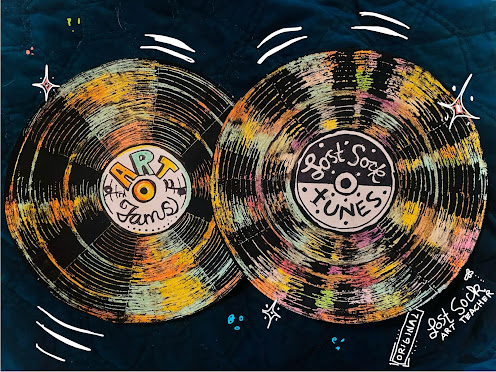
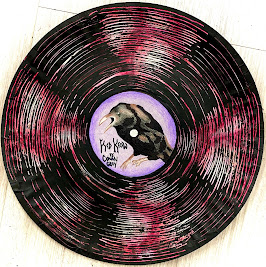
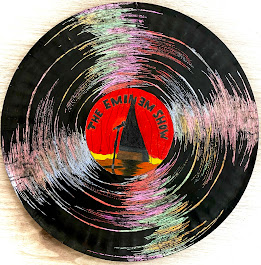
Eduardo,十年级 Jasmin D.,十年级
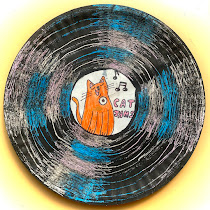
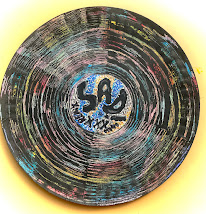
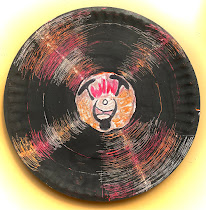
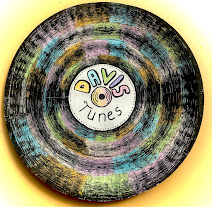
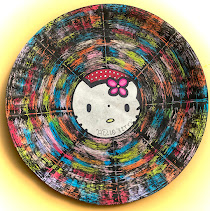
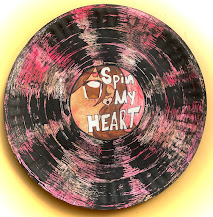
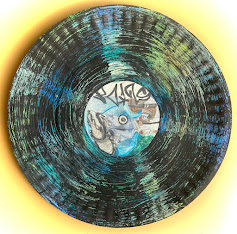
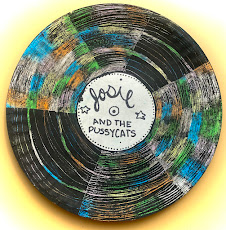
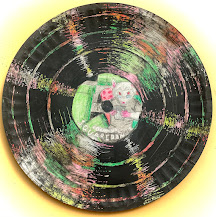
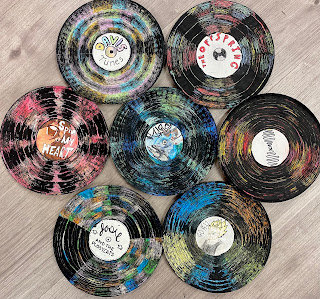
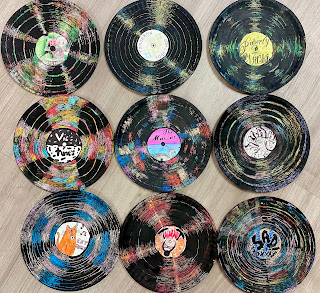
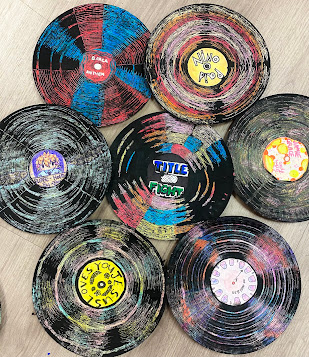
历史背景——
留声机于1877年由托马斯·爱迪生发明,其最初形态为留声筒。该装置是首个既能录音又能回放声音的设备,最初以锡箔包裹圆筒为介质。这项开创性发明为现代唱机奠定了基础;此后数十年间,技术持续演进,例如埃米尔·伯林纳发明的留声机,以及扁平式黑胶唱片的问世。
科学原理——
蜡与油类物质不溶于水性液体(如蛋彩颜料)。
在蛋彩颜料下层涂覆蜡笔或油画棒,可使干透后的颜料层易于剥落。
词汇表
放射状——指物体呈射线或轮辐状,从中心点向外发散排列。
同心圆——具有同一中心点,或在相关意义上具有同一轴心。
这两个词对保持唱片外观的真实性至关重要。
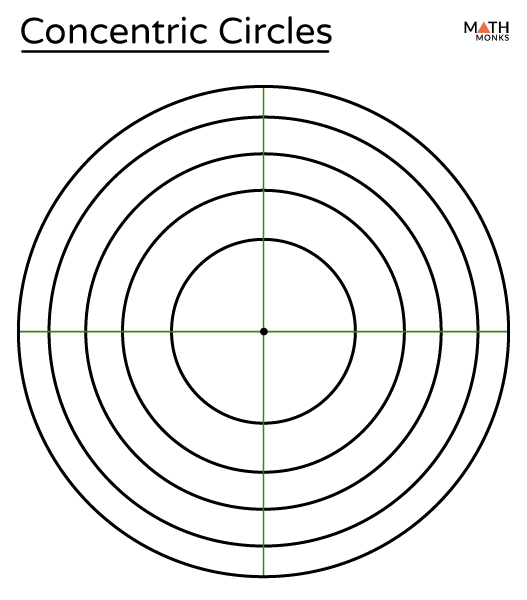
制作步骤……
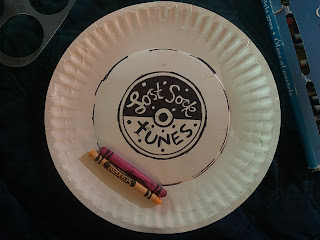
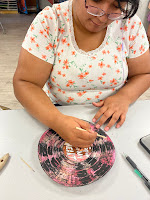
用手尽可能将圆盘压平。
也可将其置于厚重书籍或木板下过夜,效果更佳。
用圆盘背面开始绘制设计稿。
找出圆盘的中心/轴心,并在唱片中心孔位置点一个较粗的圆点。
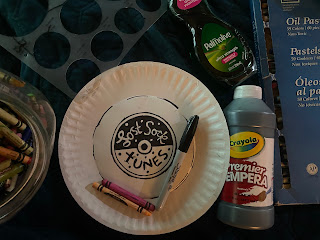
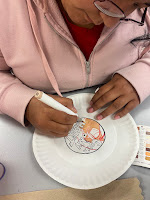
备好油画棒、蜡笔、蛋彩颜料,以及稍后需要用到的液体皂。
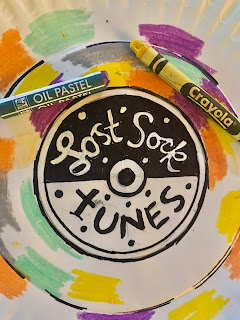
选用油画棒或蜡笔(不可水洗型/克雷奥拉牌)
用力涂抹,覆盖中心标签区周围区域,按[同心圆]与[放射状]方向运笔。
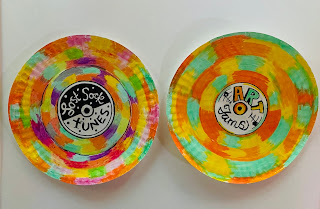
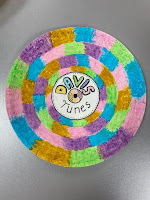
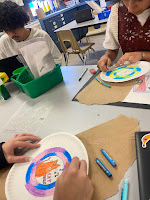
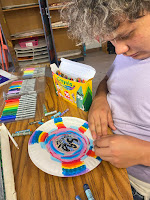
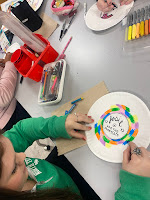
选用明度较高、色彩更鲜亮的颜色。
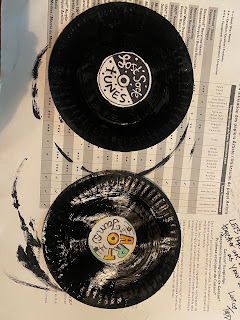
在蜡笔与油画棒图层上,均匀涂覆一层黑色蛋彩颜料与液体皂的混合液。
待其自然晾干……
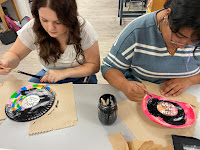
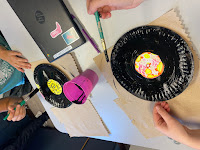
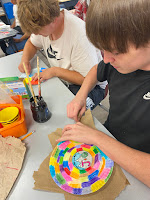
提示:若涂层过薄,待干透后可再补涂一层。
进入律动节奏
这是最难的部分。首先,在刮刻区域周围刻出约4–6道同心圆凹槽。
想象一颗石子投入水中所激起的涟漪。
这些凹槽即代表唱片中不同乐曲的分界。
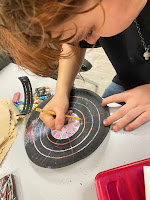
接着,以中心轴为起点,沿一条[放射状辅助线]延伸,刻画出更多线条构成的区域,以表现唱片表面高光反射的质感。
通常该图案需左右对称重复,形成对称构图。
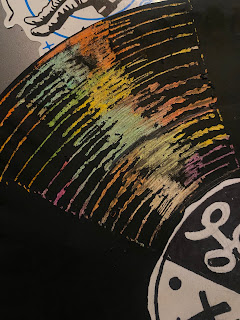
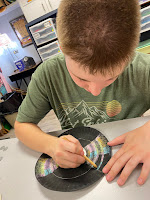
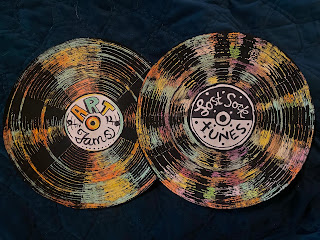
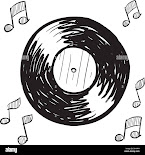
黑胶唱片视觉参考图
观察图片中如何呈现唱片凹凸起伏的[放射状]表面上的[明度]变化。

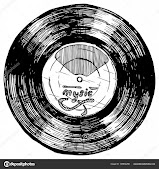


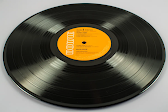
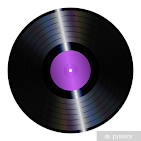
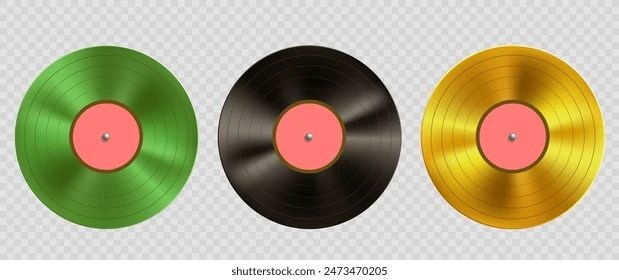

你是否想进一步深入了解黑胶唱片知识?
听一听……
黑胶唱片刮画
Original: https://tabithaannthelostsock.blogspot.com/2025/09/vinyl-record-scratchboard.html
Date: 2025-09-07
Tags: art, board, culture, Music, pop, radial, record, retro, scratch, scratchboard, vintage, vinyl
Eduardo 10th grade. Jasmin D. 10th grade
HISTORY-
The record player was invented in 1877 by Thomas Edison n the form of his phonograph. The phonograph was the first device to both record and play back sound,
initially on a tin foil wrapped cylinder. This groundbreaking invention laid the foundation for the modern record player, though the technology evolved significantly over the following decades with devices like Emile Berliner's gramophone and the introduction of flat vinyl records.
SCIENCE-
Wax and Oil do not mix with water based liquids (like tempera paint).
Applying wax crayon or oil pastels beneath the tempera paint
will allow the dry paint to flake off.
VOCABULARY
RADIAL- describes things arranged like rays or spokes from a central point.
CONCENTRIC- having a common center, or, in a related sense, a common axis.
These 2 words are imortant for keeping the record looking like record.
How to do it…
Flatten Plate as best you can with your hand.
It will help to put under a heavy book or bard overnight.
Use the back part of the plate to begin your design.
Find center/axis of plate. Make a fat dot where the record hole would be.
Gather your oil pastels, crayons, and have tempera,
and liquid soap on hand for later.
Choose Oil Pastel or Crayon (non-washable/Crayola)
Push hard covering area around center label going in a
concentric radial direction.
Choose lighter brighter colors.
Paint layer of black tempera and liquid soap mixture. Over crayon & oil pastel.
Let dry…
Note: If layer was too thin, paint another when dry.
GETTING GROOVY
This is the HARDEST part. First carve out about 4-6 concentric circles around the scratch area.
Think of a ripple created from a pebble dripped in water.
These grooves are where the songs change.
Then, using a radial guideline that goes from the middle axis, create an area with more lines that represent the highlighted shine in the record.
Typically they repeat on the other side just the same, making a symmetrical design.
Vinyl Record Visual Reference
Study the way the images show the VALUE changes on the groovy radial surface.
Are you interested in diving deeper into vinyl record knowledge?
Listen...


