韦恩·第伯德棒棒糖油画棒课程
原文链接:https://createartwithme.com/wayne-thiebaud-forms-lollipops-oil-pastel-lesson/
日期: 2019年11月12日
作者: 米歇尔·伊斯特
分类: 四年级、五年级、六年级、美术史课程、美术课程、小学美术、精选内容、初中美术、油画棒课程、波普艺术
标签: #艺术教育、Crayola油画棒、小学油画棒课程、形体课程、棒棒糖、初中美术课程、油画棒、波普艺术、波普艺术课程、第伯德蛋糕、第伯德棒棒糖、韦恩·第伯德、韦恩·第伯德棒棒糖
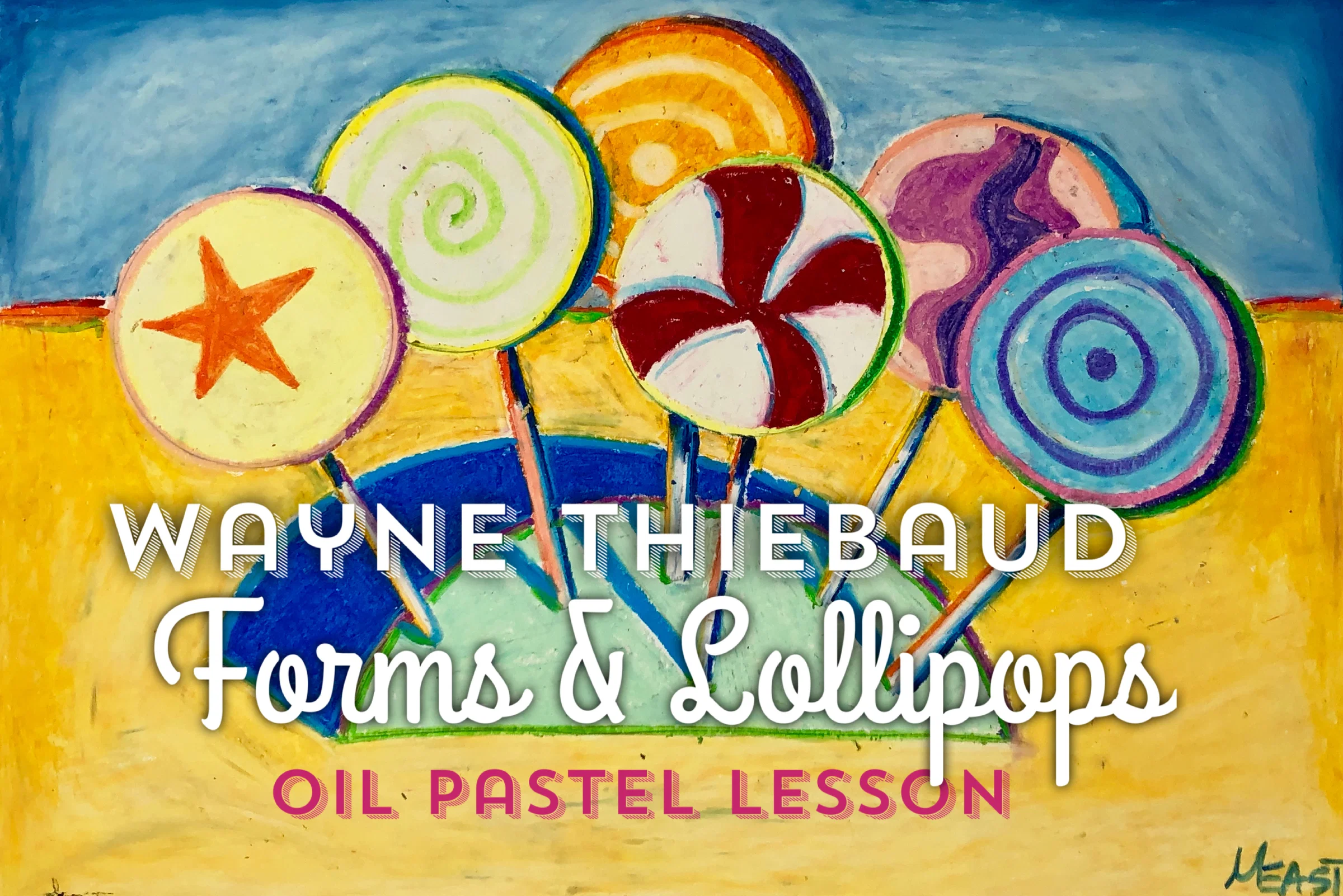
韦恩·第伯德的形体与棒棒糖
适用学段: 高年级小学至低年级初中
材料: 12×18英寸白纸、铅笔、*Crayola油画棒、纸巾(用于清洁油画棒)、报纸(铺于桌面)、*Fast Orange(用于清洁油性双手)


参考资料:
教学目标:学生将学习……
- 艺术家韦恩·第伯德的题材选择及其色彩运用方式;
- 波普艺术运动,以及第伯德对其他艺术家的影响;
- 形体不仅具有高度与宽度,还具有深度;
- 对比传统写实主义与波普艺术作品中色彩运用的异同;
- 如何绘制圆柱体及“楔形”等基本形体。
教学安排:第一天(25分钟)
韦恩·第伯德:
- 1920年11月15日出生于美国亚利桑那州梅萨市;
- 他是美国画家兼版画家,以描绘日常生活中批量生产的常见物品及橱窗陈列物而闻名,如派、口红、油漆罐、冰淇淋甜筒、糕点和热狗;他也创作风景画与人物画;
- 第伯德使用厚重颜料与夸张色彩表现主题,其作品中几乎总包含广告风格的清晰阴影;
- “你拿一个柠檬蛋白派——它本身就很美……它不只是一个绘画题材,更是一种与颜料本身的关系。你真的会感觉仿佛自己正在制作蛋白霜,正在亲手操作这个派。”——韦恩·第伯德;
- 高中期间的一个暑假,他曾受聘于华特·迪士尼工作室,为《高飞》《木偶奇遇记》及《吉米尼蟋蟀》绘制中间画稿,周薪14美元;
- 他在校期间主修商业美术;
- 他尝试过漫画与商业美术,但最终因对绘画与美术史的热爱重返校园,专攻美术教育与工作室艺术。1951年,第伯德开始在加利福尼亚州萨克拉门托市同时担任美术教师与职业艺术家;
- 韦恩·第伯德常被错误地归类为美国波普艺术家,因其大量描绘“日常”与大众文化物品。然而,他在二十世纪五十年代与六十年代所创作的作品略早于经典波普艺术家,表明第伯德可能凭借其图像语言与色彩运用对这一运动产生了影响;
- 观察韦恩·第伯德的棒棒糖系列画作:《七支棒棒糖》、《巨型棒棒糖》、《六支棒棒糖》、《棒棒糖树》。
波普艺术
- 波普艺术运动始于纽约艺术家安迪·沃霍尔、罗伊·利希滕斯坦、詹姆斯·罗森奎斯特与克莱斯·奥登伯格;
- 波普艺术是20世纪50年代兴起、60年代在美国与英国蓬勃发展的艺术运动,其灵感源自流行文化与商业文化中的图像;
- 对比传统写实主义与波普艺术作品中色彩运用的异同:
- 写实主义: 色彩常偏灰暗或柔和,所用颜色力求还原物体在现实中的真实色彩,物体通常不加轮廓线;
- 波普艺术: 色彩鲜明、夸张,未必忠实于物体实际颜色,常经主观调整;物体常以黑色或其他颜色勾勒轮廓。
第伯德如何运用美术元素?
https://www.nga.gov/content/dam/ngaweb/Education/learning-resources/an-eye-for-art/AnEyeforArt-WayneThiebaud.pdf
尽管第伯德的题材如同糖霜般轻快愉悦,他对绘画的探索却极为严肃。他借静物题材深入研究绘画的形式特质:色彩、线条、形状、光线、构图与质感。
- 质感: 第伯德以出人意料的方式运用来再现所绘物质的视觉与触觉效果而闻名。在《蛋糕》系列中,他以厚重浓密的笔触描绘每款甜点,营造出富有肌理感的表面;他将油画颜料转化为浓稠柔滑的奶油糖霜或厚实蓬松的鲜奶油;在其他作品中,他的颜料则“化作”蛋白霜、糖果甚至芥末;
- 线条、形状与构图: 如同烘焙师精心布置橱窗展示,第伯德亦严谨经营画面构成。《蛋糕》一作中,重复排列的圆柱体置于纯色背景之上;艺术家将圆柱形蛋糕置于不可思议的高脚架上,投下完美的椭圆形阴影;每个蛋糕及其底座均以轮廓线勾勒,强化其形状特征;
- 光线与色彩: 第伯德的色彩远比表面看来复杂——白色糖霜并非纯白,而是融合了橙色、蓝色与米色;蛋糕投下蓝紫色调的阴影;他发展出一种以不同颜色颜料进行素描的实践,由此形成彩虹般的边缘线,清晰界定物体轮廓;其阴影多呈蓝色或灰紫色,且许多色彩均调入白色,呈现出低调柔和的粉彩色调。
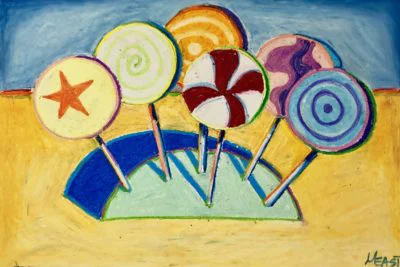
活动日 2–4:(4–5 节,每节 40 分钟)棒棒糖油画棒创作项目
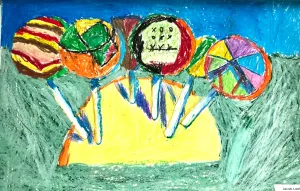
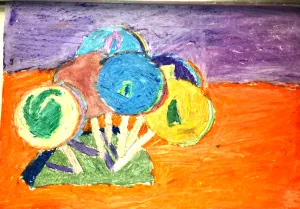
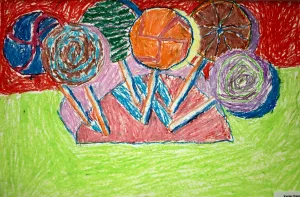
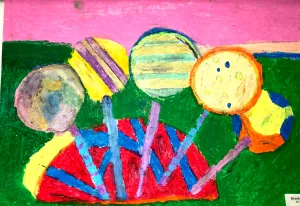
以蒂埃博(Thiebaud)的画作《六支棒棒糖》为灵感,创作一幅原创作品。 指导学生如何在本项目中塑造形体。
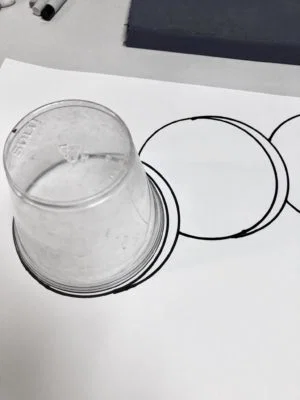
- 用塑料杯绘制棒棒糖。先完整描摹杯子轮廓,画出棒棒糖正面;再将杯子略向右平移,描摹出棒棒糖的“侧面”。
- 将冰棒棍或直尺置于棒棒糖下方,以此为参照画出棒棒糖棍(在棍子底端画一条弧线)。
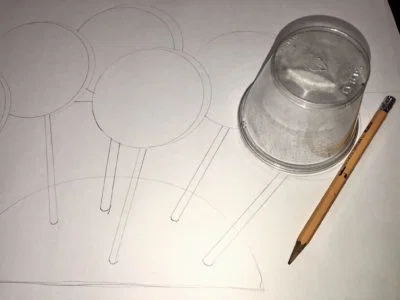
- 确定光源方向,然后在相反方向画出投影。
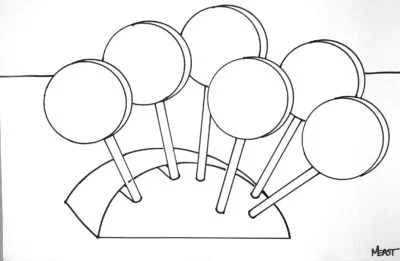
- 用铅笔在棒棒糖表面绘制图案。
- 用油画棒为所有形体勾边,所选颜色须与内部填色不同。这需要提前规划配色——建议选用色轮上互为互补色的颜色(例如:用紫色勾边,内部填黄色)。
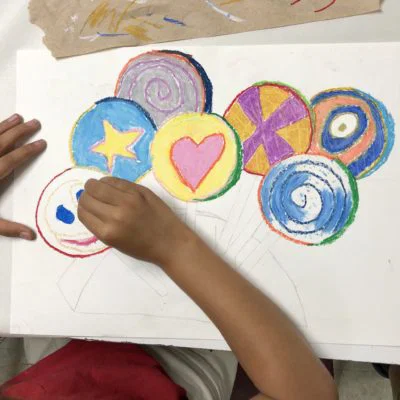
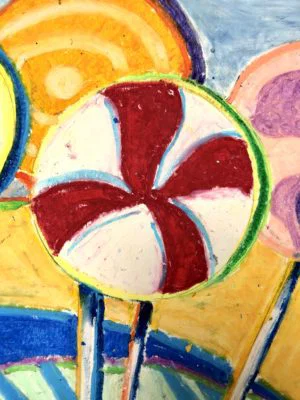
- 填涂内部色彩后,再整体覆盖一层白色,营造柔和、低饱和度的粉彩效果。
- 用蓝色和橙色勾勒棒棒糖棍边缘,再用白色填满。
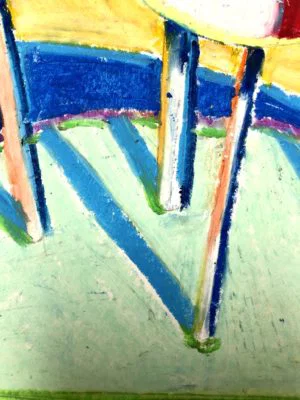
- 投影应使用蓝色或灰紫色。
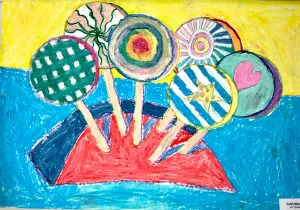
学生作品(四年级)
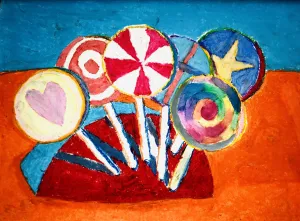
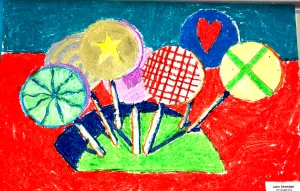
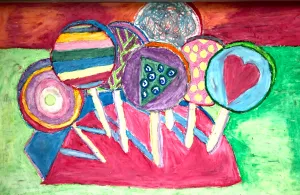
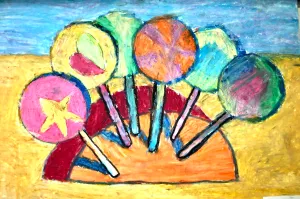
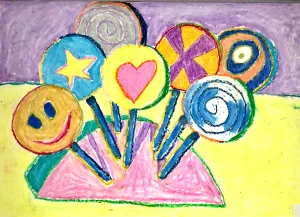
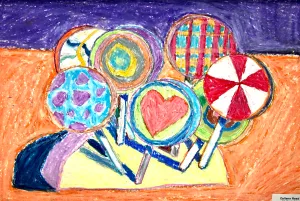
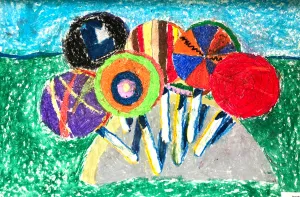
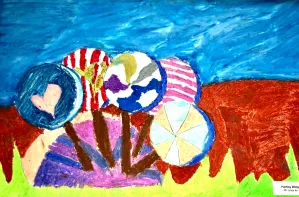
若您引用本文内容(文字或图片),请注明并链接回我的博客 Create Art with ME。
本文含亚马逊联盟链接。我仅推荐自己实际使用且喜爱的产品。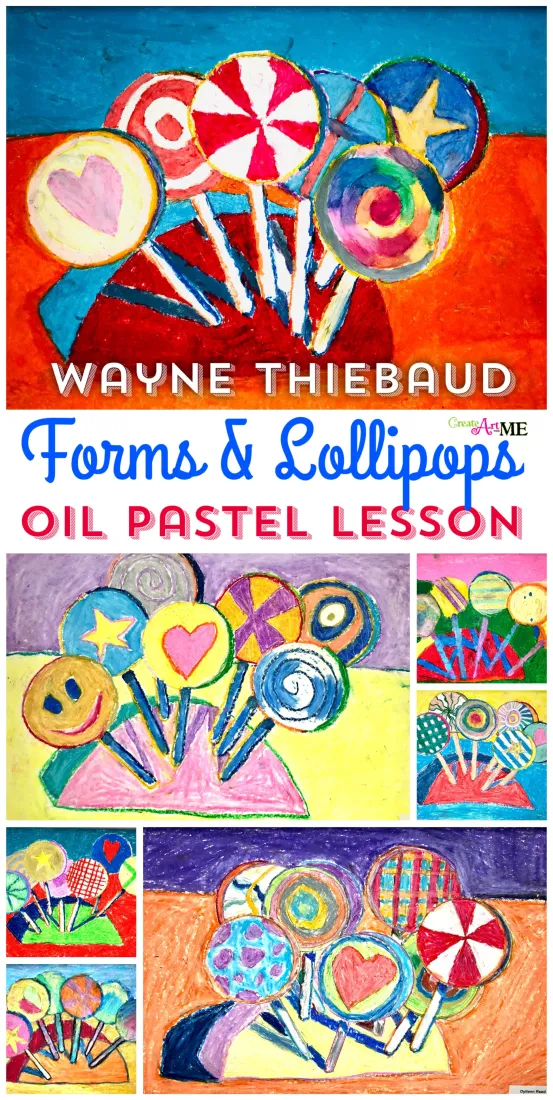](https://i0.wp.com/createartwithme.com/wp-content/uploads/2019/11/562CF856-F17E-43D8-B678-A2021C5221F3.jpeg)
Wayne Thiebaud Lollipops Oil Pastel Lesson
Original: https://createartwithme.com/wayne-thiebaud-forms-lollipops-oil-pastel-lesson/
Date: 2019-11-12
Author: Michelle East
Categories: 4th Grade, 5th Grade, 6th Grade, Art History Lessons, Art Lessons, Elementary Art, Featured, MS Art, Oil Pastel Lessons, Pop Art
Tags: #arteducation, crayola oil pastels, elementary oil pastel lesson, form lesson, lollipop, middle school art lesson, Oil Pastel, pop art, pop art lesson, thiebaud cakes, thiebaud lollipops, Wayne Thiebaud, wayne thiebaud lollipops
Grades: Upper Elementary-Lower Middle School
Supplies: 12×18 sheets white paper, pencils, *Crayola oil pastels, paper towels for cleaning pastels, newspaper for tables, *Fast Orange for cleaning oily hands
Resources:
Objectives: Students will learn…
- Artist Wayne Thiebaud’s subject matter and use of color.
- Pop Art movement and how Thiebaud influenced the artists.
- Forms have depth as well as height and width.
- Compare and contrast the use of color between traditional realism versus pop art artwork.
- How to draw forms such as cylinders and “wedges”.
Delivery: DAY 1: (25 Minutes)
Wayne Thiebaud:
- Born November 15, 1920, Mesa, Arizona, U.S.
- He is American painter and printmaker who is well-known for his colorful paintings depicting commonplace “production line” objects and items on display: pies, lipsticks, paint cans, ice cream cones, pastries, and hot dogs. He also painted landscapes and figures.
- Thiebaud uses thick paint and exaggerated colors to depict his subjects, and the well-defined shadows characteristic of advertisements are almost always included in his work.
- “You take a lemon meringue pie. It’s quite a beautiful thing…It’s more than just a subject, it’s also a kind of relationship to the paint itself. You really feel like you’re sort of making the meringue and…working with the pie.” Wayne Thiebaud.
- One summer during his high school years he apprenticed at Walt Disney Studios drawing “in-betweens” of Goofy, Pinocchio, and Jiminy Cricket at a rate of $14 a week.
- Thiebaud studied Commercial Art in school.
- He tried cartooning and commercial art, but eventually his passion for painting and art history led him back to school to study art education and studio art. In 1951, Thiebaud began a dual career as an art teacher and an artist in Sacramento, California.
- Wayne Thiebaud is often incorrectly associated with American Pop Art because of his many images of “everyday” and mass culture objects. However, his artwork executed during the fifties and sixties, slightly pre-dates the works of the classic pop artists, suggesting that Thiebaud may have had an influence on the movement because of his images and use of color.
- Look at Wayne Theibaud’s paintings of lollipops: Seven Suckers, BIG SUCKERS, Six Lollipops , Sucker Tree
Pop Art
- The Pop Art movement started with the New York artists Andy Warhol, Roy Lichtenstein, James Rosenquist, and Claes Oldenburg.
- Pop art is an art movement that emerged in the 1950s and flourished in the 1960s in America and Britain, drawing inspiration from images in popular and commercial culture.
- Compare and contrast the use of color between traditional realism versus pop art artwork.
- Realism: often dulled or muted colors. Colors used are meant to represent the actual color of the object in real life. Objects are not “outlined”.
- Pop Art: Bright, exaggerated colors. Colors are not necessarily the actual color of the objects, but usually have been changed. Objects are often “outlined” in black or different colors.
How did Thiebaud use the elements of art?
https://www.nga.gov/content/dam/ngaweb/Education/learning-resources/an-eye-for-art/AnEyeforArt-WayneThiebaud.pdf
Like frosting Thiebaud’s subjects might be light and fun, but his approach to painting is serious. He uses still-life subjects to explore formal qualities of painting: color, line, shape, light, composition, and texture.
- Texture: Thiebaud became famous for his ability to use paint in unexpected ways to recreate the look and feel of the substance it depicts. In Cakes, he painted each dessert with thick, heavy strokes to produce a textured surface. He transformed the oil paint into dense, buttery frosting or thick whipped cream. In other works, his paint “becomes” meringue, candy, or even mustard.
- Line, shape, and composition: Like a baker arranging a window display, Thiebaud carefully composes his works. Cakes shows a repeating pattern of cylinders set against a blank background. The artist places the cylinder cakes on impossibly tall stands, which create perfect elliptical shadows. Each cake and its stand are outlined to reinforce the shapes.
- Light and color: Thiebaud’s colors are more complicated than they seem—the white frosting is not just white, but it is also orange, blue, and beige. The cakes cast bluish-purplish shadows. Thiebaud developed a practice of sketching with different colored paints, which produces the rainbow-like lines that define the edges of his objects. His shadows are a blue or gray-purple color and many of his colors are mixed with white to give a low-key pastel look.
Activity Day 2-4: (4-5 40 minute classes) Lollipops Oil Pastel Project
Create an original artwork based on Thiebaud’s “Six Lollipops” painting. Guide students in how to create the forms on the project.
- Use a plastic cup to draw the lollipops. Draw the front first by tracing the cup completely. Then slide the cup slightly to the right and draw the “side” of the lollipop.
- Lay a popsicle stick or ruler under the lollipop to draw the stick (draw a curved line at the bottom of the stick).
- Choose the direction the light is coming from, then draw the shadow in the opposite direction.
- Draw Patterns into the lollipop with a pencil.
- Use oil pastels to OUTLINE everything with a DIFFERENT color than what you will color the inside with. This will require thinking through your colors. Try to use color complements-colors opposite from each other on the color wheel. (Example: outline in purple and color the inside with yellow.)
- Color the insides, then go over it with white to give it a dulled pastel look.
- Outline the lollipop stick with blue and orange and then fill it with white.
- Shadows should be blue or gray-purple.
Student Artwork (4th Grade)
If you choose to use the information in this post (written or photo), please link back to my blog Create Art with ME.*Amazon Affiliate Links were used in this post. I ONLY link products I use and love


