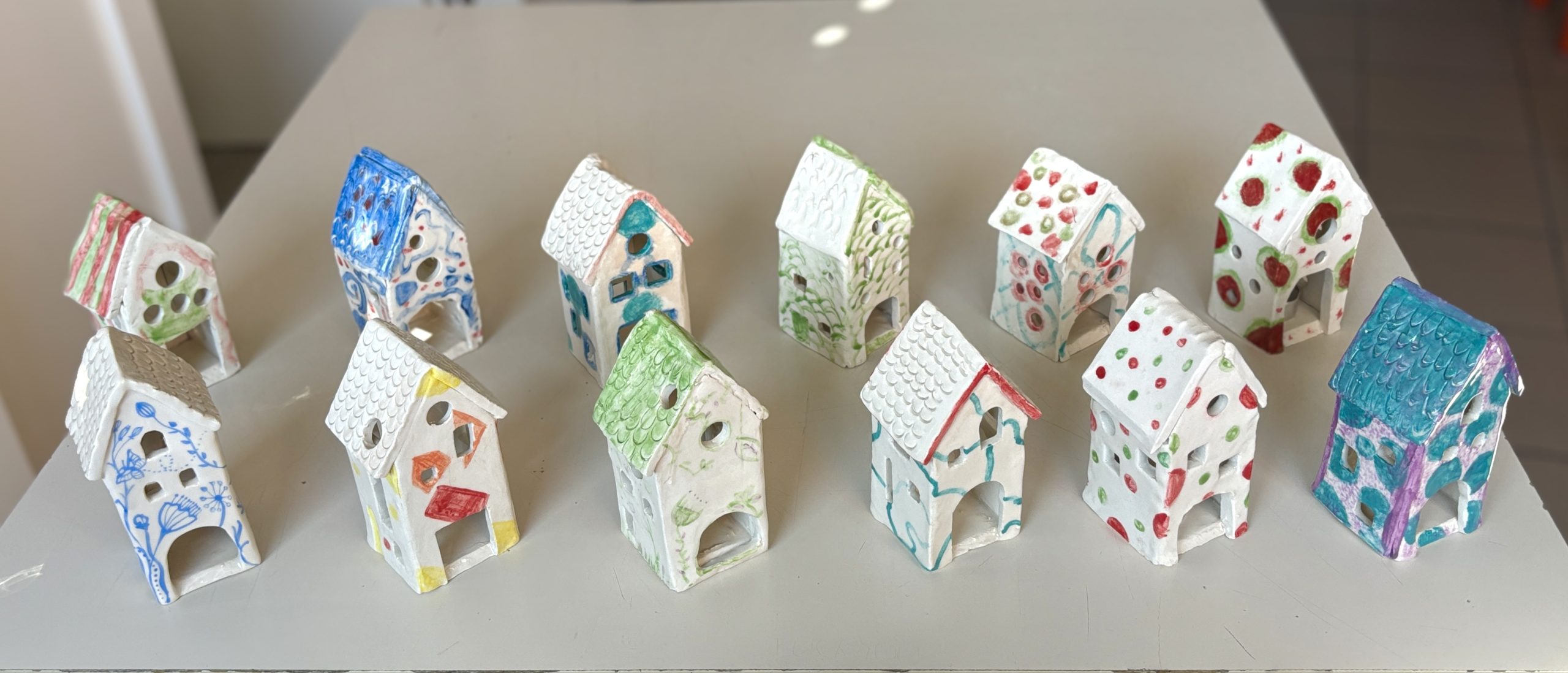
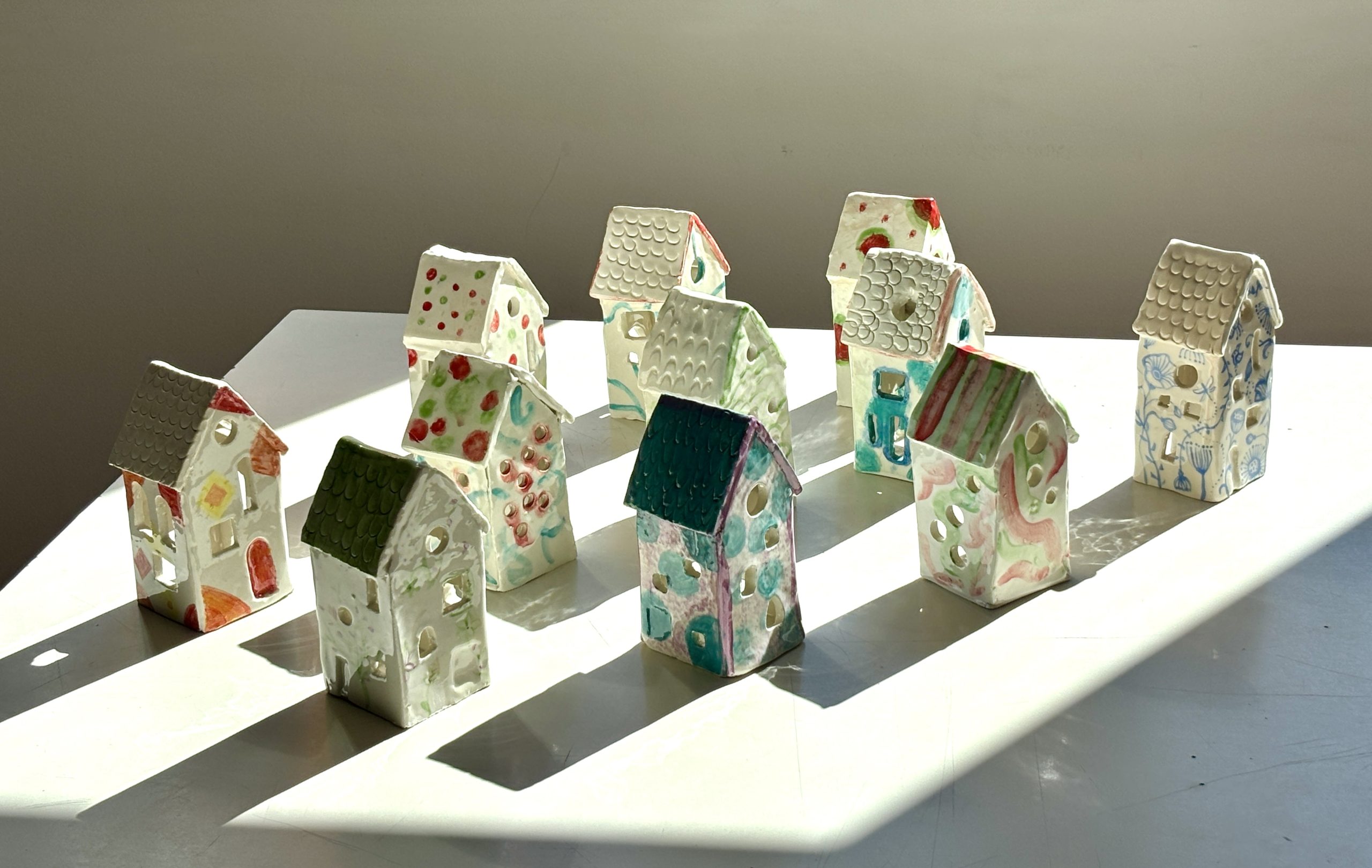
陶瓷烛台·房屋造型
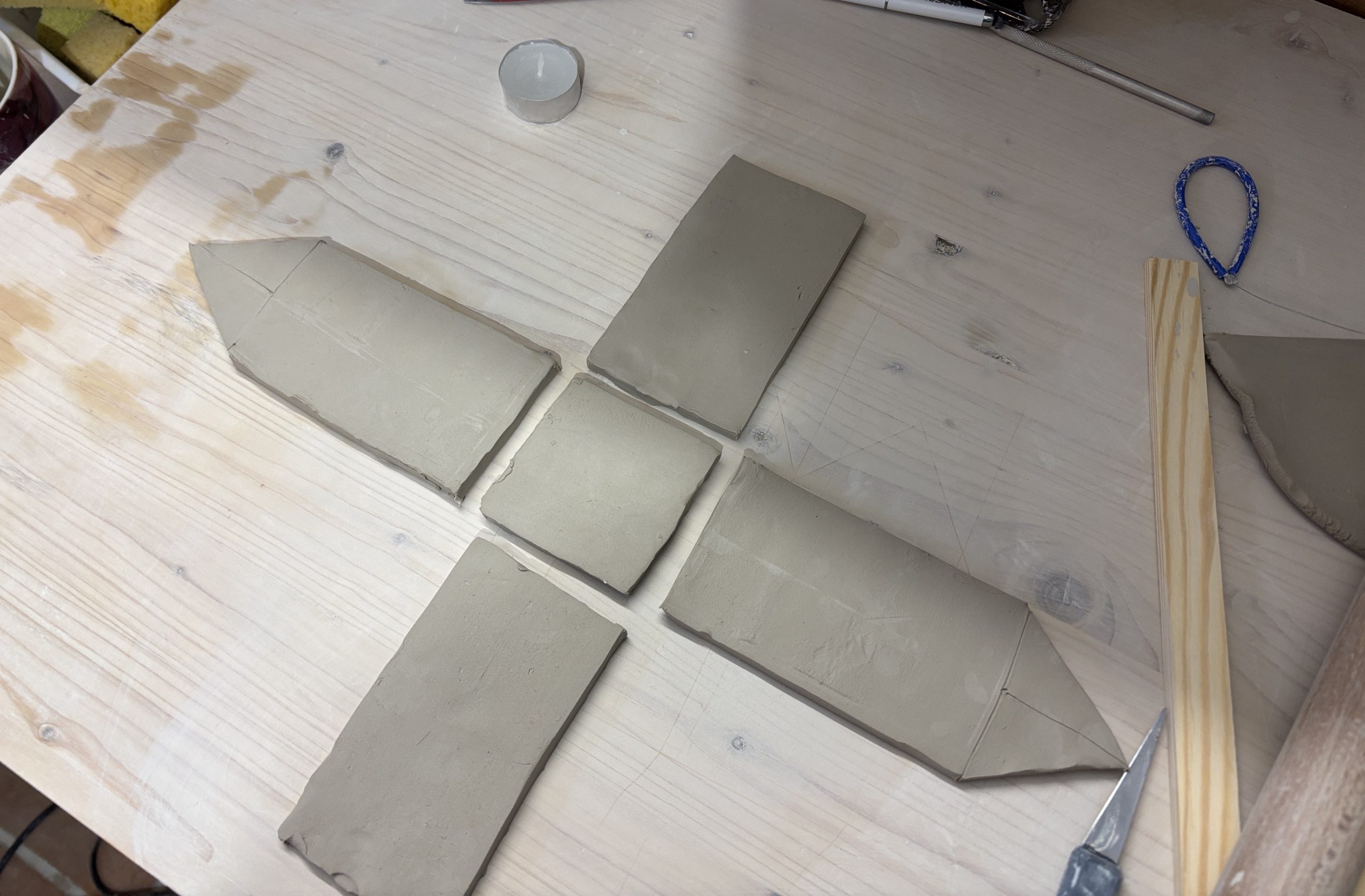
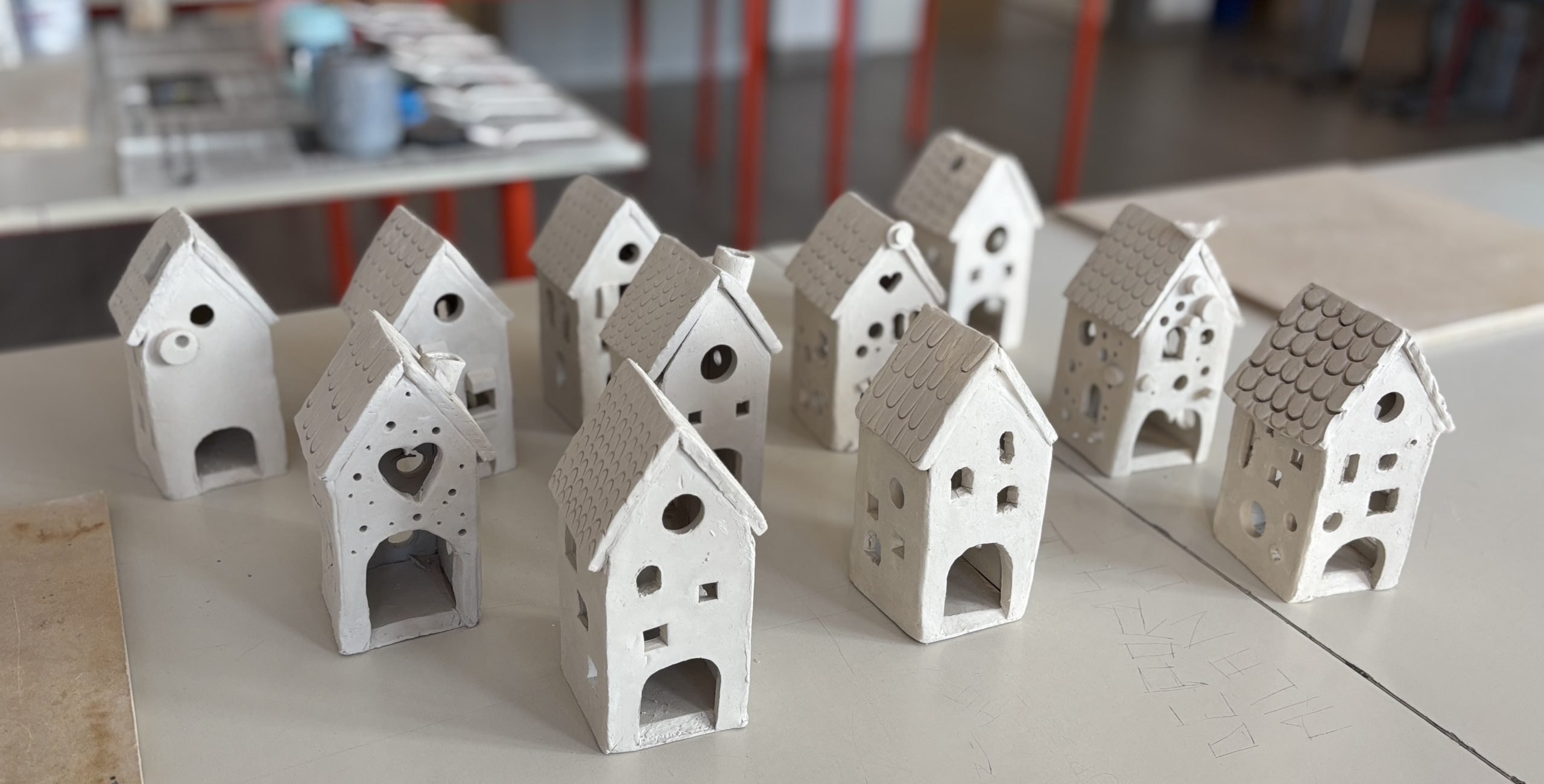
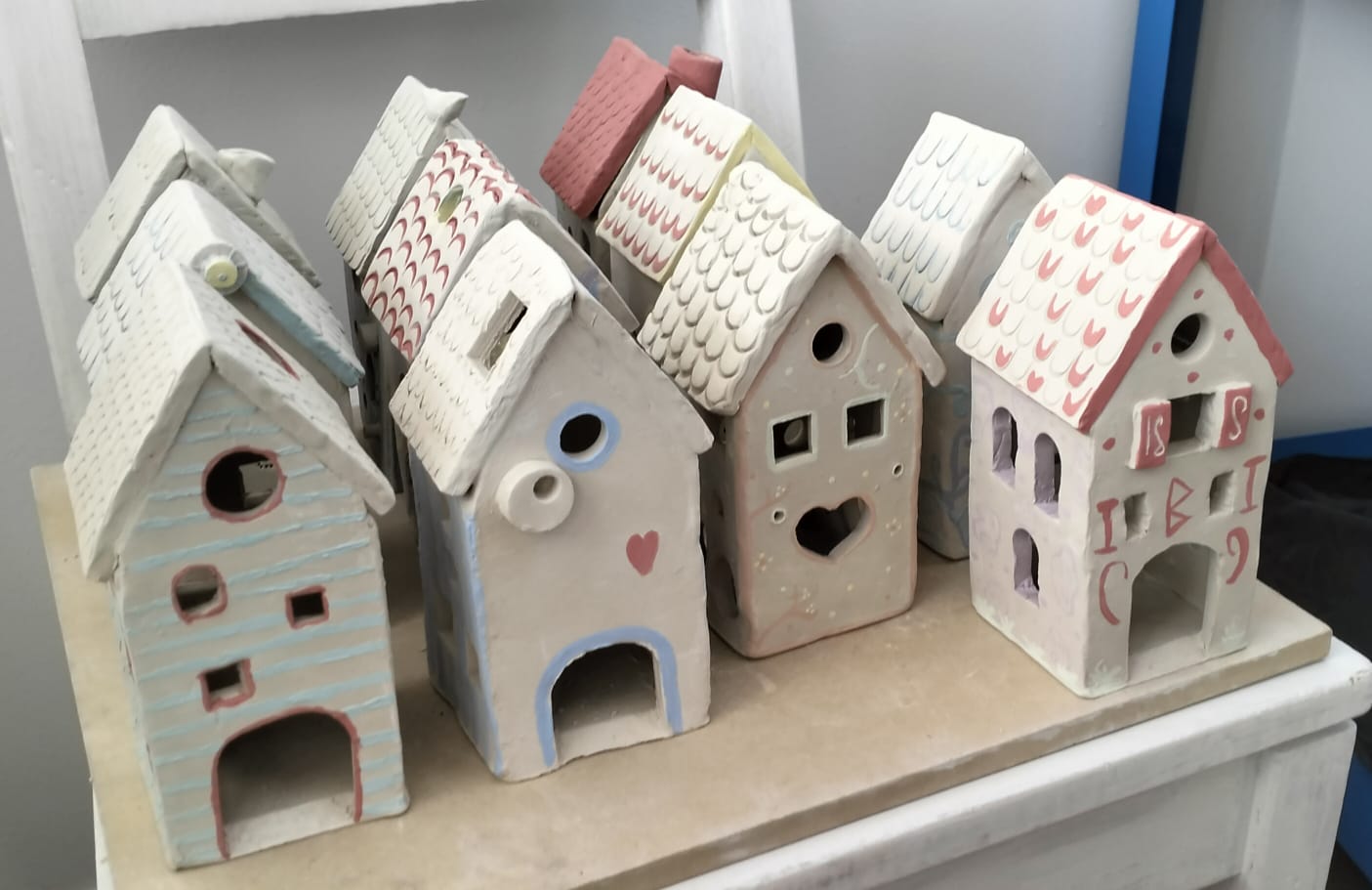
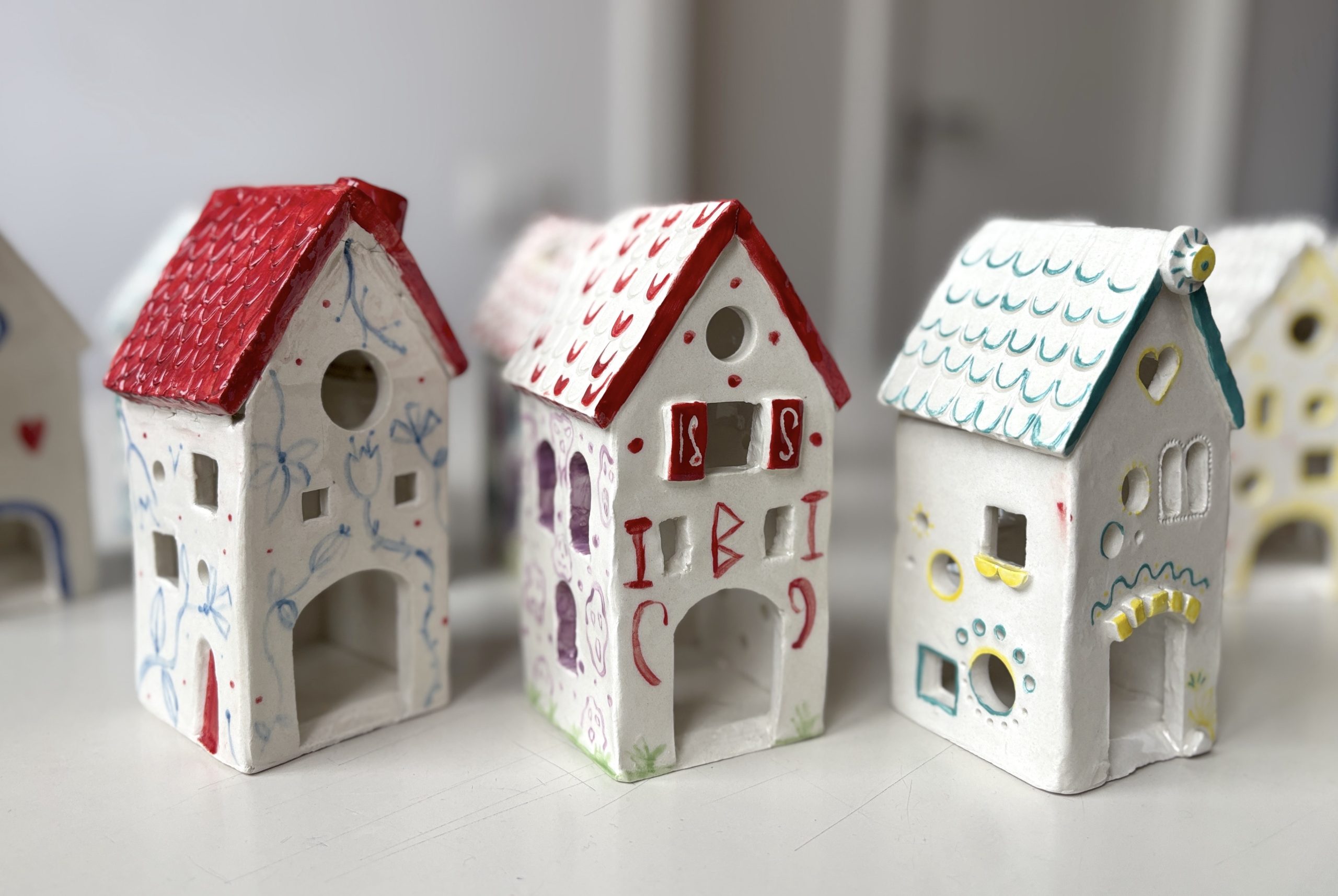
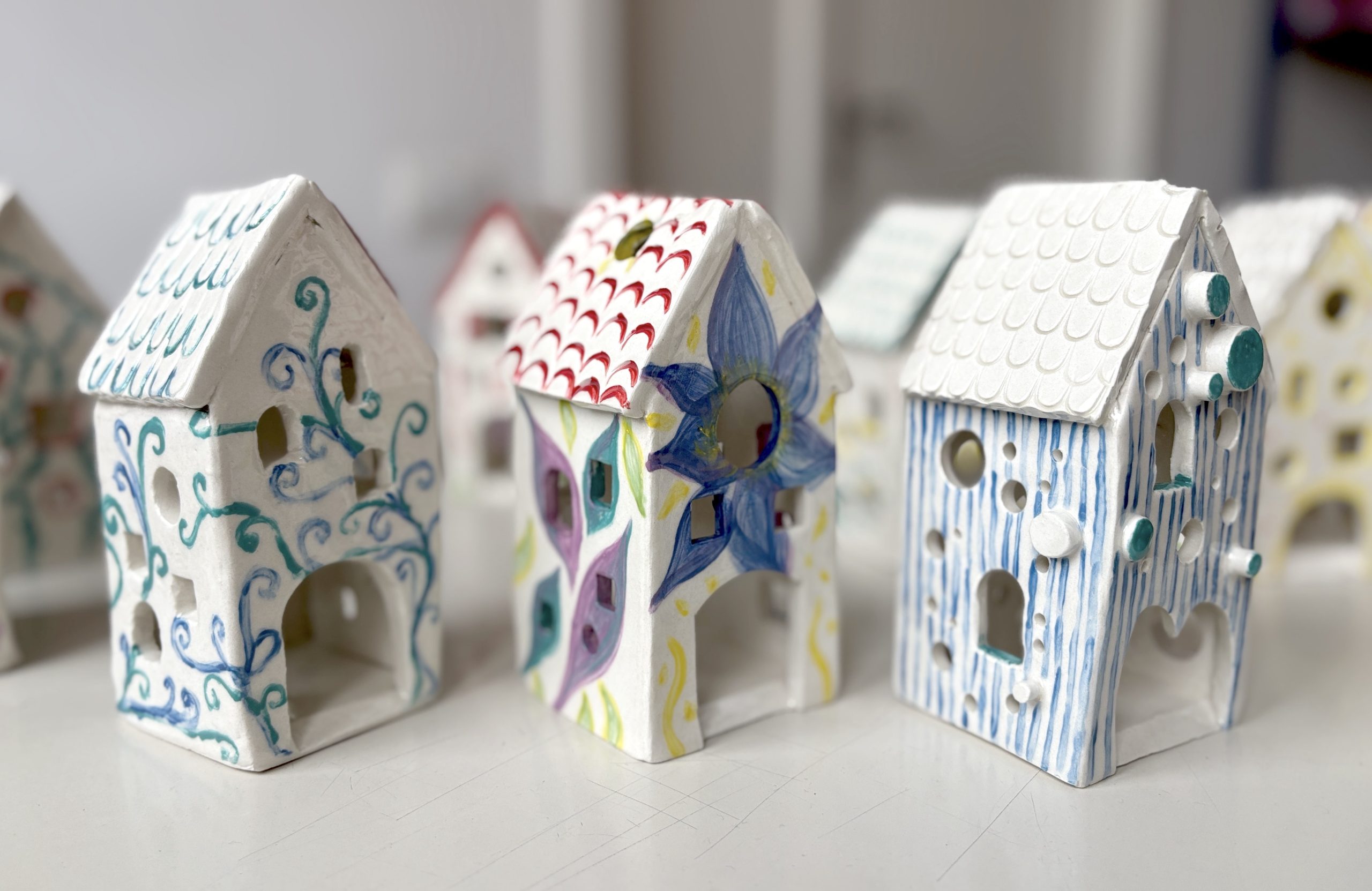
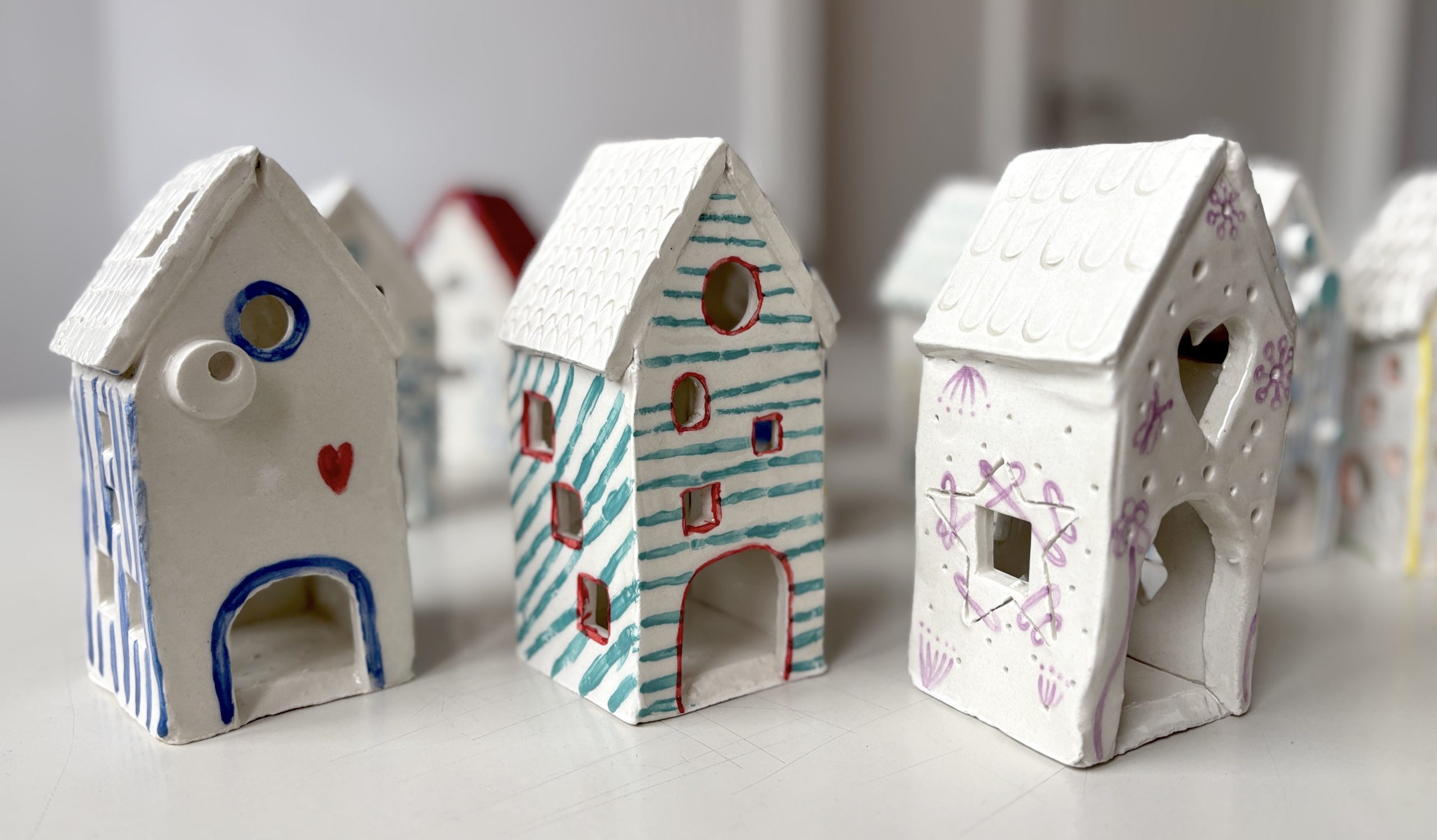
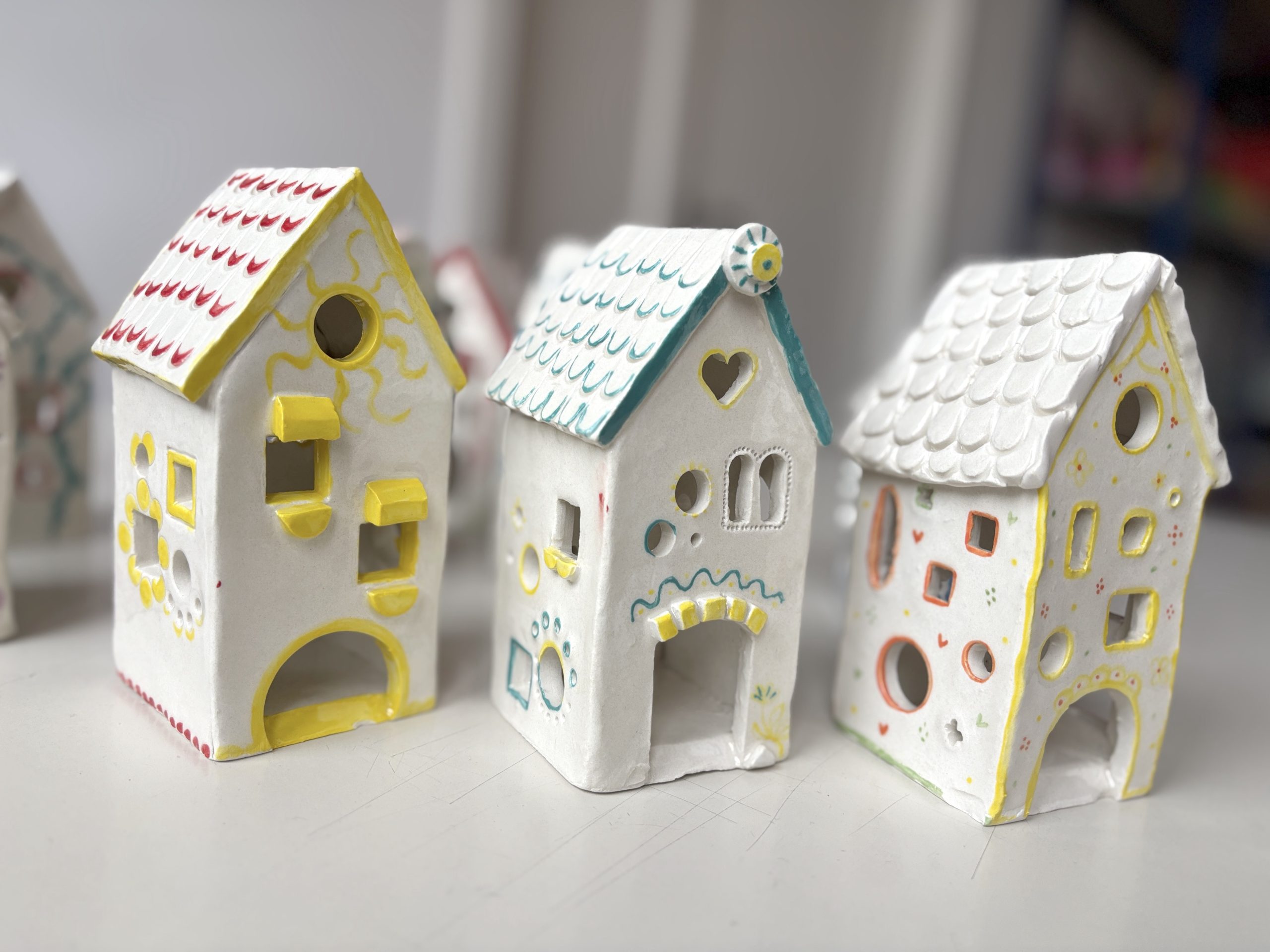
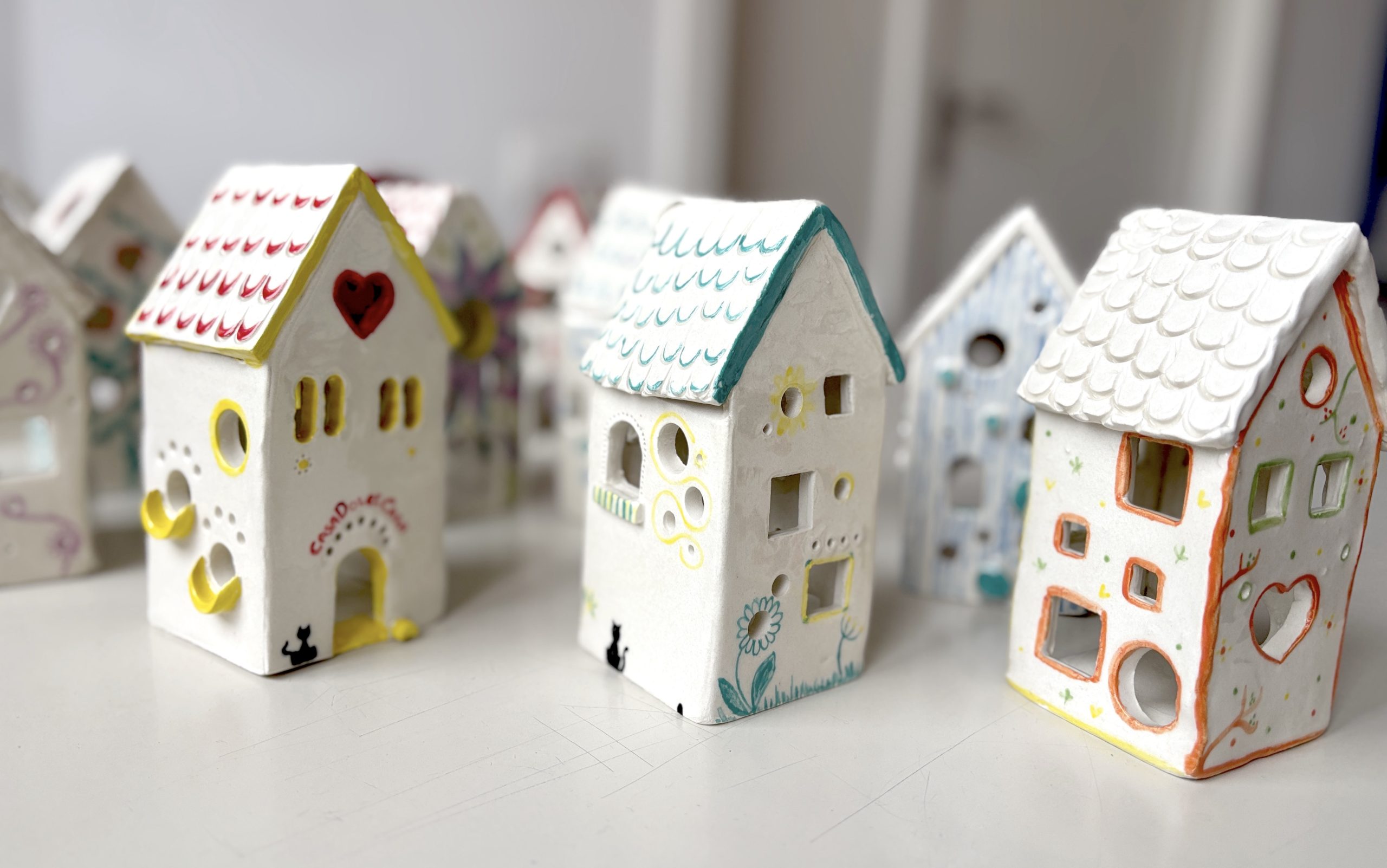
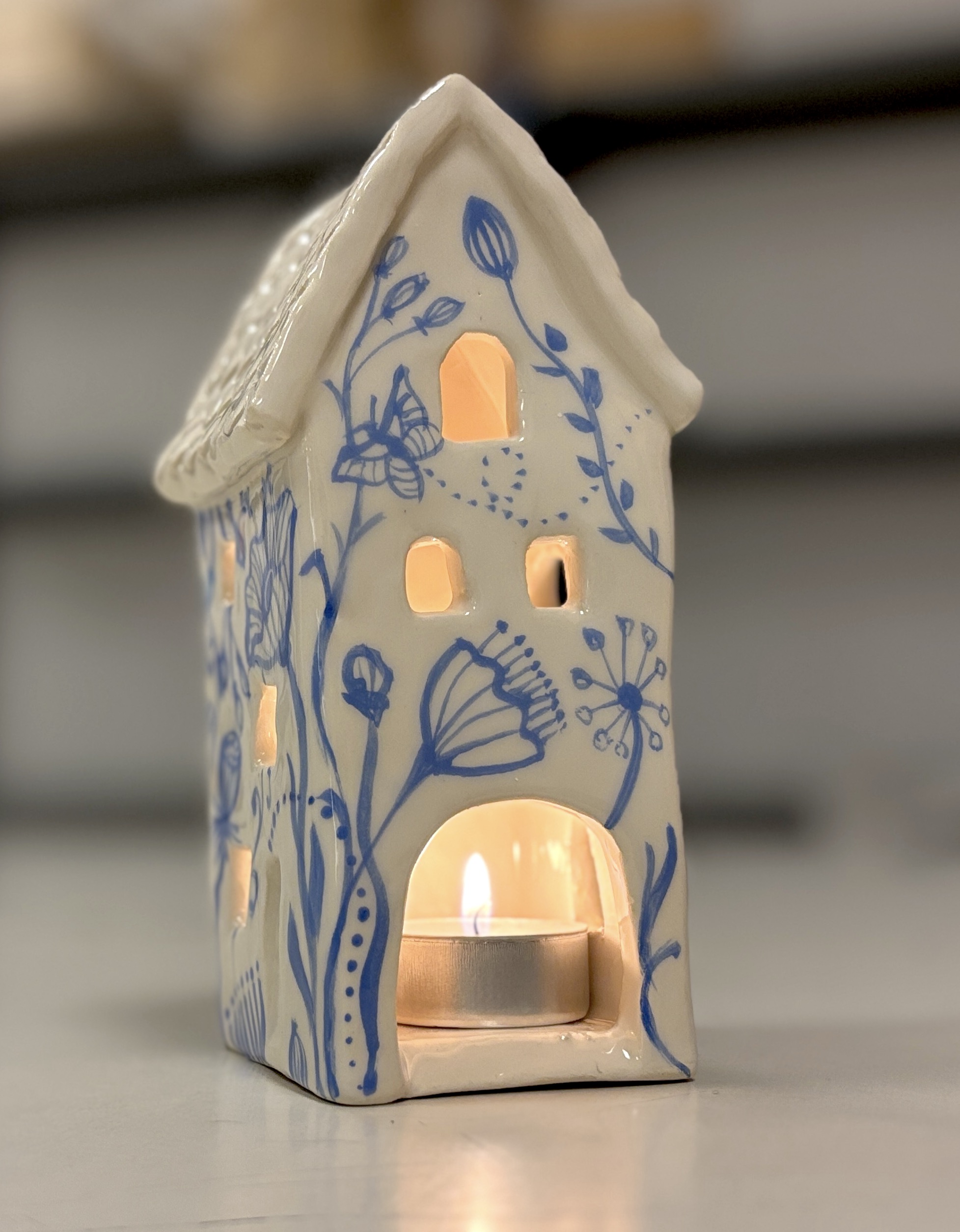
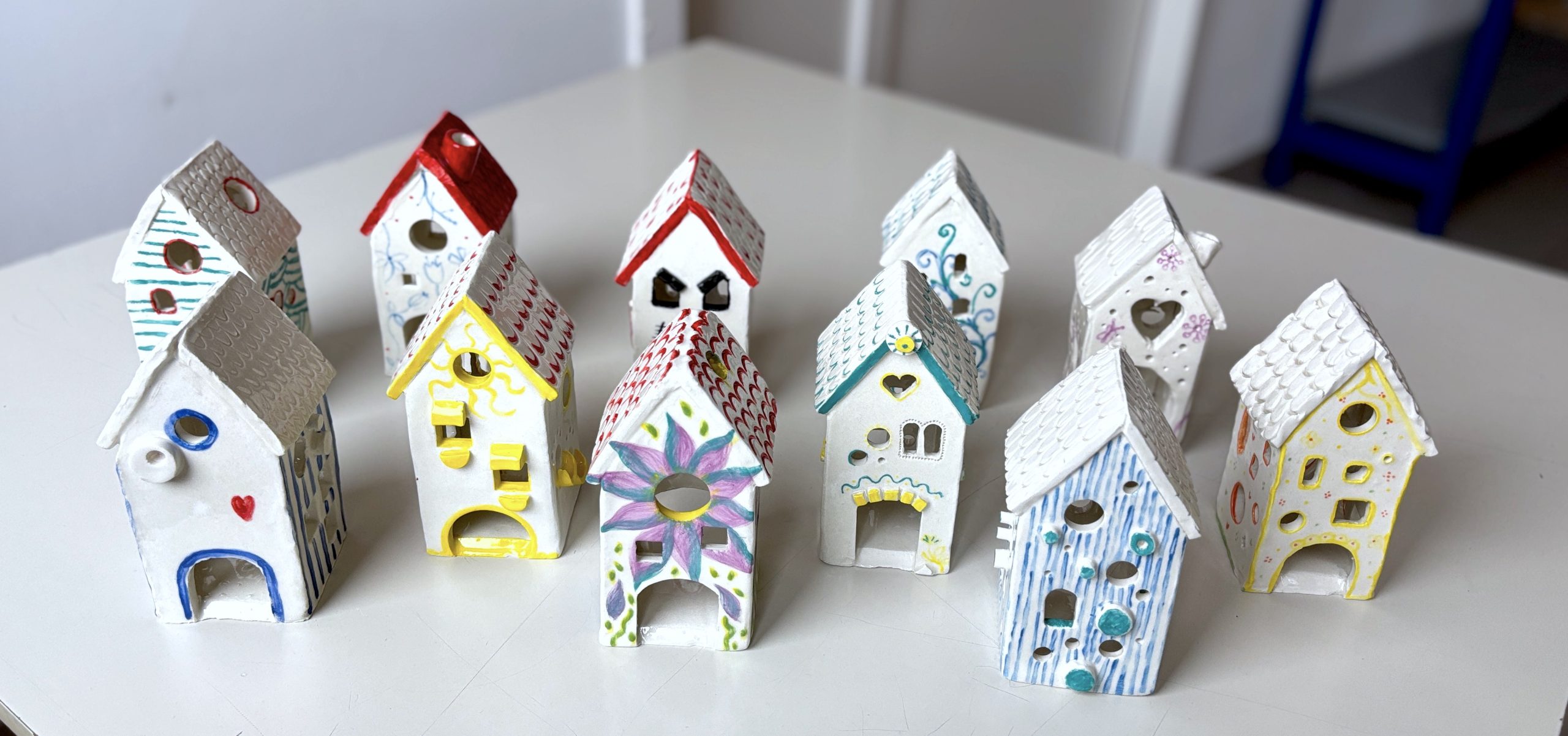
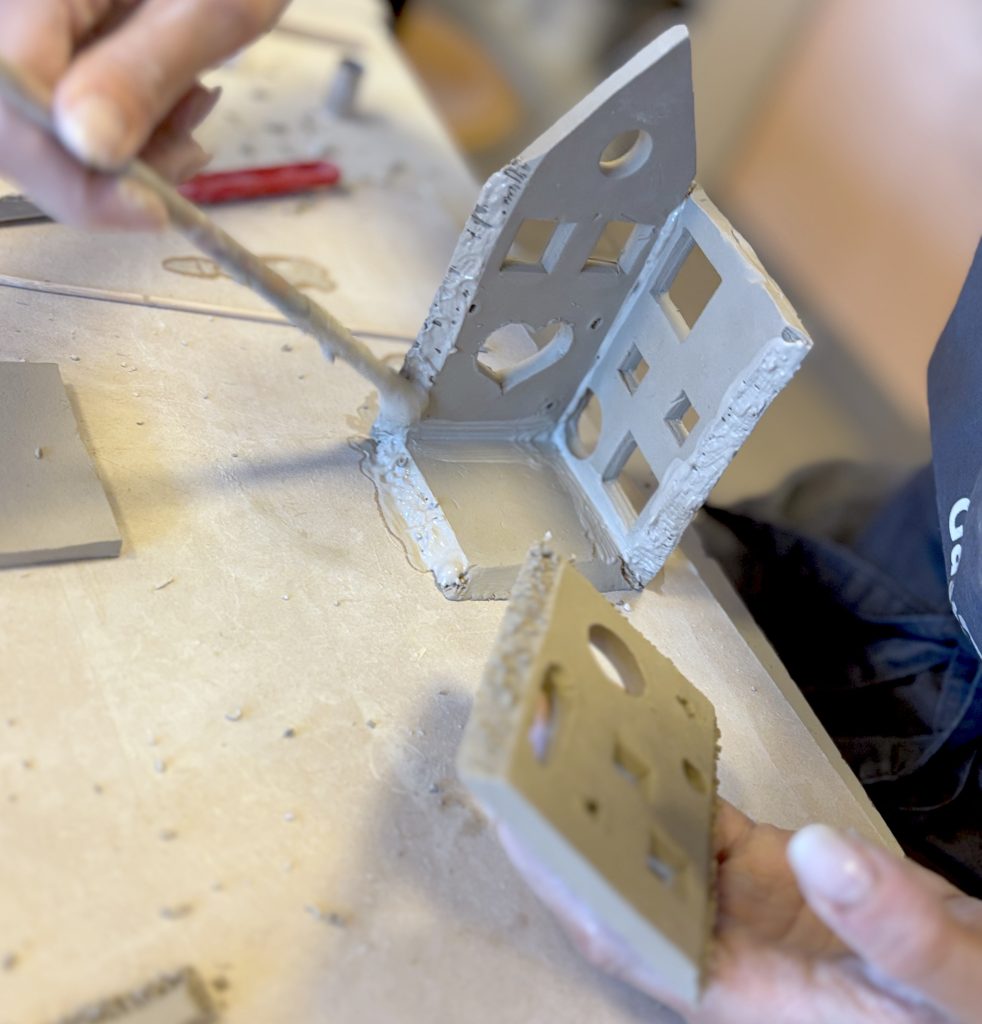
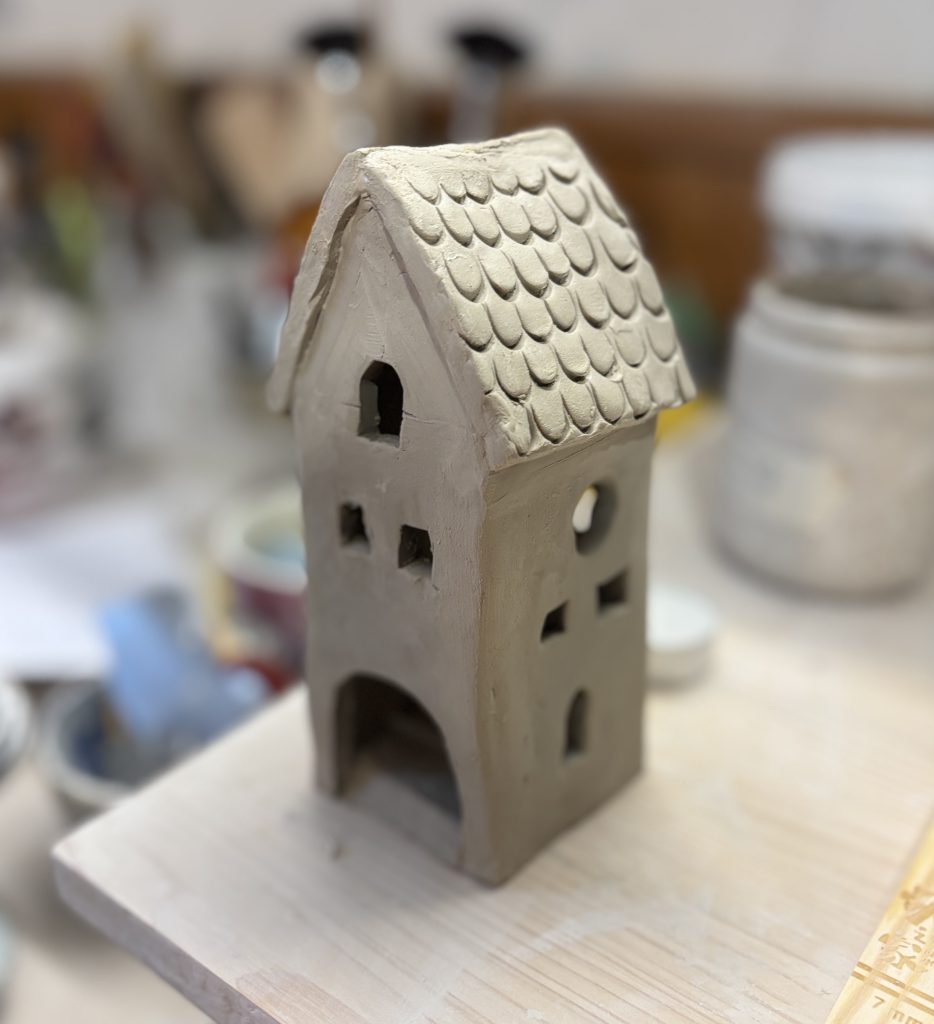
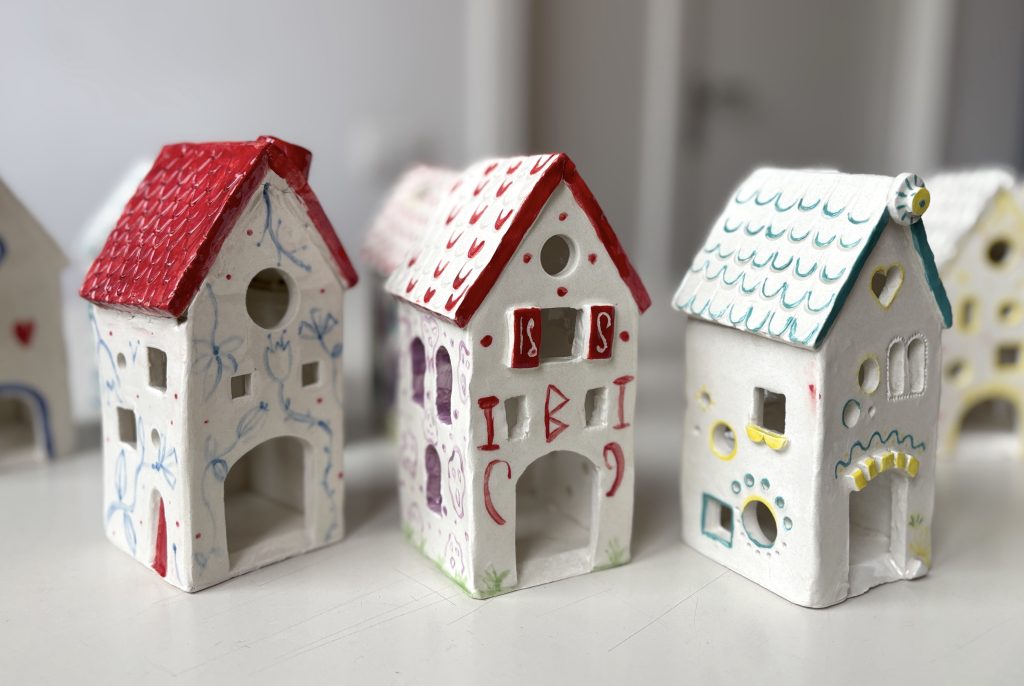
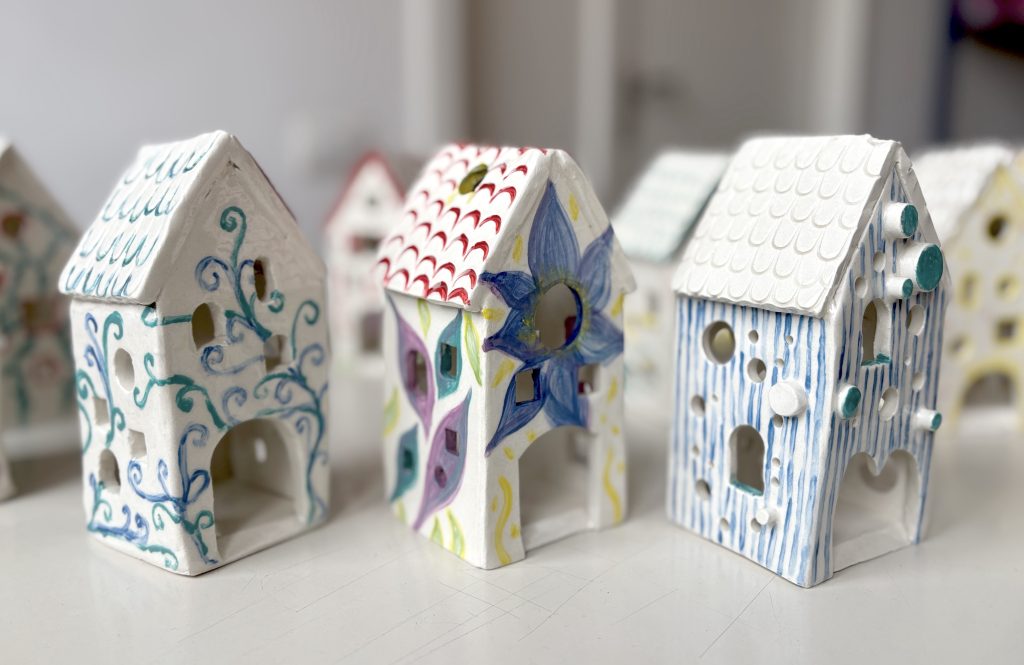
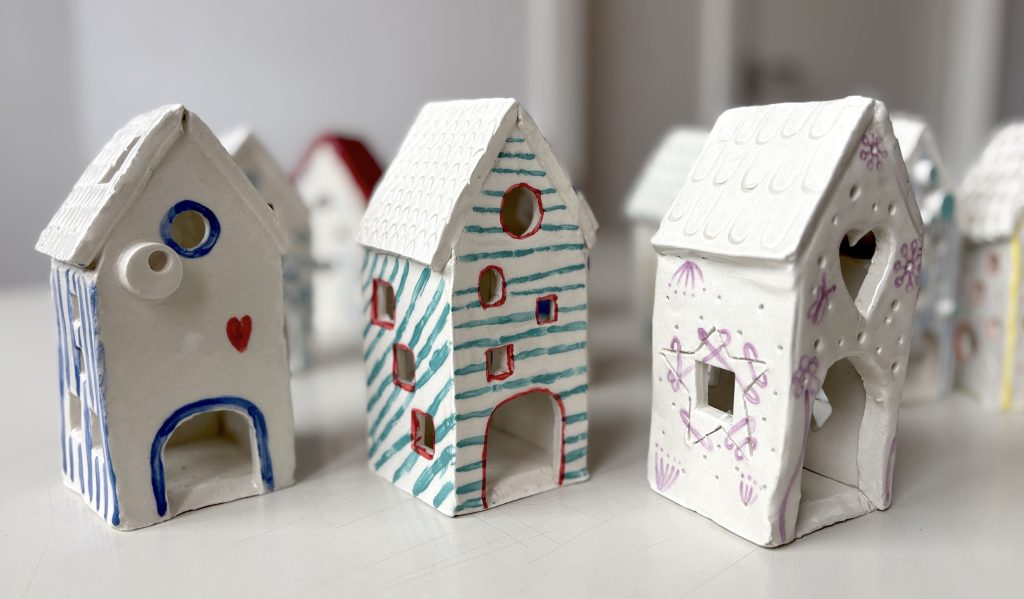
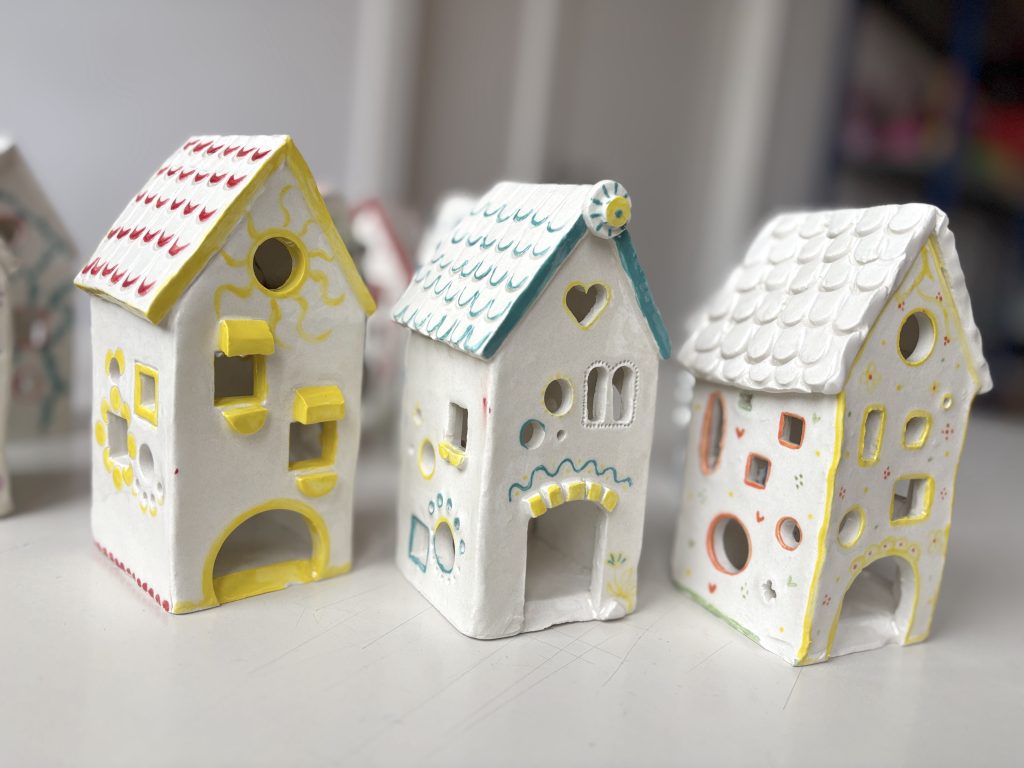
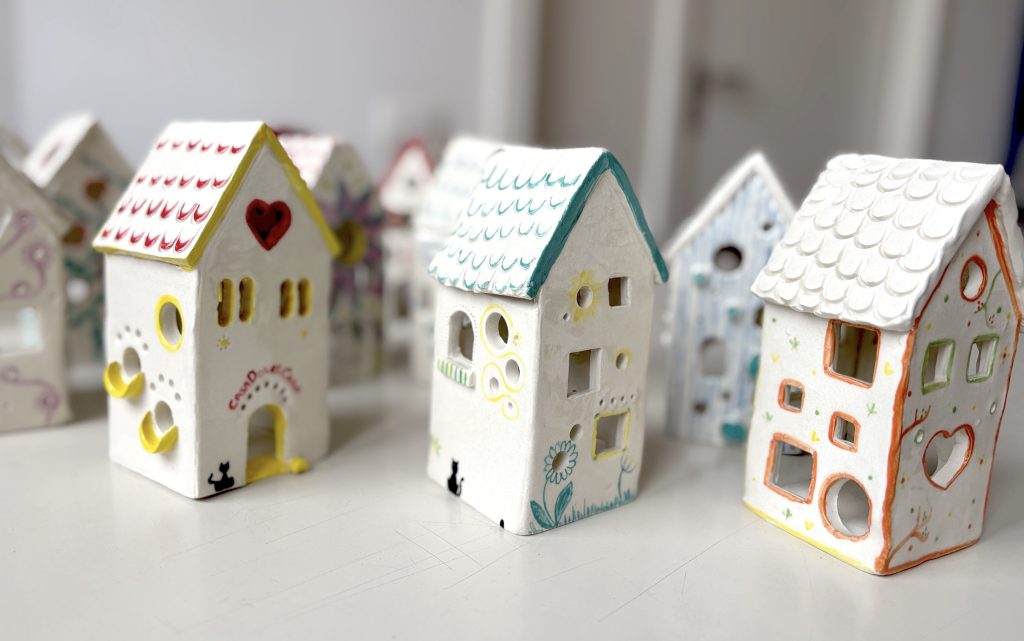
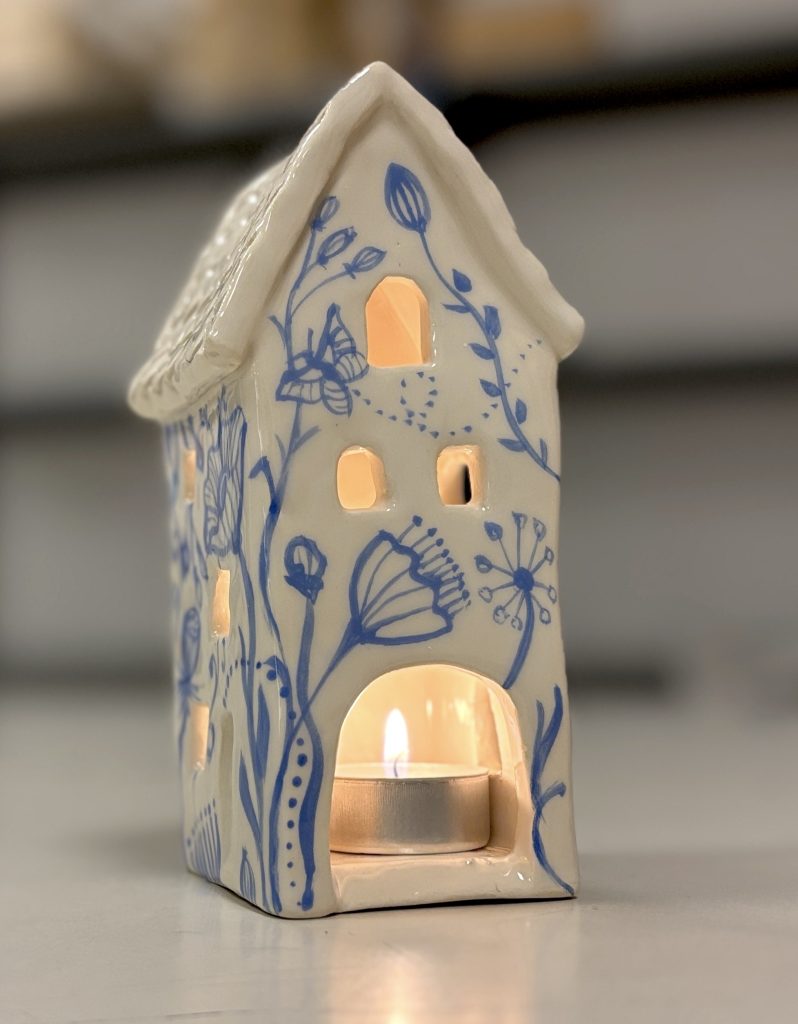
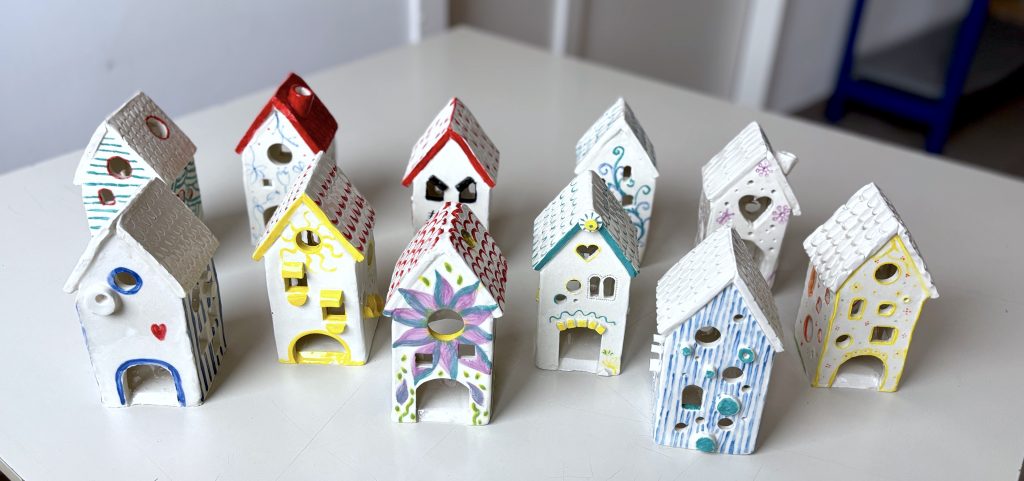
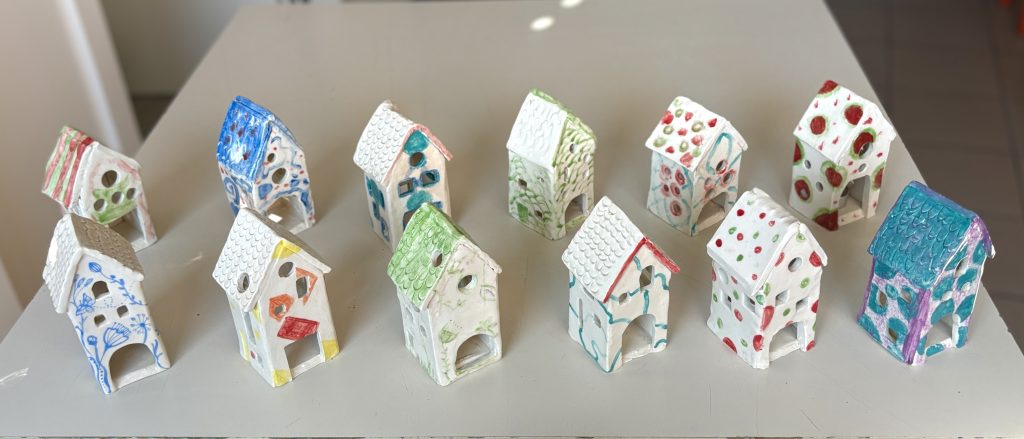
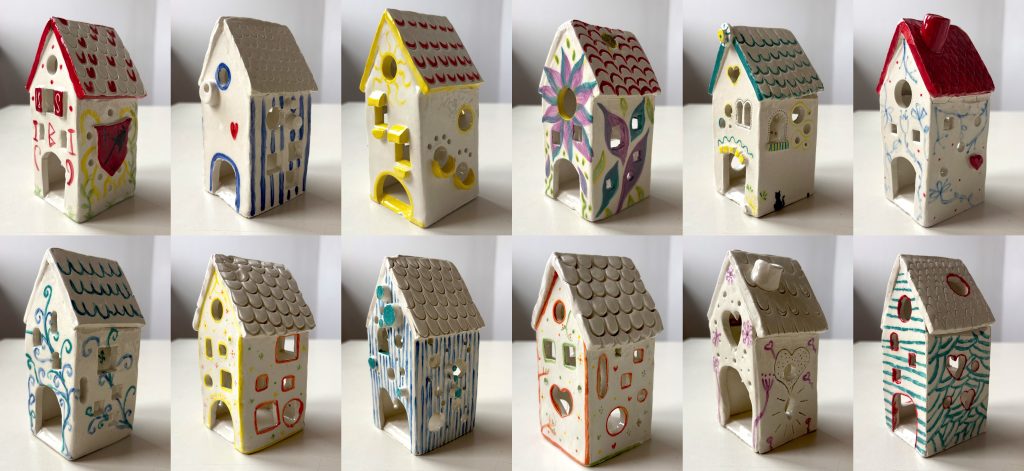
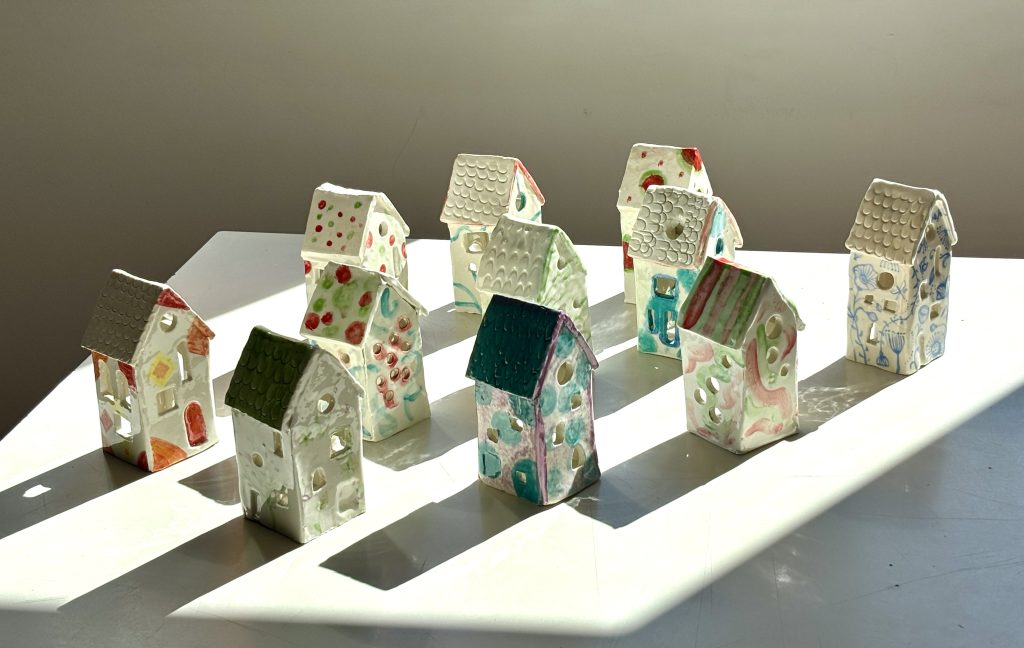
在陶艺工作坊学生的参与下,今年还有小学与中学的老师们共同制作了这些小巧的陶瓷烛台房屋。我们采用泥板成型法,并依据下方提供的图纸裁切各部件后进行组装:
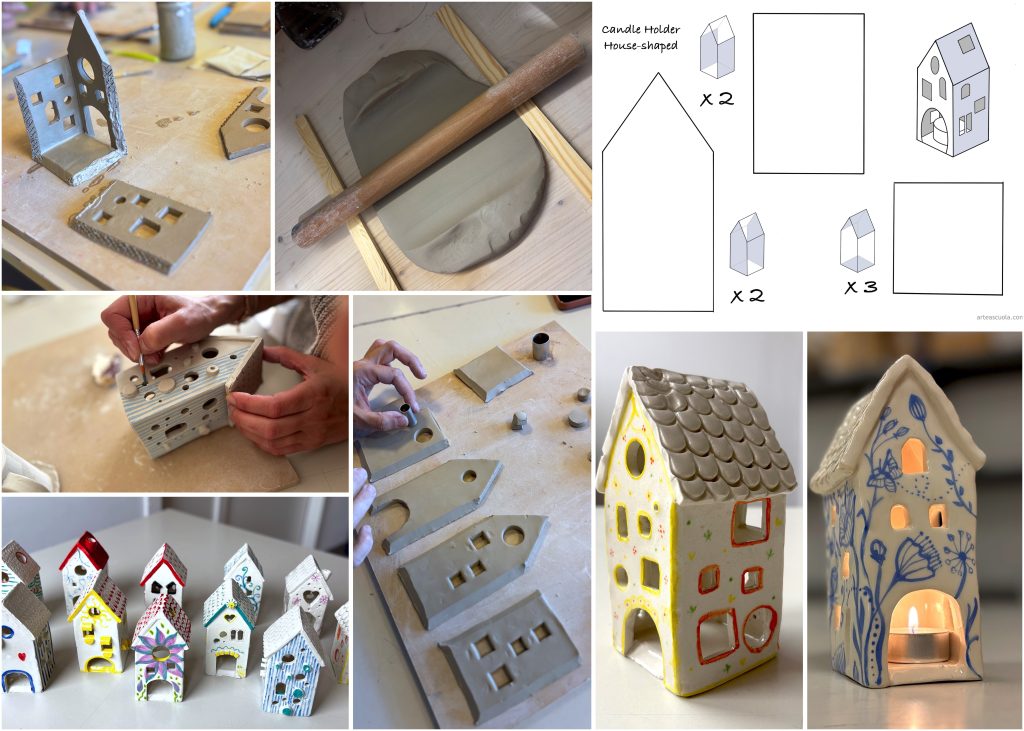
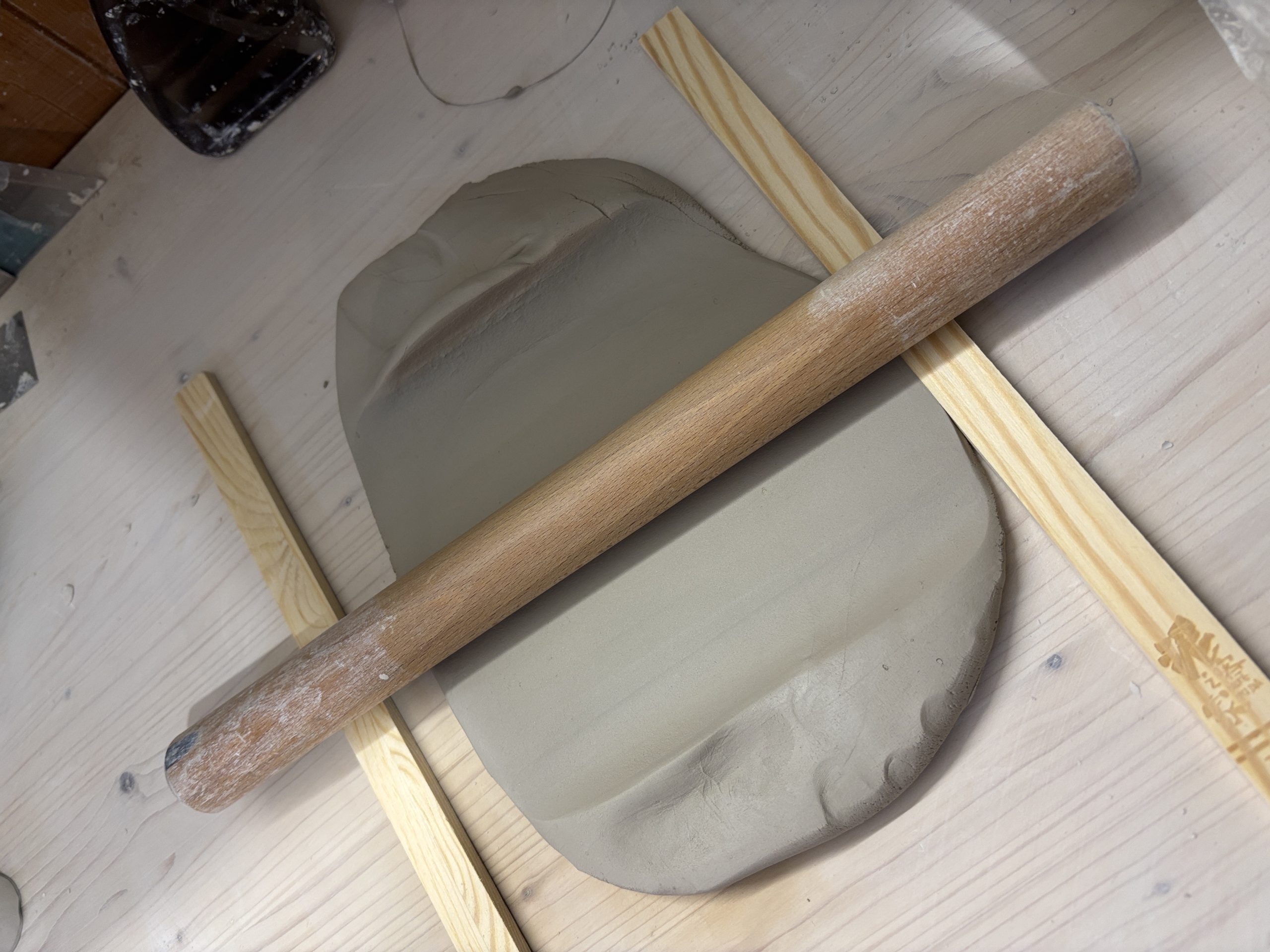
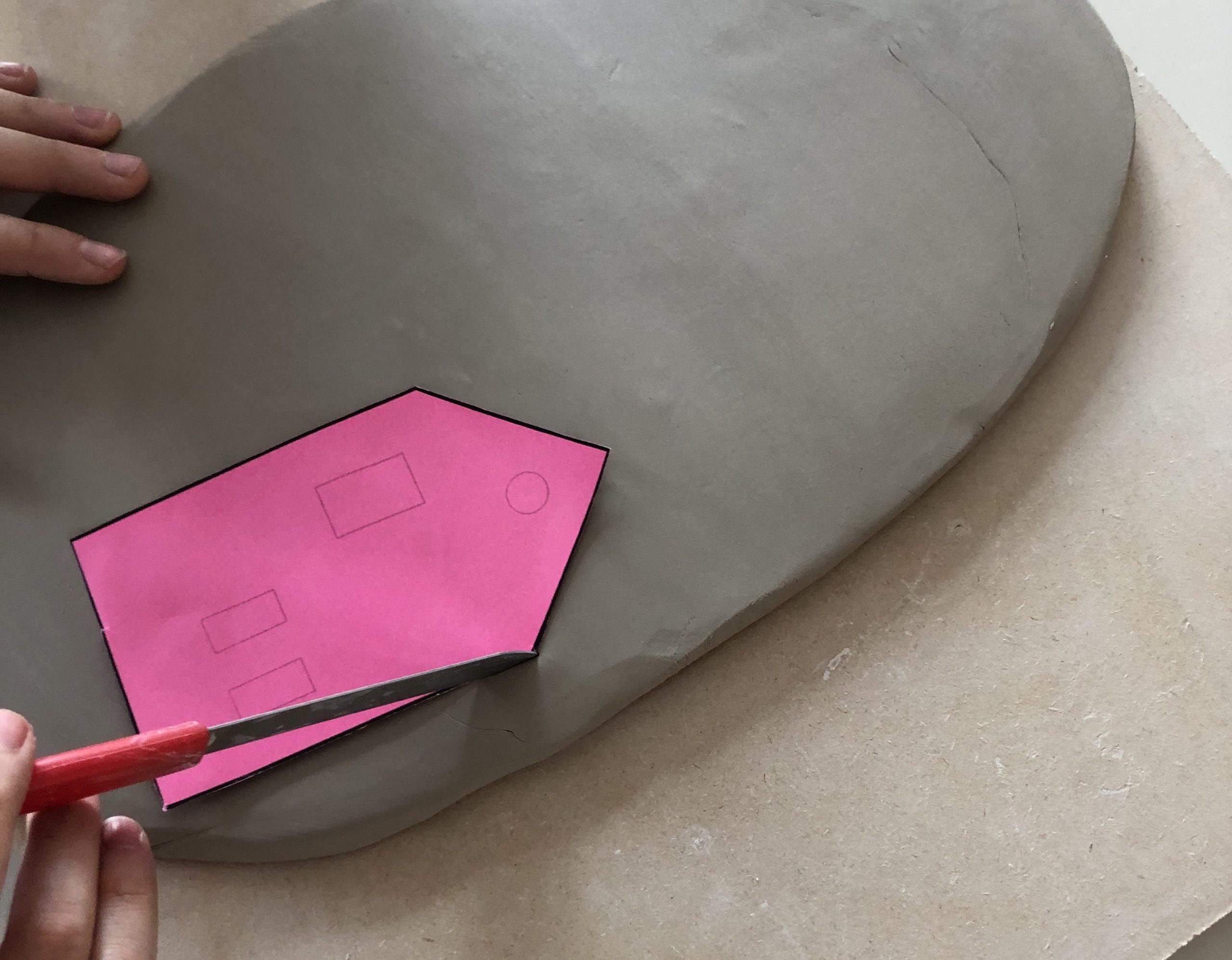
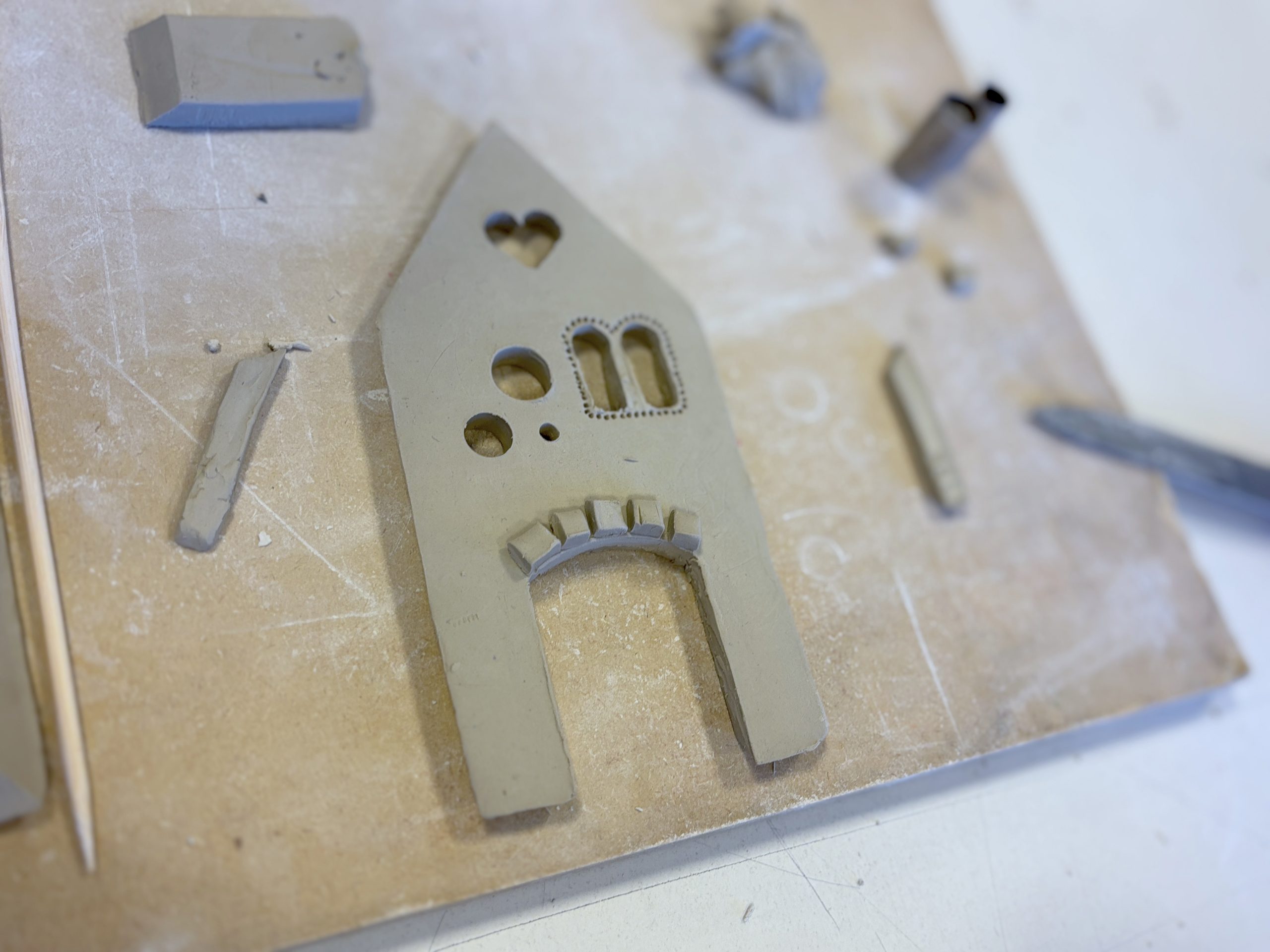
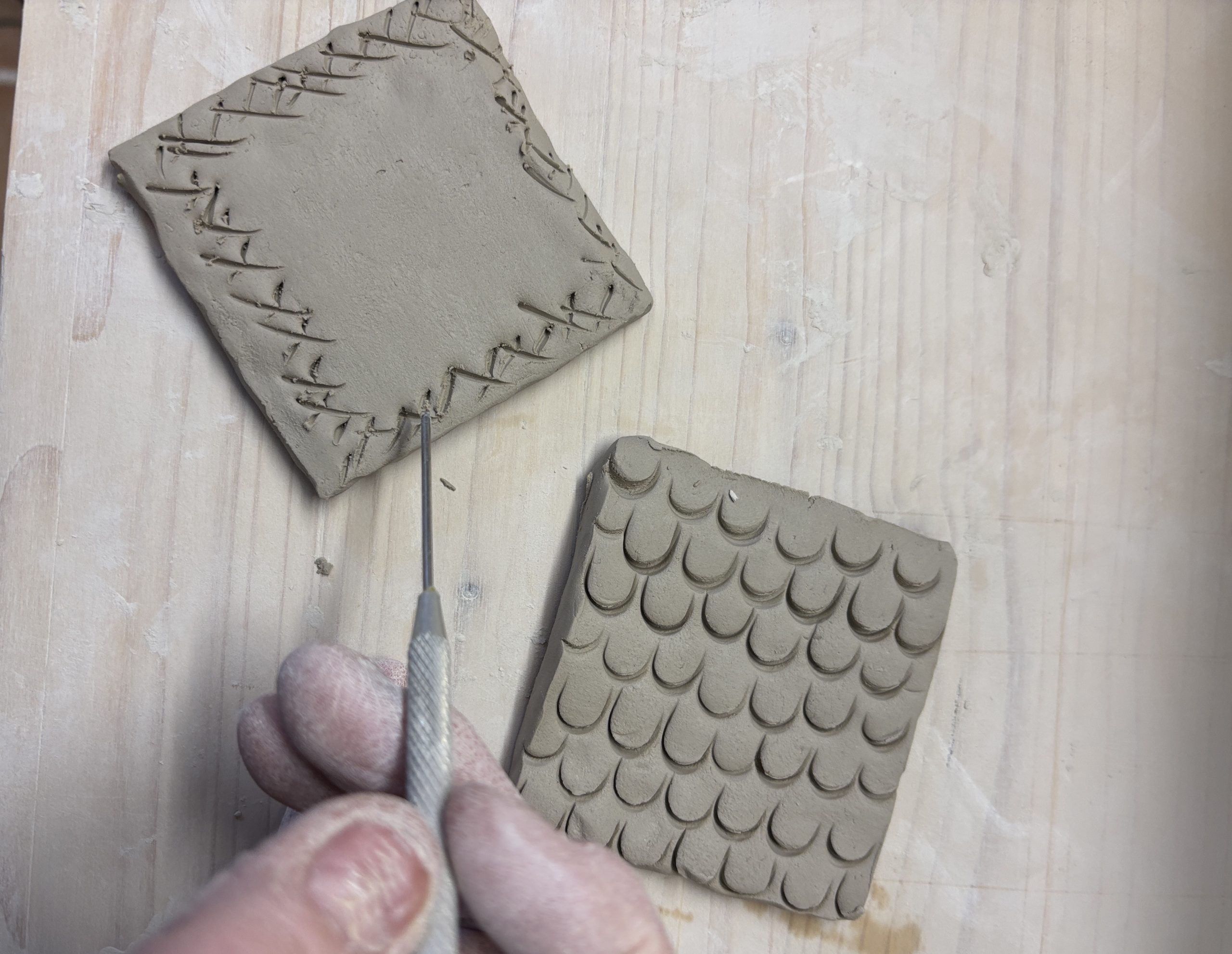
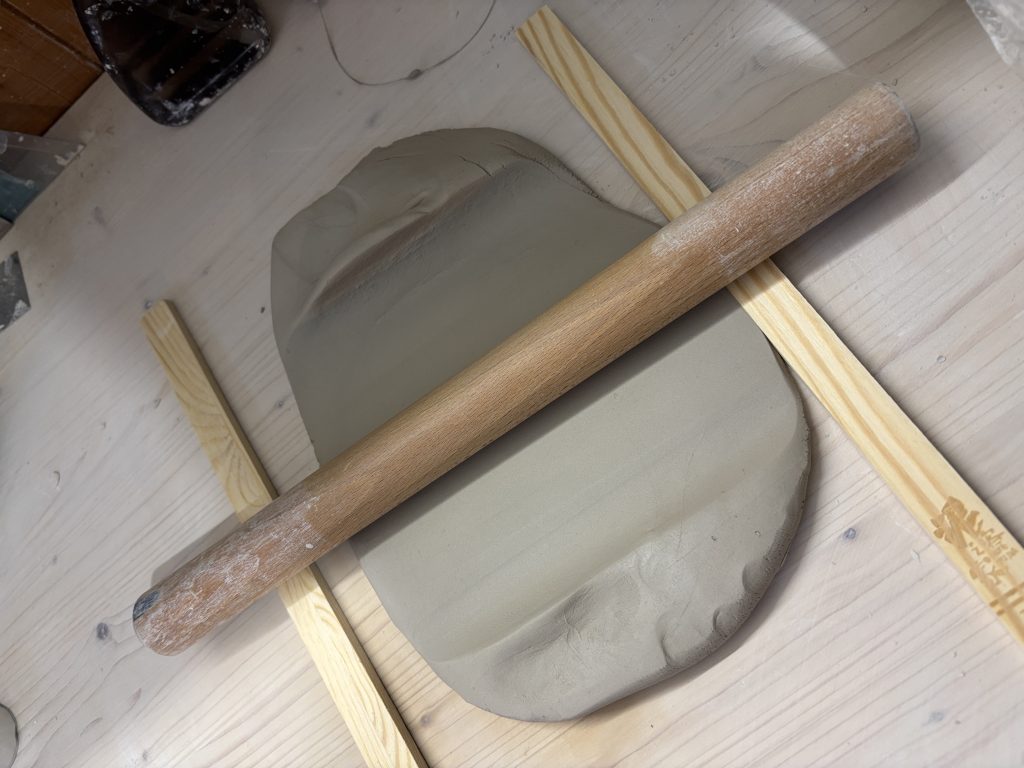
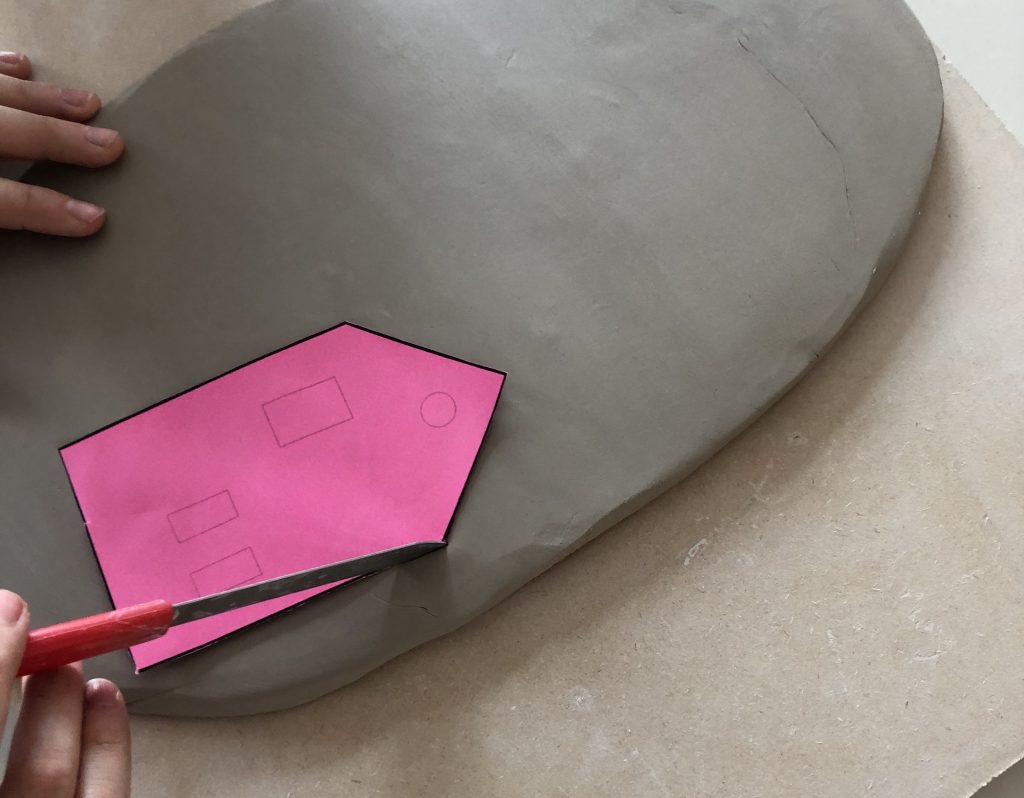
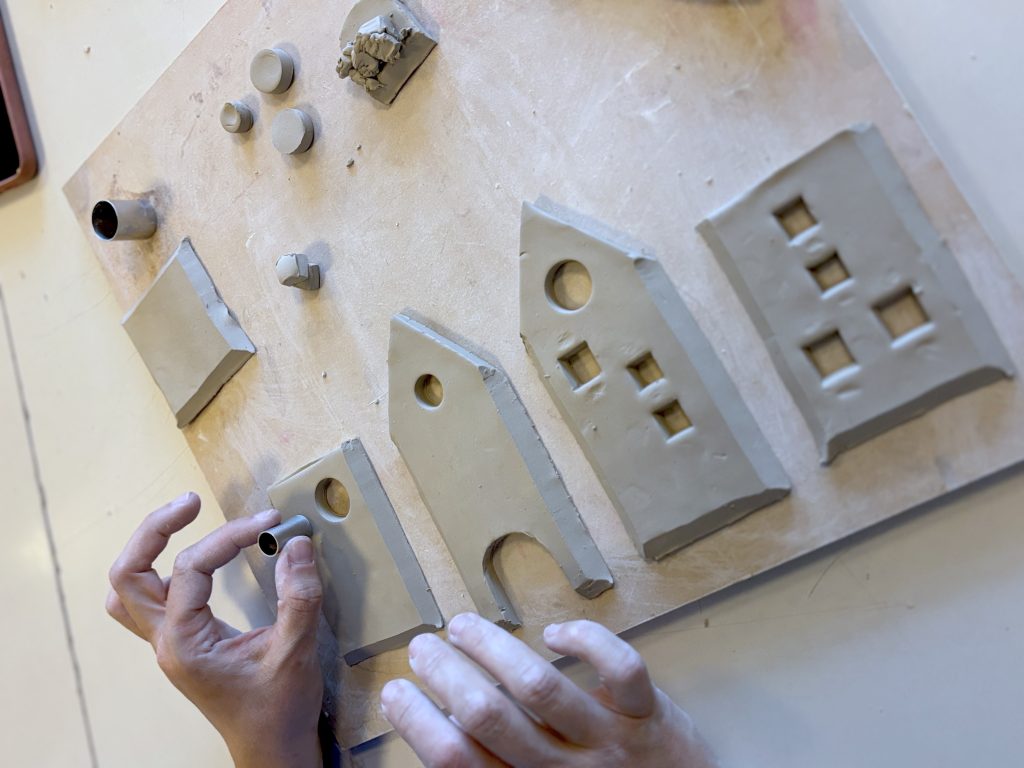
先用0.7厘米厚的木制限位条与擀面杖将泥板擀压至均匀厚度,再使用纸板模板裁切出墙体、底座及屋顶斜面。
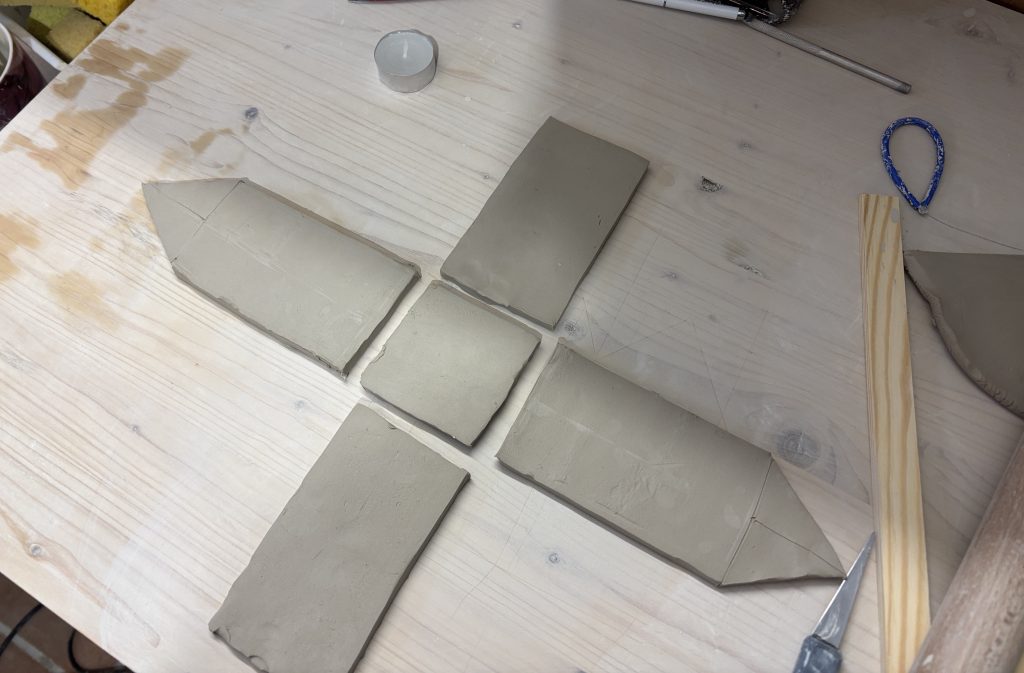
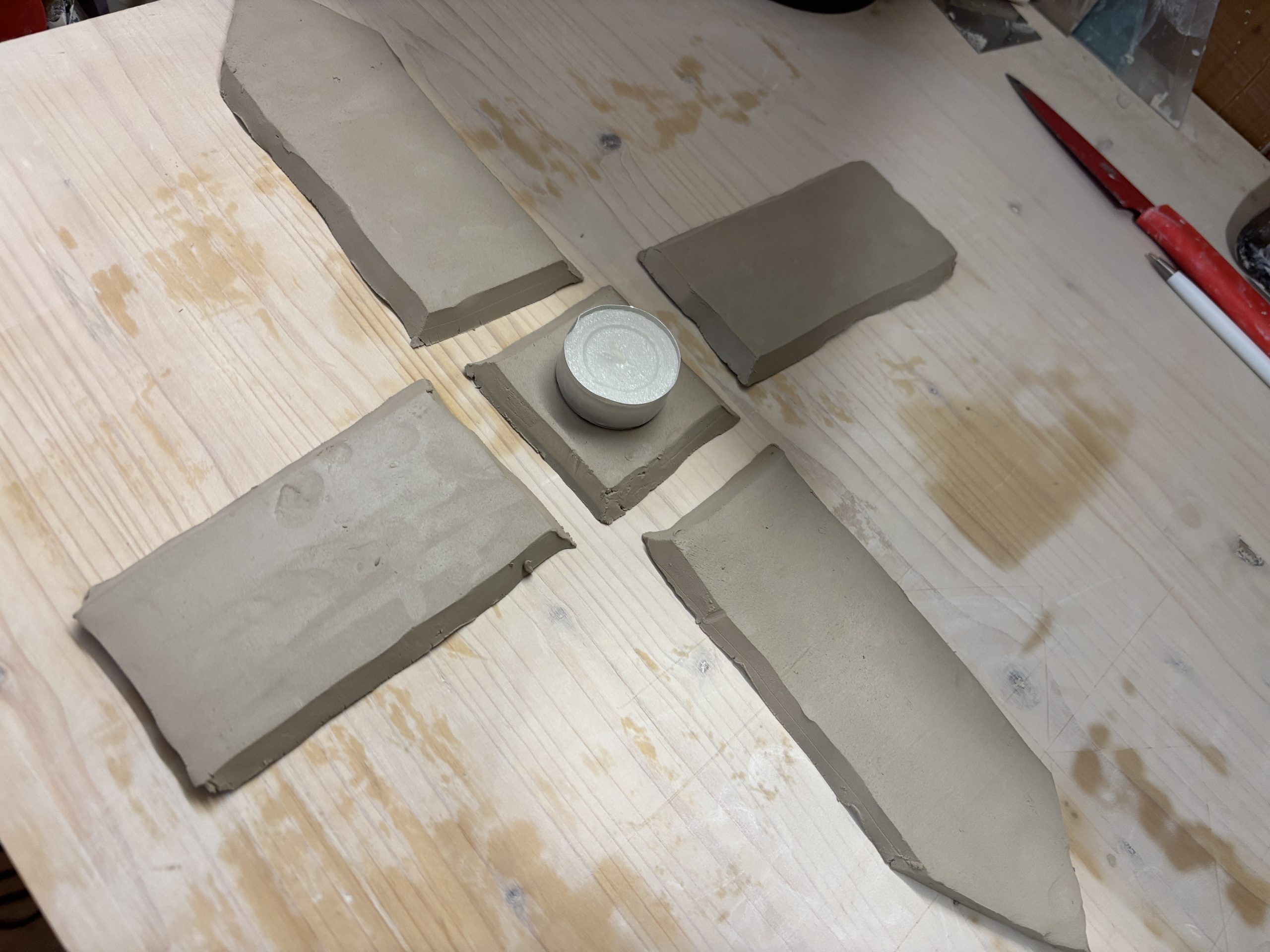
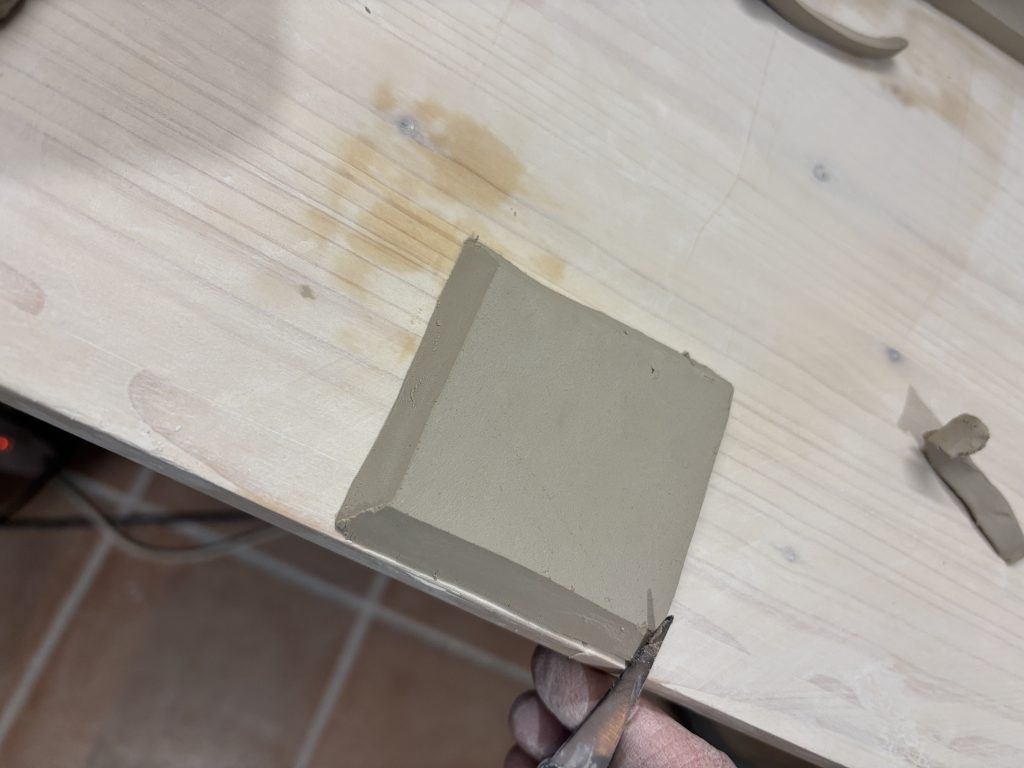
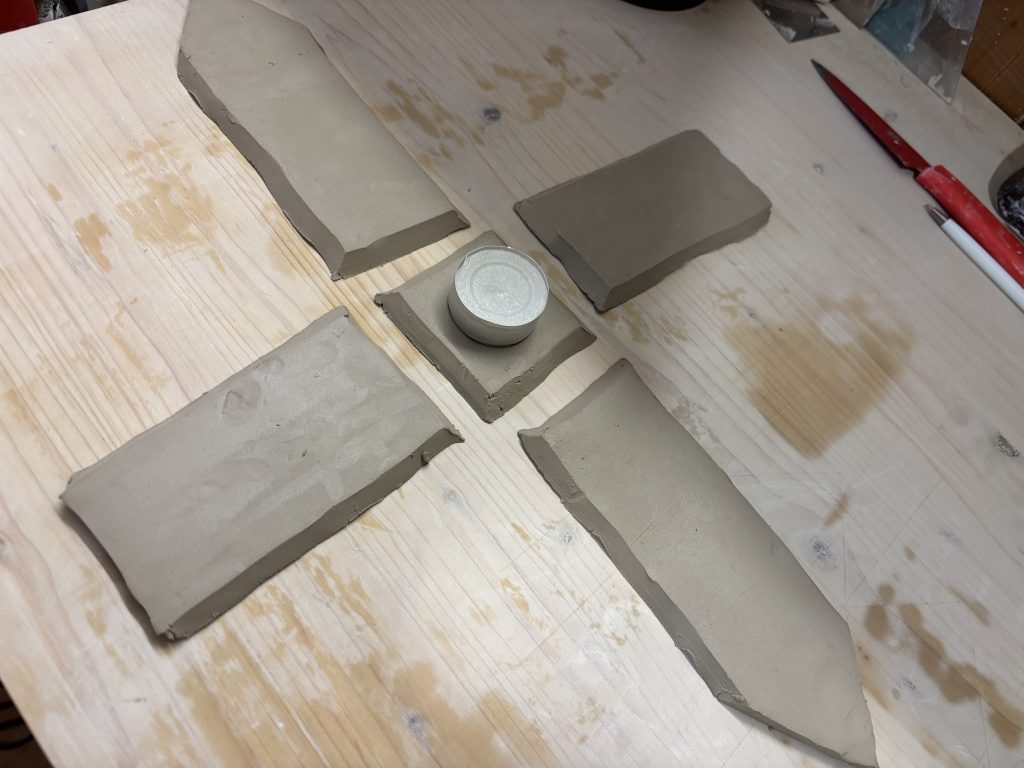
需相互拼接的墙体边缘,须用小刀以45°角斜切——此举便于拼装并使接缝更整齐。操作时务必注意:仅需对即将相接的侧边进行斜切;屋顶斜面以及构成屋顶的两个正方形则无需斜切。
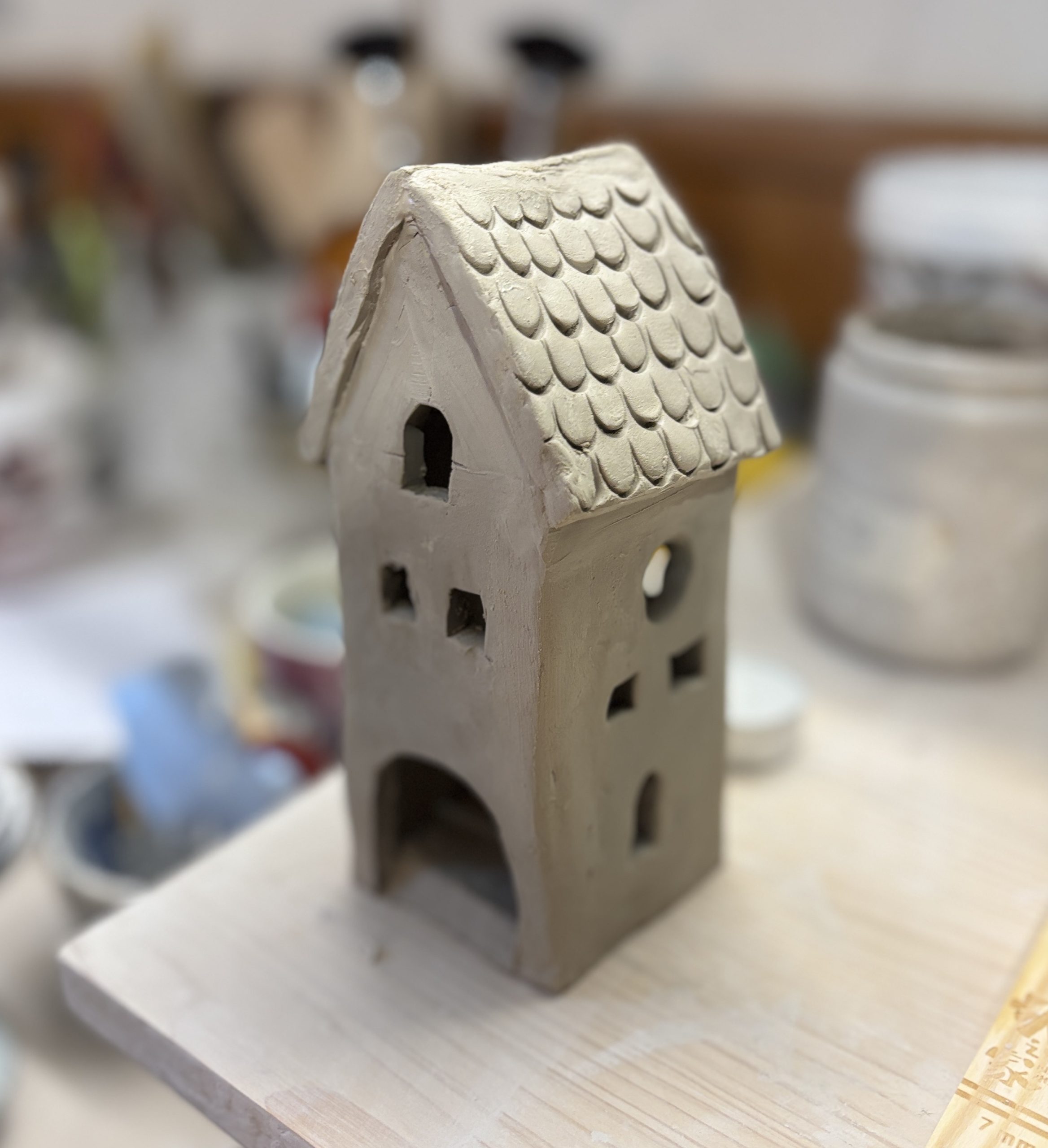
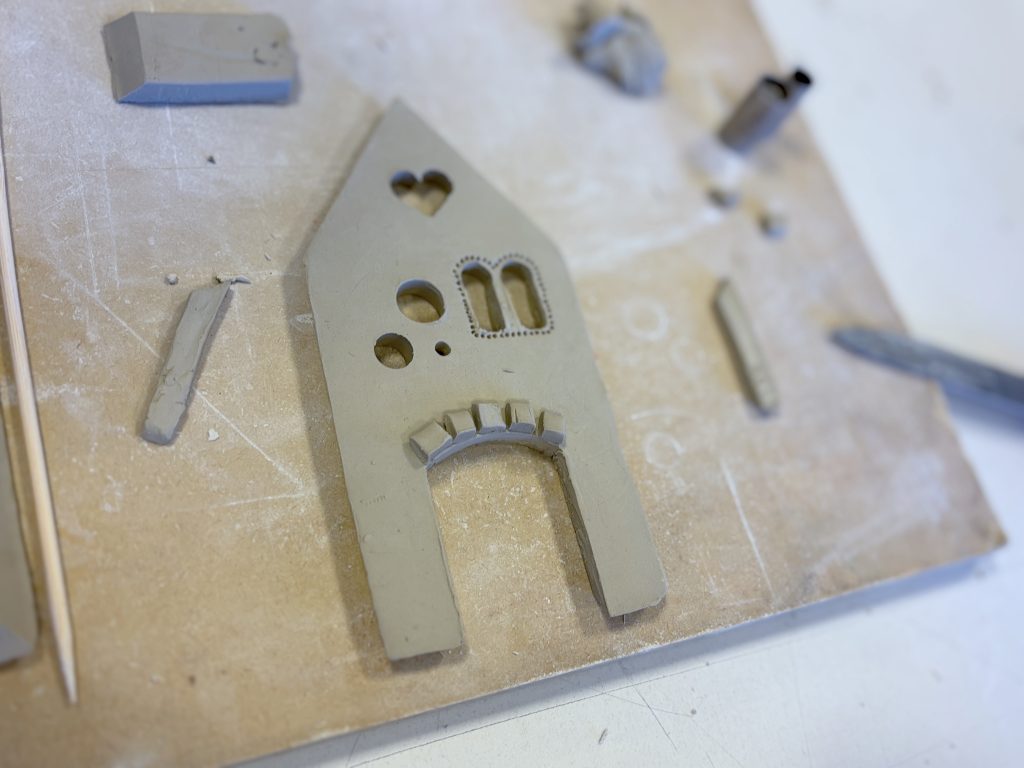
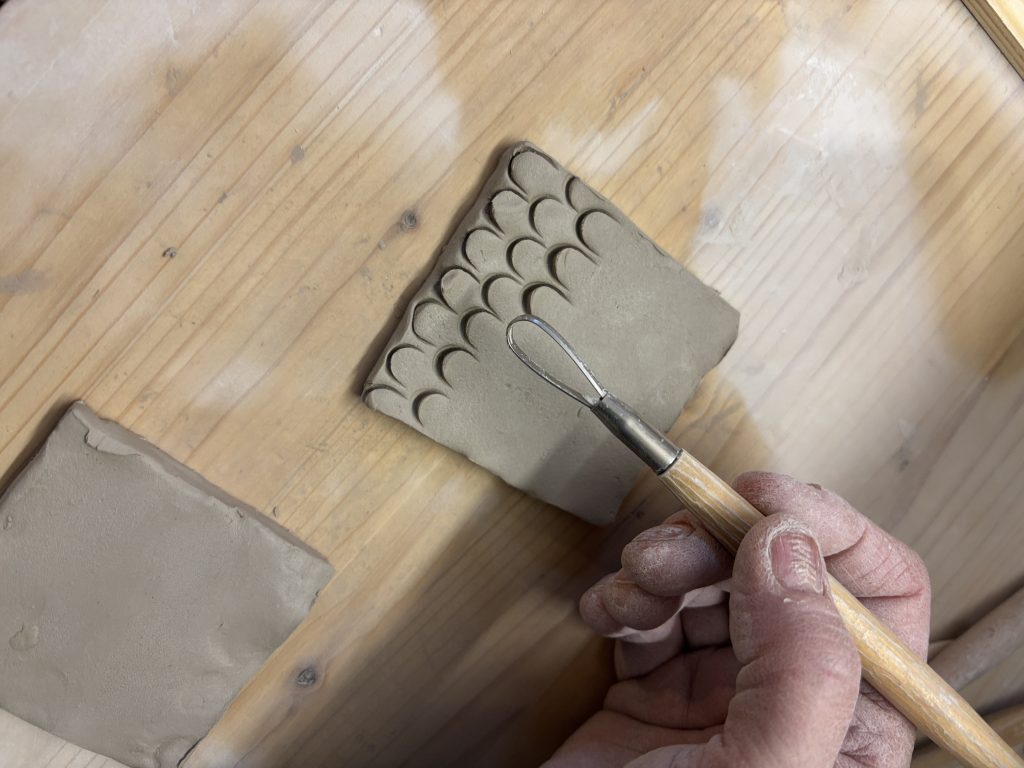
完成45°斜切后,即可在墙体上开凿各种形状与尺寸的门窗。此外,还可通过添加装饰元素、肌理或刻划纹样等方式美化墙体表面。
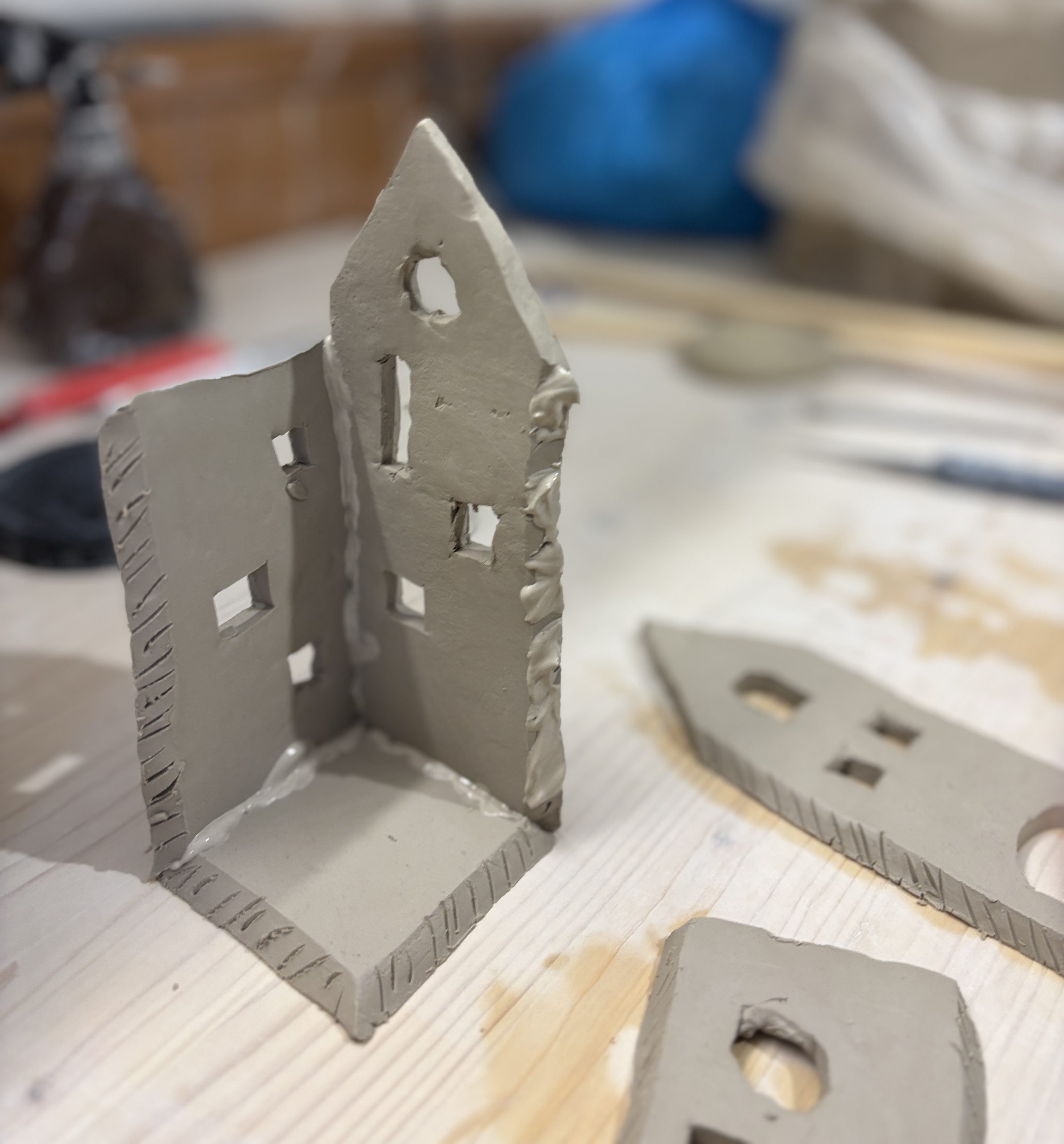
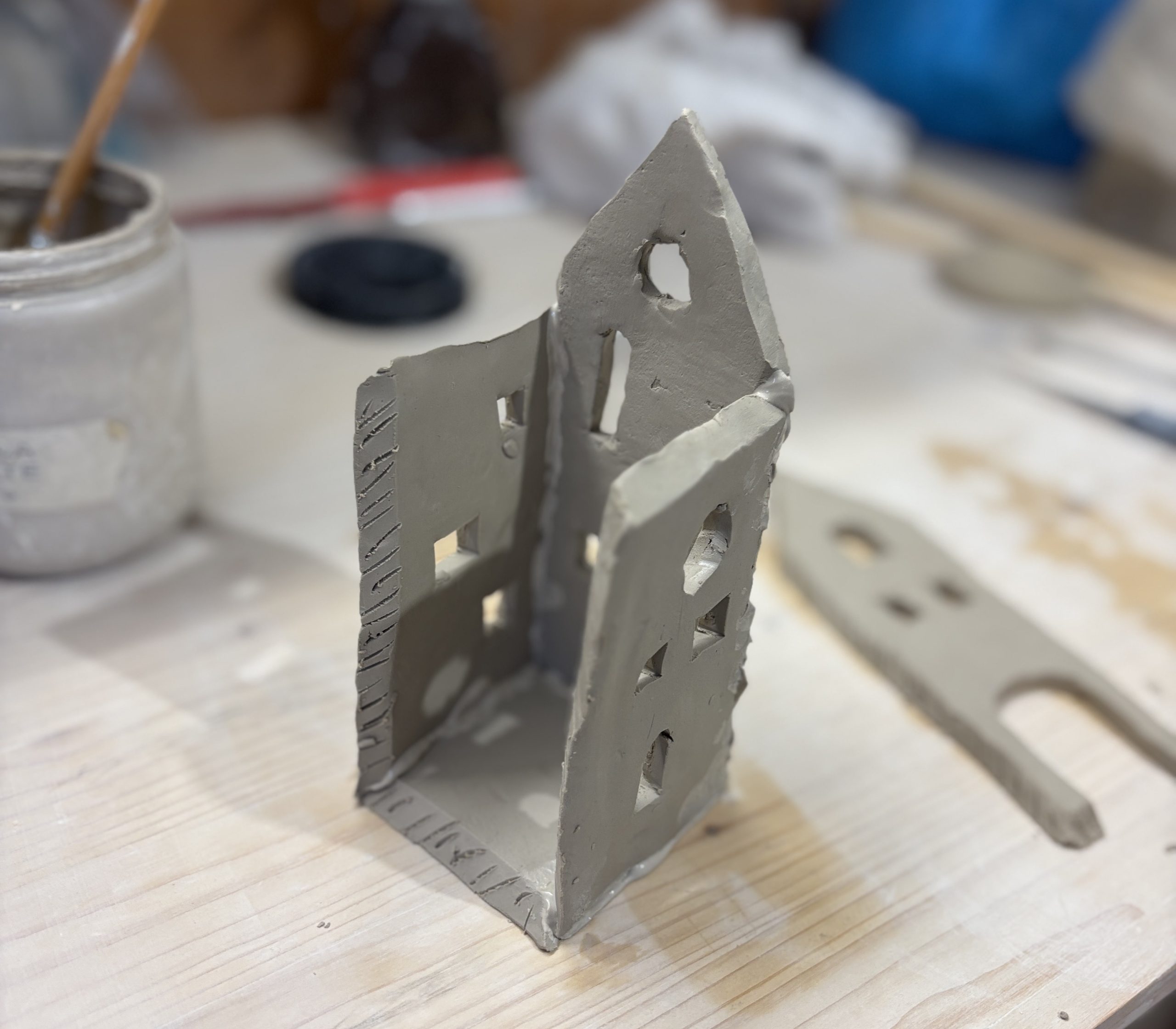
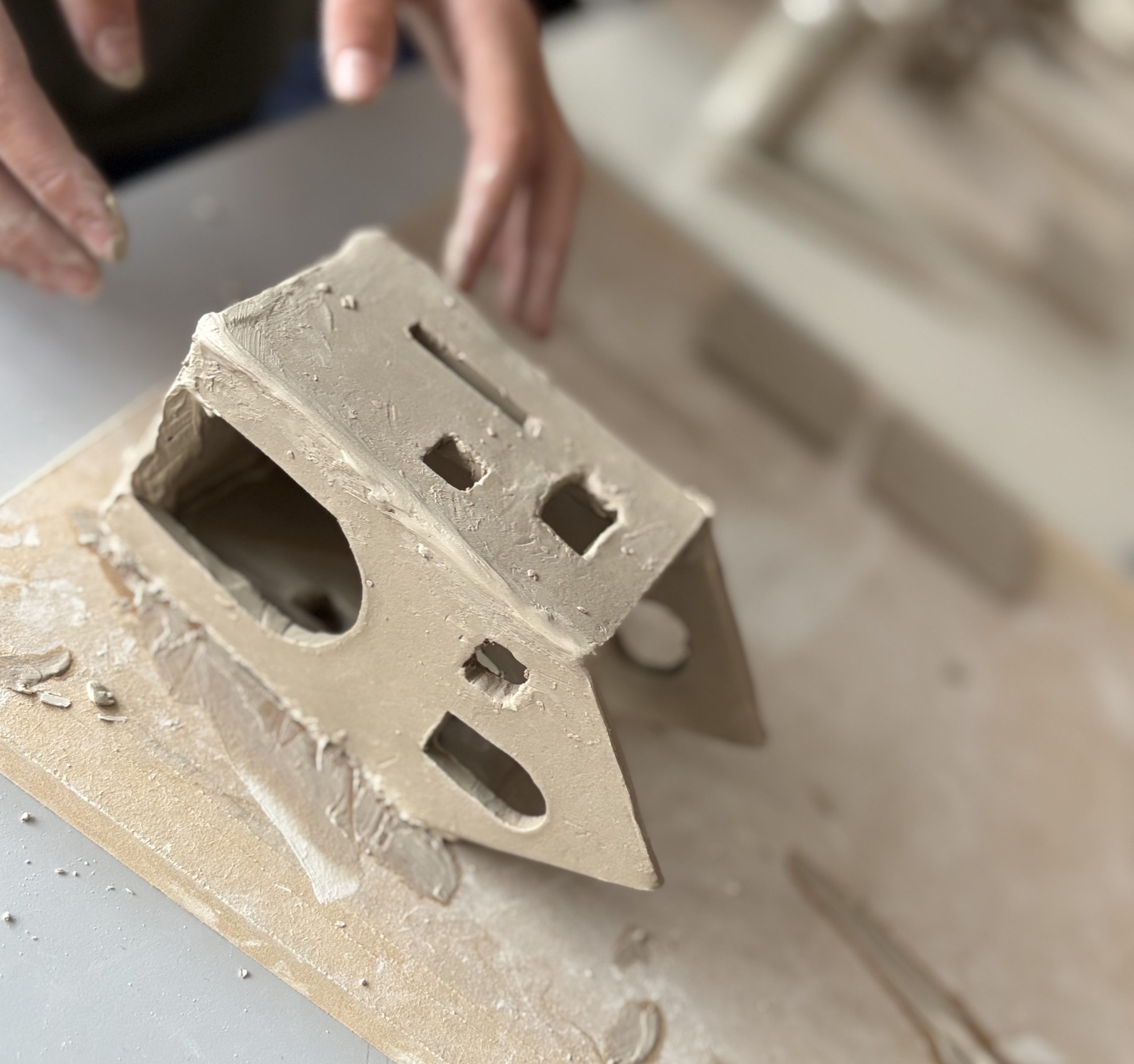
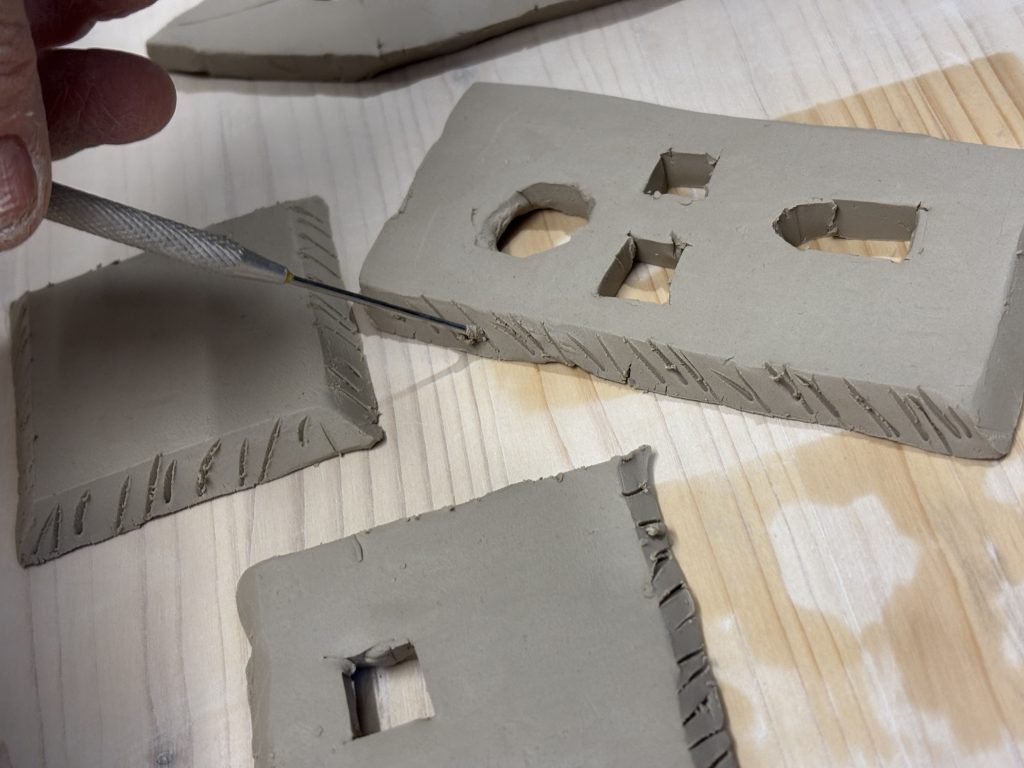
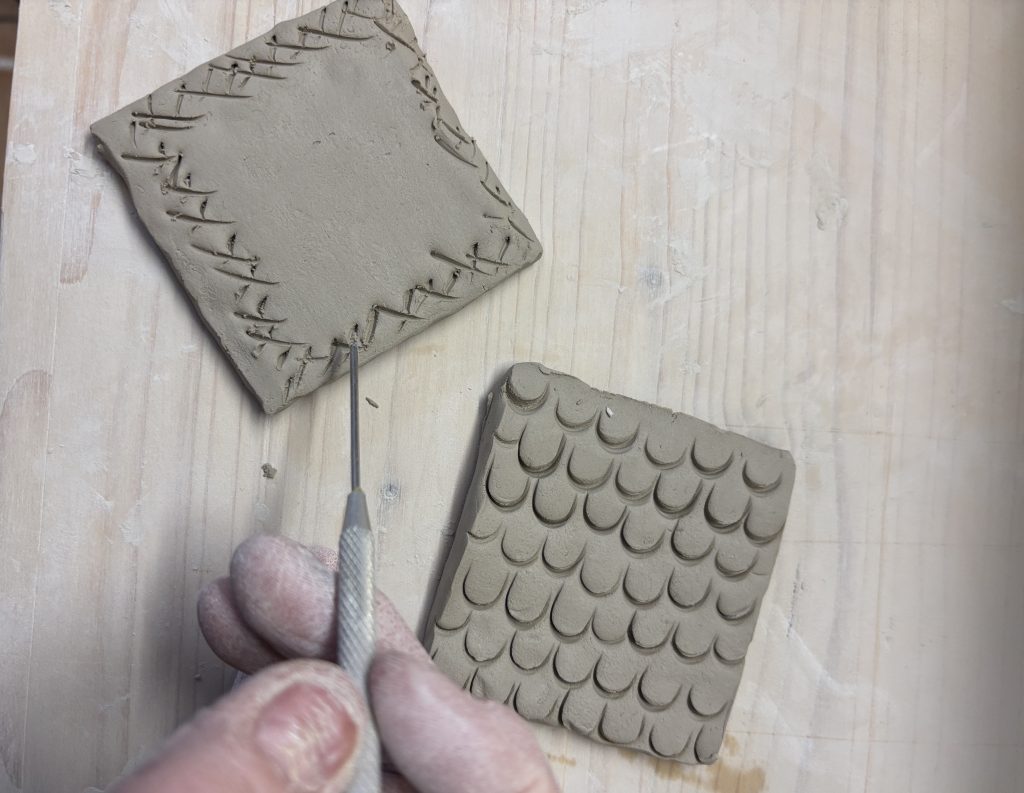
组装前,请务必用刮刀在所有待粘接的表面进行“刮毛”(knurling),并充分涂抹泥浆(slip)——即作为黏合剂的液态陶土。
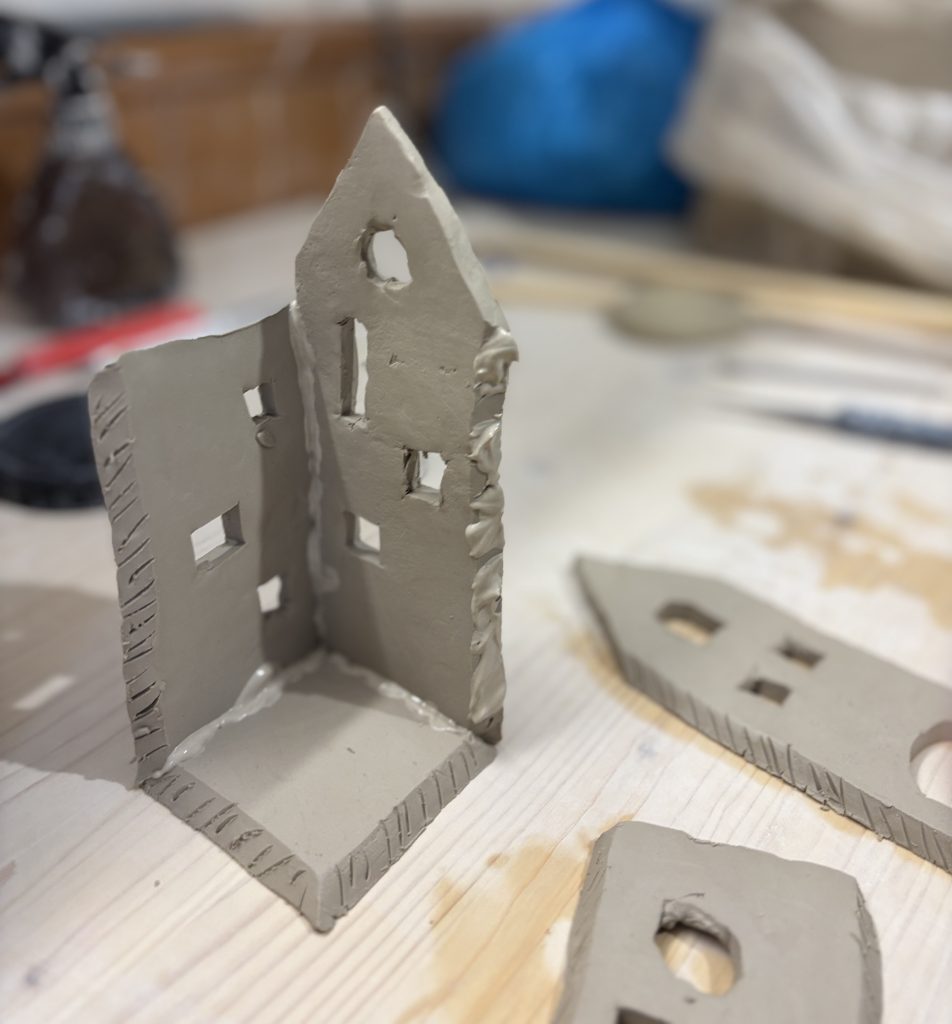
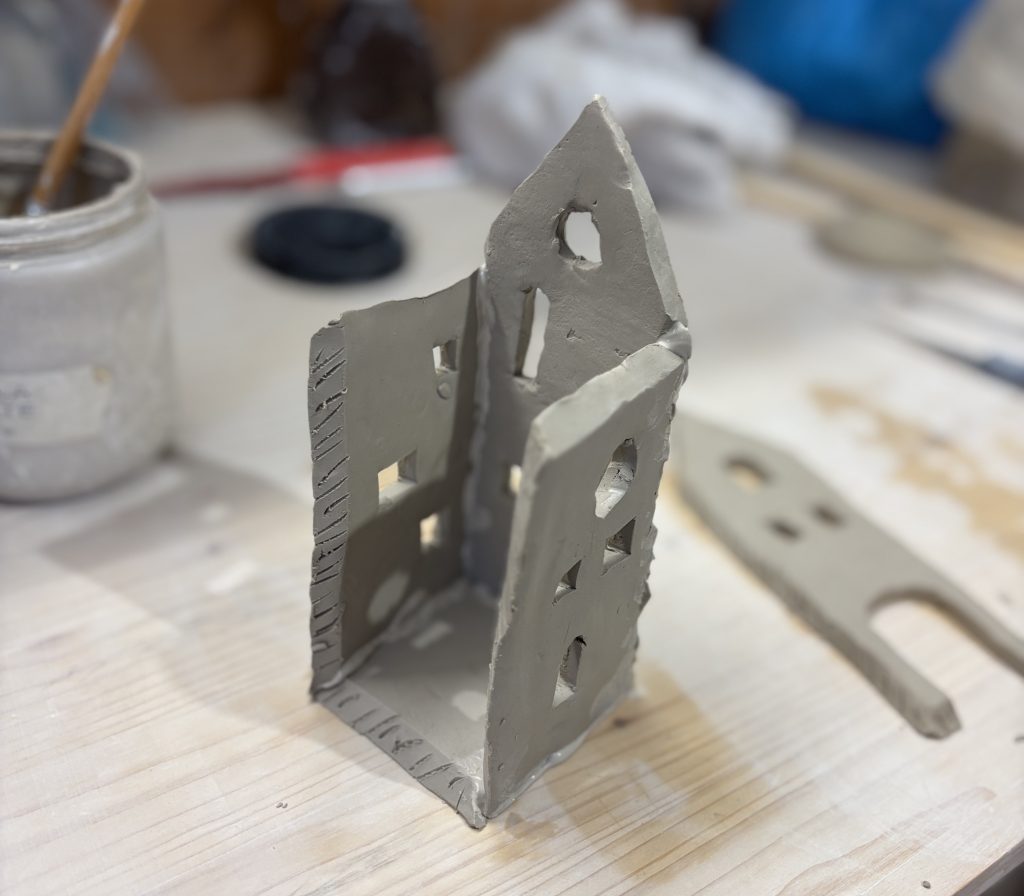
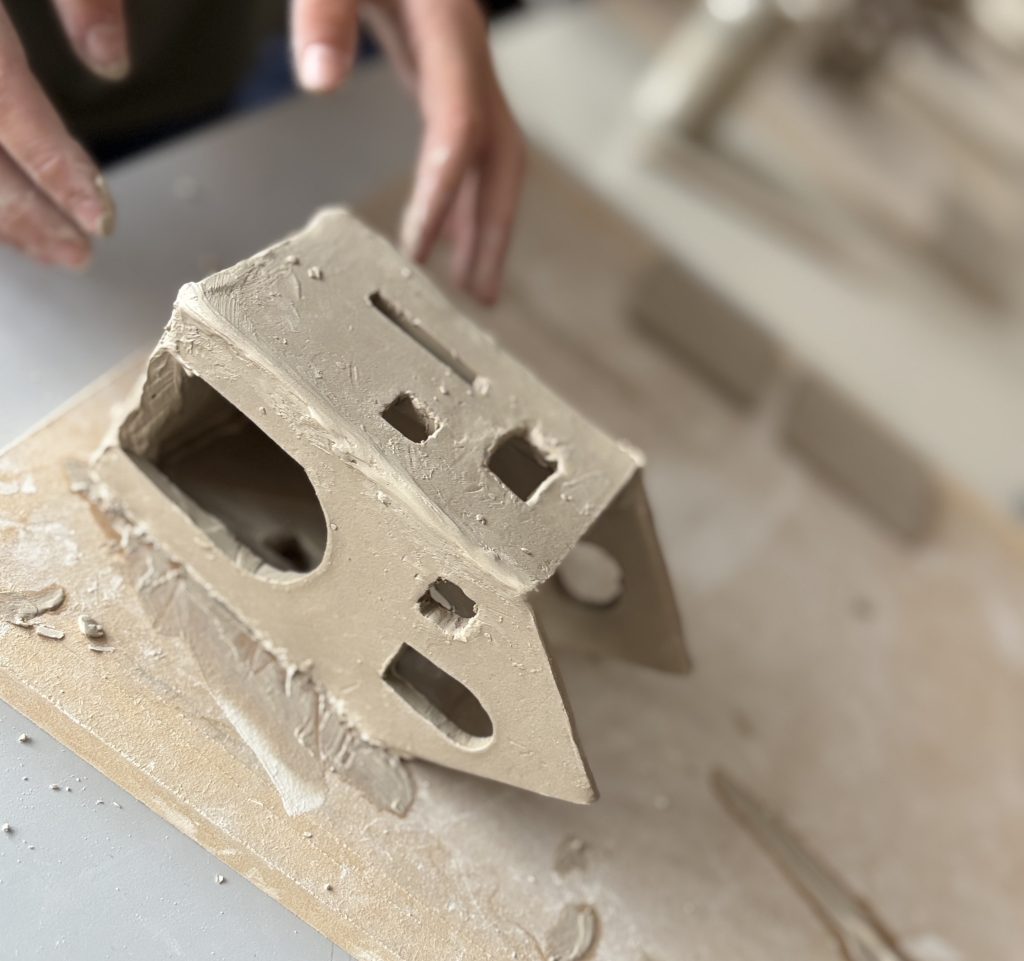
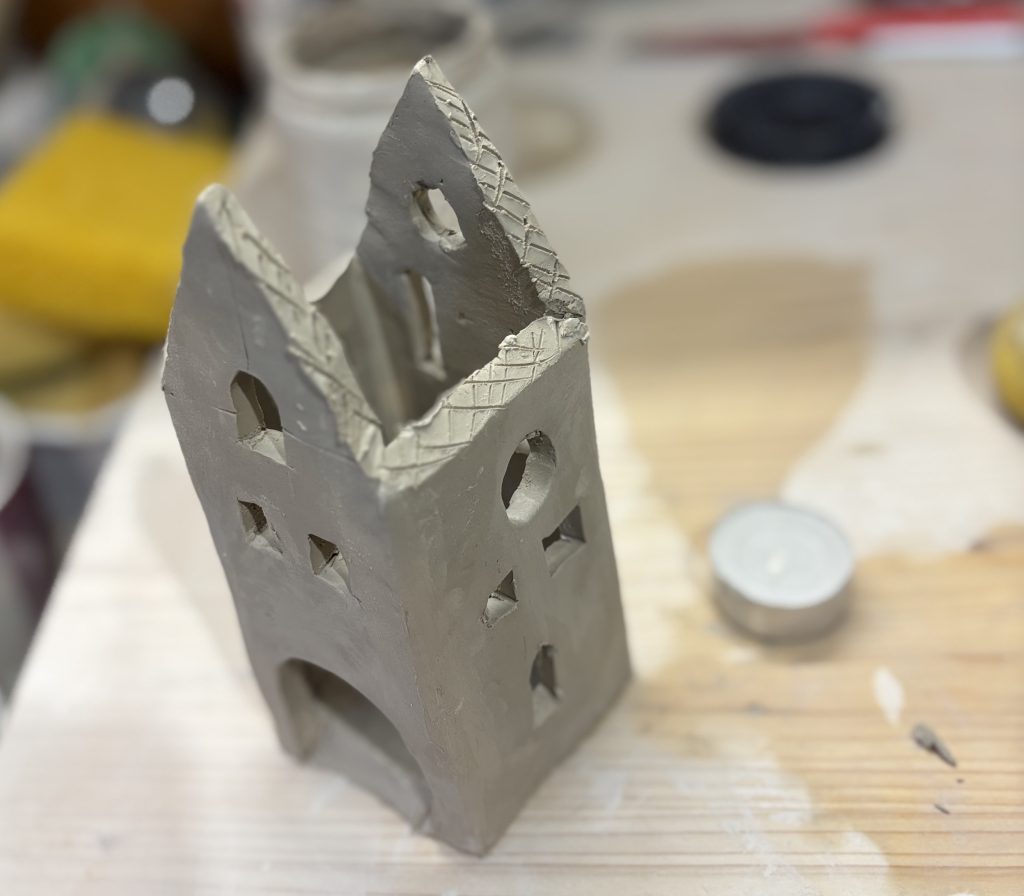
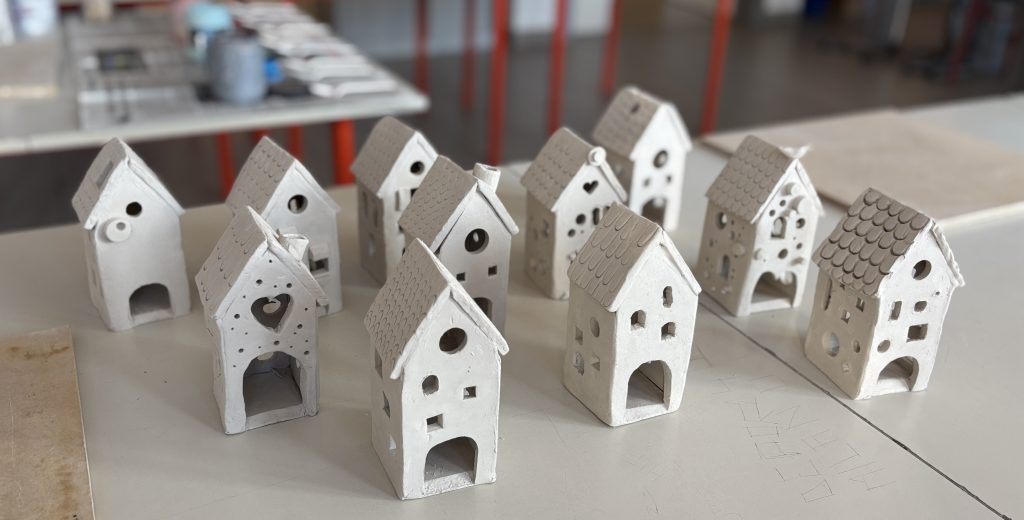
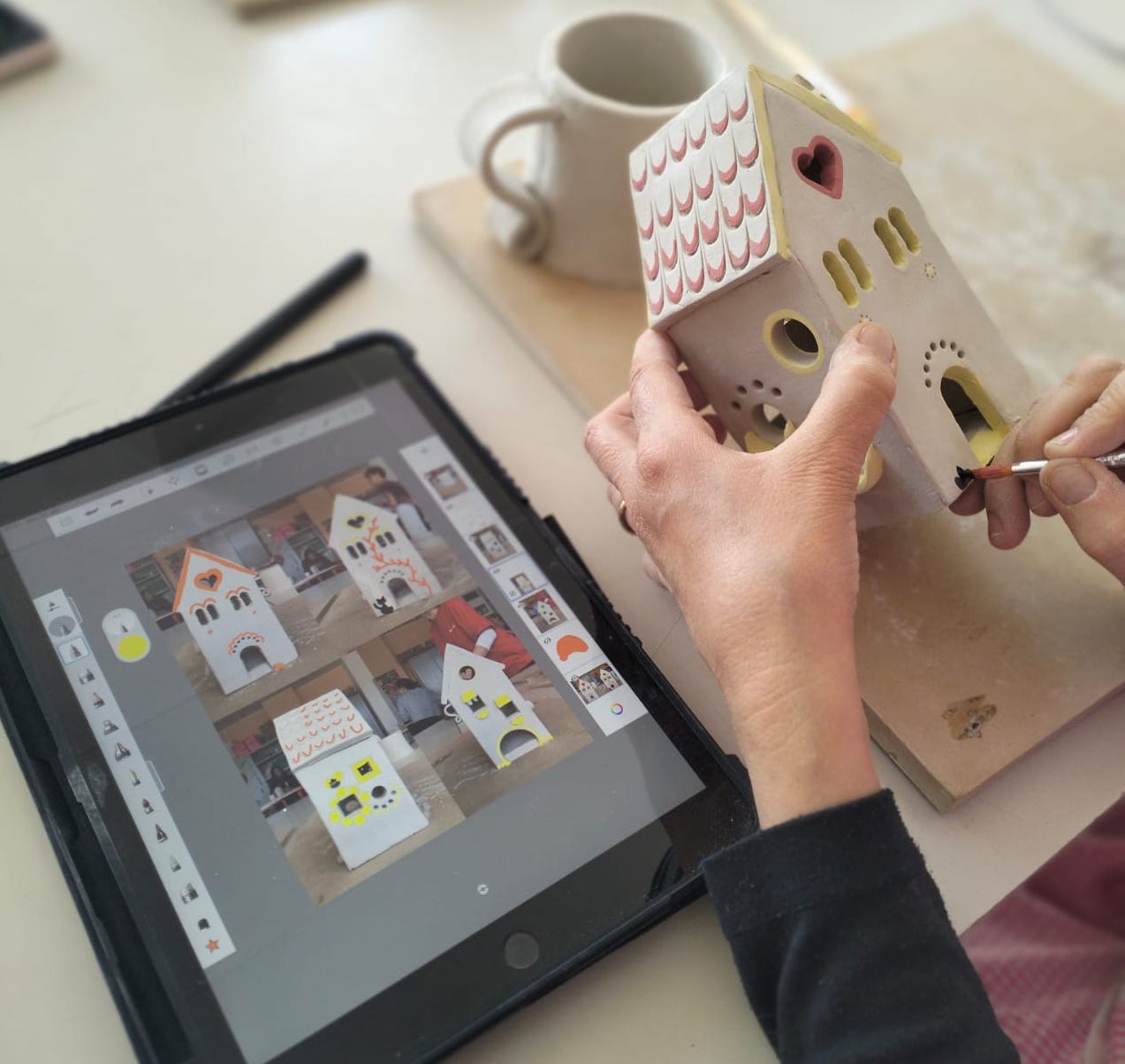
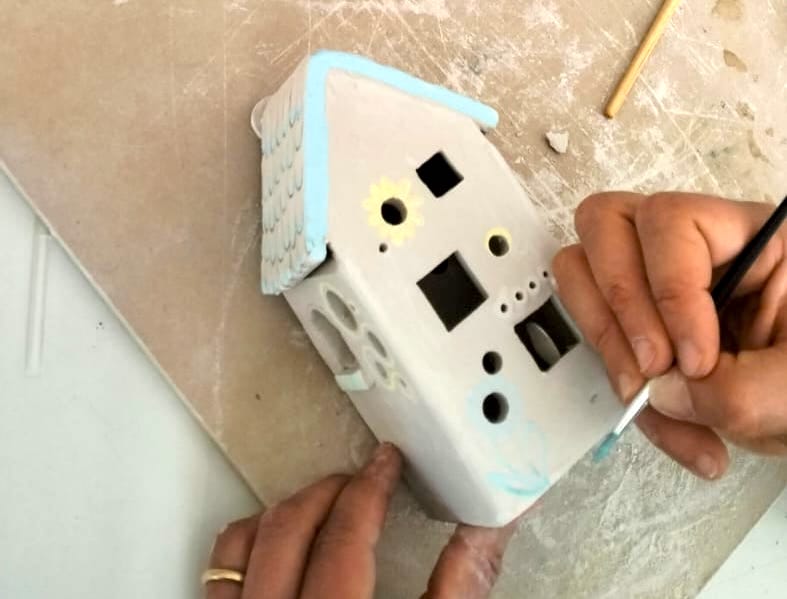
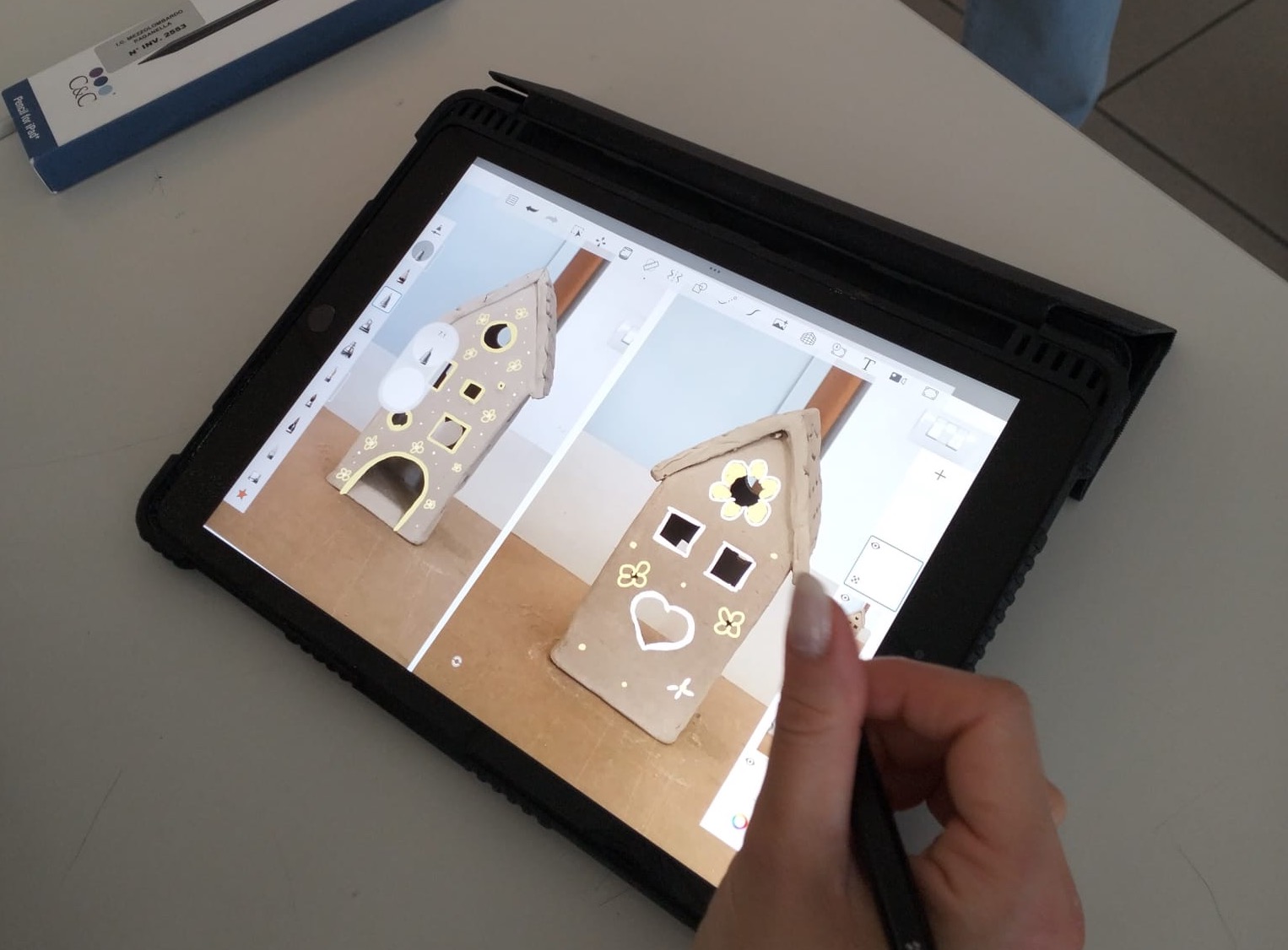
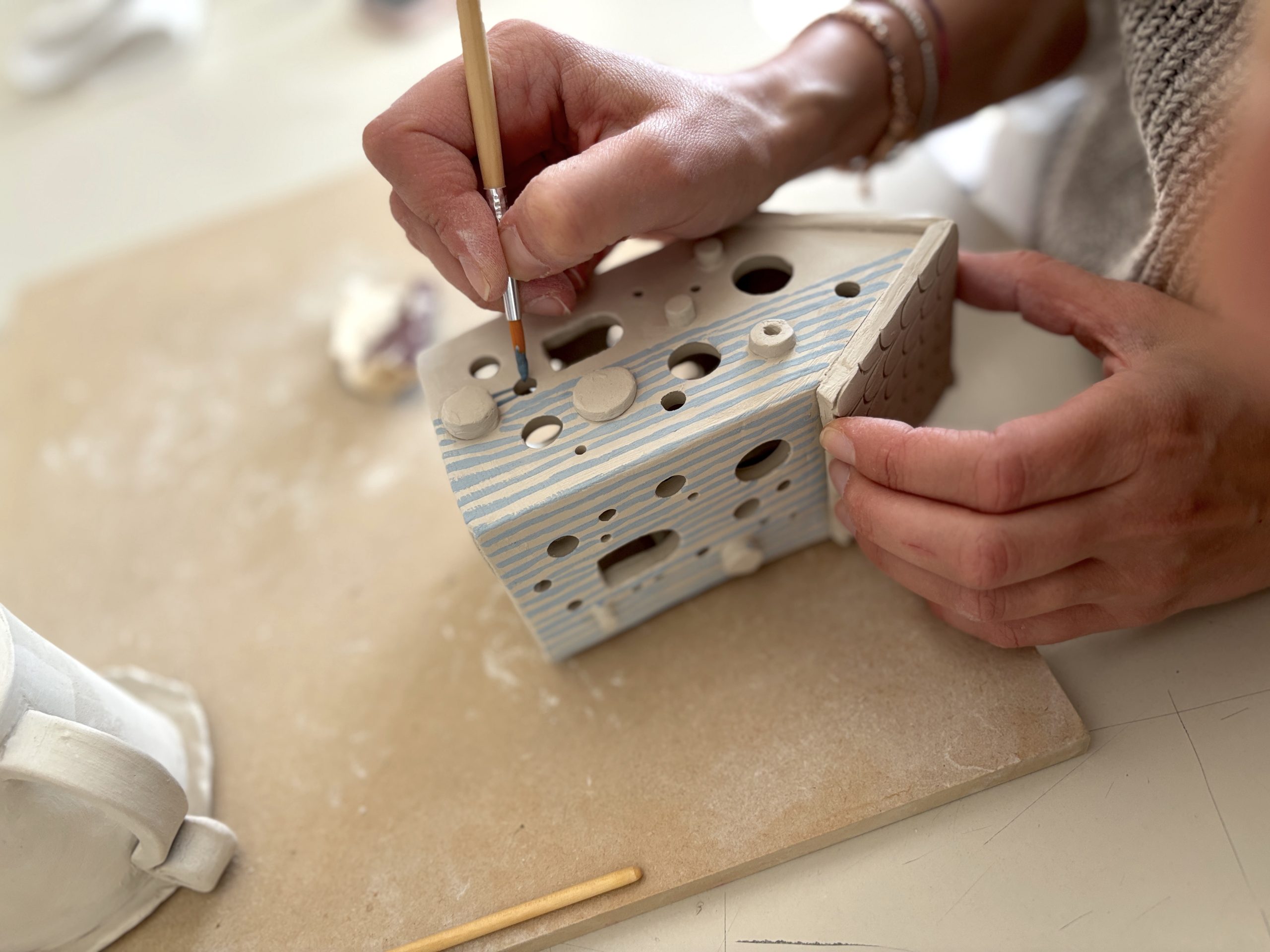
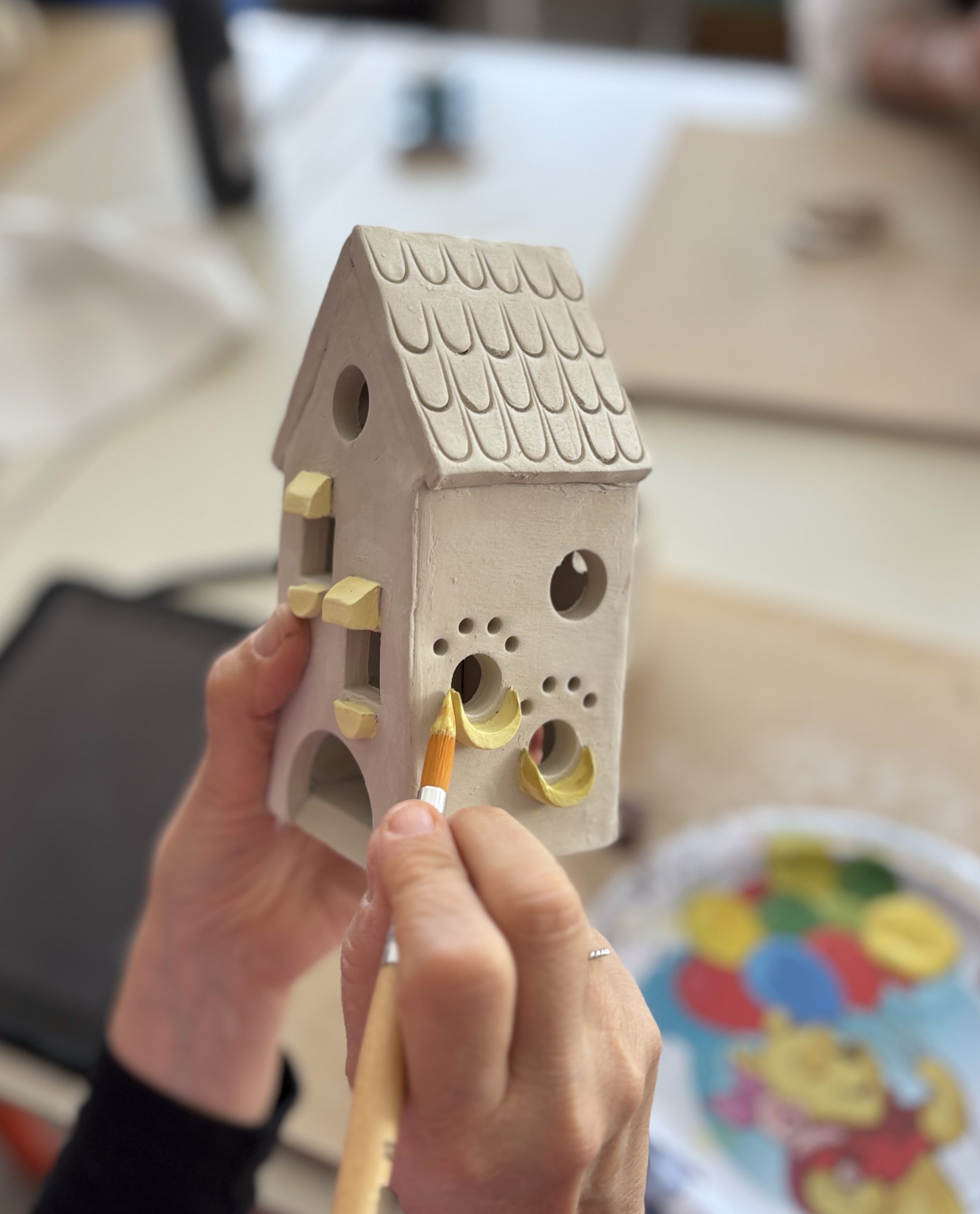
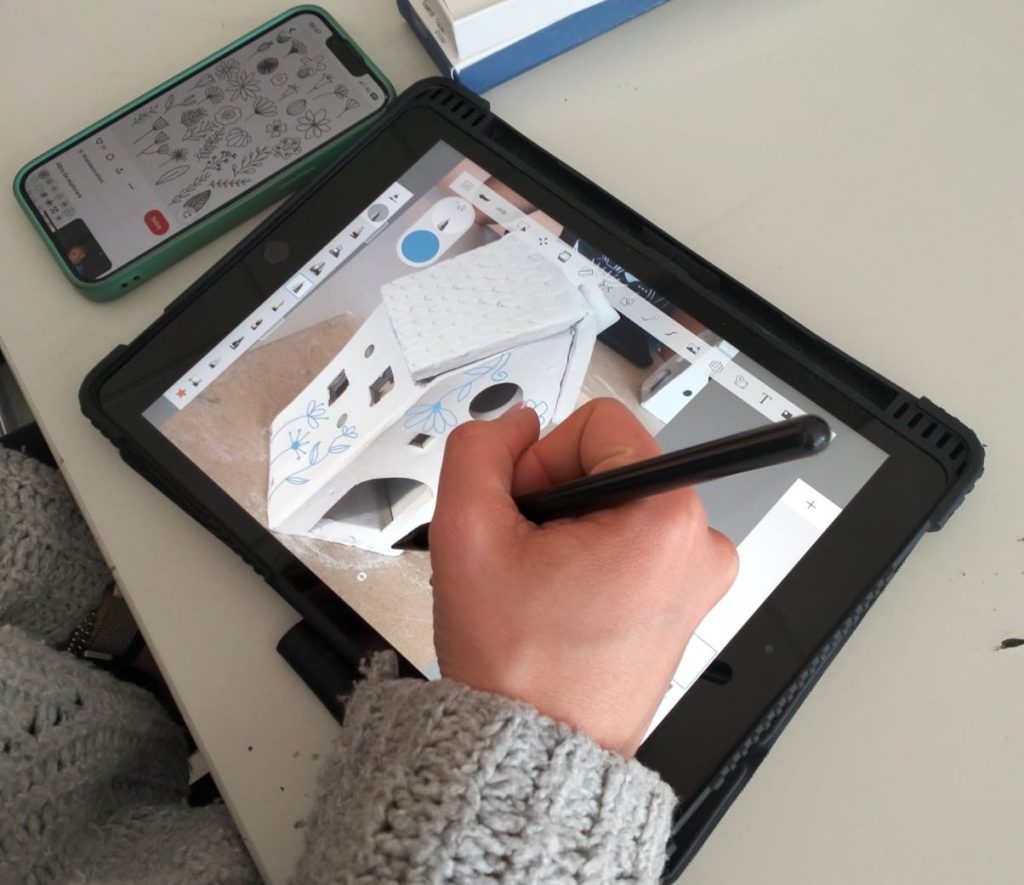
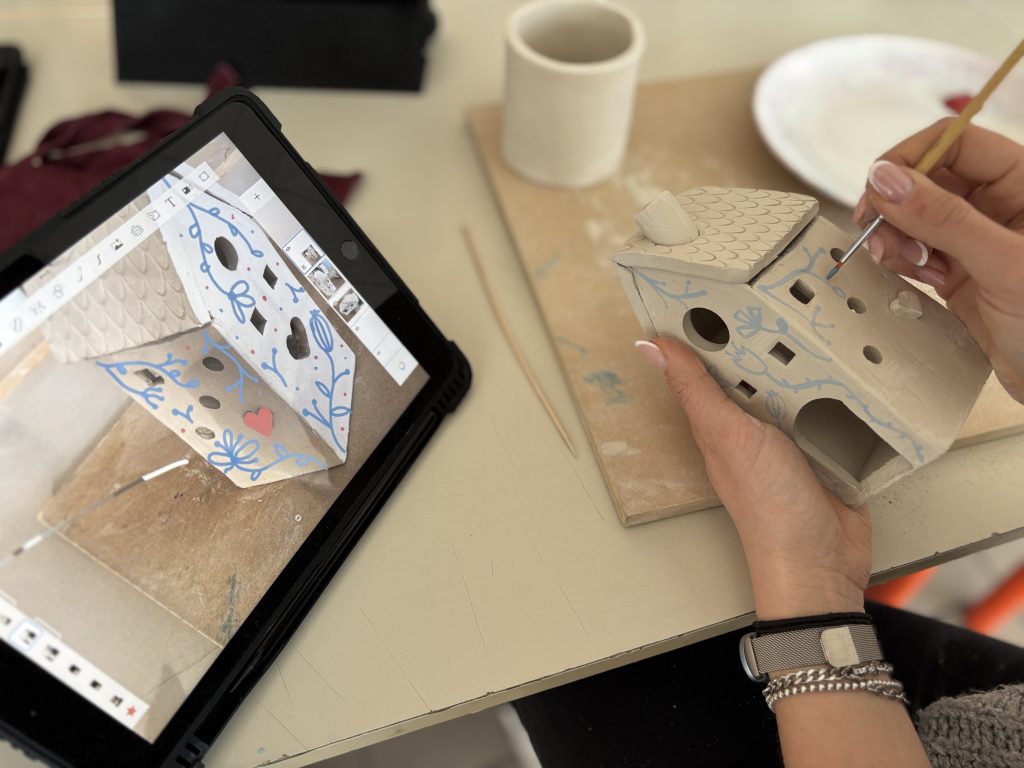
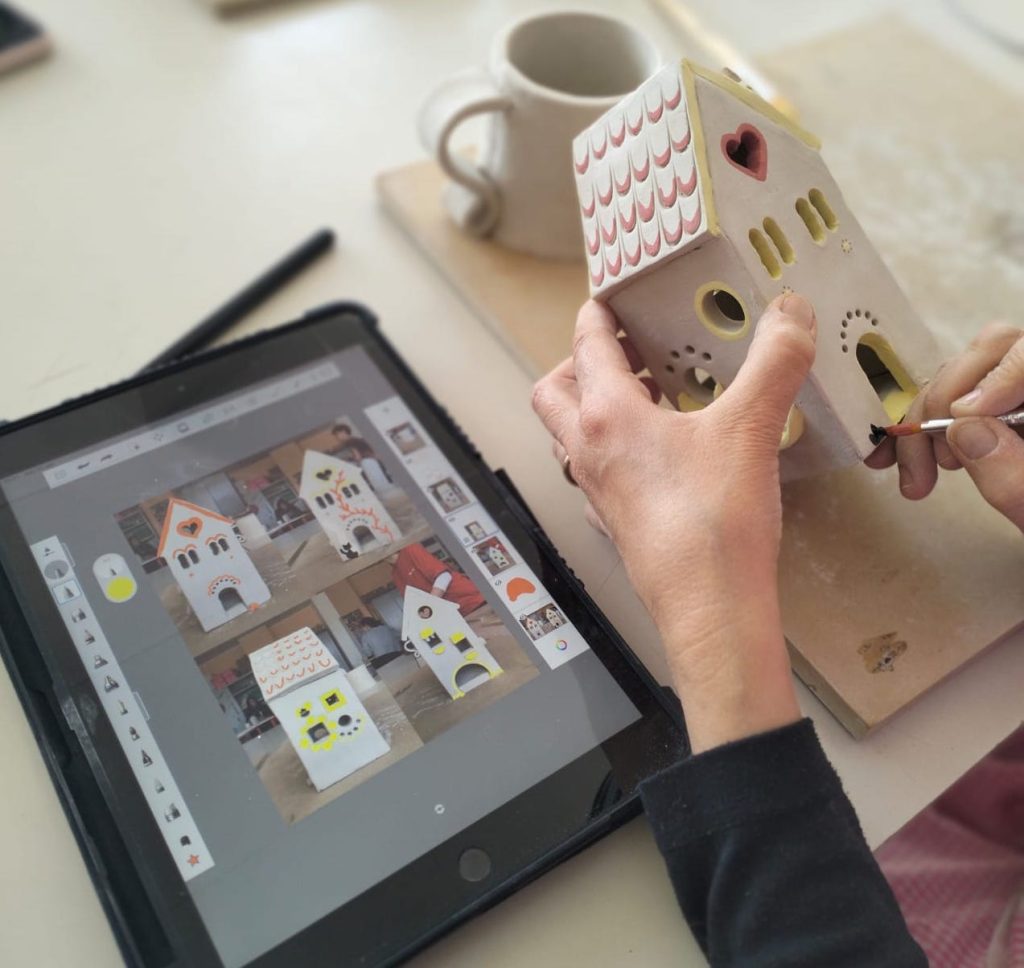
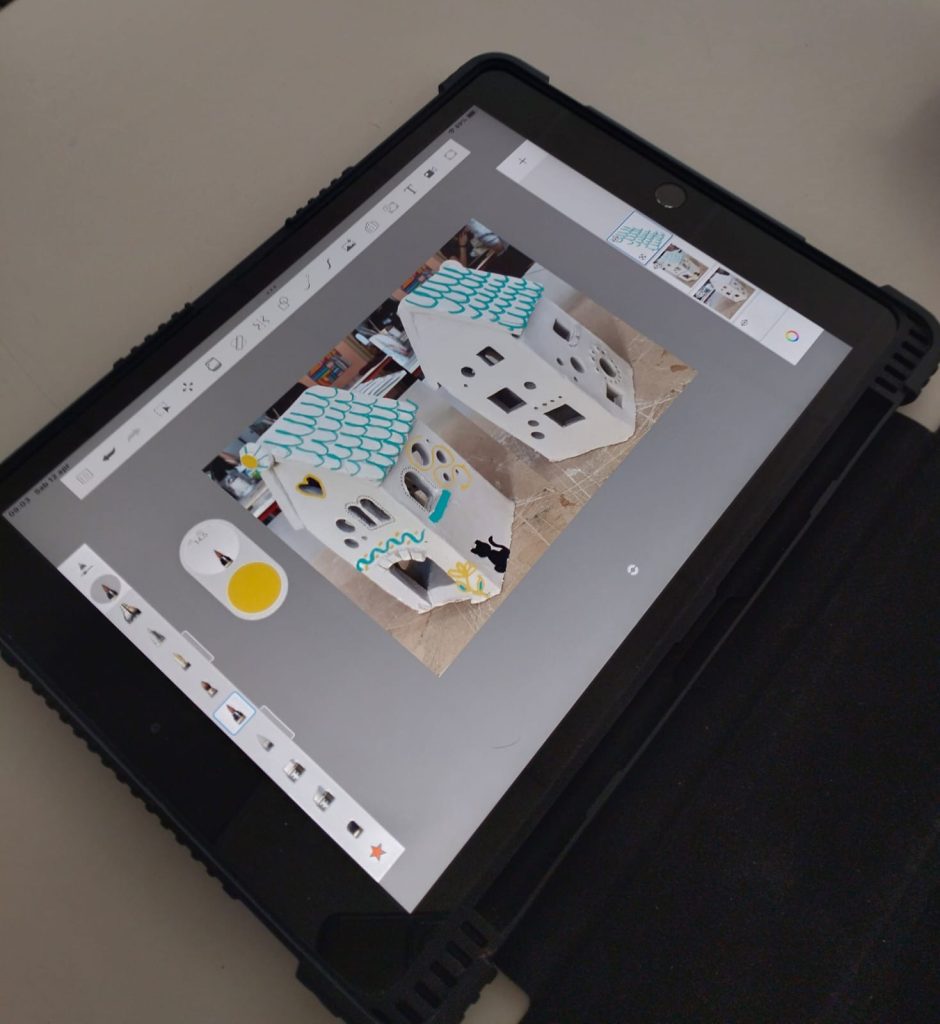
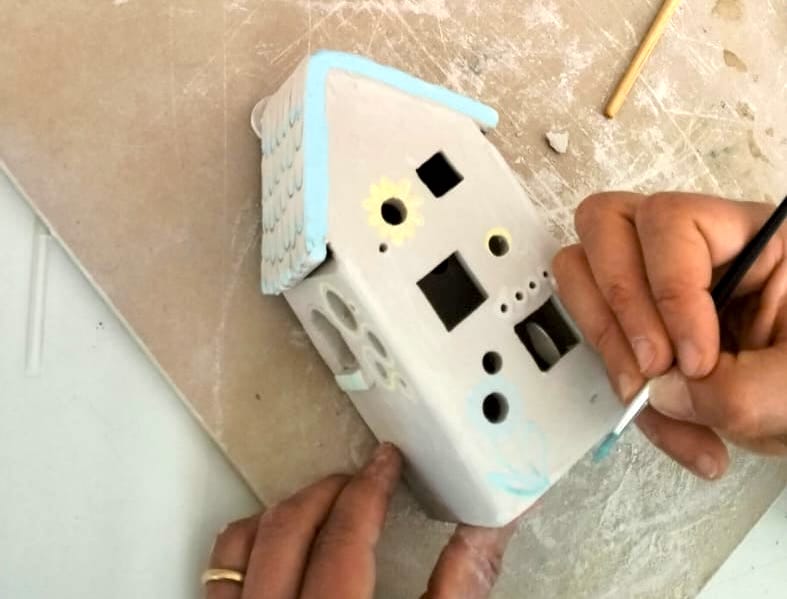
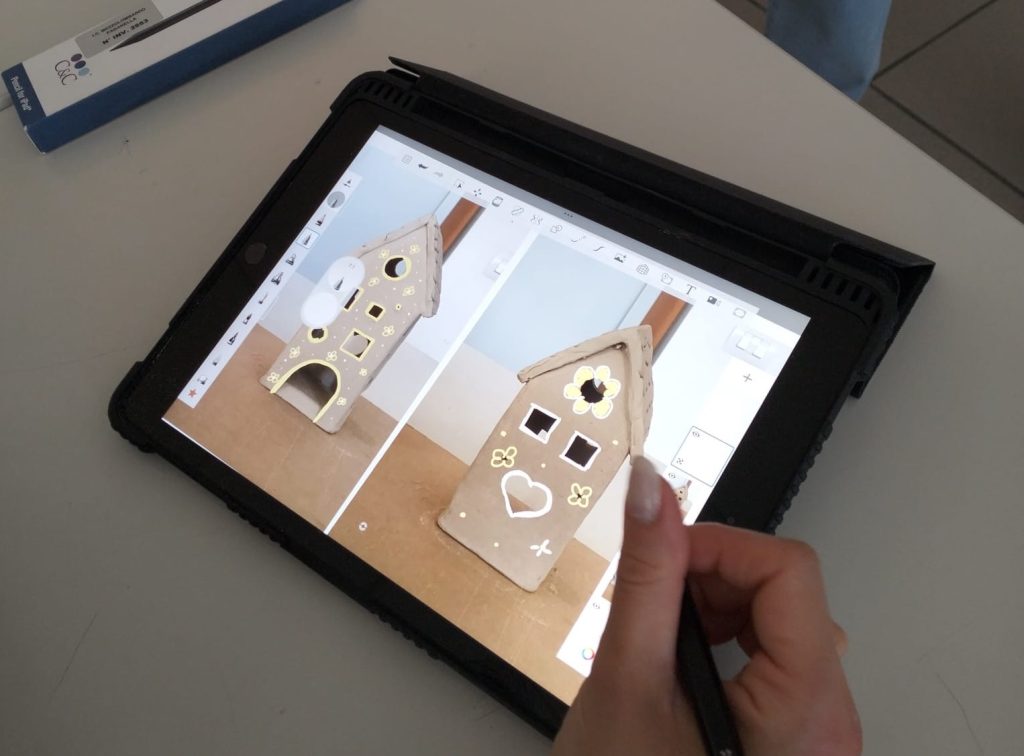
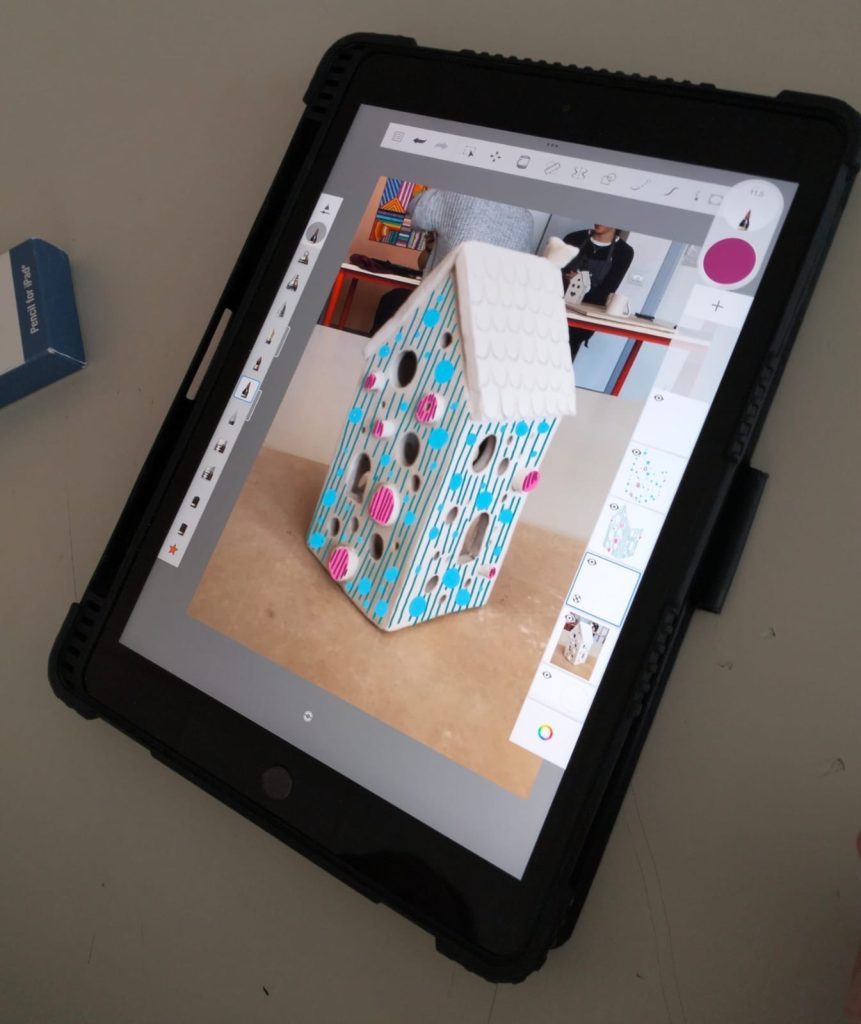
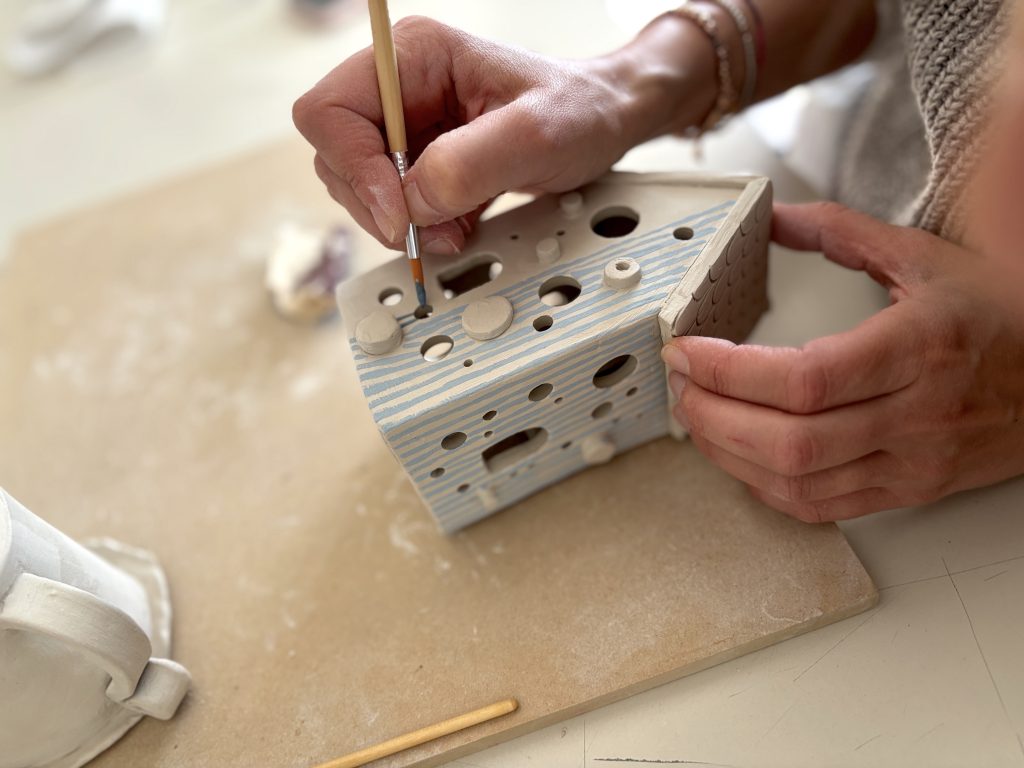
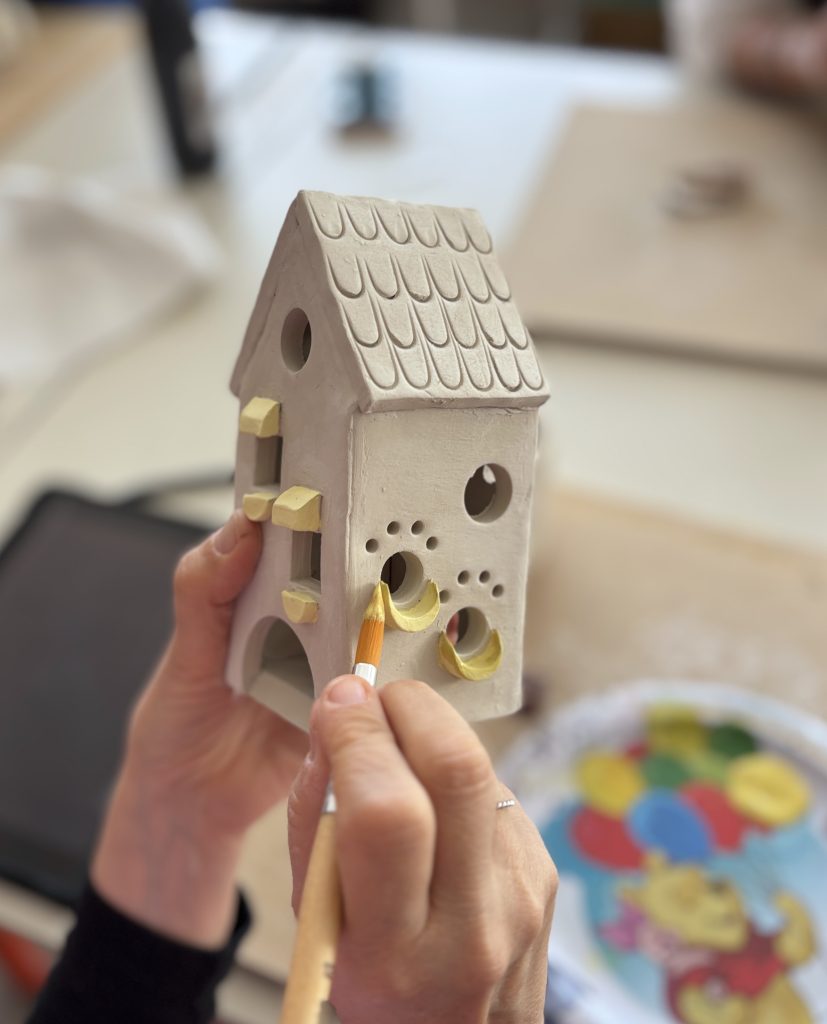
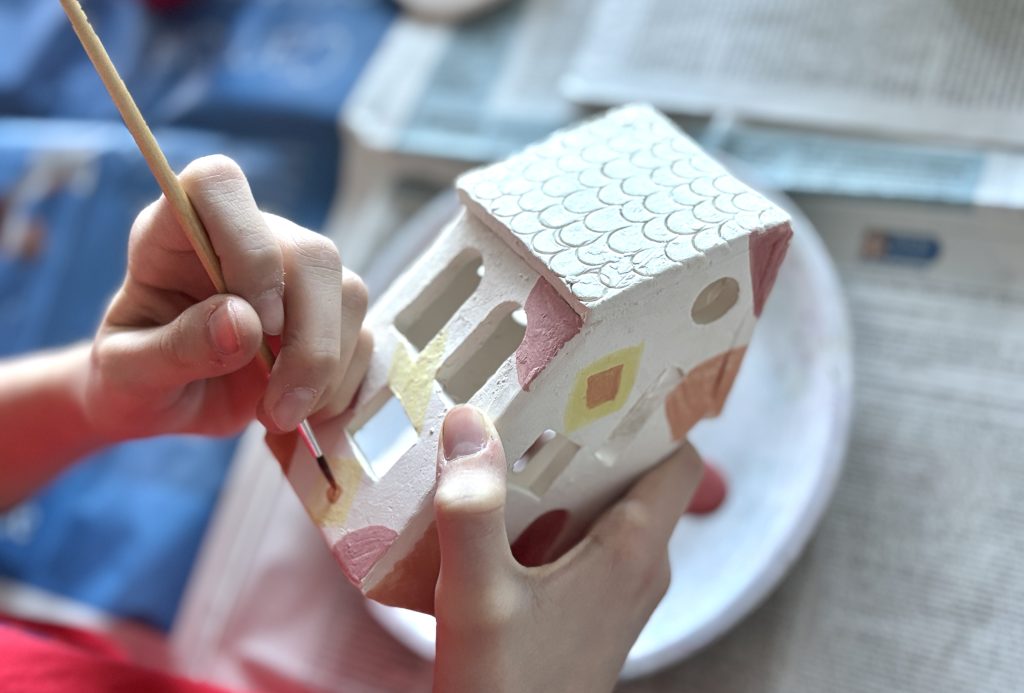
组装完成后,将房屋放置阴干,直至达到“素坯硬度”(bone dry)。装饰阶段,我们在素坯硬度的生坯上使用化妆土(engobe)进行绘制。为预先规划装饰效果,我们先用iPad拍摄坯体照片,再借助Sketchbook应用程序与数位笔进行数字草图绘制,从而确保最终手绘于坯体上的装饰图案准确无误。
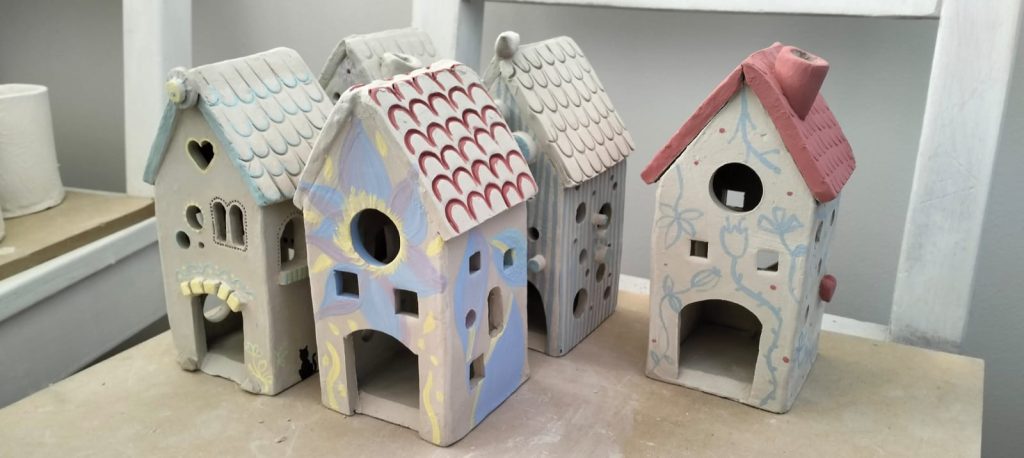
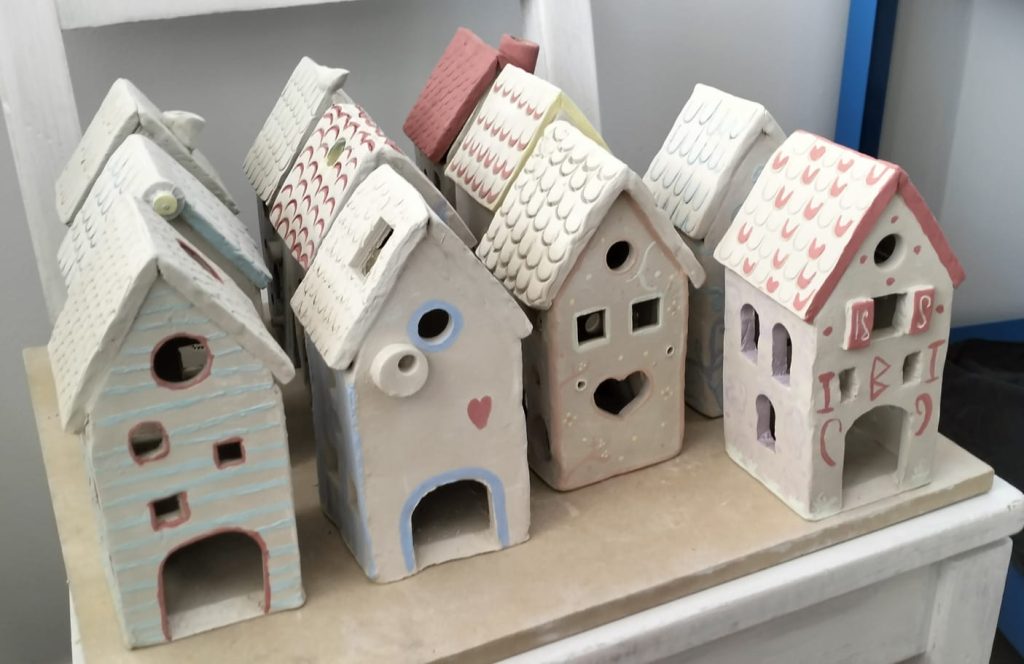
装饰完成后,房屋坯体入窑进行首次素烧;随后施以透明结晶釉,再进行第二次烧成。
Ceramic candle holder House-shaped
With the students of the ceramics workshop, and this year, also with the teachers from the Primary and Secondary School, we made these little ceramic candle holder houses, using the slab technique and cutting out the parts to assemble from a worksheet that you can find below:
After having flattened the slab with the 0.7 cm wooden guides and a rolling pin, we use the cardboard templates to cut out the walls, the base and the roof slopes.
The edges of the walls to be assembled must be cut at 45° with a small knife, this will make it easier to assemble and build the edges. You must be careful because ONLY the SIDES that must join must be cut, so it is not necessary to cut the roof slopes and the two squares that make up the roof
Once the sides to be joined at a 45° angle have been cut, windows and doors of various shapes and sizes can be opened. It is also possible to decorate the walls with the addition of decorations, textures or engravings.
Before assembly, always remember to knurle all the surfaces that need to be “glued” and to add plenty of slip, the liquid clay that serves as glue between the parts.
Once assembled, the houses are left to dry until they reach bone hardness. For the decoration we worked on the raw pieces, at bone hardness, with the engobes. To create a SKETCH of the decorations we photographed our pieces with the iPads and we decorated them digitally first using the Sketchbook APP and digital pens, so as to be sure of the decorations to be painted definitively on the piece.
After being decorated, the houses were put in the kiln for the first biscuit firing, then glazed with transparent crystalline and fired for the second time.