Adire Eleko Cloth & Senufo Animal Art Lesson (Part 1)
Original: https://createartwithme.com/adire-eleko-cloth-senufo-animal-art-lesson-part-1/
Date: 2012-12-05 Author: Michelle East Categories: 4th Grade, 5th Grade, African Art Lessons, Collage Lessons, Cultural Art Lessons, Drawing Lessons, Elementary Art, Elements of Art Lessons, Mixed Media Lessons, Oil Pastel Lessons, Painting Lessons, Principles of Art Lessons, Rhythm & Pattern Lessons, Watercolor Lessons, Watercolor Resist Tags: 4th grade art, 5th Grade Art, Adire cloth, Adire Eleko, african Art, art class for kids, art lessons for children, art lessons for kids, art projects children, art projects for, art schools for kids, artist painting supplies, Collage, elementary art, indigo cloth, indigo resist, kids school art projects, lines, mixed media abstract art, Nigeria, Oil Pastel, painting lesson, painting lesson for kids, pattern, rhythm, rhythm art, Senufo, teacher art projects for kids, teaching art to kids, Watercolor, watercolor painting lesson, watercolor resist, Yoruba, Yoruba cloth
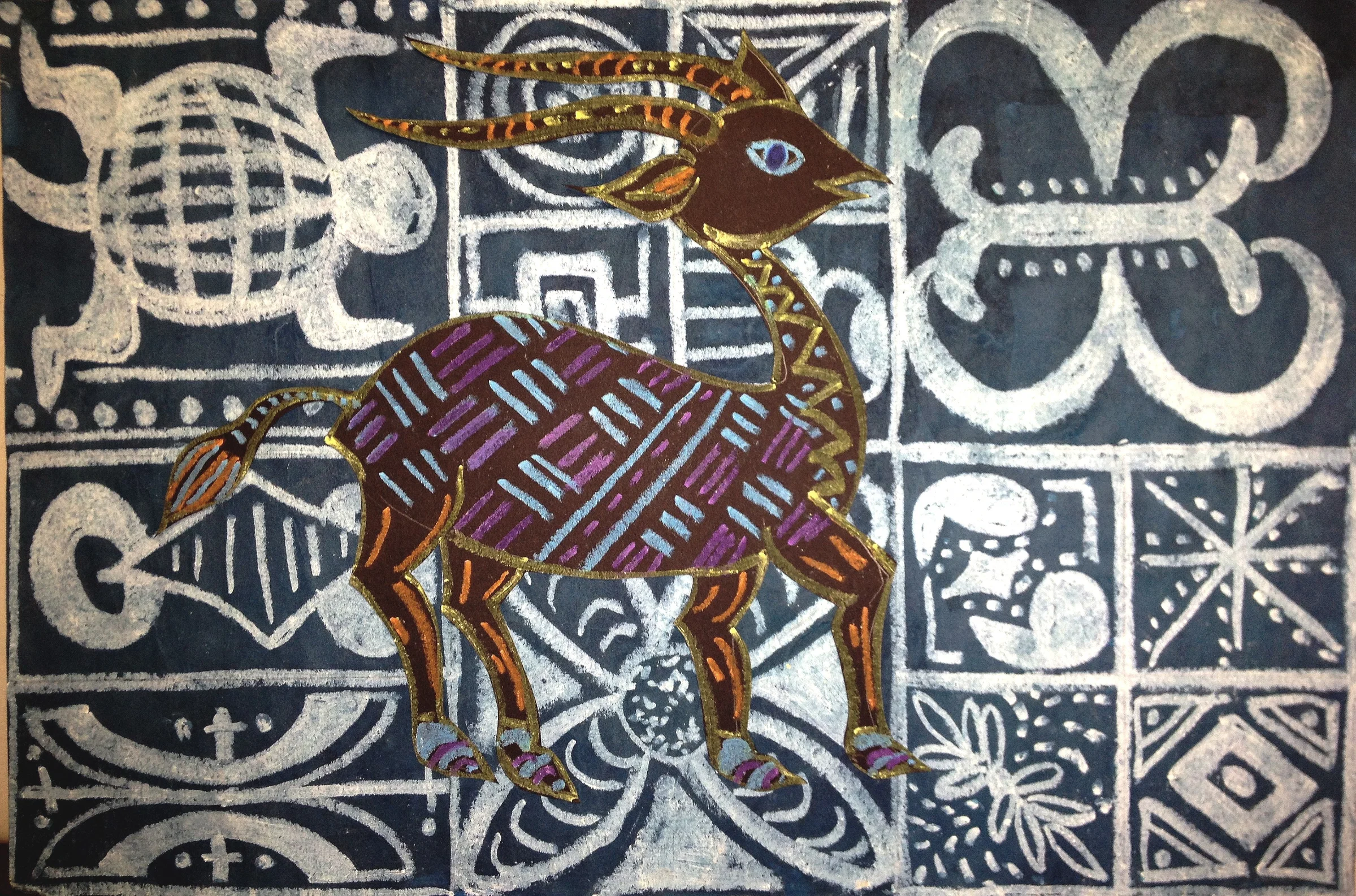
Adire Eleko & Senufo ClothAdire Eleko & Senufo Cloth (Part ONE) Lines, Shapes, Patterns, & Rhythm Art Lesson
Resources: Adire Wax Batik (A Faithful Attempt)
Objectives: Students will review the five kinds of lines (horizontal, vertical, diagonal, diagonal, & zig zag) & two kinds of shapes (organic & geometric). They will gain knowledge of the art and history of the Yoruba people of Nigeria & the Senufo people of Côte d’Ivoire, West Africa. Students will learn how to create a grid. Plan a design of a Adire Eleko cloth and a Senufo animal using the animals of West Africa and drawing with oil pastels.
Delivery Day 1-2: Adire Eleko Cloth
Explain that this project will be done in two parts, the background & the foreground.
- Power Point Lesson on Adire Eleko Cloth showing examples.
- Adire is the name given to indigo (blue) dyed cloth produced by Yoruba women of south western Nigeria using resist dye techniques. Adire translates as tie and dye.
- The dye-resistant paste can be either painted freehand or stenciled onto the fabric. When freehand painting, the artist usually paints a grid of squares or rectangles onto the fabric first.
- Then they paint these squares with geometric & symbolic motifs. They used lines & shapes to create patterns (Rhythm).
- The cloth is then dipped into a natural blue dye again and again until the cloth is a deep blue.
- The paste is scraped off to reveal the designs underneath.
- The cloth is then used as a wrap around one’s body.
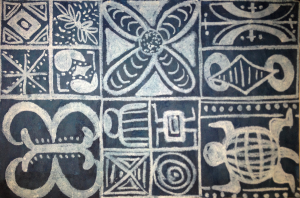
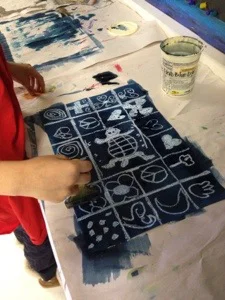
Adire Eleko Cloth made with oil pastels & indigo watercolor/india ink paint
Additional Resources on Yoruba People & Art:
Victoria and Albert Museum: Adire – Indigo Resist Dyed Cloth From Yorubaland, Nigeria
Part One: Adire Eleko Cloth Instructions:
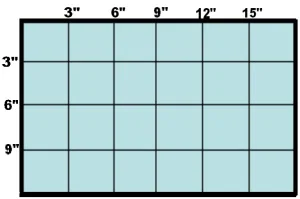
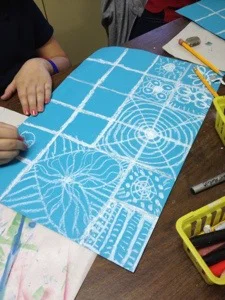
- On a 12×18 sheet of blue-green paper, use a ruler to draw a grid that is approximately 3×3”.
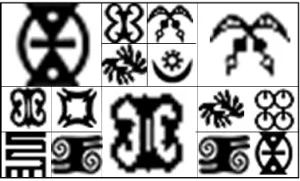
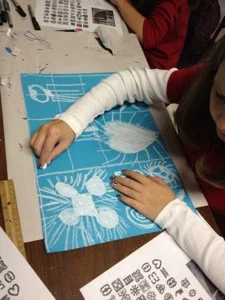
- In each grid use a white oil pastel to draw a African designs/symbols. You can outline some of the grids if you want to.
- When designs are drawn, paint over sheet with Indigo paint (mostly blue liquid watercolor/a few drops of india ink). Fun to watch the resist happen.


Resources: Adire Wax Batik (A Faithful Attempt)
Go to Part Two (Senufo Animal)
If you choose to use this lesson or repost it (written or photos), please link back to my blog Create Art with ME.