表现主义风格的城市
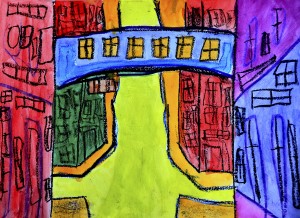
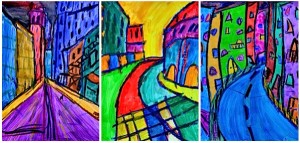
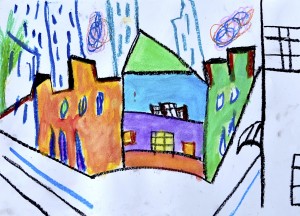
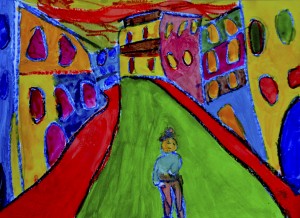
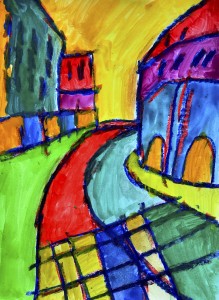
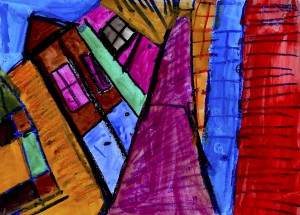
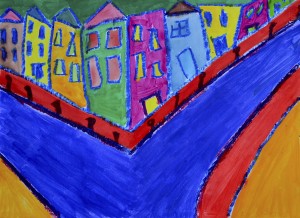
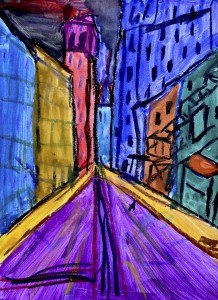
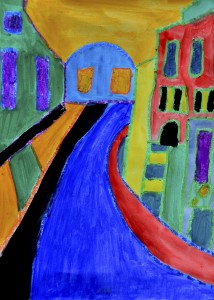
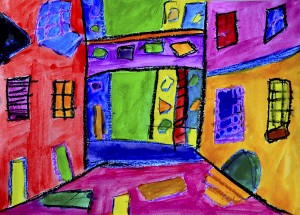
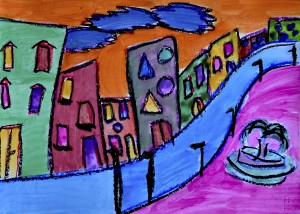
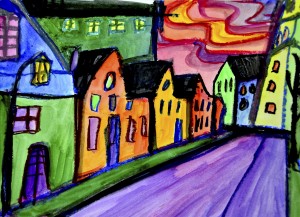
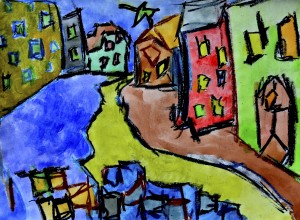
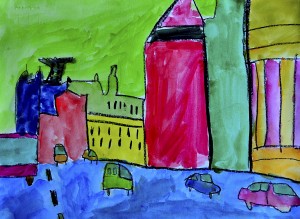
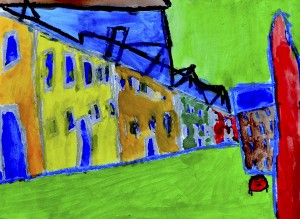
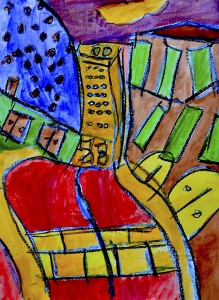
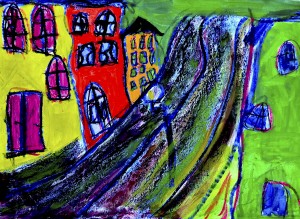
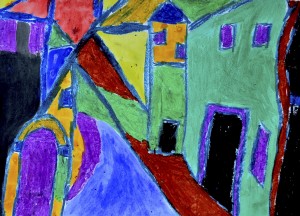
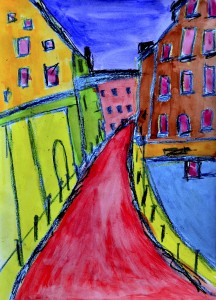
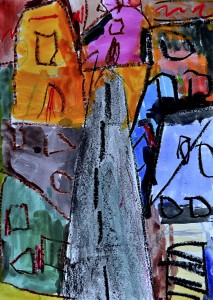
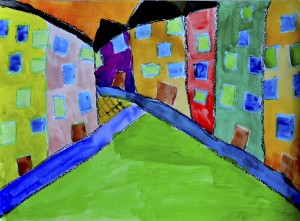
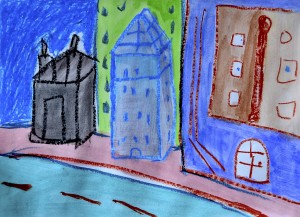
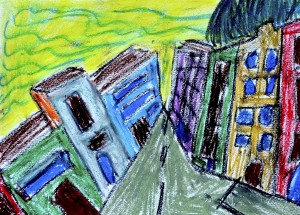
九年级课程中,我们学习了德国表现主义者,作为二十世纪先锋派艺术的一部分。重点赏析了恩斯特·路德维希·基希纳的绘画作品,并归纳出其绘画的主要特征。我们将他的艺术理念提炼为若干反复出现在画作中的视觉要素:
– 扭曲的透视与变形的现实
– 运用非自然的纯色,以及强烈对比的色彩组合
– 使用粗重、浓黑而锐利的轮廓线
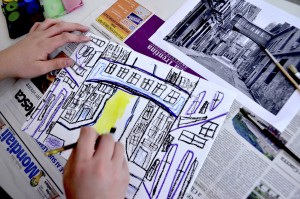
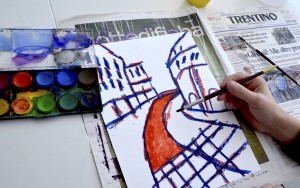
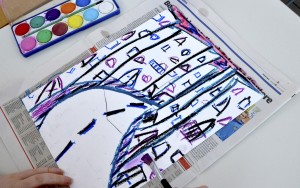
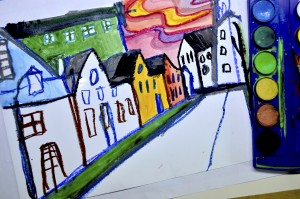
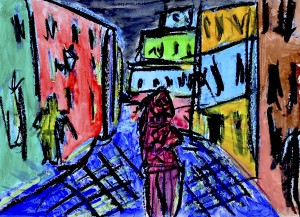
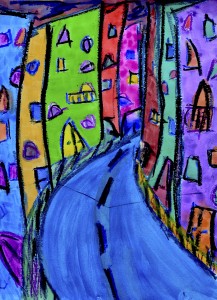
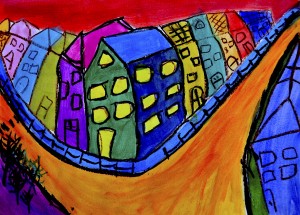
我们尝试以1905年一位表现主义艺术家的眼光去“观看”一条城市街道,并将上述特征运用于对真实场景的再诠释。首先,我们以油画棒绘制城市景象,参考一张黑白照片;随后用水彩上色,注意控制水分,避免颜色过度稀释,以保持色彩的饱和度。
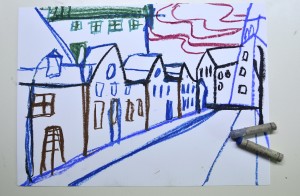
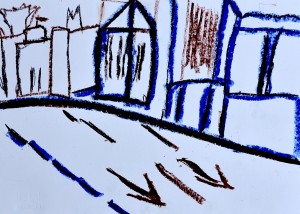

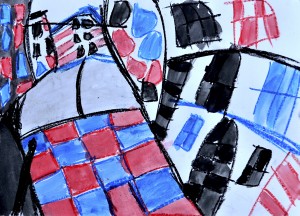
The city in Expressionist style
In the 9th grade classes, we studied the German Expressionists, as part of the avant-garde art of the twentieth century. Noting especially the paintings by Ernst Ludwig Kirchner, we pointed out the main features of his painting. We have summarized his philosophy in some visual aspects that recur in his paintings:
– Distorted perspectives and deformed reality
– Use of unreal colors, pure, with contrasting combinations
– Use of contour lines thick, dark and sharp
We tried to “see” the picture of a city street with the eyes of an Expressionist of 1905, and we have applied these features to the real, interpreting it according to this style. First we have drawn the city with oil pastels, taking inspiration from a photograph in black and white. Afterwards we colored the image with watercolors, trying not too dilute colors to maintain a certain saturation in the colors.


