费利切·卡索拉蒂的静物:明暗法临摹
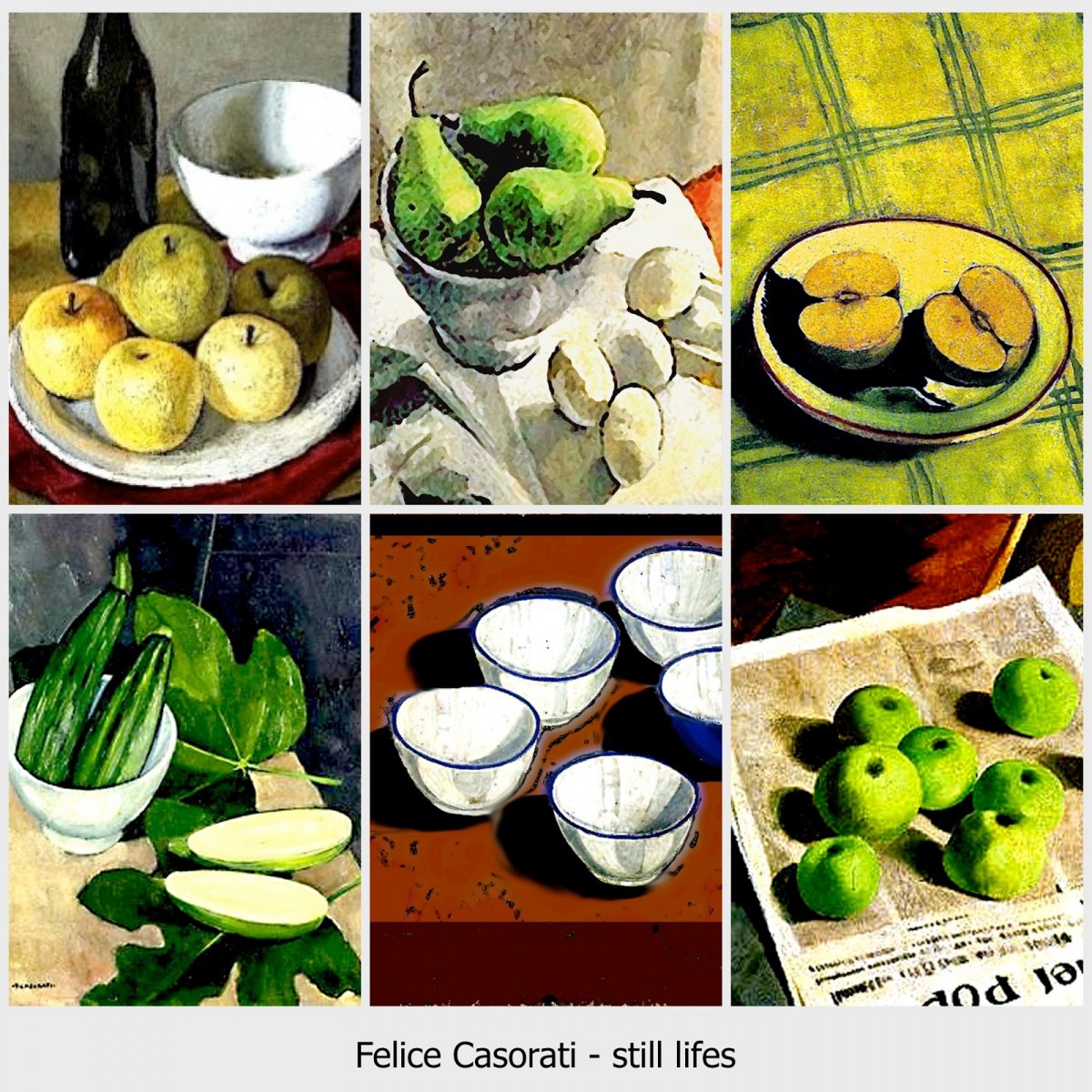
本次明暗法练习以[费利切·卡索拉蒂(意大利,1883–1963)](https://en.wikipedia.org/wiki/Felice_Casorati#:~:text=Felice%20Casorati%20(4%20December%201883,painter%2C%20sculptor%2C%20and%20printmaker.)的静物作品为灵感。卡索拉蒂是二十世纪意大利最重要的艺术家之一,也是其时代中艺术生命最长的艺术家之一,其创作生涯横跨先锋派时期直至战后时期。由于他艺术生涯漫长、创作活动丰富,很难将他简单归入某一特定流派;但我们可以将他与“魔幻现实主义”相联系——这是他在表现主义与未来主义等先锋派之后,回归秩序与写实的一种艺术取向。
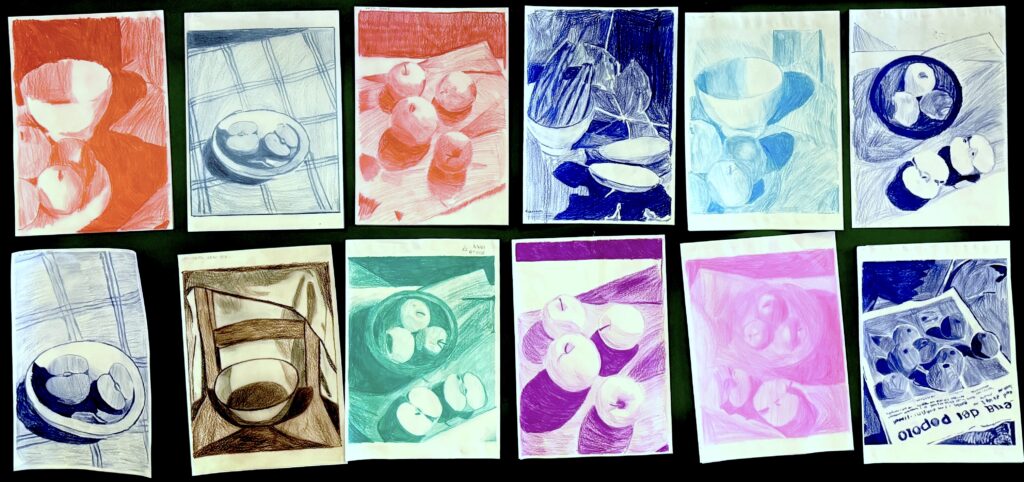
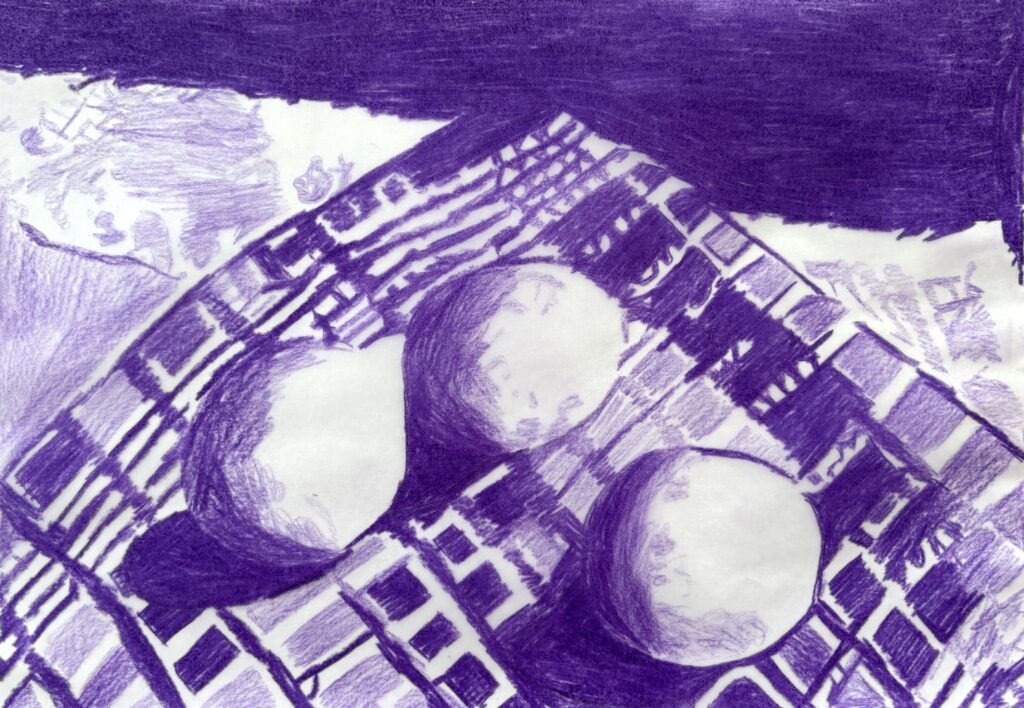
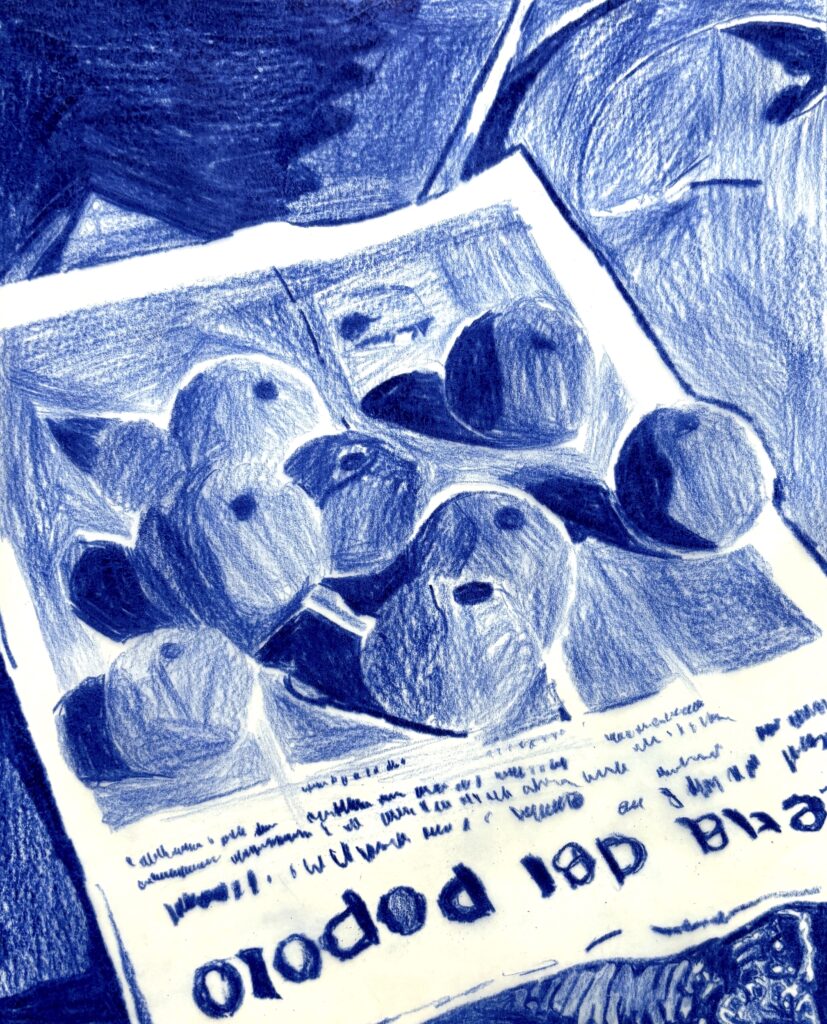
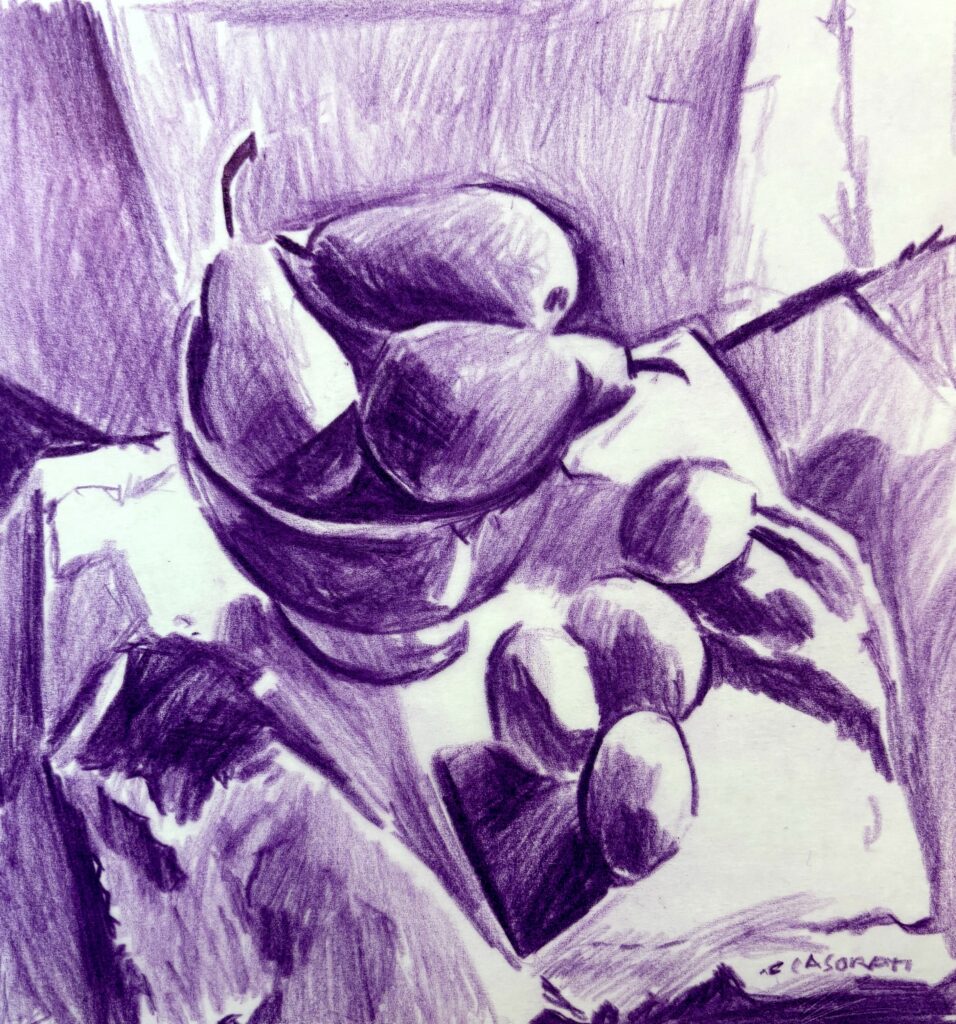
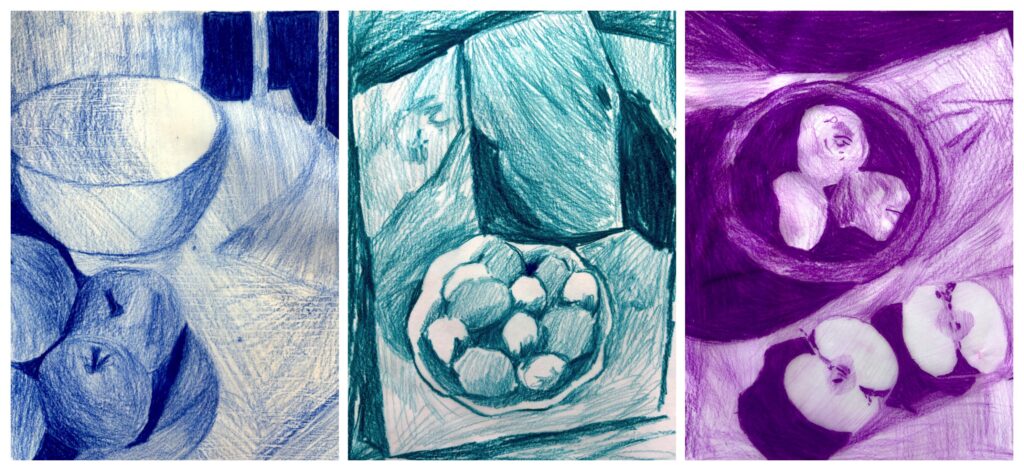
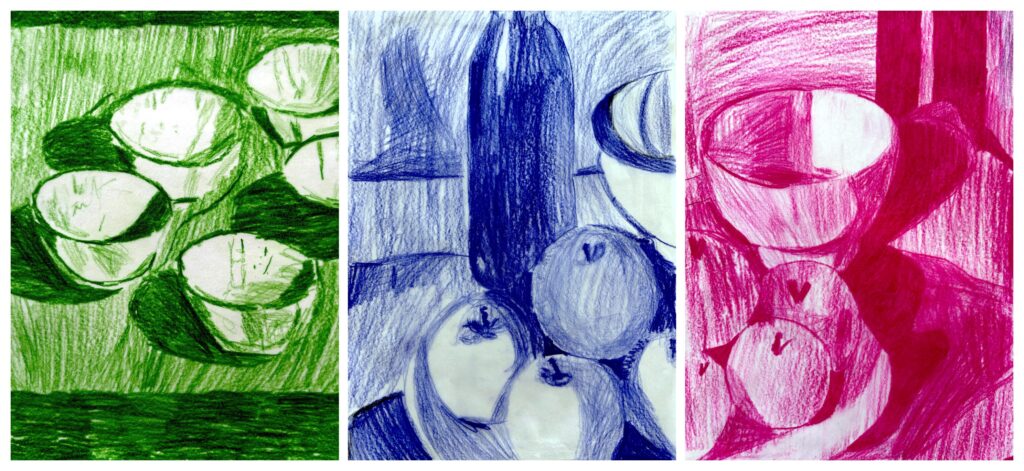
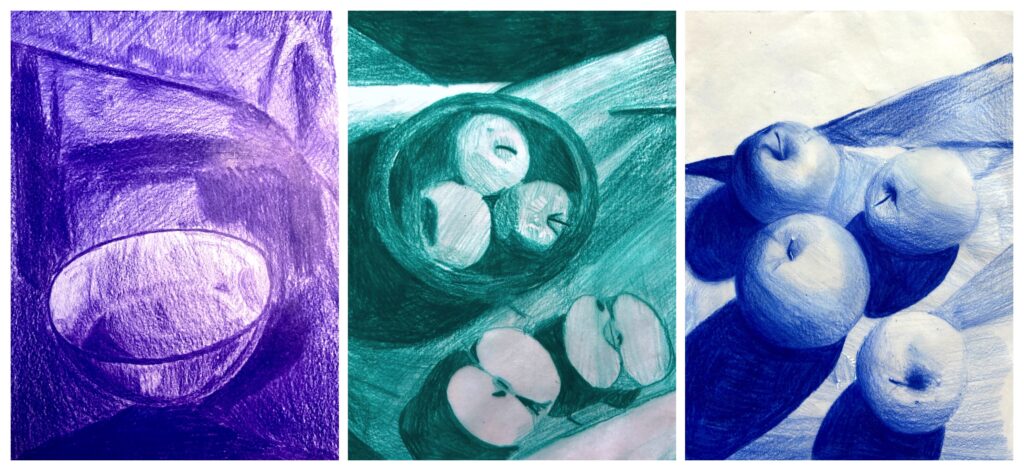
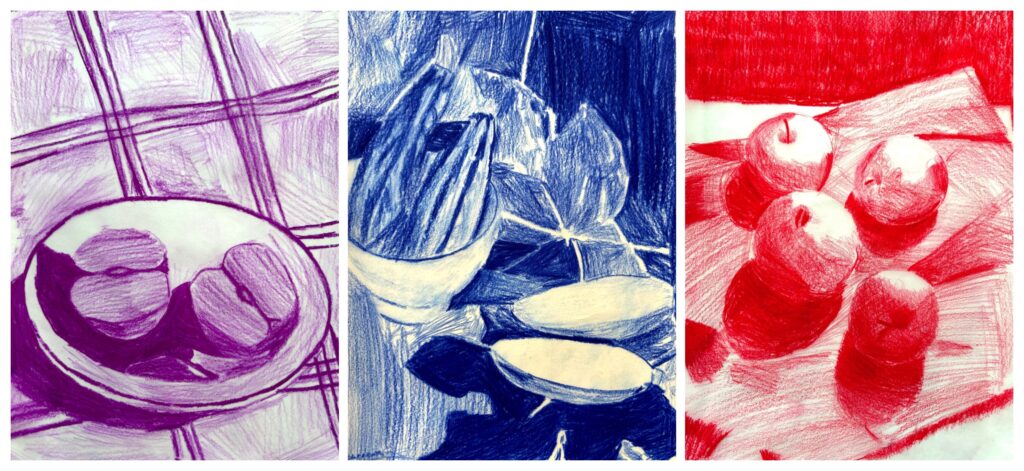
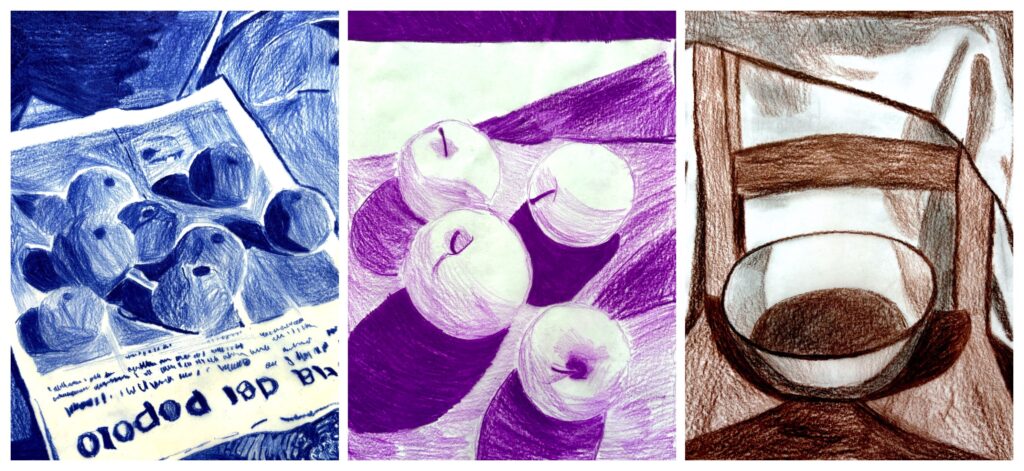
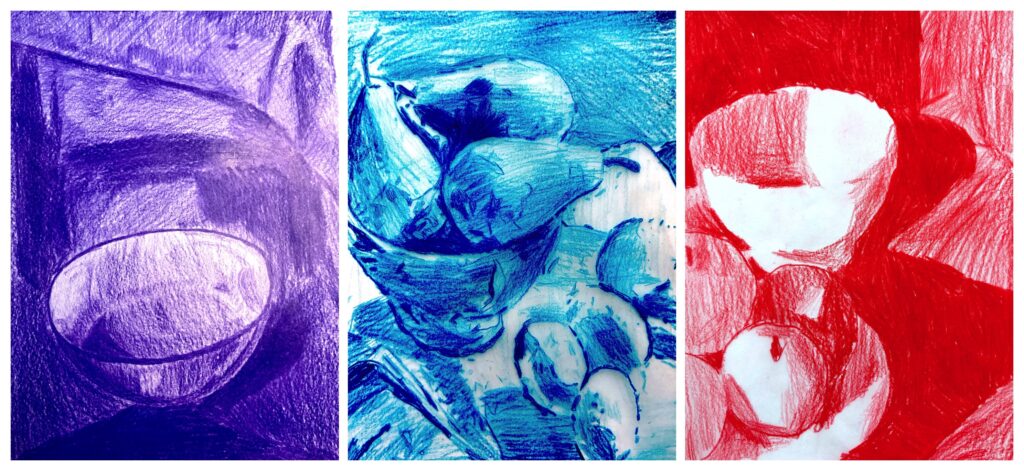
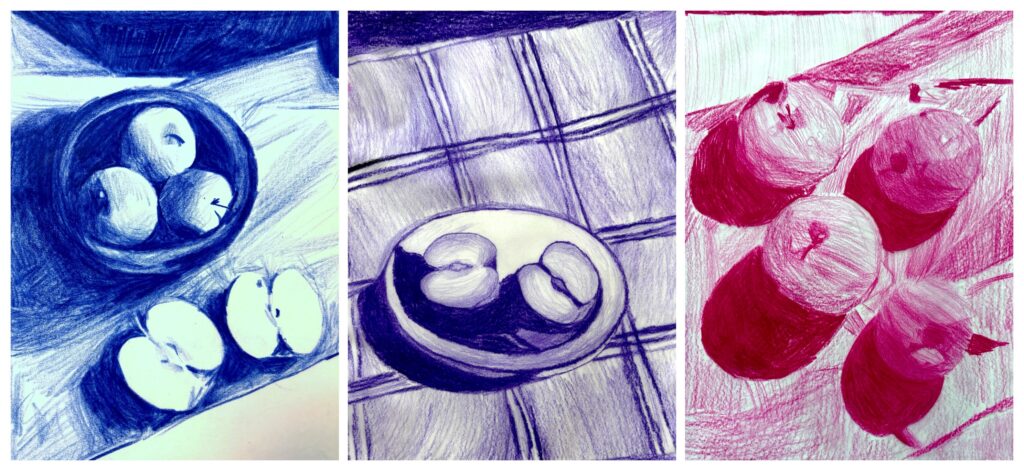
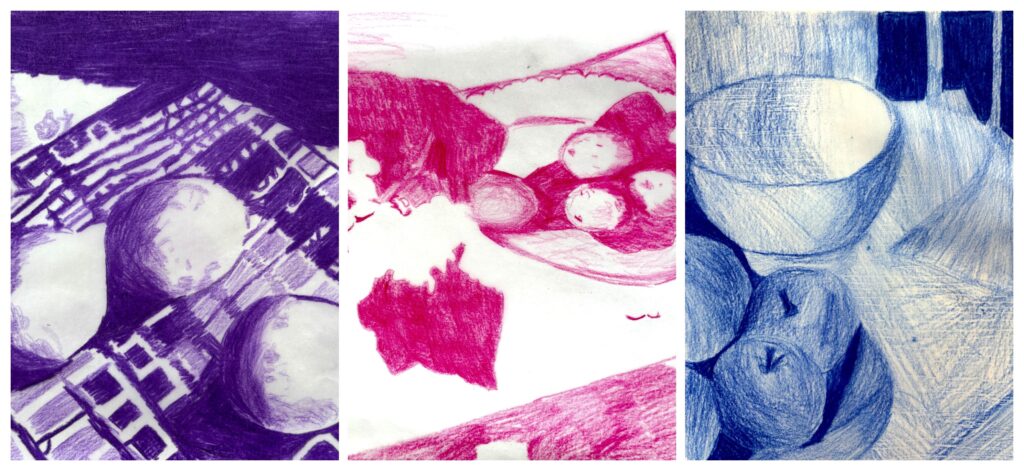
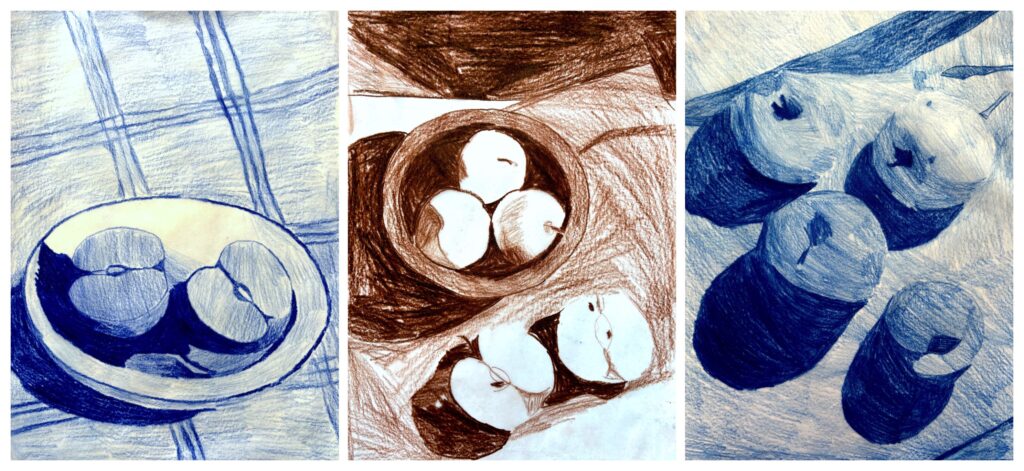
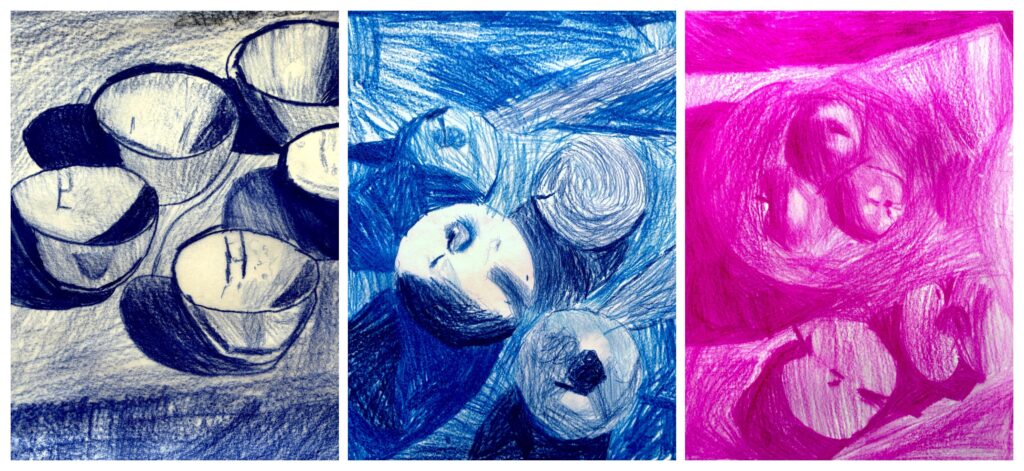
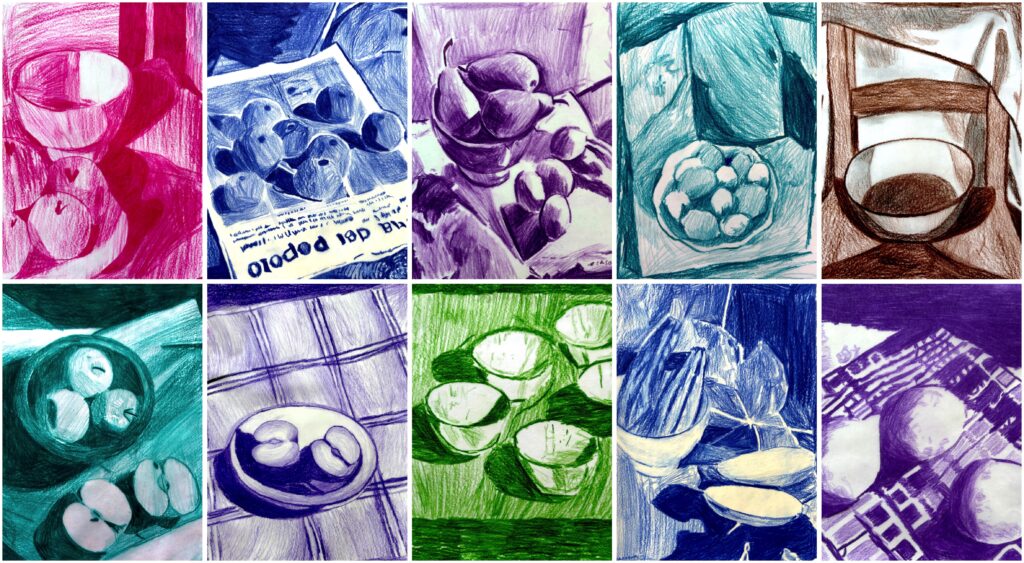
本素描练习旨在帮助七年级学生理解:一幅黑白图像中可包含何其丰富的明暗层次,因为阴影、高光及中间调的明度变化几乎是无穷的。另一重要目标是:不勾勒所绘物体的轮廓线,而仅依靠明暗关系来构建画面。
临摹一张黑白照片或黑白艺术作品,有助于我们更清晰地把握图像的明度阶调。当然,这并非写生练习,但它能让我们明白:铅笔施加压力的细微变化,即可产生极为丰富的明暗层次;同时,我们并不需要勾画出物体全部的轮廓线,便足以传达其形状与体积感。
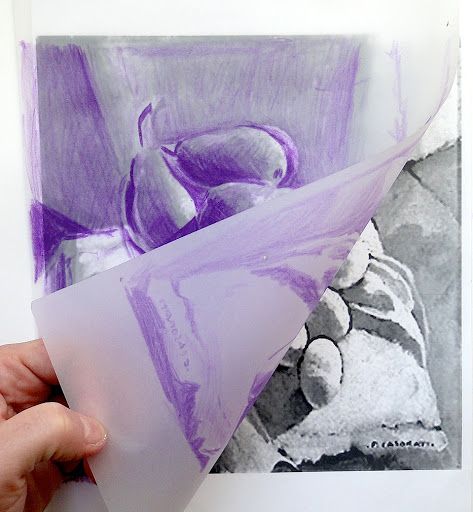
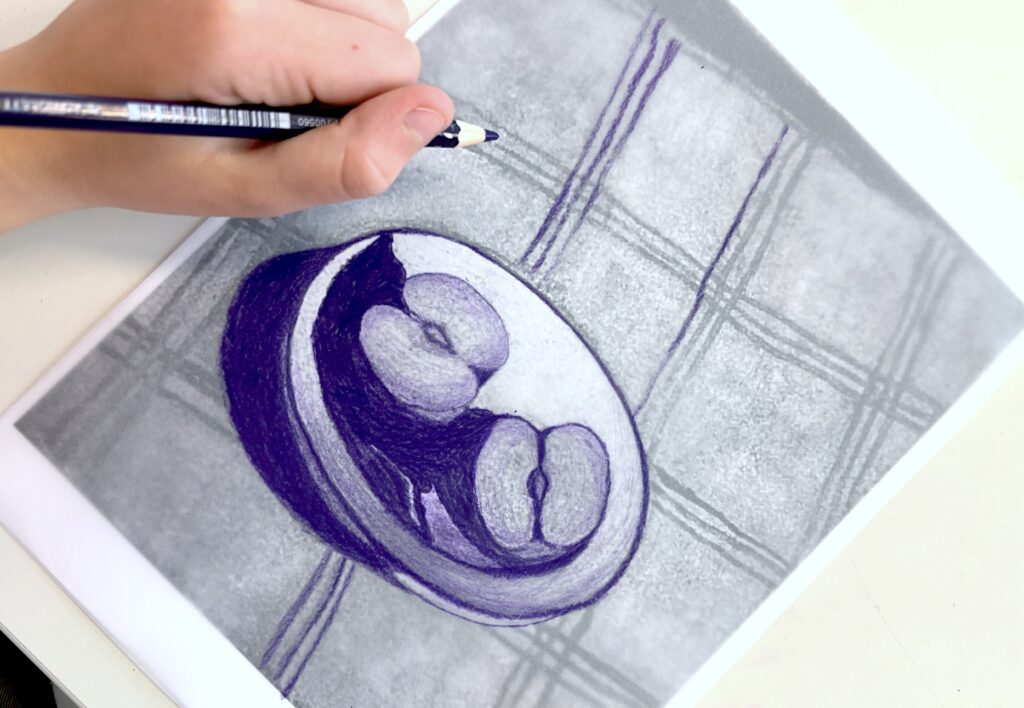
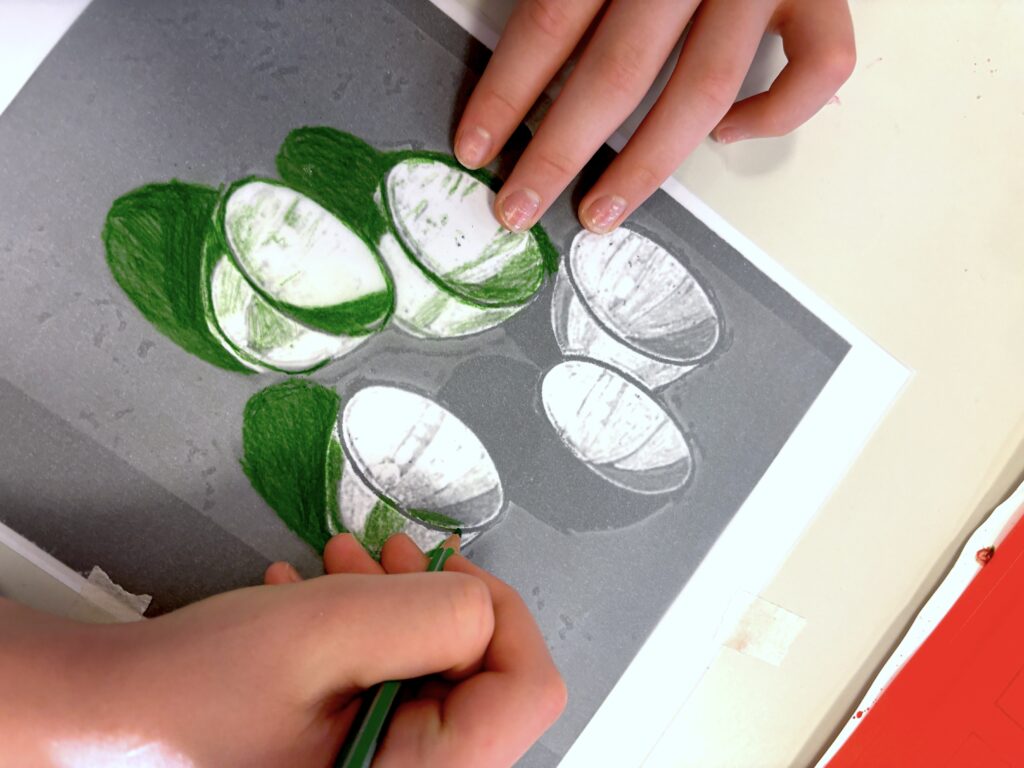
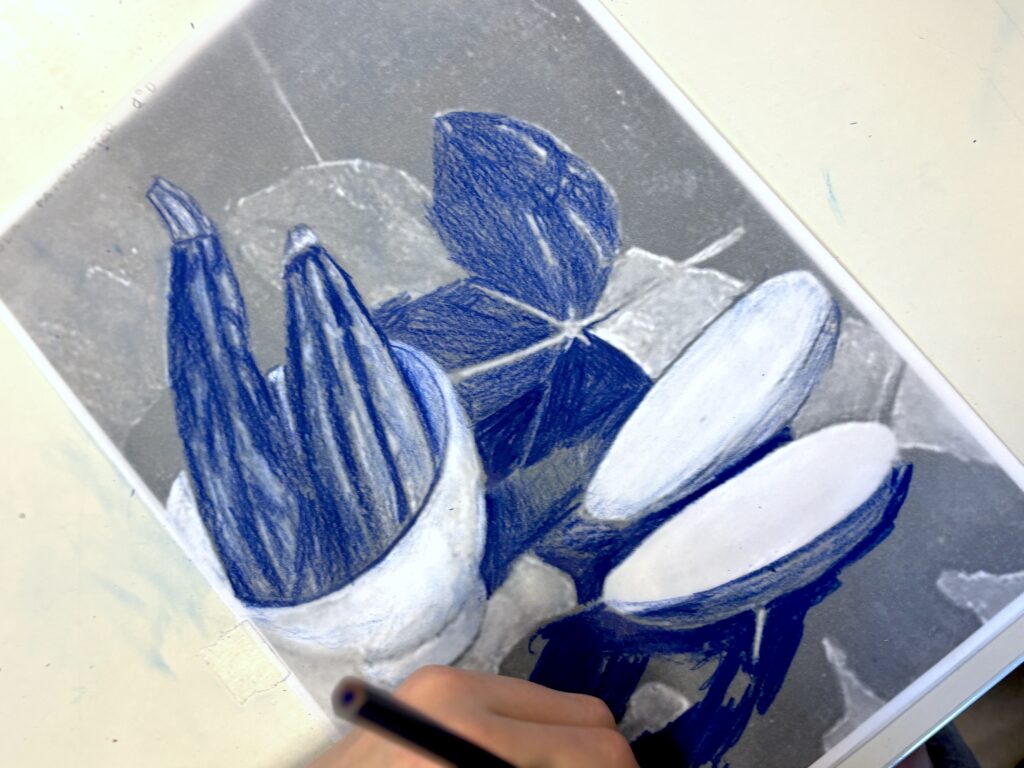
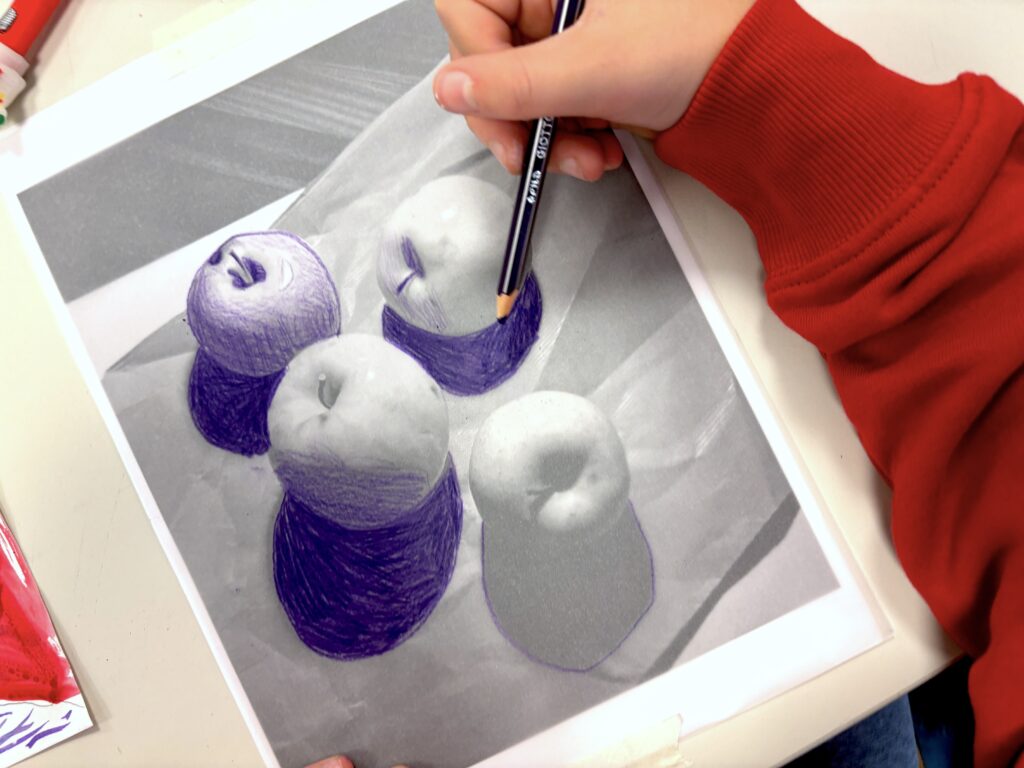
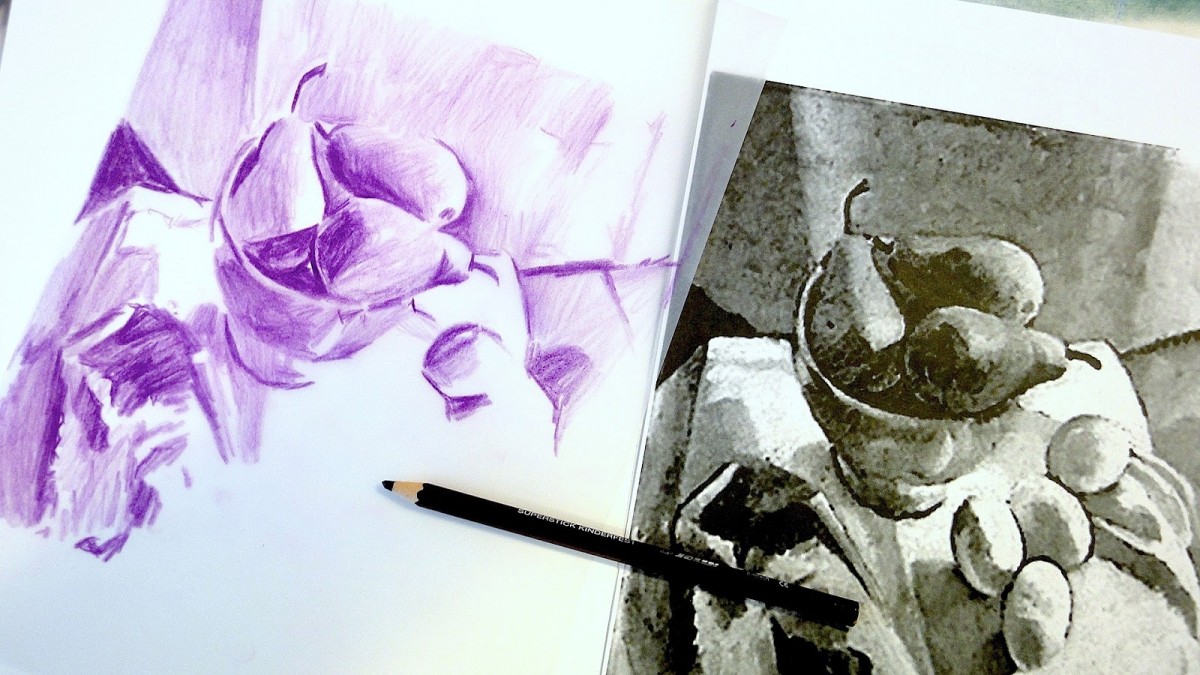
本次素描采用卡索拉蒂静物作品的黑白复印稿,或受其风格启发拍摄的黑白照片。我们在复印稿上覆盖一张描图纸,并使用彩铅作画。选用彩铅而非铅笔,是为了避免自己的线条与底图混淆,并更精准地控制明暗效果。完成绘制后,将描图纸粘贴于白纸上,以增强画面视觉效果。
The still lifes of Felice Casorati: chiaroscuro copy
For this exercise on chiaroscuro we took inspiration from the still lifes of [Felice Casorati (Italy 1883 – 1963)](https://en.wikipedia.org/wiki/Felice_Casorati#:~:text=Felice%20Casorati%20(4%20December%201883,painter%2C%20sculptor%2C%20and%20printmaker.). Casorati is one of the most important artists of the twentieth century in Italy, and one of the longest-lived of his era, having gone through the period of the avant-garde, up to the post-war period. Due to his long career and his many artistic activities it is not easy to pigeonhole him into a specific movement, but we can associate him with “Magical Realism”, with his return to order and realism after the expressionist and futurist avant-gardes.
This drawing activity was designed to help seventh grade students understand how many shades of chiaroscuro can be found in a black and white image, because the value of shadows, lights and tonal variations can be almost infinite. Another important objective is to create the image without tracing the contours of the objects represented, but working ONLY with shadows and lights.
Copying a black and white photograph or artwork makes it easier to understand the tonal scale of an image. Obviously this is not a drawing by life, but this exercise makes us understand how the variation in pressure on the pencil can determine a vast range of lights and shadows, and how it is not necessary to trace all the contours of an object to perceive its shape and volume.
For this drawing we used a black and white photocopy of Casorati’s still lifes or photographs inspired by his works. We used a sheet of tracing paper to overlay on the photocopy and a colored pencil. We use a color instead of pencil, in order to not confuse your drawing with the image below and to dose the chiaroscuro more effectively. Once the drawing is completed, the tracing paper is glued onto a white sheet to give more emphasis to the image.


