节奏与强调——禅绕画风格三维纸雕
原文链接:https://createartwithme.com/rhythm-emphasis-zentangle-3d-paper-sculpture/
日期: 2017年9月14日
作者: 米歇尔·伊斯特(Michelle East)
分类: 美术课教案、色彩对比、美术元素课、强调类美术课、精选内容、初中美术、非具象艺术、美术原理课、节奏与图案课
标签: 三维纸艺项目、美术中的节奏、强调、初中美术、初中美术课、纸雕、美术原理、美术原理之节奏与强调——禅绕画风格纸雕、节奏、禅绕画(Zentangle)、禅绕画风格纸雕
教案设计:米歇尔·C·伊斯特(Michelle C. East) © 2017
教学目标: 学生将运用重复的多种图案(含线条与形状),营造节奏感与视觉动势;利用色彩对比,构建强调区域(即视觉焦点);通过裁剪与塑形,使纸张呈现三维立体形态。
美术词汇:
- 美术元素: 线、形、色
- 美术原理: 强调、节奏、动势、多样统一
- 美术史: 禅绕画(Zentangle,一种当代艺术流派)
教学流程:
- 复习美术元素: 线、形、色
- 线的类型:水平线、垂直线、斜线、锯齿线与曲线
- 形的类型:几何形与自由形(或称有机形)
- 线与形可组合构成图案。
- 色彩与黑白形成对比,可用于强化画面中某一区域。
- 学习以下设计原理: 强调、动势、节奏、多样统一与整体统一
- 强调: 使作品某一部分在视觉上强于其他部分。
- 动势: 营造动作感或运动感,并引导观者视线流动。
- 节奏: 由美术元素的重复所形成的视觉动势——牵引视线沿特定路径移动。
- 多样统一: 关注作品中各美术元素之间的差异性或对比关系。
- 整体统一: 通过美术元素与原理的有效运用,达成画面完整、和谐的整体感。
- 多图案组合: 将数种不同图案加以融合,创造全新图案。
- 禅绕画(Zentangle):一种以铅笔、针管笔与纸张为工具的艺术形式,强调放松专注地绘制基础重复图案(http://tanglingart.com/history-of-zentangle/)。禅绕画是专注于图案与设计的精美艺术作品。
项目:禅绕画风格图案三维纸雕
媒介: 雕塑
体裁: 非具象艺术
项目目标: 学生将运用重复的多种图案(含线条与形状),营造节奏感与视觉动势;利用色彩对比,构建强调区域(即视觉焦点);通过裁剪与塑形,使纸张呈现三维立体形态;选用自己绘制的一种图案,为背景着色。
材料: 12×18英寸白色卡纸(90磅)、黑色及彩色Sharpie记号笔[——细尖与超细尖](https://www.amazon.com/gp/product/B00UHUIJK6/ref=as_li_tl?ie=UTF8&tag=crarwime-20&camp=1789&creative=9325&linkCode=as2&creativeASIN=B00UHUIJK6&linkId=01e319714e6f5415f8cf3ed88fc7342f),可用Crayola马克笔替代彩色Sharpie、12×18英寸彩色手工纸、胶水


附注:文中含联盟推广链接——仅推荐本人实际使用且喜爱的产品!
制作步骤:
- 取1张12×18英寸白色卡纸。
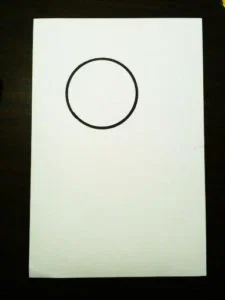
- 使用圆形、方形、椭圆形或矩形模板,在纸上绘制你的强调区域。切勿将其置于纸面正中央——太乏味!用Sharpie绘制。
](https://i0.wp.com/createartwithme.com/wp-content/uploads/2017/09/Zentangle-paper-sculpture-1-e1505438270510.jpg)
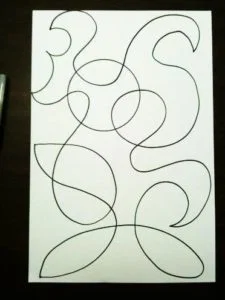
- 切忌过度描画——绘制一条相互交叠、蜿蜒曲折、波浪起伏又含直线段的闭合线条,使其首尾相接。此即所谓连续线。
- 在你的强调区域内,使用彩色Sharpie绘制图案;每个新形状内均需创作全新图案。其余所有区域,则仅用黑色Sharpie绘制不同图案;每个新形状内均需创作全新图案。
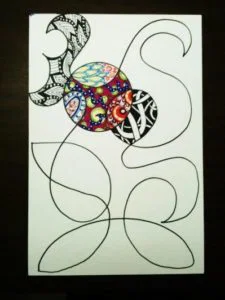
- 沿设计轮廓外缘,小心裁去多余白色区域——注意确保整个设计仍保持连贯一体。
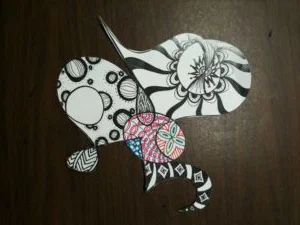
- 在设计上选取若干处,沿已有线条进行裁剪(此举有助于形成立体效果)。
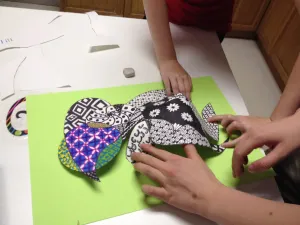
- 选取一张12×18英寸彩色手工纸作为基底。将纸雕作品塑造成富有趣味性的立体形态,使其局部从基底纸面隆起;仅在少数特定位置点胶固定,以实现你所期望的三维视觉效果。
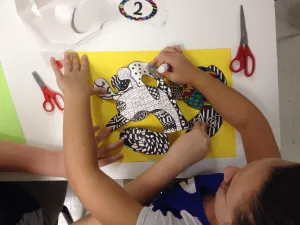
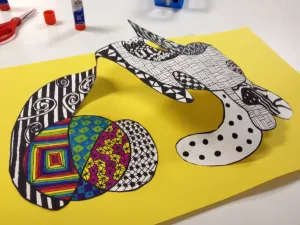
- 用加粗型Sharpie沿纸雕边缘勾勒轮廓,留出轻微边距;随后在背景区域添加更多图案。
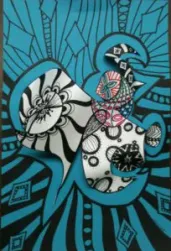
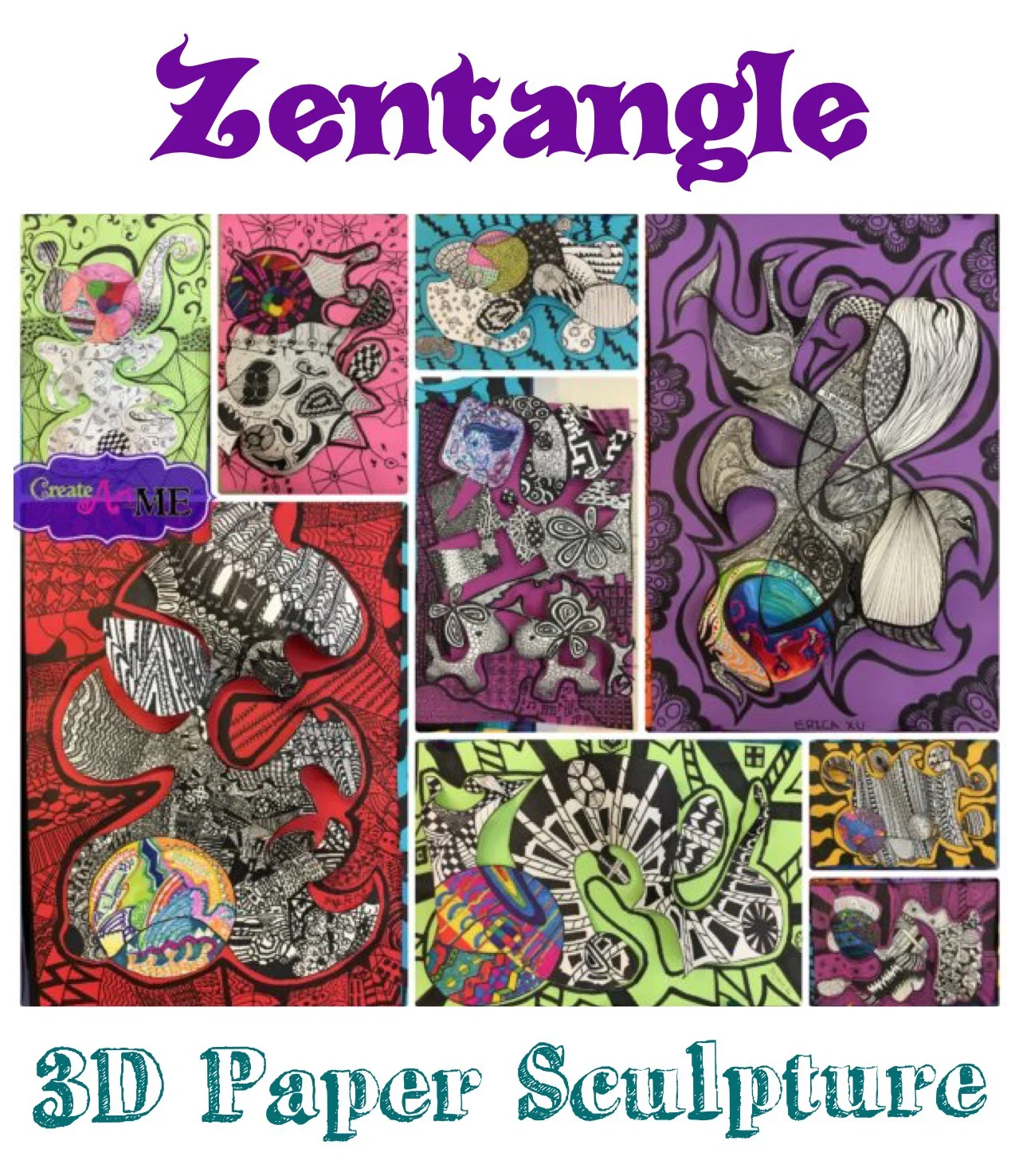
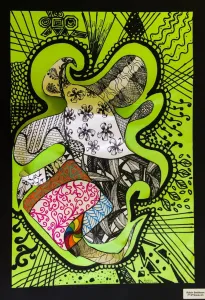
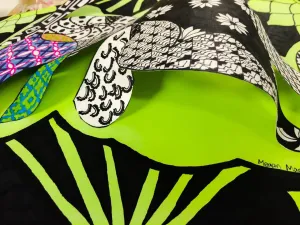
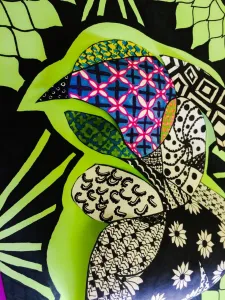
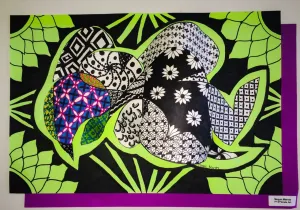
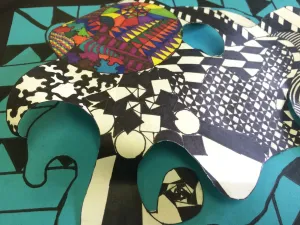
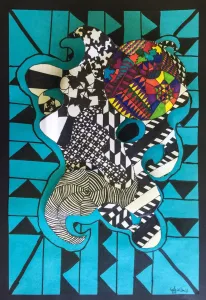
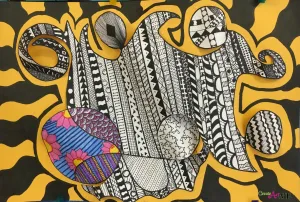
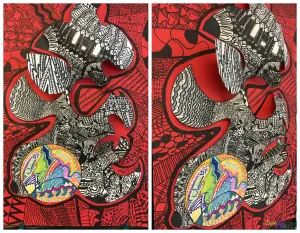
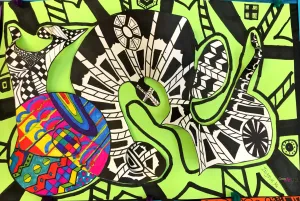
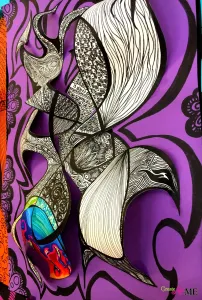
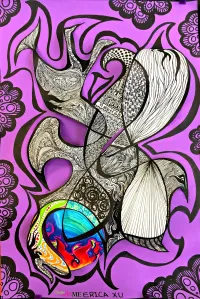
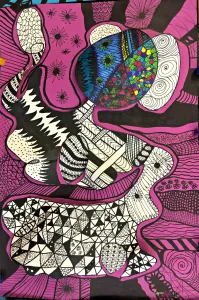
八年级学生作品
本文版权归米歇尔·C·伊斯特(Michelle C. East)所有——「与我一起创作艺术」(Create Art with ME)。若您引用本文任何内容,请务必回链至我的博客「与我一起创作艺术」[Create Art with ME](http://wp.me/p3afDo-14B)。
Rhythm and Emphasis – Zentangle 3D Paper Sculpture
Original: https://createartwithme.com/rhythm-emphasis-zentangle-3d-paper-sculpture/
Date: 2017-09-14
Author: Michelle East
Categories: Art Lessons, Color Contrast, Elements of Art Lessons, Emphasis Art Lessons, Featured, MS Art, non-objective, Principles of Art Lessons, Rhythm & Pattern Lessons
Tags: 3D Paper Project, Art Rhythm, Emphasis, middle school art, middle school art lesson, Paper Sculpture, principles of art, Principles of Art Rhythm & Emphasis- Zentangle Paper Sculpture, rhythm, zentangle, Zentangle Paper Sculpture
Zentangle Paper Sculpture Principles of Art Rhythm & Emphasis– Zentangle Paper Sculpture
Lesson Created by Michelle C. East © 2017
Objectives: Students will use repeated multi-patterns with lines and shapes to create rhythm & visual movement. Use color contrast to create an emphasis area (focal point). Students will cut and manipulate the paper so that it has 3D form.
Art Vocabulary:
- Elements: Line, Shape, Color
- Principles: Emphasis, Rhythm, Movement, and Variety
- Art History: Zentangles (a contemporary art movement)
Delivery:
- Review the Elements of Art: Line, Shape, and Color
- Types of Line: Horizontal, Vertical, Diagonal, Zig-Zag and Curved
- Types of Shapes: Geometric and Free-form or Organic
- Lines and shapes can be used to create pattern.
- Color in contrast to black and white can be used to emphasize an area in a piece of art.
- Learn these Principles of Design: Emphasis, Movement, Rhythm, Variety, and Unity
- Emphasis: makes one part of a work dominant over the other parts
- Movement: creates the look or feeling of action and guides the viewers eye
- Rhythm: a visual movement created by the repetition of the elements of art –pulls the eye along a path
- Variety: concerned with differences or contrast of elements in an artwork
- Unity: the feeling of wholeness or oneness that is achieved through the effective use of the elements and principles of art.
- Multi-Patterns: create new patterns based on combining several types of patterns.
- Zentangles Zentangle is an art form that requires a pencil, pen, and paper and a relaxed focus on creating basic repeating patterns (http://tanglingart.com/history-of-zentangle/). Zentangles are beautiful pieces of art that focus on pattern and design.
Project: Zentangle Pattern 3D Paper Sculpture
Medium: Sculpture
Genre: Non-Objective
Project Objectives: Students will use repeated multi-patterns with lines and shapes to create rhythm & visual movement. Use color contrast to create an emphasis area (focal point). Cut and sculpt the paper so that it has 3-dimensional form. Use one of your patterns to color the background
Supplies: 12×18” white tag board (90lb), Black & ColoredSharpies– fine & ultra-fine, Crayola Markers could be substituted for colored Sharpies, 12×18” colored construction paper, glue
Affiliate links-I only recommend products I use and love!
Instructions:
- Get 1 sheet of 12×18” white Tagboard paper.
- Use a circle, square, oval or rectangle shape template to draw your emphasis area. DO NOT put it in the middle of the paper…boring! Use a Sharpie
- NOT OVER DOING IT-draw an overlapping, loopy, wiggly & straight line that ends back to where it started. This is called a continuous line.
- In your emphasis area, use colored sharpies to draw patterns. Create new patterns in each new shape. In all other areas, use only black sharpies to draw different patterns. Create new patterns in each new shape.
- Cut out extra white areas from around the design-be careful that the design stays in one piece.
- Choose a few areas on the design to cut along the lines (this will help it form 3D).
- Choose a 12×18” Colored sheet of paper. Form your paper so that it raises from the paper base in interesting ways, only glue down a few specific spots that will give your sculpture the 3D look that you want.
8. Draw an outline with an extra thick sharpie around the sculpture leaving a slight border around it, then add more pattern on to the background.
8th Grade Art Student Work
This post is © Michelle C. East – Create Art with ME. If you choose to reference any part of this post, please link back to my blog Create Art with ME.


