教授美术构图的四大核心概念
原文链接:https://createartwithme.com/4-main-concepts-to-teach-art-composition/
日期: 2017-12-19
作者: Michelle East
分类: 美术课程、构图课程、精选内容、高中美术、初中美术
标签: 艺术构图、构图技巧、构图结构、教授美术构图的核心概念、强调、视觉中心、艺术中的层级关系、如何营造强调区域、引导线、选择性裁切、成功绘画、教授构图、构图结构类型
 几年前,我读到一句引言,彻底改变了我对构图在艺术中重要性的认知。 这段话深刻影响了我的个人创作,也重塑了我教学的方式。因此,我开始在课堂上大力强调构图教学,同时也将其列为我个人艺术创作的首要任务。
“……一幅构图良好但技法尚不完美的绘画,仍可成为一幅成功的作品;
而一幅技法精湛却构图拙劣的绘画,则绝不可能成功。”
出自 Cecile Baird 所著《用彩铅描绘光影》(Painting Light With Colored Pencil)(http://www.amazon.com/gp/product/1600611672/ref=as_li_tl?ie=UTF8&camp=1789&creative=390957&creativeASIN=1600611672&linkCode=as2&tag=crarwime-20&linkId=H24RJNFU7C7URCZN)。
据作者 Frank Webb 所言:“构图比事实、技法或题材都更为重要。” 要创作出引人入胜、富有表现力的作品,你必须将构图作为整体构思的基石。
亨利·马蒂斯在其《画家笔记》(Notes of a Painter)中如此定义构图:
“构图,即画家为表达自身情感,对其所能调用的各种元素进行装饰性安排的艺术。”
关于构图技巧与方法的优质资源:
掌握构图:大幅提升绘画表现力的技巧与原理
《画家的设计与构图指南》(A Painter’s Guide to Design & Composition),作者 Margot Schulzke
设计师奉行的十大构图法则,作者 Mary Stribley(这些法则虽聚焦于平面设计,但其中大量法则适用于所有艺术形式)
美术中的构图
什么是构图?它为何对一件艺术作品至关重要?
是什么: 构图指作品的整体组织方式。它是艺术家有意识地运用美术元素与原理来构建画面的过程。一幅成功的构图是统一的构图——整幅作品呈现出完整性与整体感,各部分协调一致。
为什么: 画面中物体的摆放并非随意之举,而是经过深思熟虑的决策结果。作为艺术家,你的职责是引导观者的视线进入并游走于你的构图之中。你必须有意识地运用美术元素与原理,以确立视觉中心、营造氛围,并提供方向性提示,帮助观者理解并浏览你的画面。
教授美术构图的四大核心概念
构图结构
如何运用构图结构(又称骨架结构,armature) 在画面平面上安排各元素(如三分法、三角形构图、黄金分割等)。构图结构类型(骨架结构)。此类结构种类繁多,但我倾向于先向学生介绍基础类型。(对角线构图与黄金分割构图所形成的视觉中心位置相同)
选择性裁切
如何运用选择性裁切:裁切即聚焦于主体,去除图像中不必要的或干扰性的部分。此举有助于集中观者注意力,甚至强化叙事性。
a. “填满画框”:这是摄影中常用的说法,意指艺术作品的主体应充满整个画面,甚至延伸至或超出画框边缘。“靠得更近些,再靠近些。”通常建议构图至少在画面平面的三边延伸出画框之外。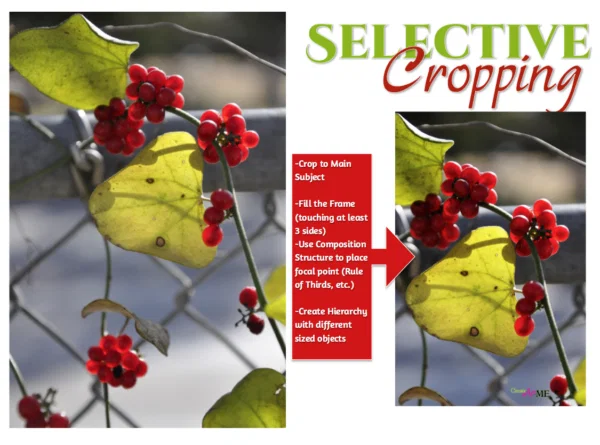
强调或视觉中心
如何营造强调区域,使构图拥有明确而有力的视觉中心。
a. 对比: 运用色彩、明度、尺寸、肌理等方面的对比。(“我发现,所有最具才华的艺术家共通的一项核心能力,便是深刻理解如何在构图中运用对比。” —— Matthew Encina)
i. 视频: 设计理论:如何打造富于动感的构图(Matthew Encina 讲授)
b. 引导线: 实线或隐含的线条能引导观者的视觉路径。善用线条将视线引向视觉中心。
c. 位置或布局: 人眼天然趋向于关注画面中心区域。置于画面中心附近的物体会最先被注意到。尽管如此,请提醒学生避免将主体直接置于纸面正中央——这会使构图显得乏味。布局应在初期阶段便确定下来,即在选定构图结构或骨架结构时同步完成。
d. 孤立: 当某一物体在画面中单独存在、远离其他物体时,观者的视线会自然被该孤立形态所吸引。
层级关系
如何建立层级关系: 指观者在观看构图时,各元素被注意的先后次序——即视线首先落在何处(视觉中心)、其次落于何处、再次落于何处,以此类推。Matthew Encina
a. 1 个超大物体: 通常是主体,也是画面中最重要的元素。该主体应至少在画面多个方向上延伸出画框之外。
b. 1–2 个中等尺寸物体: 作为次要元素,用于阐释和支撑主体。
c. 大量小型与微小物体: 作为第三层级元素,赋予画面动感,并补充更多上下文信息。
构图是创作过程不可或缺的一环,因此务必将其列为教学与个人艺术实践的重中之重!
融入构图教学的艺术项目
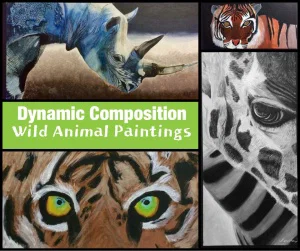 动感构图:野生动物丙烯绘画课
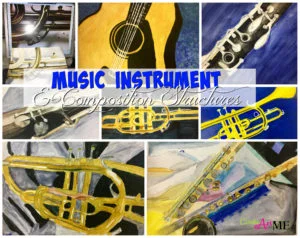 乐器与构图水彩绘画课
运用构图的课程
黑纸上的棉花糖白炭笔素描
泡沫杯炭笔静物素描
乐高炭笔素描(高中美术课)
塑料管炭笔素描
由小到大——放大绘画
奇趣麦圈交叉排线素描——以线条表现明度
大峡谷之旅:在旅行中寻找艺术灵感
本文作者:Michelle C. East。所有文字、图示及照片版权均属Create Art with ME所有。
4 Main Concepts to Teach Art Composition
Original: https://createartwithme.com/4-main-concepts-to-teach-art-composition/
Date: 2017-12-19
Author: Michelle East
Categories: Art Lessons, Composition Lessons, Featured, HS Art, MS Art
Tags: art composition, composition techniques, compositional structure, Concepts to Teach Art Composition, Emphasis, focal point, hierarchy in art, How to create an area of emphasis, Leading Lines, selective cropping, Successful painting, Teach Composition, Types of Composition Structures
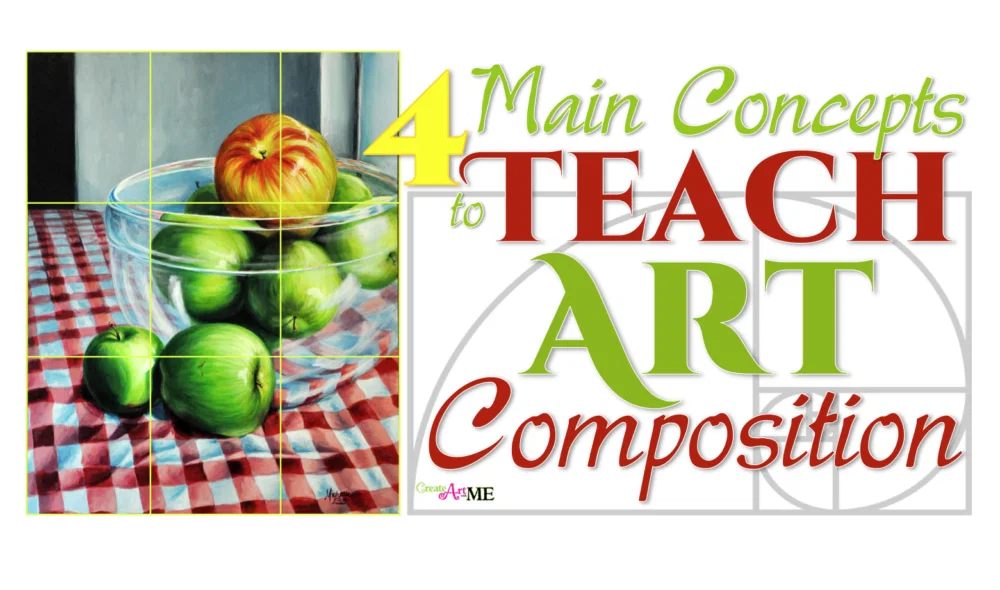
Several years ago I read a quote that changed my view on the importance of composition in art. Reading this significantly altered my own art and my approach of how to teach. As a result, I have begun to put a heavy emphasis in teaching composition to my students, as well as making it a priority in my personal artwork.
“…You can have a SUCCESSFUL PAINTING with good composition and less than perfect technique, but you CANNOT have a successful painting with great technique & poor composition.”
Painting Light With Colored Pencilby Cecile Baird.
According to author Frank Webb, “Composition is more important than fact, technique, or subject.” To create compelling, expressive works, you must make the composition the foundation of your plan.
Henri Matisse defined composition this way in his “Notes of a Painter”, “Composition is the art of arranging in a decorative manner the diverse elements at the painter’s command to express his feelings.”
Excellent Resources on composition techniques and methods:
Mastering Composition: Techniques and Principles to Dramatically Improve Your Painting
“A Painter’s guide to Design & Composition” by Margot Schulzke
10 Rules of Composition All Designers Live By Mary Stribley (these are focused on graphic design, but MANY of theses rules apply to any piece of art)
Composition in Art
What is composition and why is it important to a piece of art?
What: Composition refers to how the artwork is put together. It is how the artist INTENTIONALLY used the elements and principles of art to create the artwork. A successful composition is a unified composition, one in which the artwork has a feeling of wholeness, that it all goes together.
Why: The placement of objects within the picture plane is not an arbitrary act, but is the result of calculated decisions. It is your job as the artist to lead the viewer into and around your composition. You must use the elements and principles of art intentionally to create your focal point, create mood, and give directional cues that will help the viewer navigate your picture.
4 Main Concepts to Teach Art Composition
Composition Structure
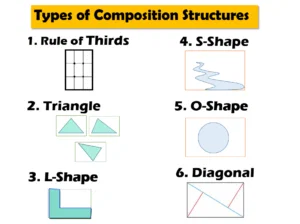
How to use a compositional structure or armature to arrange the elements on your picture plane (rule of thirds, triangle, golden mean, etc). Types of Composition Structures (Armatures). There are many more, but I like to start off with basic ones with my students. (Diagonal & Golden Mean create the same focal point placement)
Selective Cropping
How to use Selective Cropping: Cropping is the act of zooming in on the main subject matter to cut away unnecessary or unwanted portions of an image. This helps to focus the viewer’s attention and even help tell a story.
a. “Filling the Frame” This is a common photography phrase meaning that main subject matter of your art should fill the frame going past or off the edges. “Get close. Then get closer.” Generally, shoot for the composition to go off the edges on at least 3 sides of the picture plane.
Emphasis or Focal Point
How to create an area of Emphasis so the composition has a strong focal point.
a. Contrast: Contrasting color, value, size, texture, etc. (“I’ve found that the reoccurring skill in all of the most talented artists is their understanding of how to use contrast in their compositions.” Matthew Encina)
i. Video: Design Theory: How to Make Dynamic Compositions by Matthew Encina
b. Leading Lines: Lines or implied lines will direct the viewer’s visual path. Use line to direct the eye to the focal point.
c. Location or Placement: The eyes are naturally drawn toward the center of an artwork. Anything placed near the center of the work will be noticed first. That being said, discourage the students from placing the main subject in the center of the paper-it makes for a less interesting composition. Placement should be determined in the beginning stages when you are selecting your composition structure or armature.
d. Isolation: When an object is place alone and away from the other objects in an artwork, the viewer’s eye is drawn to the isolated shapes.
Hierarchy
How to develop Hierarchy: The order in which the elements within a composition are viewed by the eye. Where does the eye look at first (Focal Point), second, third and son. Matthew Encina
a. 1 Extra Large Object : usually the main subject, and most important element in the frame. This subject should go off the picture plane on several sides.
b. 1–2 Medium Sized Objects: secondary elements to give meaning to the main object.
c. Many small and tiny objects : tertiary elements to give movement and additional context for the frame.
Composition is an essential part of the creative process, therefore make it a priority in teaching as well as personal art!
Art Projects that Teach Composition
Dynamic Composition Wild Animal Acrylic Paintings Lesson
Music Instruments and Composition Watercolor Painting Lesson
Lessons that Apply Composition
Marshmallow White Charcoal Drawing on Black Paper
Styrofoam Cup Charcoal Drawing Still Life
Lego Charcoal Drawing HS Art Lesson
PVC Pipe Charcoal Drawin
Small to BIG – Enlargement Drawing
Chex Mix Cross-Hatching Drawing – Value Through Line
Grand Canyon Finding Art Inspiration through Travels
This post was written by Michelle C. East. All text, graphics and photos are copyright Create Art with ME.


