美术史热身活动
原文链接:https://thatartteacher.com/2023/07/15/art-history-warm-ups/
日期: 2023-07-15
作者: Sierra Machado
分类: 长篇教案
标签: 美术课写作提示、美术课艺术批评思路、美术教育、美术史热身活动、儿童美术解读思路、高中美术课、美术课课前任务、美术课课堂管理支持、课堂管理策略、跨学科美术教学思路、每日速写本习惯、精选内容、费尔德曼艺术批评法、如何在美术课中融入美术史、如何引导学生书写美术、如何在美术课中增加写作训练、如何在课堂中增加写作训练、速写本作业、速写本提示、那位美术老师、美术课写作提示
本文将详细说明我所采用的每日美术史热身活动实践。这些提示有助于学生发展美术解读与美术批评能力,同时为持续探究广泛多样的艺术家提供了绝佳机会。学生还通过书面表达与口头讨论,逐步积累美术专业词汇。这一实践堪称课堂管理的“游戏规则改变者”,并有力推动每日速写本习惯的养成。
我将先简要概述该理念,并提供可免费下载的模板与范例;随后深入解析每日提示的具体内容。
规律、规律、再规律
我本人极度推崇规律性,也热爱每天以结构化方式开启美术课。校园环境中存在太多干扰因素:消防演习、中午突如其来的啦啦队集会(为何偏偏是中午?)、下雪却不放假、冰雹砸向教室窗户、清晨突发龙卷风(您能猜出我住在俄克拉荷马州了吧?)、长假后返校首日、食堂里爆发的冲突……此类情况不胜枚举。
结构与节奏感,能让学生清晰知晓每日的课堂期待。2023年是我从教第十五年,而我也已坚持这一每日美术史热身活动整整十五年。过去我也称它为“课前任务”(Bellwork),#itiswhatitis——这个名称虽不够有趣,但我欣赏其直截了当。
我曾任职的学校中,有些要求全校推行某种形式的“课前任务”。学生在多数其他课程中均有课前任务,“课前任务”这一名称本身即暗示了明确期待:进入教室→取出速写本→在铃响前、同学们陆续入座时完成课前任务。
美术史热身活动概览
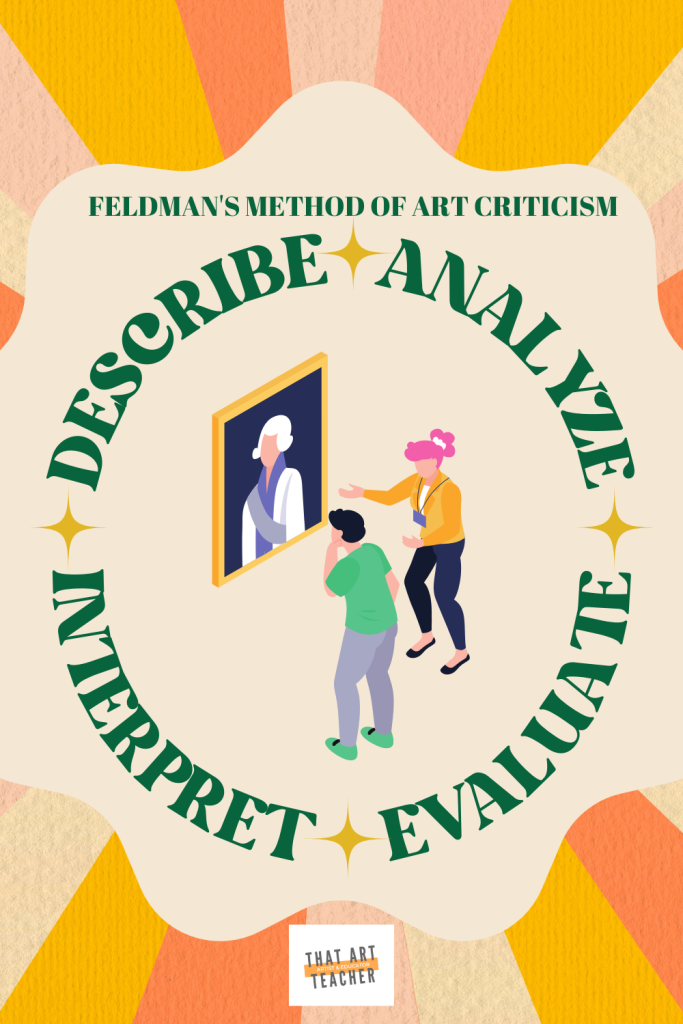
每周,学生聚焦一件艺术品并进行深度探究。我们依据费尔德曼艺术批评法(后文详述),每日围绕该作品的特定要素展开讨论。每项任务耗时五至十分钟,于课始完成。学生使用存放在教室内的个人速写本,并参照智能白板(Smart Board)上显示的提示作答。
我曾任职的学校中,有的要求学生自备速写本(如同其他高中课程所需的学习用品);有的则收取课程费用,由学校统一提供速写本;我还曾在一所零预算学校任教,需自行筹款购置教具。(您是否注意到我在俄克拉荷马州任教?)
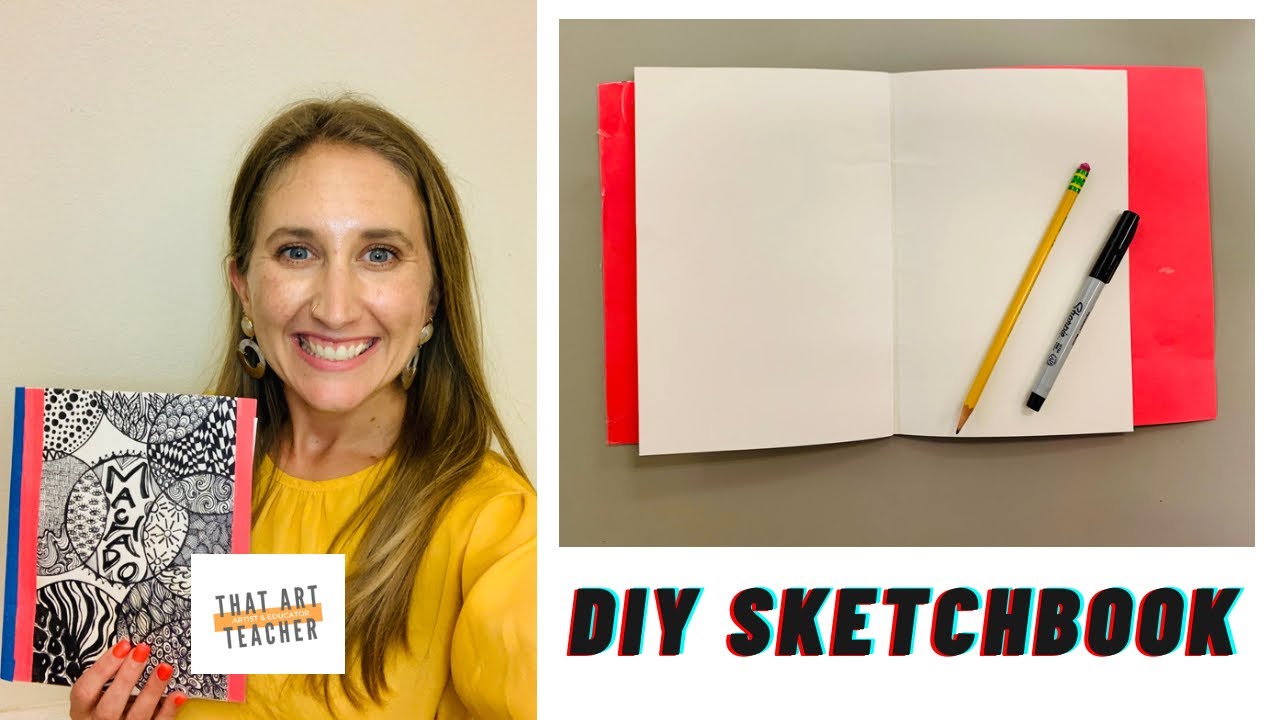
学生通常每周填满一页。若使用较大尺寸纸张,单页亦可轻松容纳两周内容。每日仅需完成一项小任务,周末则依据完成度与努力程度(含完整句子!)给予形成性评价。

搞定! 一学年内,我们便能深入探究近三十位艺术家。所有那些令人头疼却不可回避的州级与国家级课程标准——绝非仅限于“动手创作美术”——均以极具意义的方式得以落实。我们以每日固定流程化解了每日开课时的混乱局面,既为学生也为教师提供了极为有效的课堂管理支持。“美术课如何评分?”这一难题,也通过赋予学生稳定、一致的形成性评价迎刃而解——该评价不取决于其原创美术创作能力。这对校长、评估型行政人员及家长而言,无疑是一大利好。
学生会抱怨吗?每天都会。学生会为无需开展热身活动的短周期欢呼雀跃吗?当然会,而我也会与他们一同庆祝。美术课本质上是一门关于视觉艺术的学术探索。探究艺术家“为何创作”与“如何创作”,绝对不可或缺。毕竟,这叫“美术工作”(artWORK),对吧?
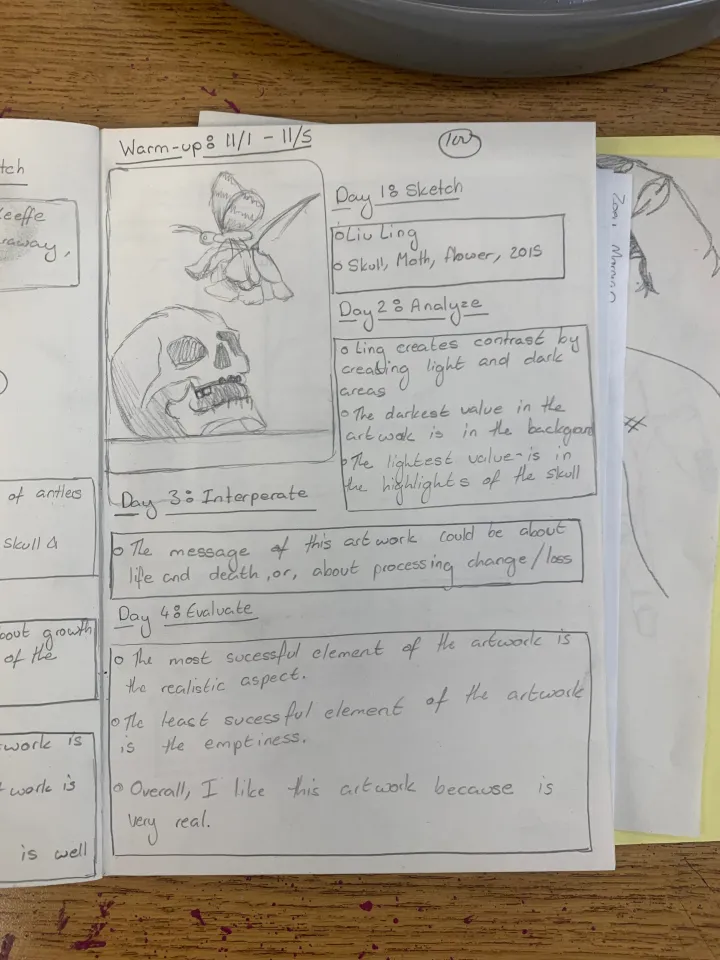
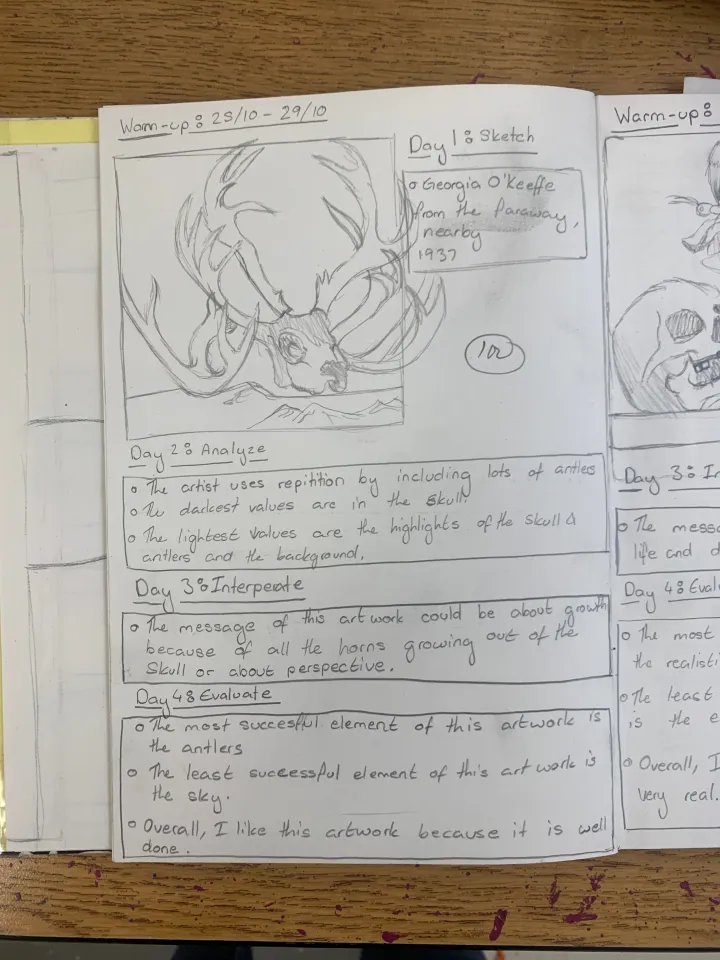
以下为学生一周末完成的速写本页面范例。问题与图片每周更换,但格式始终如一。
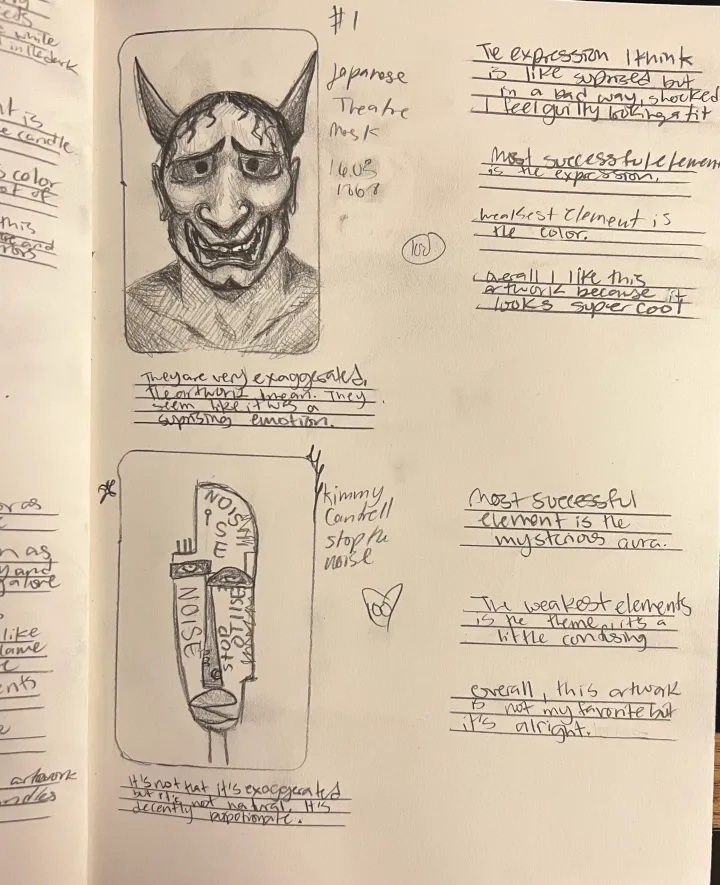
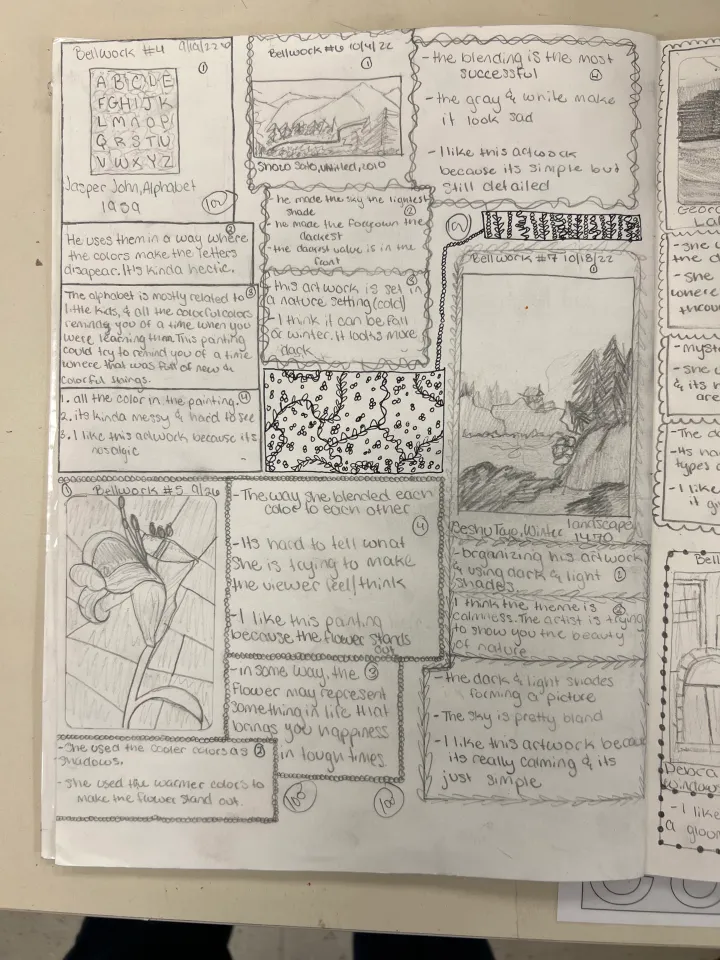
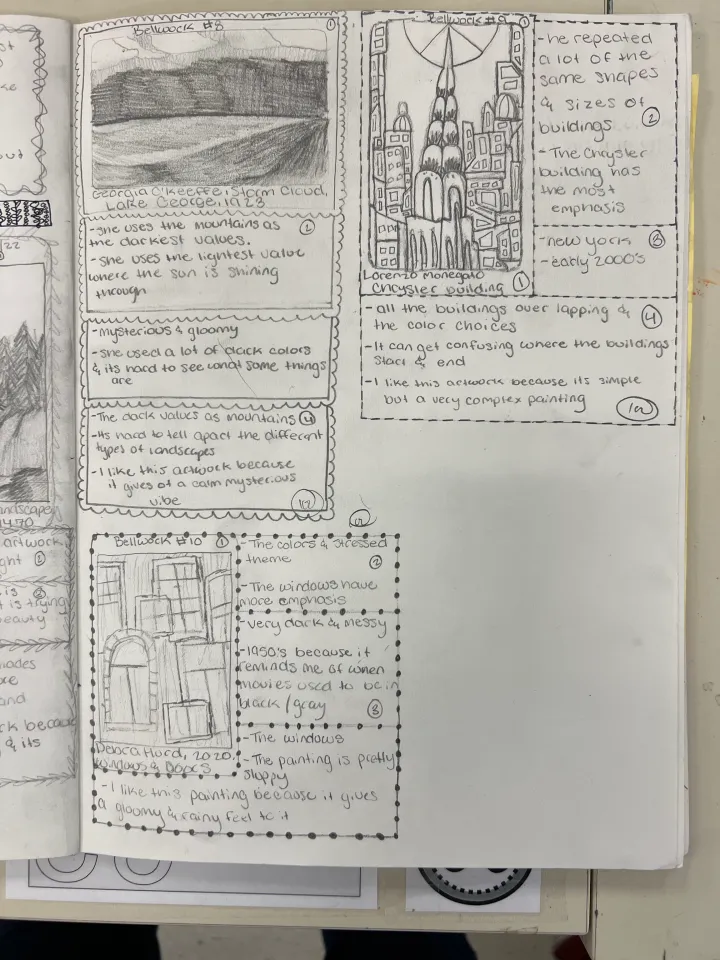
美术史课前热身模板
Bellwork-Template免费下载!
Bellwork-Template下载
您可下载此免费模板(我日常所用),并按需自行调整。多年来,我持续优化该模板,以适配本校具体教学环境。新冠疫情后,我大幅精简内容,并将每周五设为纯评阅日,取消反思性问题。具体安排还需依据学生年龄及技能水平而定。
本指南在开学第一整周尤为实用,有助于学生快速掌握热身流程。此项任务将作为学生的首个正式评分项;第二整周起,我们则转入素描本环节。此举亦便于应对学生调课及班级名单变动等情况。
Printable-Art-History-Warm-up-Guide下载
Printable-Art-History-Warm-up-Guide下载
各年级、各班级的具体需求略有不同。过去我每周五均设置一道关于学生个人创作的反思题;但后疫情时代,周五仅保留常规评阅环节——学生仍需照例取出素描本准备接受评阅,但无需完成额外作业。
全新上线!我已制作20余页可编辑的Google幻灯片,您可直接使用,也可依自身教学理念与课程内容自主修改。欢迎点击了解:
借助每日美术史热身与可编辑Google幻灯片提升艺术批评能力
以下是我近期在课堂中实际使用的部分热身课件示例,欢迎直接采用或按需调整——这并非我个人首创。
Ruth-Asawa下载
Amy-Sherald下载
The-Penitent-Magdalen下载
Frida-Kahlo下载
美术史热身教学资源
这一观画方法绝非我所独创。我在南卡罗来纳大学攻读研究生期间,首次系统学习了费尔德曼艺术批评法(Feldman’s Method of Art Criticism)。该方法采用分层递进式结构,强调须在全面观察、深入探究作品之后,方可进入批评评价环节。
以下是由北卡罗来纳州立美术馆提供的该方法快速入门简介(来源可靠):
链接: https://learn.ncartmuseum.org/wp-content/uploads/2019/01/Feldman-Method-of-Art-Criticism_0.pdf
Feldman-Method-of-Art-Criticism_0下载
大峡谷州立大学亦提供一份优质指南,内含若干示范性提问范例。
Feldmans-Model-Crit下载
链接:https://www2.gvsu.edu/hipshean/resources/Feldman’s%20Model%20Crit.pdf
马来西亚在线教育技术期刊(MOJET)所载文章对该艺术批评法进行了更为详尽的解析与探讨:https://files.eric.ed.gov/fulltext/EJ1086252.pdf
此热身模板同样非我原创。在我入职前,我敬爱的前同事玛丽·凯瑟琳·雷恩斯(Mary Catherine Raines)及其同事(后调往他州)已在里奇兰东北高中长期使用该模板。作为一名初出茅庐的新教师,当玛丽·凯瑟琳对我说:“这是我们每日热身的标准流程,所有美术课均须执行,它已纳入本教研组统一教学大纲”时,我如释重负。我向来欣赏明确清晰、稳定一致的教学规范。这一现成模板不仅助我迅速开启教学实践,更缓解了新教师普遍面临的课程开发压力——每位新手教师都深知其中挑战之艰巨。
美术史课前热身格式
每周课件的制作耗时颇多。我常反复斟酌:究竟选用哪位艺术家?展示哪件作品?是否充分兼顾文化多样性?这件作品能否真正激发学生兴趣?当我要求他们临摹某幅超写实主义作品时,会不会引发集体“抗议”?经过数个学期积累,我储备的艺术家数量已远超实际授课周数。而参加教研会议、同行交流或浏览Instagram时,我的灵感图库更呈指数级增长。
我所遴选的艺术家,其观念表达与技法特征均须与当周课堂教学内容形成概念性与技术性双重关联。我始终致力于强化一个理念:研习艺术家是获取创作灵感的重要途径——哪怕这种灵感最终导向与原作截然不同的艺术表达。
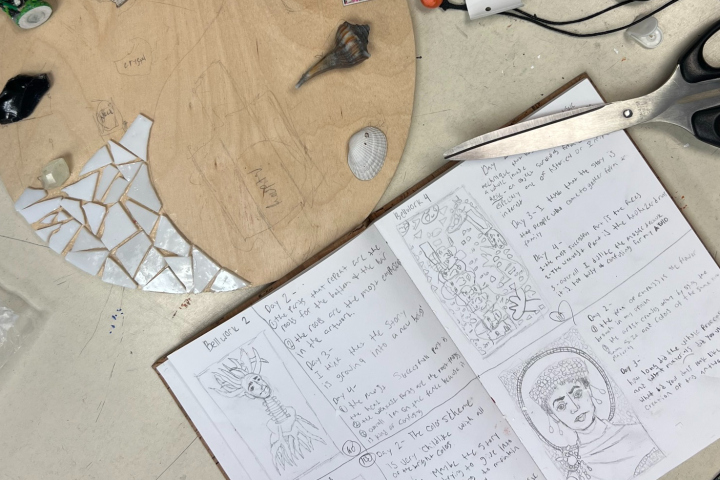
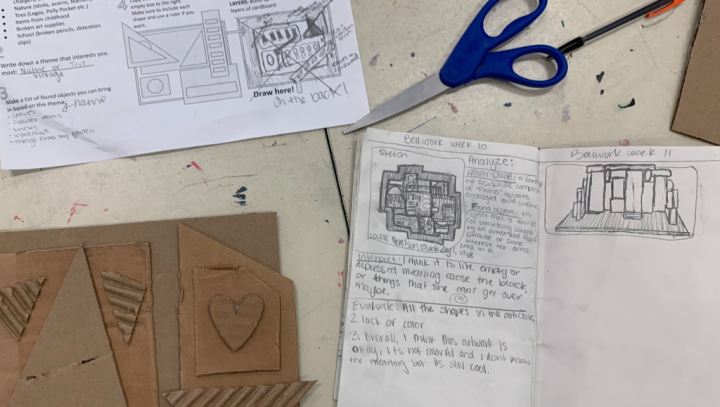
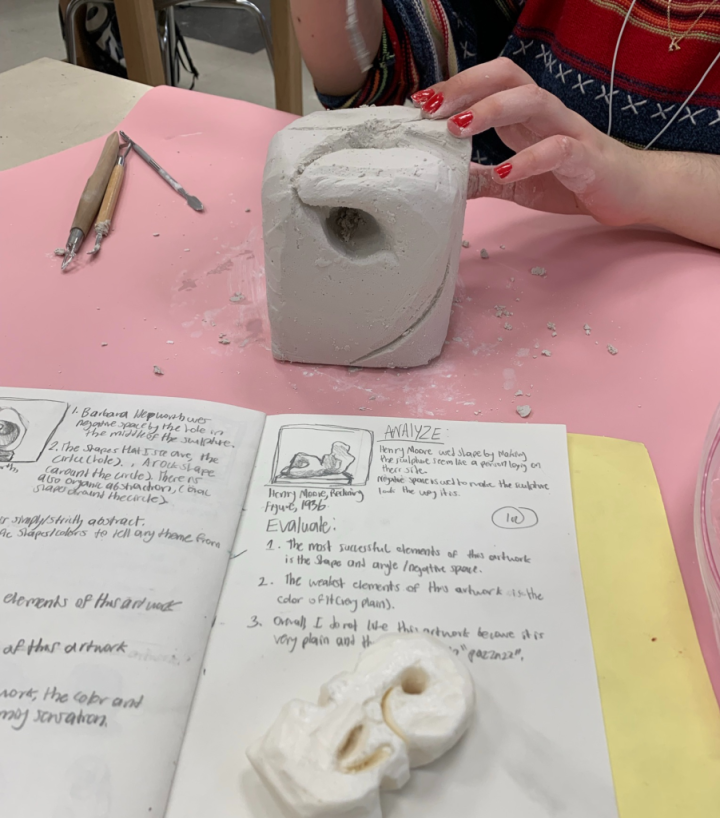
每周热身流程完全固定:围绕单件作品,依次进行描述(Describe)→ 分析(Analyze)→ 解读(Interpret)→ 判断/评价(Judgment/Evaluation)。该结构引导学生沉心静气、细致观察、主动发问,避免流于肤浅的即时反应。
第一天:描述/速写

此环节旨在训练学生对作品进行不带主观评判的初级观察。教师可组织学生列清单、归纳三点观察发现,或开展口头讨论。我们始终以速写作为观察活动的起点。这对初学美术的学生而言颇具挑战,但我已成功将此活动应用于五年级学生、初中生、“迷失方向”的高中美术1班学生,乃至艺术磁石项目中的高年级优等生。
对部分学生而言,绘画始终令人望而生畏。实践表明,教师同步示范、学生跟随临摹的方式效果显著。过去我常用白板演示,如今则借助Elmo实物展台,师生共同完成缩略草图绘制。学期初,我会优先选择那些对学生(以及对我自己!!!)而言相对友好、不具压迫感的作品进行练习。
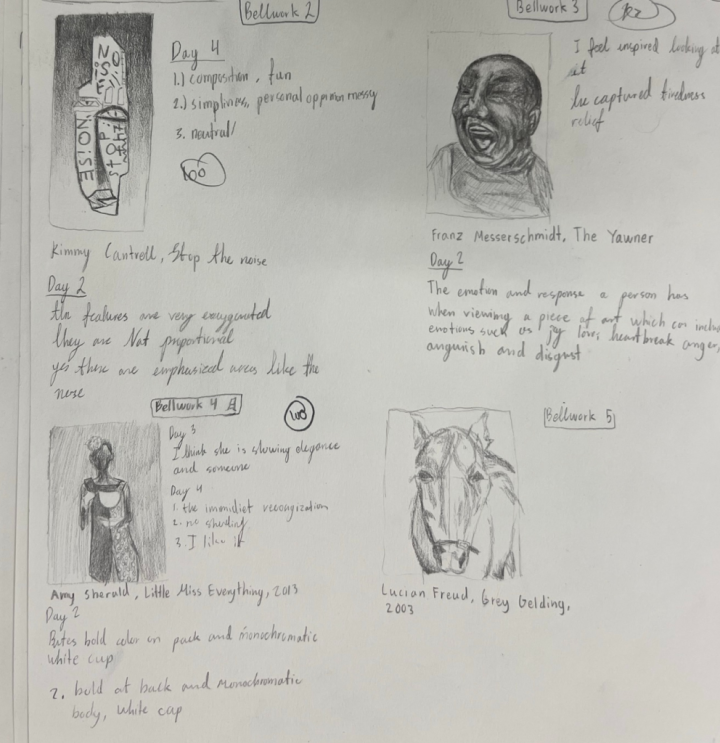
我的素描常常出错。我常用自嘲式幽默说:“别忘了,只有我领这份工资”或“没错,我确实有两个艺术学位……”我是否总爱自己的素描?是否每天热衷于画同一幅作品4到6遍?当然不!但反复练习终有回报,也能让学生明白:艺术不只是与生俱来的天赋,更是一种需要持续训练的学科。
在素描过程中,我还会穿插介绍艺术家的一些背景知识:比如所处时代、艺术风格,以及这件作品在问世之初是否具有革命性,抑或曾遭人厌恶。若涉及重要文化或历史事实,我们也会在当周教学中适时展开讨论。
第二天:分析

第二天,我们基于客观事实对作品进行分析,避免掺入主观意见。例如,不说“我不喜欢这幅作品的配色”,而练习表述为“艺术家采用了单色配色方案”。此时我们暂不探讨这些选择背后的含义——那留待第三天。这是理解一件艺术品如何在形式上组织与构建的基础,最终将引导我们讨论这些形式选择可能传达的意义。
我制作了这份指南,帮助学生在整个学期中掌握相关术语。我们通常将其附在素描本首页,方便随时查阅。
艺术元素与原则指南免费下载!
我也把这一天称为“术语日”,因为我们会聚焦于两个艺术元素或原则,并探讨其具体运用。这对向学生介绍后续希望他们运用于自身创作的概念尤为有效。例如,若正在探索风景画中的空间感与透视,就可选取能体现这些概念的作品,再让学生就此写作分析。这也是向学生引入艺术术语的绝佳契机。有些周次,我们先写一个术语定义(如:强调),第二句则回答“该作品中如何运用了强调?”这种方式能循序渐进地引入艺术术语,并关联学生已学过的相关概念。
第三天:解读
第三天,我们对作品的故事、信息、意义及作为观者所产生的感受进行假设性探讨。我会提醒学生:所谓“假设”,是你基于已有知识所作的最佳推测;我不期待他们准确知晓艺术家的真实意图,每位学生的回应都可能不同。除非艺术家本人就站在你身边亲口解释其创作初衷,否则你永远是以观者身份,独立得出自己的结论。
唯一不被允许的回答是“我不知道(IDK)”。我尤其强调“因为”这个词。我常需推动学生具体说明“为何”这样认为。例如,“我认为这件作品在探讨孤独感,因为画面中存在大量负空间,且采用单色配色方案”,远比“我觉得艺术家当时很孤独”更有深度。并非所有学生都擅长写作,但为写作提供清晰结构,确实能切实帮到他们。你的英语教师同事(以及负责评估的校长们!)也会因此欣赏你。
许多学生会以令人惊叹的细腻观察,让你刮目相看。不过,不少学生——尤其是高中生——在解读作品时,往往比其他环节更觉困难。我发现,有些班级在被问及“你认为这件作品的含义是什么?”时,能立刻给出成百上千种回应;而另一些班级的学生,则会像被点名举手发言的青少年一样,面露恐惧、呆坐不动。
我发现低龄儿童对此毫无障碍:他们会兴奋地高高举起小手,争着大声分享自己的解读。高中生虽让这一过程略显艰难,但设计得当的引导性问题,往往能显著改善效果。如果课堂讨论并非你的强项——而我自己也花了多年时间锤炼这类引导技巧——那么“思考—分享—结对”也是一种极佳的替代方式。
第四天:评价

最后,我们进行评判。对我而言,这是最轻松也最有趣的环节。据我观察,学生在表达个人观点方面训练有素;但要让他们结合作品中的具体证据来陈述观点——这需要反复练习。我告诉学生:观点是个人化的,会因作品而异。我不会向他们展示一长串我个人偏爱的作品,而是精心挑选那些具有重要历史意义、且与我们自身创作中所运用的概念紧密关联的艺术品。你不必因为“喜欢”某件作品而额外加分,也不会因“不喜欢”而伤到我的感情。
我们通过以下句式练习组织评价性表述:“我 _______ 这件作品,因为 _______” 或 “这件作品是 _______(成功/不成功等),因为 _________。”
诚然,个人观点至关重要;但我们不鼓励学生简单粗暴地高声宣布“我喜欢它”或“我讨厌它”,而是引导他们以自己的标准,判断该作品是否成功(或不成功)。一件作品可能在技术层面极为成功,却未必能引发你的个人共鸣。这类讨论将贯穿整个学年。
你需要引导学生远离“我讨厌它,它真丑”或“我爱它,它真美”这类笼统回应。好吧,“讨厌”是个很强烈的词——那么,是色彩(或此前讨论过的其他形式要素/艺术原理)的哪个方面让你感到不适?你认为这件作品中最美的元素又是什么?这是一种需要习得的技能,而看到学生一年下来对艺术批评越来越自如、越来越自信,实在令人欣喜。
这种艺术批评方法之所以成效显著,关键在于将评判环节留至每周末才进行。同时,我也尽量避免在学生分享观点前,过多透露作品的背景信息。我希望学生能直接、真切地与作品发生个人联结,而不是由某位YouTube上的艺术史学者(或我自己!)来告诉他们“应该”如何欣赏一件作品。
在大家交流完各自观点后,我喜欢播放一段关于艺术家或该作品的短视频。有时我能找到恰到好处的两分钟短片,有时则完全找不到符合我预期效果的资源。我可能在周五评分前再展示更多该艺术家的其他作品图像,也可能辅以一段简明扼要的艺术史讲解——短小精悍即可。
感谢你一路相伴!
以上仅是我个人在日常教学中运用艺术史热身活动的方式:将艺术批评融入其中,并持续建立艺术史关联。它可轻松适配不同学段与各类学校环境。我由衷喜爱这一方法,也深深感激所有为此奠定基础的前辈同仁——正是他们,让这一实践成为我教学中不可或缺的一环。它助我持续、自信地落实各项视觉艺术课程标准。我真心相信,它不仅帮助学生成长为更出色的艺术家,更让他们在日常生活中,对所遭遇的各类视觉图像保持更高程度的关注与投入。
订阅,以免错过任何一篇推送!
订阅那位美术教师
寻找更多课堂管理妙招?请查看这篇 文章:
美术教师亲授的5种课堂管理策略
查看这篇涵盖开学季全部要点的 文章:
美术教师开学季资源包

作者:西耶拉·马查多
2023年1月21日

作者:西耶拉·马查多
2022年12月10日
作者:西耶拉·马查多
2022年12月1日
Art History Warm-Ups
Original: https://thatartteacher.com/2023/07/15/art-history-warm-ups/
Date: 2023-07-15
Author: Sierra Machado
Categories: long form lesson plan
Tags: art class writing prompts, art criticism ideas for art class, art education, art history warm-ups, art interpretation ideas for kids, art lessons for high school, bellwork for art, classroom management help for art, classroom management strategies, cross curricular art ideas, daily sketchbook habit, featured, feldman's method of art criticism, how to connect art history in art class, how to get kids to write about art, how to use more writing in art class, how to use more writing in class, sketchbook assignments, sketchbook prompts, that art teacher, writing prompts for art class
This post will describe (in detail!) my practice of daily art history warm-ups. These prompts help students develop their art interpretation and art criticism skills and it’s a wonderful opportunity to investigate a broad range of artists consistently. Students also develop their art vocabulary both by writing and participating in verbal discussions. This practice is a classroom management game changer and helps establish a daily sketchbook habit.
I will give a brief overview of the concept with free downloadable templates/examples, and then dig deeper into each daily prompt.
Routine, Routine, Routine.
I am a huge fan of routine, and I love starting my class each day with structure. There are so many disruptions in a school environment. Drills, a mid-day pep rally (WHY), snow but no cancellation, hail hitting the classroom windows, an unexpected morning tornado (can you tell I like in Oklahoma?) the first day back after a long break, a fight in the cafeteria…I could go on forever.
Having structure and rhythm helps students know what is expected of them each day. I am starting year fifteen in 2023, and I am fifteen years committed to this daily art history warm-up routine. I have also called it Bellwork, #itiswhatitis, which is a less fun title, but I like the directness of the name.
I have worked in schools where some sort of “bell ringer” is a school wide expectation. Students have bellwork in the majority of their other classes and the title implies the expectation. Come to class, get your sketchbook, do your bellwork as students are coming in before the bell.
An Overview of Art History Warm-Ups
Each week, students look at one artwork and explore it in depth. We discuss certain elements of that artwork each day using the Feldman’s method of art criticism (more on that later). Each task is done in the first five to ten minutes of class. Students use their own sketchbook that they keep in class and follow the prompt that is displayed on the Smart Board.
I have worked in schools where students were expected to provide their own sketchbook (like supplies for any other high school class) and I have worked in schools with a course fee and we provide sketchbooks. I have also worked in a school where there is a $0 budget and I am expected to fundraise for supplies. (Did I mention I teach in Oklahoma?)
Try out this DIY tutorial for a budget friendly sketchbook:
Students typically fill one page per week. If using larger paper they can easily fit two weeks of work on one page as well. Each day there is a small task and at the end of the week they get a formative grade based on completion and effort (including complete sentences!).
BOOM. We accomplish a deep investigation of almost thirty artists in a school year. We have hit all those pesky state and national standards that aren’t just “make art” in a really meaningful way. We have solved the chaos of starting class each day by giving the students (and the teacher!) a daily routine that is sooooo helpful with classroom management. We have answered the question “how do you grade art?” by giving students a consistent formative grade that is not based on their ability to create original art. This is a huge bonus for principals, evaluating administrators and parents.
Will students complain? Every day. Will students celebrate the short weeks we don’t do warm-ups? Yes, and I will celebrate with them. Art class is an academic pursuit of visual art. And exploring why artists create and how they create is absolutely essential. It is called artWORK, right?
Here are some student example pages of how this looks at the end of the week. The questions and images change, but the format never does.
Art History Warm-Ups Template
Bellwork-Templatefree Download!
Bellwork-TemplateDownload
You can download this free template that I use and make it your own. I have adjusted it throughout the years to fit my particular school environment. After Covid, I paired down a lot and let Fridays be a day of grading without a reflection question. It depends on your age group and their skill level.
This guide is really useful the first full week of school to help students learn the format. This is turned in as their first grade and then we transition to sketchbooks the second full week. This helps as students change their schedules and class rosters switch around.
Printable-Art-History-Warm-up-GuideDownload
Printable-Art-History-Warm-up-GuideDownload
Each grade level and class will have slightly different needs. I used to have a reflection question each Friday about their own personal artwork, but post-Covid Friday is simply a grading day where students still have the routine of getting their sketchbooks out and ready for grading, but do not have any work to complete.
NEW! I have over 20 editable Google Slides that you can use as is or update of your own ideas and curriculum. Check then out here:
Boost Art Criticism Skills with Daily Art History Warm-Ups & Editable Google Slides
Here are some sample warm-up presentations I have recently used in my classroom. Feel free to use them or change them, this is not something that I have invented.
Ruth-AsawaDownload
Amy-SheraldDownload
The-Penitent-MagdalenDownload
Frida-KahloDownload
Art History Warm-Ups Resources
I certainly did not invent this method of looking at art. I was introduced to Feldman’s Method of Art Criticism in graduate school at the University of South Carolina. It is a tiered approach where you delay criticism of an artwork until you have fully explored and investigated it.
This is a great quick introduction to this method I found on through the North Carolina Museum of Art.
Link: https://learn.ncartmuseum.org/wp-content/uploads/2019/01/Feldman-Method-of-Art-Criticism_0.pdf
Feldman-Method-of-Art-Criticism_0Download
This is also a great guide from Grand Valley State University with some sample questions.
Feldmans-Model-CritDownload
Link:https://www2.gvsu.edu/hipshean/resources/Feldman’s%20Model%20Crit.pdf
This link from the Malaysian Online Journal of Educational Technology has a much more detailed breakdown and discussion of the art criticism method. https://files.eric.ed.gov/fulltext/EJ1086252.pdf
I also did not invent this warm-up template. My wonderful former coworker Mary Catherine Raines and her colleague, who I replaced after she moved to another state, used this for years in their classrooms at Richland Northeast High School before I came along. As a brand spanking new teacher, I was so relieved when Mary Catherine said “This is our daily warm-up routine. All art classes are expected to use it, it’s part of our department’s syllabi.” I am someone who appreciates directness and consistency. This also gave me a head start to building my own curriculum, and all new teachers know how intimidating that is.
Art History Warm-up Format
It takes time to build each week’s presentation. I sometimes agonize over which artist and which artwork to show my students. Am I showing enough diversity? Will this particular artwork inspire my students? Will they revolt against me when I ask them to sketch this hyper realistic artwork? A few semesters in, and I have more artists prepared than weeks of school. As I go to conferences, talk to other art teachers, or scroll through Instagram my library of inspiration exponentially increases.
I pick artists that have conceptual and technical connections to what we are doing in class. I try to reinforce the importance of looking at artists for inspiration, even if that means inspiration to create art completely different from them.
The format stays the same every single week. With one artwork you first describe, then analyze, continue to interpret and conclude with judgment/evaluation. This helps students take the time to really observe and question artworks without jumping to a knee-jerk reaction.
Day One: Describe/Sketch
This is the practice of looking at an artwork and making primary observations without judgement. You could have students make lists, write out bullet points of three things they notice and engage in verbal discussion. We always start with sketching as our base point of observation. This can be tricky in a beginning art class, but I have done this with students as young as 5th grade, middle schoolers, lost Art 1 high school students and the advanced seniors in a magnet program for the arts.
Drawing will always be intimidating for some students. What seems to help is to model the drawing for students as they draw along with you. I used to draw on the white board, but now we draw our thumbnail sketches together using my Elmo document camera. I like to start the semester with artworks that aren’t completely intimidating for them (and me!!!) to draw.
There are mannnny times that my sketches are out of whack. I use self-deprecating humor and say “remember, I’m the only one getting paid for this” or “yes, I do have two art degrees…” Do I always love my sketches and am I also eager to draw the same artwork 4-6 times a day? Heck no. But the practice pays off and it helps students see that art is not just innate talent but a discipline.
I will also throw in a few facts about the artist as we are sketching. I may mention the time period, the style, if the artwork was revolutionary or hated at the time it was made. If there are any important cultural or historical facts these are discussed throughout the week as it fits.
Day Two: Analyze
On the second day, we analyze the artwork using factual observations and withholding anything opinion based. Instead of saying “I don’t like the artwork’s color scheme” we practice making factual observations such as “the artist used a monochromatic color scheme”. We don’t explore the meaning behind these choices yet, we save that for the next day. This is the building block for understanding how an artwork is formally organized and structured, which will eventually lead to discussing what those choices may convey.
I made this guide to help my students with their vocabulary throughout the semester. We typically attach this to the front page of their sketchbook to reference.
Elements-and-Principles-of-Art-Guidefree Download!
I also call this vocabulary day because we focus on two elements or principles and discuss their use. This is very useful when introducing students to concepts you then want them to use in their own art. For example if you are exploring depth and perspective in landscapes, select artworks that demonstrate these concepts and then have students write about them. This is also a great opportunity to introduce students to art vocabulary. Some weeks we write one definition (ex: emphasis) and then the second sentence will answer the question how is emphasis used in this artwork? This allows for a slow introduction to art vocabulary and draws on concepts they may have already learned.
Day Three: Interpet
On day three, we hypothesizeabout the story, message and meaning of the artwork and how it makes you feel as a viewer. I remind students that hypothesizing is your best educated guess. I don’t expect them to know exactly what the artist is trying to say and every student may have a different response. Unless an artist is standing right next to you explaining their intentions, you will always be the viewer coming up with your own conclusions.
The only answer not allowed is IDK. I love to emphasize the word because. I often have to push students to specify WHY they think what they do. For example “I think the artwork is exploring loneliness because of the large areas of negative space and monochromatic color scheme” is a much deeper statement than “I think the artist was lonely”. Not all students are strong writers, but giving students structure in their writing really helps. And your English teacher colleagues (and evaluating principals!) will love you for it.
Many students will blow your mind with the thoughtful things they will notice in an artwork. Some students, high schoolers in particular, will struggle with interpreting an artwork more than anything else. I find that some classes will come up with a million responses when you ask “What do you think is the meaning of this artwork?” And some of them stare at you with the dread of a teenager asked to raise their hand in class.
I have found that younger kids do not struggle with this concept at all. They will wildly wave their hands in the air to share their interpretation out loud. High school students will make this process a little more challenging, but finding the right guided questions can really help. If class discussions aren’t your jam, and I have had to hone my skills leading these throughout the years, a think-share-pair is another great approach.
Day Four: Evaluate
And finally, we judge. This is the easiest and most fun prompt for me. In my experience, students are very well trained with communicating their personal opinions. Now, stating their opinion using evidence from the artwork…THAT takes practice. I tell students their opinion is their own and will vary from artwork to artwork. I don’t show them a line-up of my favorite artworks, I curate artworks that are important historically and that connect to concepts we are using in our own art. You do not get extra points for loving it, you do not hurt my feelings if you dislike it.
We practice structuring evaluation statements with “I _______ this artwork because _______” or “this artwork is _______(successful/unsuccessful etc.) because _________.”
Yes, personal opinion is important. But instead of loudly declaring if you like it or hate it, we practice evaluating it as a successful piece or unsuccessful (in your own opinion, of course). Something can be a very technically successful piece that does not speak to you personally. And there will be many conversations along those lines throughout the year.
You will have to steer students away from “I hate it, it’s ugly” and “I love it, it’s pretty” responses. Okay, hate is a strong word. What about the color (or whatever element/principle were discussed) bothers you? What do you think are the most beautiful elements in the artwork? This is a learned skill and it’s so fun to see how much more comfortable students get with art criticism throughout the year.
This method of art criticism is so impactful due to holding judgment until the very end of the week. I also try to hold back too much information about the background of the artwork until after they share their opinions. I want students to personally engage with the artwork, and not have some art historian on YouTube (or me!) tell a student why they should appreciate an artwork.
After we share our opinions, I like to show a short video about the artist or artwork. Sometimes I find the perfect two minute video, and sometimes there is nothing out there that has the impact I want. I may show more images of their work on Friday before grading or give a brief art history talk as well. Short and sweet.
Thank you for sticking around!
This is just my personal use of art history warm-ups to use art criticism and make art history connections daily. It can easily be tailored for a variety of grade levels and school environments. I love this method and I am so thankful for all the people who laid the groundwork for this to be an integral part of my teaching practice. It helps me hit those visual art standards consistently and with confidence. I truly think it helps students not only become better artists, but also way more engaged with the visual encounters they have in their daily life.
Subscribe so you never miss a post!
Subscribe to that art teacher
Looking for more classroom management tips? Check out this post:
5 Classroom Management Strategies from an Art Teacher
Back to School Resources for Art Teachers
by Sierra Machado
January 21, 2023
by Sierra Machado
December 10, 2022
by Sierra Machado
December 1, 2022