多洛米蒂山:联合国教科文组织世界遗产地
在公民与公民教育课上,我们探讨了尊重与弘扬文化遗产的教育意义,并了解到文化资产主要包括以下几类:
- 具有历史与艺术价值的资产,例如纪念碑、建筑、考古遗址;
- 环境类资产,例如自然公园;
- 非物质类资产,例如艺术、农业、烹饪、音乐及宗教传统。
尤其在意大利,有逾十万项文化资产归属上述类别。我国的景观、历史与艺术遗产受《意大利宪法》第9条保护,该条款规定:“共和国推动文化发展及科学与技术研究;保护国家的景观及历史、艺术遗产;保护环境、生物多样性与生态系统,亦为后代福祉着想。”
随后,我们与学生重点了解了联合国教科文组织(UNESCO)的诞生及其职能——该组织成立于1945年,旨在通过教育、科学、文化、传播与信息促进各国间的和平与相互理解。我们还探讨了“世界遗产”的概念,以及联合国教科文组织所通过的《保护世界文化和自然遗产公约》:依据该公约,凡被认定对全人类具有突出普遍价值的文化或自然资产,均应予以识别、保护与保存。
其中,我们的多洛米蒂山于2009年被列为世界遗产,因其绝美而独特的地貌景观,以及在地质学与地貌学层面所具有的重要科学价值。
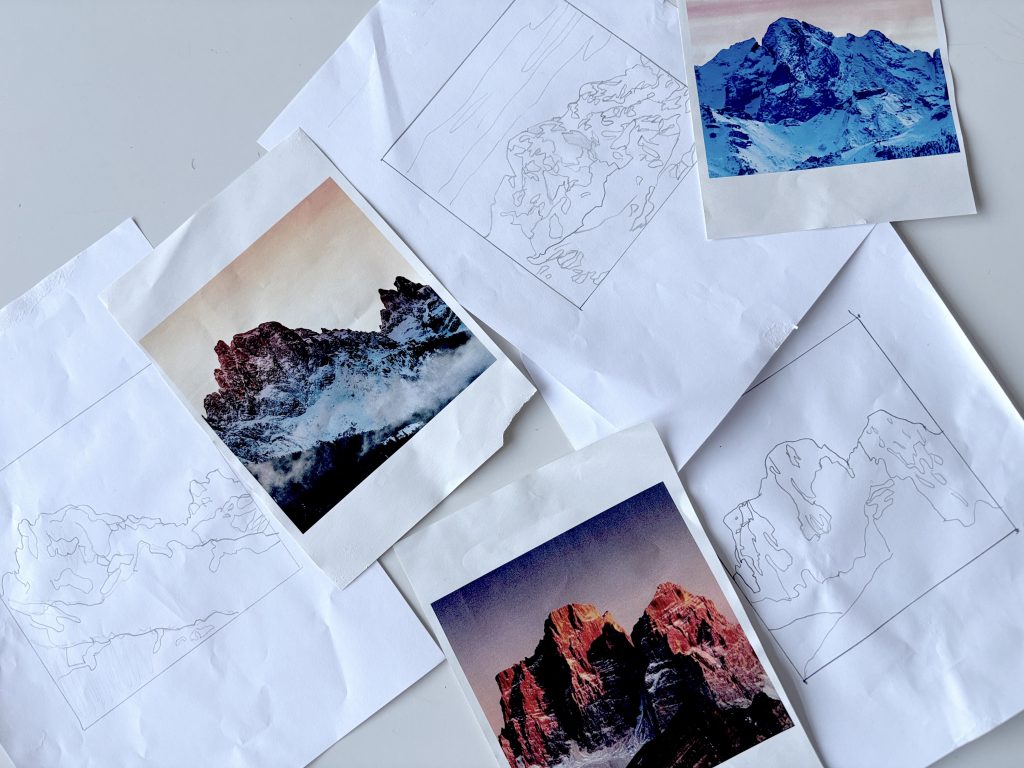
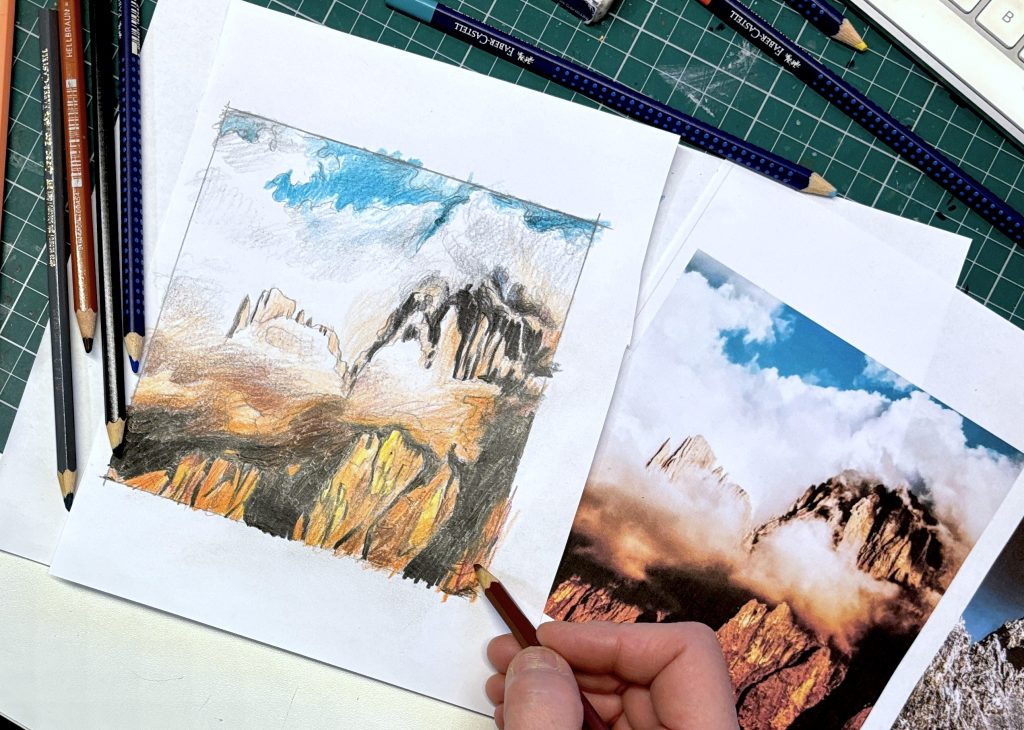
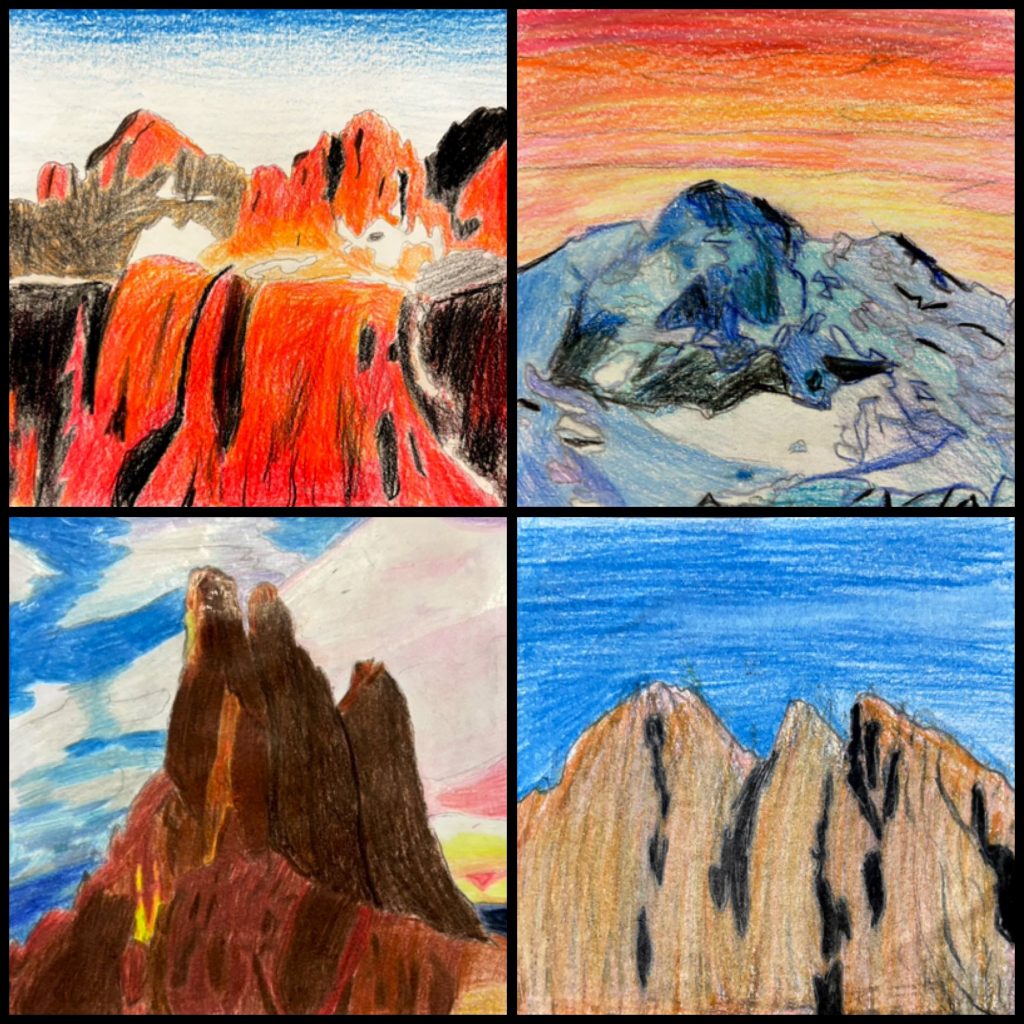
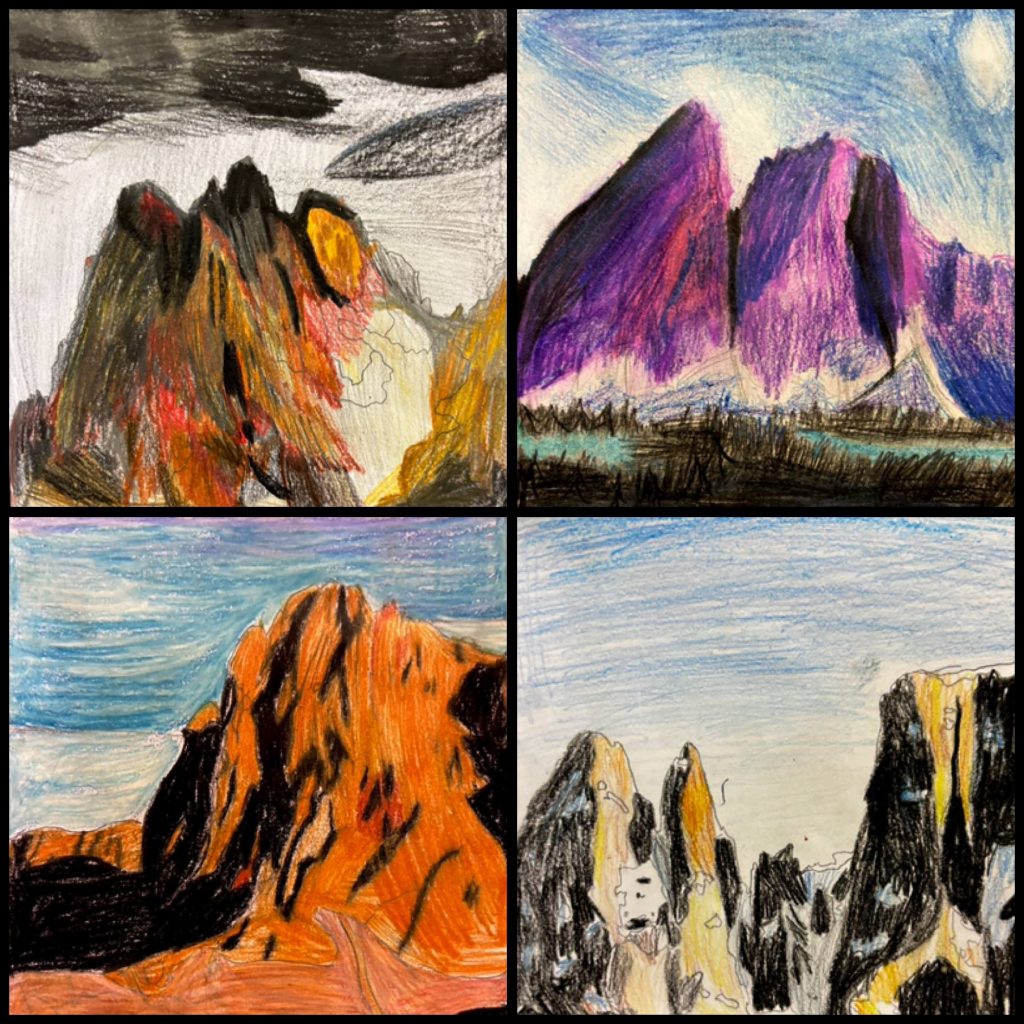
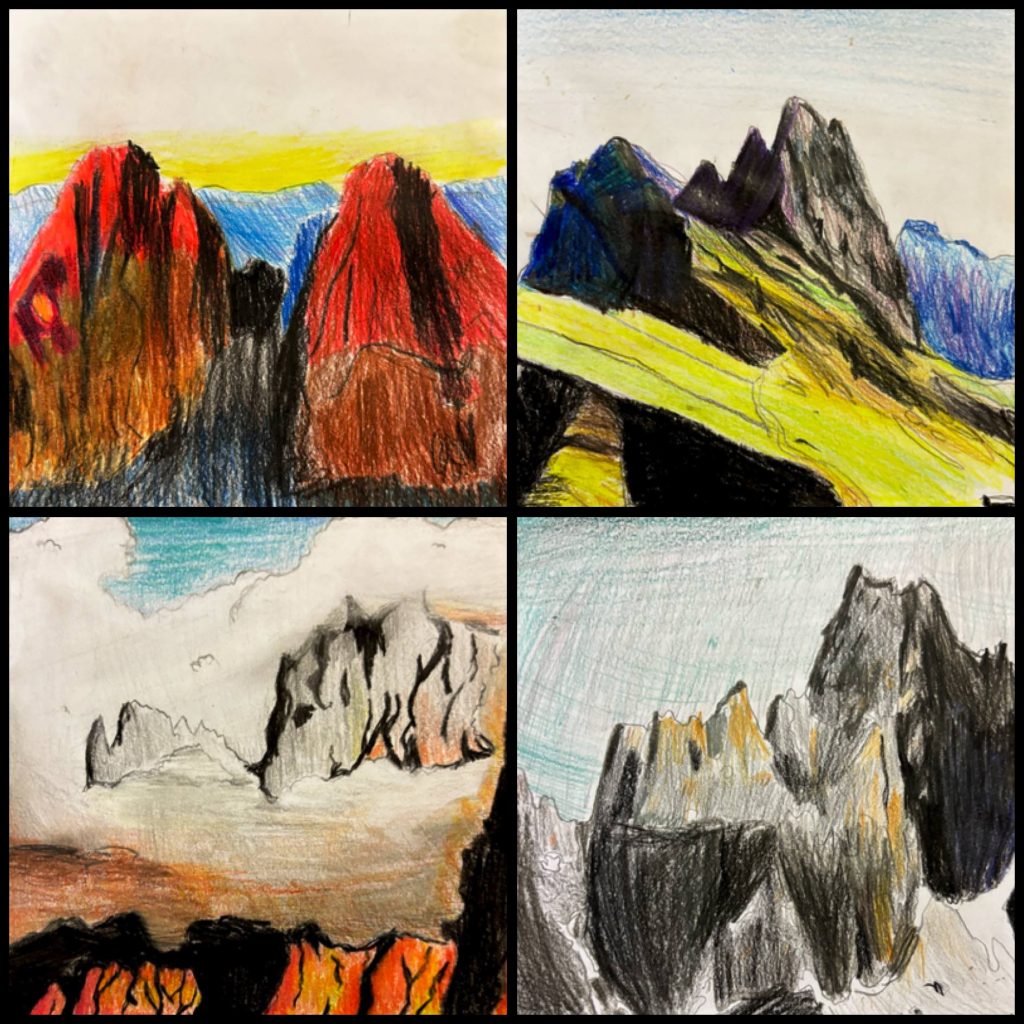
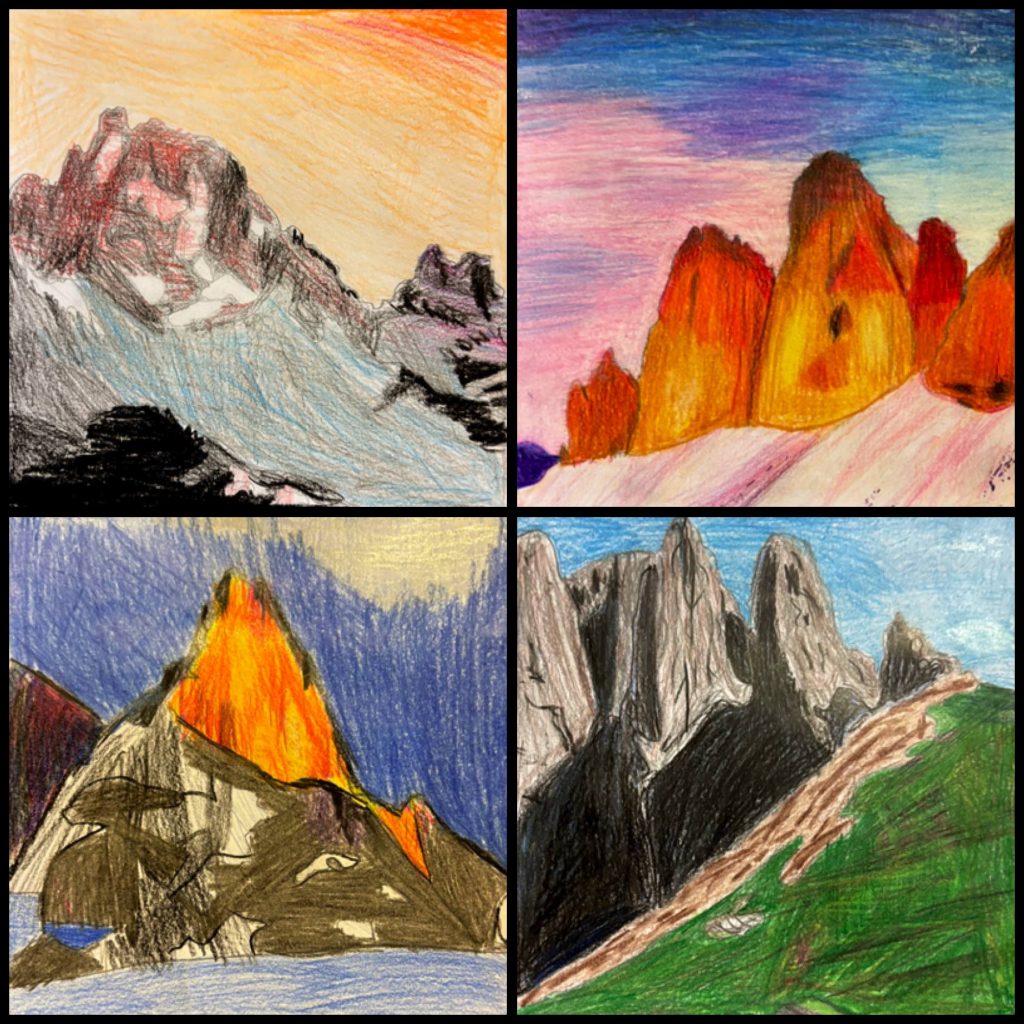
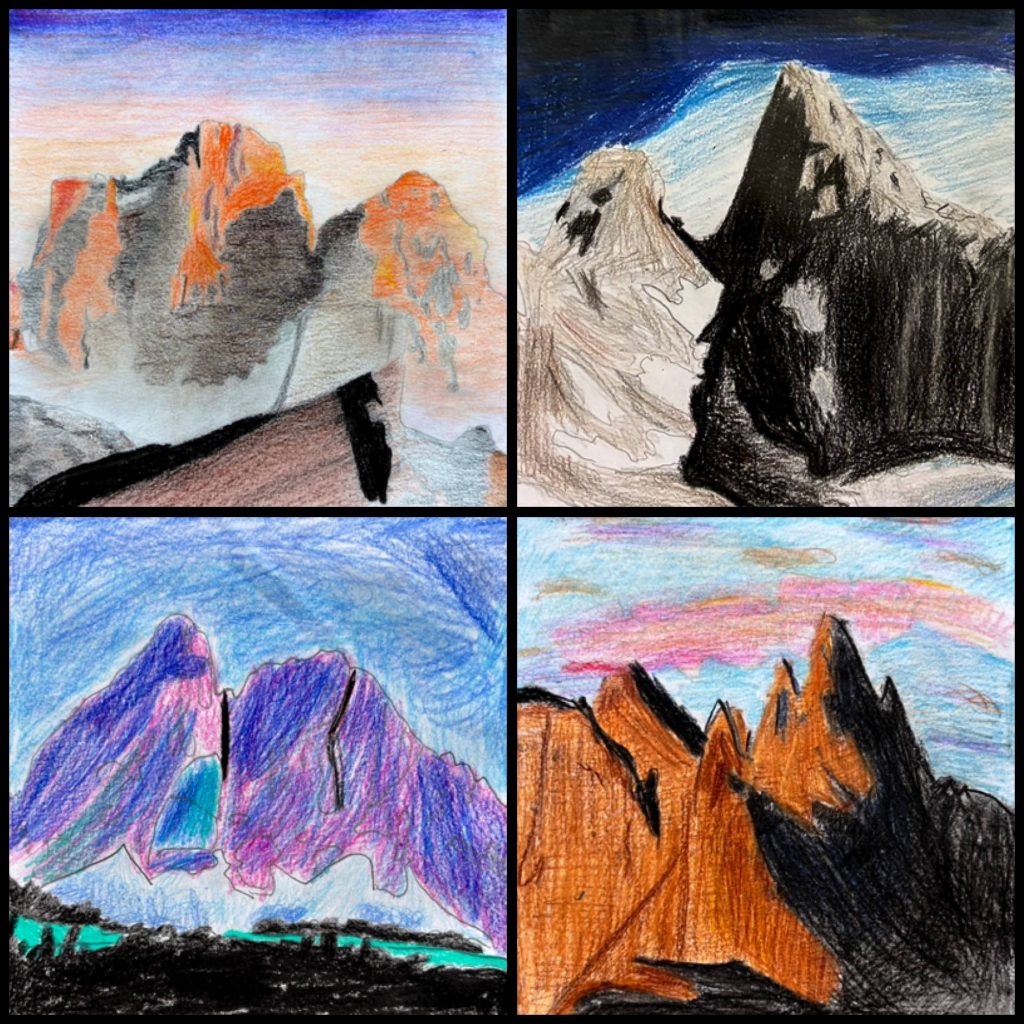
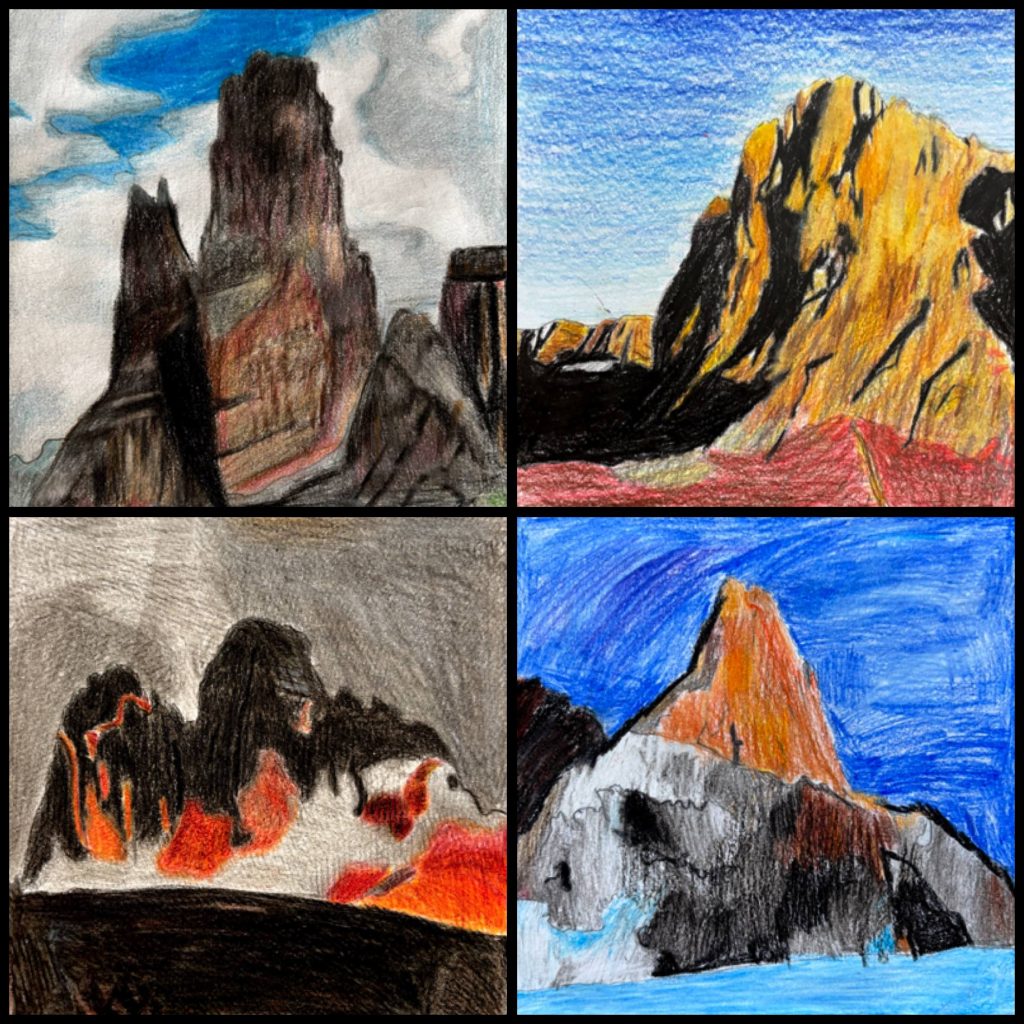
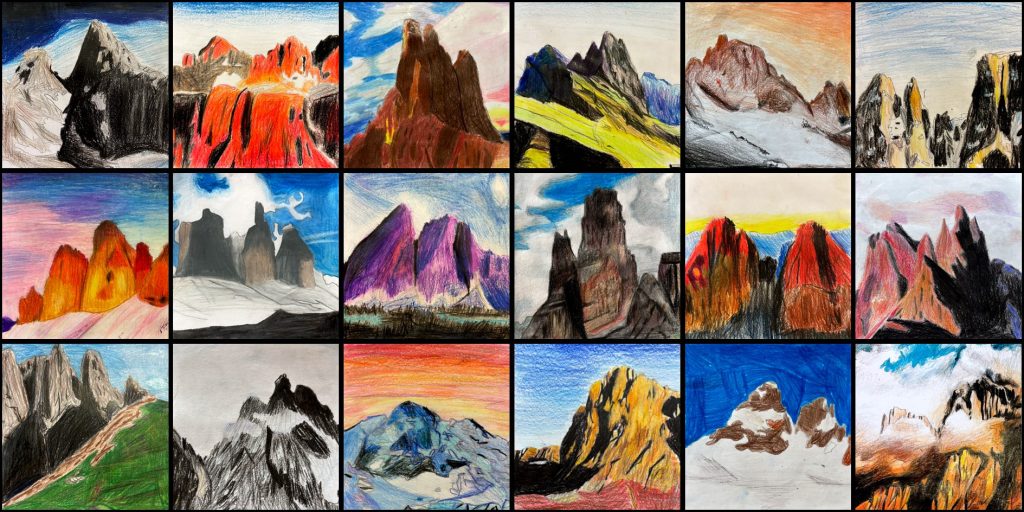
本次绘画实践以联合国教科文组织主题研究为灵感,要求学生用彩铅临摹多洛米蒂山的正方形构图照片。写生式临摹使我们得以深入探究这些非凡山脉的色彩、岩石形态,以及一日之中不同时段所形成的明暗关系。首先,我们在普通复印纸上勾勒出所有有助于还原图像的线条,包括表现明暗交界线与高光区域的轮廓线。
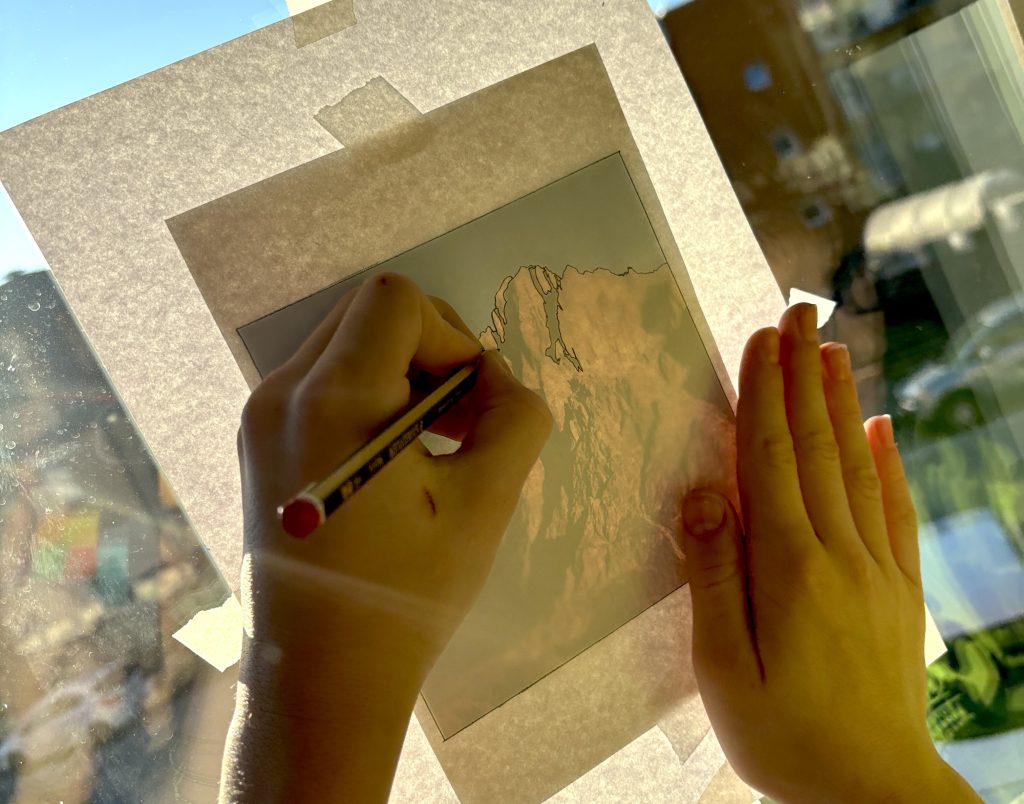
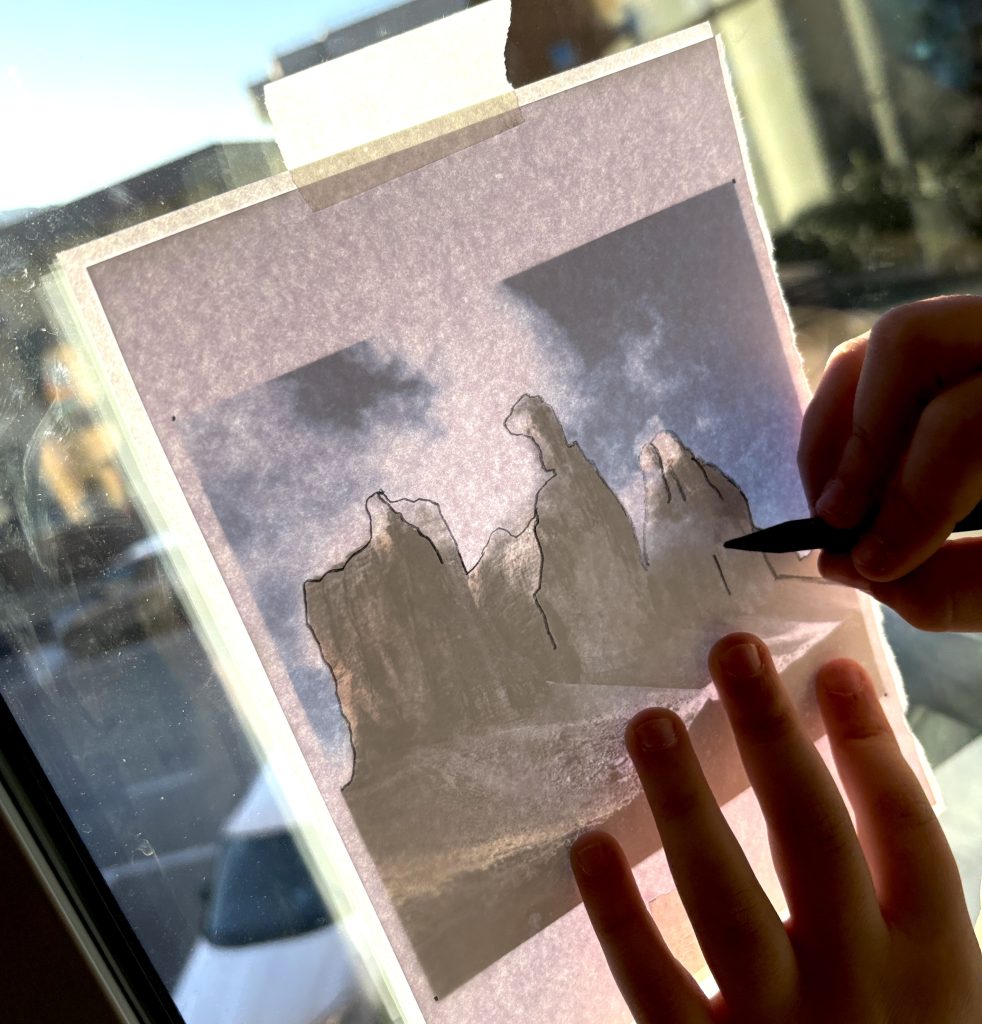
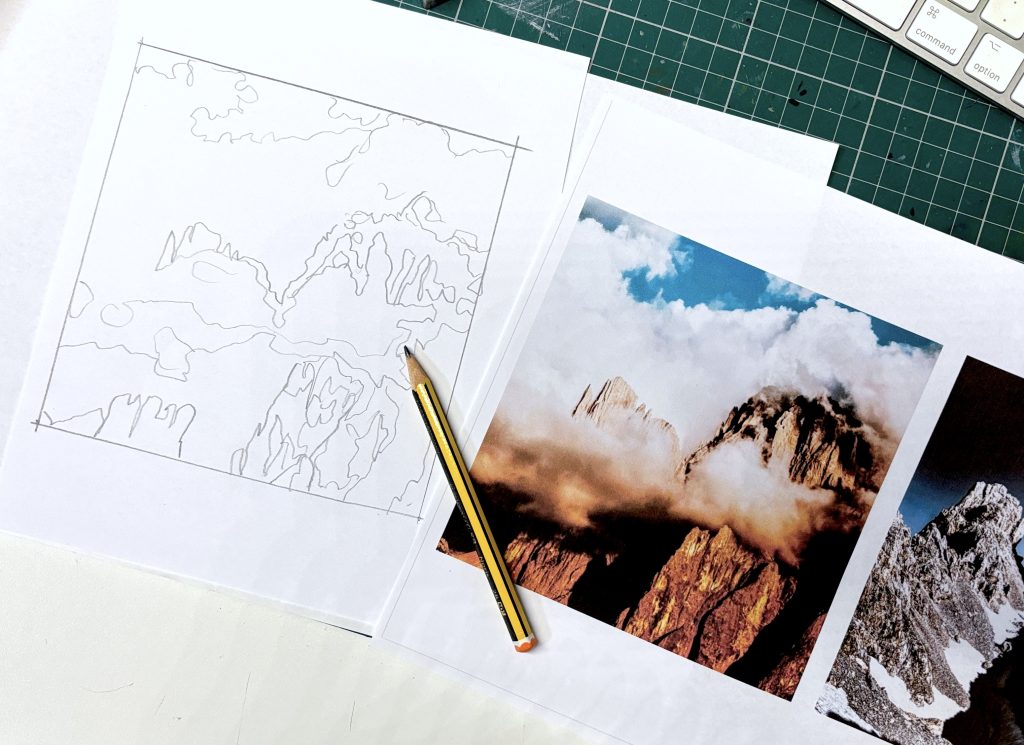
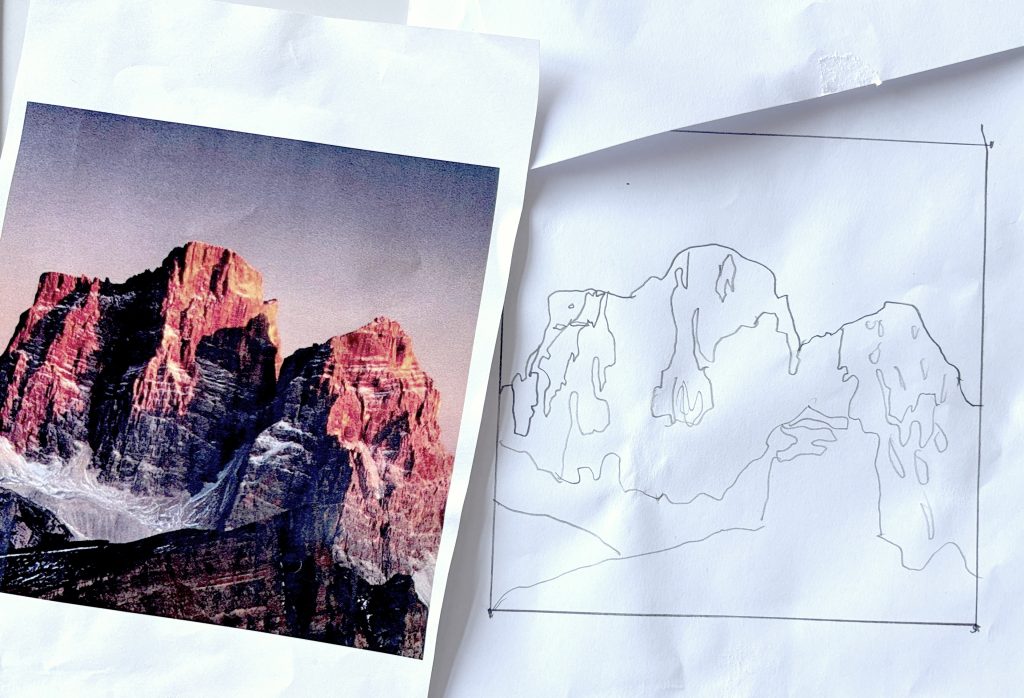
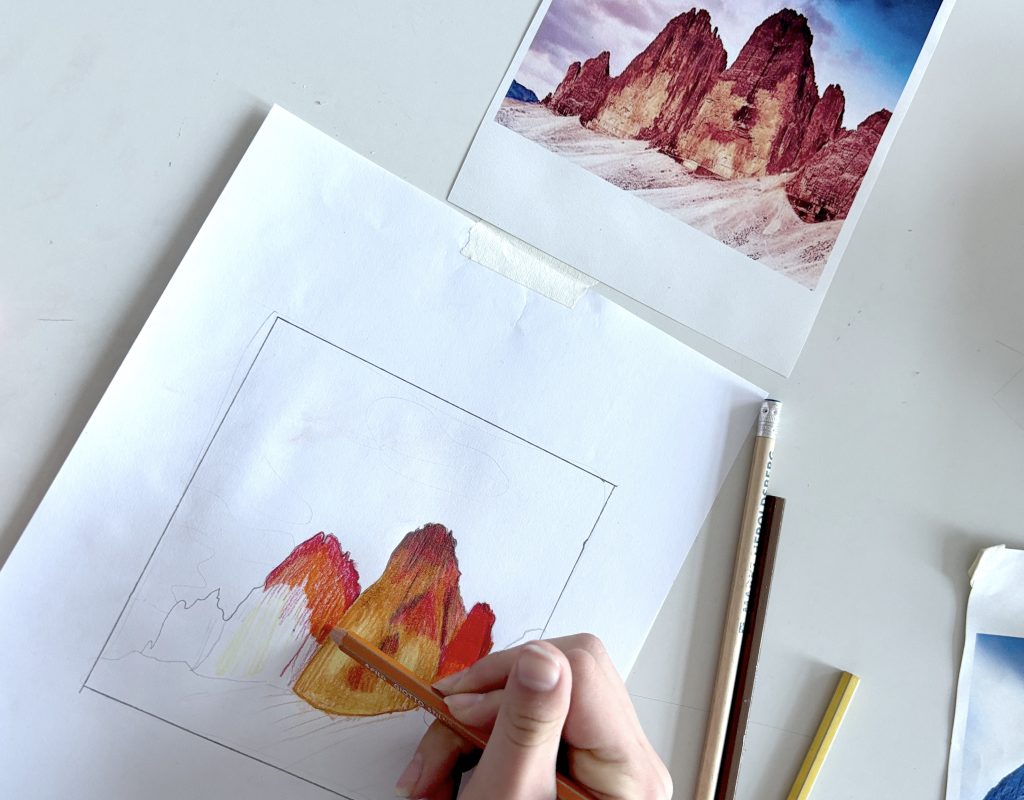
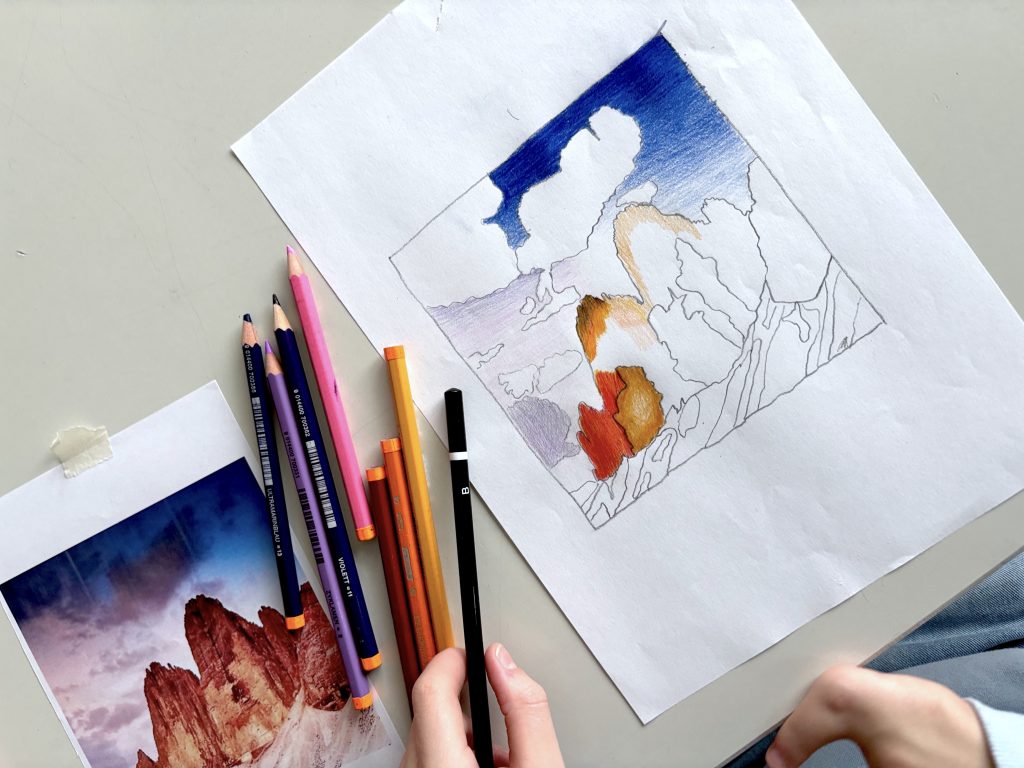
随后,在持续观察原照片的基础上,我们用彩铅为画作上色,力求精准还原色彩,并通过多层叠涂彩铅来获得恰当的色调变化。尤为关键的是对阴影与高光的敏锐感知——正是它们塑造了形体的体积感。
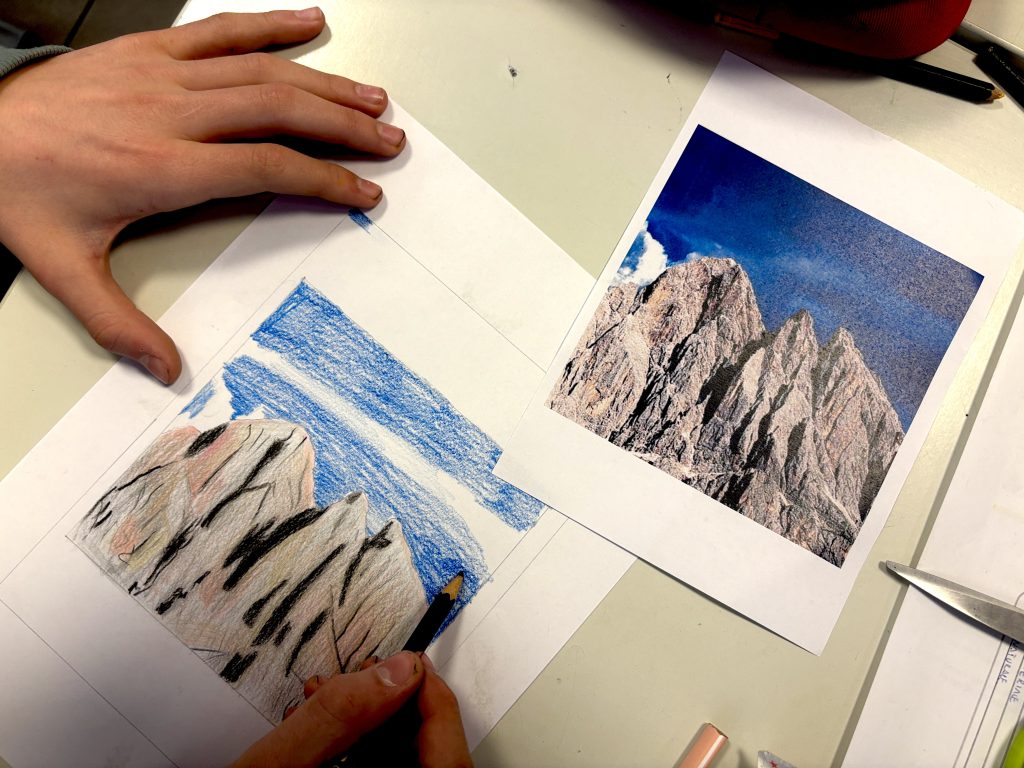
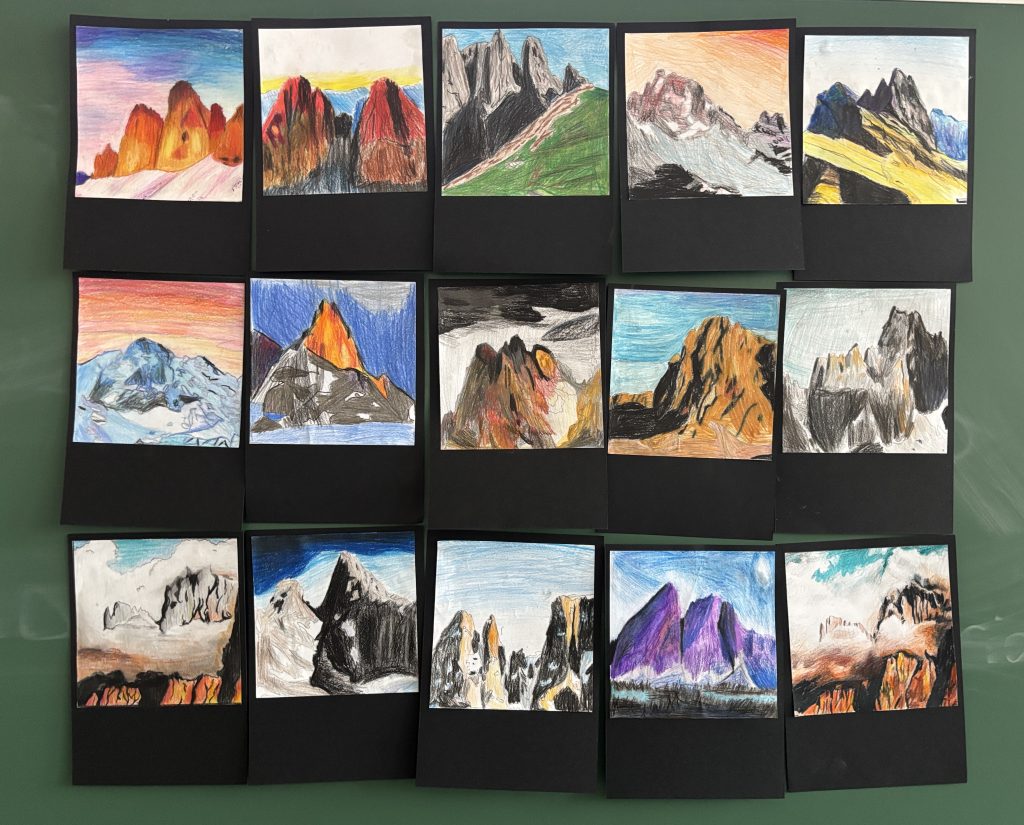
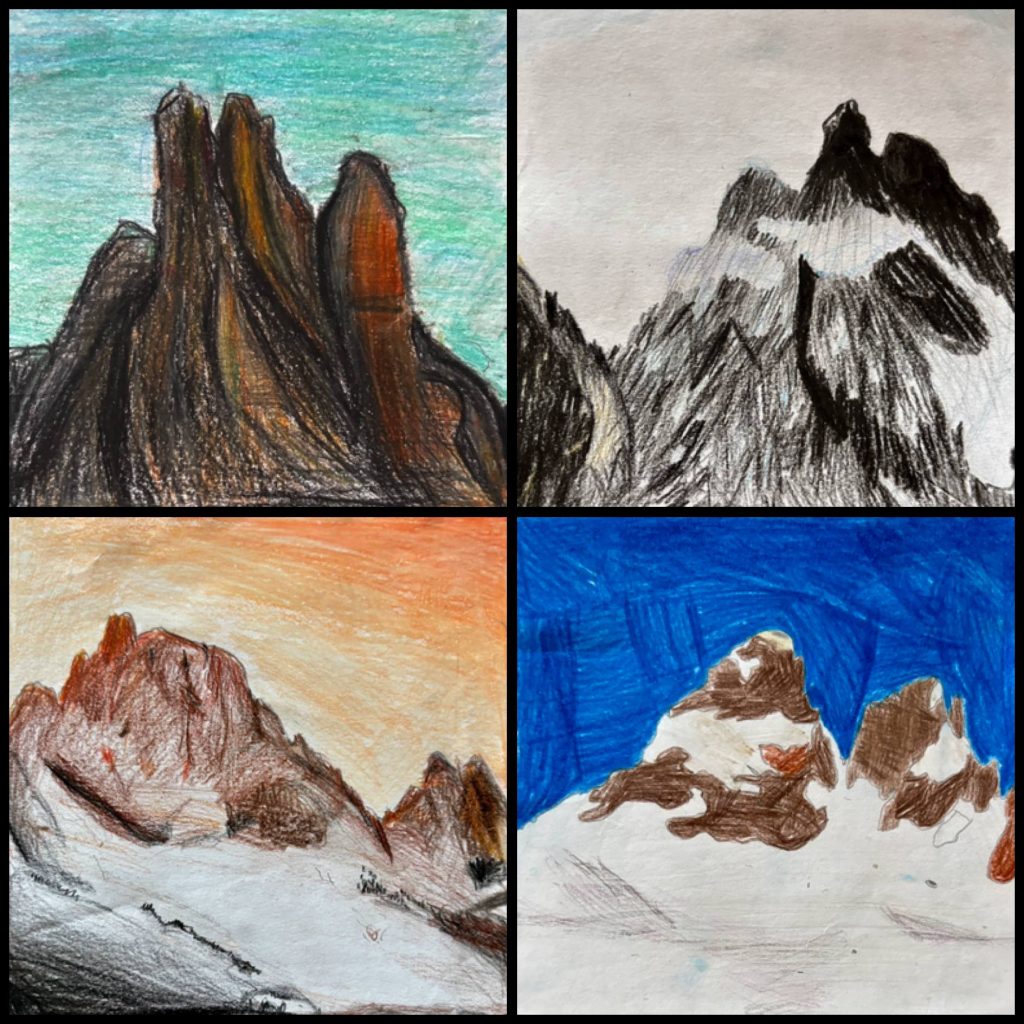
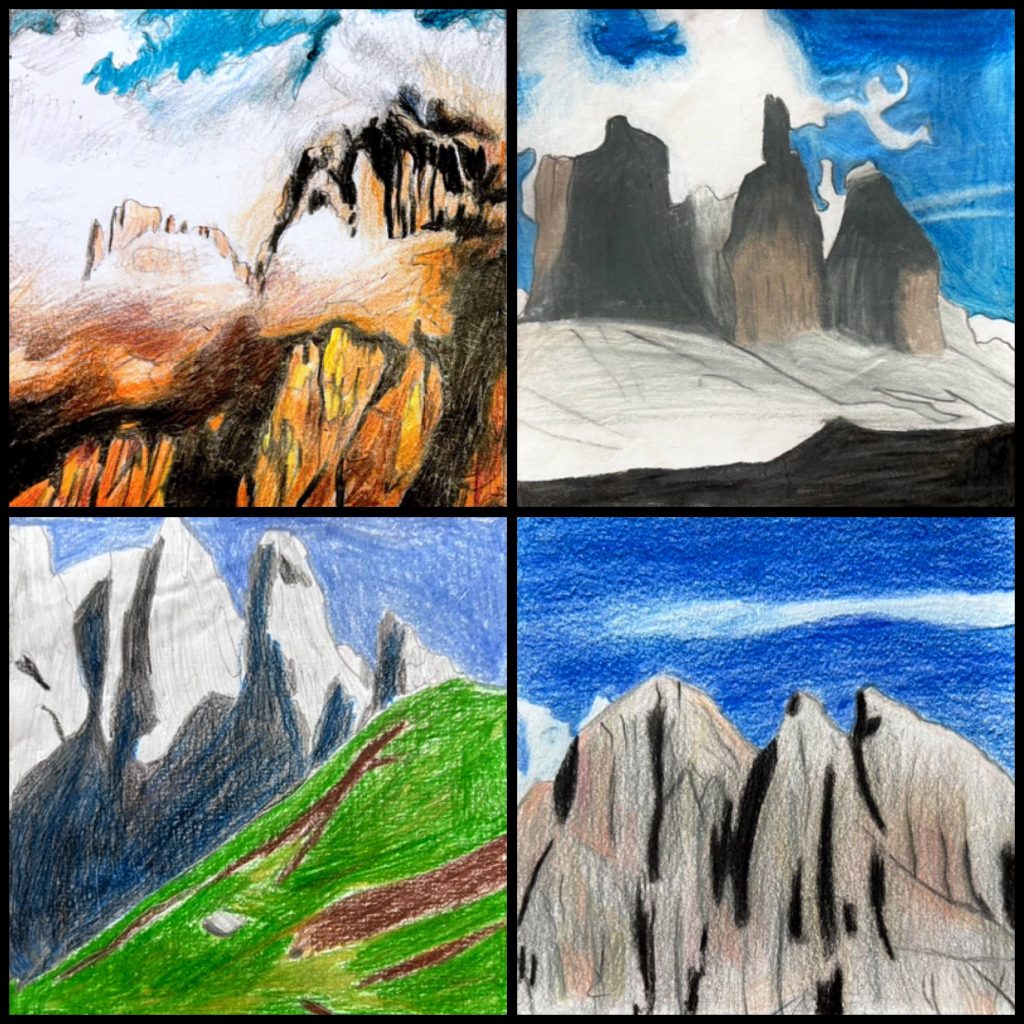
写生式临摹训练双眼与双手的观察能力,使我们以极为深入的方式认知图像;这本身亦是一种守护、珍爱并弘扬我们非凡文化遗产的方式。
The Dolomites: UNESCO World Heritage Site
In the field of Civic and Citizenship Education we talked about education in respect and valorization of Cultural Heritage and we saw how, in cultural goods, the following are included:
- assets of historical and artistic interest, such as monuments and architecture, archaeological sites
- environmental assets such as natural parks
- intangible assets such as artistic, agricultural, culinary, musical and religious traditions.
In Italy, in particular, there are over 100,000 cultural assets that fall into these categories, and our landscape, historical and artistic heritage is protected by ARTICLE 9 of the Italian Constitution which states: “The Republic promotes the development of culture and scientific and technical research. It protects the landscape and the historical and artistic heritage of the Nation. It protects the environment, biodiversity and ecosystems, also in the interest of future generations”
With the students we then focused on the birth and role of UNESCO, the United Nations organization founded in 1945 with the aim of promoting peace and understanding between nations, through education, science, culture, communication, information. We also discussed the concept of World Heritage and the Convention adopted by UNESCO, according to which the assets considered so important as to be the heritage of all humanity are identified, protected and preserved.
Among these UNESCO assets are our DOLOMITES, declared a World Heritage Site in 2009, for their beauty and unique landscape and for their scientific importance at a geological and geomorphological level.
The drawing work inspired to our research about UNESCO consisted of copying square-format photographs of the Dolomites with colored pencils. Copying from life allowed us to investigate the colors of these extraordinary mountains, the conformation of the rocks and the chiaroscuro that forms at different times of the day. First, we traced on a normal photocopy sheet all the lines that could help us reconstruct the image, including those that outline the shadows and lights.
Subsequently, continuously observing the photograph, we colored the drawing trying to be as faithful as possible to the search for colors, overlapping the colored pencils to obtain the right shades. Very important was the awareness of shadows and lights, which create the volumes of the shapes.
Copying from life trains the eye and the hand to observe and makes us know the image in a very profound way, this too is a way to protect, love and enhance our extraordinary heritage.


