画山
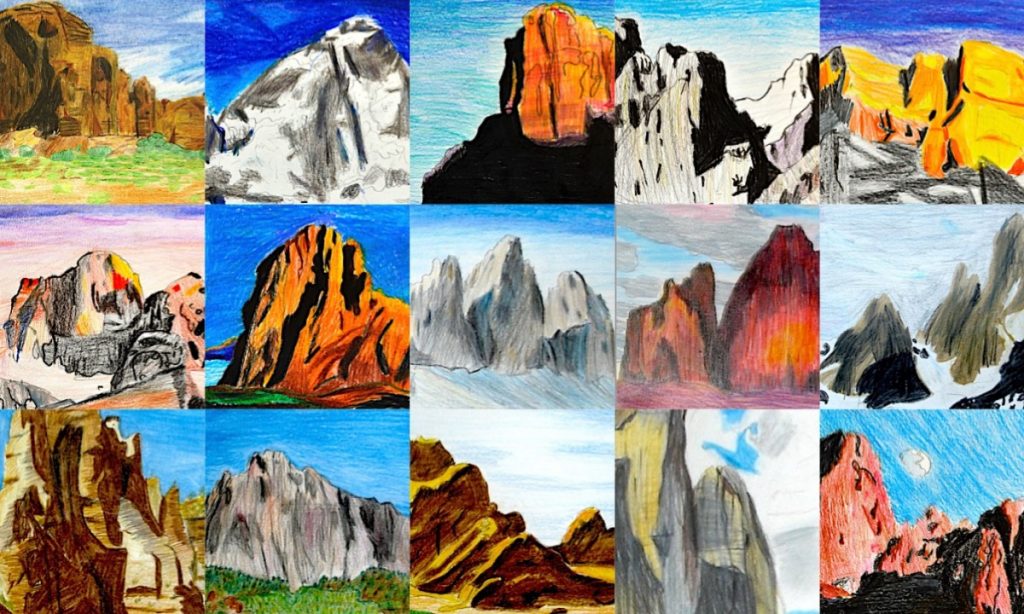
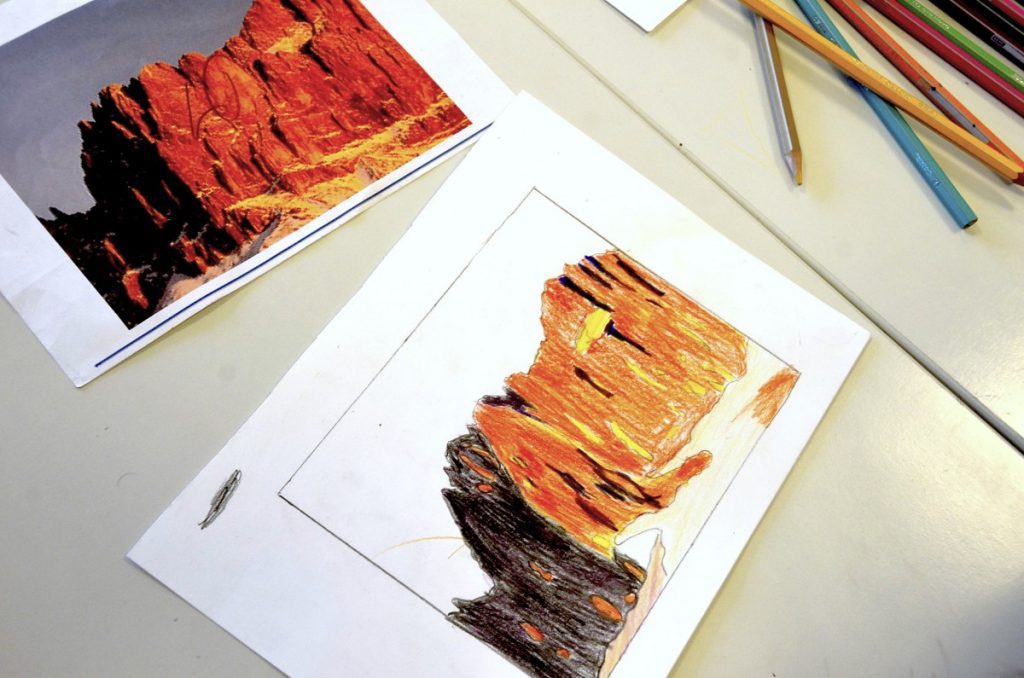
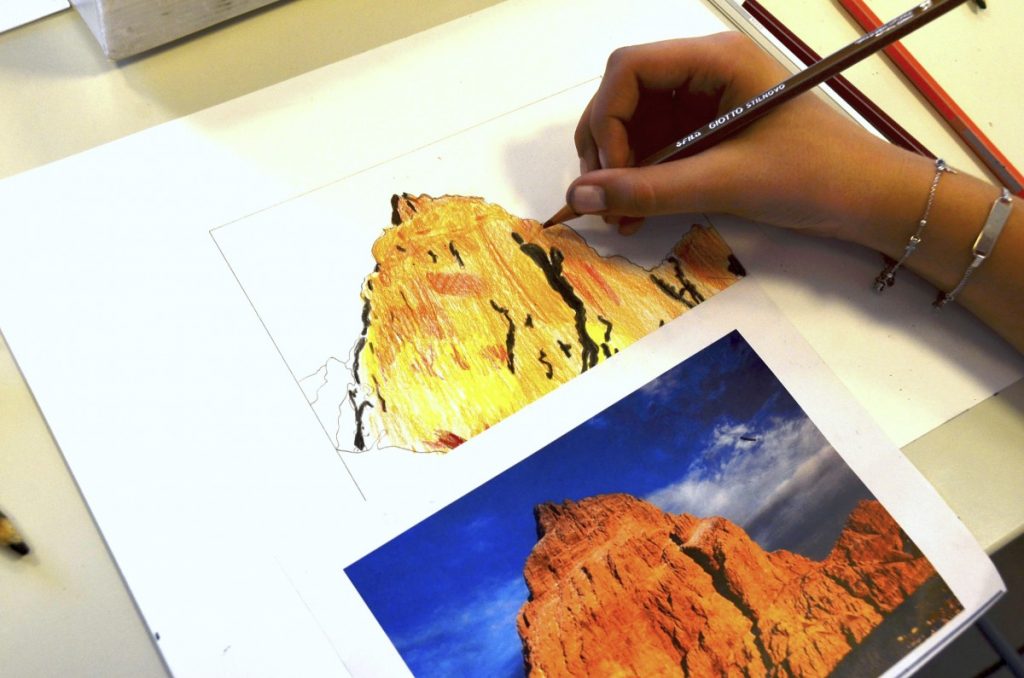
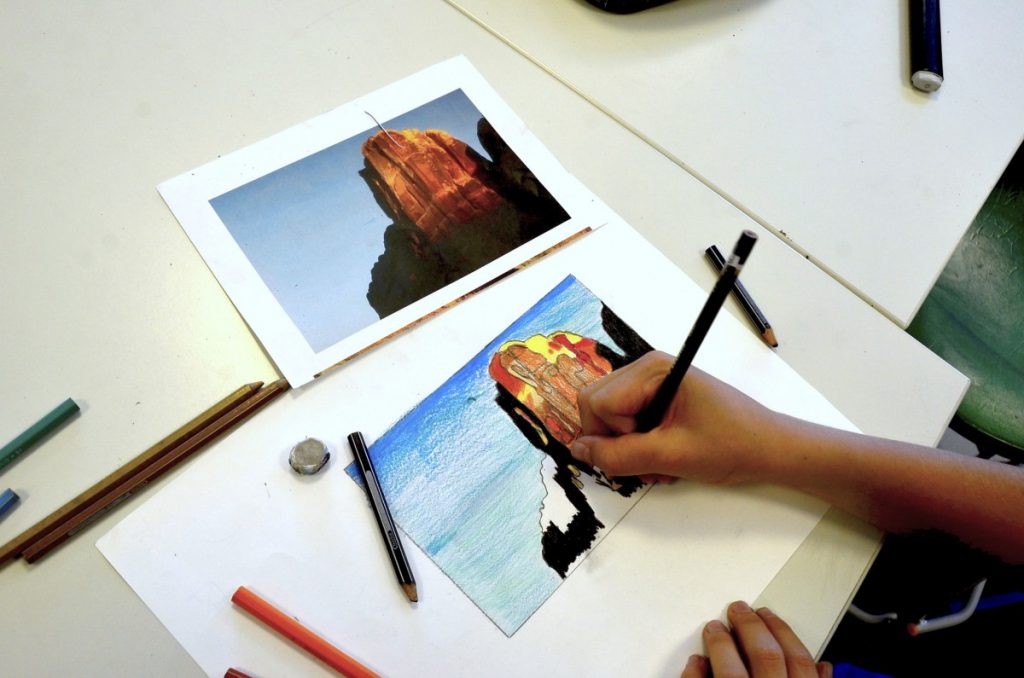
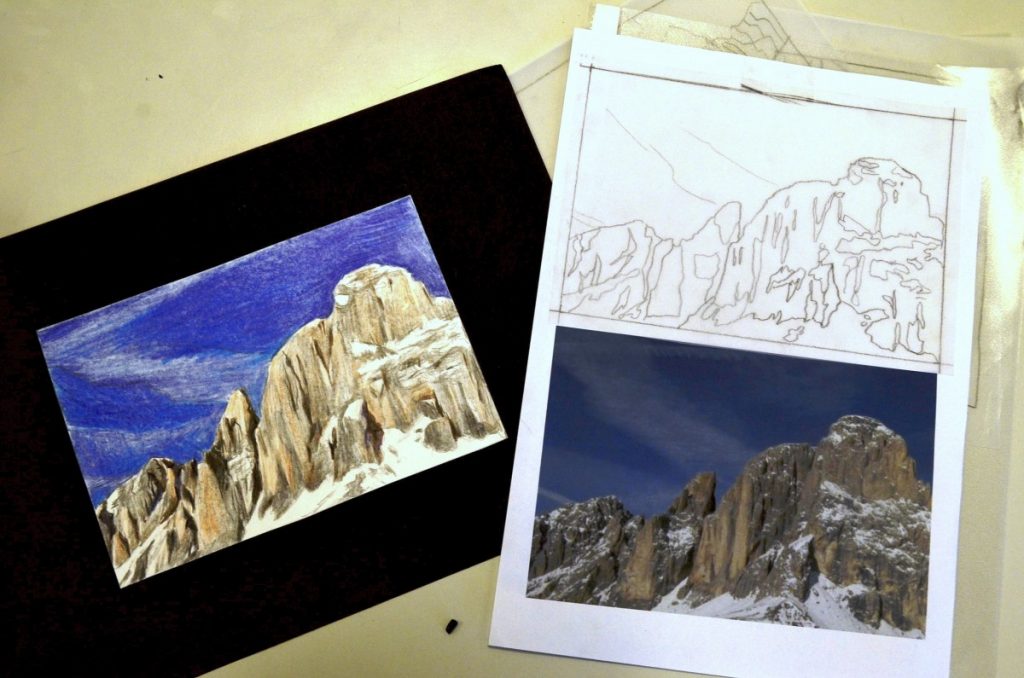
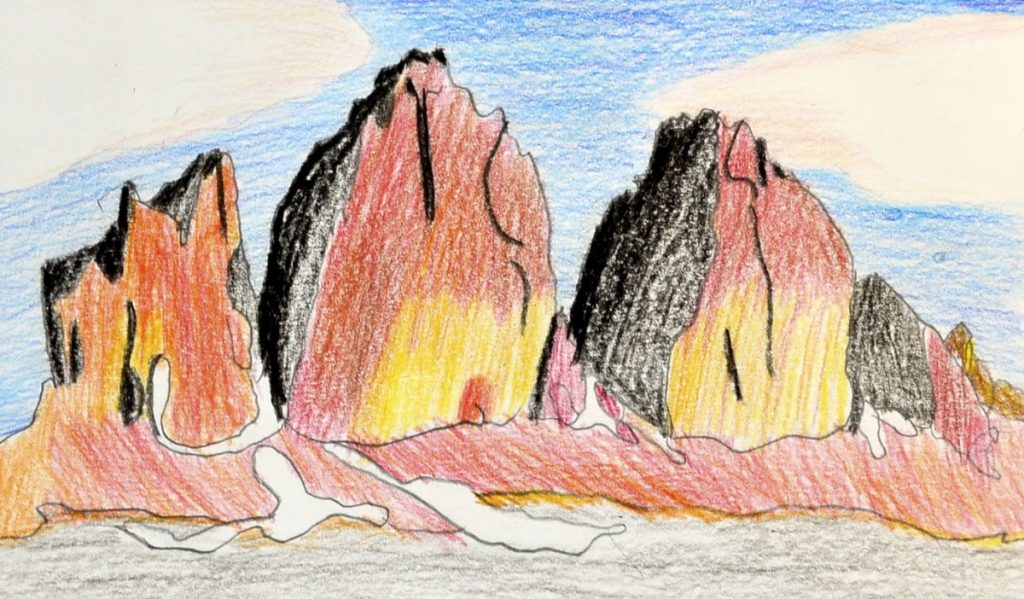
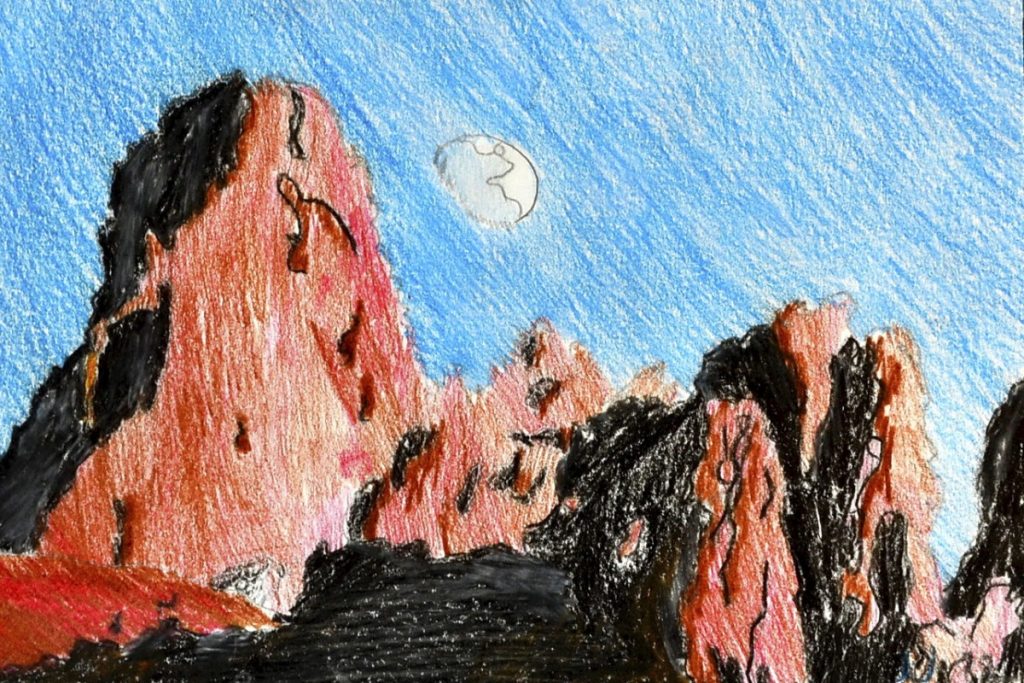
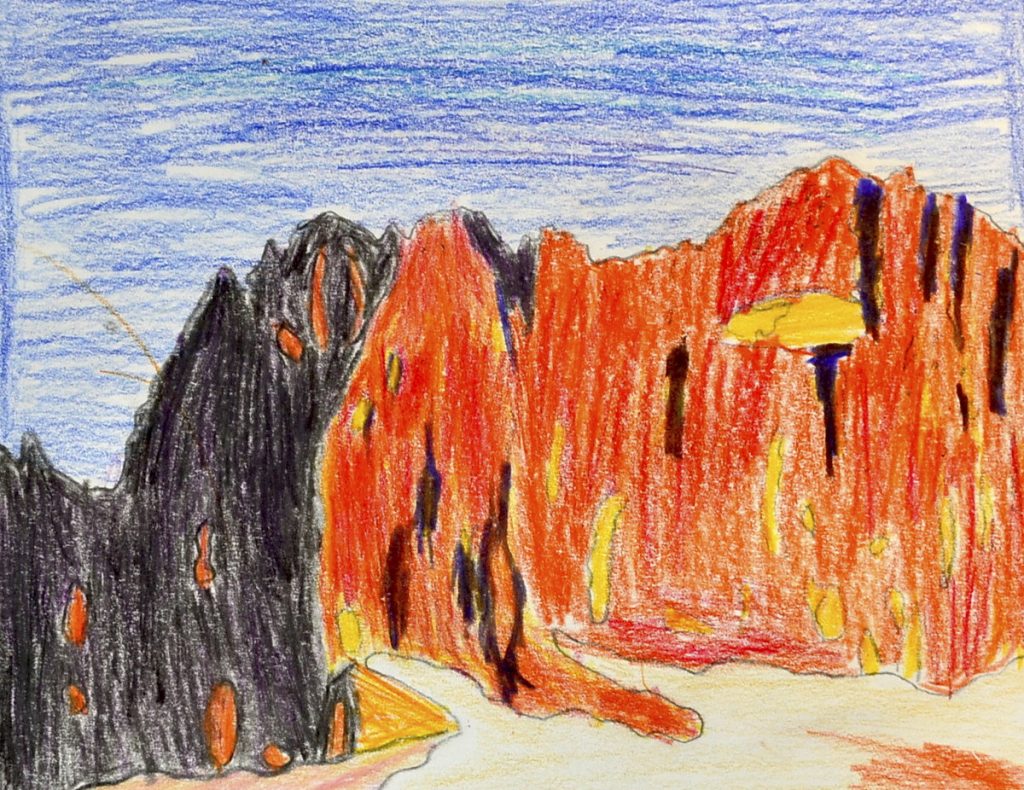
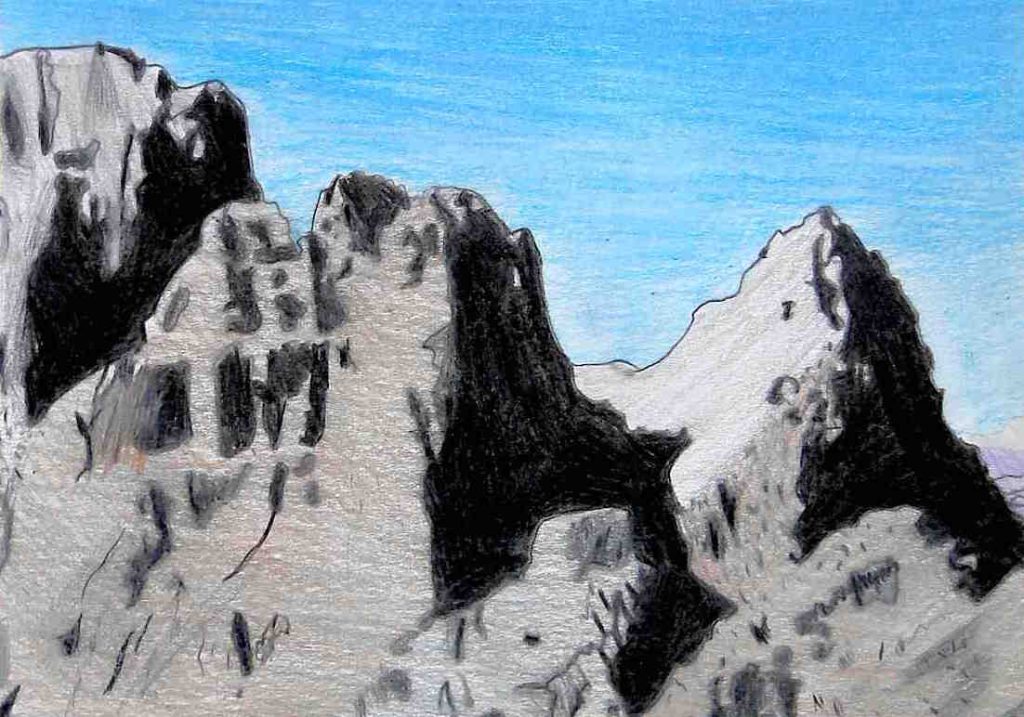
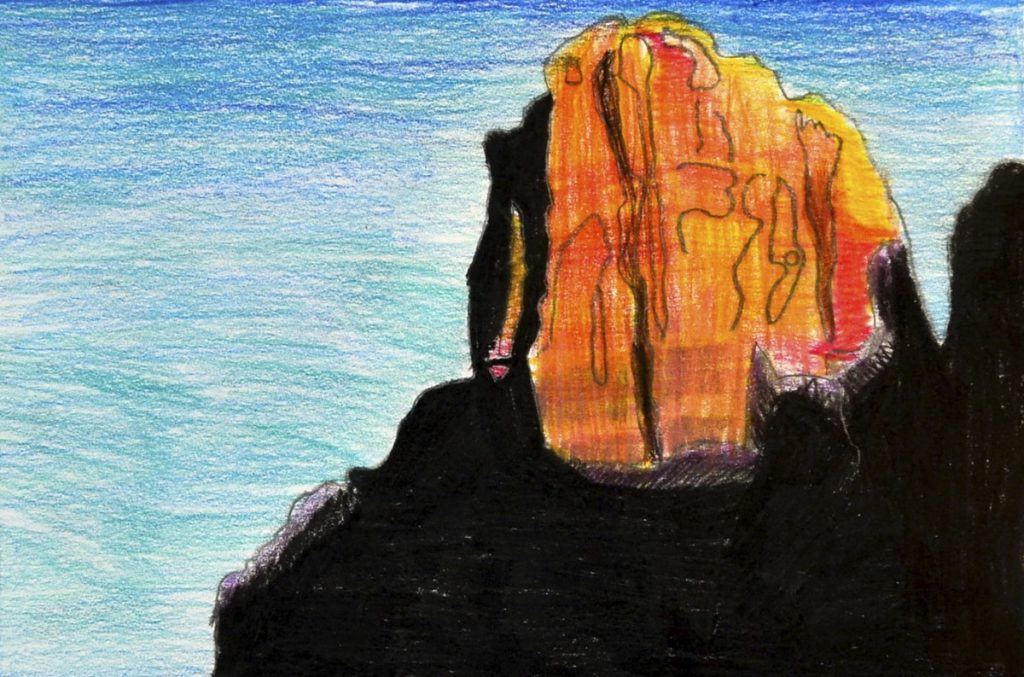
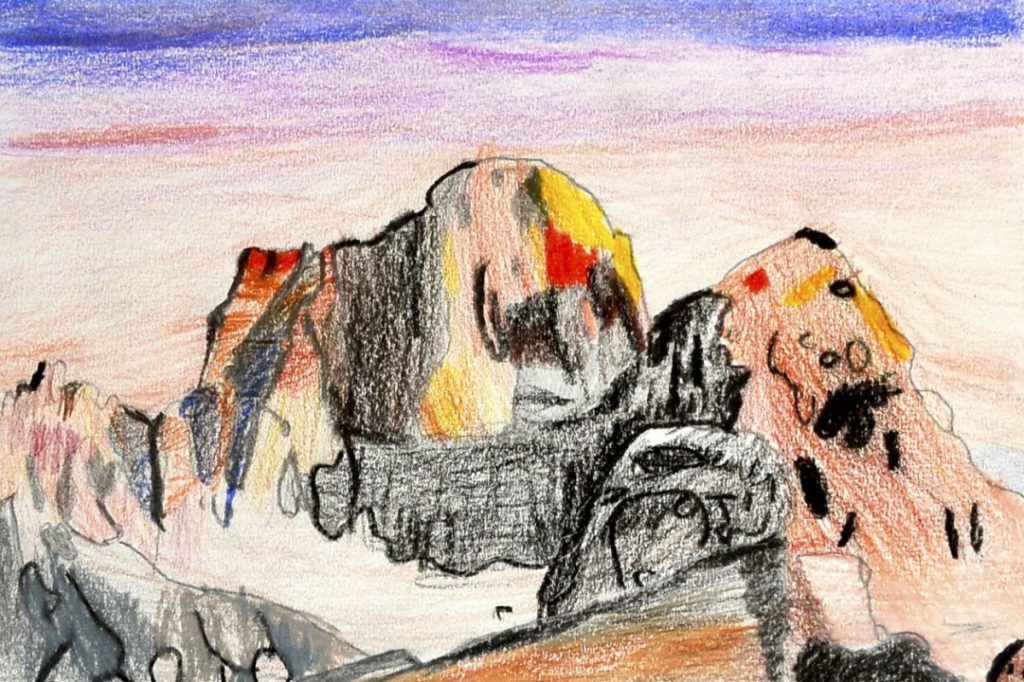
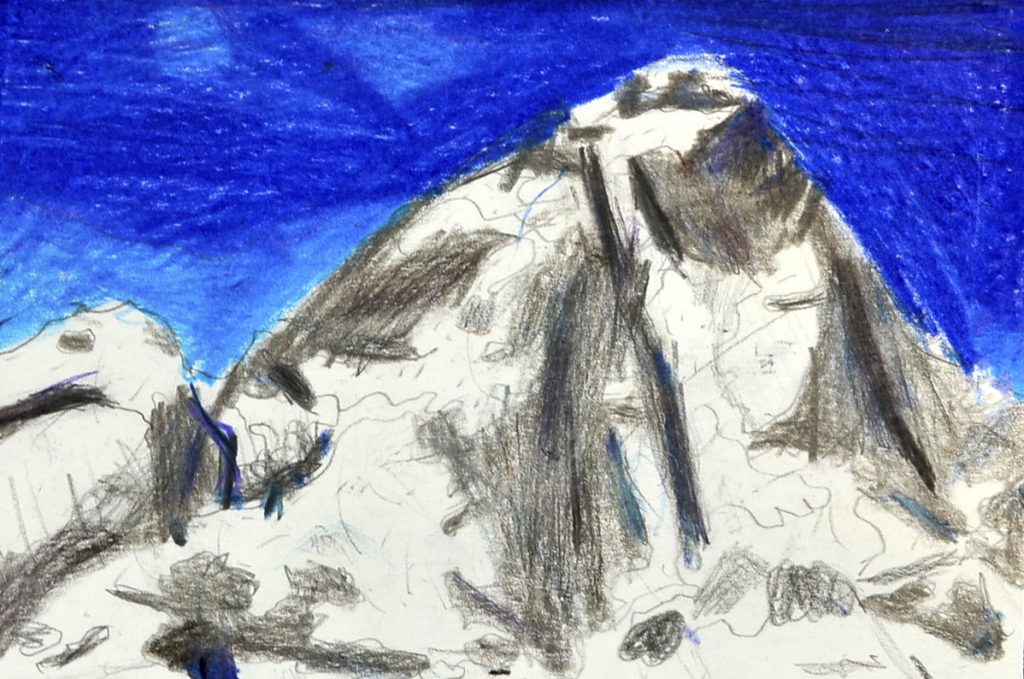
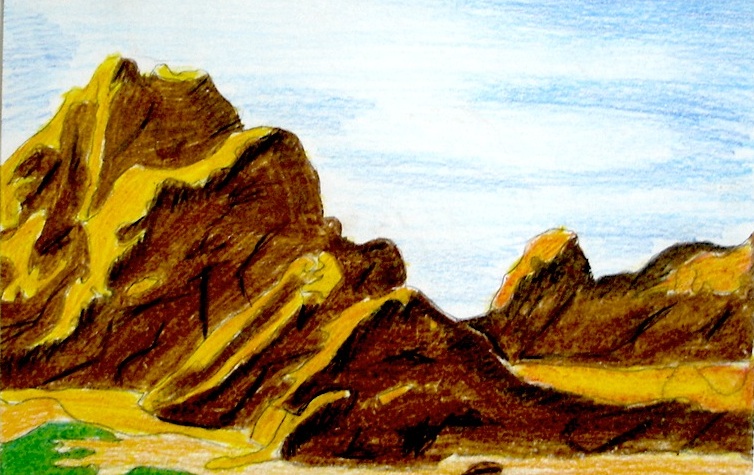
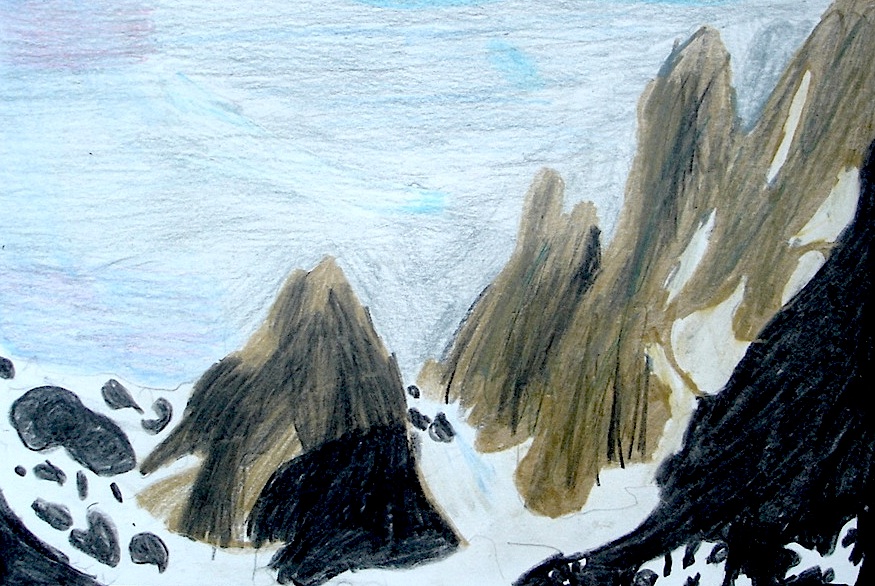
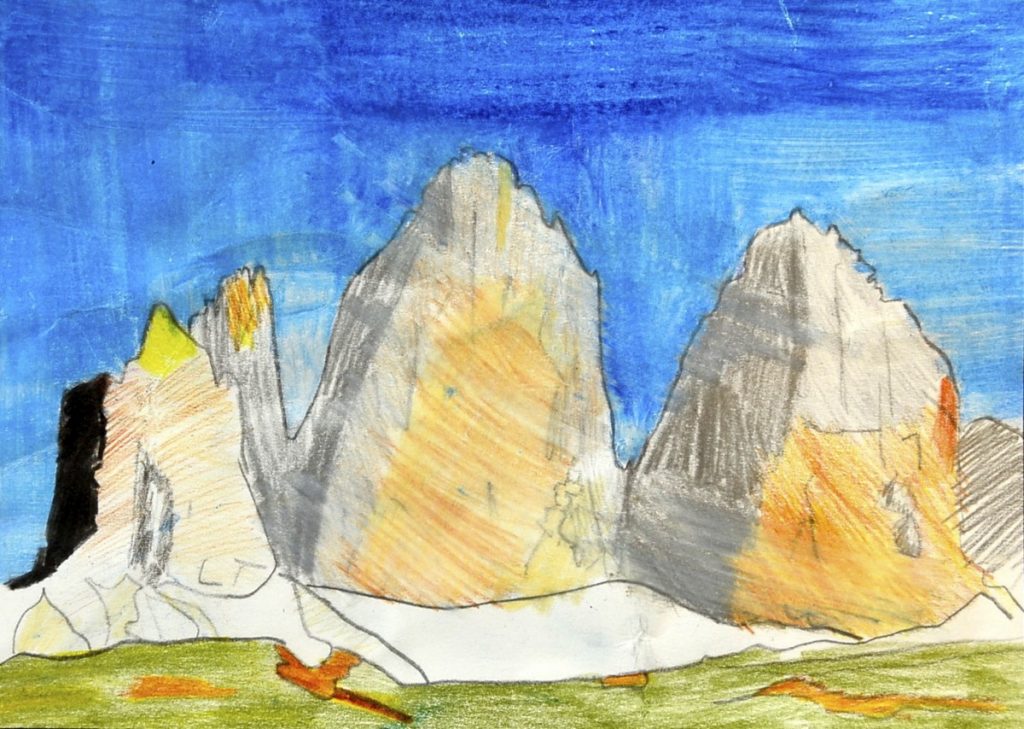
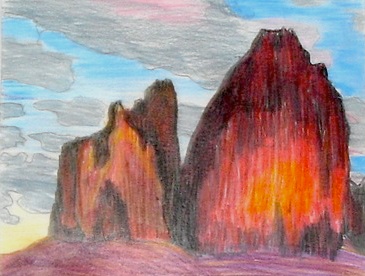
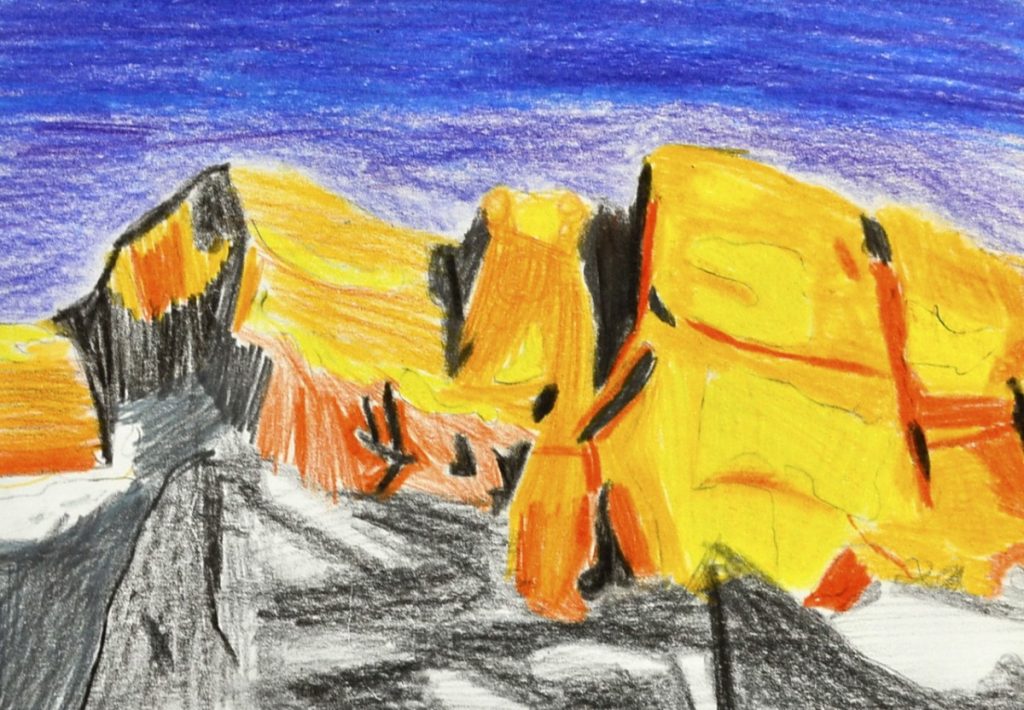
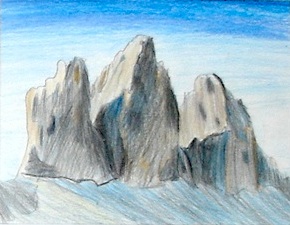
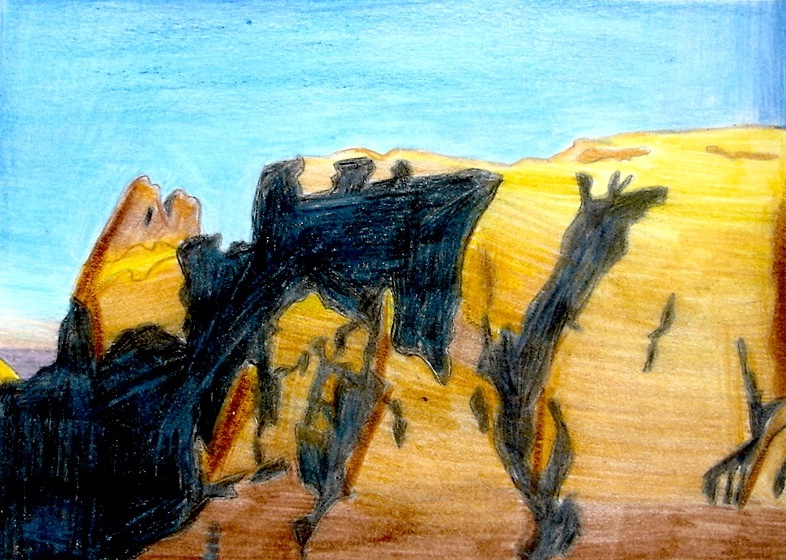
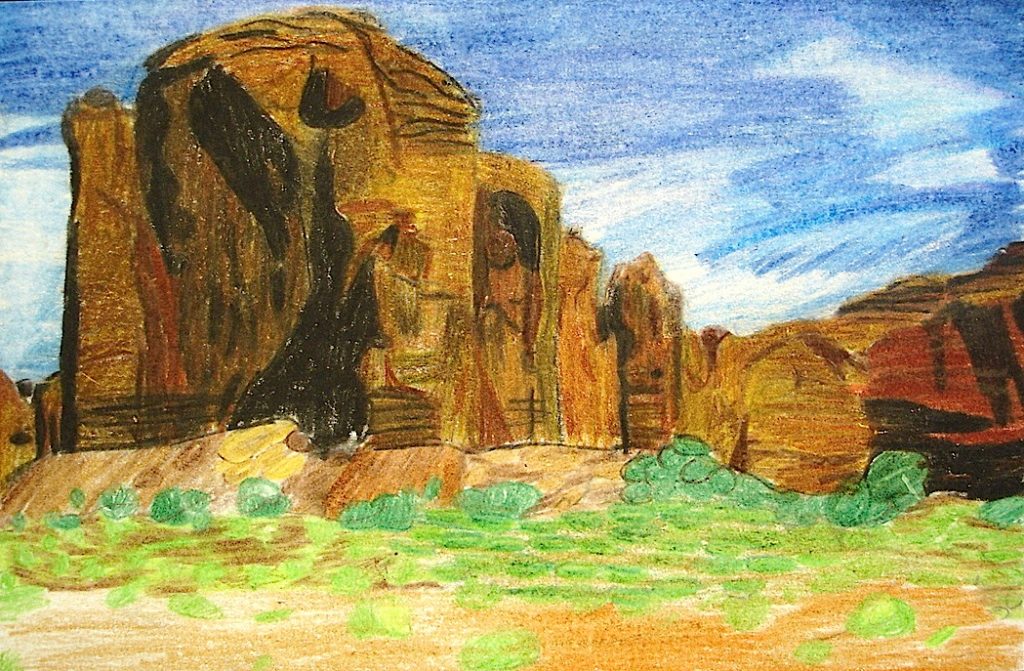
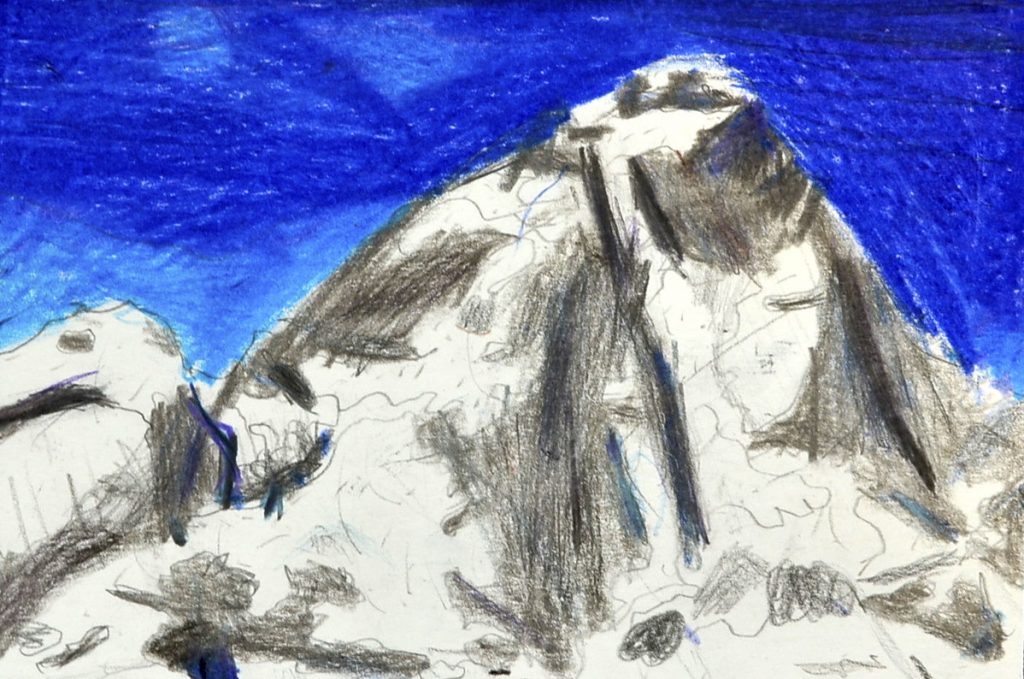
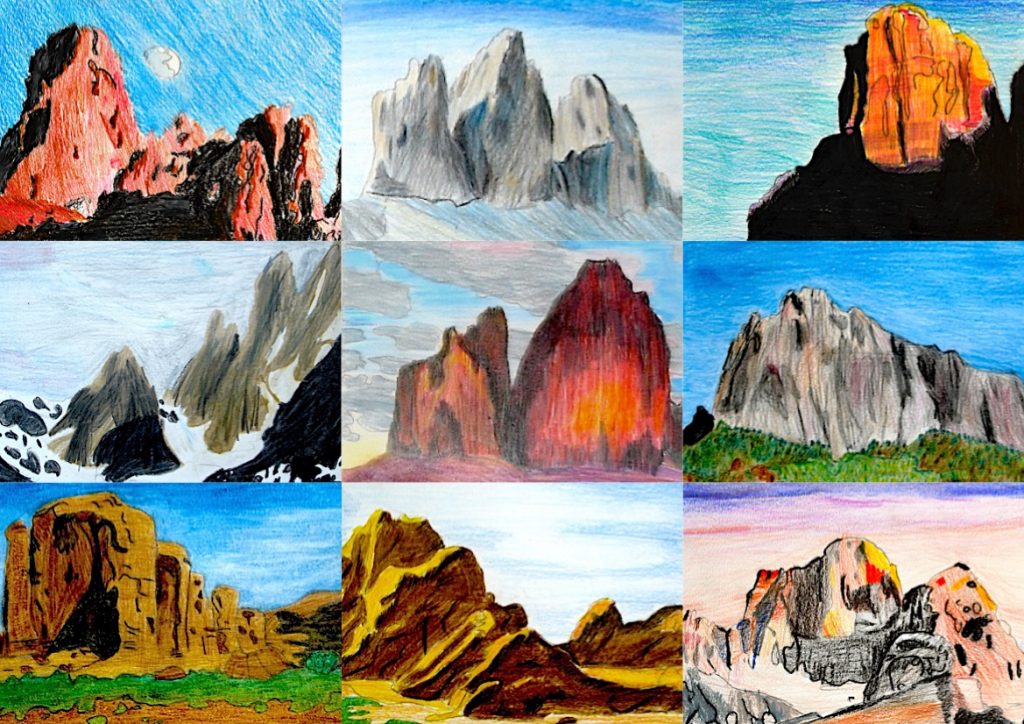
唯有通过观察真实景物、写生临摹,才能避免将山峦画成千篇一律的“白雪皑皑的金字塔”式刻板形象。写生真正的难点,在于准确再现现实景物的基本形体,以及其明暗关系。为辅助这项练习,我们选用明信片尺寸的山景照片,并在硫酸纸上描摹出所有形体轮廓线、亮部与暗部的边界线。
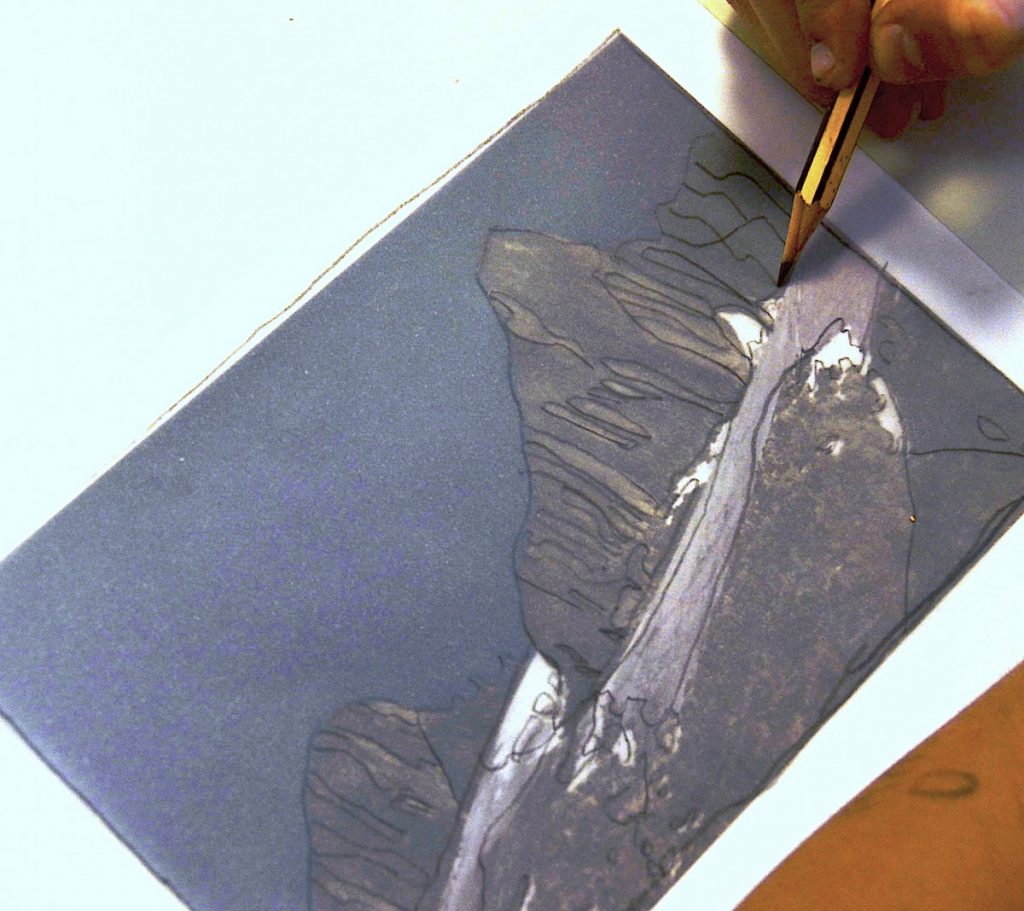
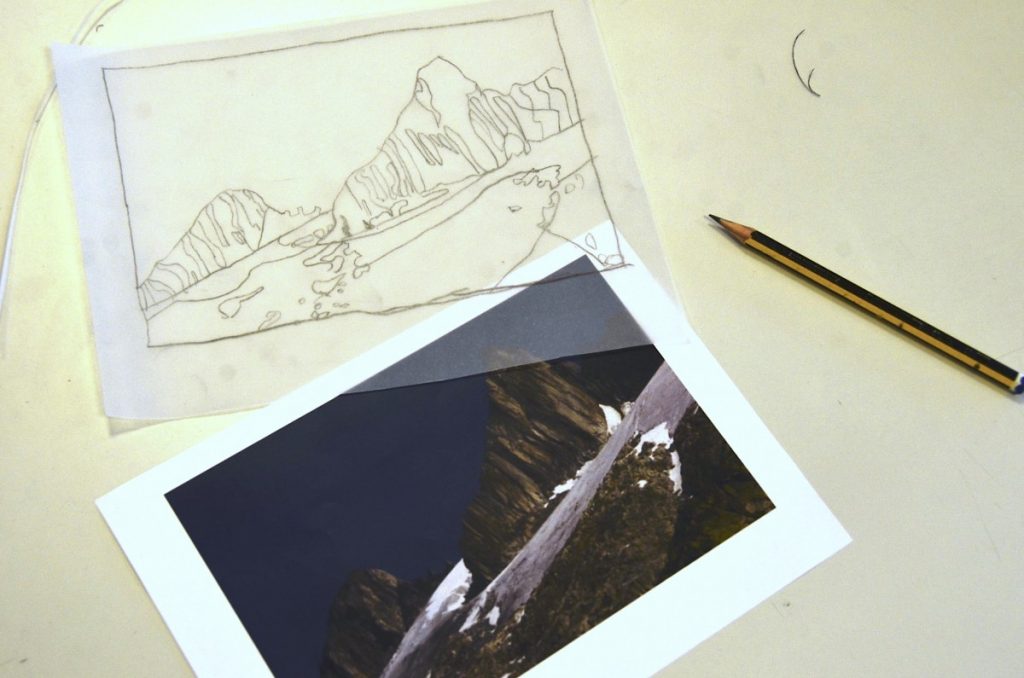
最终得到一幅布满奇异形状的“地图”:将这些线条转绘到白纸上后,我们用彩铅按原图尽可能精确地为各区域上色。此阶段便发生一种对真实图像的抽象化处理——我们把临摹重心放在色块本身及其模仿上,不追问所画为何物,而仅透过图像的视觉元素:线条与色彩来观看。
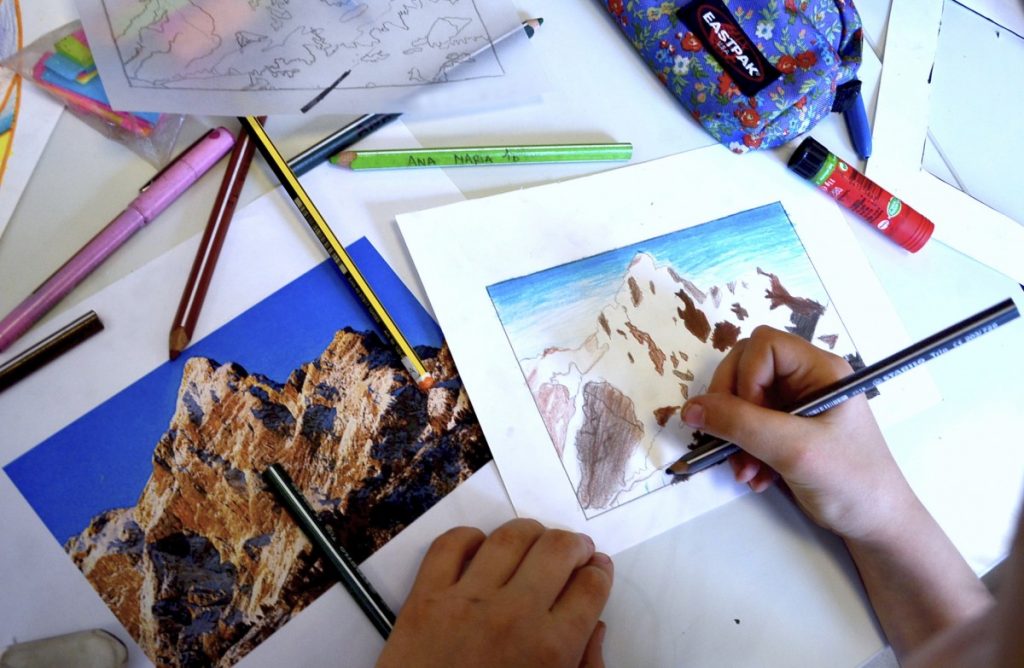
我要求学生们将视线聚焦于明信片上几平方厘米的微小区域,力求精准复现该局部的色彩,尤其尽力还原明度层次(这正是赋予画面真实感与立体感的关键!)。我还建议他们在临摹时眯起眼睛:当面对繁多细节而感到困难时,眯眼能自然弱化视觉,滤去琐碎信息,使图像简化为单纯的明暗色块。
我让学生们在临摹时眯起眼睛以弱化视觉焦点。事实上,当原图细节过于丰富而令人困扰时,眯眼可帮助他们暂时忽略细节,以更简化的视角去感知图像——仅关注明暗色块。
通过本次练习,我们领悟了绘画的三个根本要点:
- 首先,人人都能画画;
- 其次,简化复杂事物极为有效,能助人收获卓越成果(不仅适用于绘画,也适用于生活!);
- 第三,彩铅绝非一种简单平庸、仅适合机械填涂轮廓的工具;它实为一种非凡、神奇且令人惊喜的艺术表现技法。
Drawing mountains
Drawing the mountains trying not to fall into the stereotype of “snow-capped pyramids” is possible only through the observation of reality and the copy from life. The real challenge of the life drawing is focused on the reproduction of reality in its main shapes and in its light and dark colors. To facilitate this work we used postcards-size pictures of the mountain and traced all contour lines of shapes, lights, and shadows on tracing paper.
The result is a kind of map filled with strange shapes: once these lines have been copied on the white sheet we color the areas with colored pencils, following the original image as closely as possible. In this step, it occurs a sort of abstraction from the real image because we focus the process of copying on the spots of color and on the imitation of those spots. We copy those colored areas without thinking about what they are but looking at the image only through its visual elements: lines and colors.
Ho chiesto ai ragazzi di concentrare lo sguardo su pochi centimentri quadrati della cartolina per cercare di riprodurre quella specifica zona di colore, cercando di rispettare il più possibile le tonalità chiare e scure (sono quelle che daranno il realismo e la tridimensionalità al nostro disegno!). Suggerisco loro anche di offuscare lo sguardo mentre copiano: quando si trovano in difficoltà per la quantità di particolari da copiare offuscare lo sguardo li aiuta a togliere di mezzo i dettagli e a vedere l’immagine in modo semplificato, solo attraverso macchie chiare e scure.
I asked the students to focus their gaze on a few square centimeters of the postcard and reproduce that specific area of color, trying to respect as much as possible the light and dark shades (they will give realism and three-dimensionality to our drawing). I also suggest them to squint while they copy, in order do obscure the gaze. In fact, when they are in trouble for the big number of details in the original image, they can remove the details obscuring the gaze and seeing the image in a simplified way, only through light and dark spots.
With this work we understood three fundamental aspects of drawing:
- first, everyone can draw;
- secondly, simplifying complicated things is very useful and makes you achieve great results (not only in the drawing but also in life!);
- third, colored pencils are not that trivial and obvious tool, only good for tediously filling out contours, but they are an extraordinary, magical and surprising artistic technique.