海马水彩画:暖色与冷色
原文链接:https://createartwithme.com/seahorse-watercolor-painting/
日期: 2012-10-18
作者: 米歇尔·伊斯特(Michelle East)
分类: 二年级、三年级、四年级、色彩对比、色彩理论、绘画课、小学美术、水彩课、水彩抗蚀法
标签: 二年级美术、课后美术班、课后美术创意、美术教案、美术教案创意、运用暖色与冷色进行色彩对比、色彩对比、对比色、珊瑚、珊瑚绘画、小学美术、美术元素、实验性水彩画、绘画、作画、儿童绘画项目、绘画课、分步绘画课、绘画项目、美术原理、重复、艺术中的节奏感、水彩中加盐、海洋动物绘画、海马、海底绘画、海马绘画课、教师用儿童美术项目、儿童美术教学、肌理、盐粒制造肌理、海底主题美术、水彩、水彩与蜡笔、水彩画材料、水彩绘画课、水彩抗蚀法
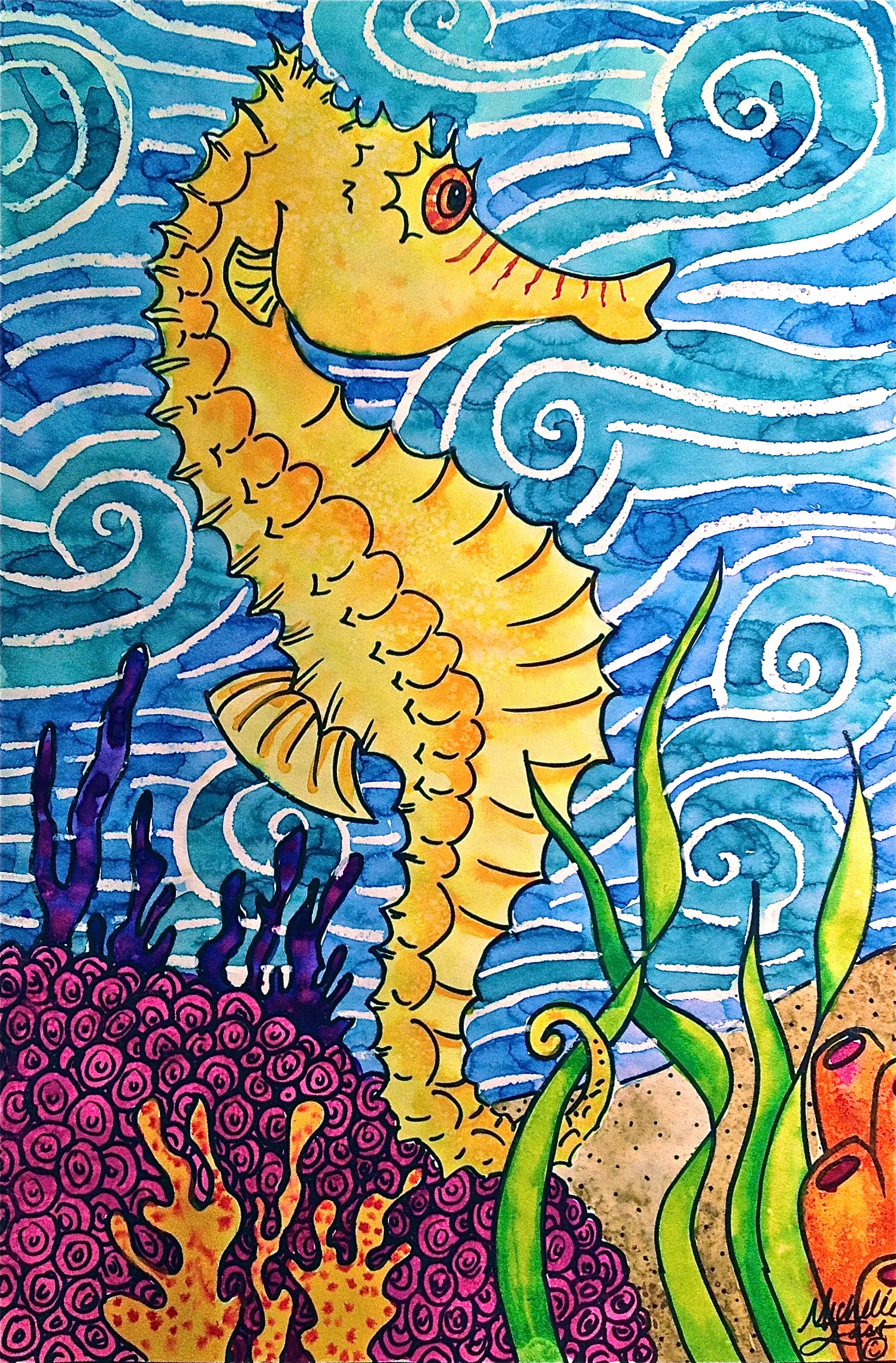
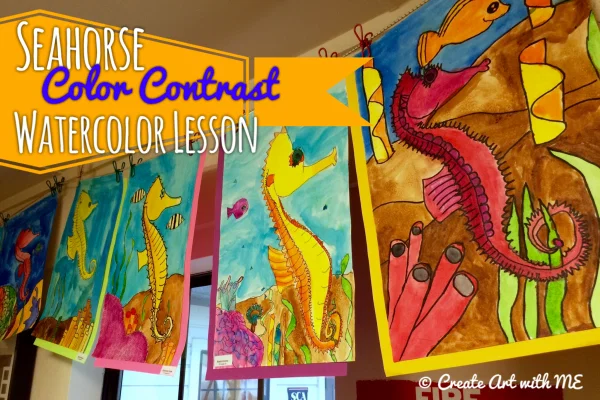
 海马水彩画:暖色与冷色
学生将复习色轮知识,并学习暖色与冷色的概念;还将了解色彩对比——即通过使用对比色,使画面主体更加突出。
所需材料:
12×18 英寸卡纸板、铅笔、海马参考照片、记号笔(Sharpie)、水彩颜料、画笔、水杯、纸巾、铺桌用报纸(可选:白色油画棒用于绘制背景)、基础水彩技法工作表
教学流程:
- 光谱是如何被发现的?1665 年,艾萨克·牛顿(Isaac Newton)正在为望远镜研磨透镜,偶然发现其中一块透镜在边缘产生了模糊的彩色光晕。他因此暂停透镜研究,转而开始系统探索色彩。
- 色轮可分为三大类:
- 原色(红、黄、蓝)
- 间色(绿、橙、紫:由两种原色混合而成)
- 复色(黄橙、红橙、红紫、蓝紫、蓝绿、黄绿:由一种原色与一种间色混合而成)
- 色轮还可按另外两种方式分组:
- 暖色: 红、黄、橙——视觉上向前推进,最先吸引观者注意(展示示例)
- 冷色: 蓝、紫、绿——视觉上向后退缩(展示示例)
- 色彩对比: 艺术家运用对比来呈现两物之间的差异,从而凸显某一对象。当冷色与暖色相邻放置时,即产生色彩对比。(展示示例)(文末另附其他色彩对比类型)
- 教师示范:如何绘制海马(参照《沃尔特·福斯特丛书:海洋生物》Walter Foster book-Sea Creatures 中的步骤)


活动说明:海马混合水彩画
教学目标:运用色彩对比,创作一幅海底海马主题水彩画。
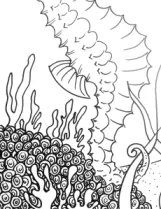
- 可选步骤:用白色油画棒在“水面”区域画出螺旋状线条(表现水流动感),再用水彩覆盖上色——此为水彩抗蚀法。
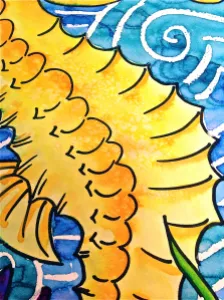
- 背景涂以冷色……深绿、蓝色、蓝绿色
- 海马涂以暖色——黄色、橙色或红色;趁颜料未干时撒入盐粒,形成独特肌理。
- 海草与珊瑚主要使用暖色绘制(如黄绿色、粉红色/红色、橙色等)。
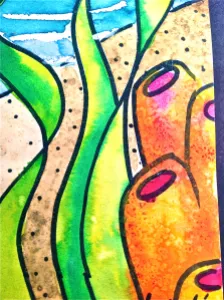
学生作品进行中:
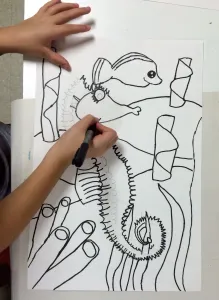
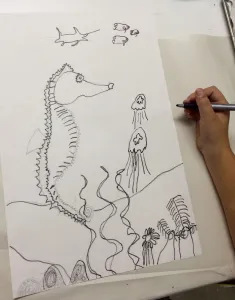
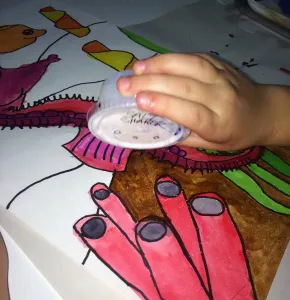
: 向湿润水彩中撒盐
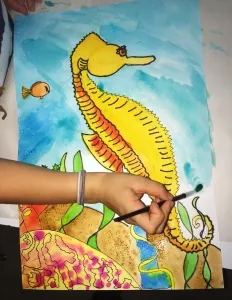
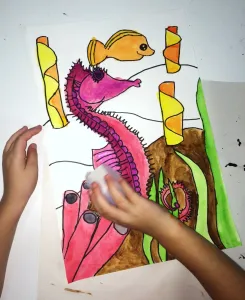
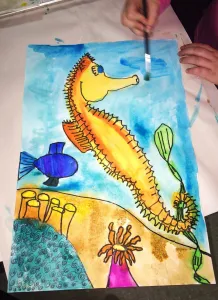
本教案由米歇尔·C·伊斯特(Michelle C East)原创。若您选择转载或以任何形式(文字或图片)使用本教案,请务必注明并链接至Create Art with ME*。*
其他水彩抗蚀法教案:
 暖色与冷色手印图案水彩抗蚀教案
 海胆图案水彩抗蚀教案
 色彩对比与肌理拓印:鬣蜥水彩抗蚀画
 非具象肌理拓印与水彩抗蚀

雪人马克笔与水彩抗蚀画
基础水彩技法教案与工作表
Seahorse Watercolor Painting Warm and Cool Colors
Original: https://createartwithme.com/seahorse-watercolor-painting/
Date: 2012-10-18
Author: Michelle East
Categories: 2nd Grade, 3rd Grade, 4th Grade, Color Contrast, Color Theory, Drawing Lessons, Elementary Art, Painting Lessons, Watercolor Lessons, Watercolor Resist
Tags: 2nd grade art, after school art class, after school art ideas, art lesson, Art lesson ideas, color contras using warm and cool colors, color contrast, Contrasting COLORS, coral, coral painting, elementary art, elements of art, experimental watercolor painting, paint, painting, painting art projects for kids, painting lesson, painting lesson step by step, Painting project, principles of art, repetition, rhythm in art, salt in watercolor, sea animal painting, sea horse, sea painting, seahorse painting lesson, teacher art projects for kids, teaching art to kids, texture, texture with salt, under the sea art, Watercolor, Watercolor and crayon, watercolor paint supplies, watercolor painting lesson, watercolor resist
Seahorse Watercolor Painting Warm & Cool Colors
Students will review the color wheel and learn about warm & cool colors. They will also learn about color contrast-using contrasting colors to make subjects stand out in the artwork.
Supplies:
12×18 sheets of tag board, pencils, reference photos of sea horses, sharpies, watercolor paints, paint brushes, water cups, paper towels, newspaper for tables (optional: white oil pastels for background), Basic Watercolor Techniques Worksheet
Delivery:
- How was the spectrum discovered? In 1665, Isaac Newton was grinding lenses for a telescope when he found that one of his lenses made blurred rims of color around the edge. He stopped working on lenses and began his study of color.
- Color wheel: organized into 3 main groups:
- Primary colors (red, yellow, blue)
- Secondary colors (green, orange, purple: made by mixing 2 primary colors together)
- Intermediate colors (yellow-orange, red-orange, red-violet, blue-violet, blue-green, yellow-green: made by mixing one primary color together with one secondary color).
- Color wheel can also be organized into 2 other groups:
- Warm Colors: reds, yellows, oranges-come towards the viewer & attract your attention first (show examples)
- Cool Colors: blues, purples, greens- visually recede from the viewer (show examples)
- Color Contrast: Artists use contrast to show differences between two things, to make something stand out. When cool colors are placed next to warm colors contrast is created. (show examples) (additional color contrast listed at bottom of post)
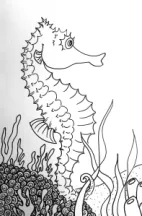
- Teacher guided demo: how to draw a seahorse (following the steps in the Walter Foster book-Sea Creatures)
Activity Instructions: Sea Horse Mixed Watercolor Painting
Objective: Create a watercolor painting of a sea horse under the sea using color contrast.
-
Begin by having students observing photos of sea horses, then draw their compositions in pencil. Include the sea floor-seaweed, coral, other sea creatures (keep the focus on the sea horse), etc 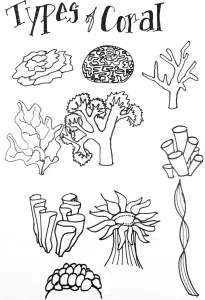
-
Using the fine point black markers, students will trace their entire pencil design.
- Optional: Use a white oil pastel to draw swirly lines in the water (to give the water movement). Then paint with watercolors –this is a watercolor resist method.
- Paint the color of the background-cool colors… dark green, blue, blue-green
- Paint the sea horse a warm color –yellow, orange or red. Sprinkle salt into the paint while it is wet to give interesting texture.
- Paint the seaweed & coral mostly warm colors (yellow-green, pink/red, orange, etc.).
Student Artwork in Progress:
: Adding Salt into WET Watercolors
This lesson was created by Michelle C East. If you choose to re-blog or use this lesson in any way (written or photos), then please make sure to link/credit to Create Art with ME.**
Additional Watercolor Resist Lessons:
Warm and Cool Color Hand Print Pattern Watercolor Resist Lesson
Sand Dollar Pattern Watercolor Resist Lesson
Color Contrast and Texture Rubbings Iguana Watercolor Resist Painting
Non-Objective Texture Rubbing & Watercolor Resist
Snowman Painting with Markers & Watercolor Resist
Basic Watercolor Techniques Lesson Plan & Worksheet

 海马水彩画:暖色与冷色


