摩托车综合媒介美术课(高中)
原文链接:https://createartwithme.com/motorcycle-mixed-media-art-lesson-high-school/
日期: 2012-12-30
作者: 米歇尔·伊斯
分类: 丙烯课程、AP工作室艺术(高中高阶美术)、美术课程、炭笔课程、素描课程、干性粉笔课程、高中美术、综合媒介课程、初中美术、油画棒课程、绘画课程、钢笔与墨水、蛋彩画、水彩课程、水彩铅笔课程、水彩铅笔绘画
标签: 丙烯、美术构图、炭笔、彩铅、摩托车素描、素描准确性、写生、观察能力训练、综合媒介中的黄金分割、网格法素描、三分法运用指南、含三分法的教学课例、炭笔摩托车、水彩摩托车绘画、摩托车绘画、三分法、学生摩托车作品、教授美术构图、面向高中生的构图教学、面向儿童的综合媒介教学、水彩
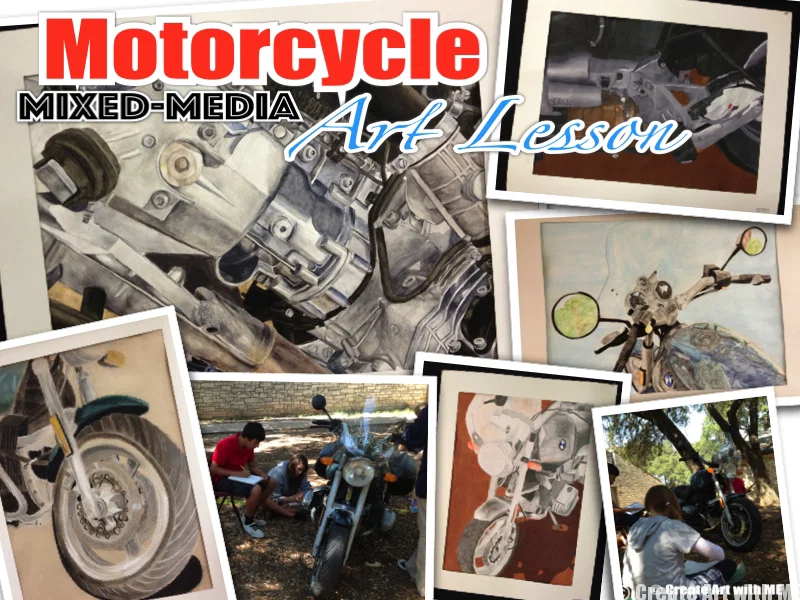
为构图的设计与创作提供富有趣味性的题材,是美术教师的重要任务。 我构思这一摩托车综合媒介美术项目已有数年,非常幸运地找到一位愿意将自家摩托车开到学校供我的高中生写生的人!我希望借由一个真正具挑战性、又极富视觉吸引力的主题,来向高中美术班讲授构图原理。本项目亦可调整为初中水平——例如简化构图,或改用自行车替代摩托车。
在学生于速写本上绘制摩托车之前,我们先开展了一堂复习课,内容涵盖构图、黄金分割与三分法。自小学高年级起,我们几乎在所有构图练习中均采用三分法。此外,我们还研究了艺术家凯瑟琳·E·德沃拉克(Kathleen E. Dworak)www.kedwatercolors.com的作品,她以视觉效果鲜明的摩托车水彩画而著称。
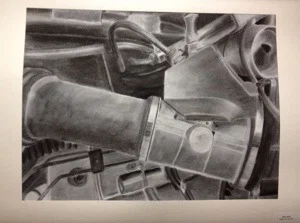
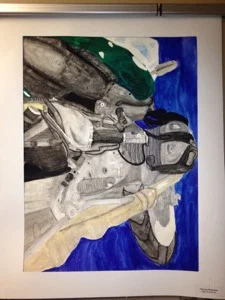
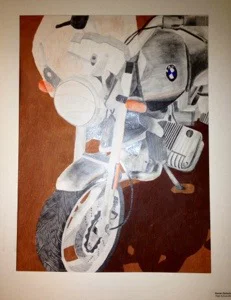
本项目的两大核心目标是:提升素描准确性,并运用三分法构建富于动感的构图。 我为学生们深感自豪——以下展示的是部分9至12年级学生的课堂习作!
课前技法教学:
干性粉笔课程教案与练习表
炭笔技法课程教案与练习表
丙烯绘画技法课程教案与练习表
水彩铅笔技法练习表
终极水彩技法课程教案与练习表
摩托车综合媒介美术课(高中)
 所需材料: 摩托车(或自行车)、印有三分法线框的取景器(由透明胶片制成)、素描工具、绘画工具、各类美术材料及纸张、数码相机或iPad
教学目标:
- 定义视觉艺术中的“构图”。
- 定义“强调”,并观察其在视觉艺术中的具体应用。
- 辨识营造强调效果的六种方式。
- 运用选择性裁切(selective cropping)构建有力的构图。
- 通过直接写生完成精准的素描。
- 运用三分法安排视觉焦点,创作原创构图。
教学实施:
- 什么是美术中的构图? 构图指作品各部分的组织方式,即艺术家如何有意识地运用美术的造型元素与形式原理来组织画面。画面中物体的位置安排绝非随意之举,而是经过周密考量后的决策结果。
- 强调(emphasis): 强调亦称作视觉焦点(focal point),即画面中引人注目的中心区域。
- 营造强调效果的六种方式: 位置(三分法)、对比色、对比大小、对比形状、对比肌理、孤立处理
a. 讨论并展示体现上述六种强调方式的美术作品范例
- 裁切(cropping): 裁切是指去除图像中不必要或不理想的局部,以引导观者注意力,甚至辅助叙事。
- 讨论构图在美术中的重要性,并讲解三分法;展示运用三分法作为基础的美术作品与摄影范例。
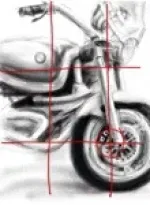
- 允许学生围绕摩托车走动,自主选择最喜爱的视角。
- 使用取景器,将视觉焦点置于三分法交叉点之一。 要求他们拍摄所选视角的精确照片。我允许学生使用开启三分法辅助线的iPad相机拍照。“写生”是提升素描准确性的最佳途径!也是观察能力训练的核心!
- 学生随后在速写本上花费一小时完成构图的粗略草图。
- 下一节课,我们为每位学生打印一张8×10英寸彩色照片作为后续绘制依据(因摩托车仅在校停留一天)。
- 学生需自选两种媒介进行创作。推荐组合包括:墨水与水彩、丙烯与墨水、炭笔与墨水、彩铅与墨水、粉笔与炭笔等。
- 学生在18×24英寸画纸上(纸张或画布类型依所选媒介而定)手绘三分法辅助线。
- 接着,采用简化的网格法绘制构图。
- 最后,学生依所选媒介进行深入刻画,并自行决定绘制顺序(如先用哪种媒介)。完成后统一装裱并展出,全校师生反响极为热烈!
整个项目历时8周,每周两次课,每次1.5小时——虽属长期项目,但绝对物有所值!!
学生作品范例:
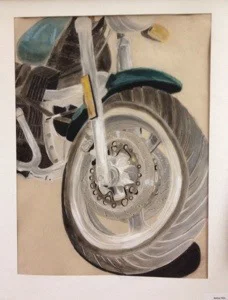
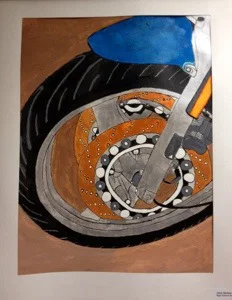
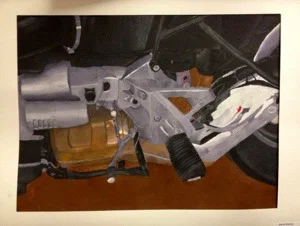
若您选择使用本课教案或转载(文字内容或图片),请务必附上回链至我的博客。本课作者为米歇尔·C·伊斯(Michelle C. East)。 与我一起创作艺术
其他技法课程:
钢笔与墨水技法教案及练习表
彩铅技法教案及练习表
油画棒技法练习表
基础水彩技法教案及练习表
进阶水彩技法教案及练习表
其他高中美术项目推荐:
平衡类型剪纸拼贴
水彩花卉绘画课
突破边框
综合材料静物
水彩蝴蝶图形风格
水彩倾倒法肖像
切分与重组形态素描项目
Original: https://createartwithme.com/motorcycle-mixed-media-art-lesson-high-school/
Date: 2012-12-30
Author: Michelle East
Categories: Acrylic Lessons, AP Studio Art (Advanced HS Art), Art Lessons, Charcoal Lessons, Drawing Lessons, Dry Pastel Lessons, HS Art, Mixed Media Lessons, MS Art, Oil Pastel Lessons, Painting Lessons, Pen & Ink, Tempera Painting, Watercolor Lessons, Watercolor Pencil Lessons, watercolor Pencil Painting
Tags: acrylic, art composition, charcoal, colored pencil, drawing a motorcycle, drawing accuracy, Drawing from real life, drawing observation skills, golden mean in mixed media, grid method of drawing, how to use the rule of thirds, lesson with rule of thirds, motorcycle in charcoal, motorcycle watercolor painting, painting a motorcycle, rule of thirds, student motorcycle art, Teach art composition, teach composition to high school, teaching kids mixed media, Watercolor
Providing interesting subject matter for planning & creating compositions is important for art teachers to do. I had envisioned doing this mixed media motorcycle art project for several years & was so grateful to find someone who was willing to bring their motorcycle up to our school so my high school students could draw it! I wanted something to really challenge & provide a super interesting subject to teach composition to my high school art class. This project could also be adapted to a middle school level by simplifying the composition or using a bicycle instead of the motorcycle.
Prior to drawing the motorcycle cycle in their sketchbooks, we had a review lesson on composition, the Golden Mean, & the Rule of Thirds. We use the rule of thirds in almost all of our compositions beginning in upper elementary. We also studied the artist Kathleen E. Dworak www.kedwatercolors.com who has visually interesting motorcycle watercolor paintings.
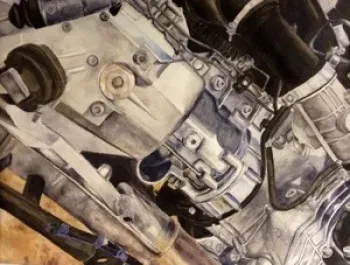
The two main objectives in this project were drawing accuracy & creating a dynamic composition using the Rule of Thirds. I am very proud of my students-below are a few of my student’s artwork ranging from 9th-12th grade!
Pre-Instruction Art TECHNIQUE Lessons:
Dry Pastels Lesson Plan & Worksheet
Charcoal Techniques Lesson Plan & Worksheet
Acrylic Painting Techniques Lesson Plan & Worksheet
Watercolor Pencil Techniques Worksheet
Ultimate Watercolor Techniques Lesson Plans & Worksheets
Supplies: motorcycle or bike, view finders with Rule of Thirds made from transparencies, drawing supplies, painting supplies, various art supplies & paper supplies, digital camera or iPads
Objectives:
- Define composition in the visual arts.
- Define emphasis, observe how it is applied to visual art.
- Identify 6 ways to create emphasis.
- Use selective cropping to develop a strong composition.
- Create an accurate drawing from direct observation.
- Create an original composition using the Rule of Thirds to place the focal point.
Delivery:
- What is composition in art? Composition refers to how the artwork is put together. It is how the artist INTENTIONALLY used the elements and principles of art to create the artwork. The placement of objects within the picture plane is not an arbitrary act, but is the result of calculated decisions.
- Emphasis: Emphasis can also be called the focal point, it is defined as the center of interest in a picture.
- 6 Ways to create emphasis: Placement (Rule of Thirds), Contrasting color, Contrasting size, Contrasting shape, Contrasting texture, Isolation
a. Discuss & view examples of artwork illustrating the 6 Ways to create emphasis
- Cropping: cropping is the act of cutting away unnecessary or unwanted portions of an image to help focus the viewer’s attention and even help tell a story.
- Discuss the importance of composition in art & explain the Rule of Thirds. Show examples of art & photos that have used the Rule of Thirds as a base.
- Allow students to walk around the motorcycle to choose the viewpoint they like best.
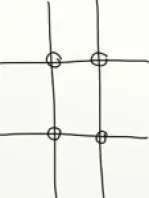
- Use viewfinders to position the focal point in one of the Rule of Thirds. Have them take a photograph of their exact viewpoint. I allowed them to use an iPad camera with the Rule of Thirds guidelines turned on to take their pictures. Drawing from real life is the best method of learning drawing accuracy! Drawing Observation Skills!
- They then spent an hour drawing a rough sketch of their composition in their sketchbooks.
- The next class We printed out a 8×10″ color picture for them to work from (since we only had the motorcycle for one day).
- They chose two mediums to create their art. Some suggestions were: Ink & Watercolor, Acrylic & ink, Charcoal & ink, Colored Pencil & Ink, Pastel & charcoal, etc.
- They drew the rule of thirds on their 18×24″ paper (various paper/canvas depending on the mediums they chose).
- Then drew their compositions using a simplified grid method of drawing.
- Next they rendered their compositions with their chosen mediums, thinking through which one to use first. When finished we matted & displayed them & the reaction from the school was awesome!
The entire project took us 8 weeks of 1.5 hr classes meeting every other day-a long project, but absolutely worth it!!
Student Examples:
If you choose to use this lesson or to repost it (written info or photos), please link it back to my blog. I, Michelle C. East am the creator of this lesson. Create Art with ME
Additional Technique Lessons:
Pen and Ink Techniques Lesson Plan and Worksheet
Colored Pencil Techniques Lesson Plan and Worksheet
Oil Pastel Techniques Worksheet
Basic Watercolor Techniques Lesson Plan & Worksheet
Advanced Watercolor Techniques Lesson Plan & Worksheet
Additional HS projects to check out:
Types of Balance Cut Paper Collage
Watercolor Flower Painting Lesson
Beyond the Border
Mixed Media Still Life
Watercolor Butterfly Graphic Style
Watercolor Pouring Portrait
Sliced & Diced Forms Drawing Project

 所需材料: 摩托车(或自行车)、印有三分法线框的取景器(由透明胶片制成)、素描工具、绘画工具、各类美术材料及纸张、数码相机或iPad


