图文诗
六年级学生与意大利语教师及我的美术同事玛丽亚·诺埃米·德马约合作,开展了这项跨学科教学活动。首先,学生们受意大利女诗人西尔维娅·韦基尼的启发,创作了以“作者心中珍爱之地”为主题的诗歌。
在采用“描摹法”的诗歌创作中,每位学生都尝试描述一处自己珍爱的地方,细致描绘该地的气息、色彩、声响、滋味以及由此唤起的种种感受。最终完成的诗歌饱含回忆、乡愁与亲身体验,而我们则努力用视觉语言将这些内容具象化。
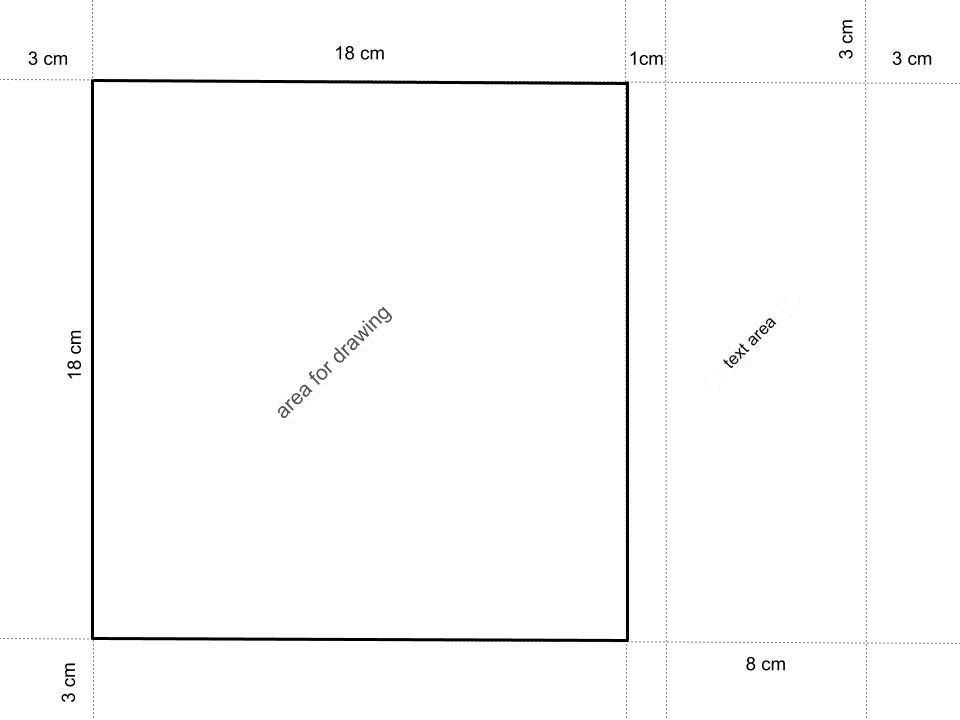
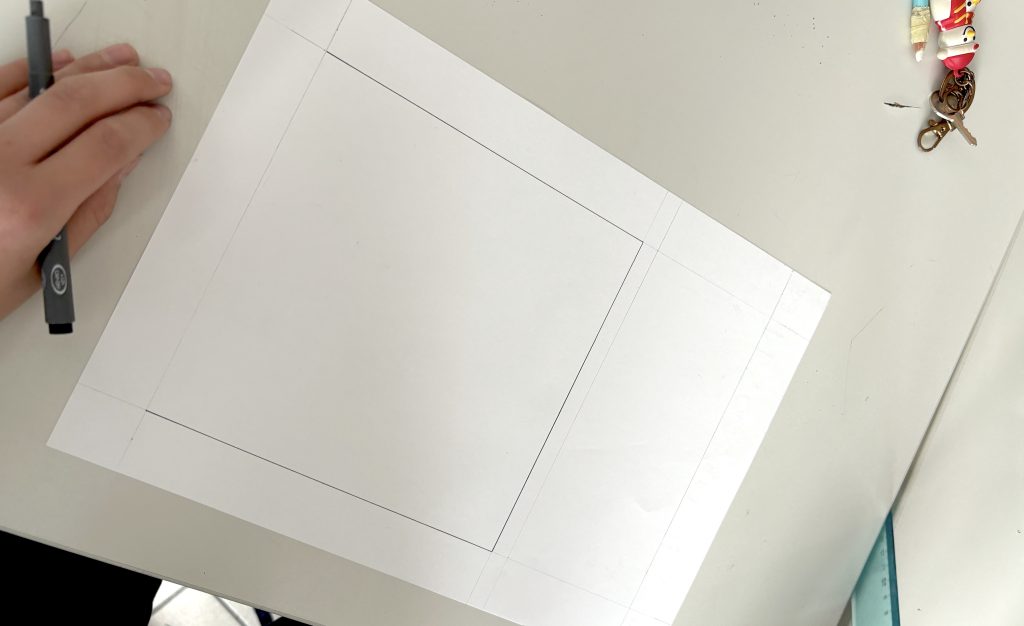
在此任务中,我向学生明确了尺寸要求与操作步骤。首先,将一张33×24厘米的画纸按如下方式打格:
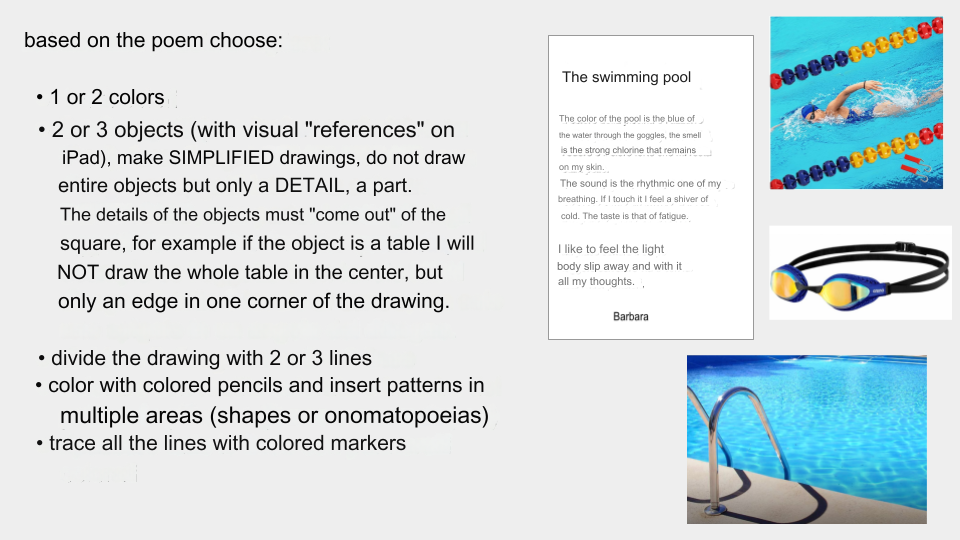
根据所写诗歌,学生须选定:
● 1种或2种颜色
● 2件或3件物品(借助iPad上的视觉“参考图”),绘制其简化图形——不画完整物体,仅表现一个细节或局部。该细节须“突破”方格边界;例如若物体是一张桌子,则不可将整张桌子画于画面中央,而应仅在画纸一角描绘桌沿。
● 用2条或3条线条分割画面
● 使用彩铅上色,并在多个区域添加图案(几何形或拟声词)
● 全部轮廓线均用彩色记号笔勾勒
以下是三张幻灯片,概括整个制作流程:
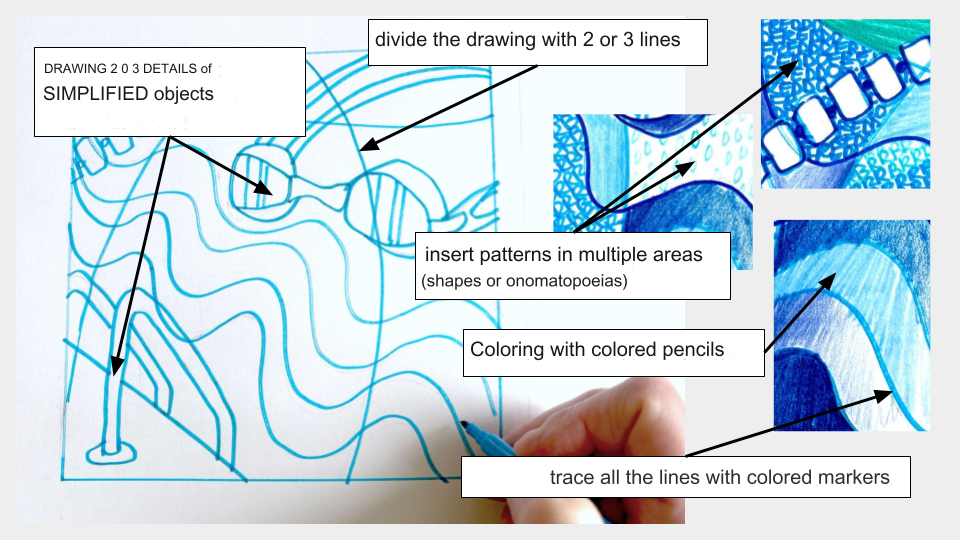
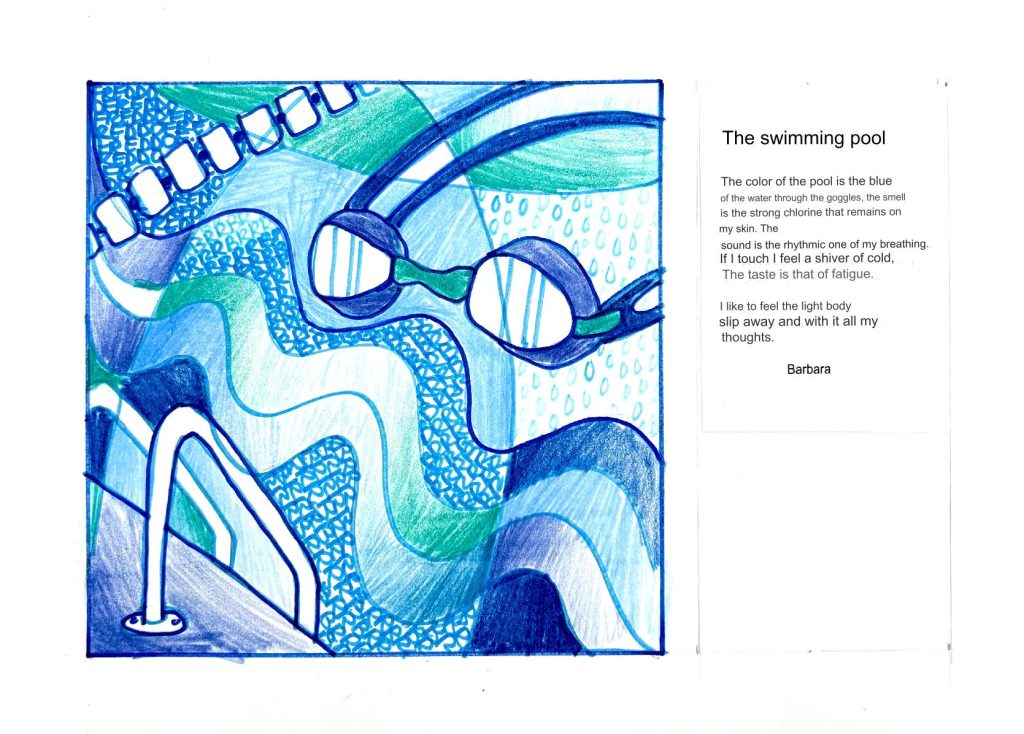
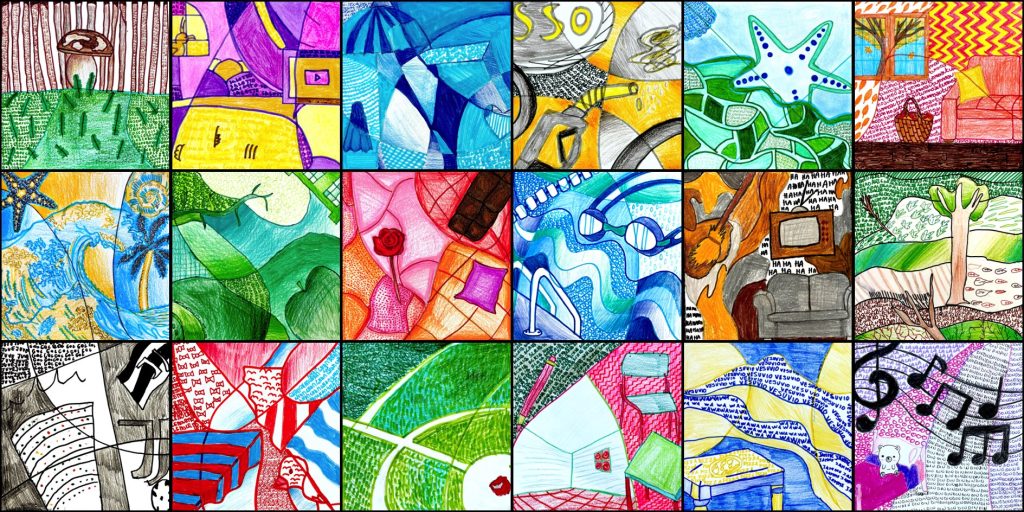
学生们写出了优美的诗歌,配图同样出色。本次插图创作的关键在于:必须具备强烈的表现力与唤起感——正如文字部分需唤起声音、气味与感受,图形部分亦无需照搬现实中的物体或场景,仅需组合若干细节、形状与图案(包括拟声词),便足以达成诗意表达。以下为创作过程各阶段成果,以及配图诗歌实例:
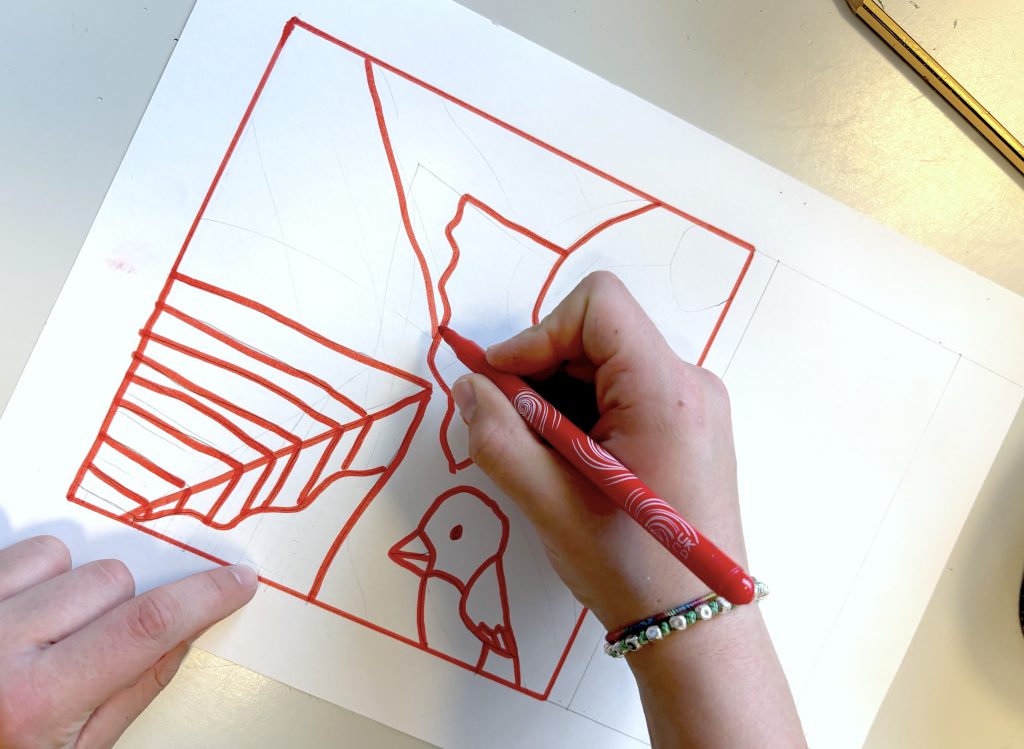
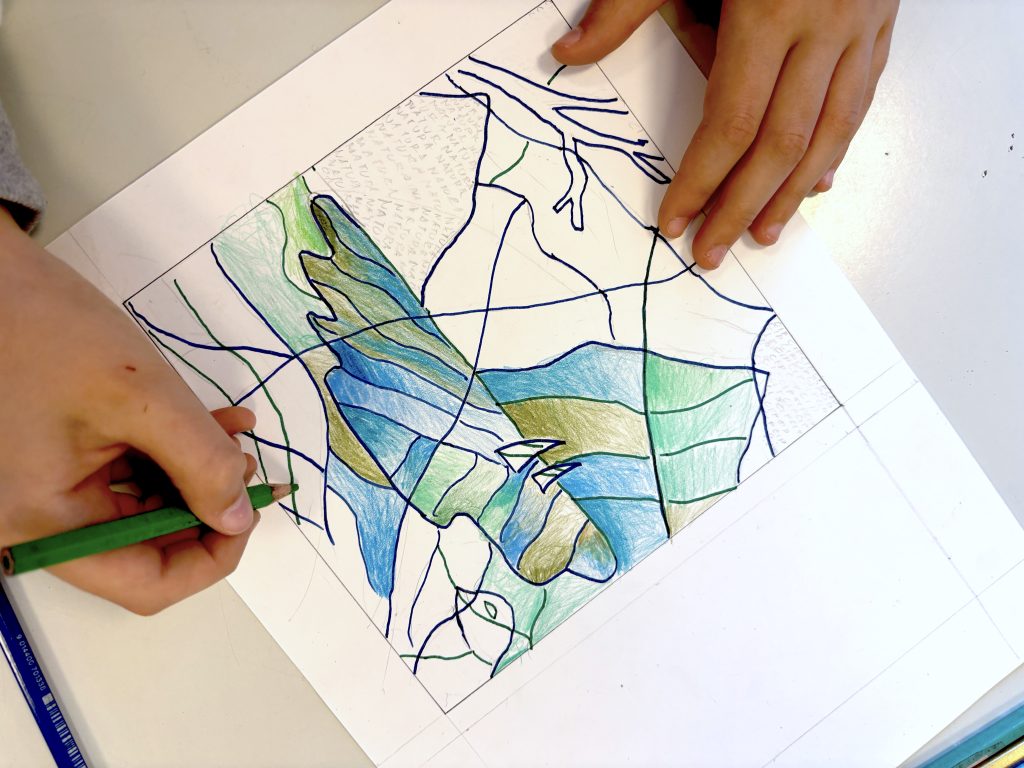
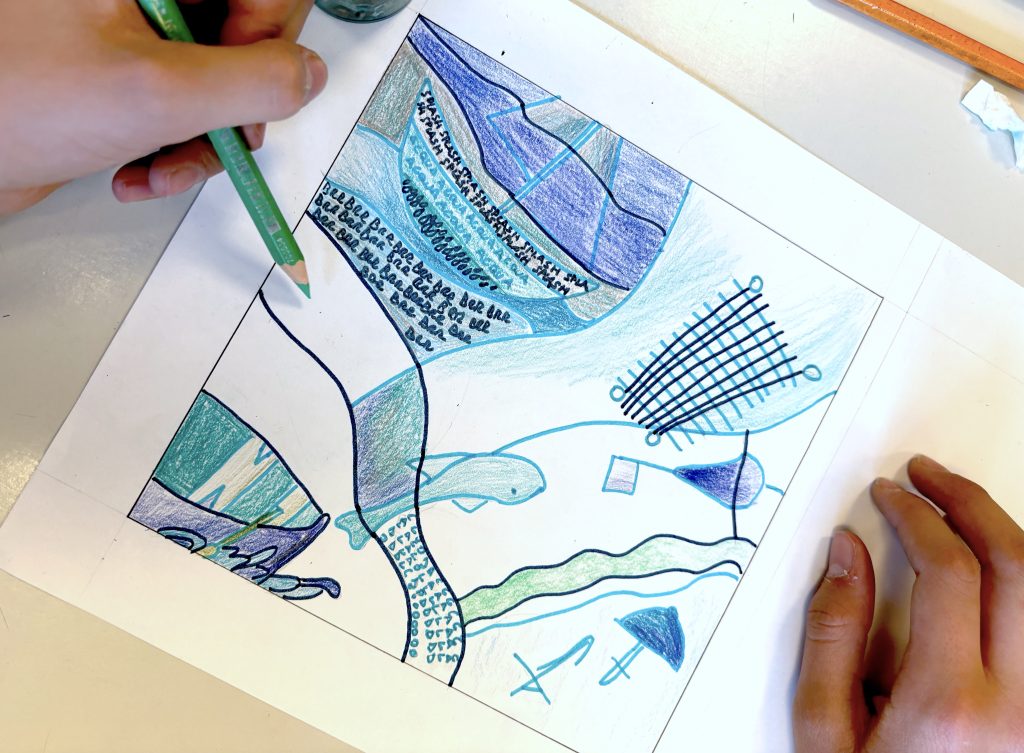
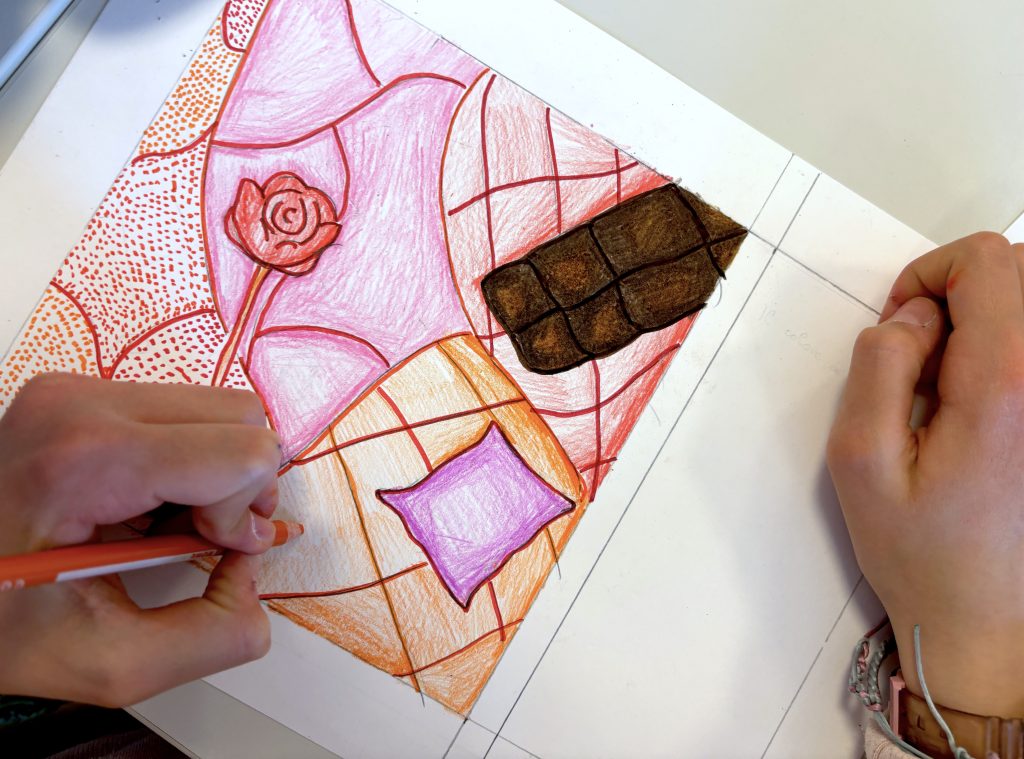
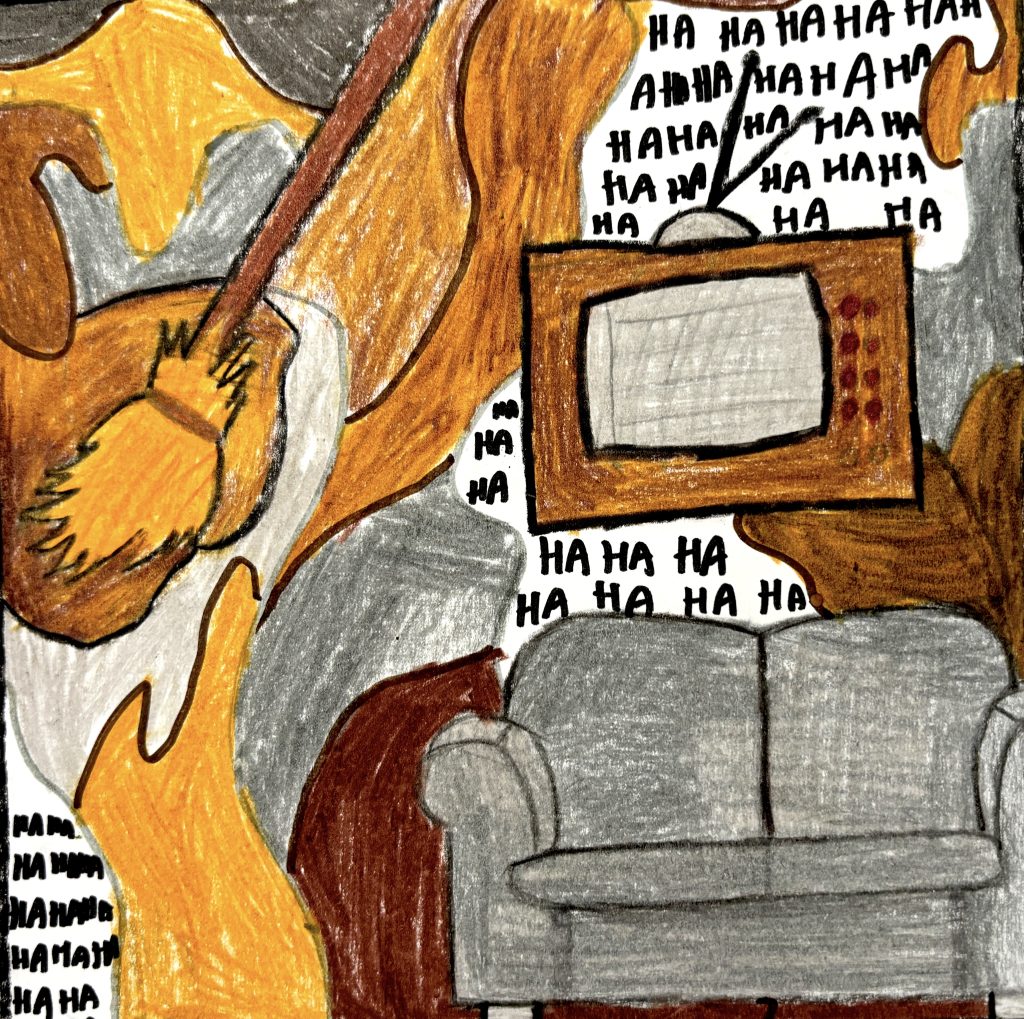
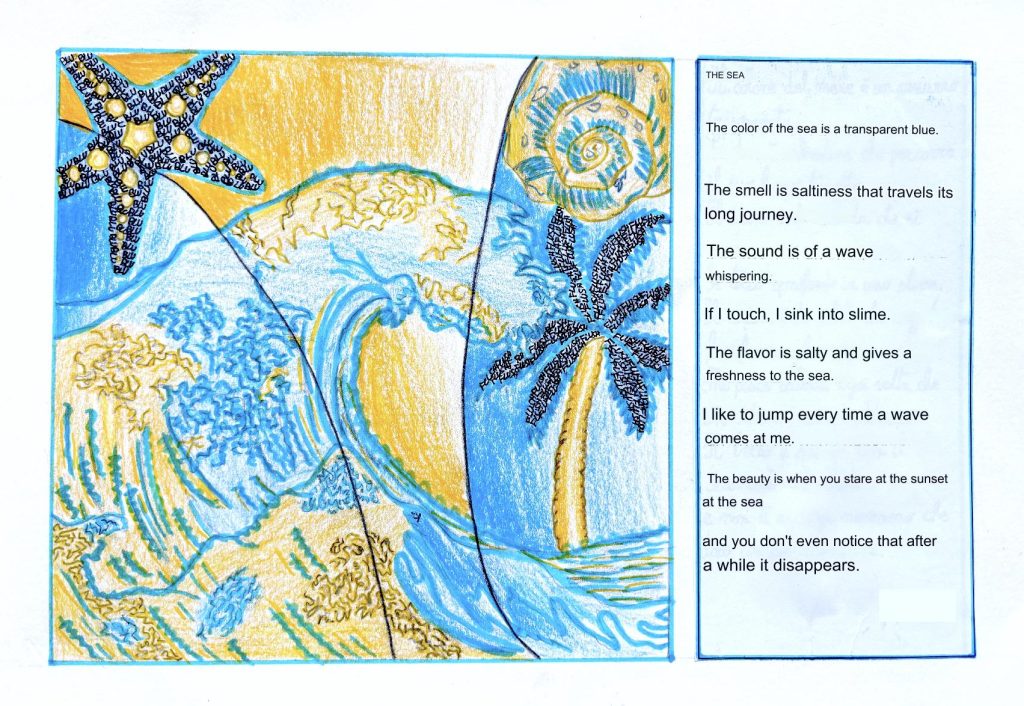
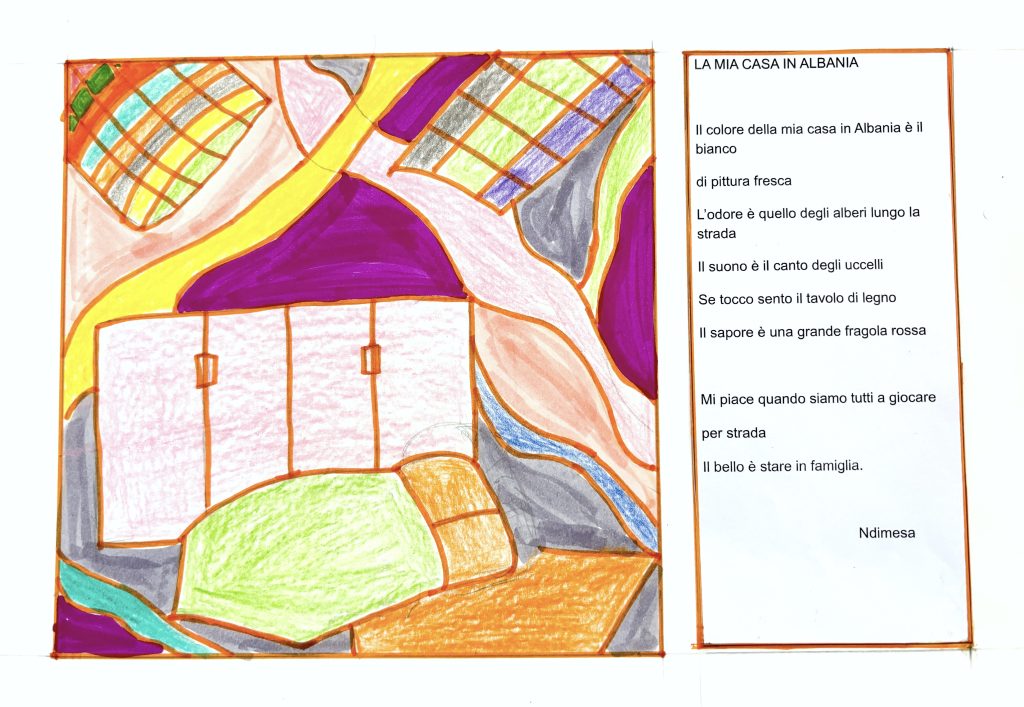
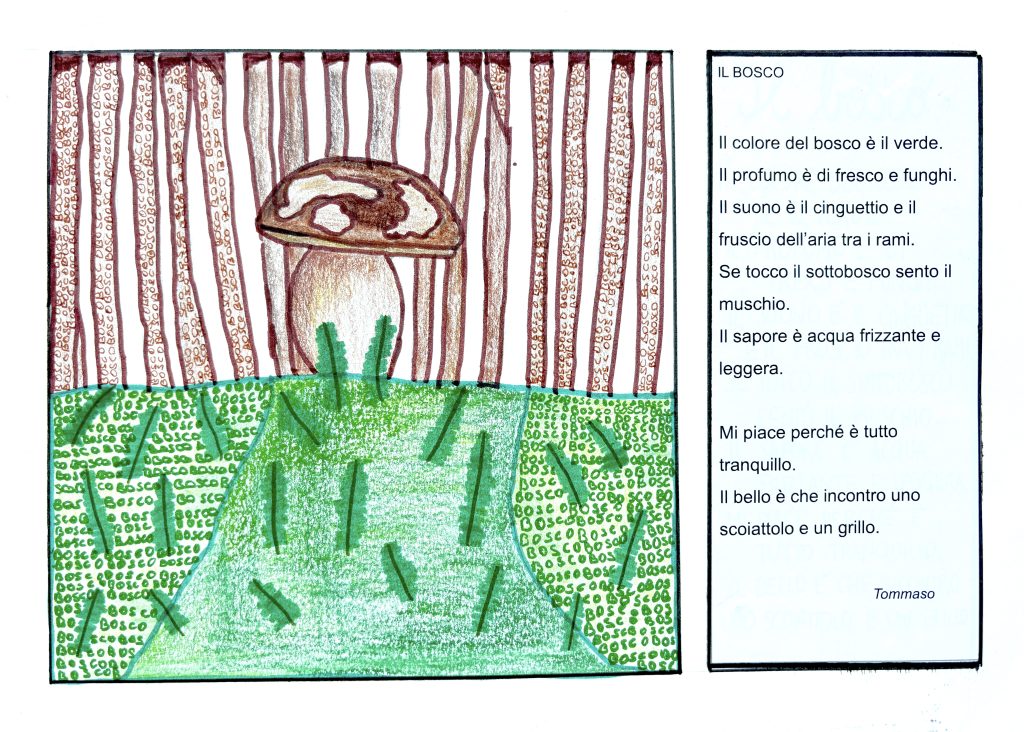
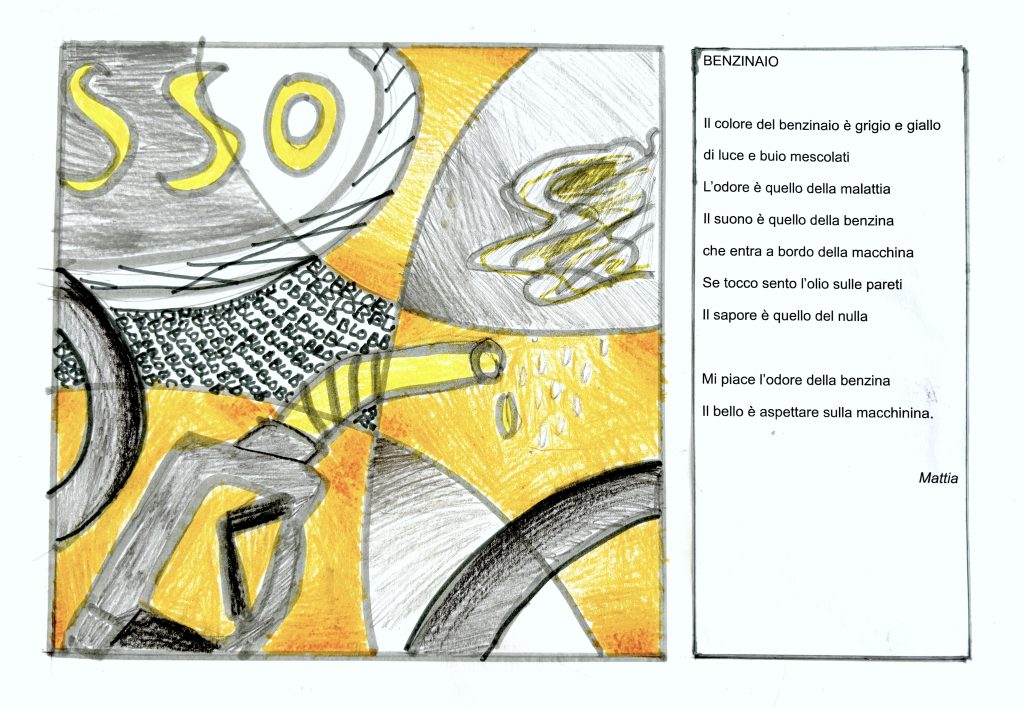
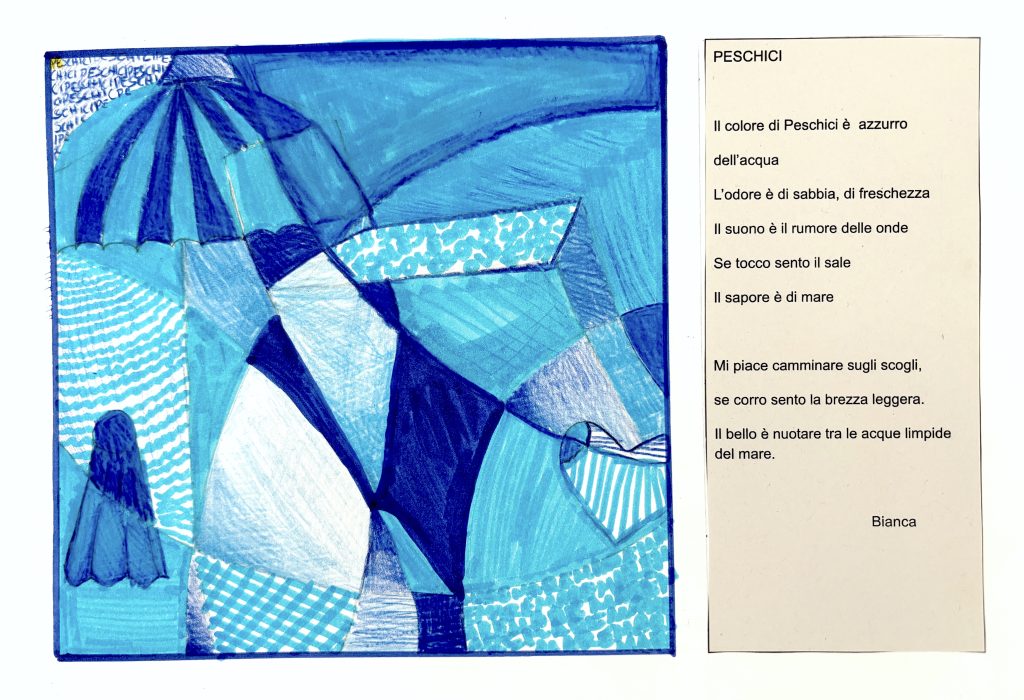
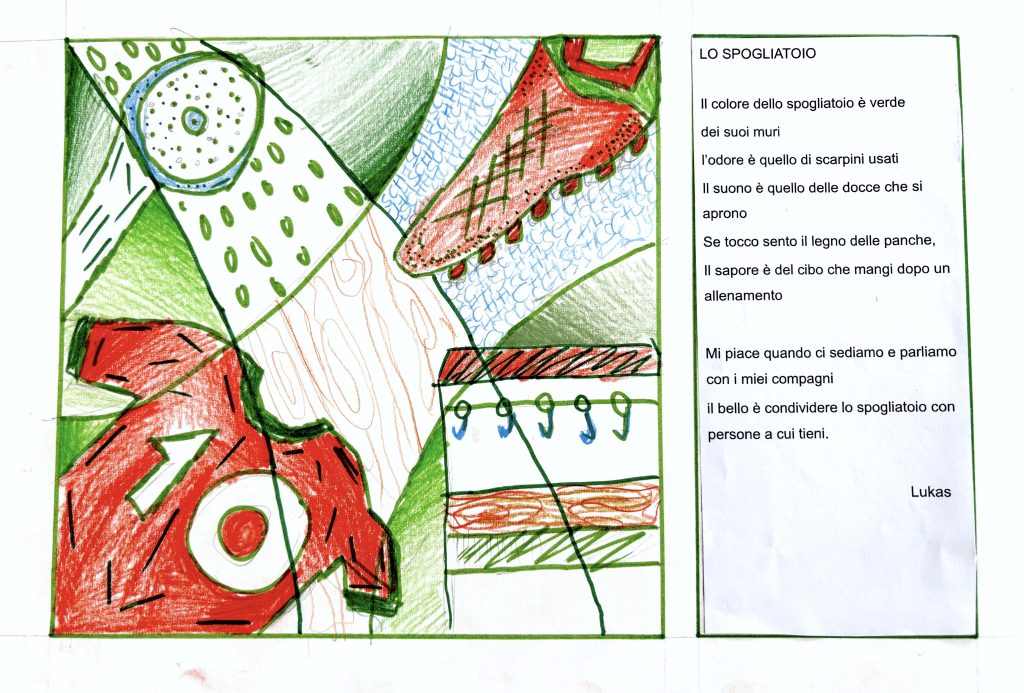
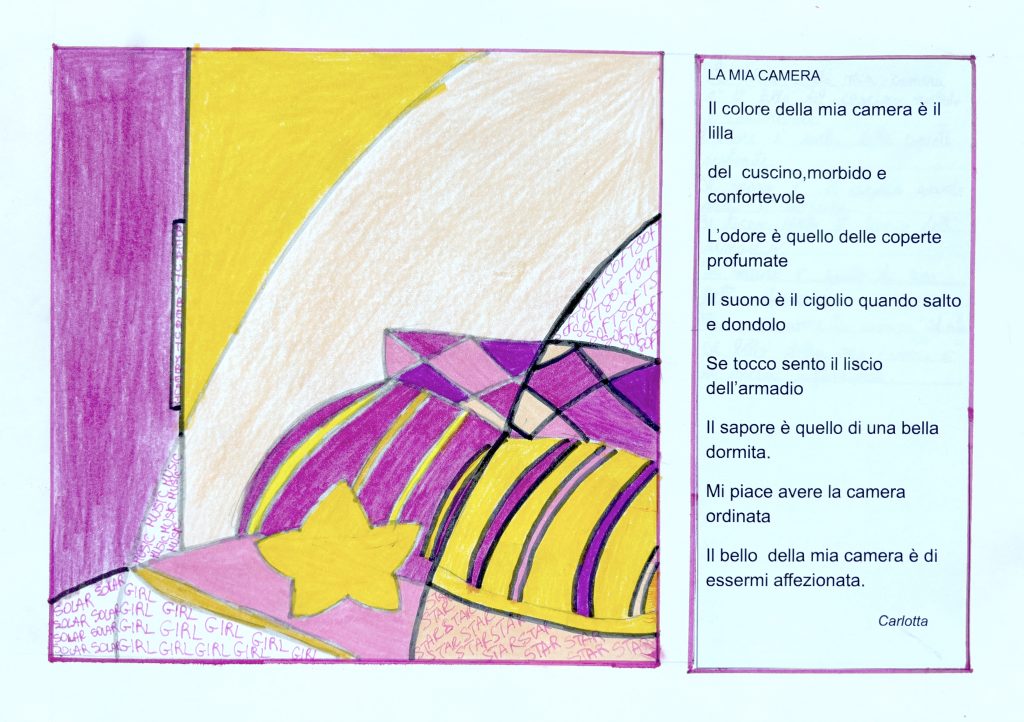
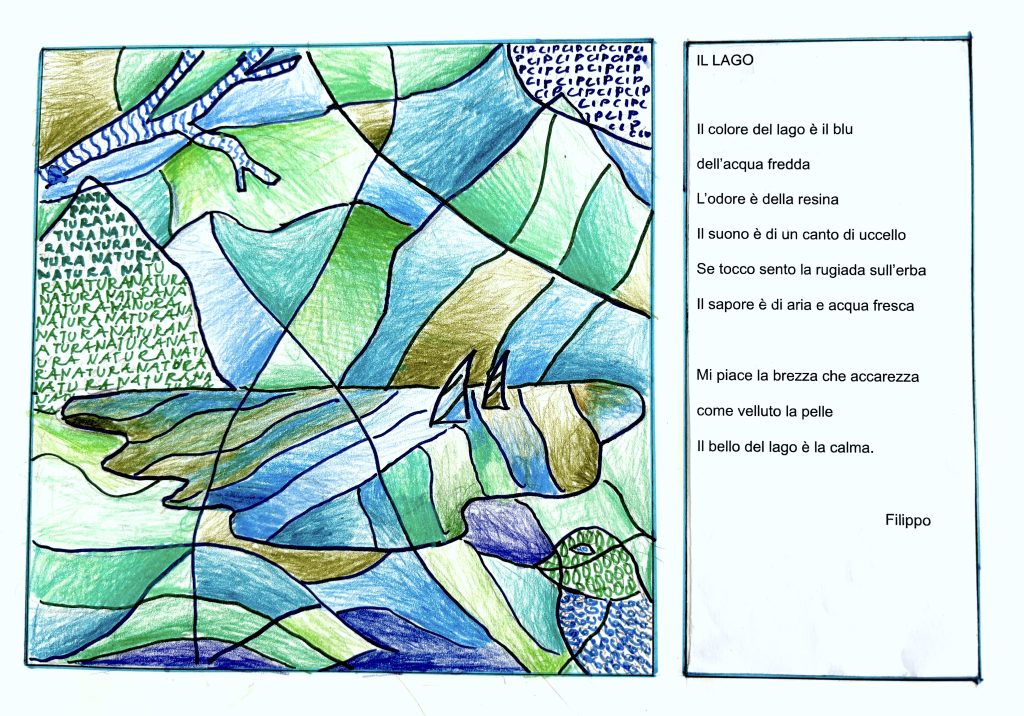
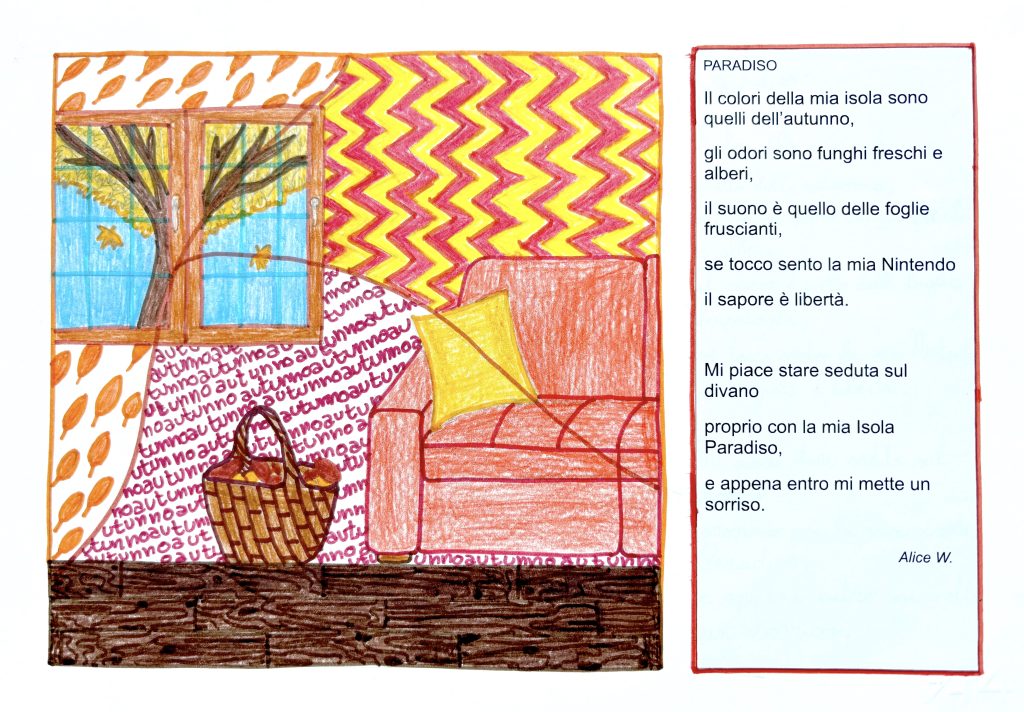
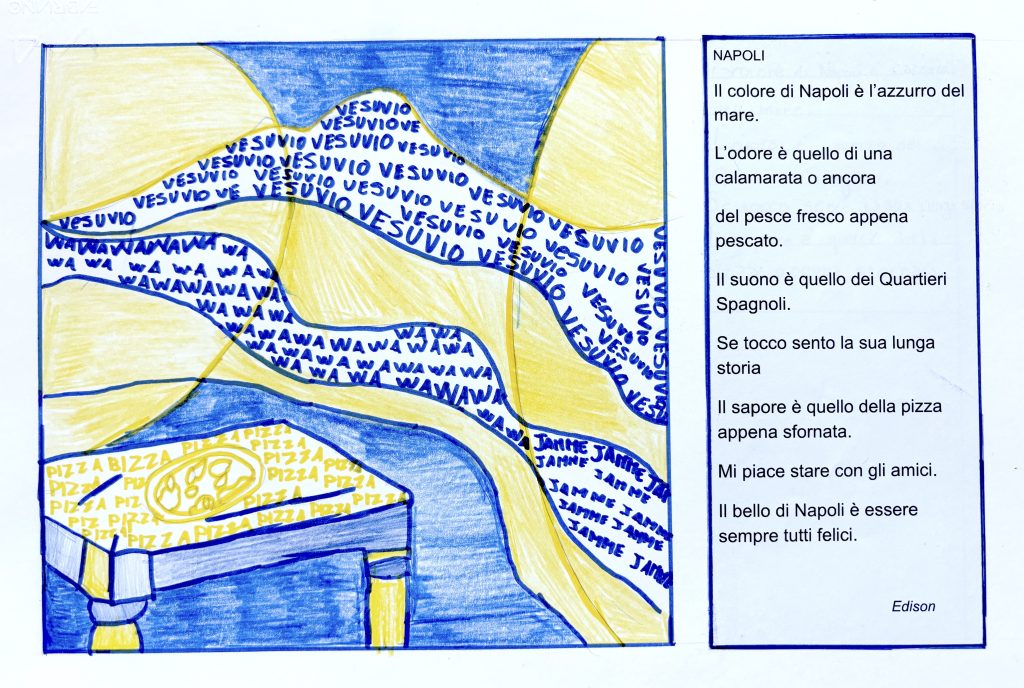
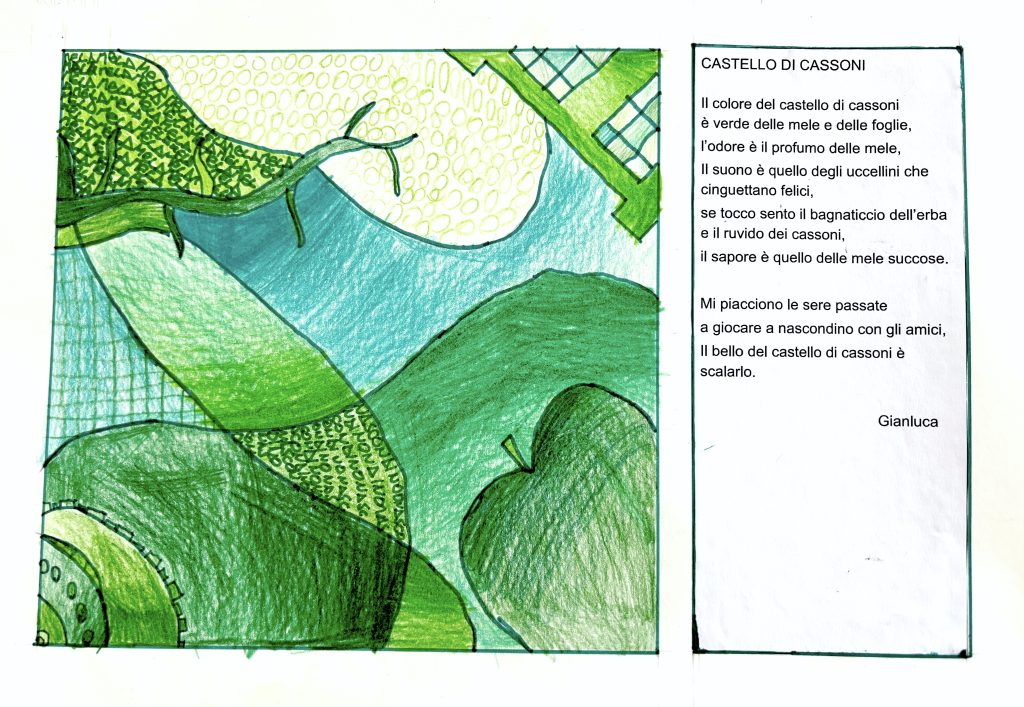
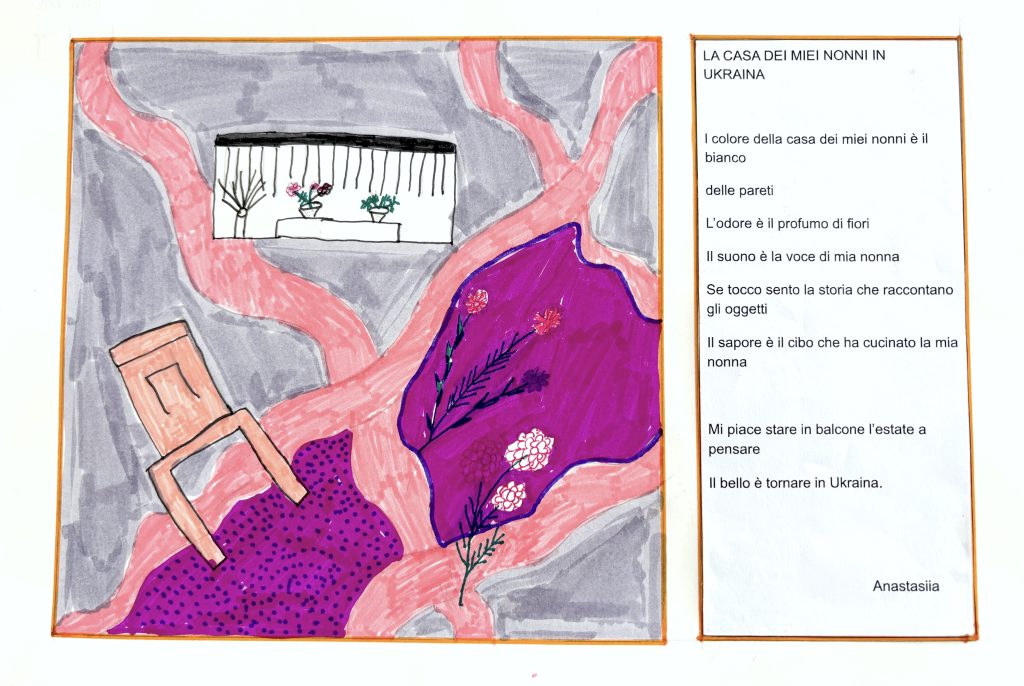
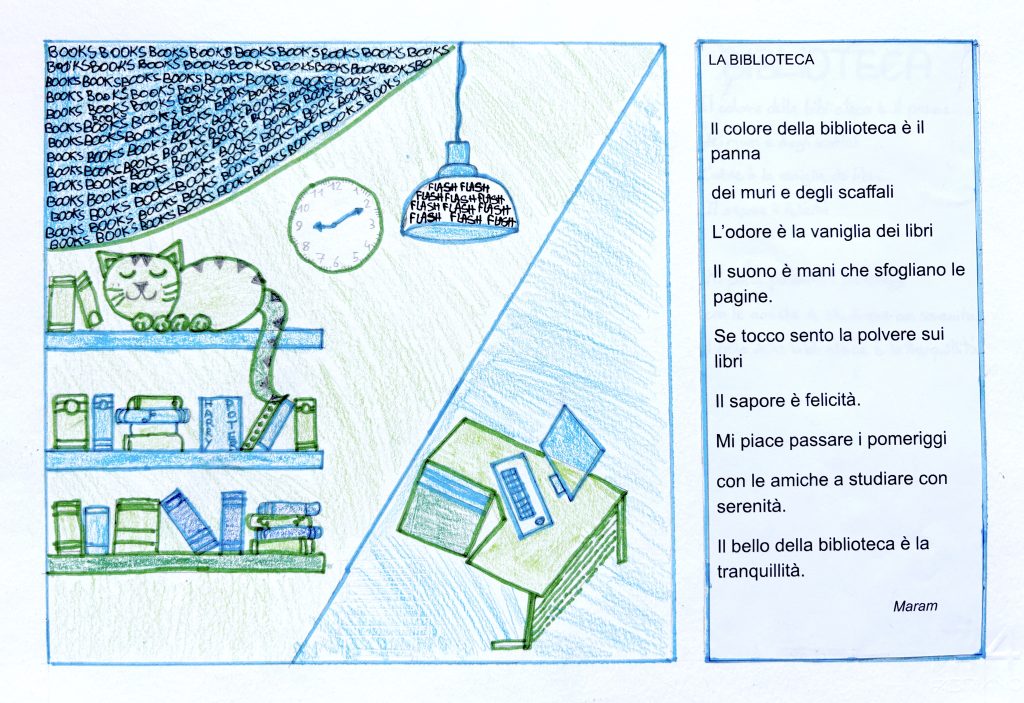
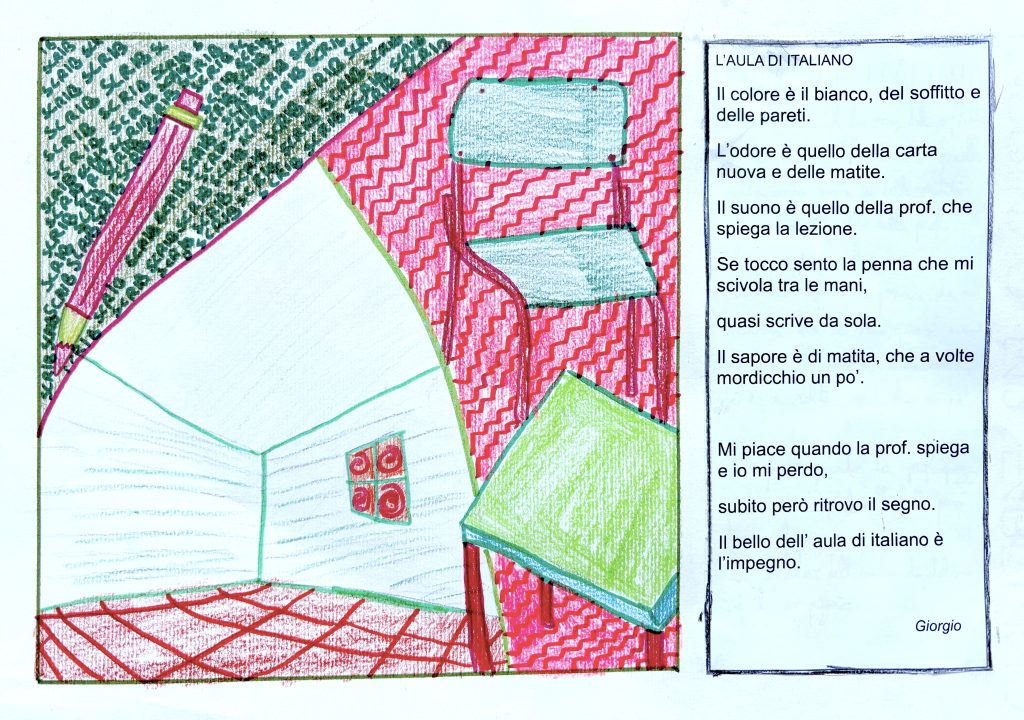
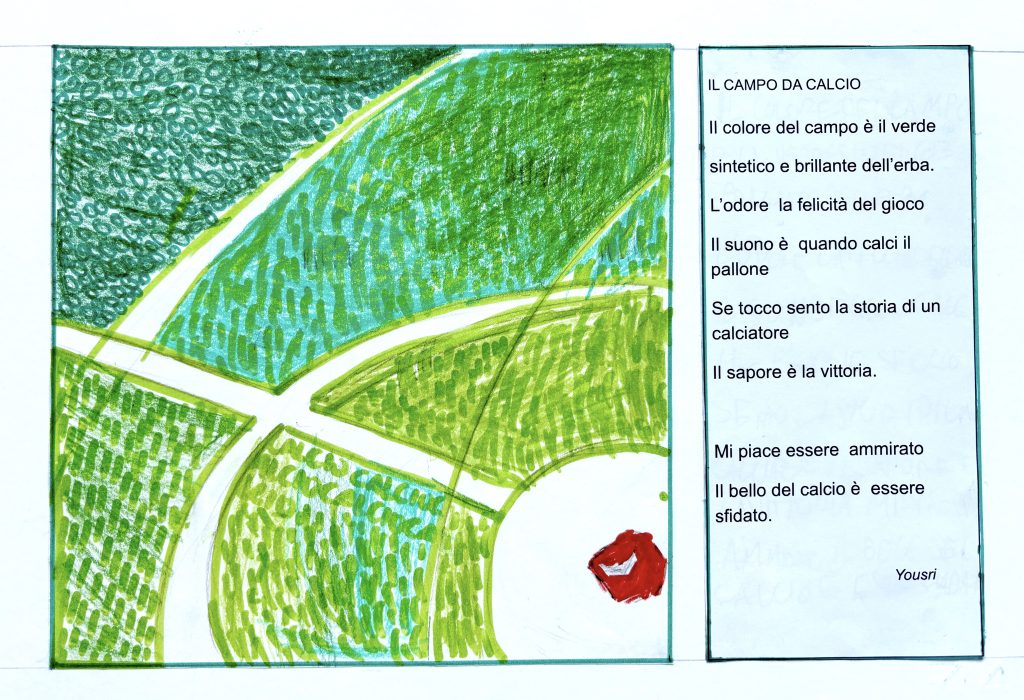
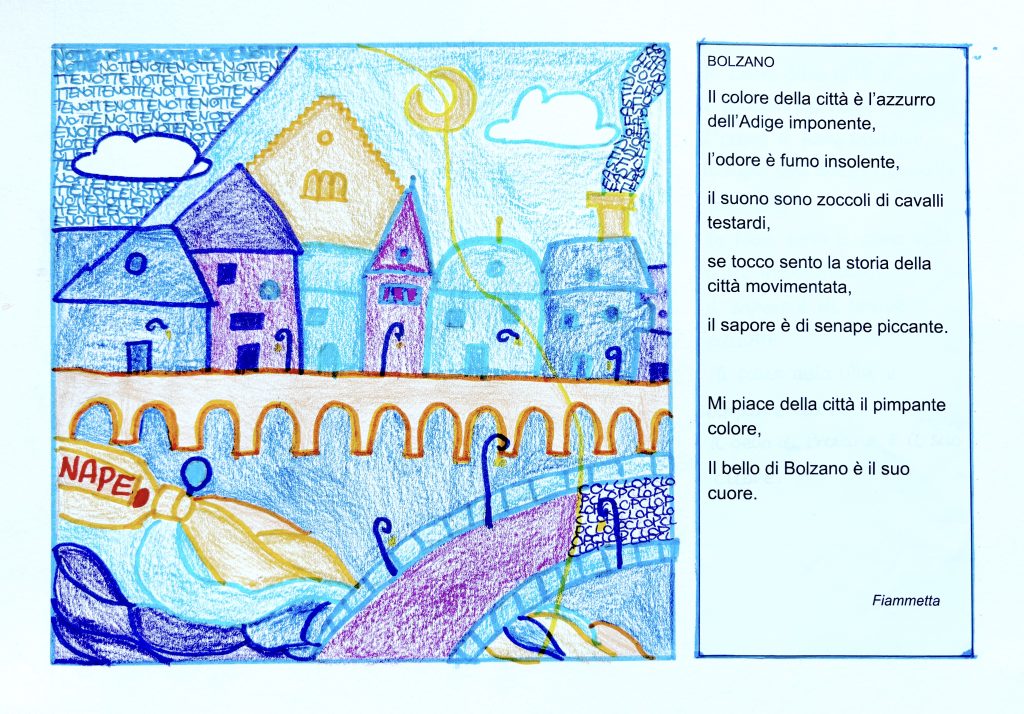
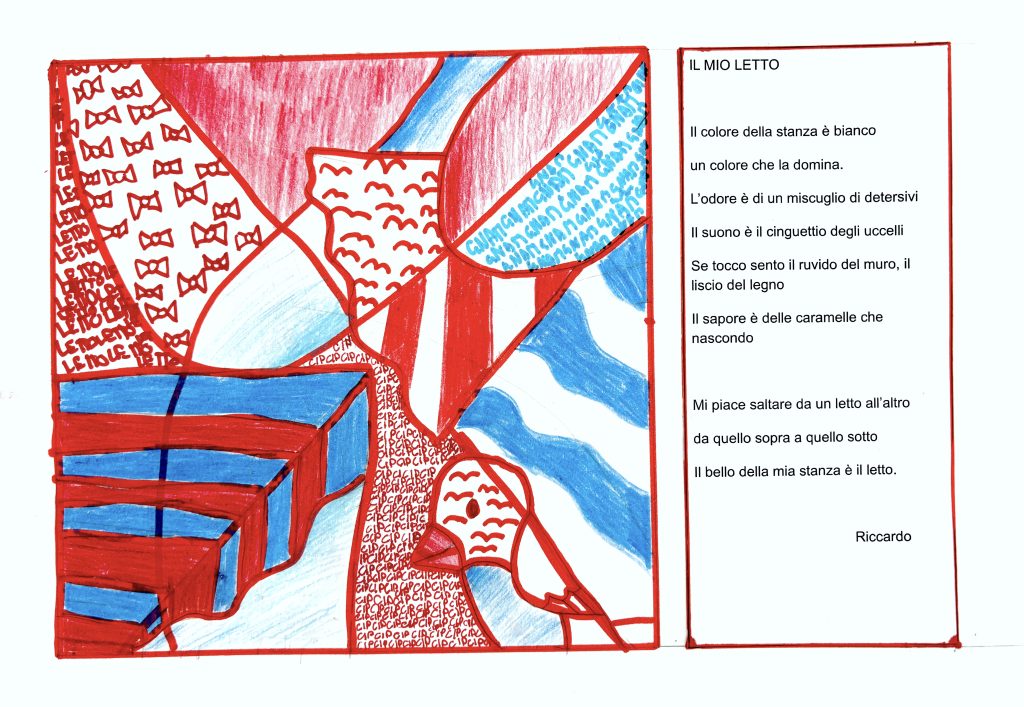
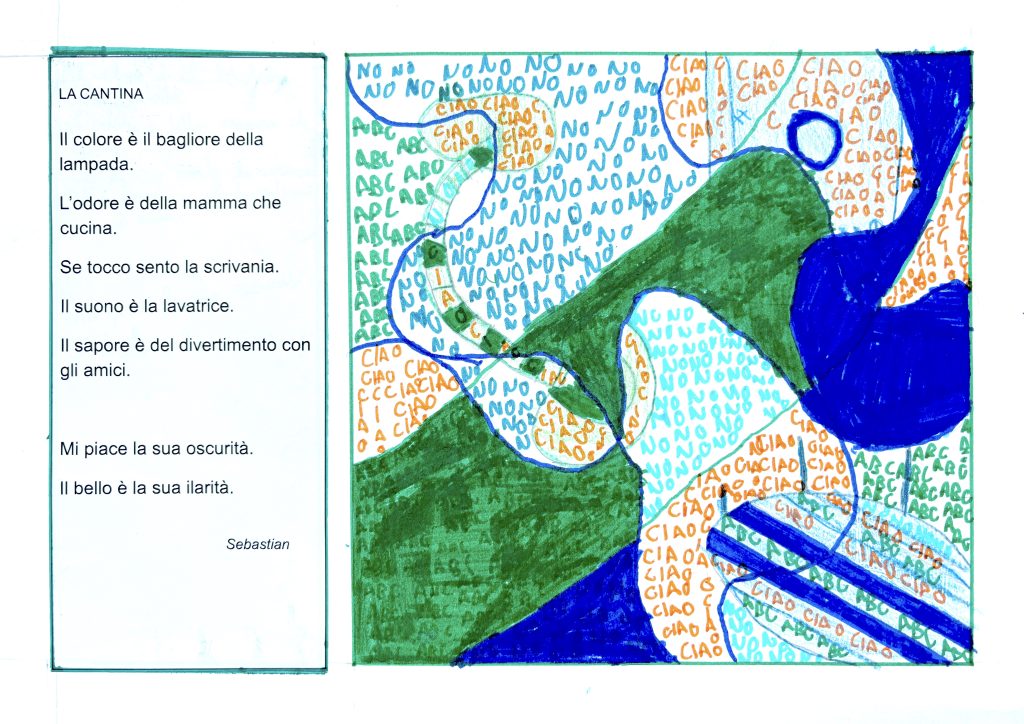
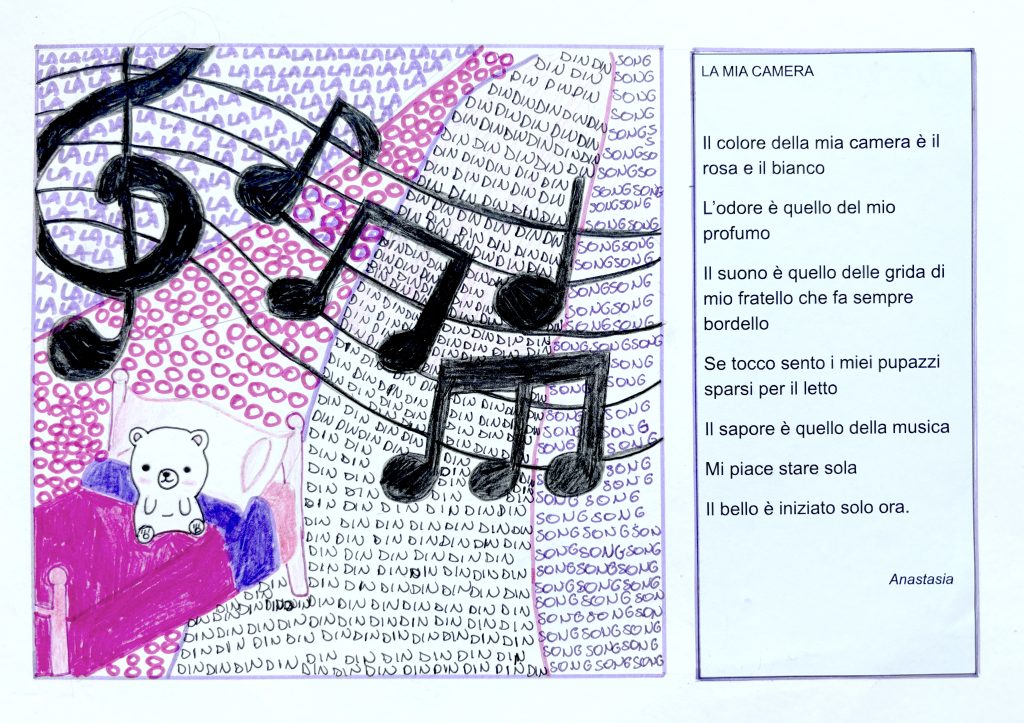
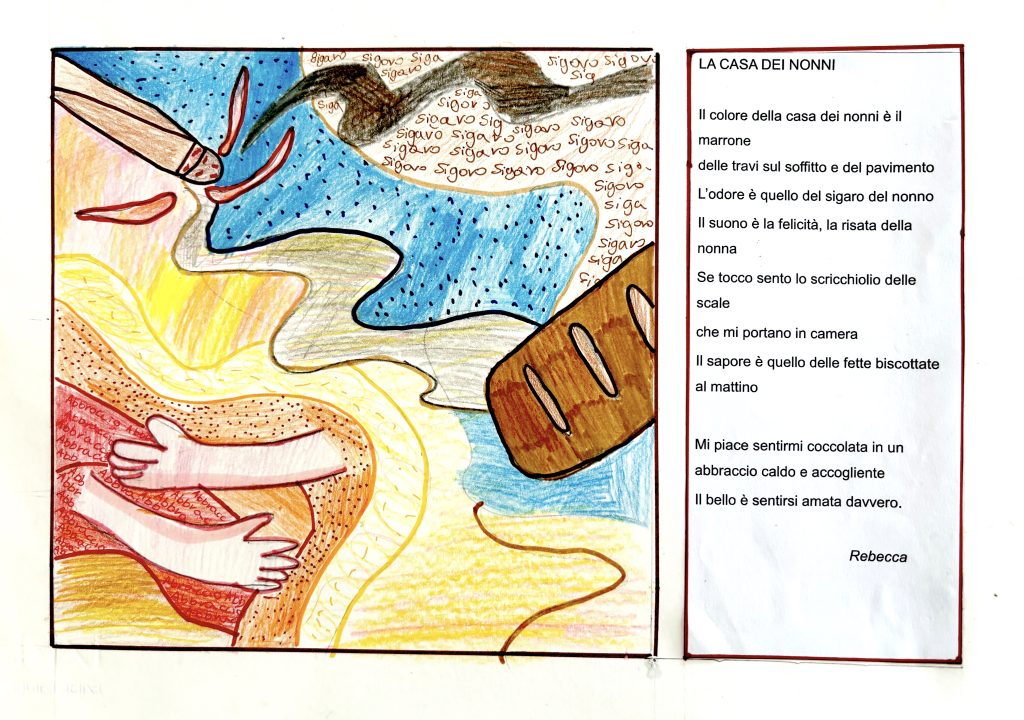
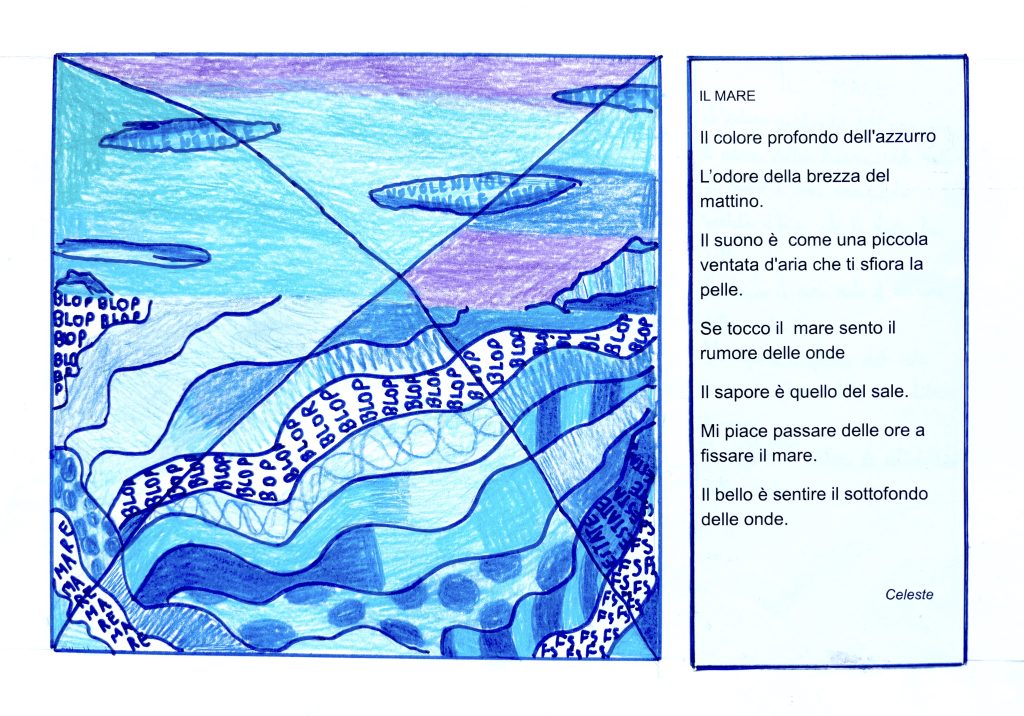
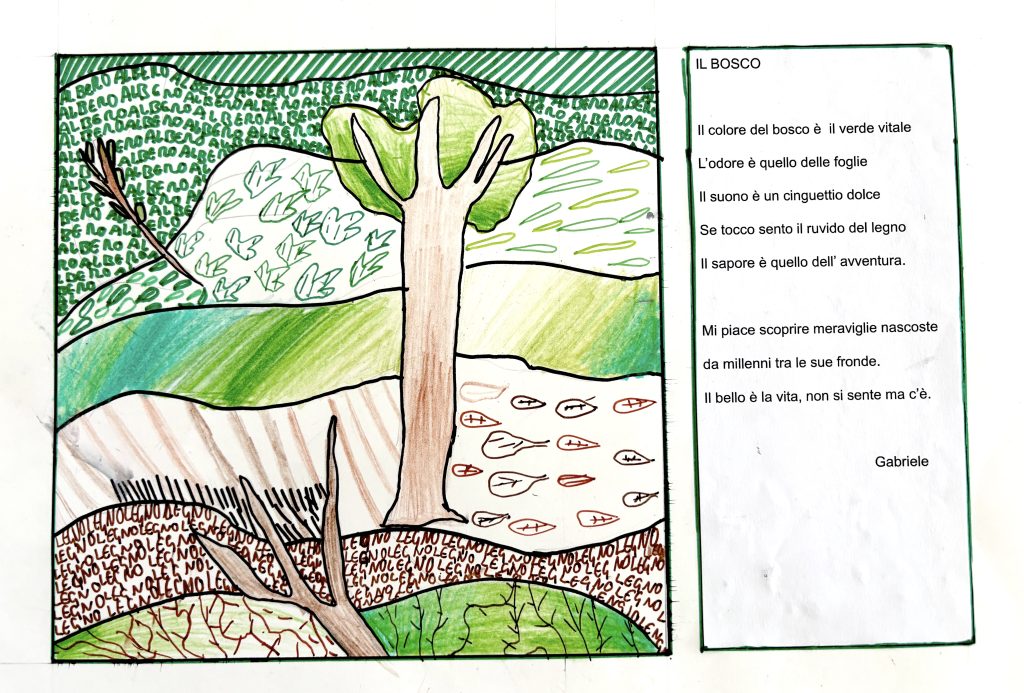
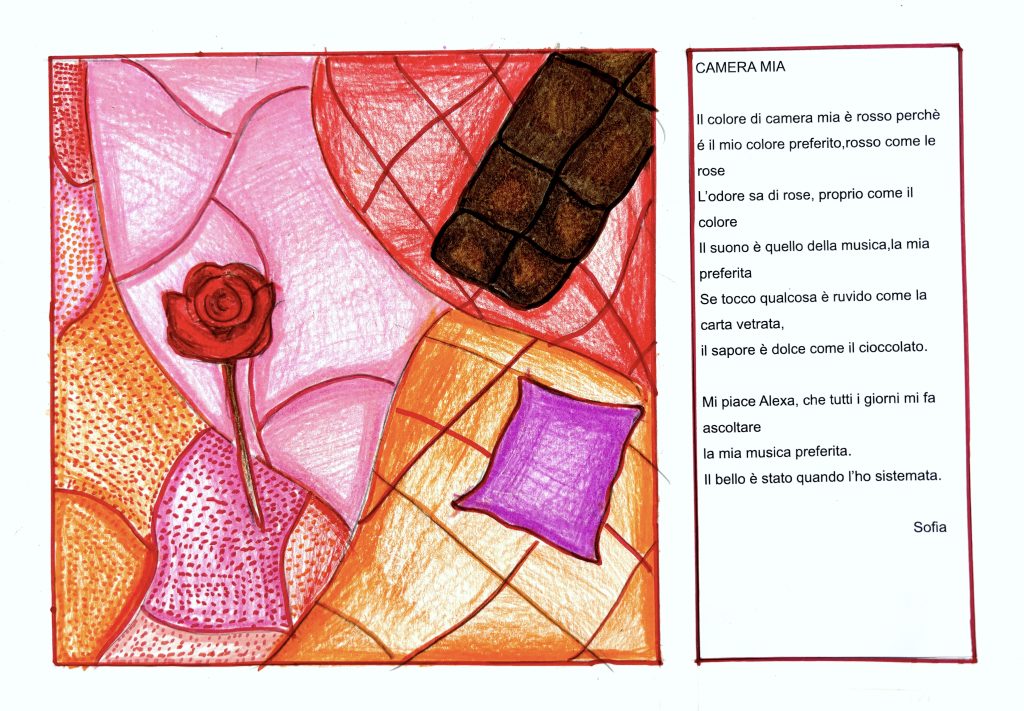
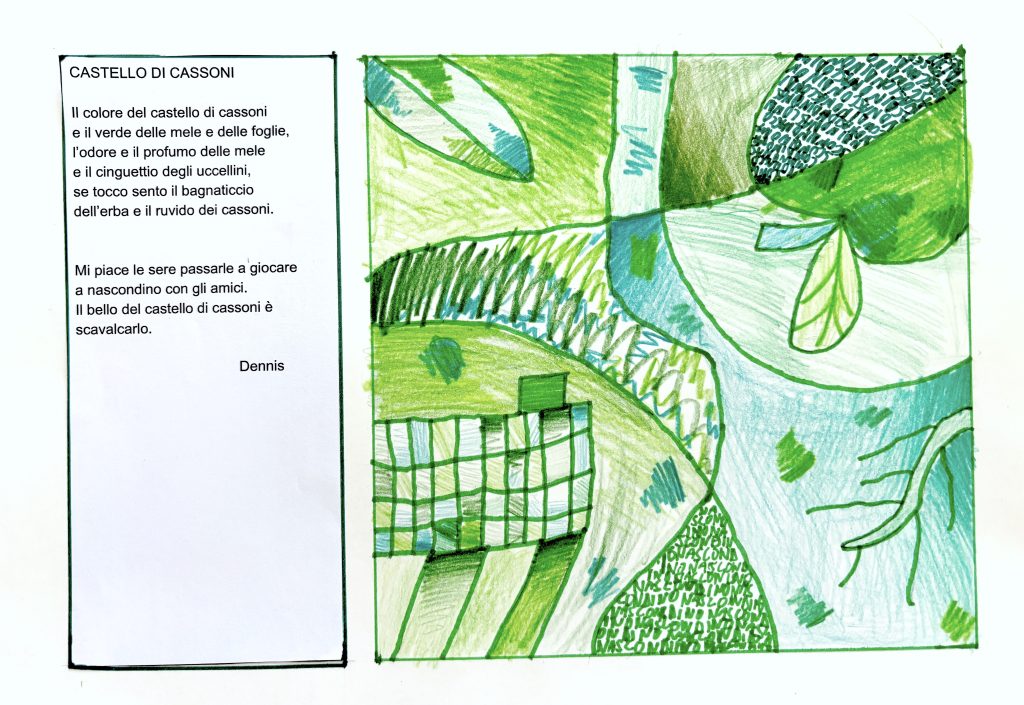
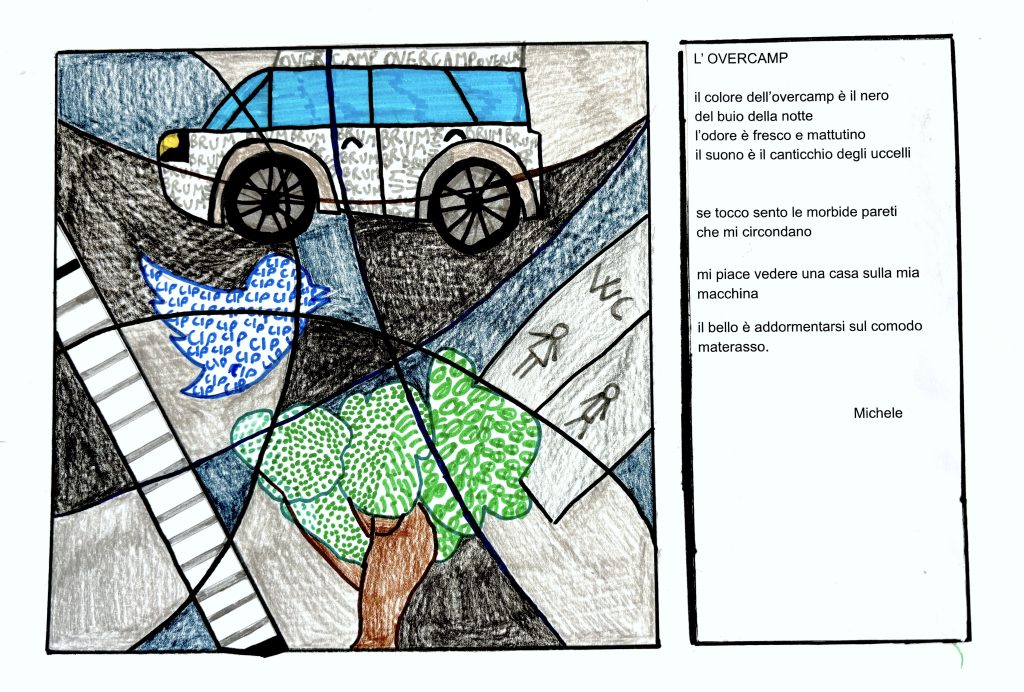
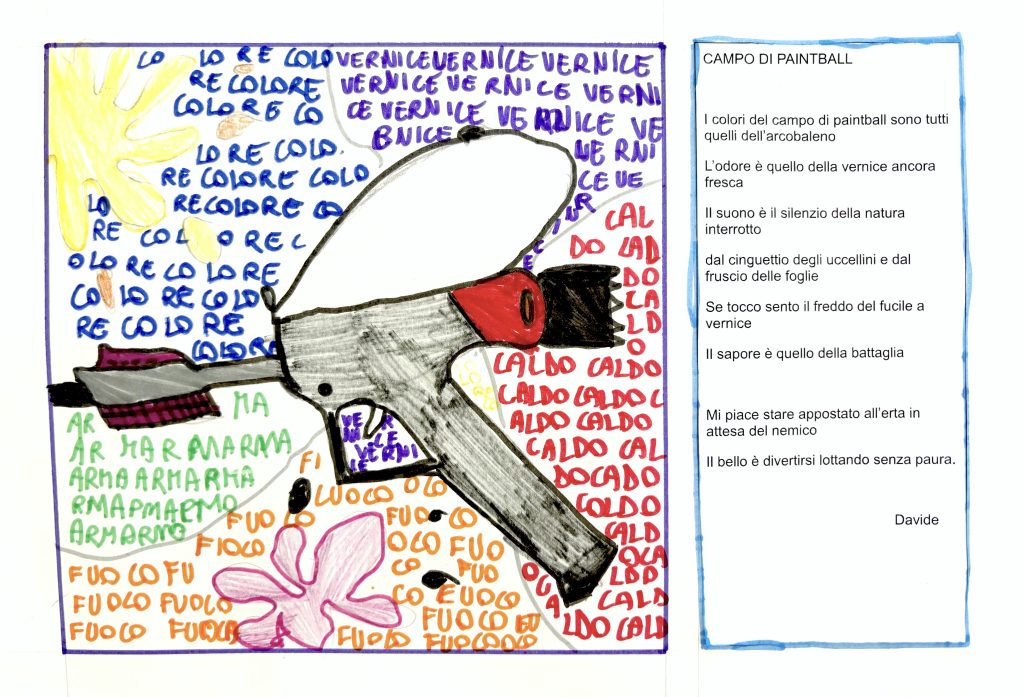
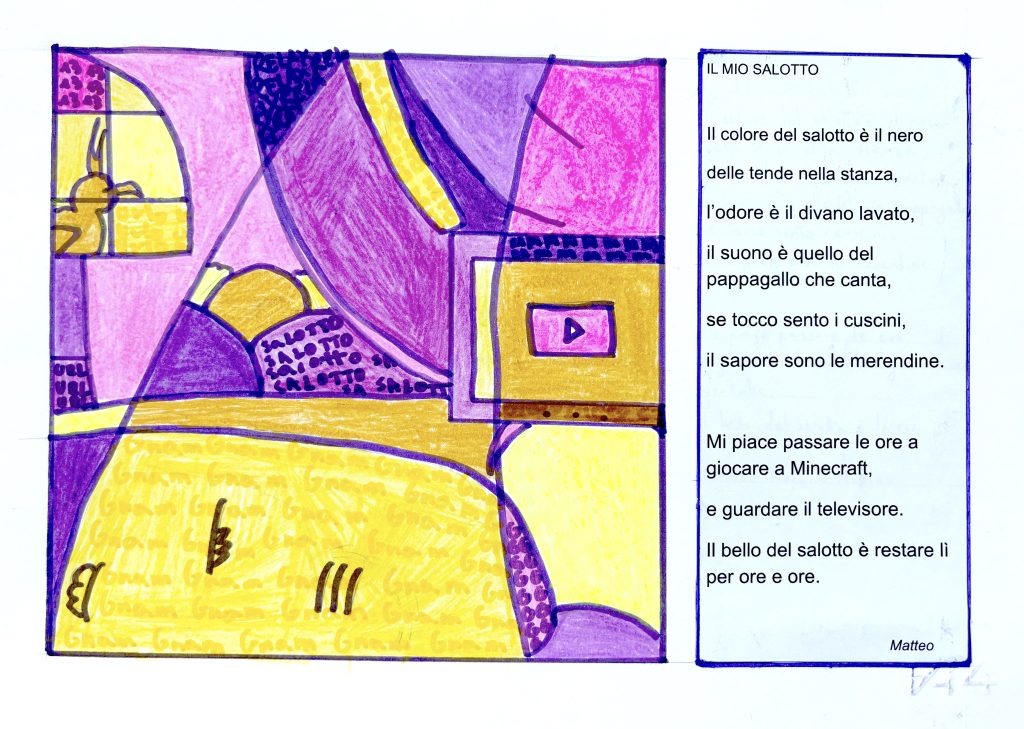
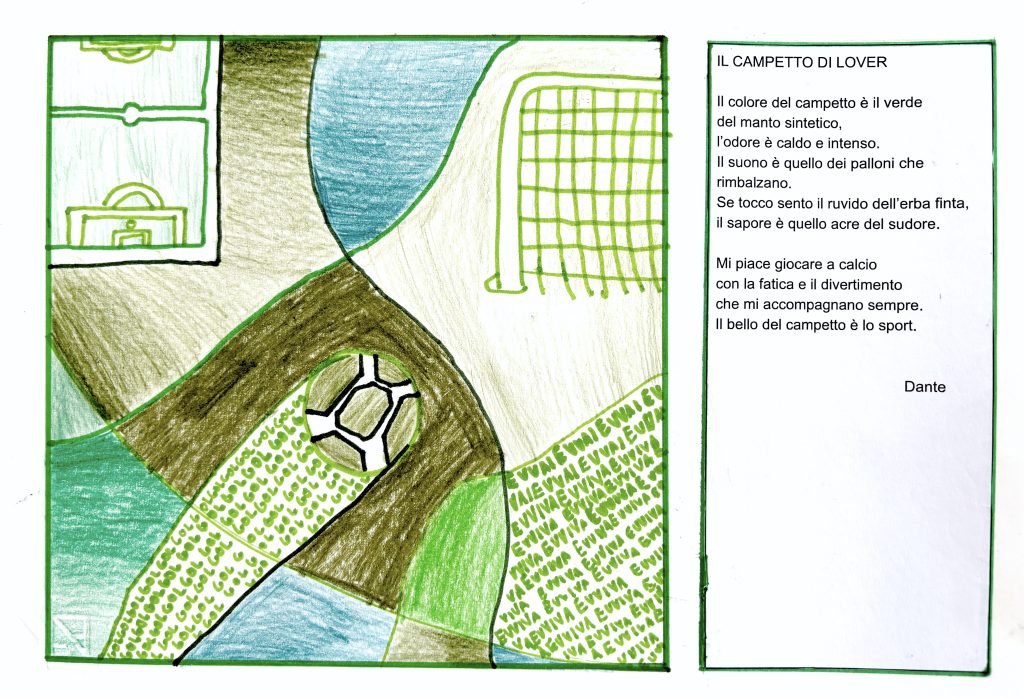
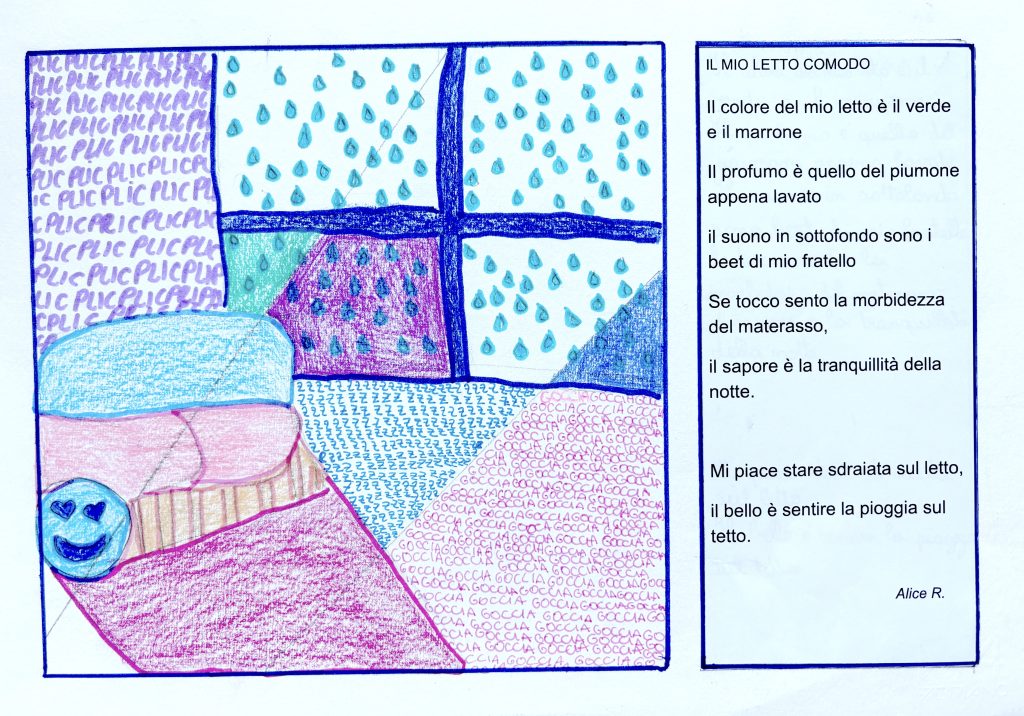
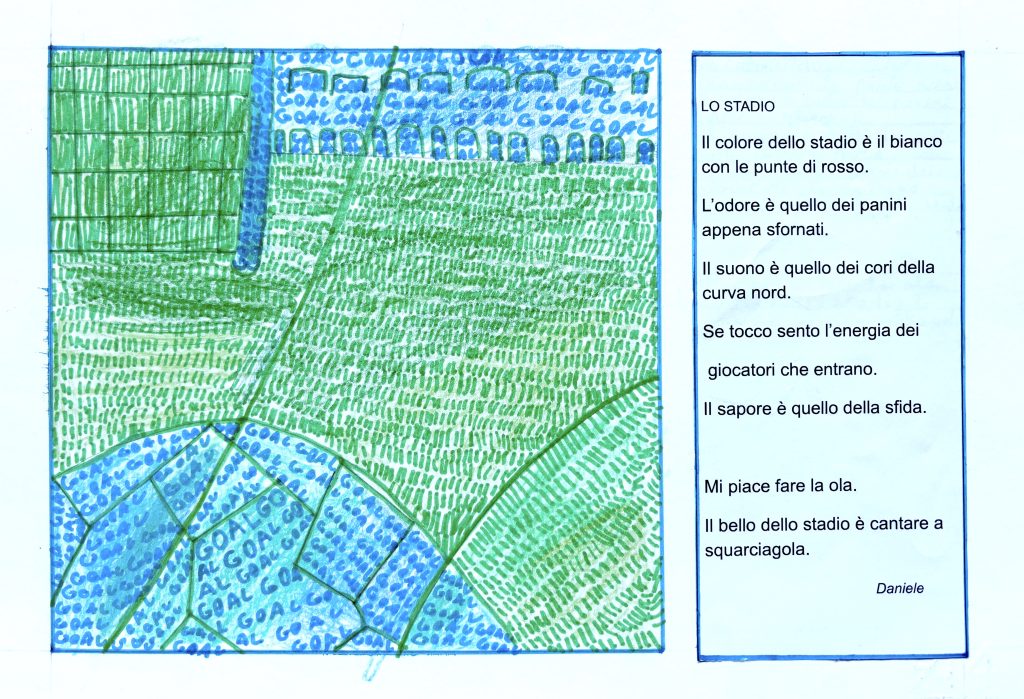
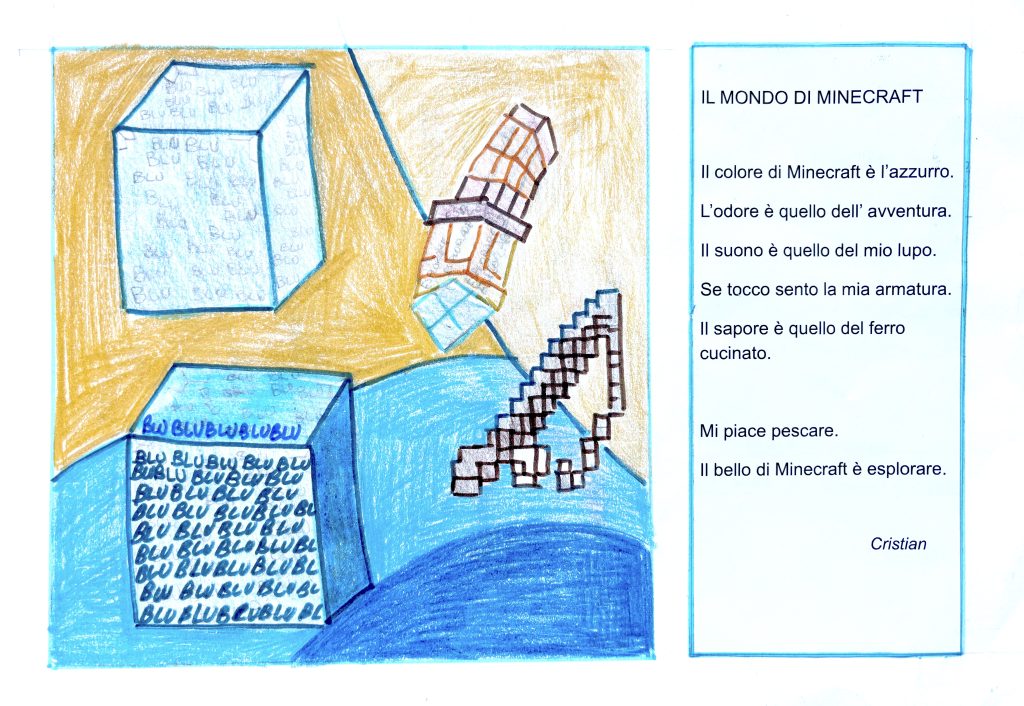
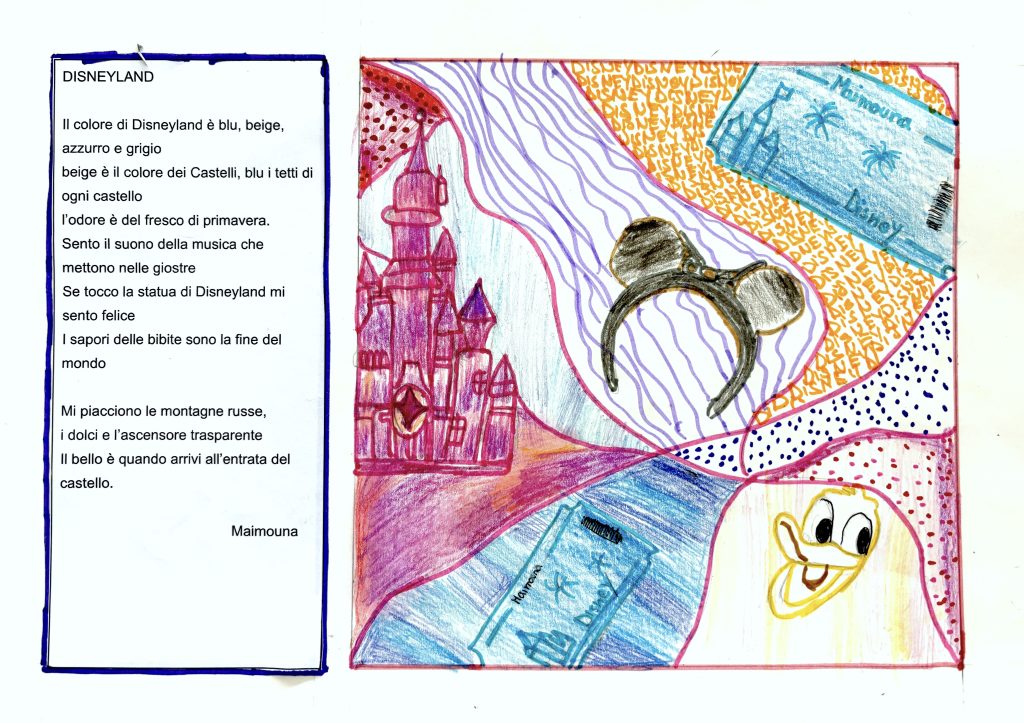
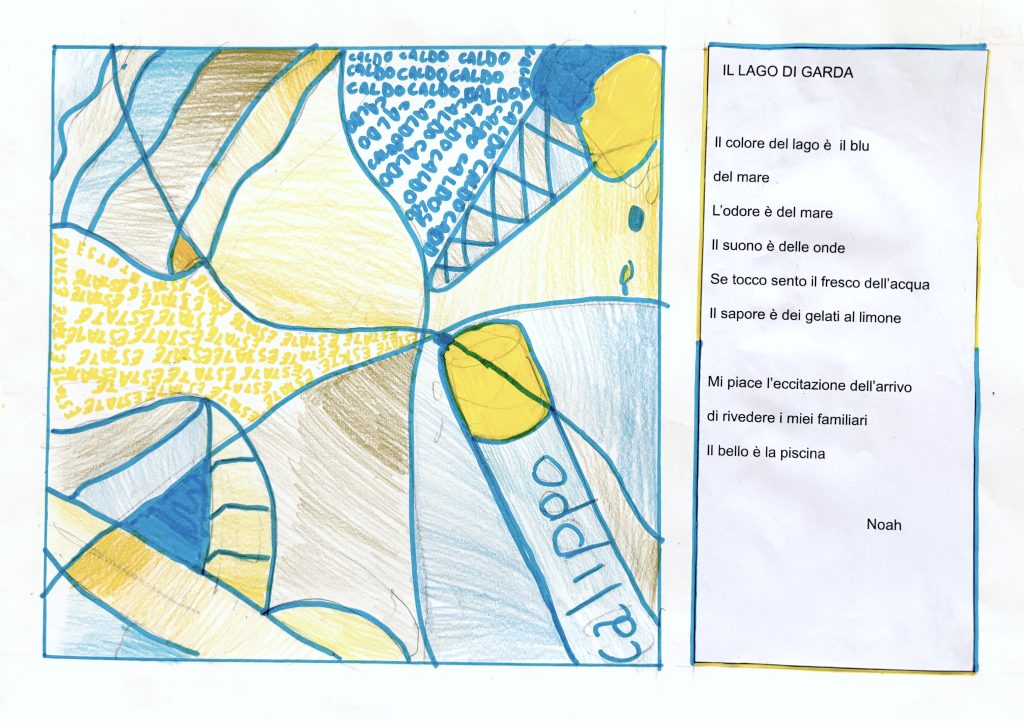
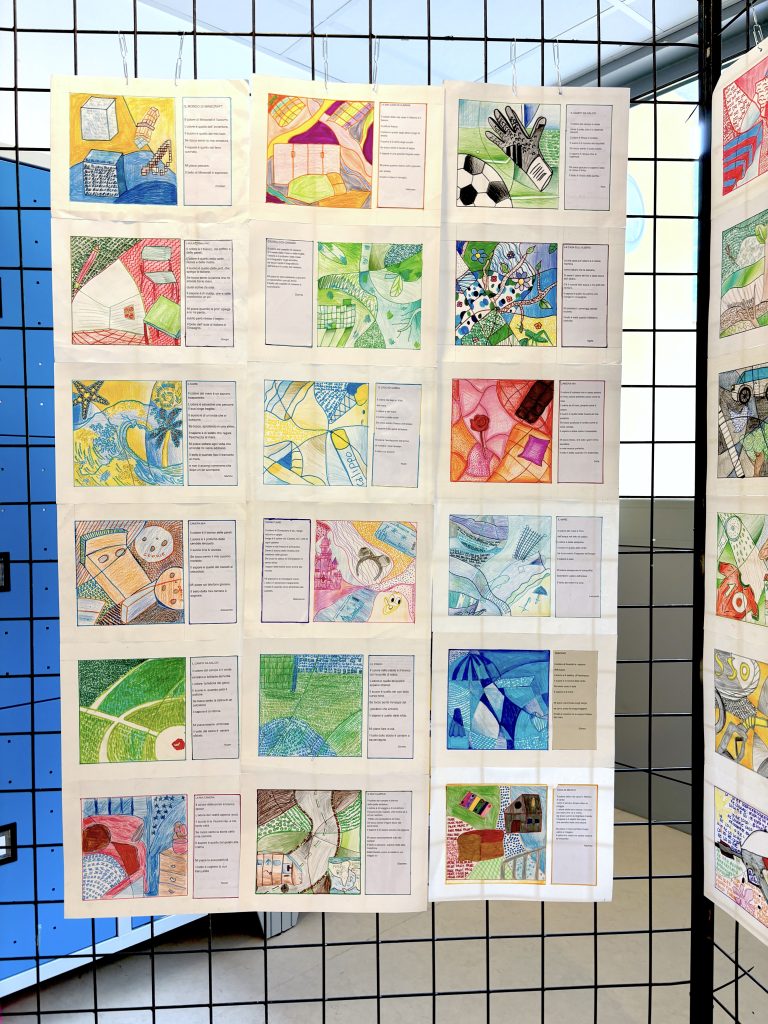
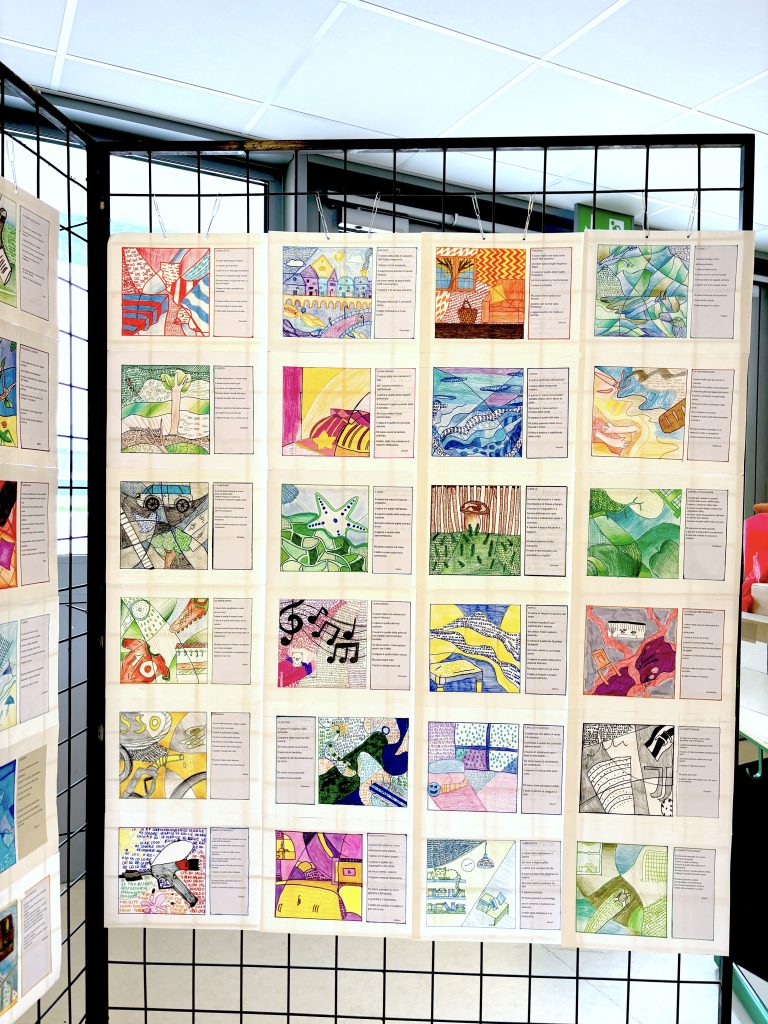
学年结束时,这些图文诗在校内展览中展出:
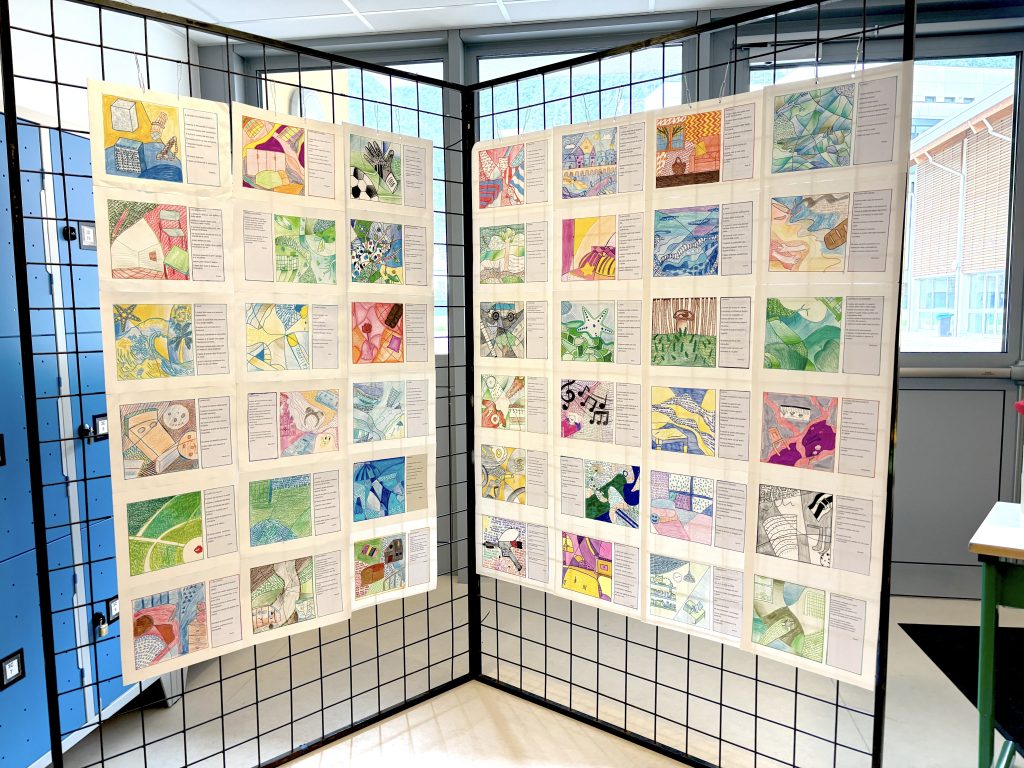
Illustrated poetry
With sixth grade students we did this interdisciplinary work in collaboration with the Italian teachers and with my art colleague Maria Noemi Demaio. First, the students wrote poems inspired by an italian poetress SILVIA VECCHINI, that describes a PLACE dear to the author.
In the poetry with the “tracing” method each student tried to describe a dear place, with its scents, colors, noises, flavors and sensations that this place arouses in him. The result was poems full of memories, nostalgia, experiences that we tried to represent graphically.
In this task I gave to students precise instructions for the measurements and the procedure. First of all we squared a 33x24cm drawing sheet in this way:
Based on the poem you must choose:
● 1 or 2 colors
● 2 or 3 objects (with visual “references” on iPad), make SIMPLIFIED drawings, do not draw entire objects but only a DETAIL, a part. The details of the objects must “come out” of the square, for example if the object is a table I will NOT draw the whole table in the center, but only an edge in a corner of the drawing.
● divide the drawing with 2 or 3 lines
● color with colored pencils and insert patterns in multiple areas (shapes or onomatopoeias)
● trace all the lines with colored markers
Here are three slides summarizing the procedure :
The students wrote beautiful poems, and they were illustrated just as well, the important aspect of these illustrations is that they had to be above all EVOCATIVE, as in the written part it was required to evoke sounds, smells, sensations, so in the graphic part it was not necessary to represent objects or environments “from life”, but it was sufficient to combine details, shapes and patterns also composed of onomatopoeias. Here are some of the phases of the work and the poems with the images:
At the end of the year the illustrated poems were exhibited at the school exhibition:


