我的情绪画廊
本次美术项目邀请学生探索内在世界,为自身情感赋予可视化的形态。通过创作个人专属的“情绪画廊”,我们将自我反思与艺术表达相结合,运用色彩、形状与符号来呈现内心感受。
在本次工作坊中,我们通过一个富有挑战性的问题来探索内在世界:我们能否将情绪画出来? 本活动与《2030年可持续发展议程》目标3(良好健康与福祉)相联结,使我们认识到:福祉始于识别并表达自身感受的能力。我们从康定斯基的抒情抽象、波洛克与克利等艺术家富于表现力的作品中汲取灵感,将无形的情绪转化为线条、形状与色彩。
本次活动帮助我们练习自我觉察,让我们体会到:艺术是一种强大工具,能传达真实的自我,远超外在表象。
所需材料:
- 素描纸(24×33 厘米)
- 黑色卡纸(A4 尺寸)
- 水彩、蛋彩或丙烯颜料、油画棒与彩铅
- 记号笔与钢笔
- 用于拼贴的纸片碎料
- 剪刀、胶水与胶带
步骤一:制作折页书(Leporello)
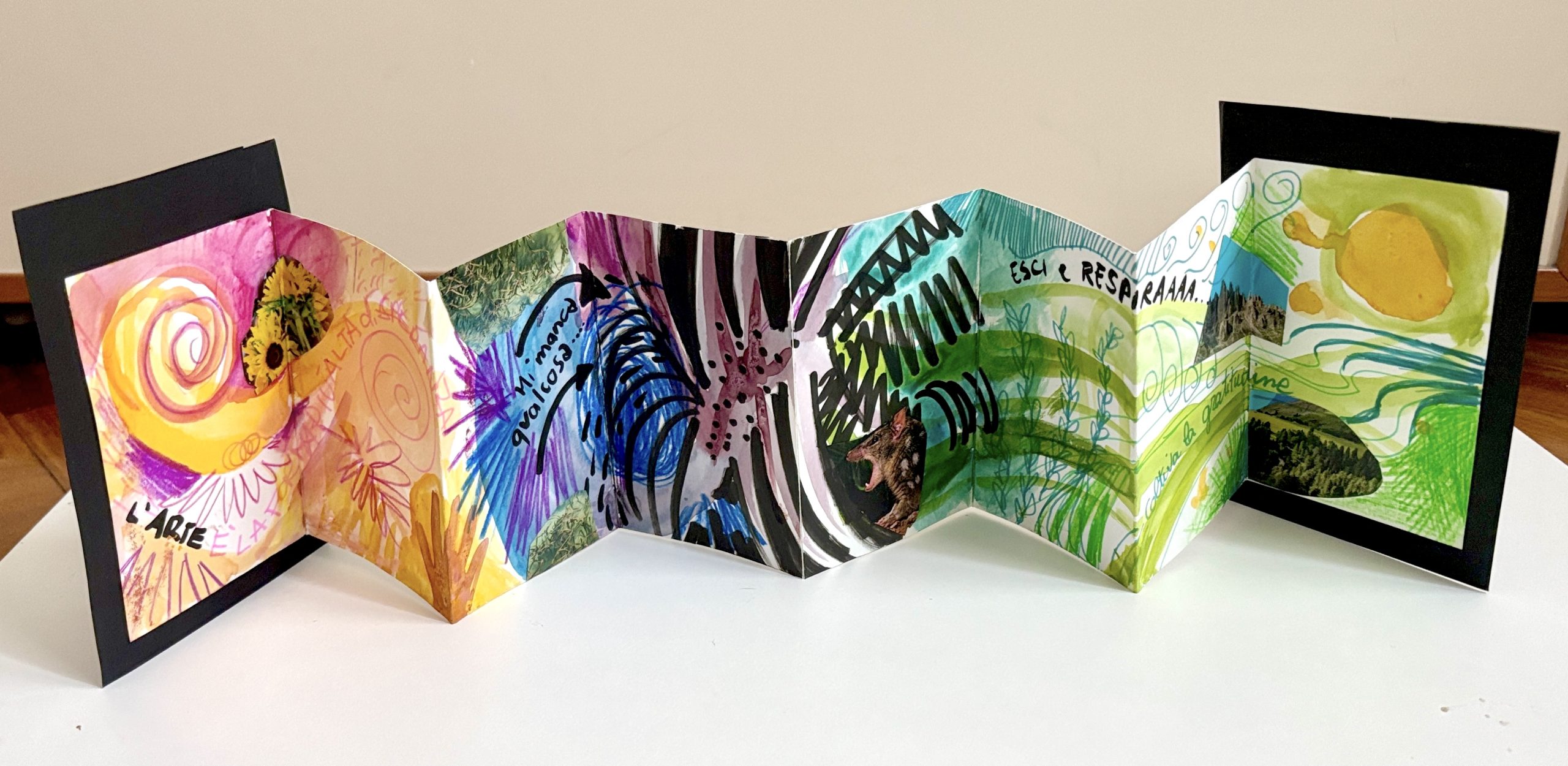
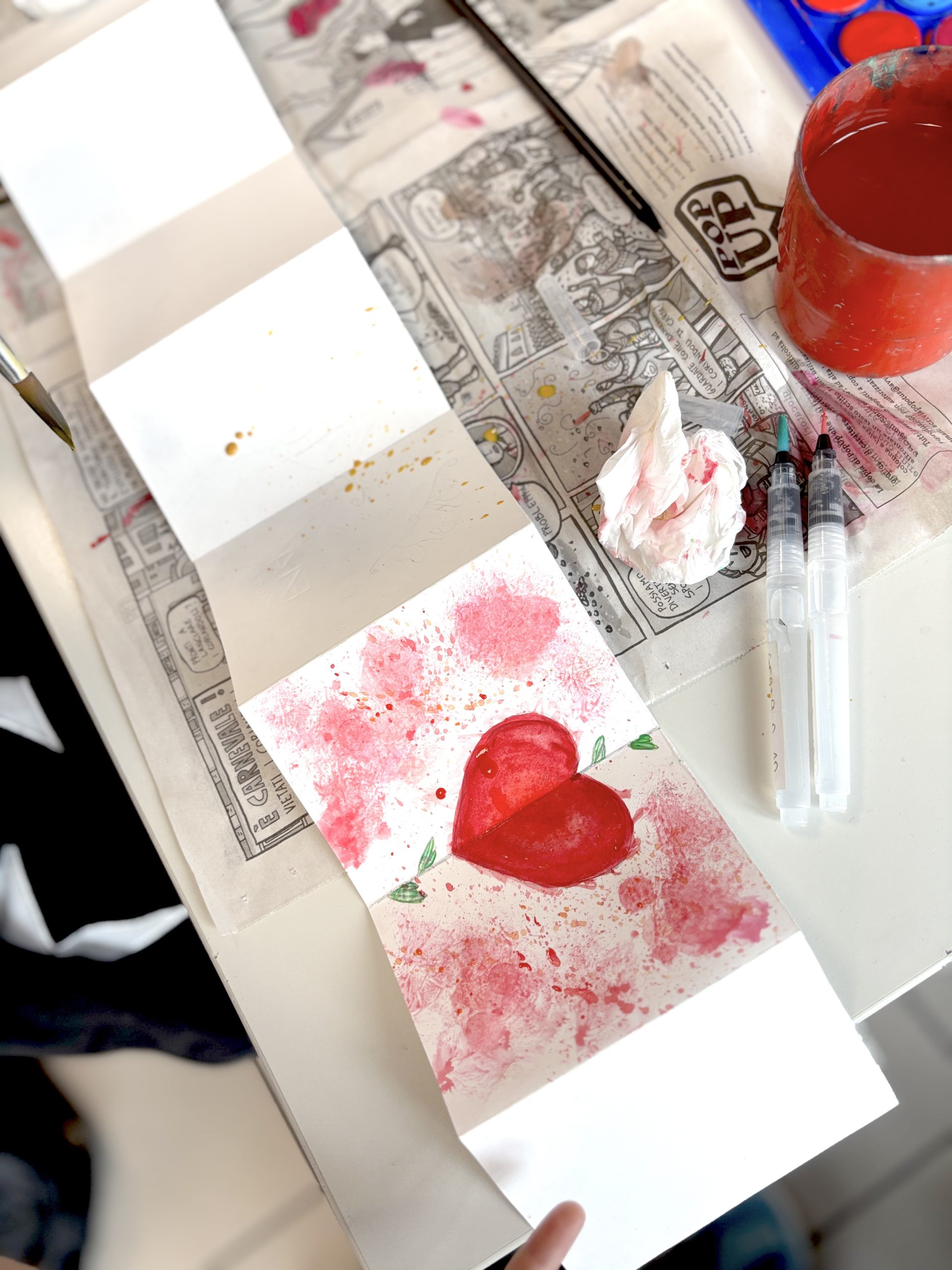
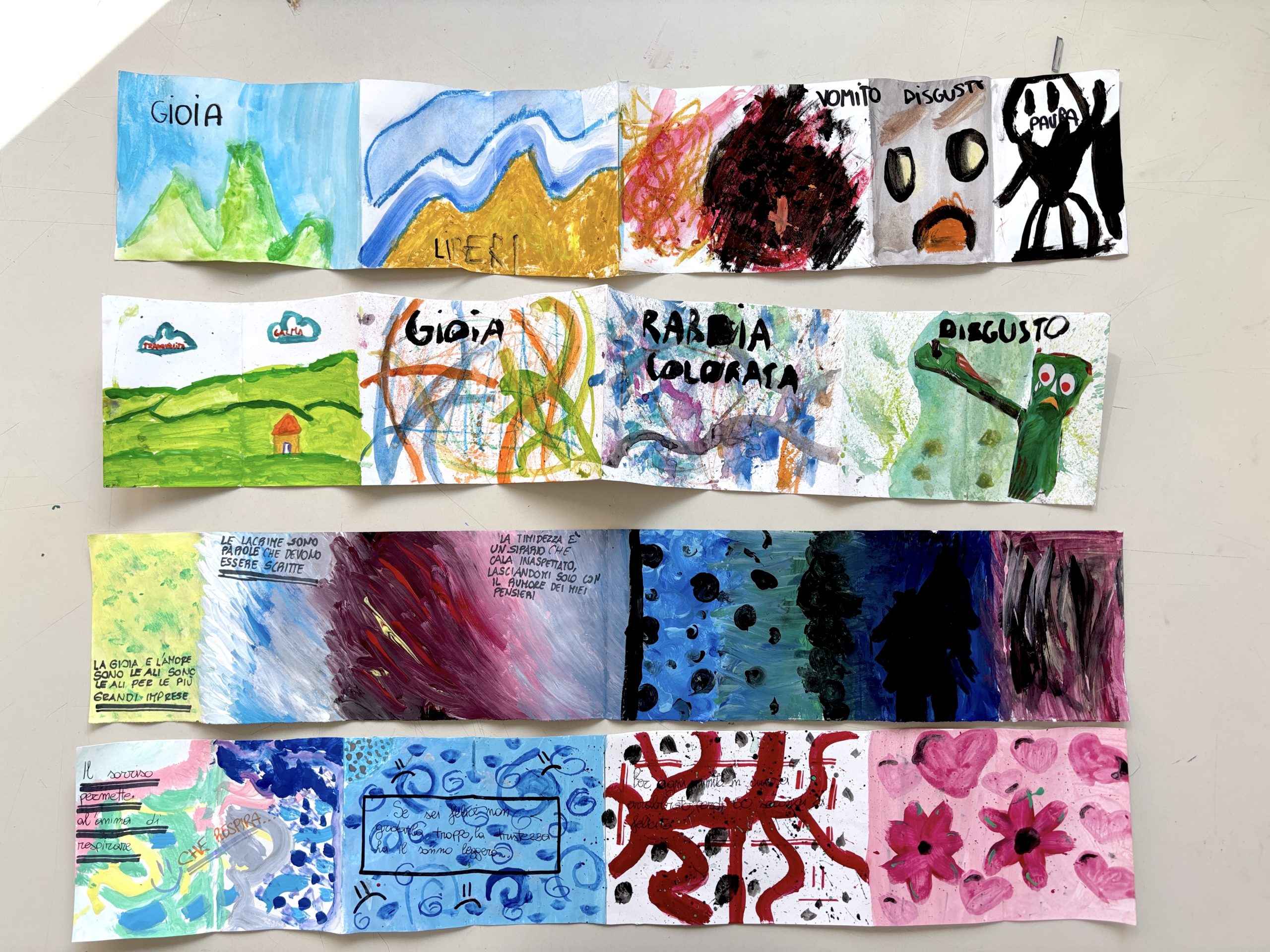
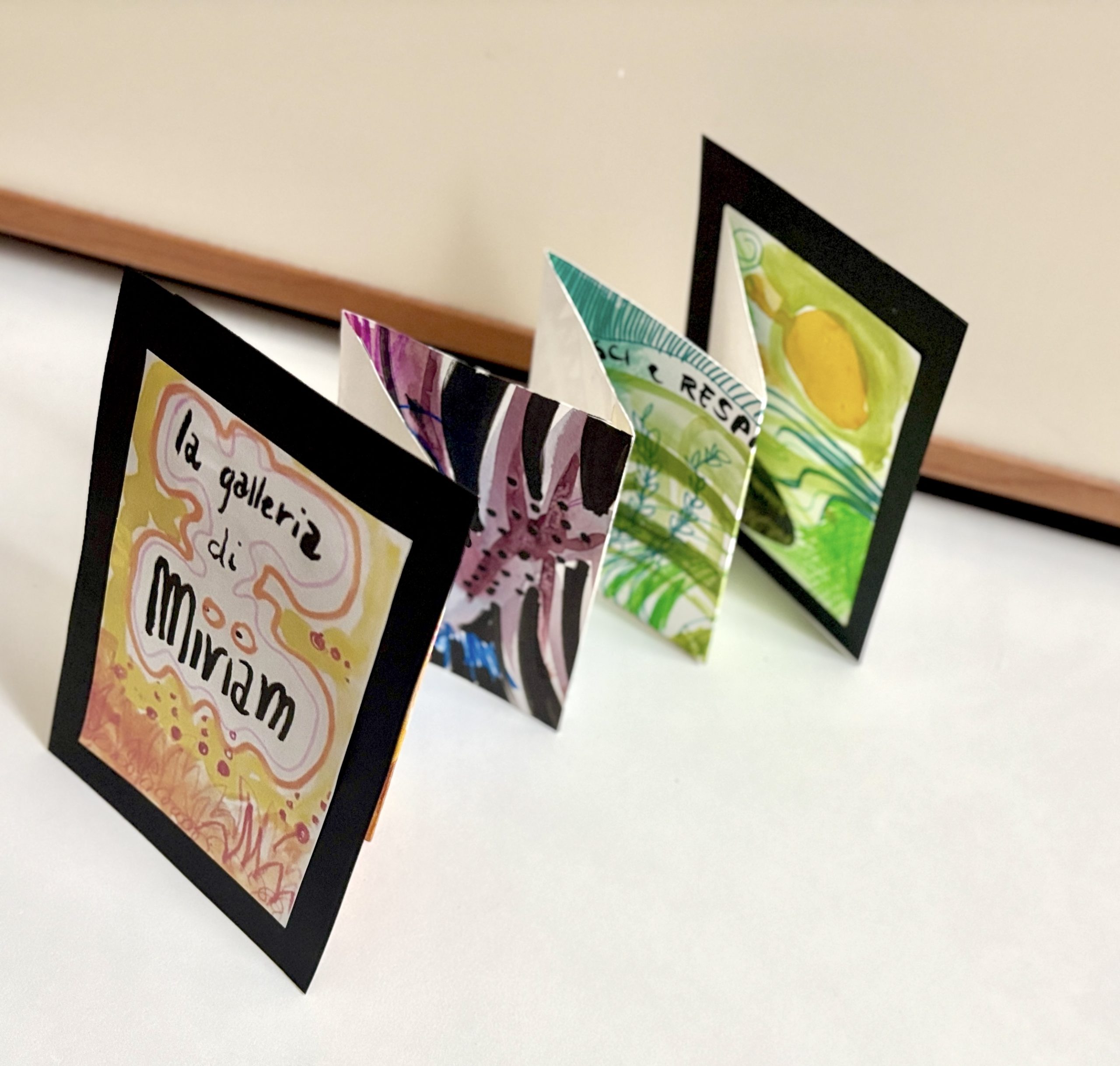
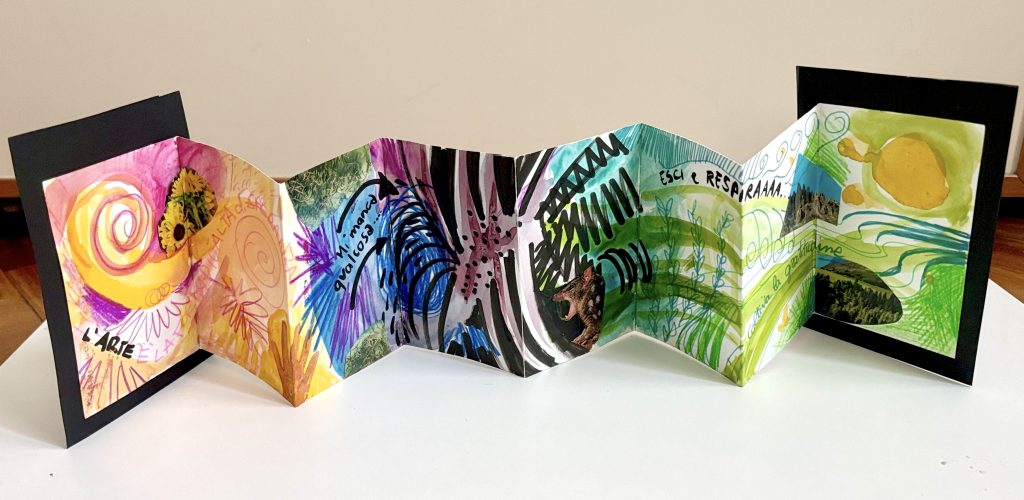
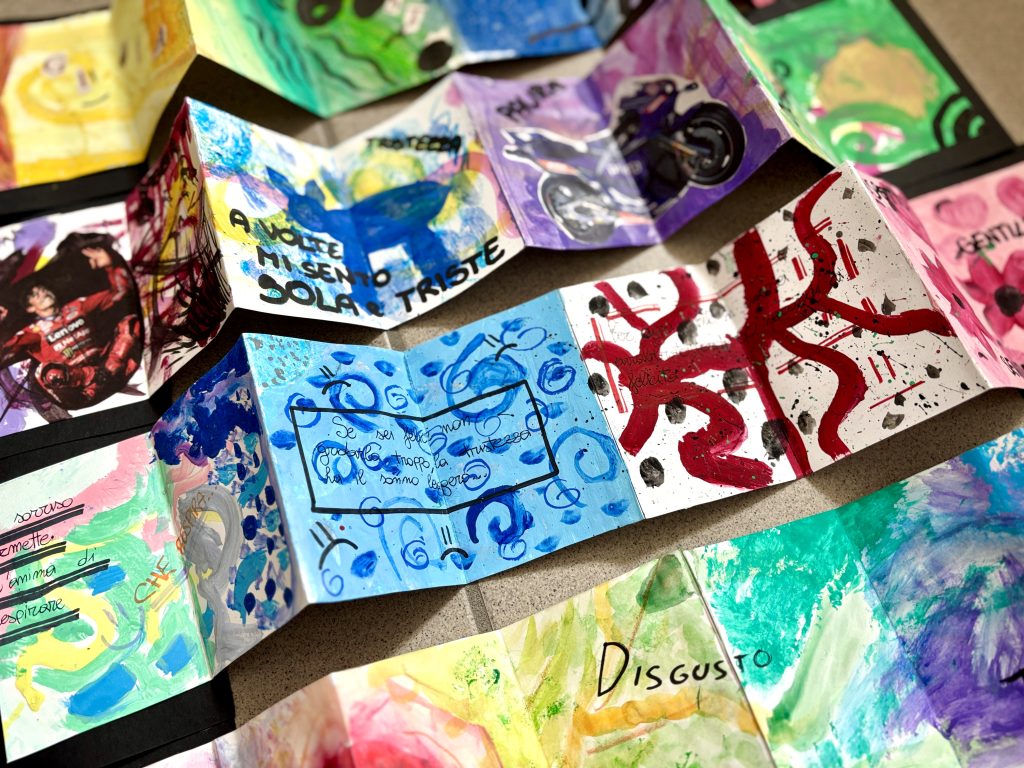
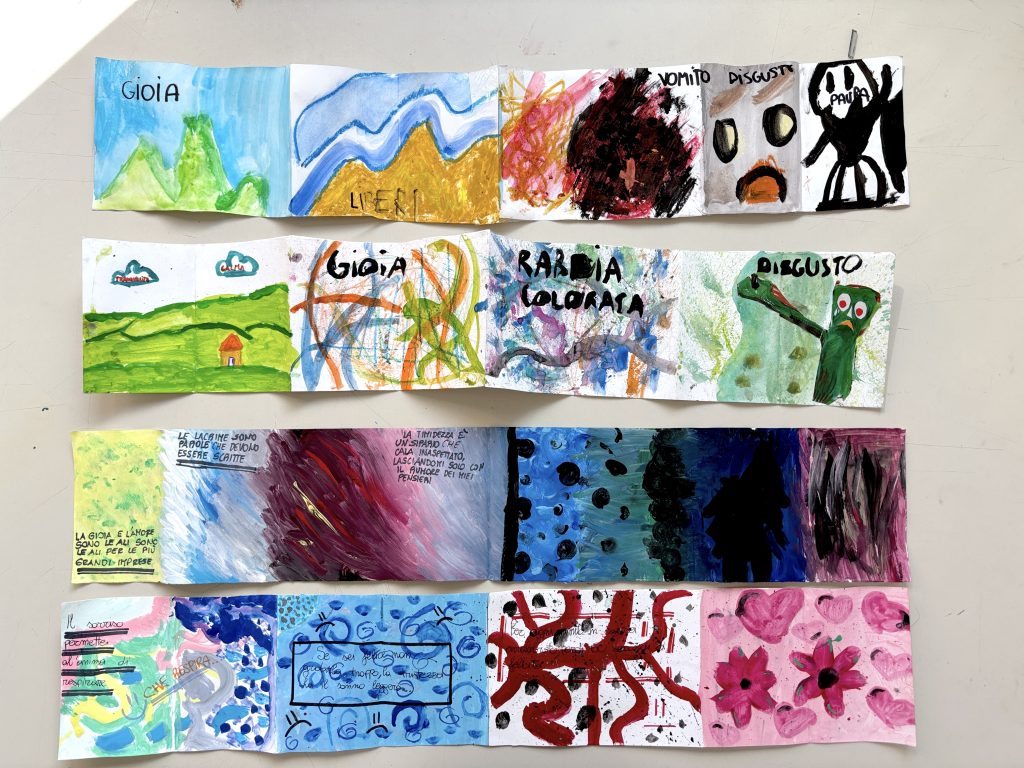
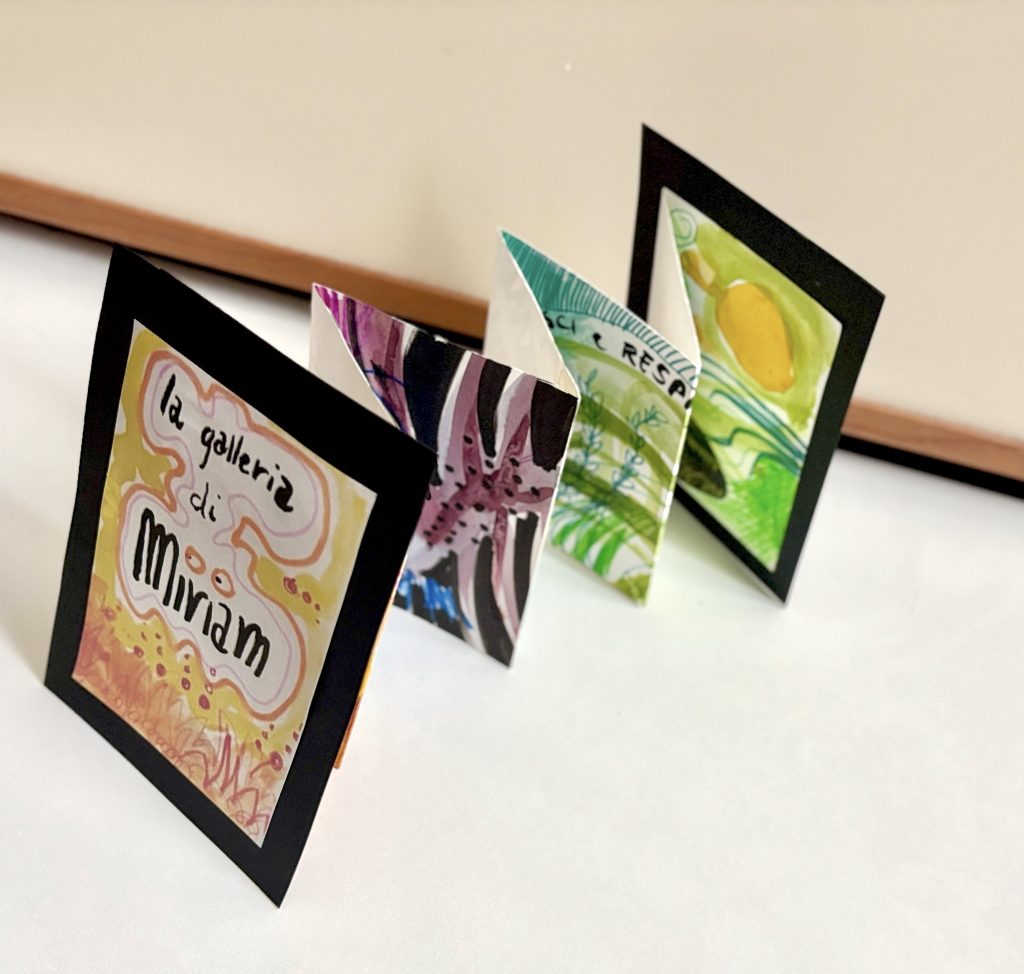
我们首先为项目准备结构:将一张素描纸沿水平方向对半裁开,再用胶带将两条纸带连接成一条极长的纸带。随后,将此基底以手风琴式折成八等份,制成一本折页书(又称手风琴装订书)。这种特殊形式可让内容逐段展开或隐藏——恰如我们有时对待自身情绪的方式。
步骤二:以综合媒材表达情绪
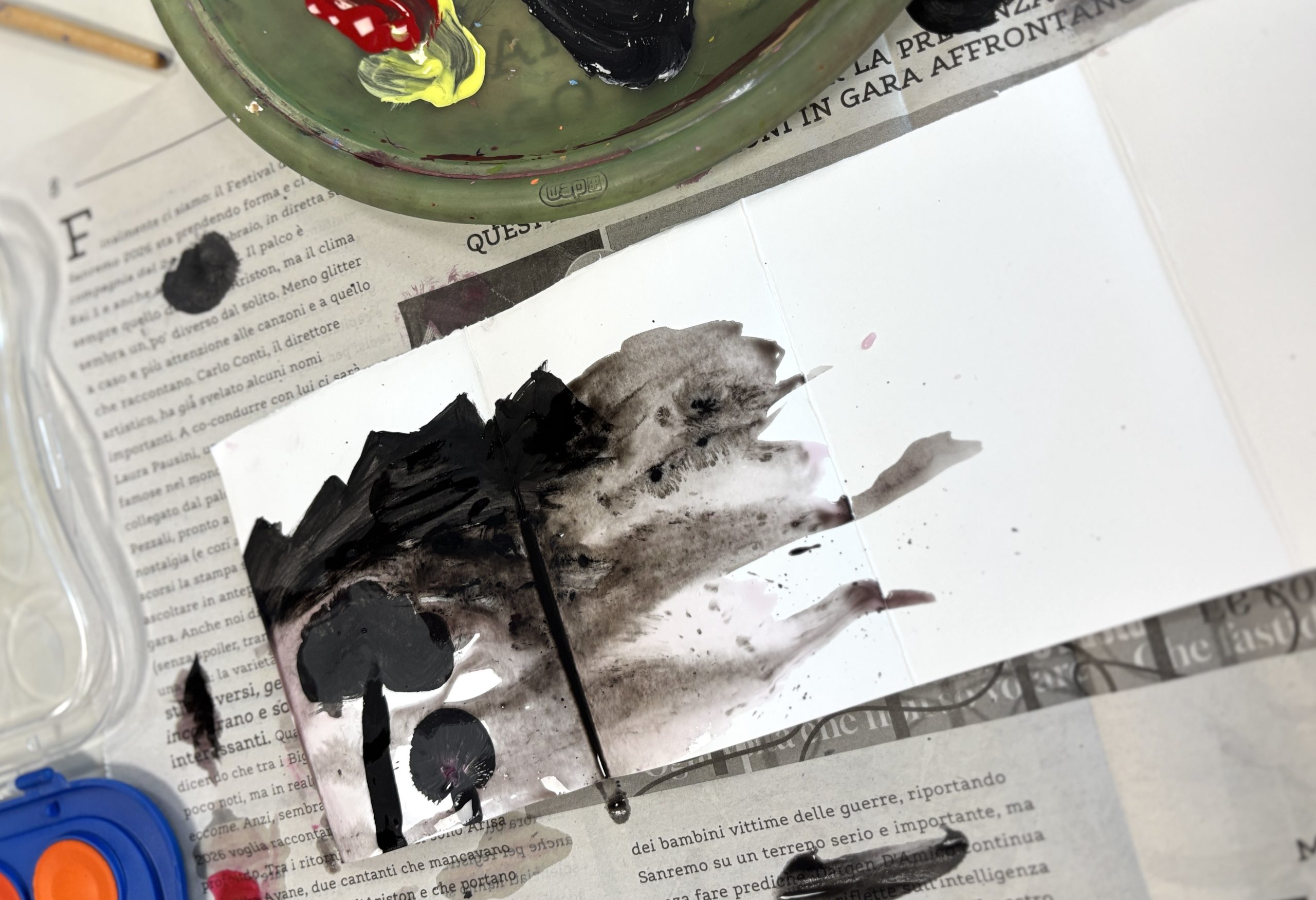
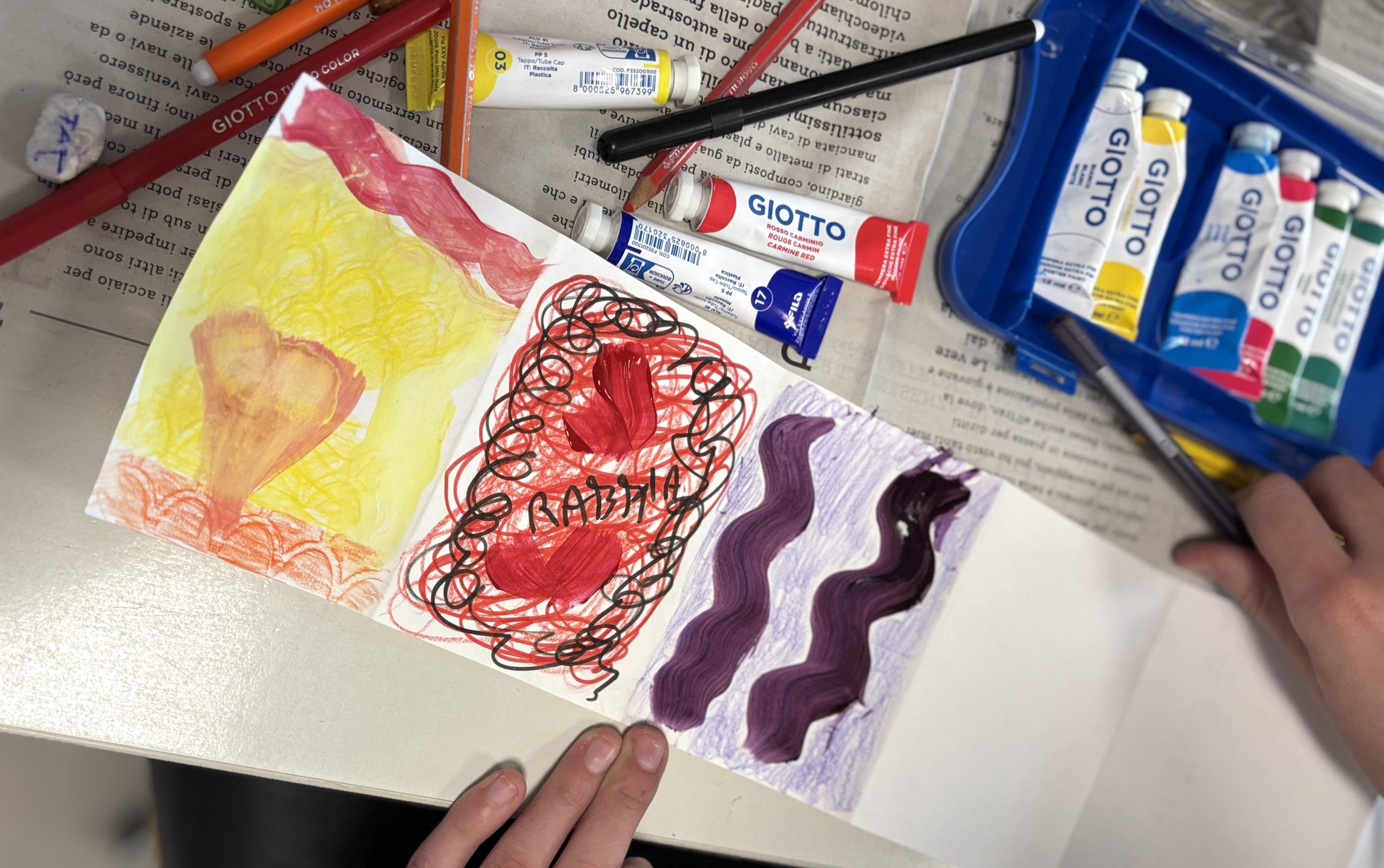
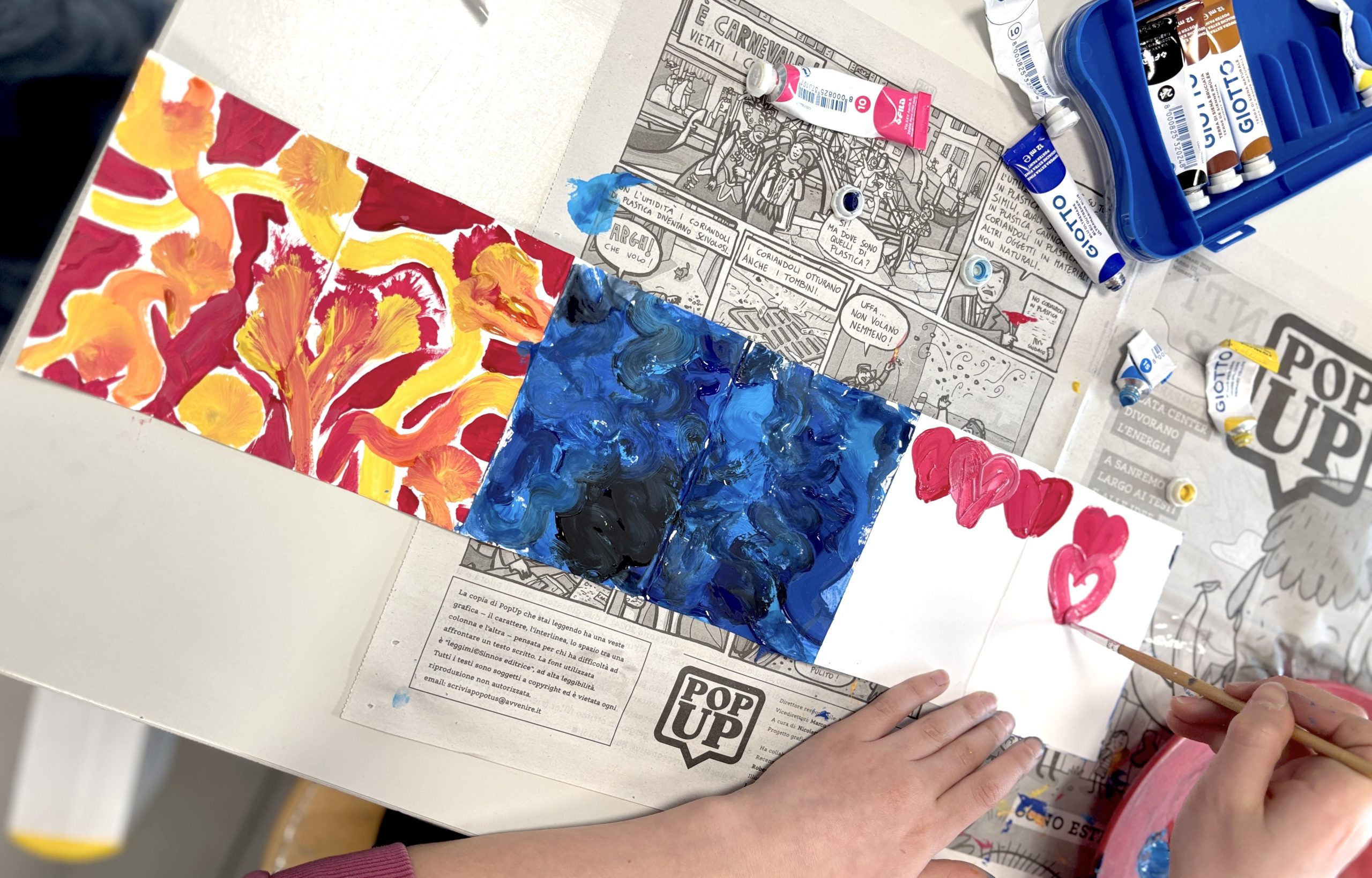
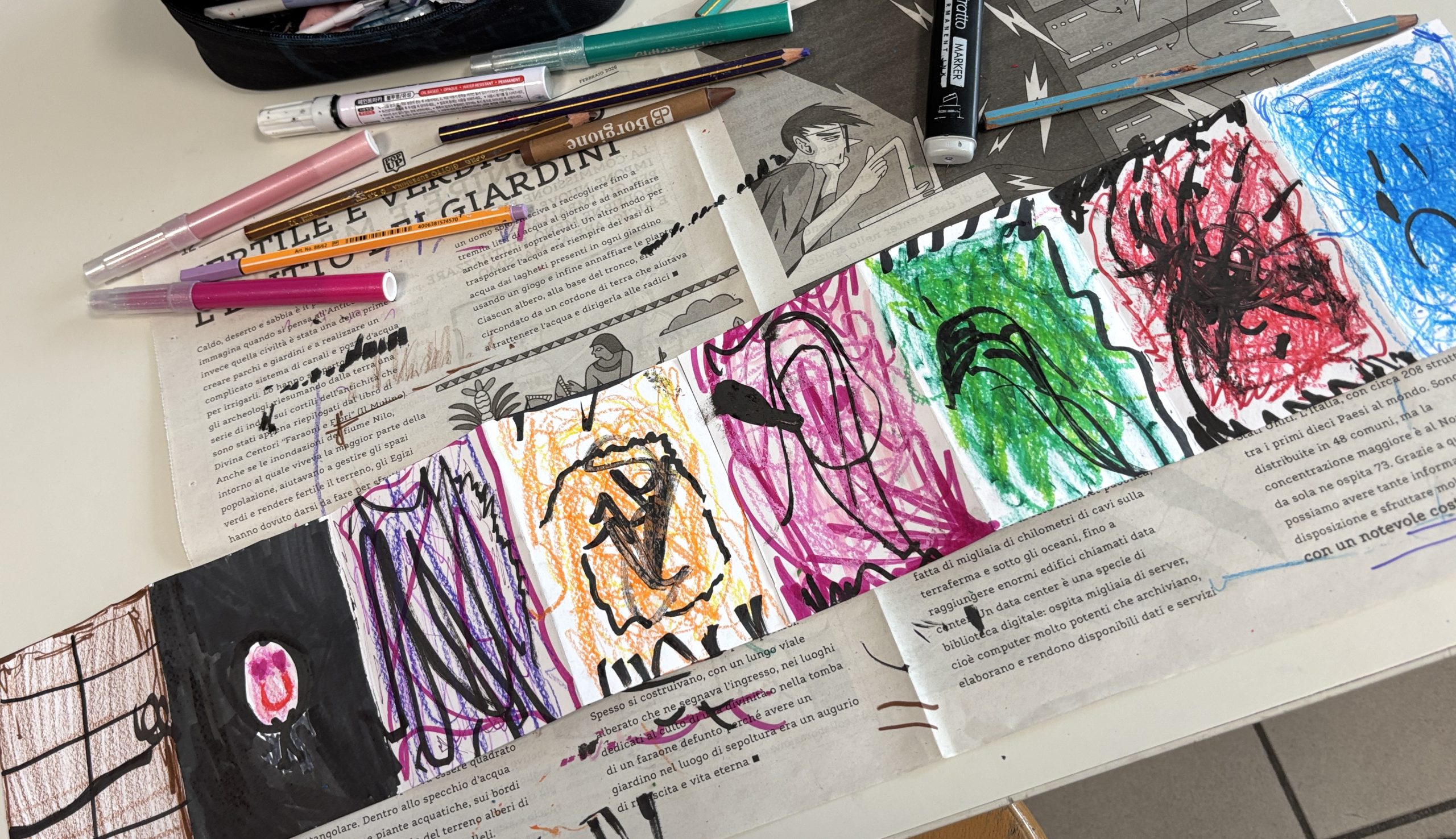
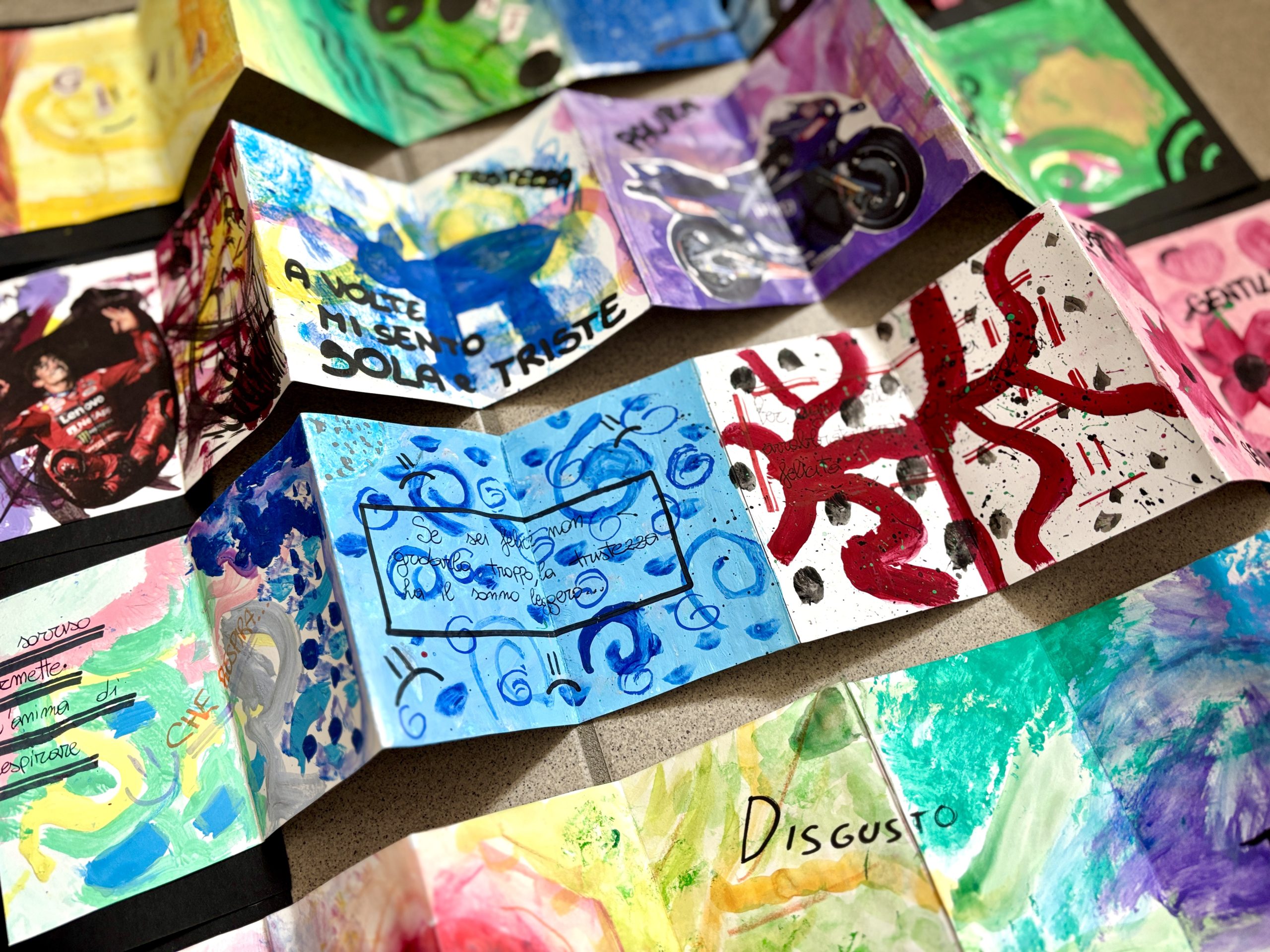
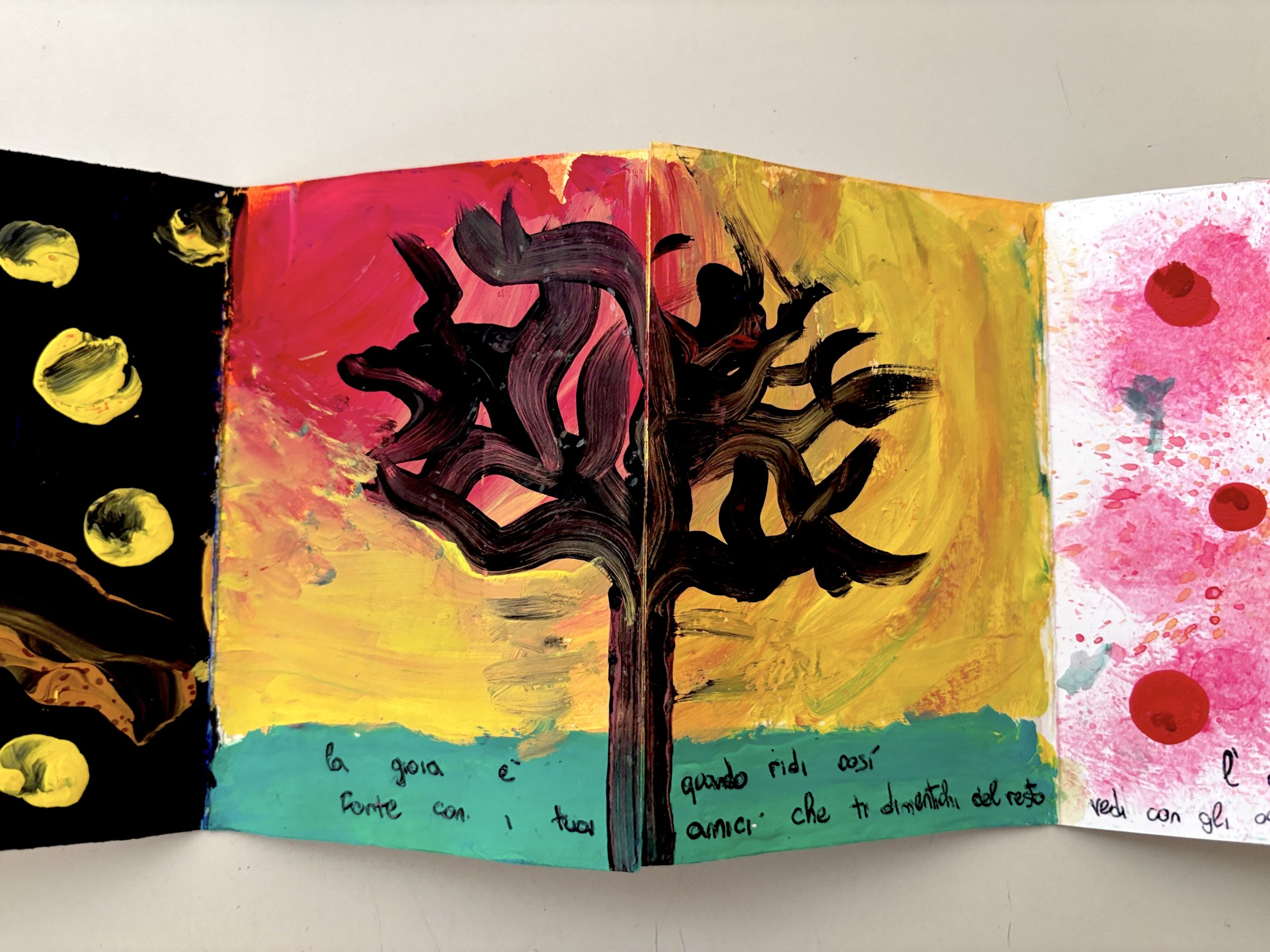
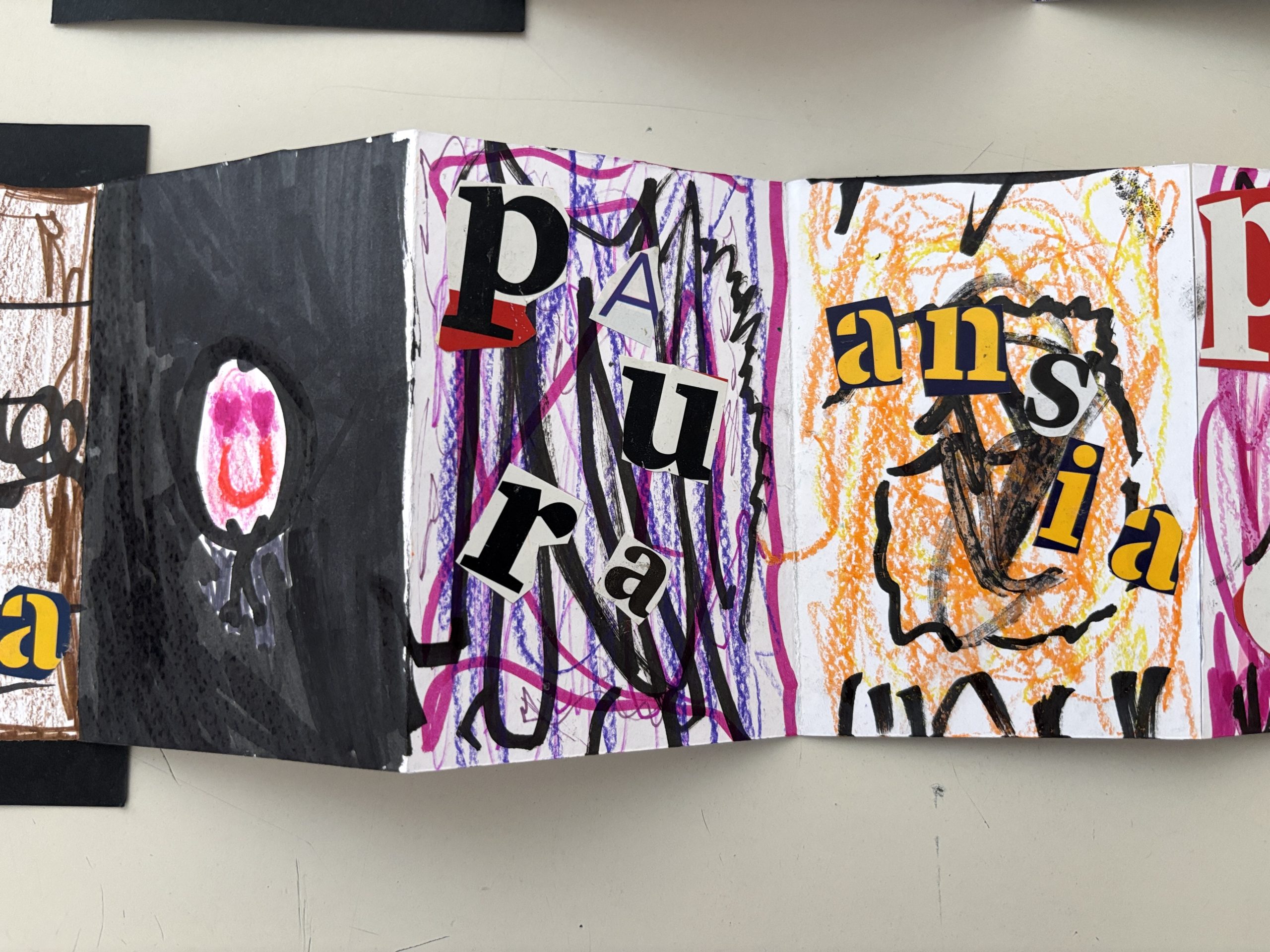
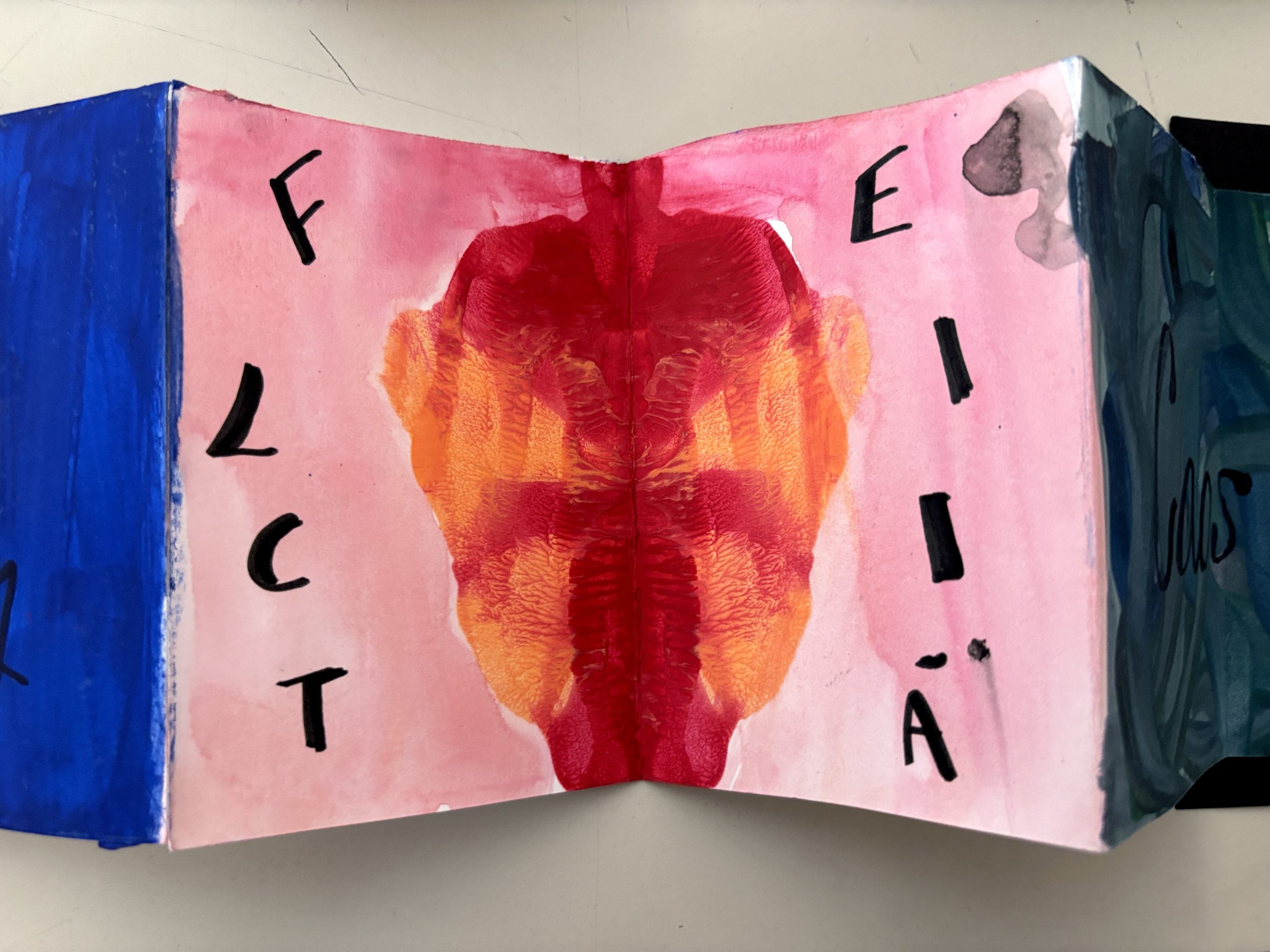
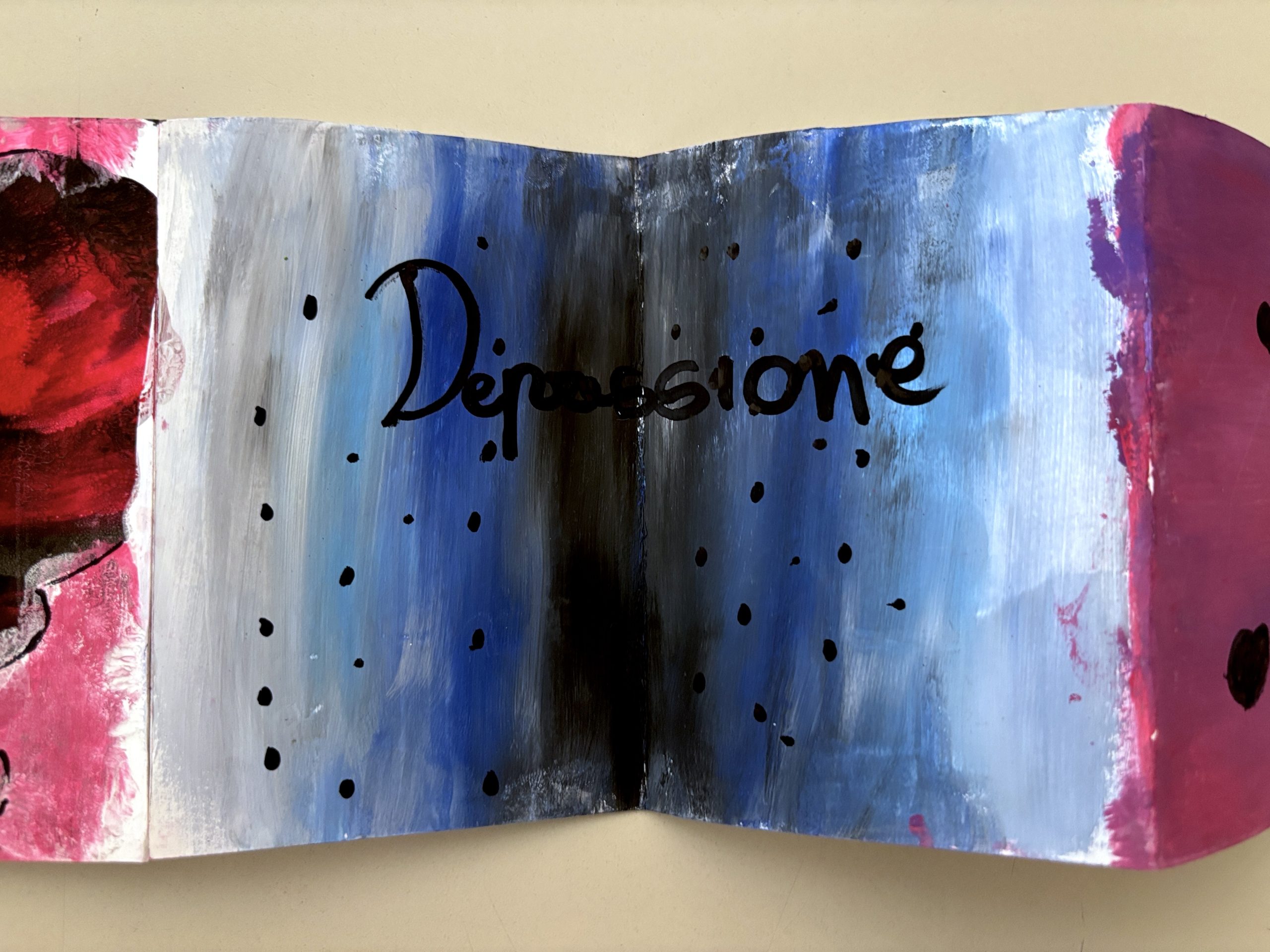
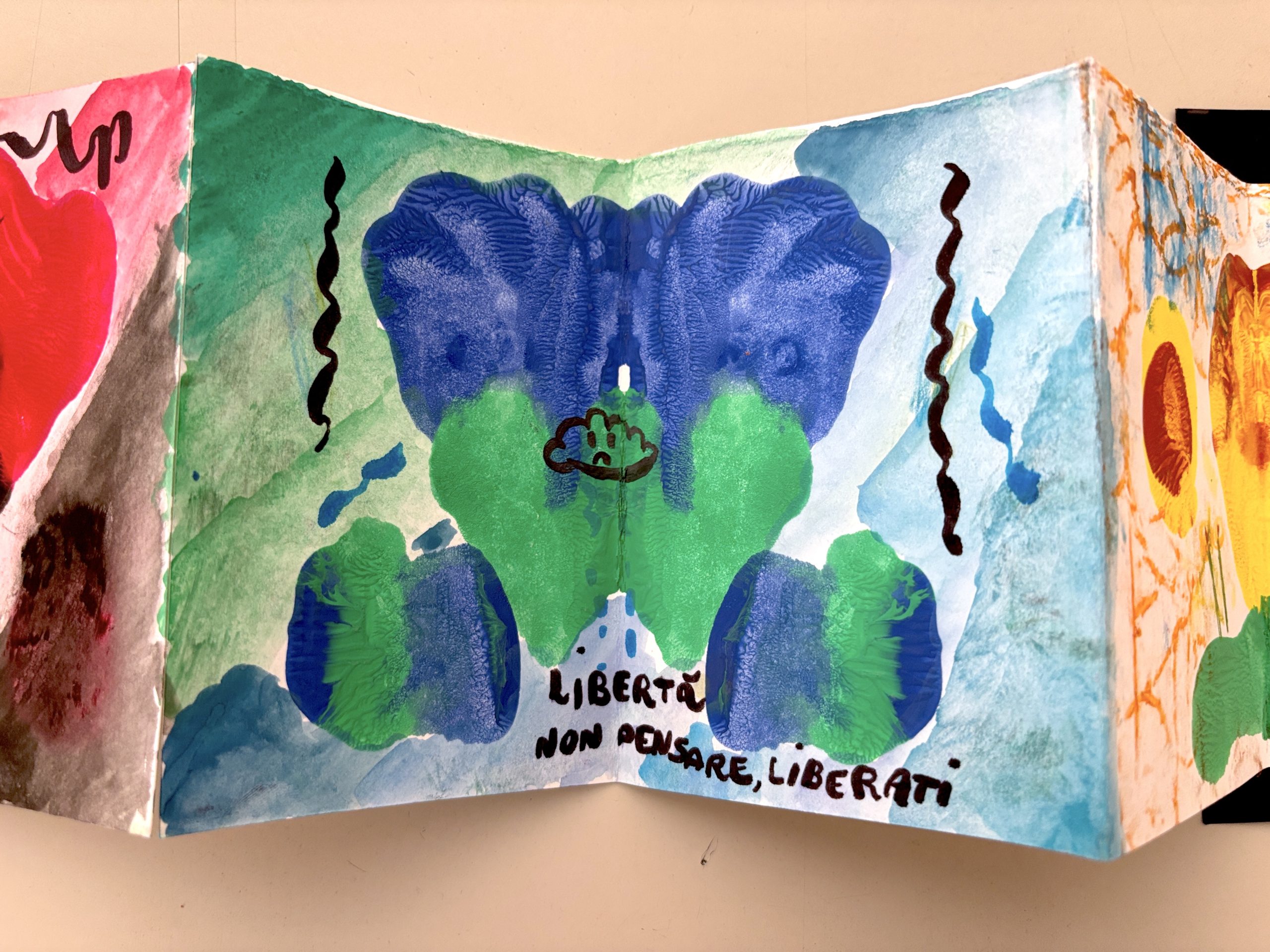
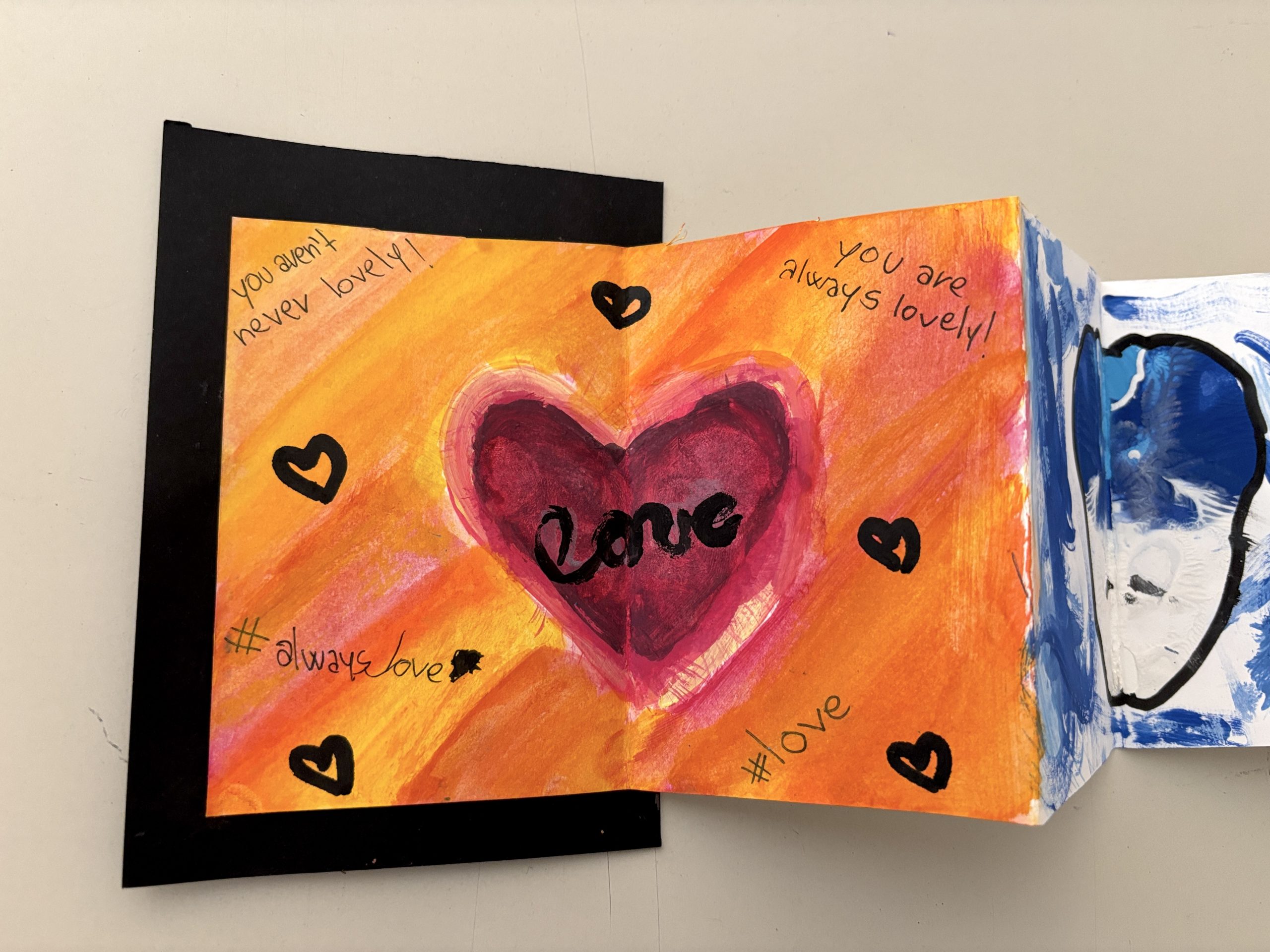
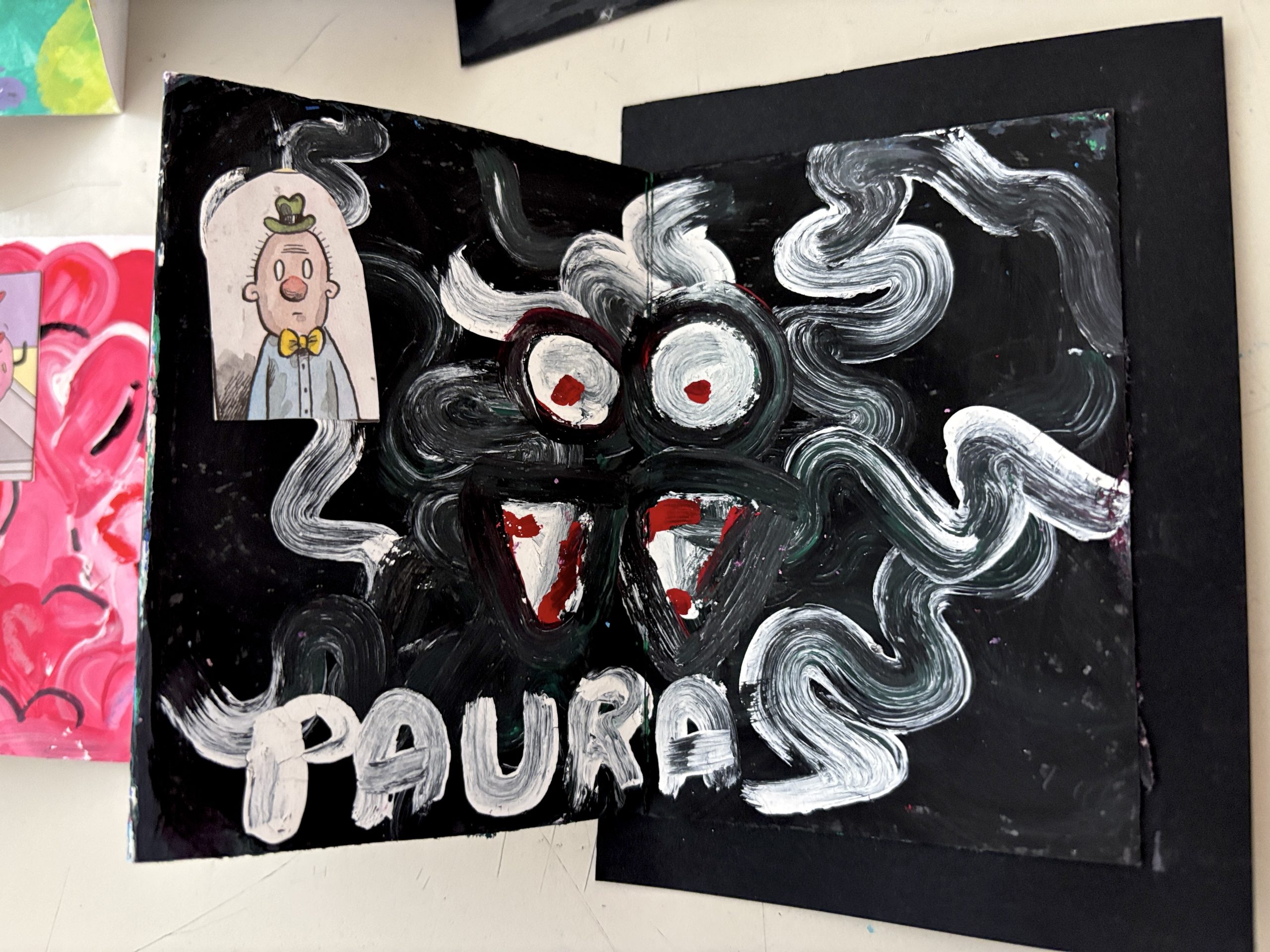
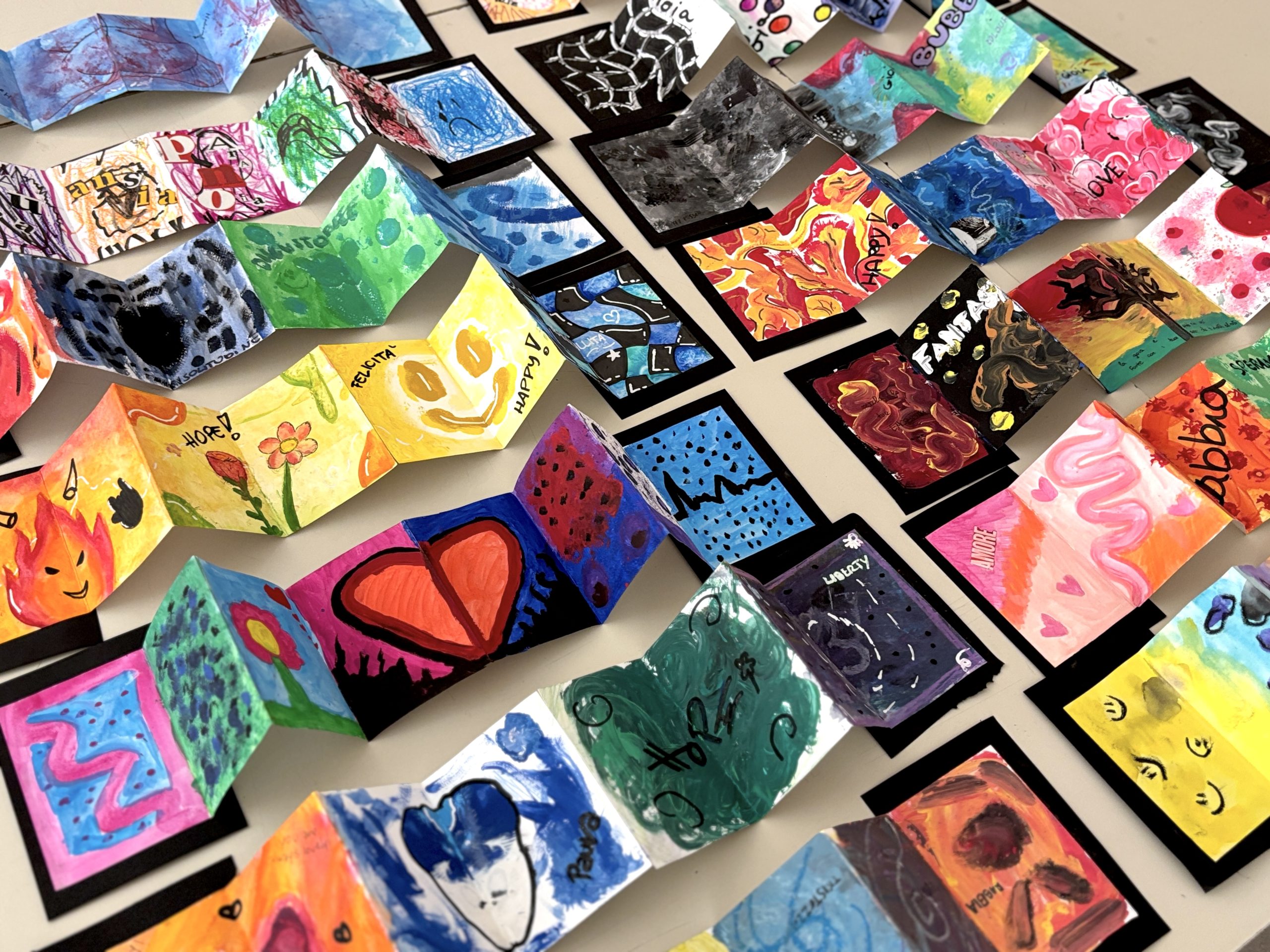
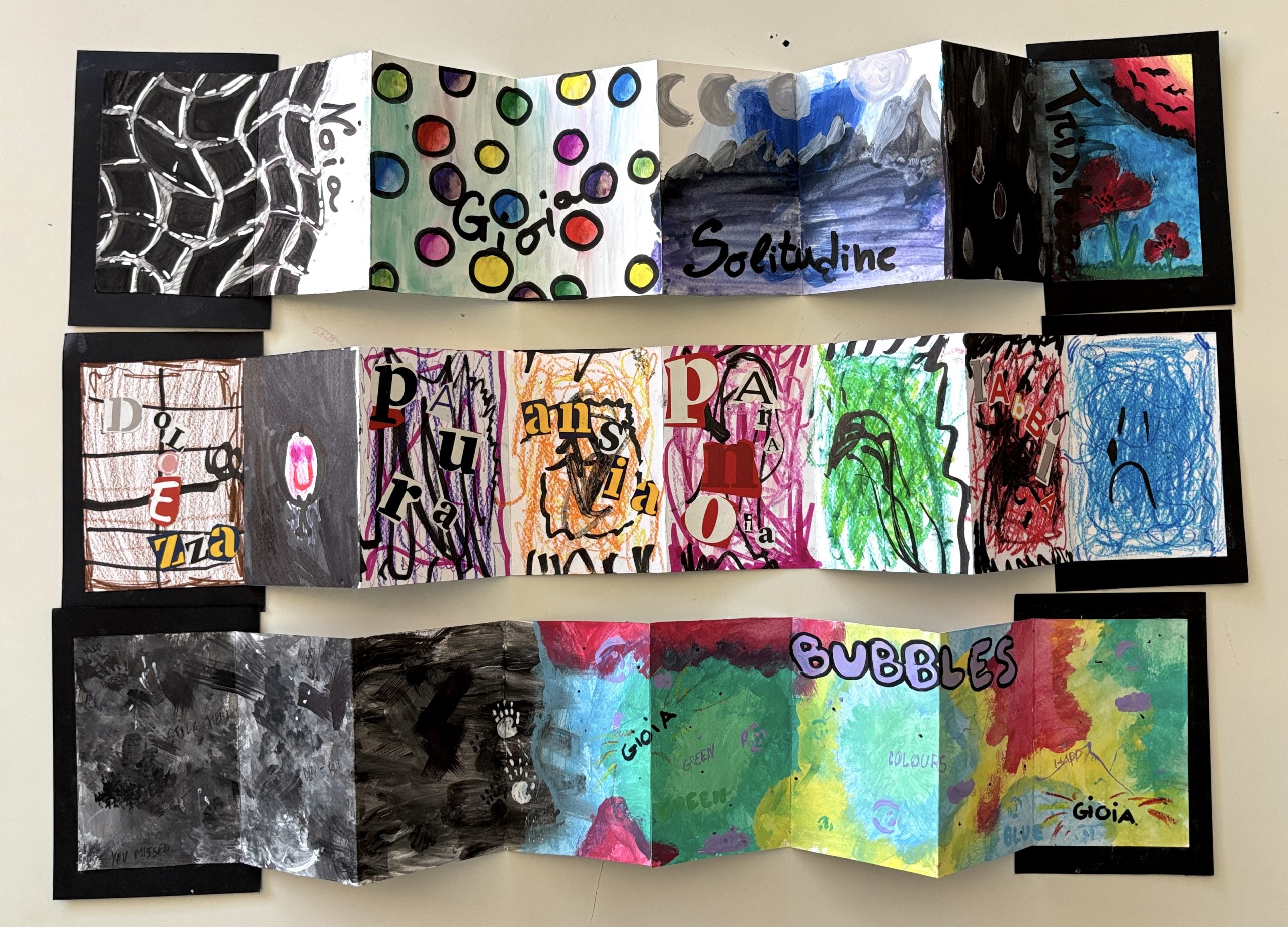
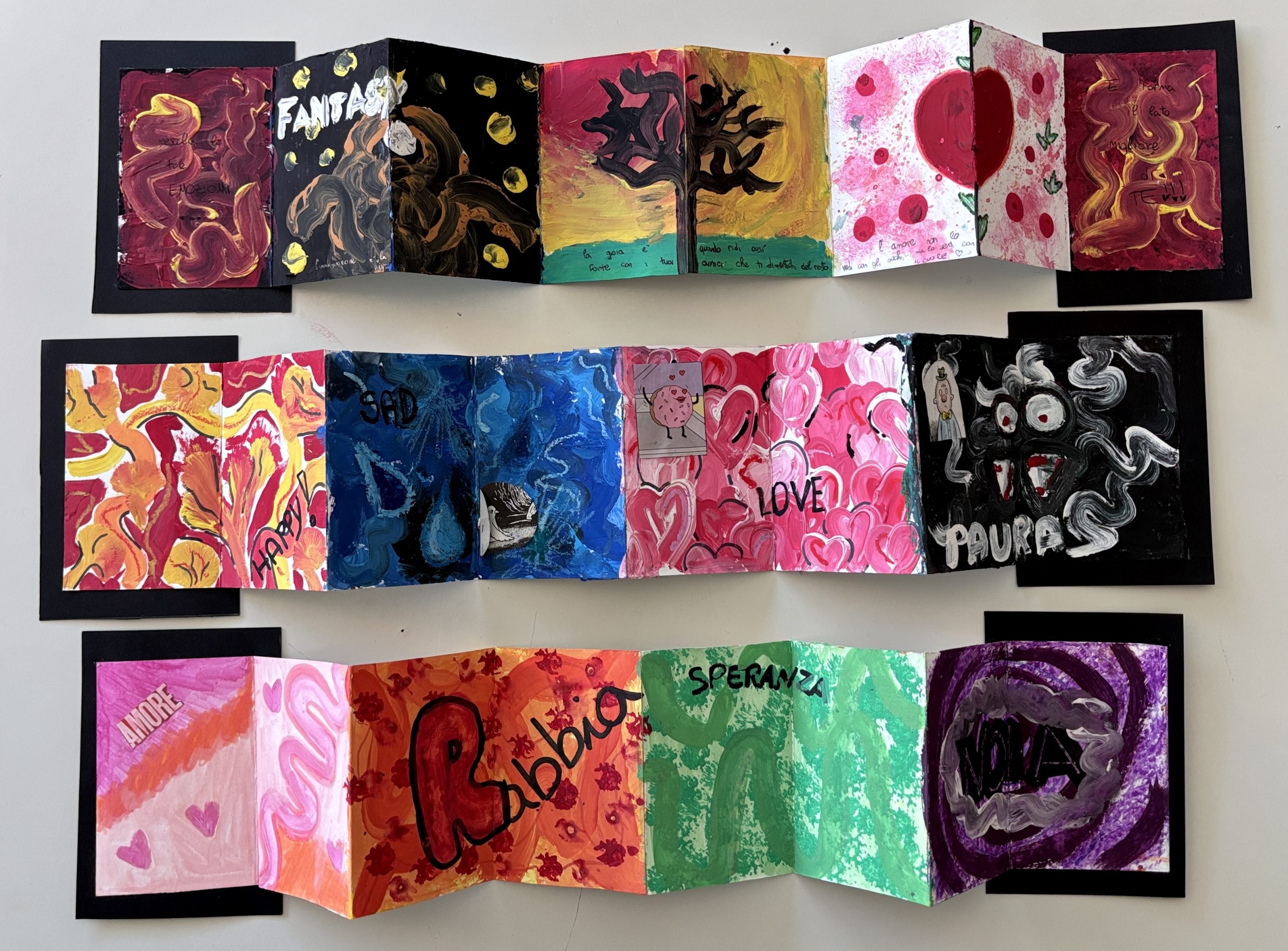
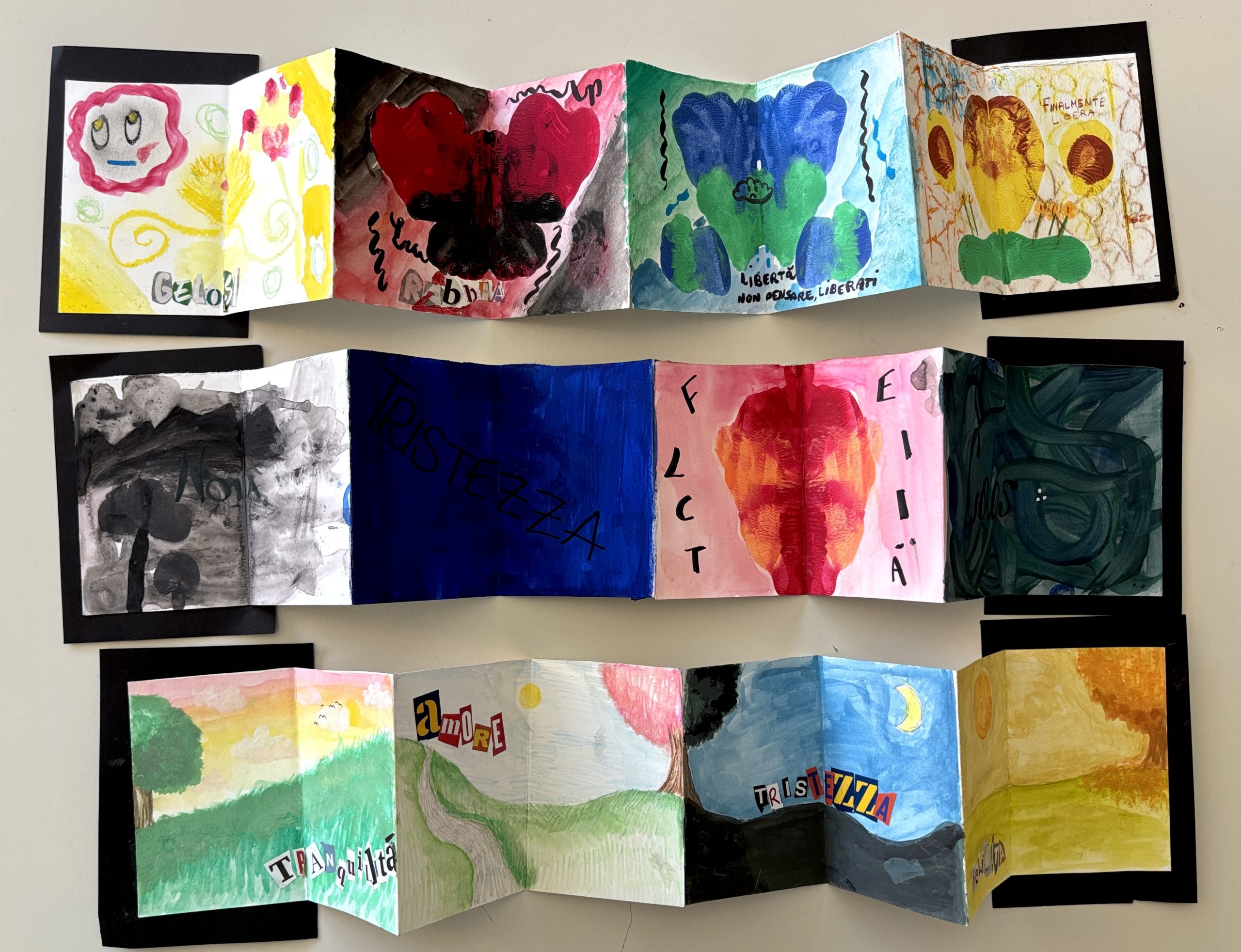
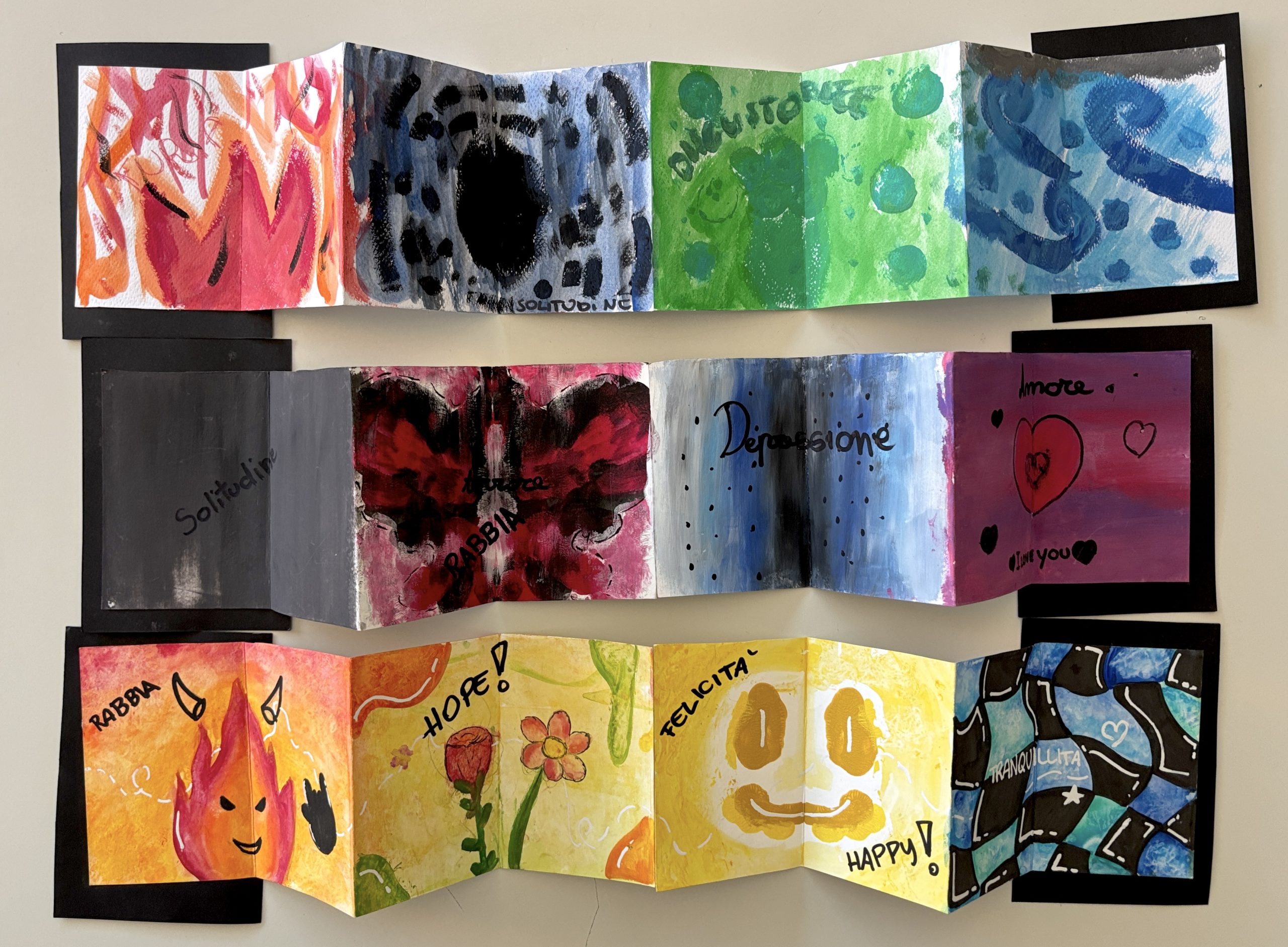
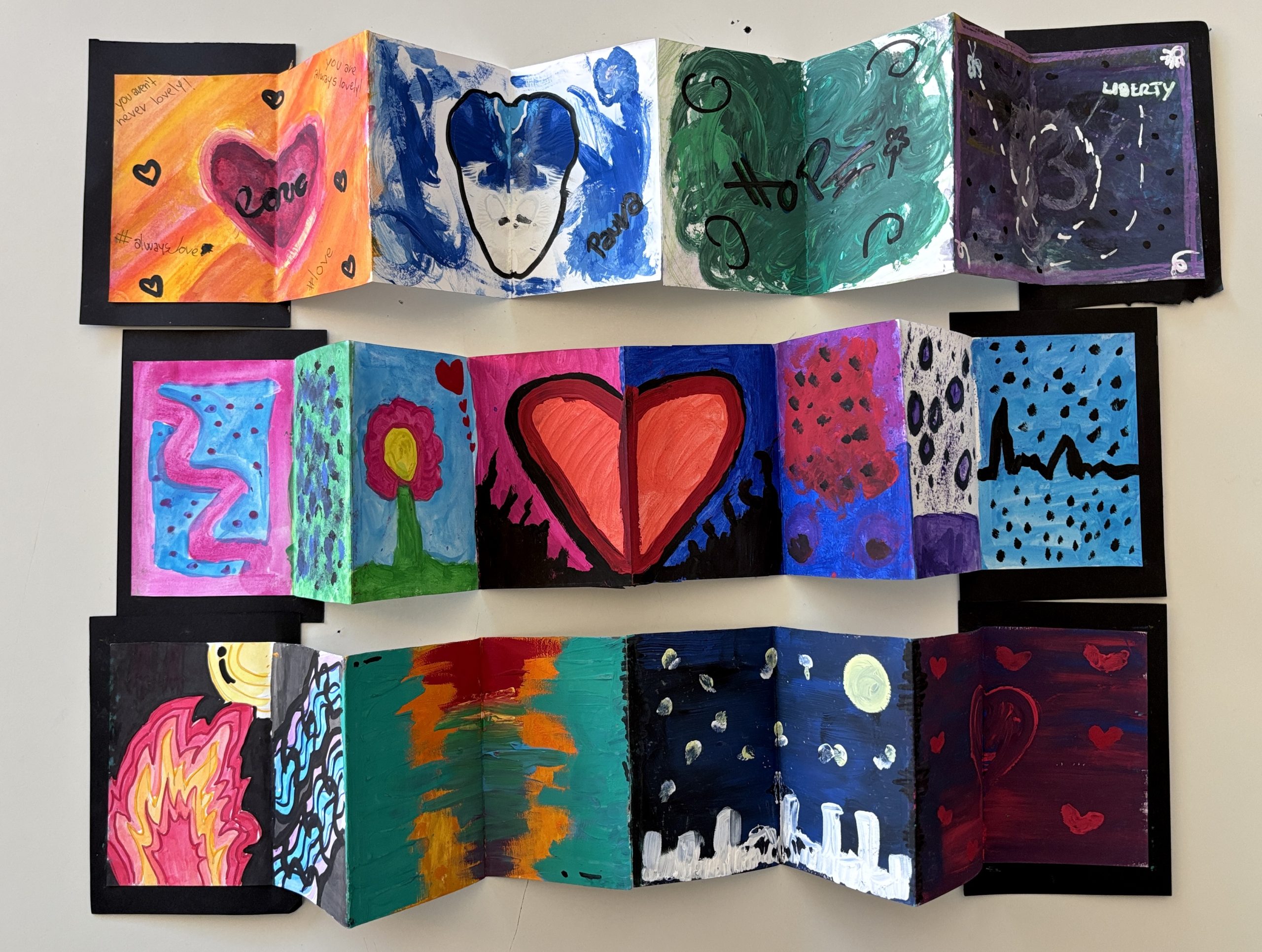
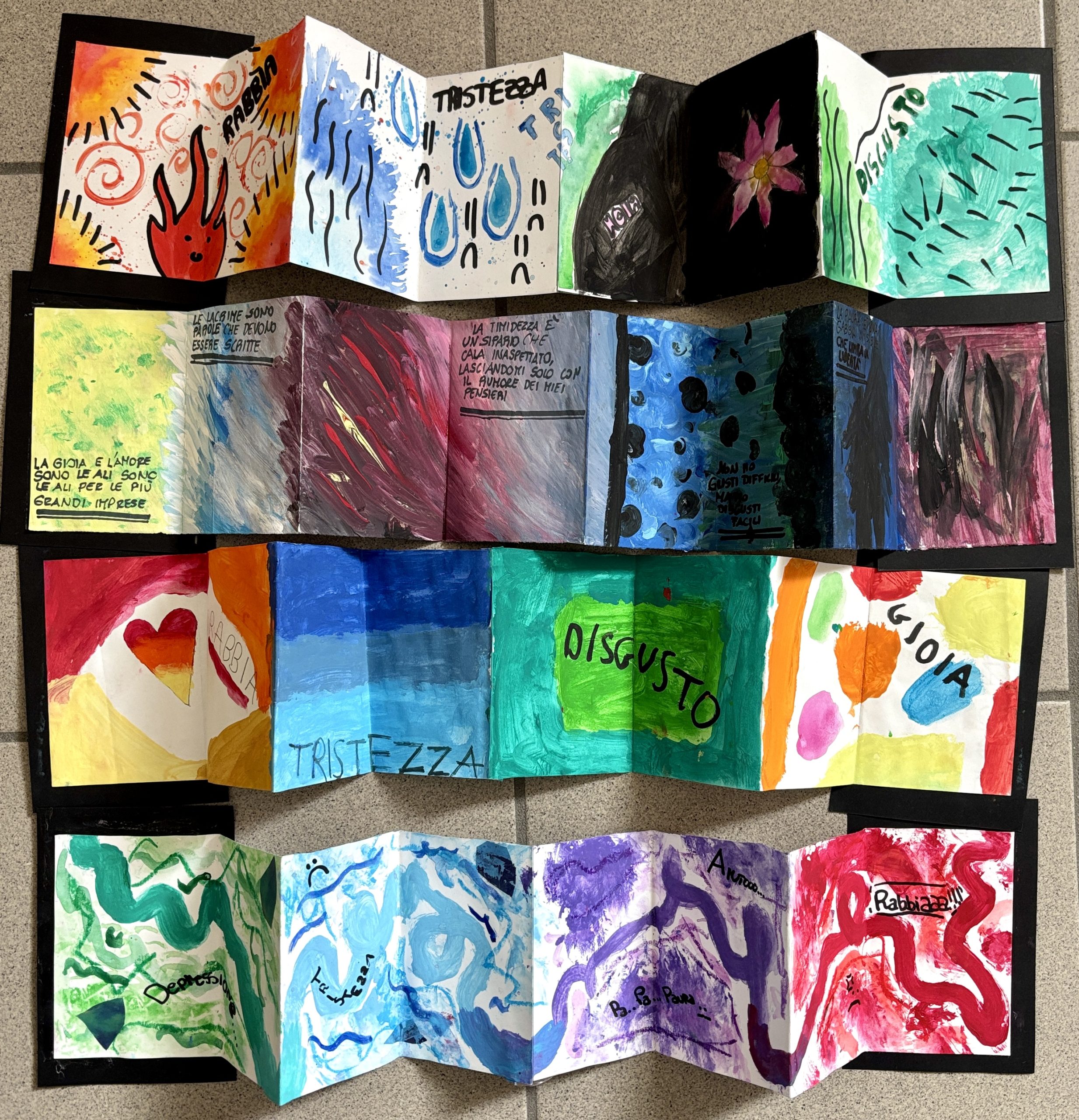
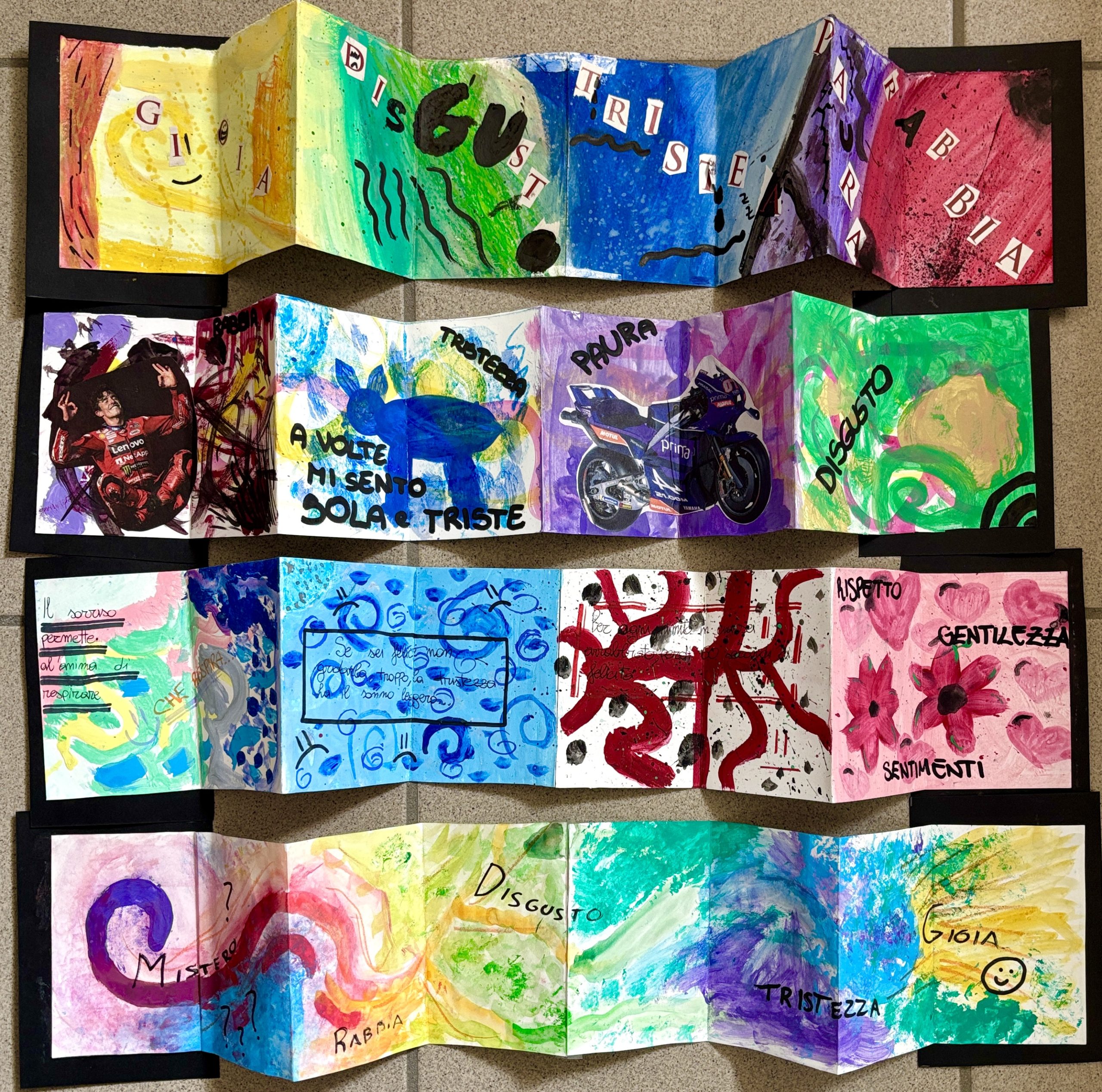
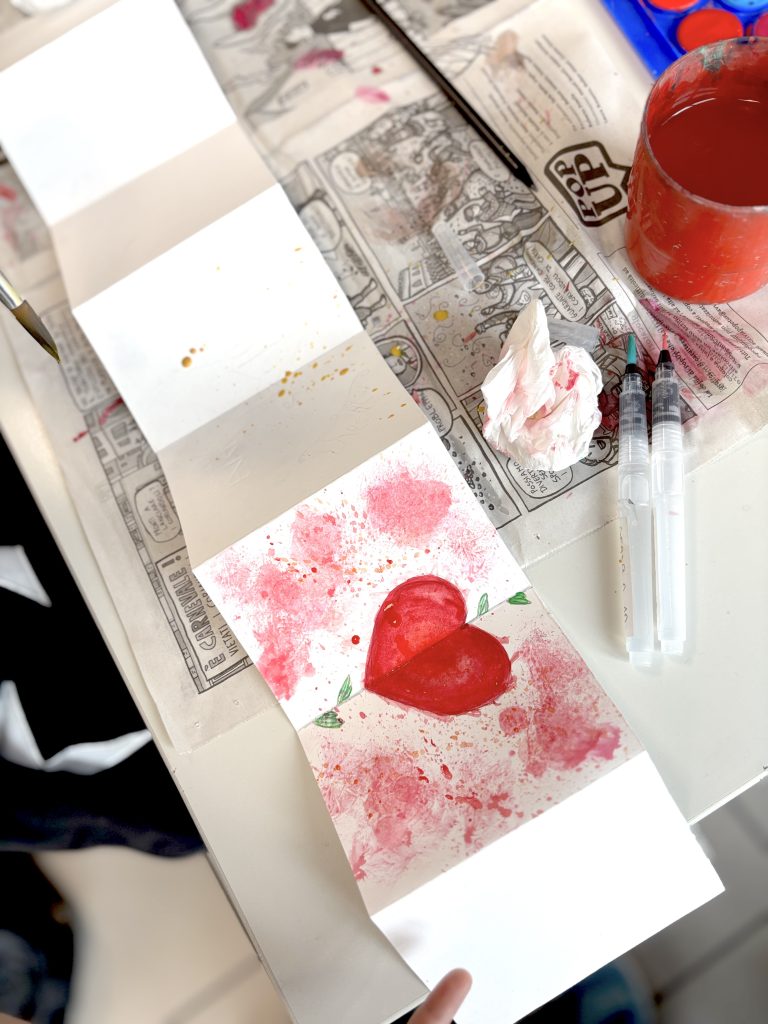
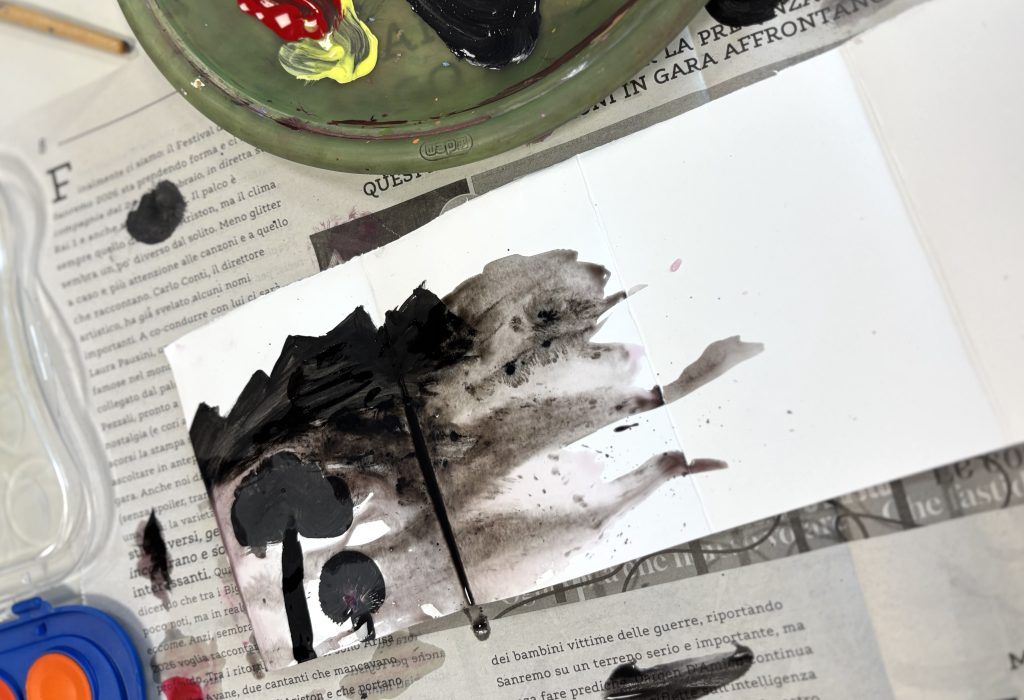
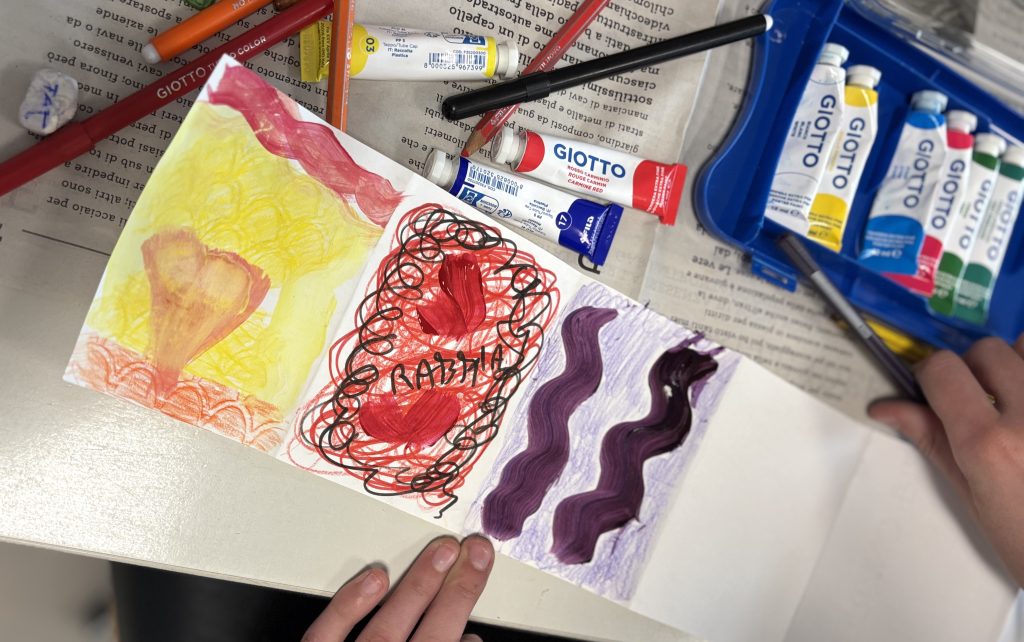
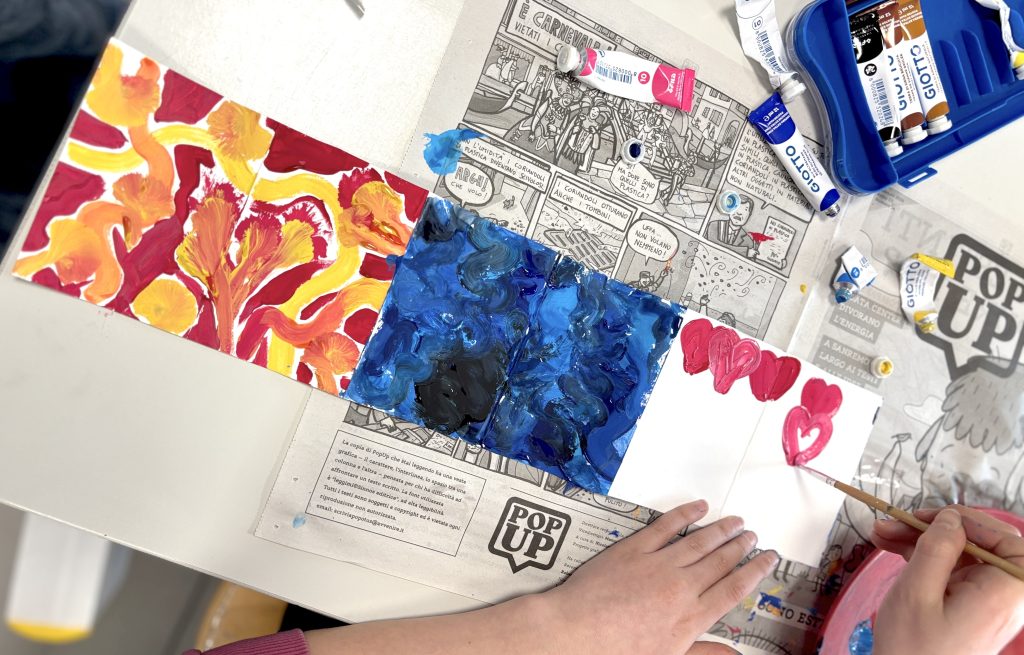
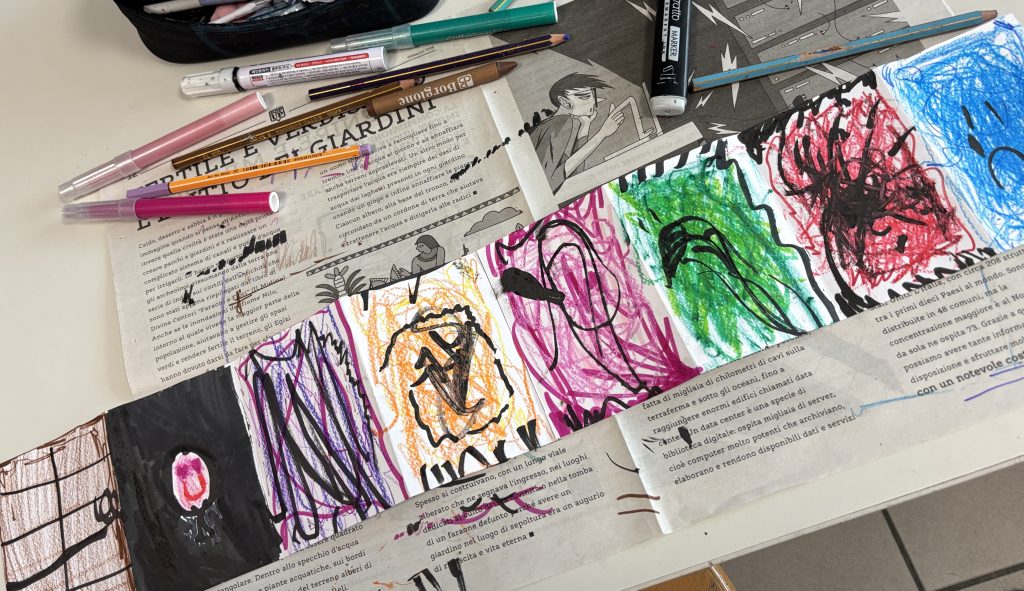
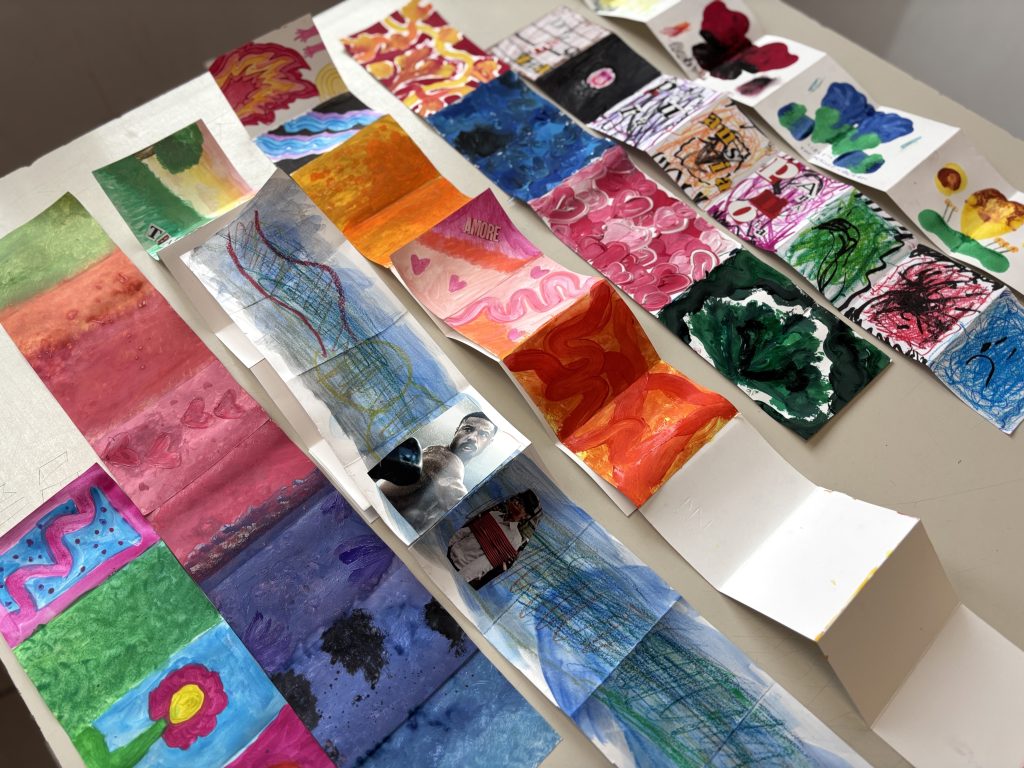
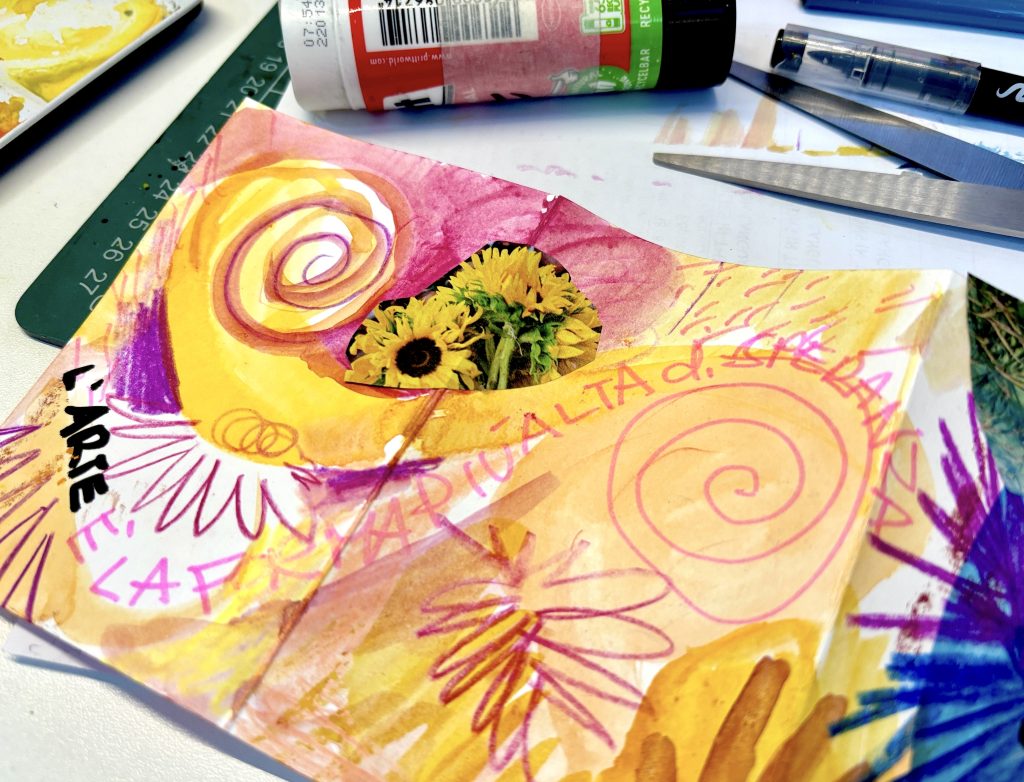
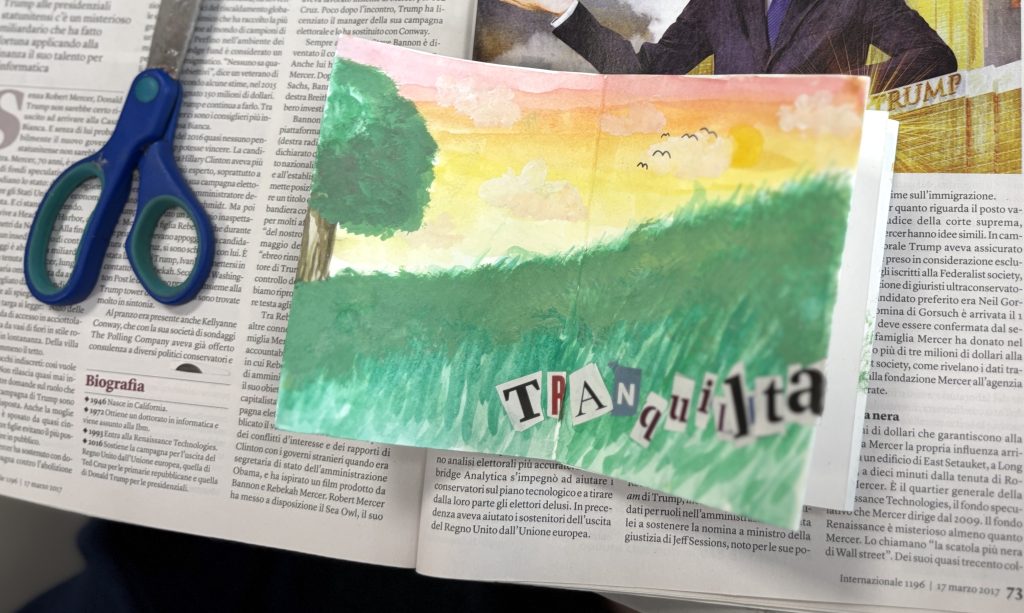
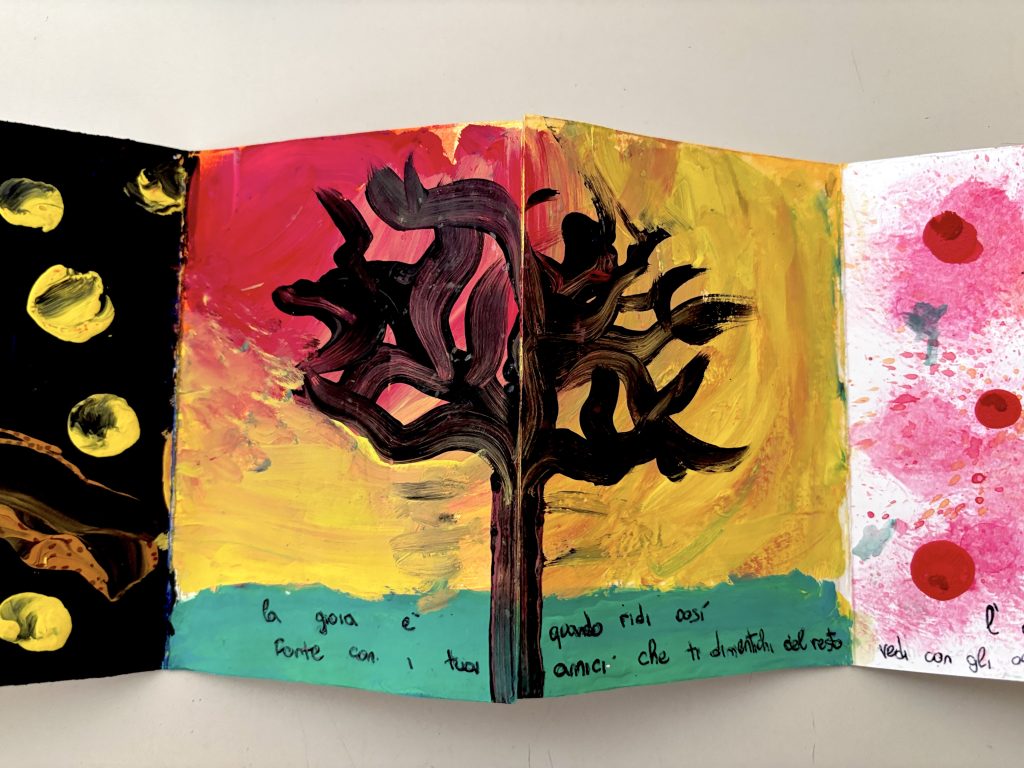
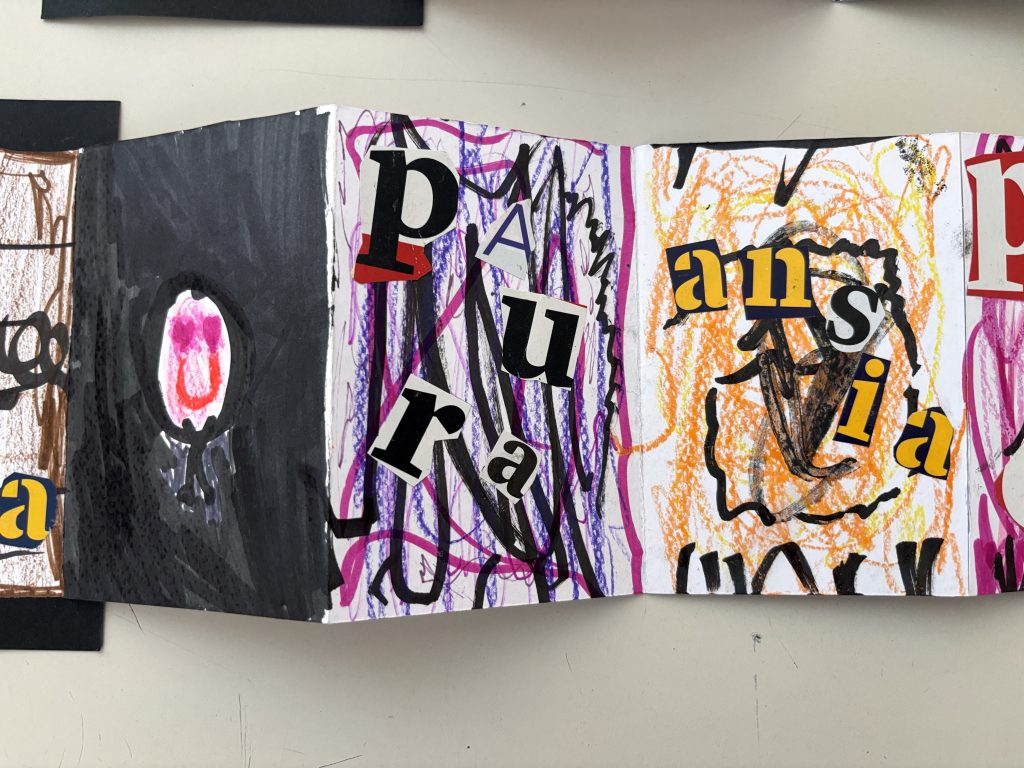
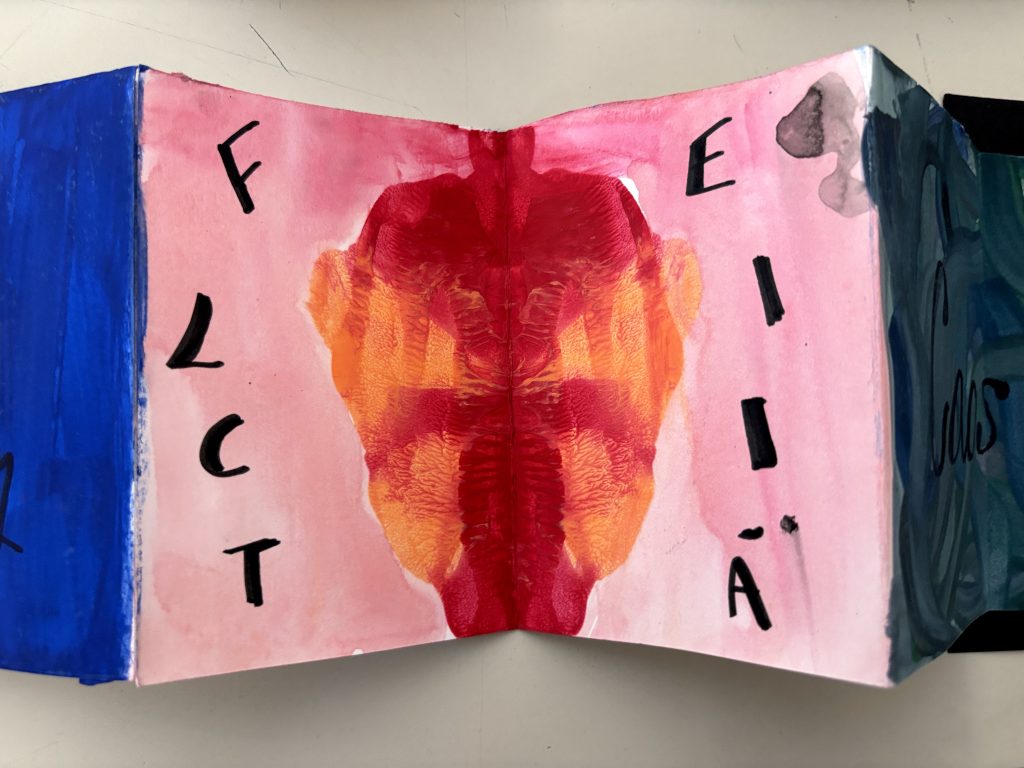
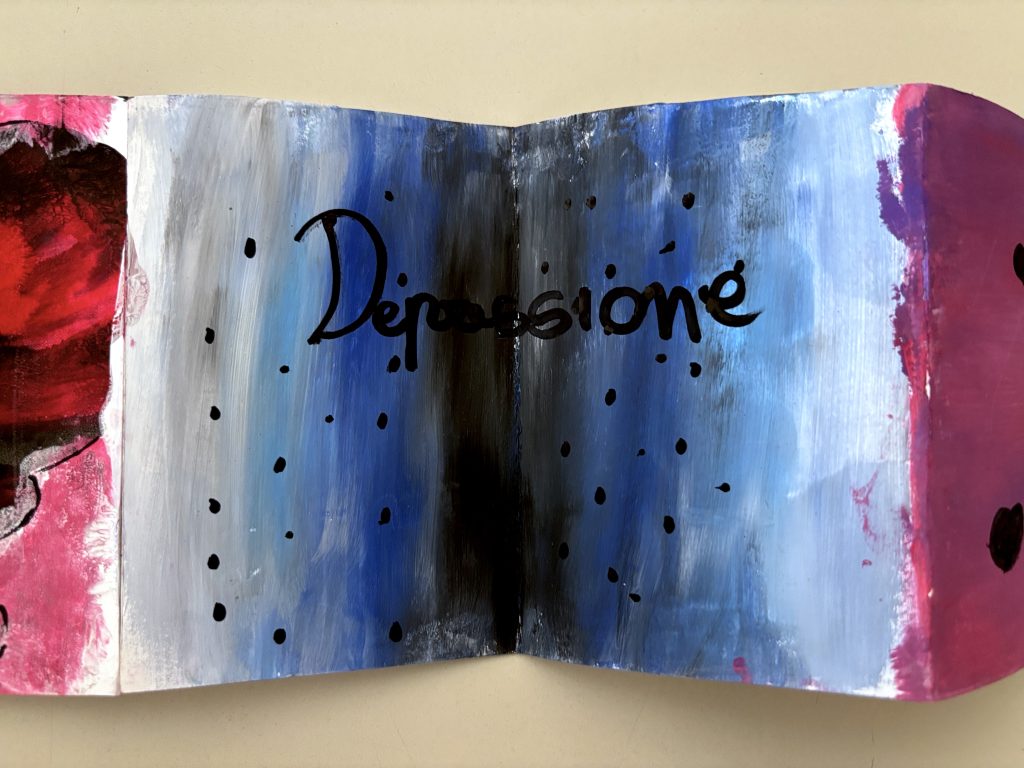
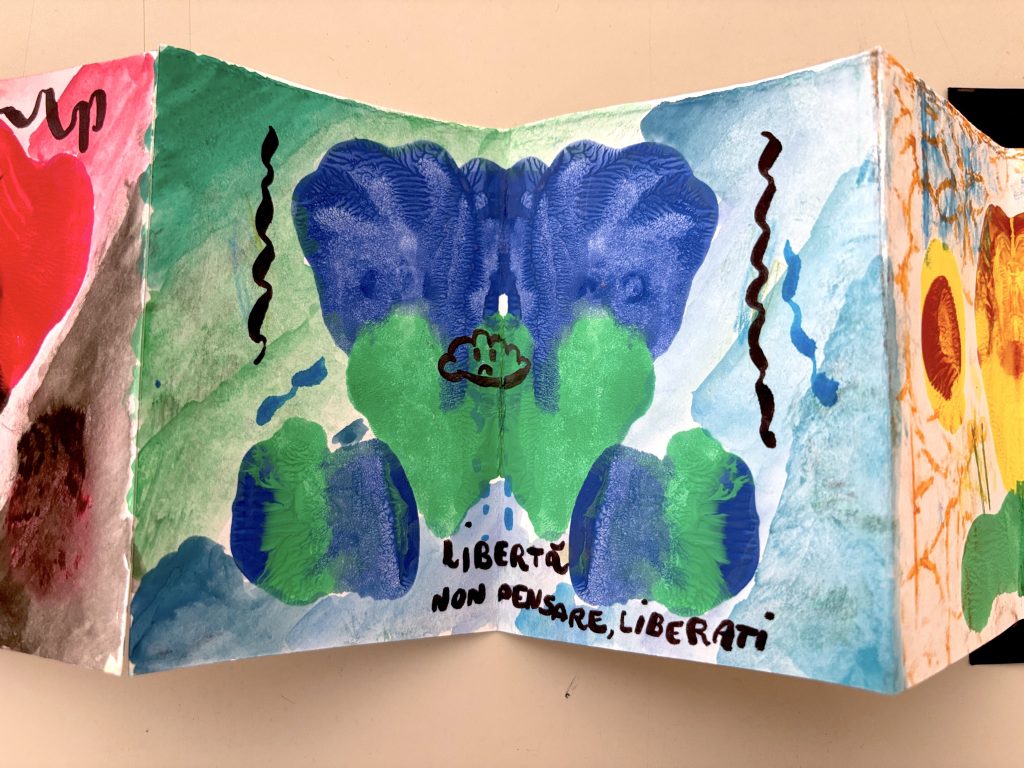
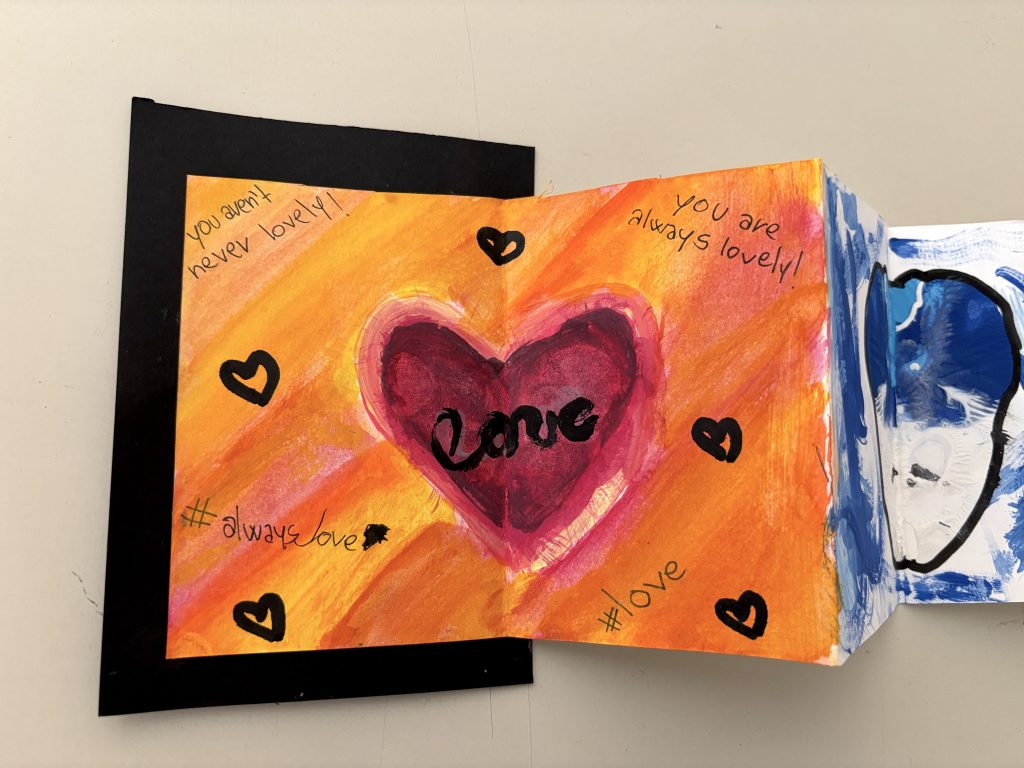
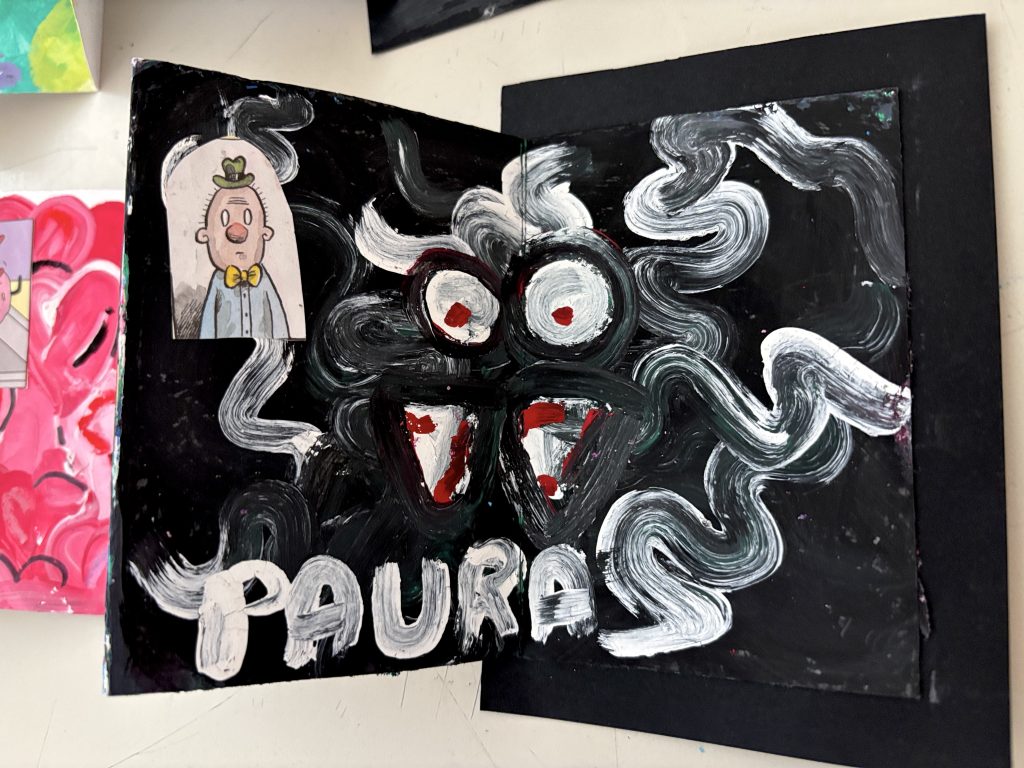
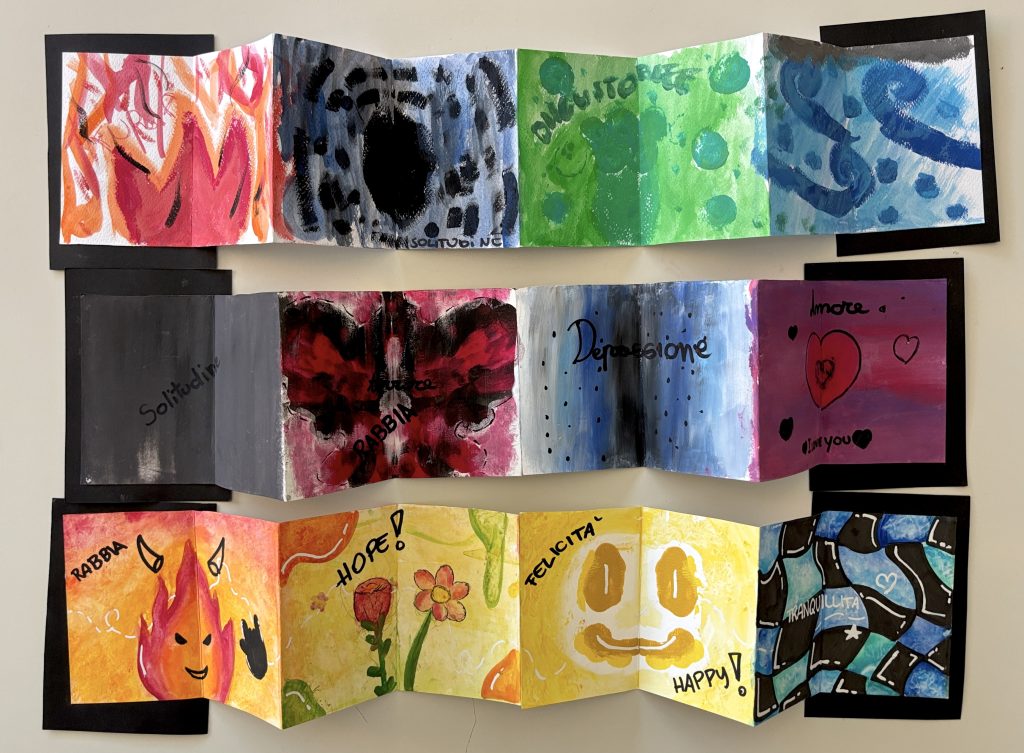
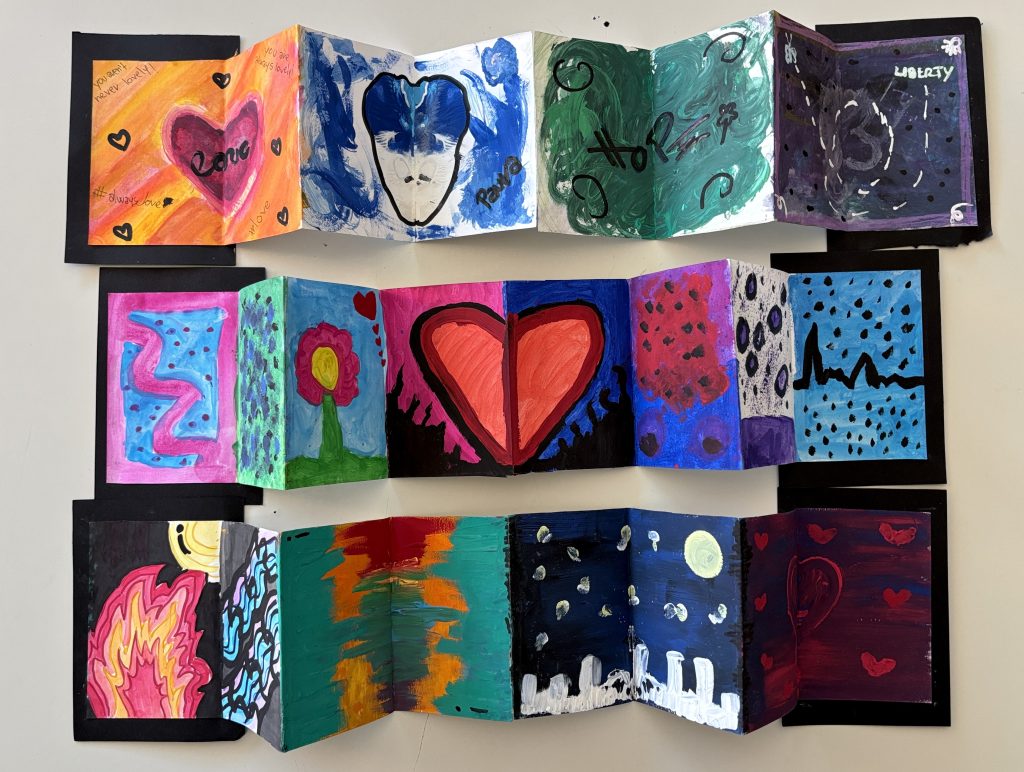
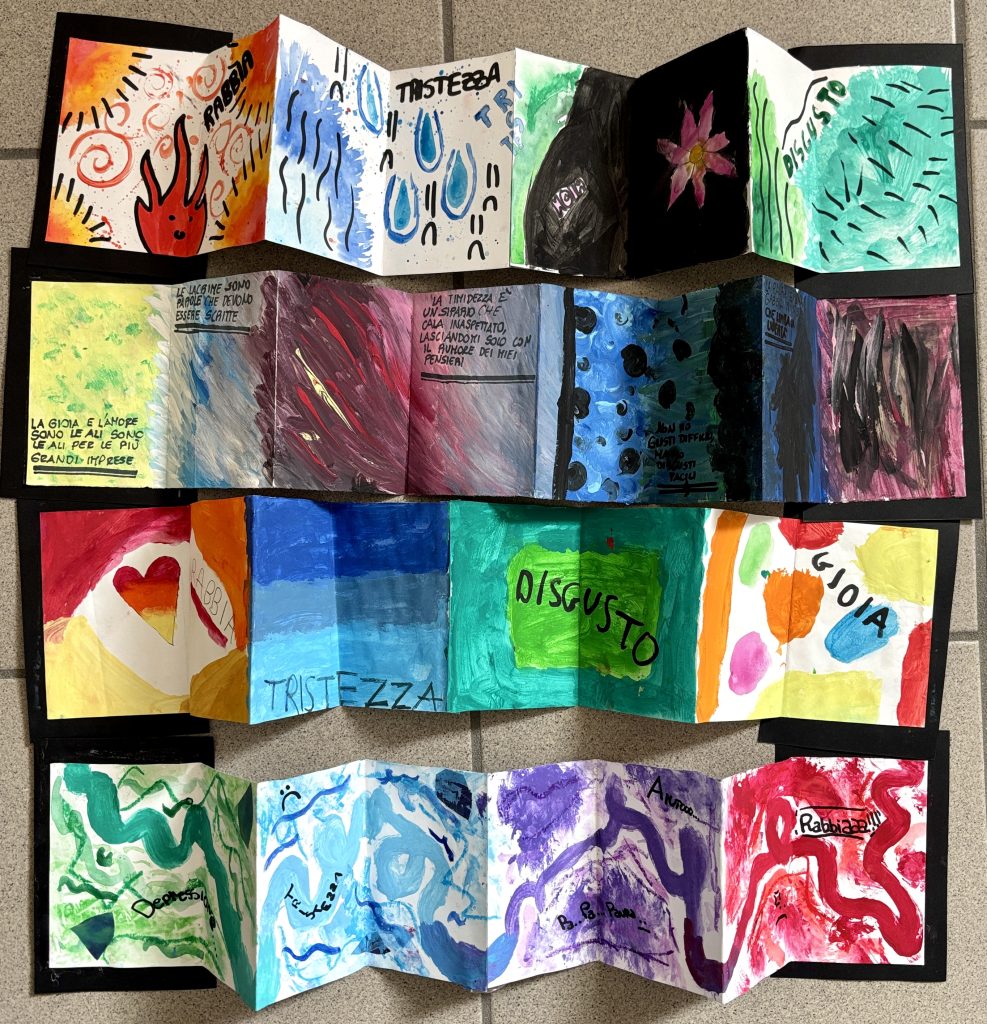
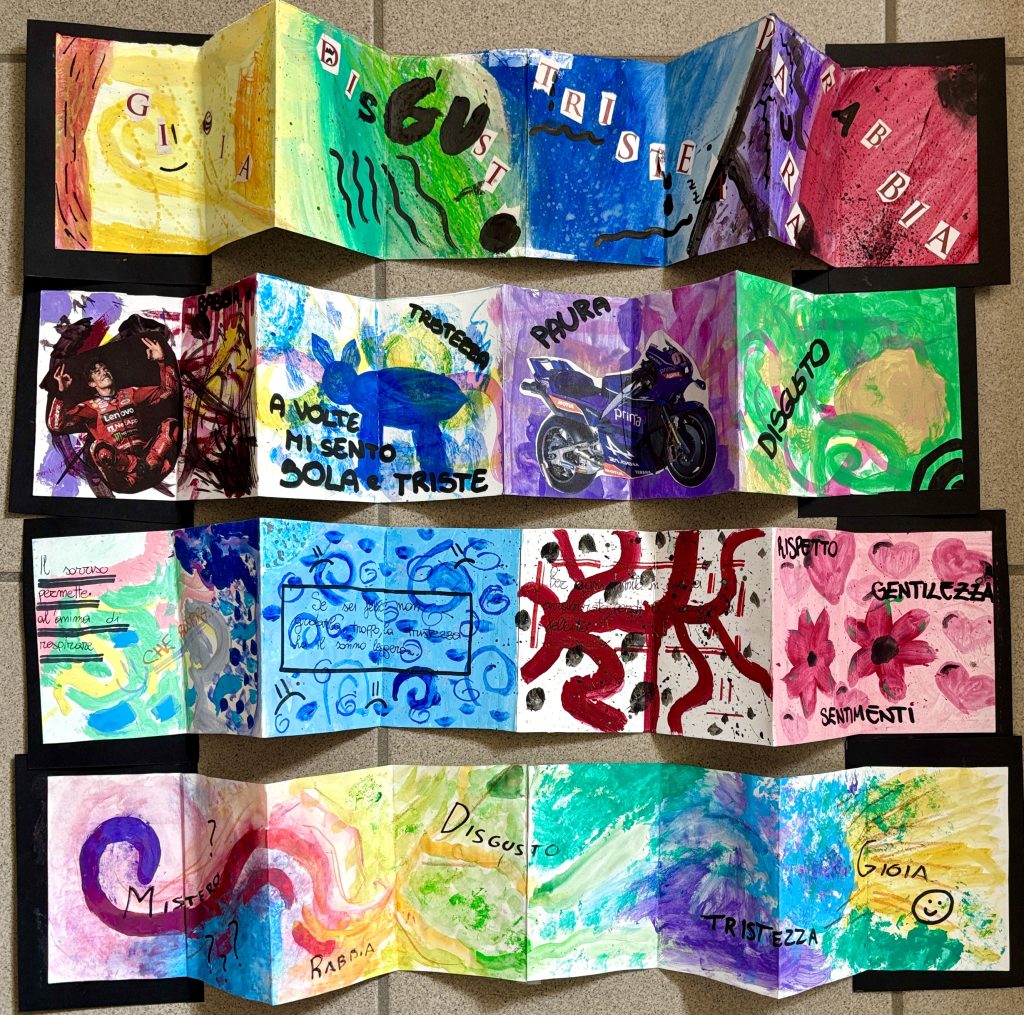
我们开始以自由而个性化的方式,让情绪自然流淌至折页册上,聚焦于悲伤、喜悦、愤怒与恐惧等情绪状态。不惧犯错,我们运用综合媒材技法,叠加使用水彩、油画棒与记号笔。部分同学为每一页分配一种特定情绪;另一些则创作出贯穿整个矩形空间的连续色流。
步骤三:文字、符号与细节
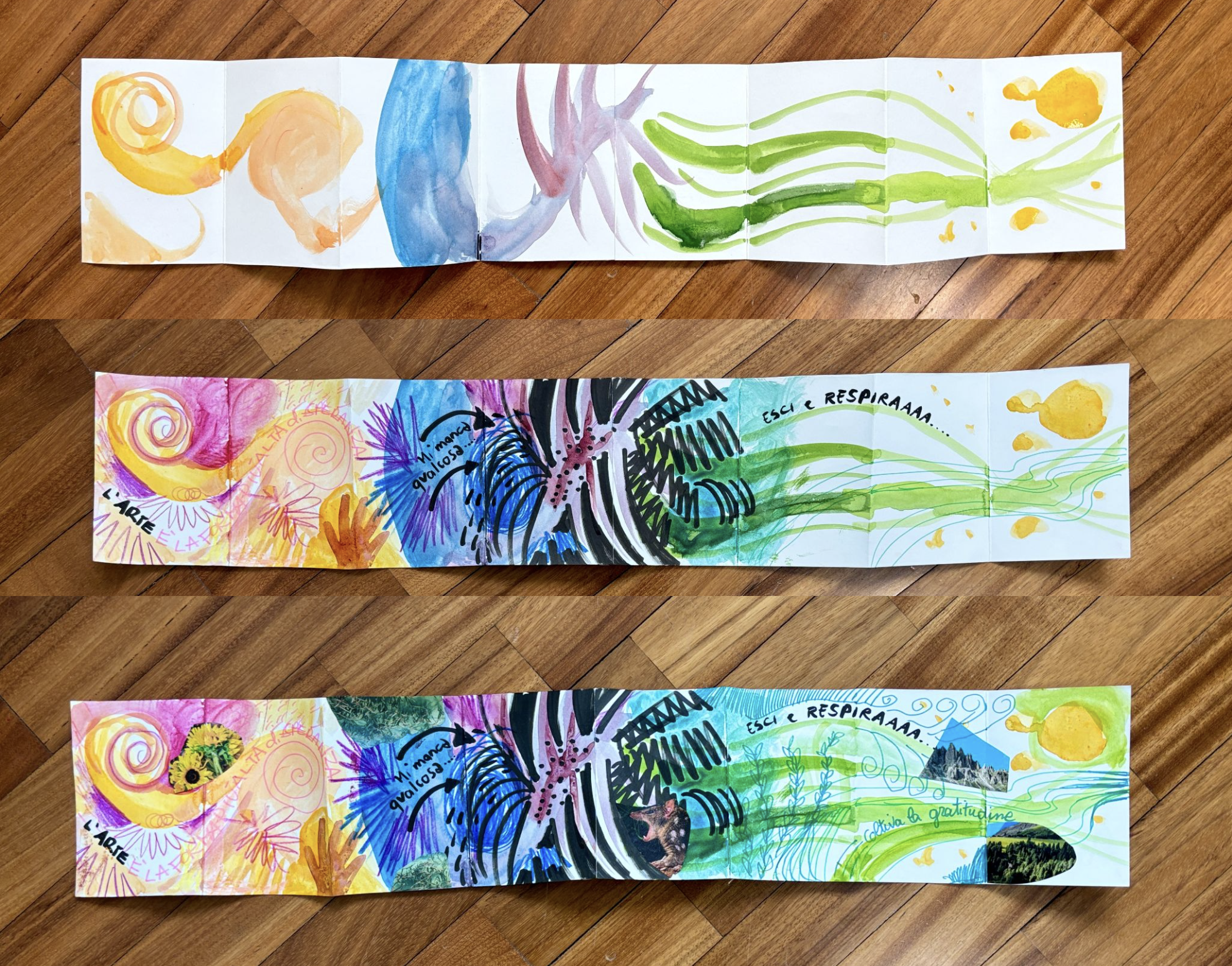
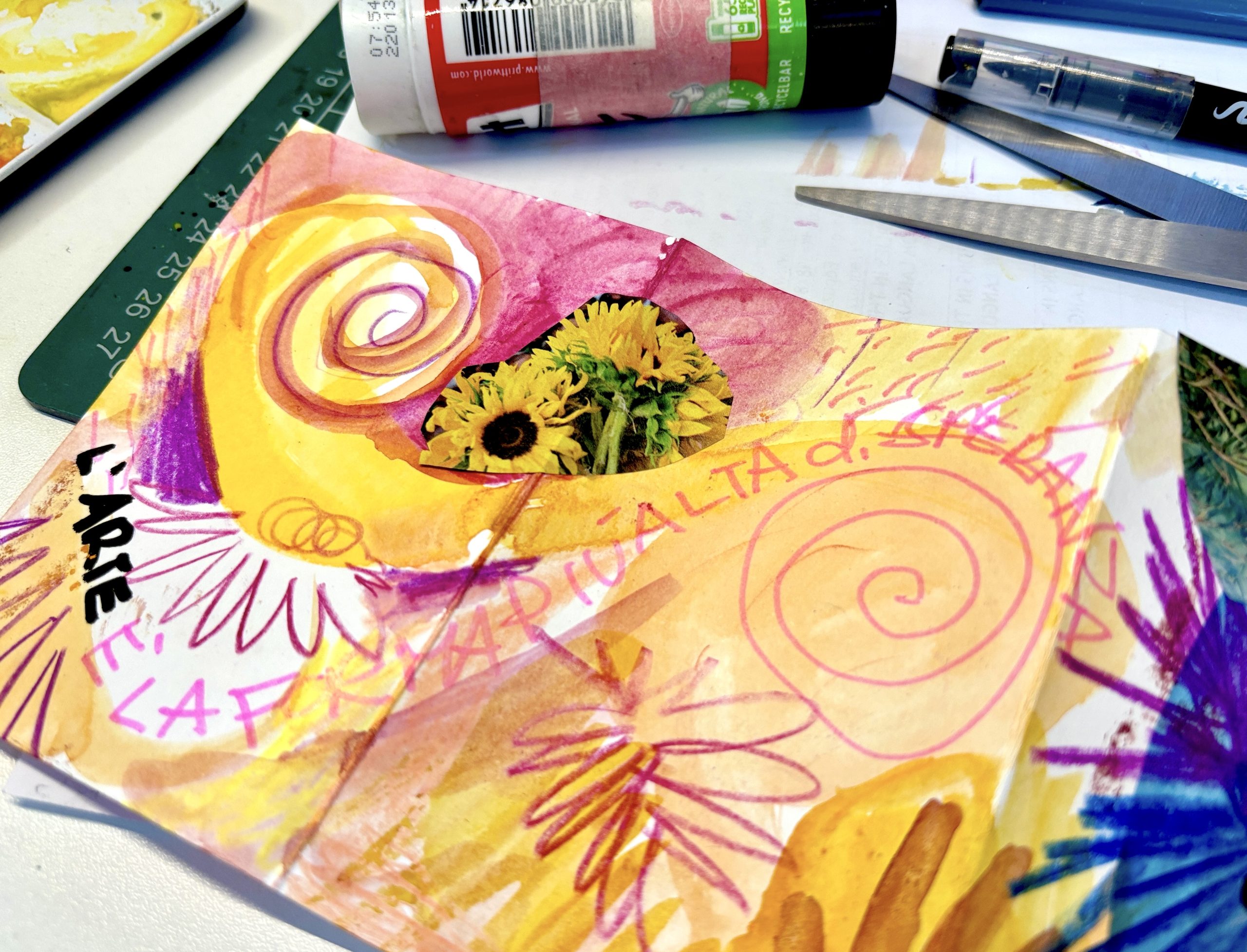
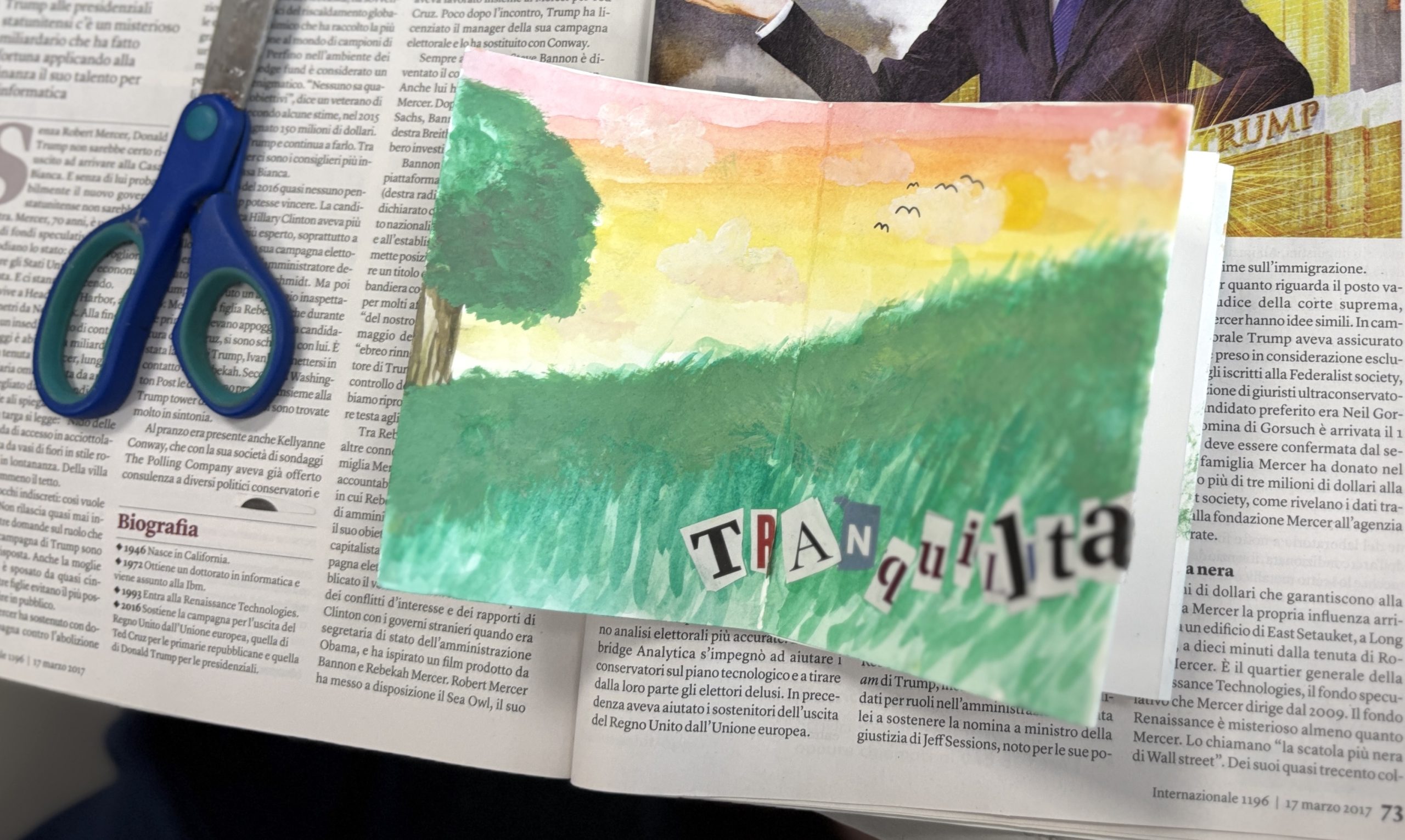
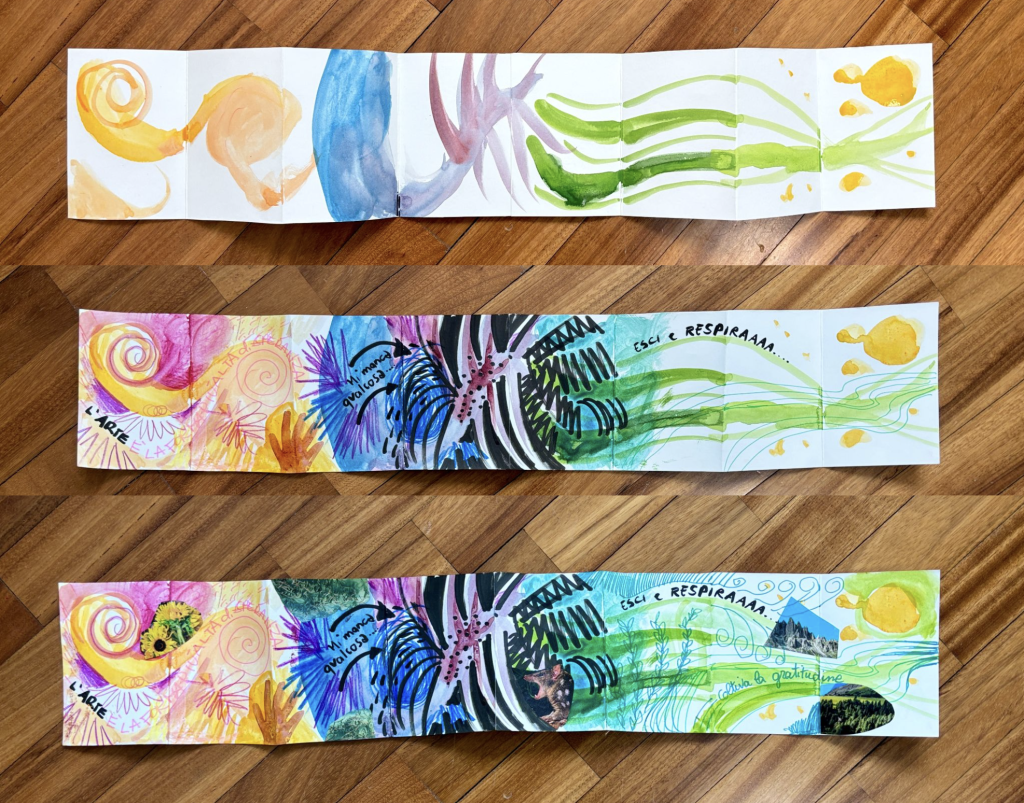
为丰富作品,我们添加了手写字体、有意义的短句、拼贴与涂鸦。目标是打造一本真正的视觉日记,借由文字与符号为自身感受命名。我们在笔触表现上追求最大程度的多样性:用锯齿状线条表现愤怒,用宽幅泼洒的色块表现喜悦,或用留白空间表现悲伤,强调每种诠释所具有的独特原创性。
步骤四:封面与最终润饰
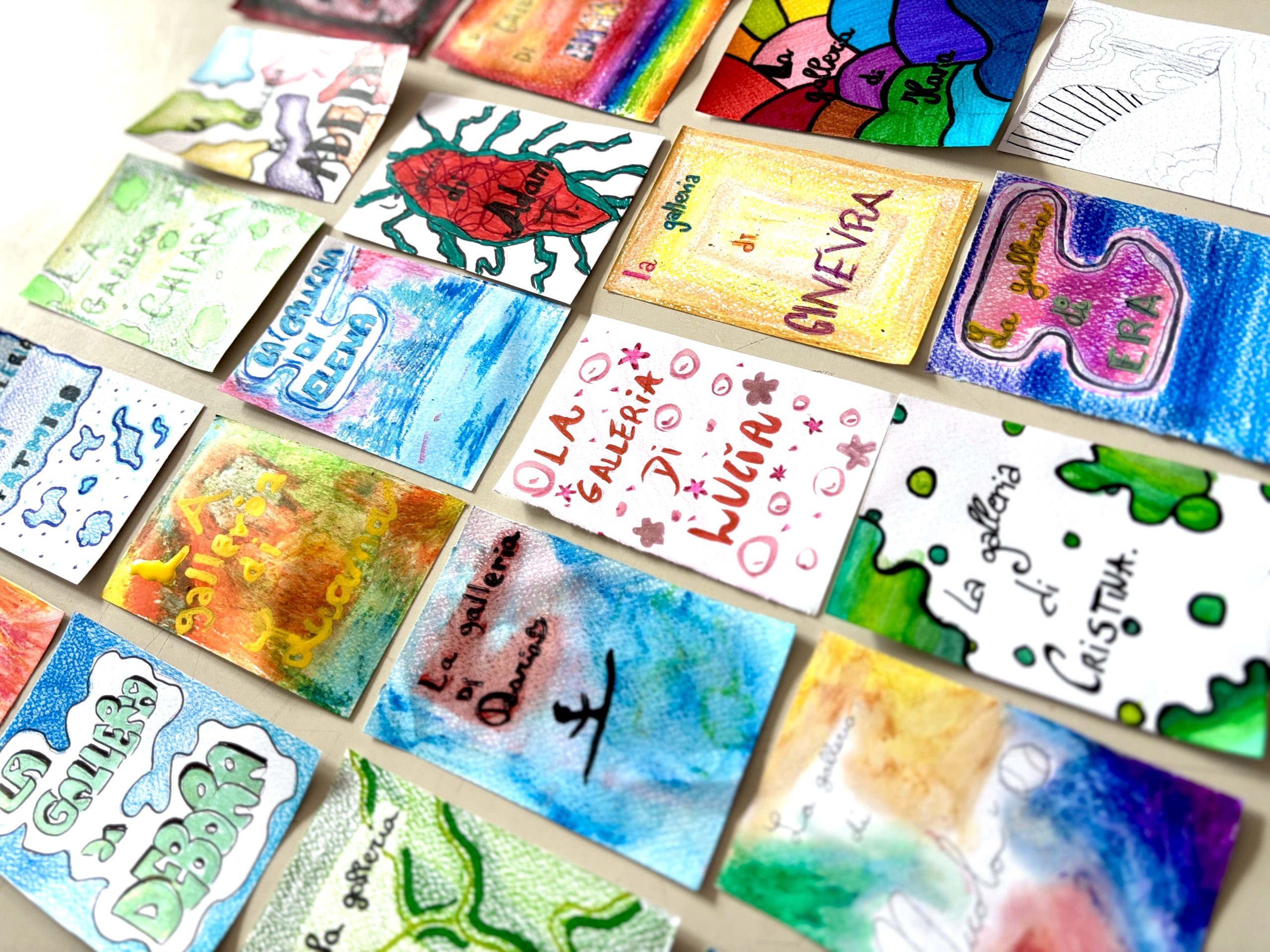
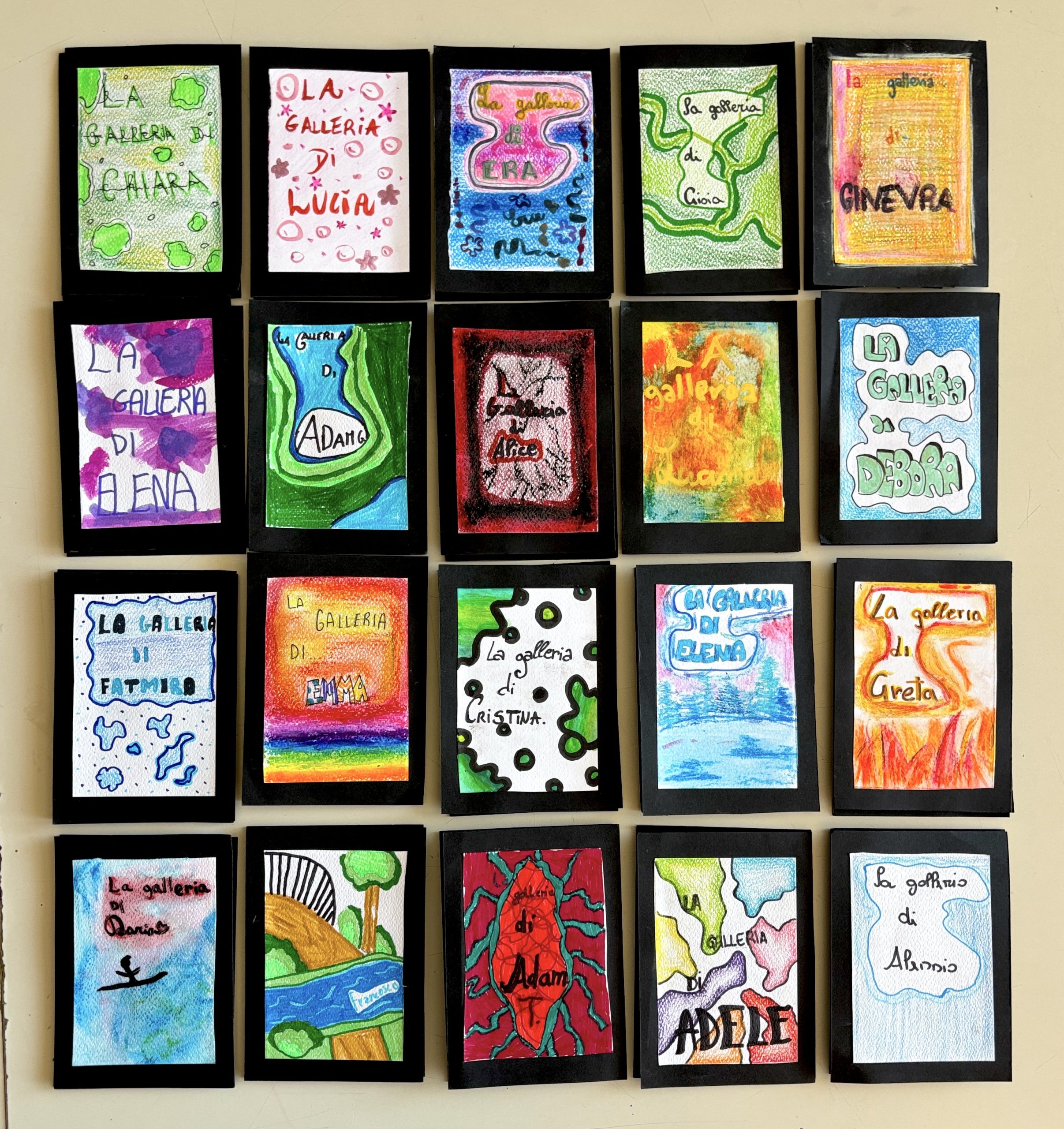
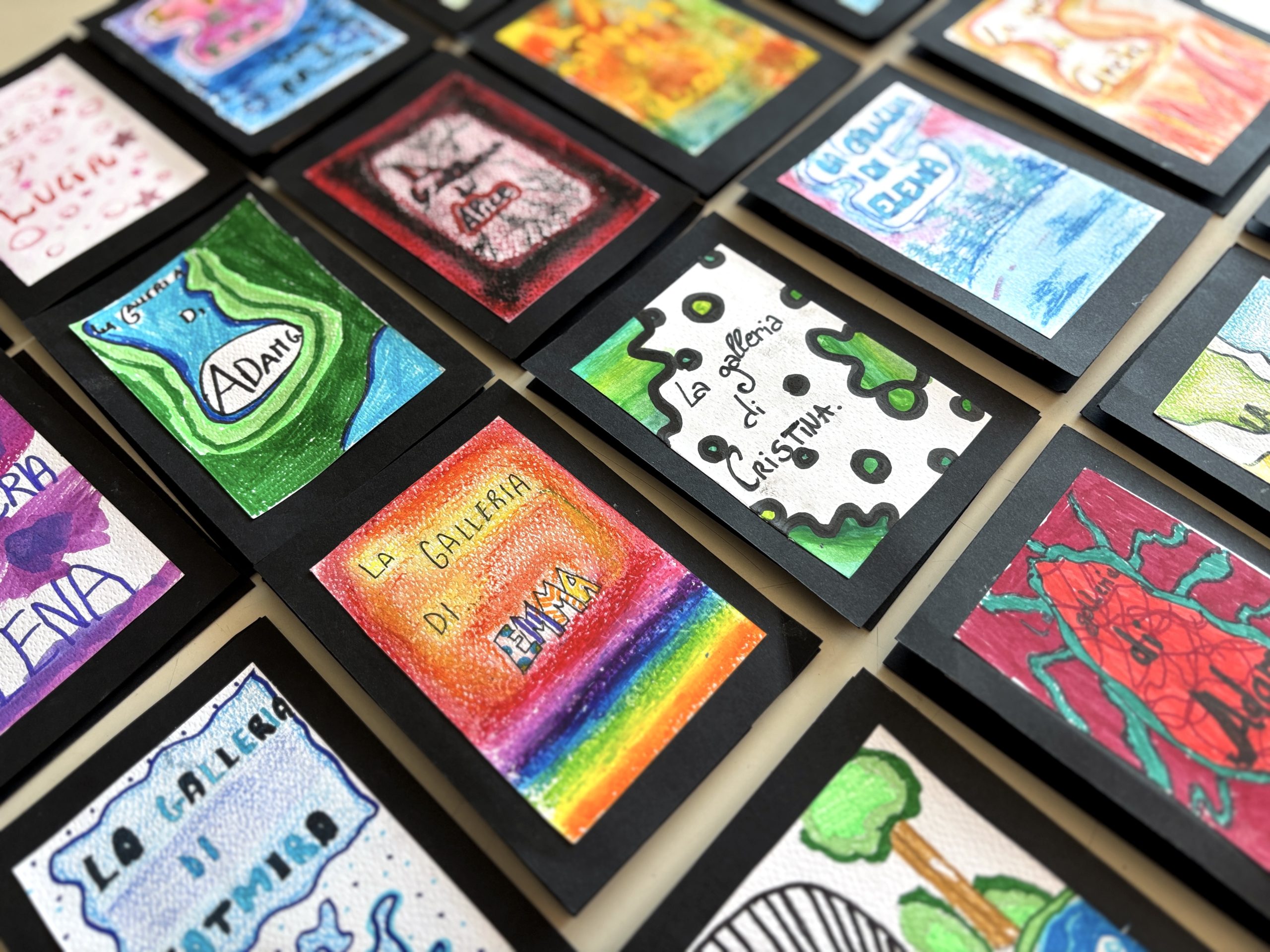
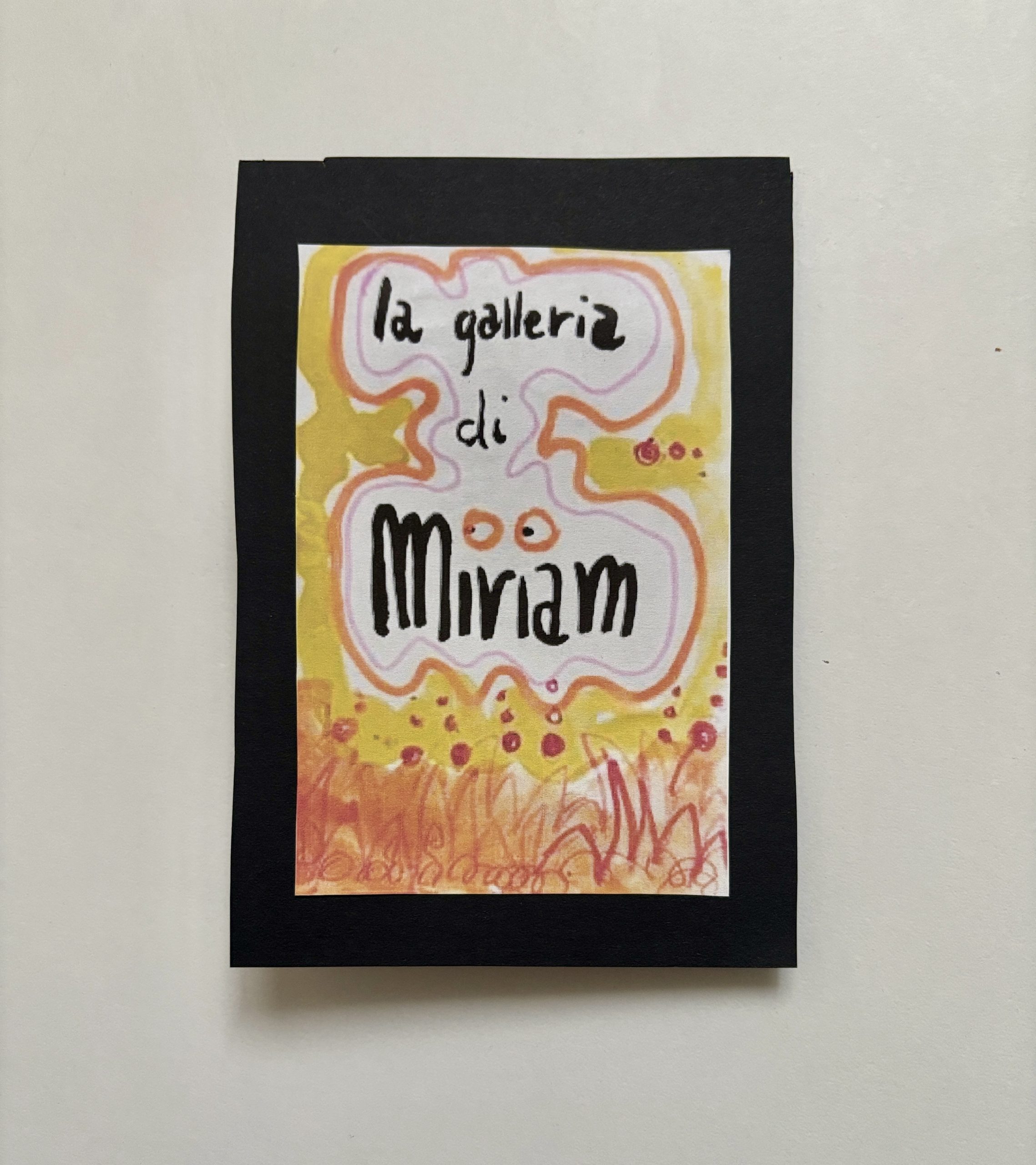
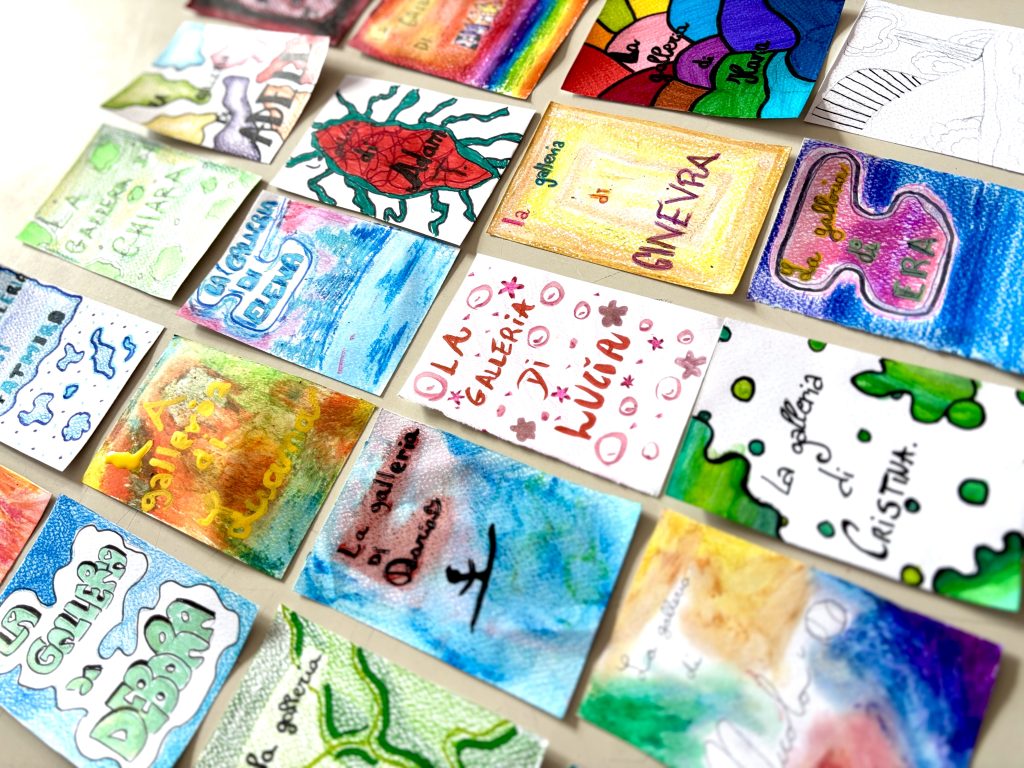
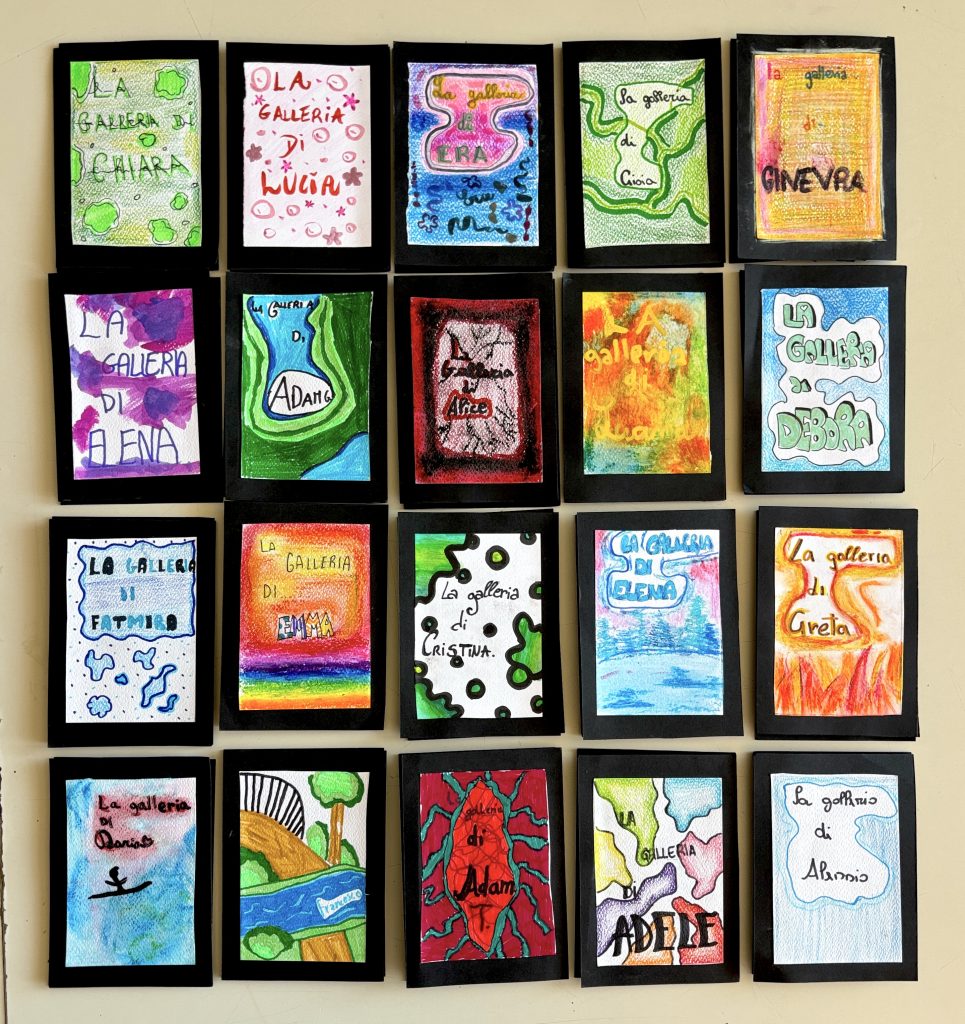
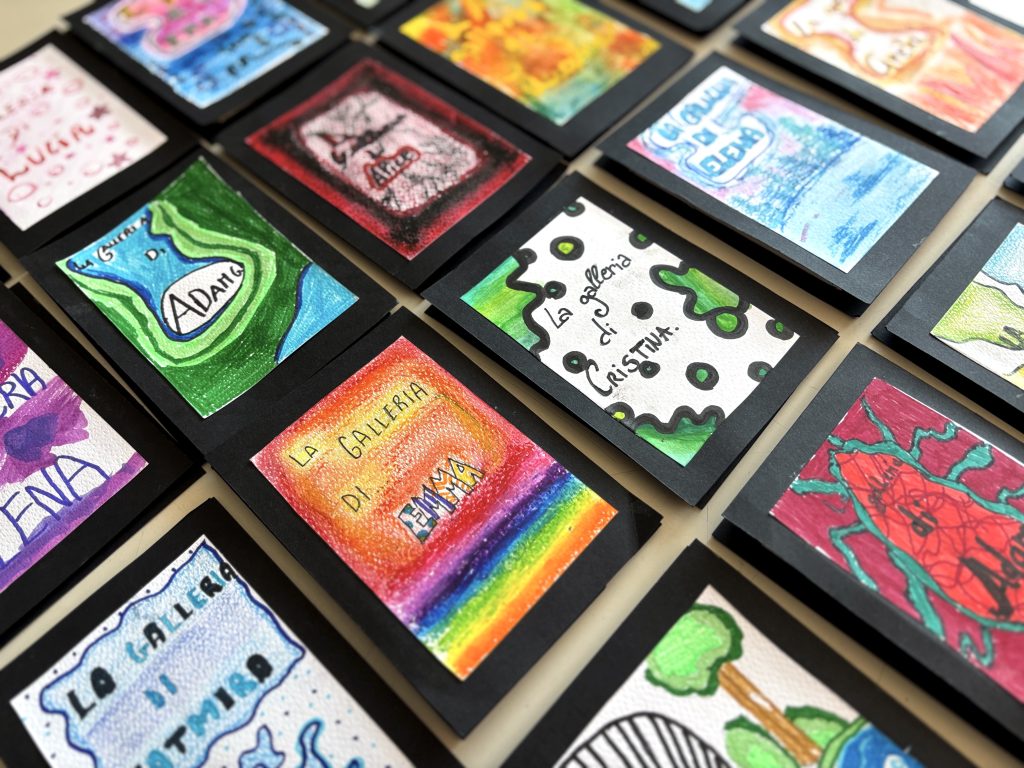
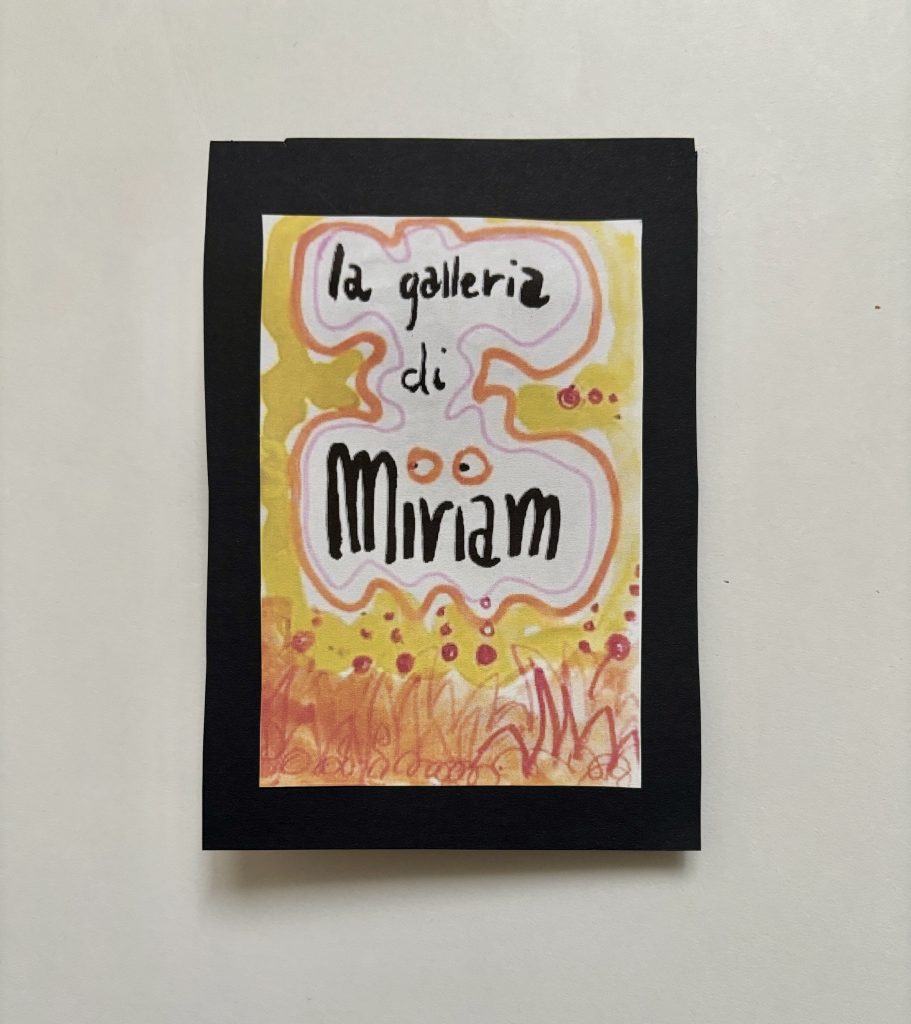
最后,我们用两张黑色卡纸矩形片(13 × 9.5 厘米)剪出封面,粘贴于折页册两端。封面正面贴上装饰性标签,写有标题“……的情绪画廊”,并填入各自的姓名。
最终成果是一只小巧的“珍宝匣”,收纳着我们的内在世界——这件作品既可完全展开陈列,亦可合拢收起。
结语:一座便携式美术馆
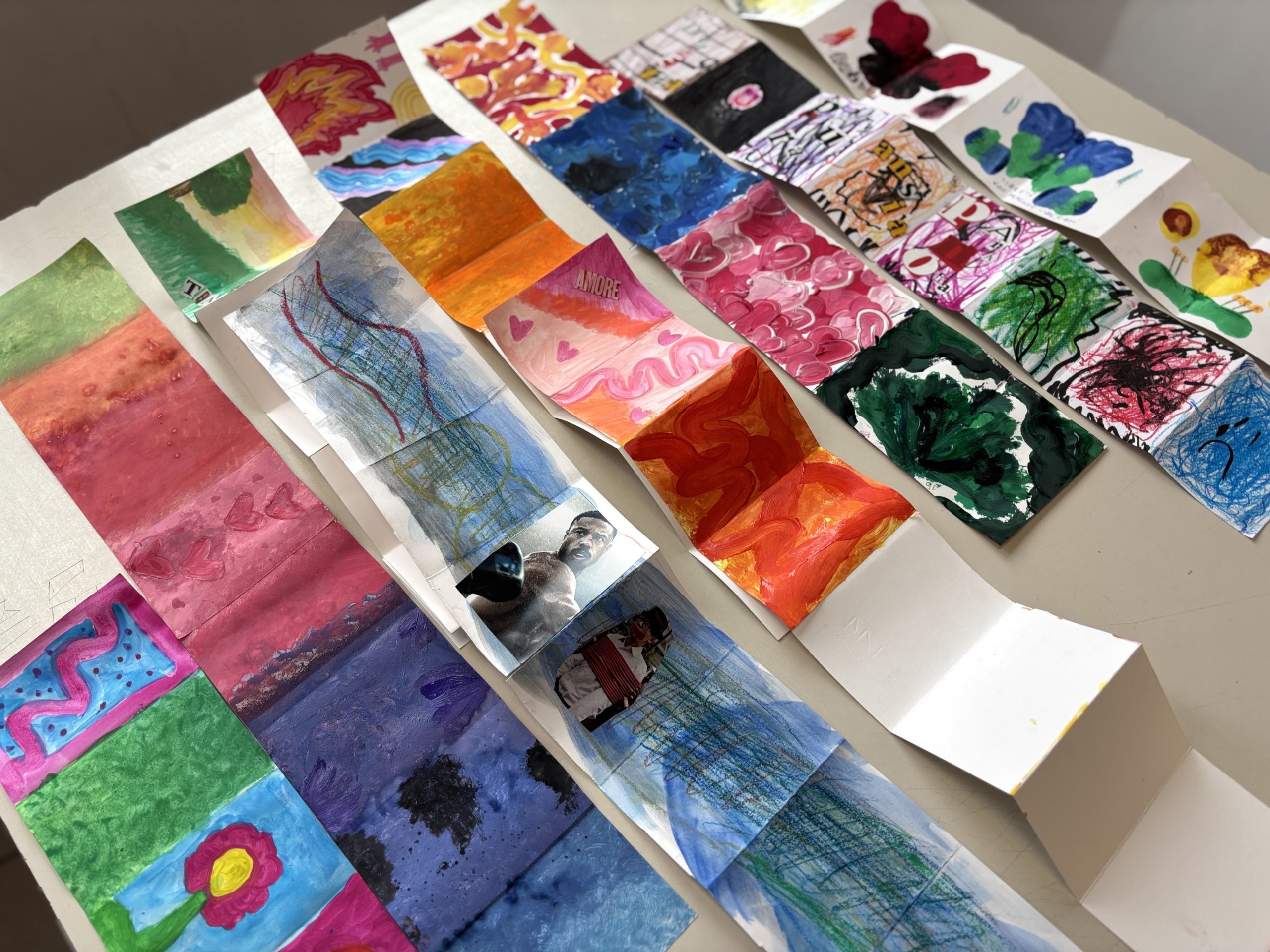
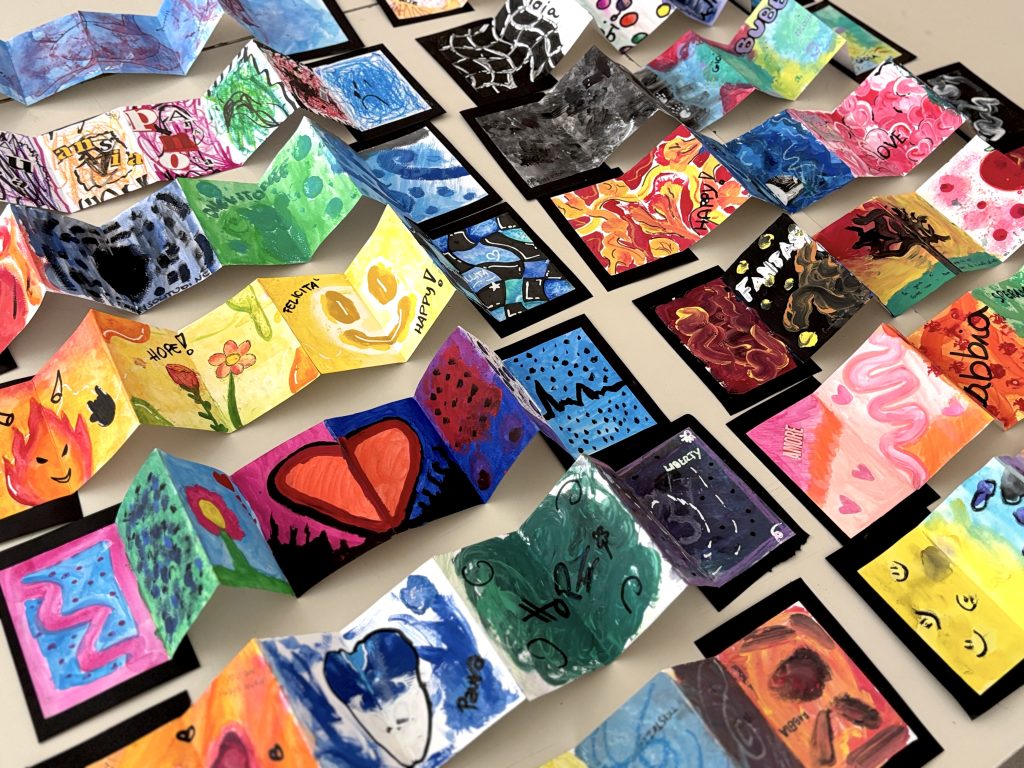
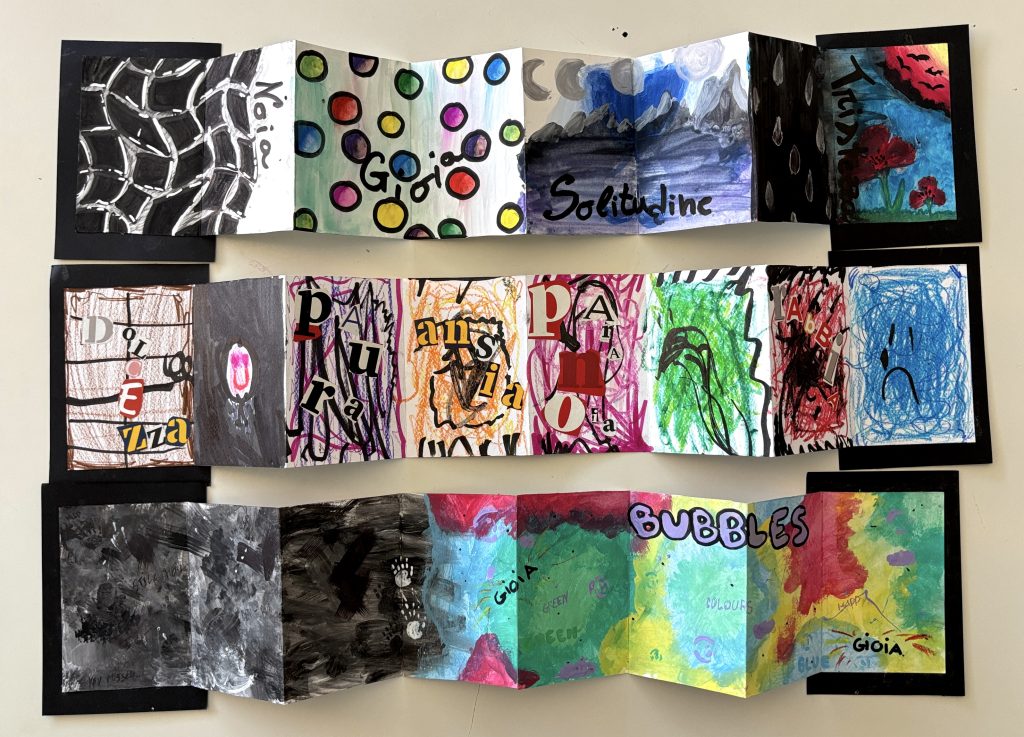
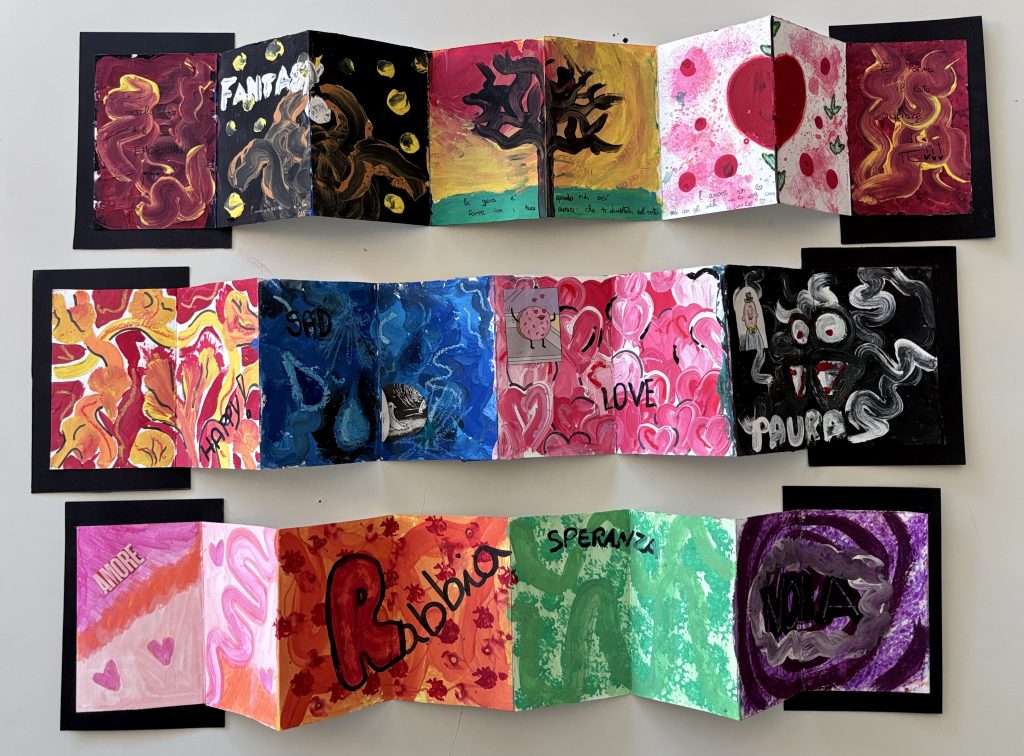
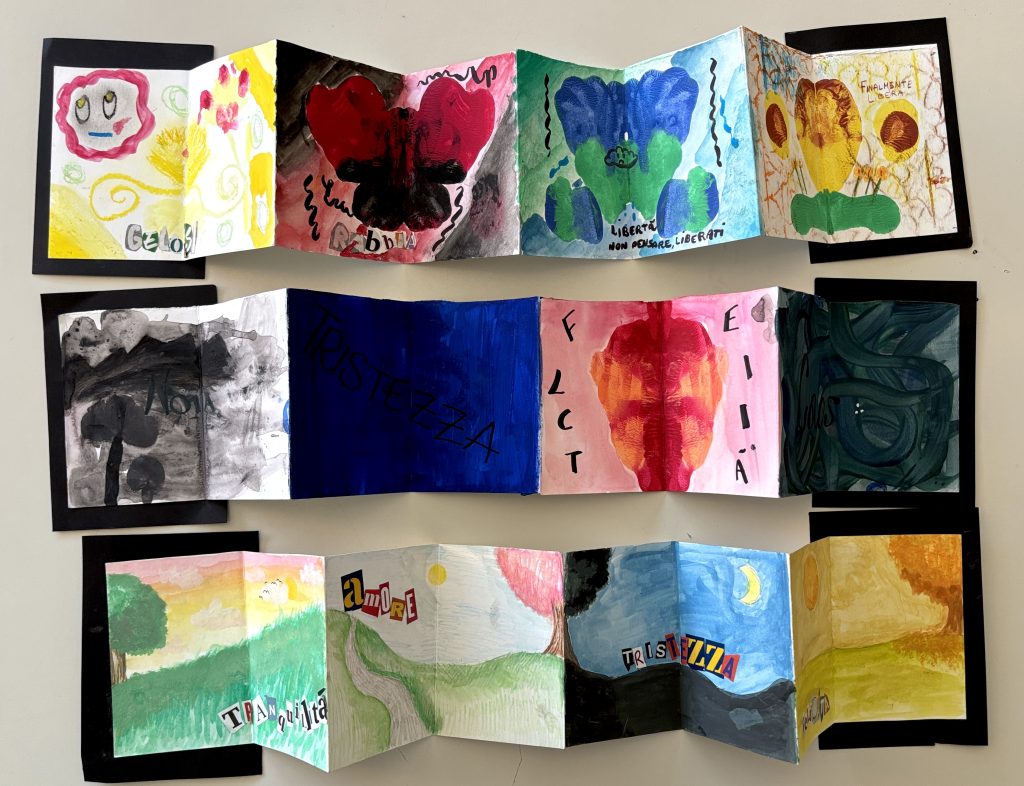
我们制作的折页册展现出令人惊叹的情绪多样性与个性诠释。凭借技巧与热忱,我们成功将几张普通纸张转化为一座真正的便携式美术馆:每本折页书皆借由色彩、线条、形状与文字的精妙运用,揭示我们的内在世界,圆满达成“为情绪发声”的目标。
为总结本项目,我们制作了短视频,展示折页书开合时的动态过程——正如一座真正便携的美术馆:
The Gallery of My Emotions
This art project invited students to explore their inner world and give a visual shape to their feelings. By creating a personal “Gallery of Emotions,” we combined self-reflection with artistic expression, using colors, shapes, and symbols to represent what we feel inside.
In this workshop, we explored our inner world by asking ourselves an ambitious question: is it possible to draw our emotions? By connecting our work to Goal 3 of the 2030 Agenda (Good Health and Well-being), we understood that well-being starts with the ability to recognize and express what we feel. Drawing inspiration from the lyrical abstraction of Kandinsky and the expressive power of artists like Pollock and Klee, we transformed the invisible into lines, shapes, and colors.
This activity allowed us to practice self-awareness, teaching us that art is a powerful tool for communicating who we truly are, moving far beyond our outward appearance.
Materials Needed:
- Drawing paper (24×33 cm)
- Black cardstock (A4 size)
- Watercolors, tempera or acrylic paint, oil pastels, and colored pencils
- Markers and pens
- Paper scraps for collage
- Scissors, glue, and adhesive tape
Step 1: Creating the Leporello
We began by preparing the structure for our project: we cut a sheet of drawing paper in half horizontally and joined the two strips with adhesive tape to create one very long strip. This base was then accordion-folded into eight equal parts to create a leporello (or concertina book). This specific format allows the content to be revealed or hidden—much like the way we sometimes handle our own feelings.
We began to let our emotions flow onto the booklet in a free and personal way, focusing on moods such as sadness, joy, anger, and fear. Without the fear of making mistakes, we used mixed media techniques, layering watercolors, oil pastels, and markers. Some of us dedicated each panel to a different emotion, while others created a continuous flow of color that travels across the entire rectangular space.
Step 3: Words, Symbols, and Details
To enrich our work, we added lettering, meaningful phrases, collage, and doodles. The goal was to create a true visual diary where words and symbols helped us give a name to what we were feeling. We aimed for maximum variety in our mark-making: using jagged lines for anger, broad splashes of color for joy, or empty spaces for sadness, emphasizing the unique originality of every interpretation.
Step 4: The Cover and Final Touches
Finally, we created the cover by cutting out two black cardstock rectangles (13 x 9.5 cm) to glue onto the ends of the booklet. On the front, we applied a decorated label with the title “The Gallery of…”, personalized with our own names.
The result is a small “treasure chest” that holds our inner world—a piece that can be displayed wide open or kept folded shut.
Conclusion: A Portable Art Gallery
The booklets we created showcase an incredible variety of emotions and personal interpretations. With skill and passion, we managed to transform simple sheets of paper into a true portable art gallery: each leporello reveals our inner world through the clever use of color, line, shape, and word, fully achieving the goal of giving a voice to our feelings.
To conclude the project, we created short videos to show the movement of the leporello as it opens and closes, just like a portable art gallery: