康定斯基非具象彩铅与水彩铅笔绘画
原文链接:https://createartwithme.com/wassily-kandinsky-non-objective-color-pencil-and-watercolor-pencil-painting/
日期: 2015-03-08
作者: 米歇尔·伊斯
分类: 四年级、五年级、六年级、美术史课程、美术课、彩铅课程、素描课、小学美术、高中美术、初中美术、非具象、绘画课、PDF教案与工作纸、水彩课、水彩铅笔课、水彩铅笔绘画、工作纸与讲义
标签: 抽象艺术、居家美术、彩铅课、彩铅与水彩铅笔对比、小学抽象艺术课、抽象艺术创始人、康定斯基、初中抽象艺术课、非具象、瓦西里·康定斯基、水彩铅笔绘画、水彩铅笔技法
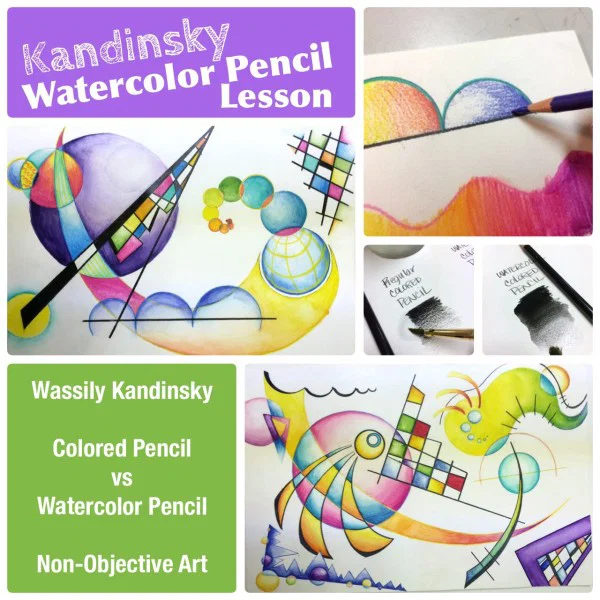
 康定斯基非具象彩铅与水彩铅笔绘画
适用年龄: 小学高年级至初中美术(四至八年级)
教学目标(IO): 学生将理解:艺术家运用不同类型的线条来构成形状,并借此表达态度与观念;艺术家运用多种几何形与自由形,以传达观念,或表现自然物与人造物。学生将了解艺术家瓦西里·康定斯基;还将学习彩铅与水彩铅笔的特性差异(参见彩铅与水彩铅笔对比),并掌握二者各自的适用情境——何时应选用彩铅,何时应选用水彩铅笔。


所需材料: 水彩铅笔技法工作纸、彩铅与水彩铅笔对比工作纸、水彩纸、Crayola 24色水彩彩铅、Crayola彩铅、各类形状模板——Fiskars 497570973号1号形状模板工具
教学流程:
线条与形状
- 复习五种基本线条: 水平线、垂直线、斜线、之字线与曲线
- 复习两类形状: 自由形与几何形
非具象与抽象
- 非具象艺术——不具再现性、不含任何可辨识人物或物体的艺术。其主体即为形式要素本身(如线条、形状、色彩等),亦称“纯粹抽象”。
- 抽象艺术—— 在抽象艺术中,艺术家选取可辨识的物体或人物形象,对其进行改造,使其不再呈现写实面貌。艺术家可能省略细节、改变视角、夸大尺寸、简化形态,或以其他方式扭曲图像。
瓦西里·康定斯基
- 艺术家研究:瓦西里·康定斯基 于1866年出生于俄罗斯莫斯科。父母均演奏乐器,他幼年即学习钢琴与大提琴。音乐是他生命中极为重要的一部分,后来深刻影响了他的诸多画作(例如《即兴》《印象》与《构图》系列)。30岁时,康定斯基开始研习美术,并探索个人绘画理念:“我用调色刀将色带与色斑涂抹于画布之上,竭尽全力令它们纵情歌唱……” 康定斯基被公认为抽象艺术的奠基人之一。其作品多为非具象绘画,聚焦于通过线条与形状构建构图(画面中几乎不出现或仅极少量出现可辨识物体)。
- 康定斯基作品幻灯片演示,来源:YouTube频道 ArtvideosYT
- 视频《色彩听上去是什么样?康定斯基与音乐》:https://www.youtube.com/watch?v=2xDnxkzQtdI
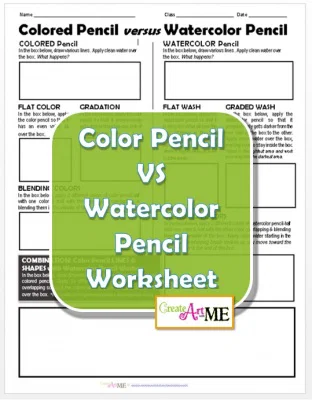
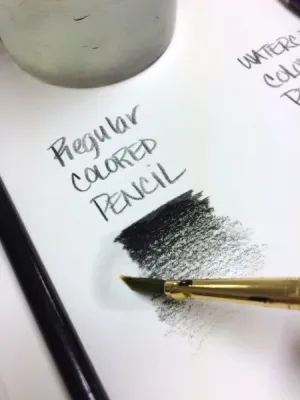
- 彩铅——蜡基材质,不溶于水(无法用水稀释),适合绘制清晰硬边。
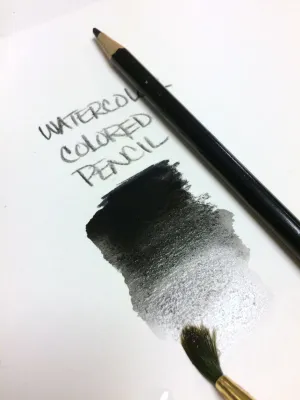
- 水彩铅笔——以水彩颜料制成,包裹于木质笔杆中,可溶于水;只需用画笔蘸水,逐次刷过单色区域,所涂颜料即可转化为水彩效果。
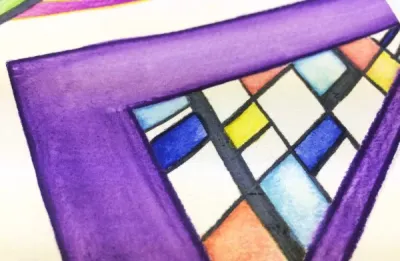
- 两种铅笔的协同使用: 本课将有意识地结合使用彩铅与水彩铅笔。对不希望“晕染”或呈现水彩质感的线条与形状(尤其是黑色线条),请使用彩铅;对希望呈现绘画感的着色区域,则使用水彩铅笔——此法尤其适用于明度渐变!
- 正确选择铅笔类型:
彩铅: 适用于实线、边框与图案(可用于蜡防染技法)
水彩铅笔: 适用于所有水彩渲染、色彩混融及明度渐变
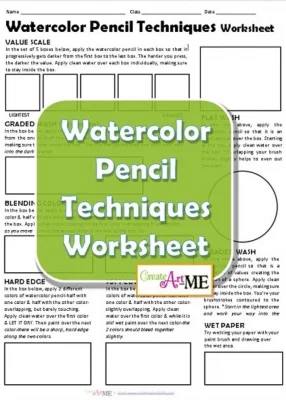
活动三:康定斯基非具象彩铅与水彩铅笔绘画
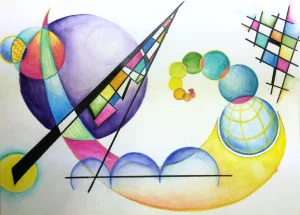
操作步骤:
- 在素描本上,至少设计两幅绘画草图。保持非具象风格。*注意:先确定视觉焦点位置(切勿置于画面正中央!),再运用强调手法(如大小对比、位置安排、色彩对比)引导观者视线。可借助圆形模板与直尺辅助构图。
- 在一张水彩纸上,用铅笔轻轻勾勒最终选定的构图。
- 首先完成全部彩铅部分。 这些区域需呈现清晰硬边效果。请用彩铅绘制黑色线条或形状、实线、形状边框,以及位于水彩铅笔覆盖层之下的图案。
- 接着,在所有需呈现水彩渲染、色彩混融及明度渐变的区域,使用水彩铅笔。
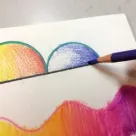
- 对于大面积区域(如背景),亦可直接使用常规水彩颜料盘作画。
若您引用本教案内容(文字或图片),敬请注明原始出处并链接回本博客Create Art with ME!
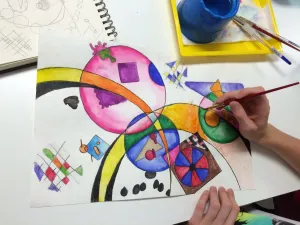
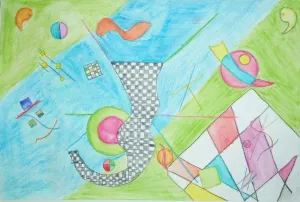
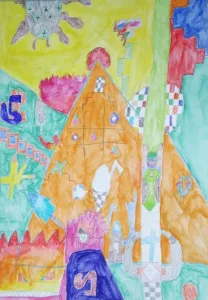
八年级学生作品:
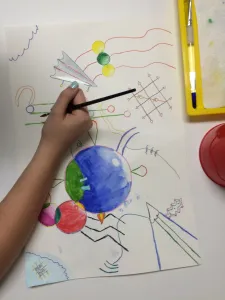
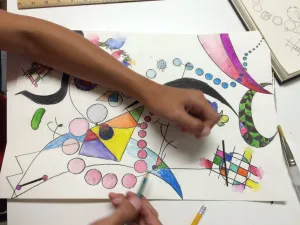
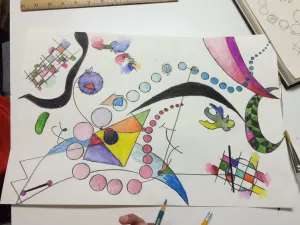
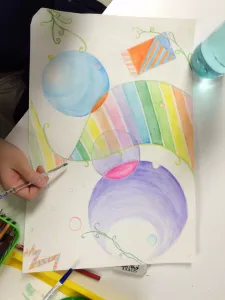
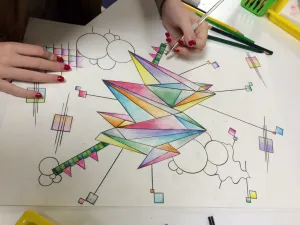
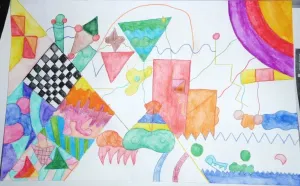
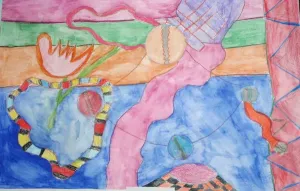
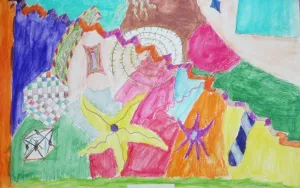
六年级学生作品:
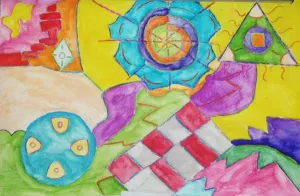
Wassily Kandinsky Non-Objective Color Pencil and Watercolor Pencil Painting
Original: https://createartwithme.com/wassily-kandinsky-non-objective-color-pencil-and-watercolor-pencil-painting/
Date: 2015-03-08
Author: Michelle East
Categories: 4th Grade, 5th Grade, 6th Grade, Art History Lessons, Art Lessons, Colored Pencil Lessons, Drawing Lessons, Elementary Art, HS Art, MS Art, non-objective, Painting Lessons, PDF Lessons & Worksheets, Watercolor Lessons, Watercolor Pencil Lessons, watercolor Pencil Painting, Worksheets & Handouts
Tags: abstract art, art at home, color pencil lesson, color pencil vs watercolor pencil, elementary abstract art lesson, founder of abstract, Kandinsky, middle school abstract art lesson, non-objective, wassily Kandinsky, watercolor Pencil Painting, watercolor pencil techniques
Kandinsky Non-objective Colored Pencil & Watercolor Pencil Painting
Ages: upper elementary art to MS Art 4th-8th Grade
IO: Students will understand that artists use different kinds of lines to create shapes and express attitudes and ideas. Artists use a variety of geometric and free-form shapes to convey and idea and to represent natural objects and artificial objects. Students will learn about the artist Wassily Kandisky. They will also learn properties of color pencils versus watercolor pencils and understand when to properly use color pencils versus watercolor pencils.
Supplies: Watercolor Pencil techniques Worksheet, Color Pencil versus Watercolor Pencil Worksheet, Watercolor Paper, Crayola 24ct Watercolor Colored Pencils, crayola color pencils, various shape templates-Fiskars 497570973-Pack No. 1 ShapeTemplate Tool
Delivery:
Line & Shape
- Review 5 types of lines: horizontal, vertical, diagonal, zig-zag, & curved
- Review types of shapes: free-form & geometric
Non-Objective & Abstract
- Non-Objective Art- Art that is not representational, containing NO recognizable figures or objects. The elements of art (lines, shape color, etc.) are the main subject. Also called “pure abstraction”.
- Abstract Art- In abstract art the artist takes recognizable objects or figures and changes them so they no longer looks realistic. The artist may leave out details, shift the point of view, exaggerate size, simplify or otherwise distort the image.
Wassily Kandinsky
- Artist Study: Wassily Kandinsky was born in Moscow, Russia in 1866. His parents played musical instruments and he learned to play the piano and cello at an early age. Music was an important part of his life and later influenced many of his paintings (such as Improvisations, Impressions, and Compositions). At the age of 30, Kandinsky began to study art and explore his own ideas of painting – “I applied streaks and blobs of colors onto the canvas with a palette knife and I made them sing with all the intensity I could…” Wassily Kandinsky is considered to be a founder of abstract art. His artwork is mostly non-objective paintings that focus on composition through lines and shapes (no or little recognizable objects)
- Kandinsky Artwork slideshow by ArtvideosYT on YouTube
- Video What Does Colour Sound Like? Kandinsky and Music: https://www.youtube.com/watch?v=2xDnxkzQtdI
-
- Colored Pencils-wax based, not water-soluble (cannot be diluted with water), good for hard edges.
- Watercolor Pencils– Watercolor pigments wrapped in wood casing, water-soluble- just wet a paint brush, brush over one color at at time,and the applied pigment turns into watercolor painting.
- Using the two pencils together: we will be intentionally using the colored pencils and watercolor pencils together. Use the colored pencils for any lines or shapes that you do not want to “blur” or have a painted look-specifically black lines. Use the watercolor pencil to colored areas that you want to look like a painting. This is a great pencil for gradations!
- Know When to Use the Right Pencil:Colored Pencil: Use for Solid Lines, Borders and Patterns (for Wax ResistWatercolor Pencil: Use for all Color Washes, Blending of colors, and Gradation of colors
Activity #3: Kandinsky Non-Objective Colored Pencil & Watercolor Pencil Painting
Instructions:
- In your sketchbook, draw at least 2 designs for your painting. Keep it non-objective. *Remember to place your focal point first (NOT in the middle of the paper!) & use emphasis techniques (size, placement, color contrast) to pull the viewer’s eye. You can use circle templates and rulers to create your composition.
- On a sheet of water color paper, lightly draw you composition in pencil.
- Apply all COLORED Pencil areas first. These are they areas that you want hard edge design. Use the color pencil for BLACK lines or shapes, Solid Lines, Borders around shapes, and Patterns under the watercolor pencil.
- Next, use the WATERCOLOR Pencil on all areas where there will be Color Washes, Blending of colors, and Gradation of colors.
- For large areas like the background, you can use a regular watercolor palette.
If you choose to use any of this lesson (written or photos), please link back to this blog Create Art with ME!
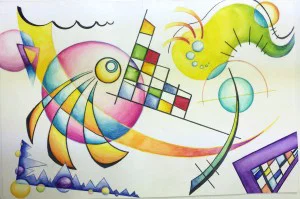
8th Grade Student Work:
6th Grade Student Work:
 康定斯基非具象彩铅与水彩铅笔绘画


