如表现主义木刻一般
今年,由于美术教室关闭,我们仍尝试在普通教室中利用手边工具开展教学。以往我们会进行版画印刷,而这次则改用黑白绘画来模拟木刻的视觉特征。本课灵感源自德国表现主义木刻——这类作品使用木质印版制作,线条棱角分明、刚硬有力,人物形象原始粗犷,整体仅以极有限的几种颜色呈现最强烈的明暗对比。
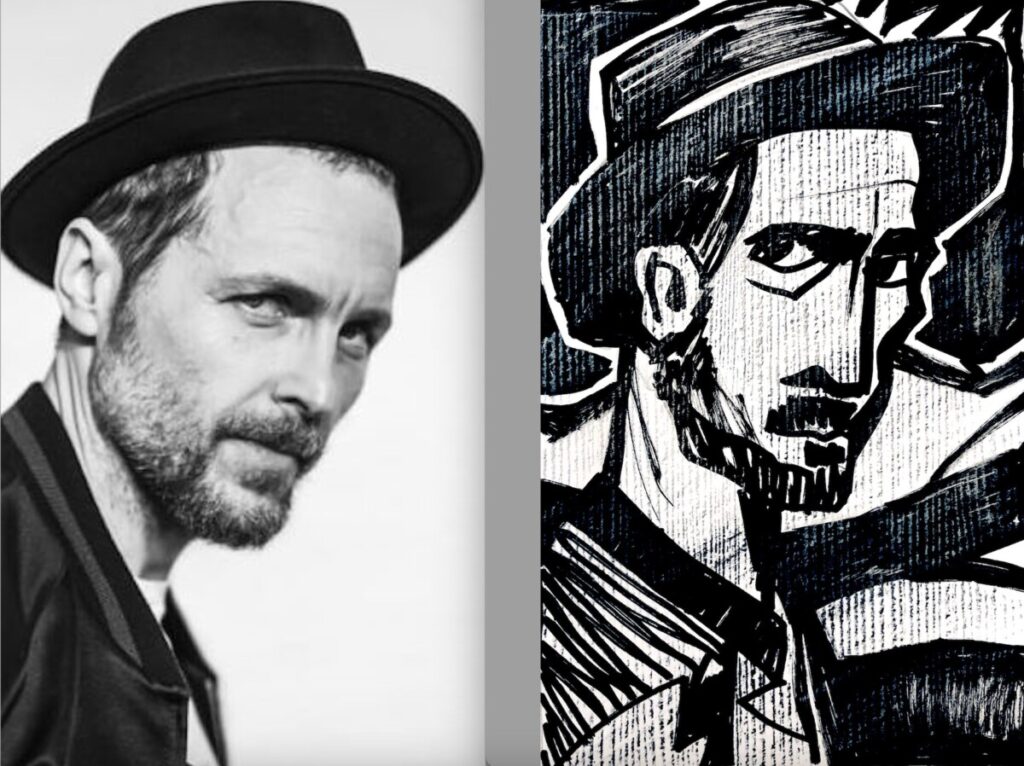
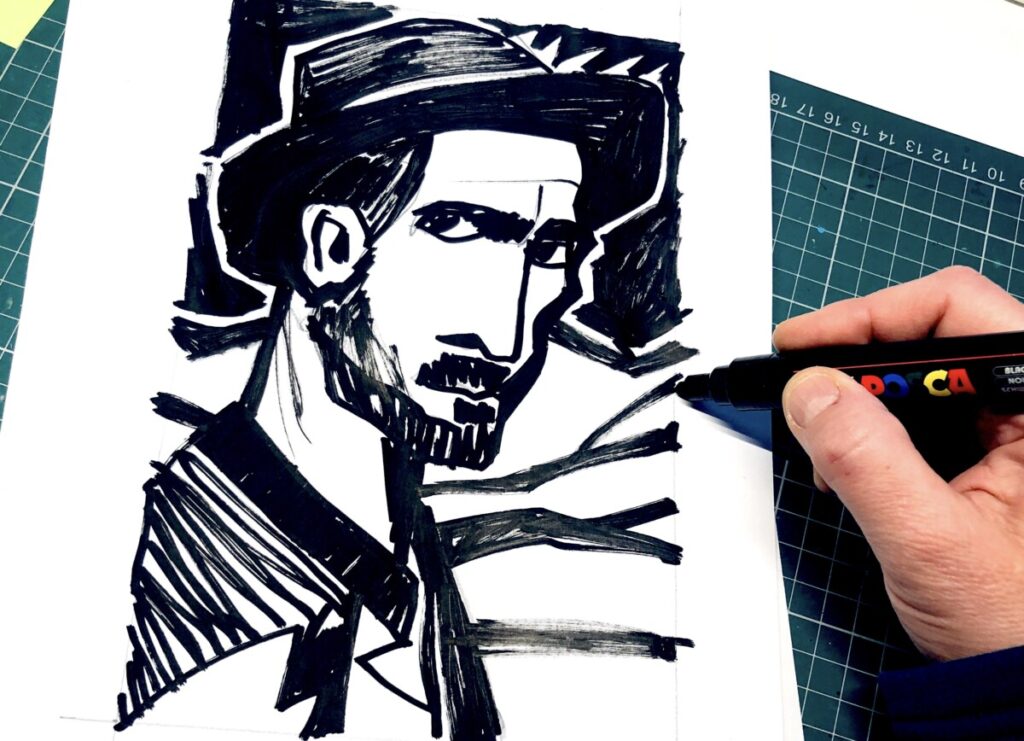
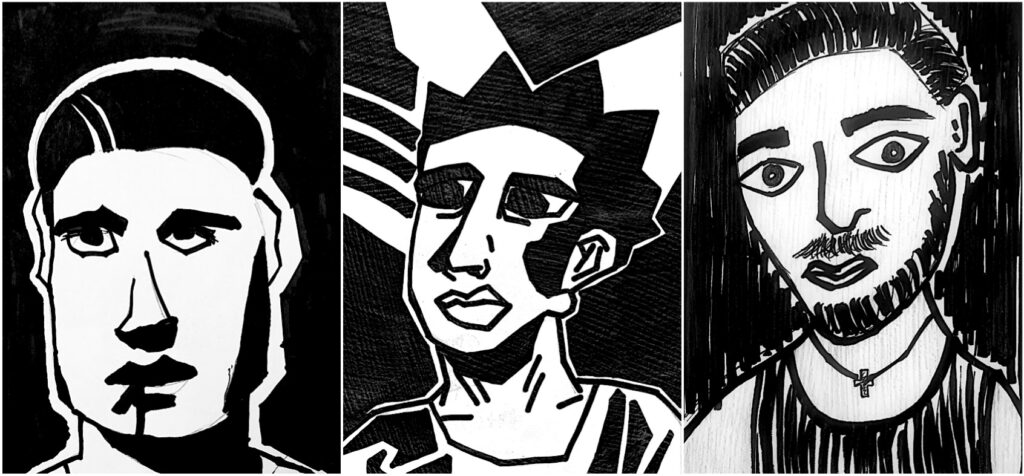
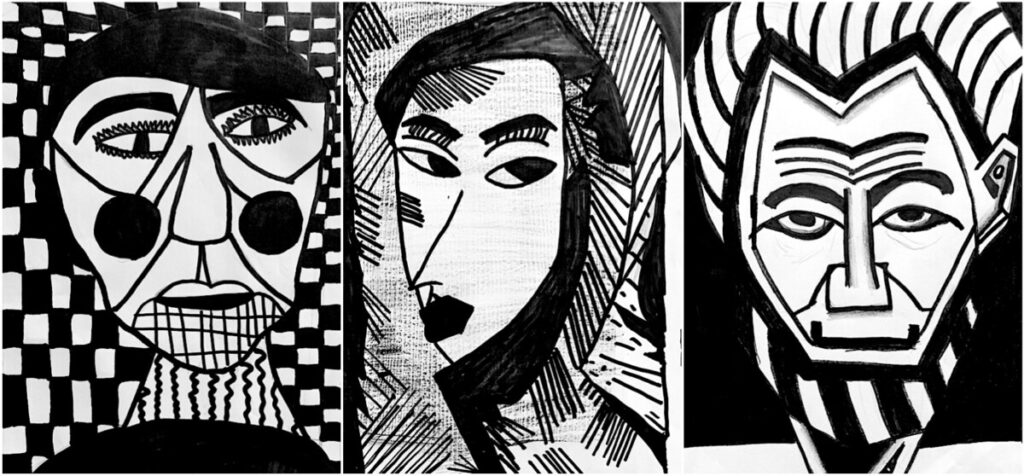
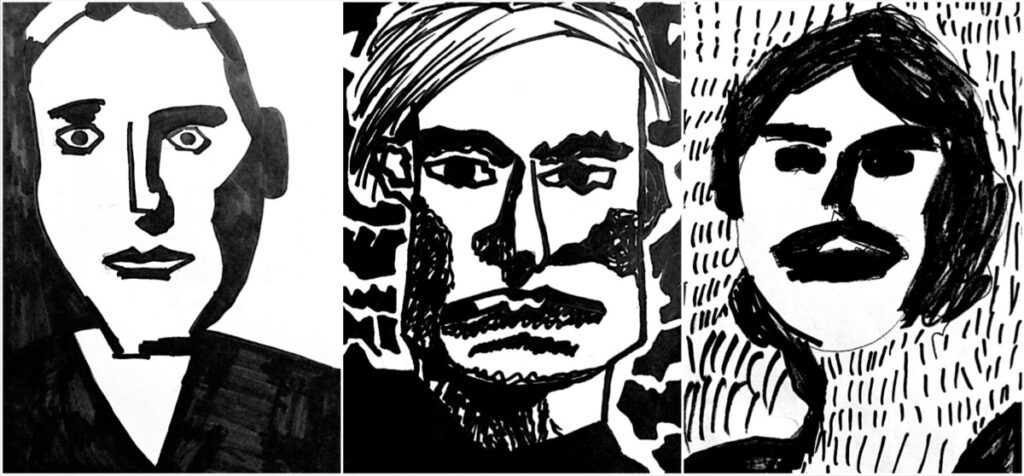
每位学生选取一张黑白肖像照片作为参考,在A4纸上描摹出面部的主要轮廓线、阴影与高光。此过程并非简单复制图像,而是以表现主义方式进行再诠释:即简化并强化线条,使其更粗粝、更具棱角;同时将阴影与高光压缩为纯粹的黑色与白色色块。
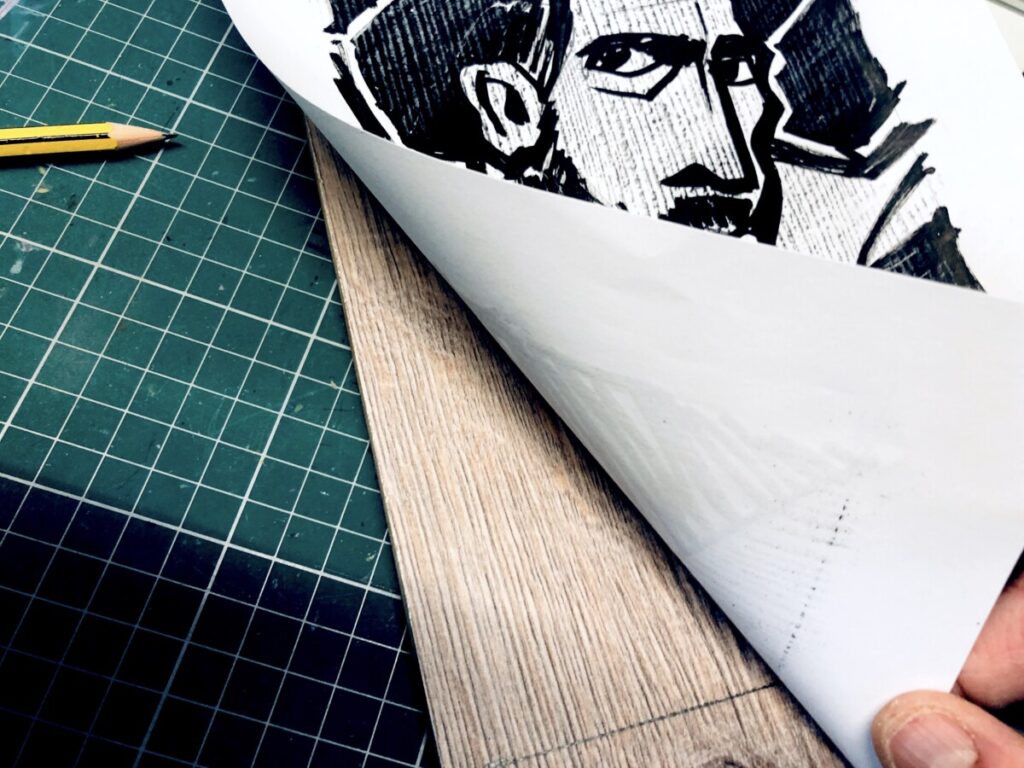
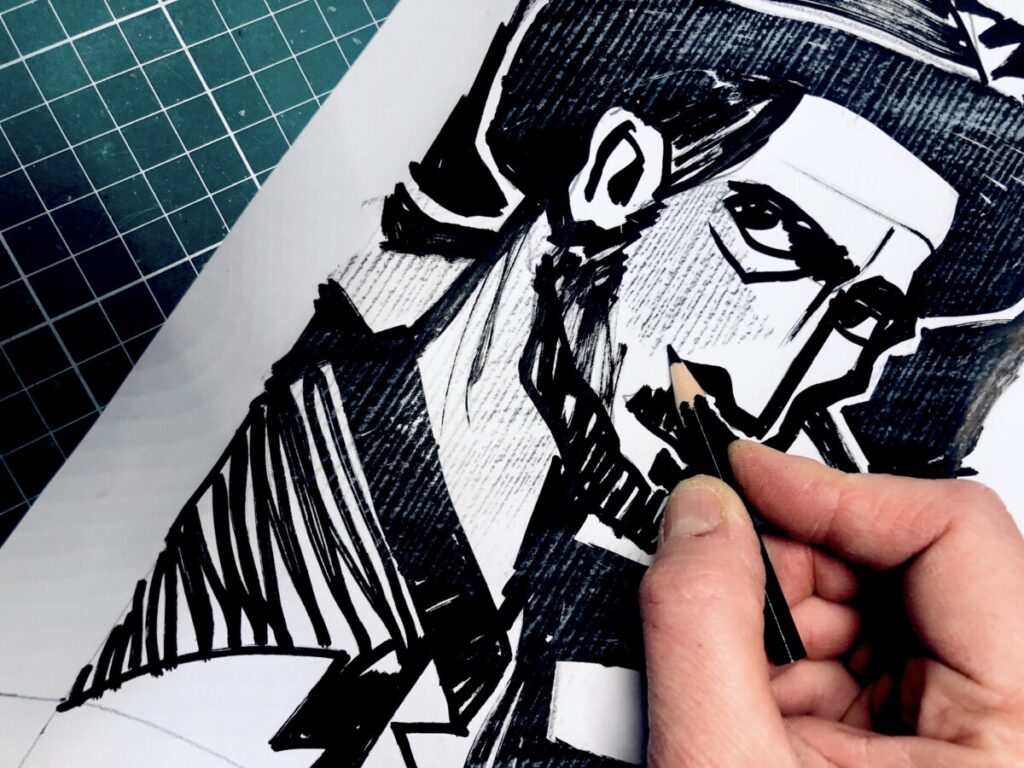
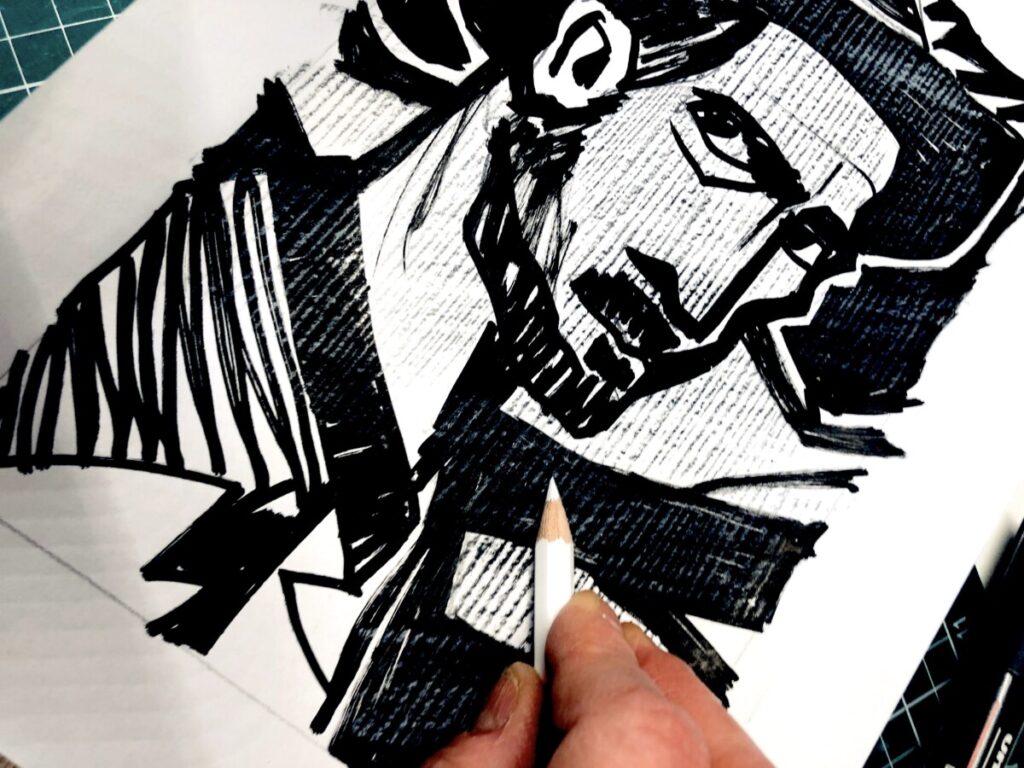
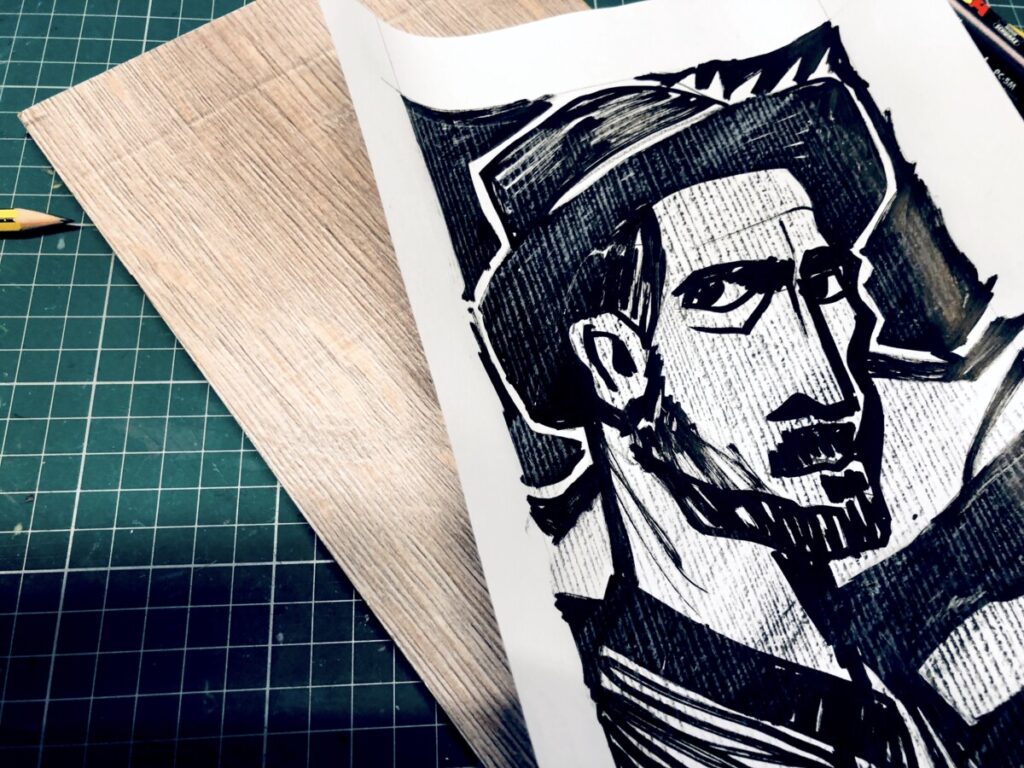
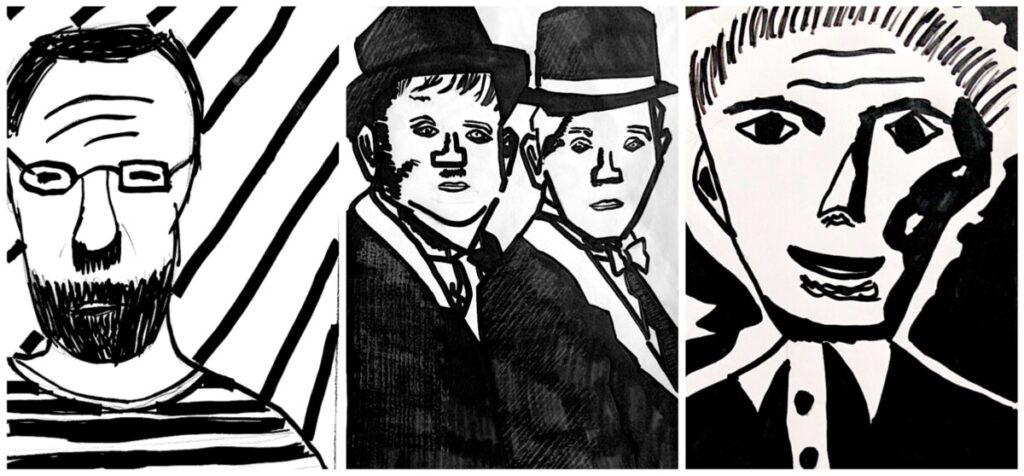
最后一步是模仿木纹肌理,采用“拓印法(FROTTAGE)”:将纸张覆于粗糙表面(此处为带有垂直木纹的木板)之上,用蜡笔在纸面摩擦显形。具体操作为——在画面的白色区域用黑色铅笔拓印,在黑色区域则用白色铅笔拓印。
在画作下方放置一块带有凸起纹理的平板,再用黑白铅笔进行拓印。
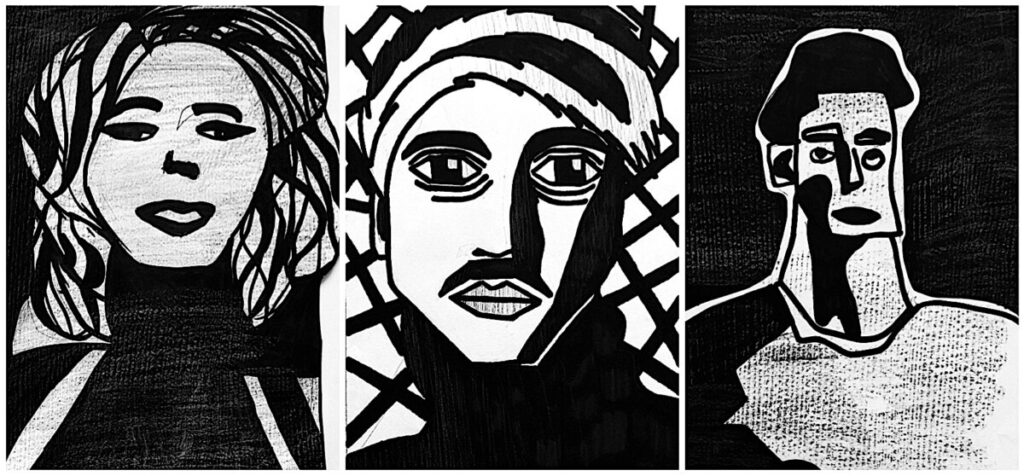
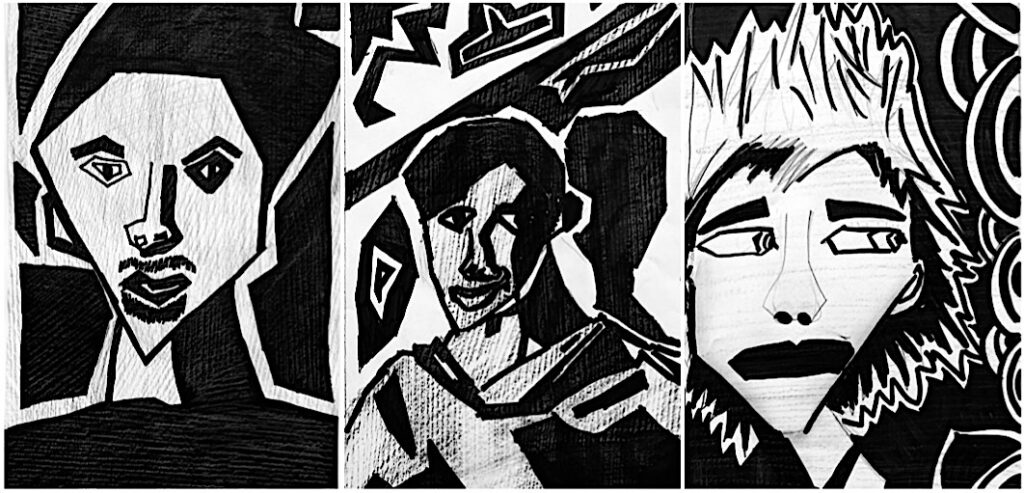
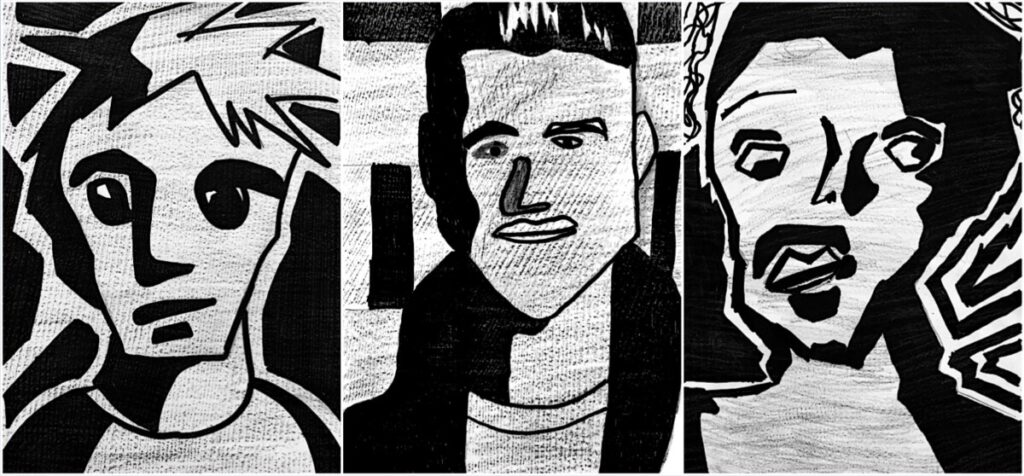
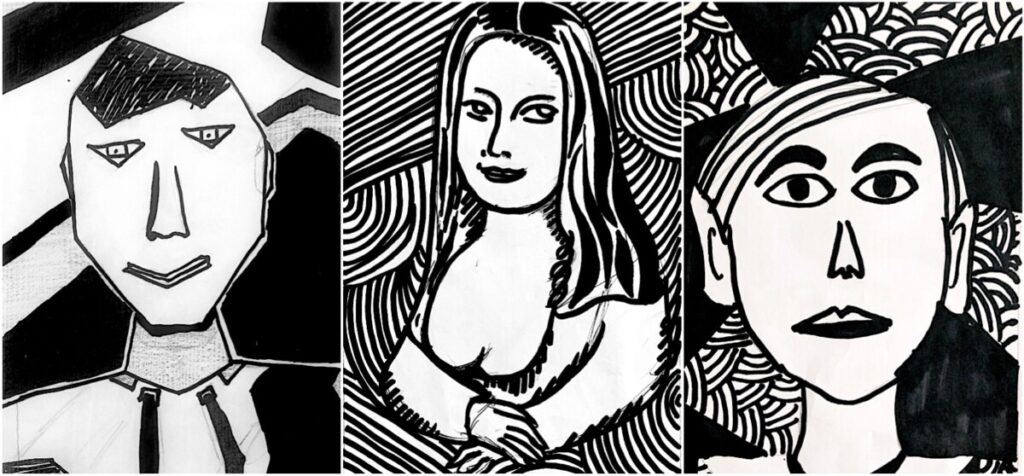
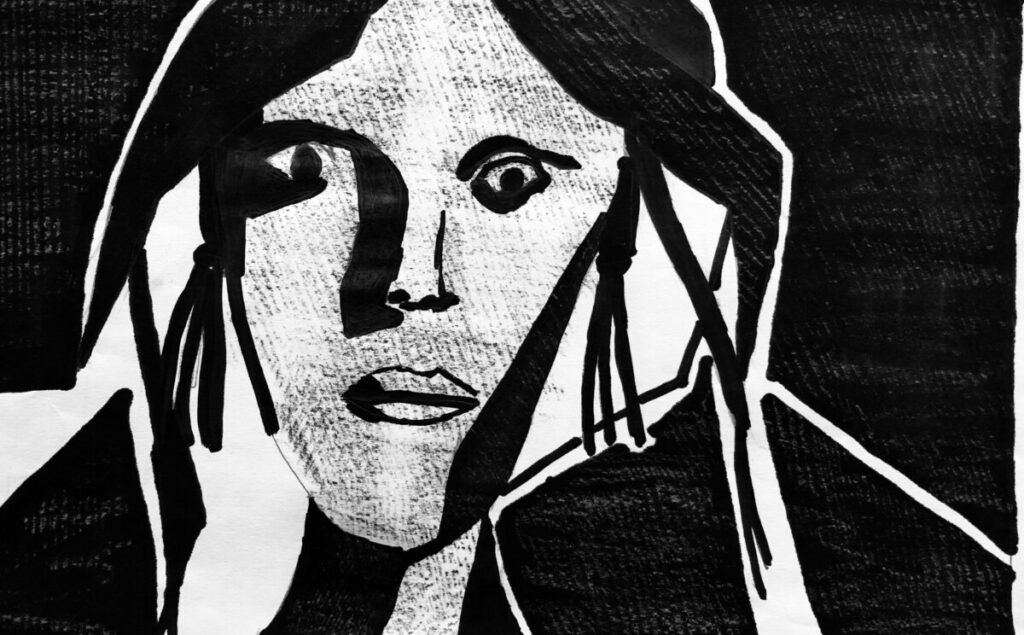
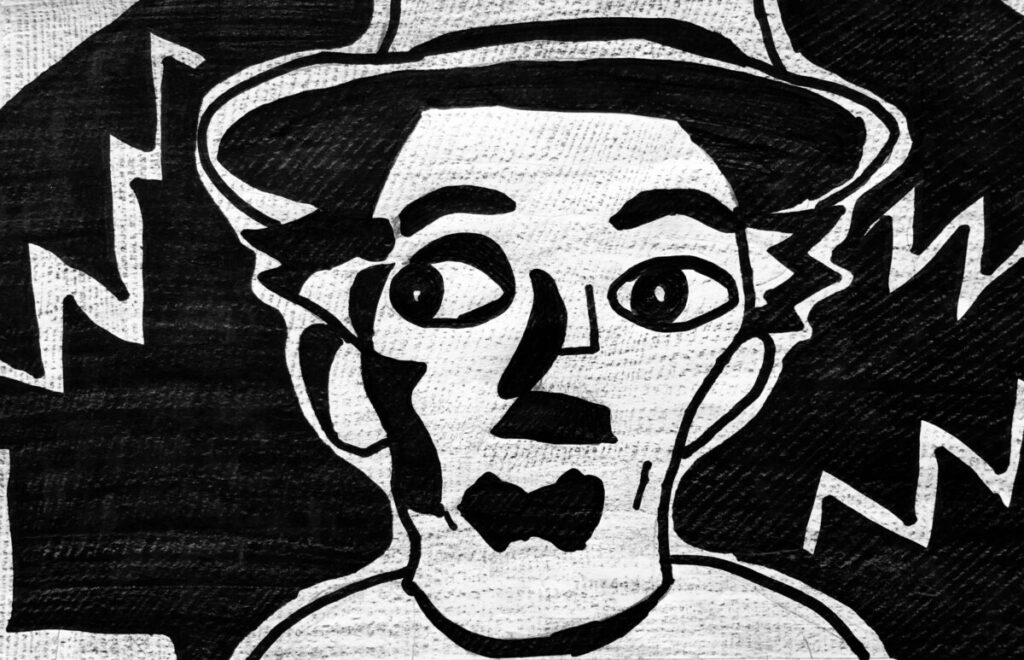
以下是学生们的作品:
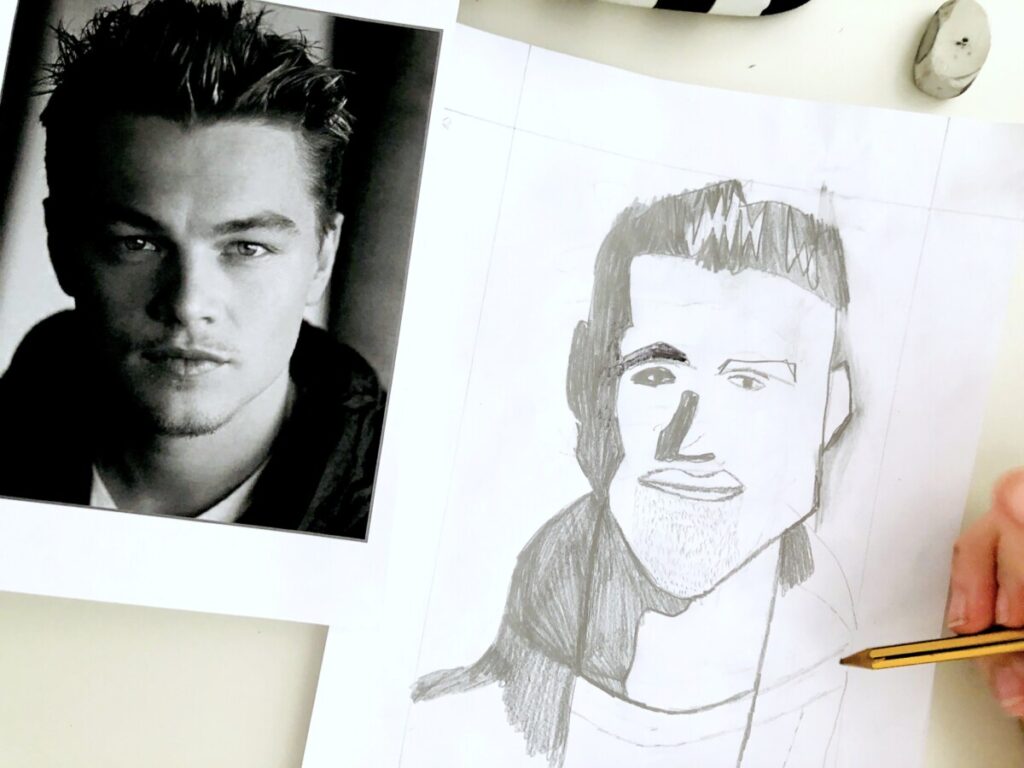
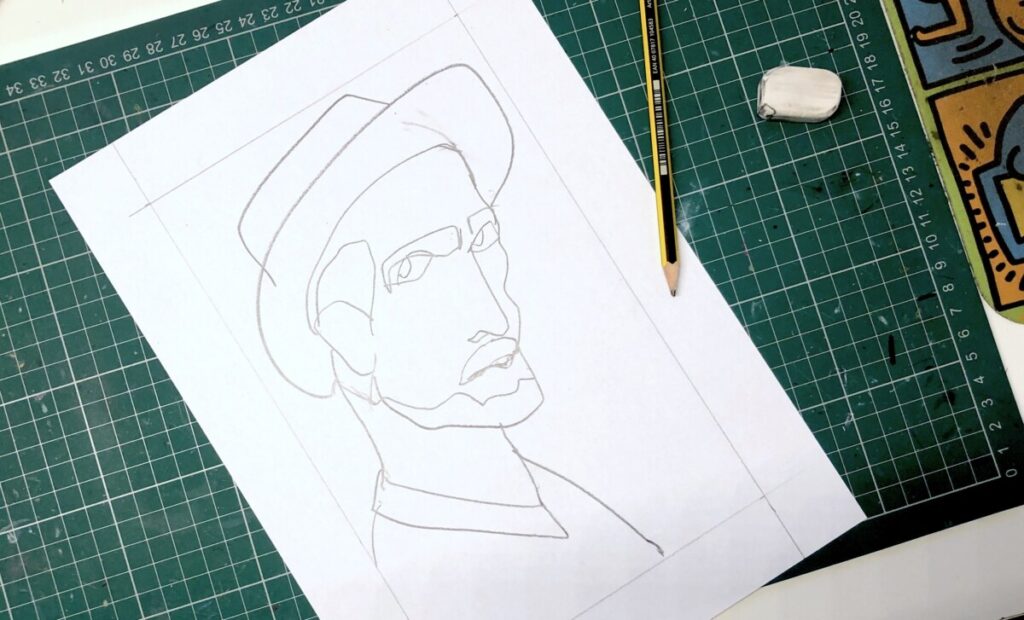
铅笔风格化的肖像
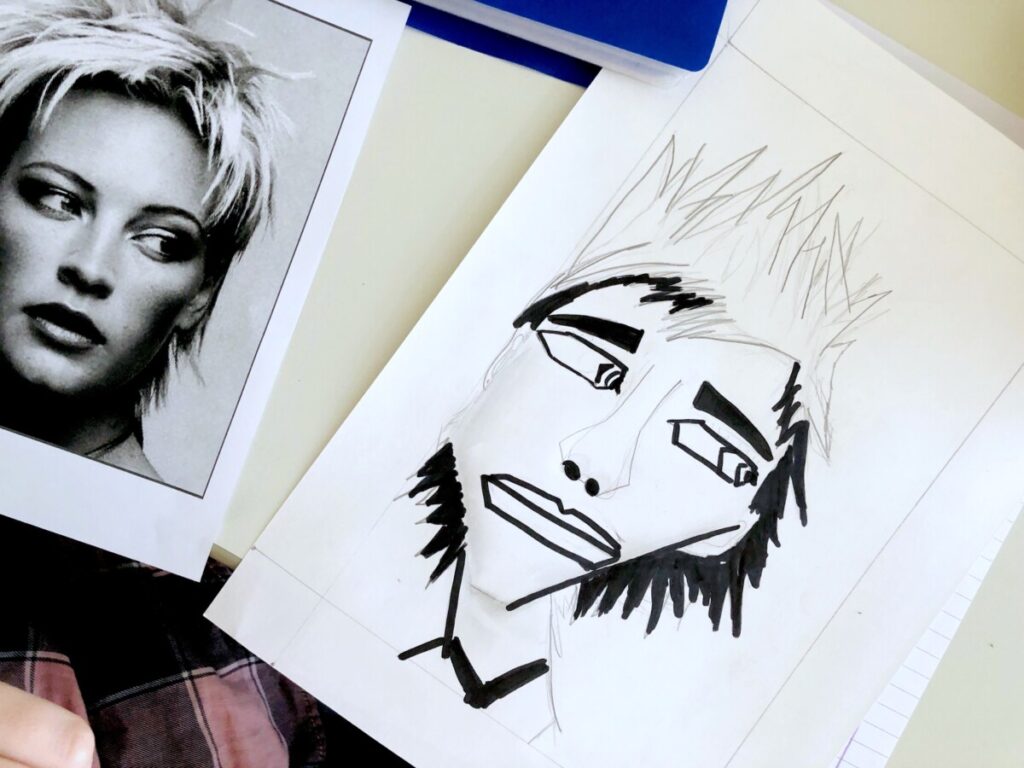
主轮廓线及黑白色块的界定
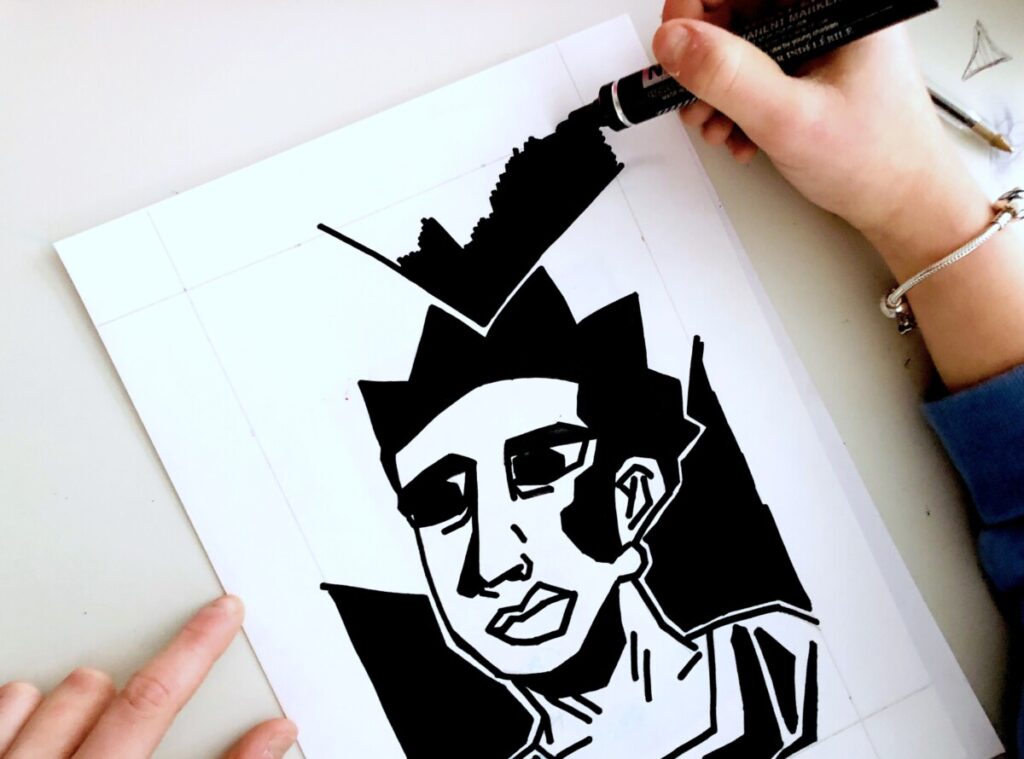
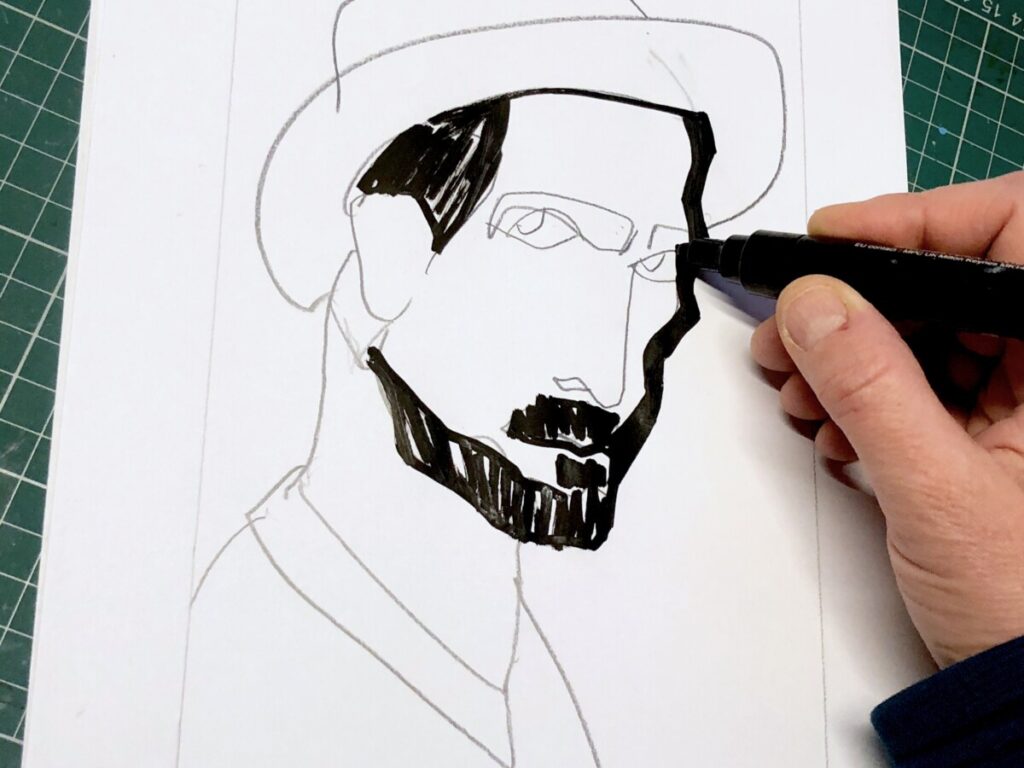
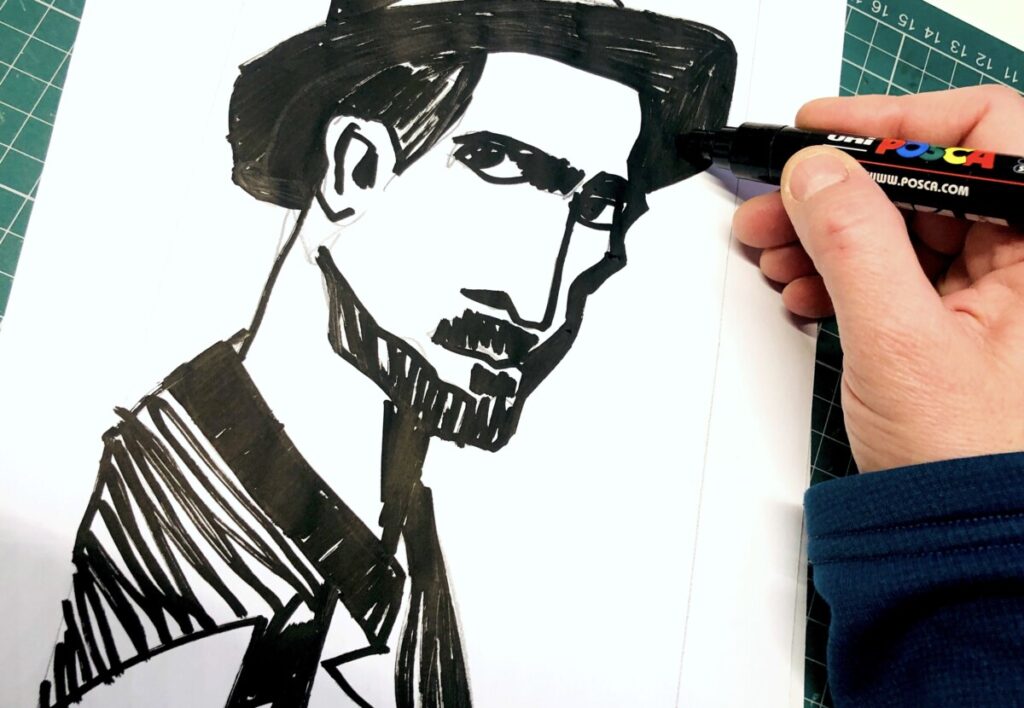
用黑色记号笔完成的绘画
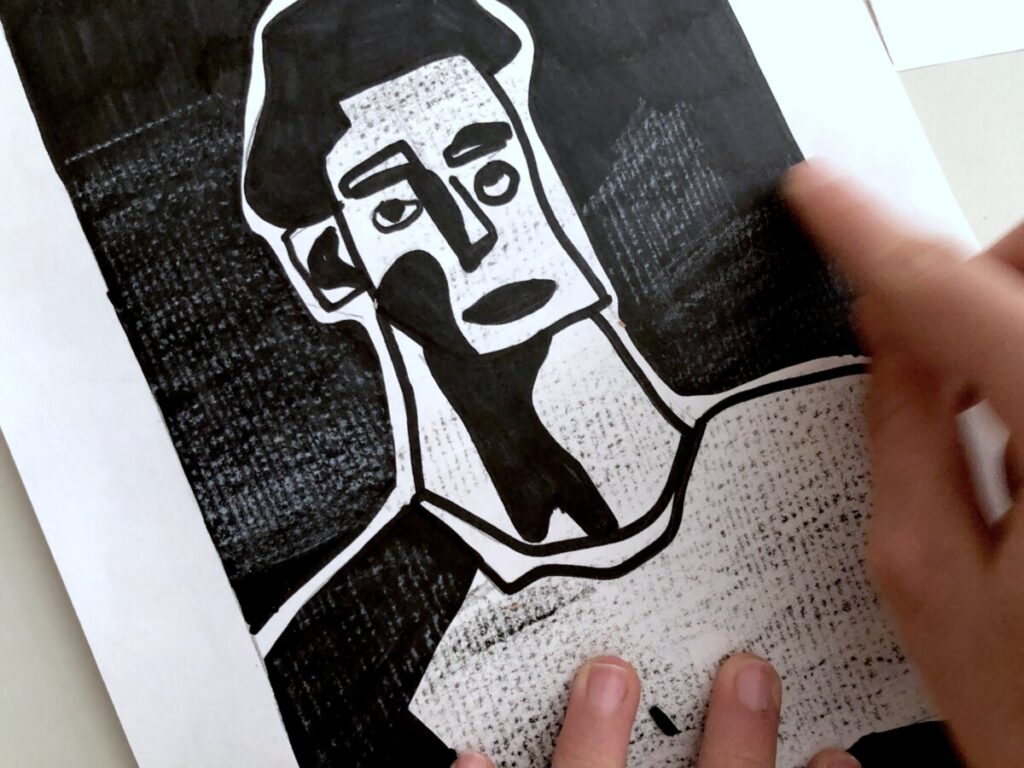
在木质表面上用白色或黑色铅笔进行的拓印
Like an Expressionist woodcut
In this particular year, when the art room is closed, we still tried to work in the classroom with the tools available and instead of printing, which we used to do, we recreated the characteristics of a woodcut in a black and white drawing. For this activity, we were inspired by the Woodcuts of German Expressionism, prints with wooden printing plates with angular and hard signs, figures with primitive and rough features, all limited to the maximum contrast between very few colors.
Each student was inspired by an image of a black and white portrait and copied the main lines of the face, the shadows, and the highlights of the photo on A4 paper. The image is not simply copied but is interpreted in an Expressionist sense, that is, the lines are simplified and made coarse and angular, and the shadows and highlights are reduced to black and white areas.
A final step to imitate the wood grain is done with the FROTTAGE, a technique of rubbing pastel on the paper placed on a rough surface, in this case, a wooden board with vertical grain. The frottage is done with a BLACK PENCIL on the white areas and with a WHITE PENCIL on the black areas.
under the drawing, you place a tablet with embossed veins and proceed with the FROTTAGE with black and white pencils.
Here below the students’ works:
pencil stylization of a portrait
definition of main lines and black and white areas
drawing with black marker
frottage with white or black pencil on a wooden surface


