Pagoda Architecture Design and Painting Lesson
Original: https://createartwithme.com/pagoda-architecture-design-painting/
Date: 2014-03-24 Author: Michelle East Categories: 4th Grade, 5th Grade, 6th Grade, Architecture Lessons, Art Lessons, Cultural Art Lessons, Drawing Lessons, Painting Lessons, Tempera Painting, Watercolor Lessons Tags: 4th grade art, 5th Grade Art, 6th grade Art, architecture, asian architecture, characteristics of asian architecture, chinese architecture, curved roof, design architecture, elementary architecture lesson, elementary art, pagoda, pagoda art, pagoda art lesson, pagoda lesson, Pagoda Painting, painting lesson, shapes in architecture, shapes in buildings, watercolor painting lesson, why is a chinese building curved roof
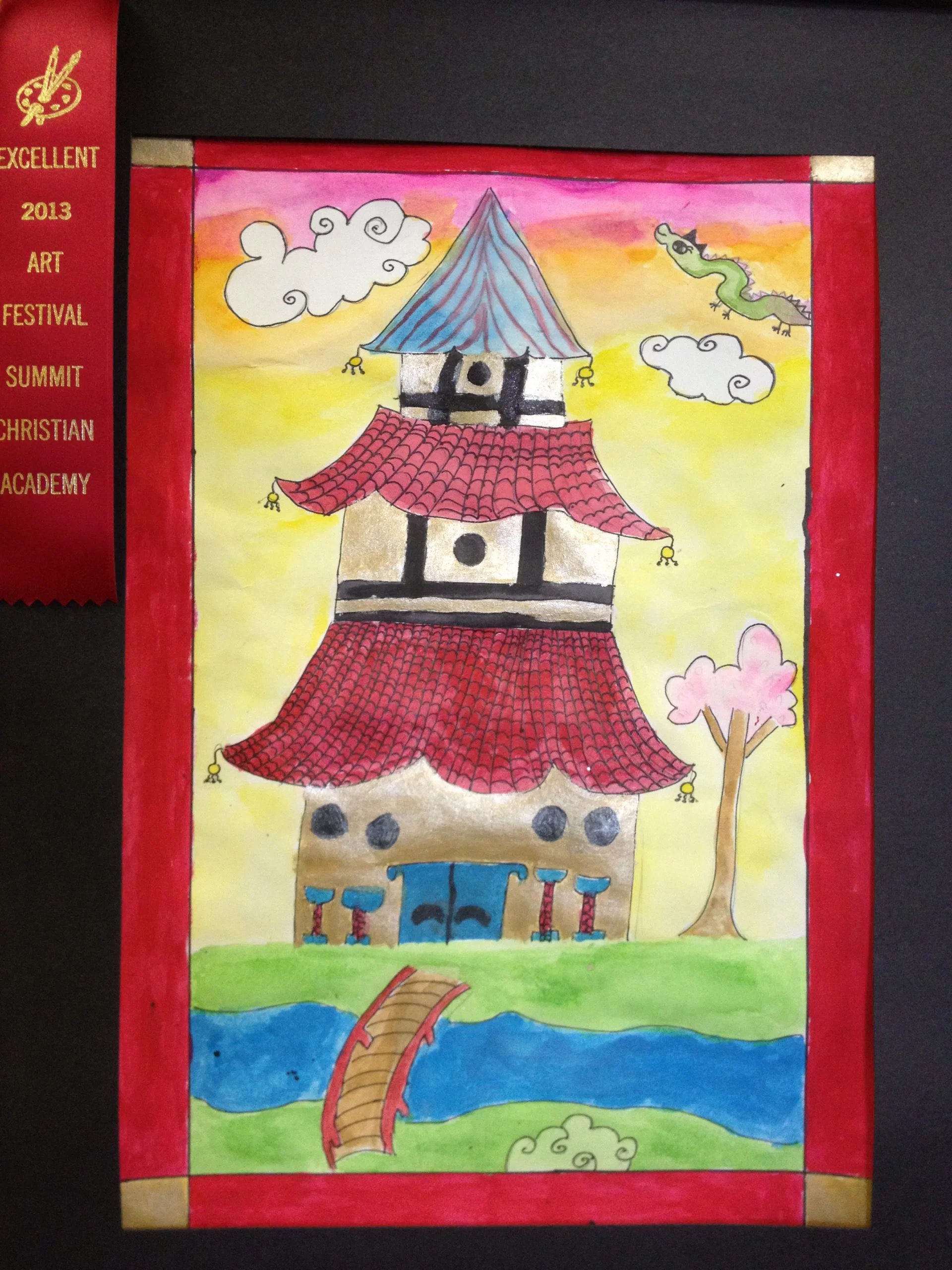
Pagoda Lesson Pagoda Architecture Design and Painting Lesson
Objective:Students will learn that architects use geometric & free-form shapes & forms to design buildings. Students will compare & contrast different cultures architecture. They will study & create a piece of art based on Asian architecture specifically the pagoda.
Delivery:
Overview of Architecture:
- What is architecture? The designing & planning of buildings
- What is an architect? It is someone who plans & designs buildings
- Imhotep was the first know architect – he designed the Pharaoh Zoser’s Step Pyramid.
- Review types of shapes: free-form & geometric
- Architects use geometric & free-form shapes to design their buildings.
Asian Architecture has several important characteristics:
Show Examples of each from Asian architecture
- Emphasis on Horizontal line
- Emphasis on Symmetry –Even Balance
- Buildings are usually made out of wood
- The roof of a typical Chinese building is curved (why is it curved?)
- Chinese dragon, an emblem reserved for the imperial regime, were heavily used on imperial architecture – on the roofs, on the beams and pillars, and on the doors.
- The ancient Chinese favored the color red.
- Pagoda History
- Characteristics of Pagodas:
- The pagodas were tall in addition to being symmetric in design.
- They were built using different materials- stone, bricks, wood, iron, glazed tiles and occasionally, even gold!
- They were multi-storied with the number of floors always being an odd number. The minimum number of floors was 3 and most of them went up to 9, or even more.
- At the apex, pagodas were topped with a steeple – a symbol of the power of heaven.
Activity: Venn Diagram Compare and Contrast Pagodas and European Cathedrals
How do these characteristics compare with architecture from different cultures (Western, European, Etc)? View examples of each culture and discuss the similarities and differences. I had groups of 2-3 create a Venn diagram to observe similarities and differences between Pagoda & Cathedrals. Display the two side by side. Discuss results as a class. Finally, as a result of their findings, discuss which style of architecture they like best.

Prompts:
- What was the buildings’ purpose?
- What materials are they constructed from?
- How do the structures compare to each other (stories, roofs, etc)
- What types of decorations were used and how do they reflect the culture?
- What features are opposite in style to each other and what are the same?
Activity: Pagoda Architecture Painting
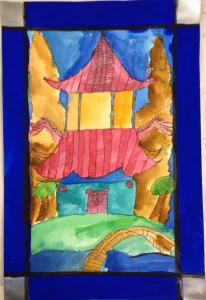
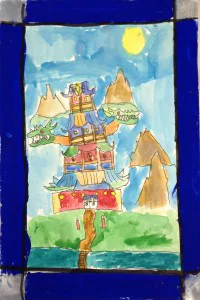
Project Objective: Create a watercolor and tempera painting based on characteristics of Asian/Chinese Architecture.
Project Instructions:
- On a 12x 18 sheet of white paper, using a pencil & ruler draw a 1″ border around the whole page
- Draw a central axis line down the center of the paper for a symmetry guideline.
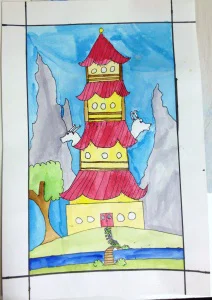
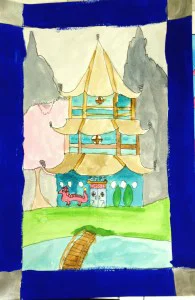
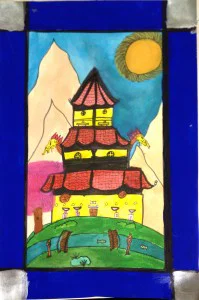
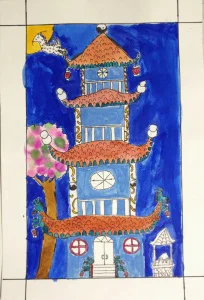
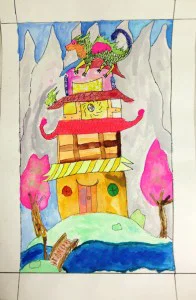
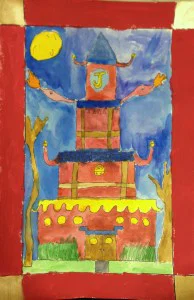
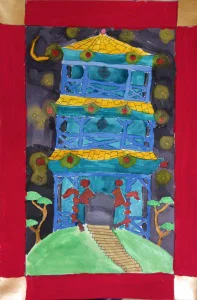
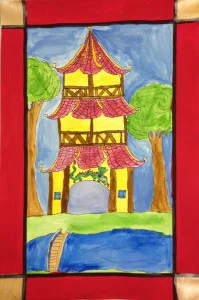
- Draw a pagoda, start with the base, then add the curved roof. Add stories repeating the base & roof form.
- Include a background, maybe a koi pond & trees, or mountains in the distant background.
- Outline it in sharpie.
- Paint with watercolor paints or tempera cakes (see below).
- Finally, for the border, paint the sides red or blue and the corners gold or silver.


In Progress Pictures…
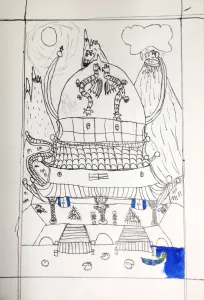
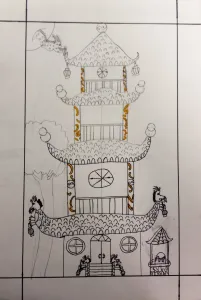
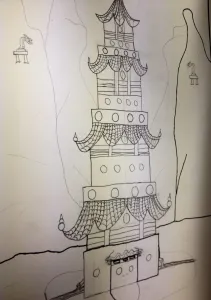
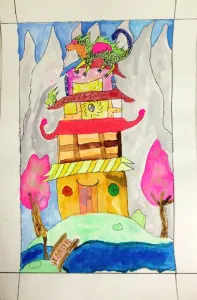
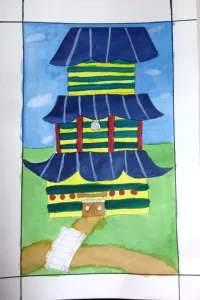
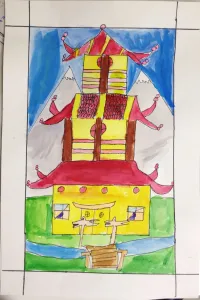
Finished and Almost finished Pieces…
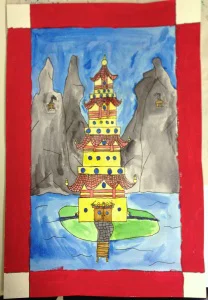
If you use any part of this lesson written or photo, please link back to my blog Create Art with ME
Another Great Pagoda Lessons on the web:
http://marysartspot.blogspot.com/2012/01/fifth-grade-pagodas.html