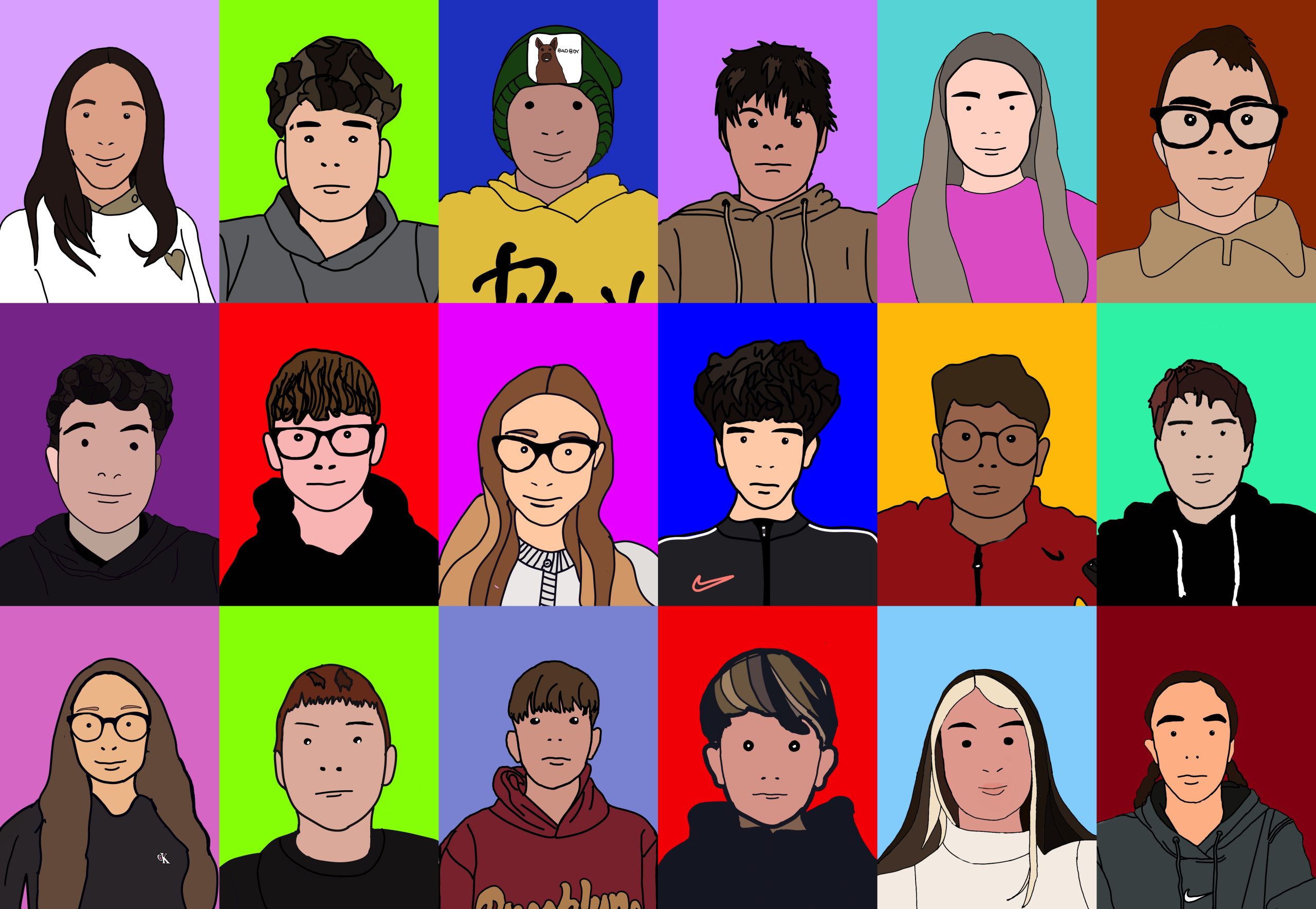
受朱利安·奥佩启发的数字自画像
朱利安·奥佩 是一位当代英国艺术家,我一向欣赏他以极简细节表现人像与人体的独特方式:用粗重的黑色线条勾勒形体轮廓,其线性风格令人联想到日本艺术、漫画世界以及路标所具有的极简象征性。诚邀各位访问他的网站,浏览其最新作品:
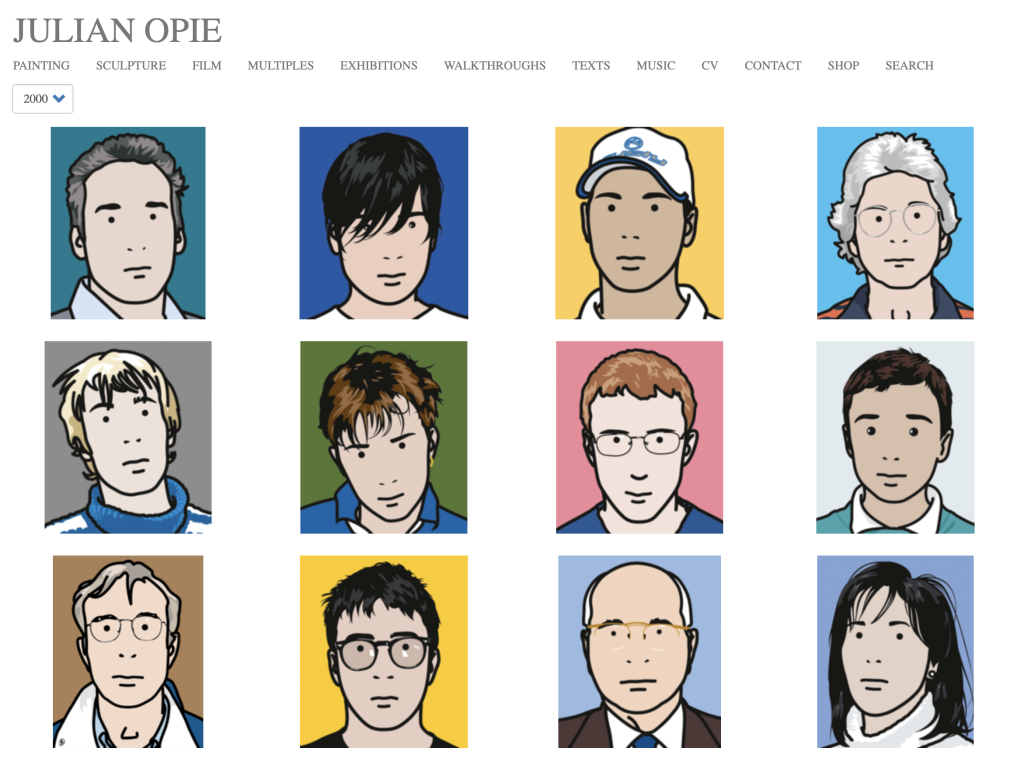
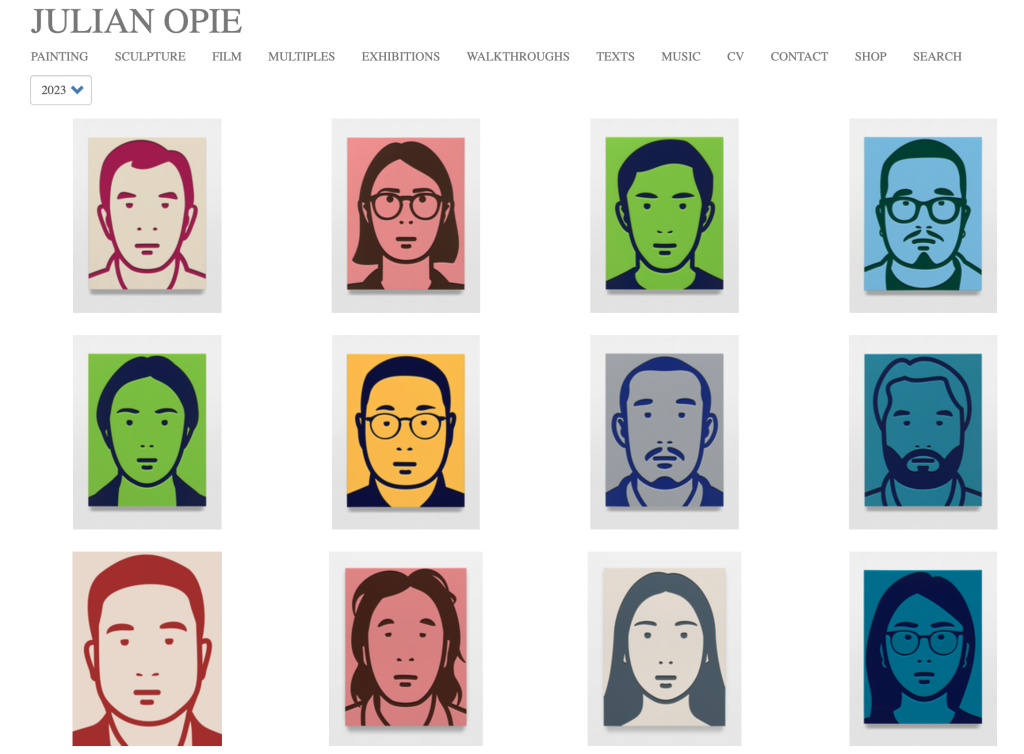
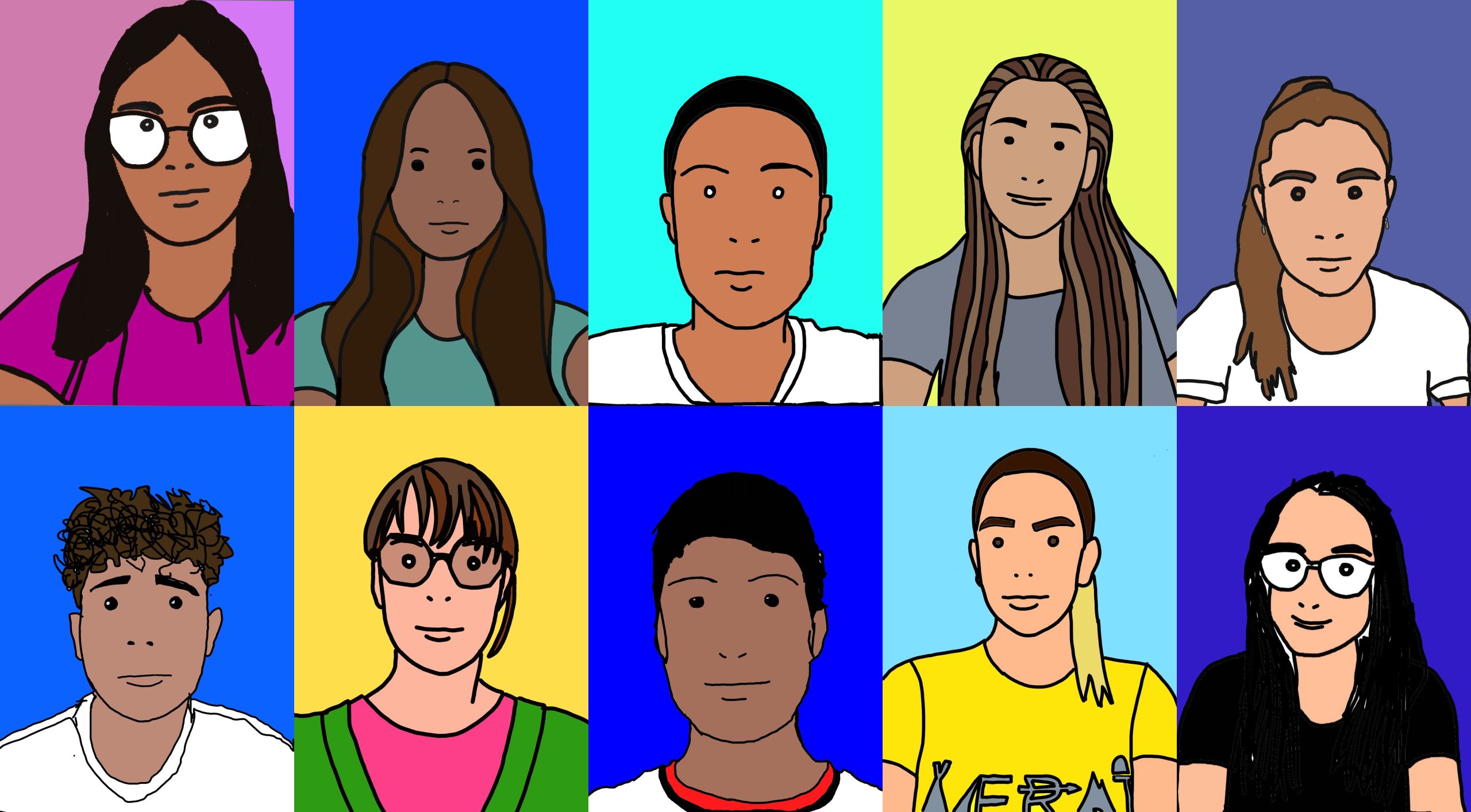
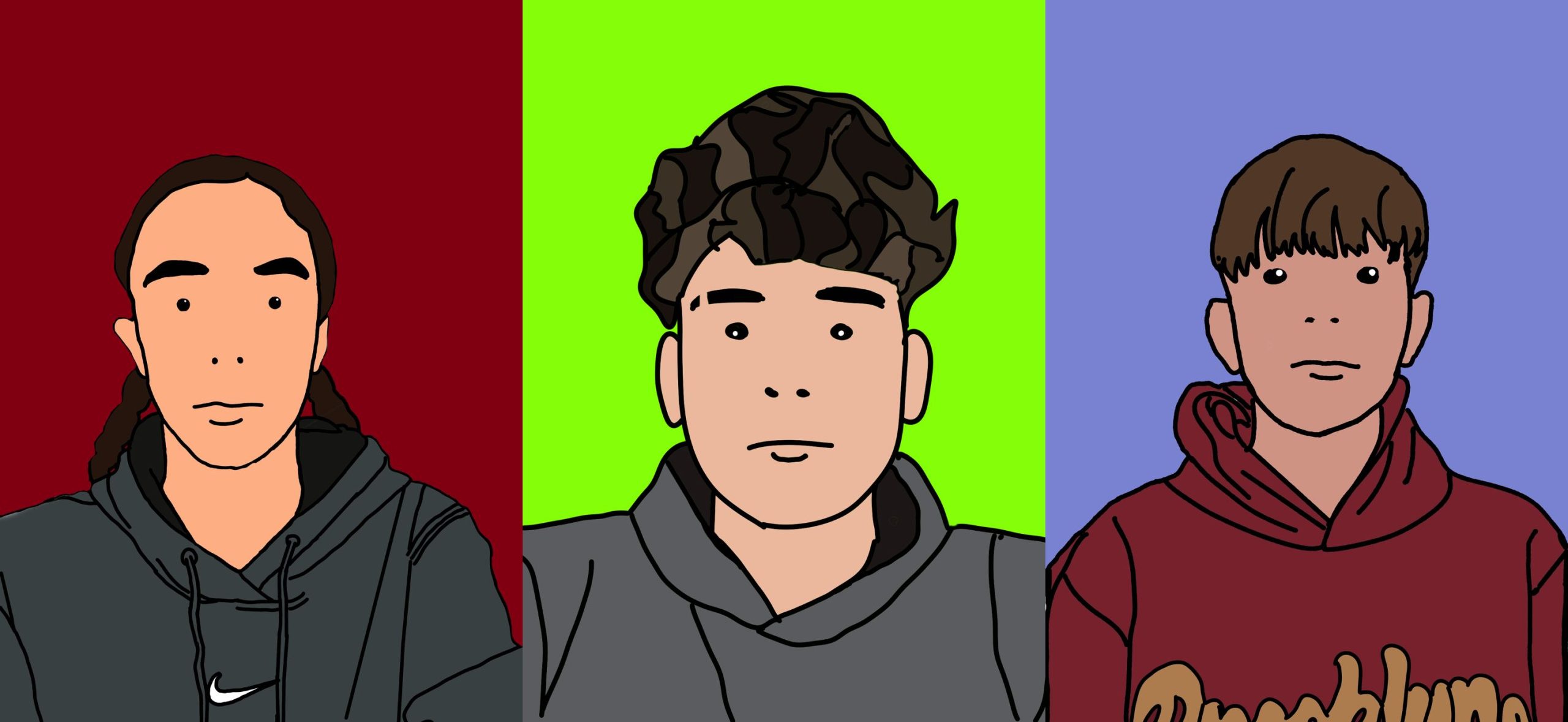
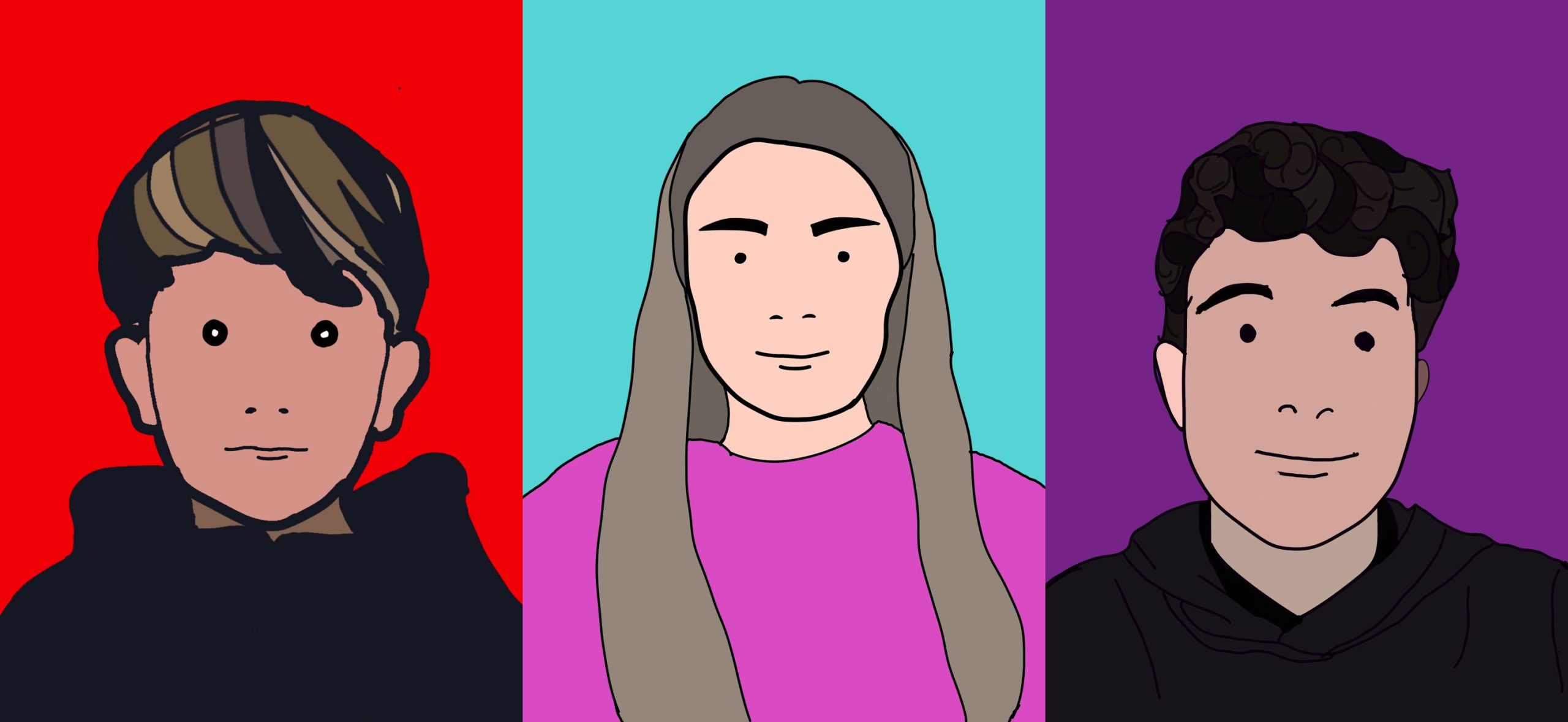
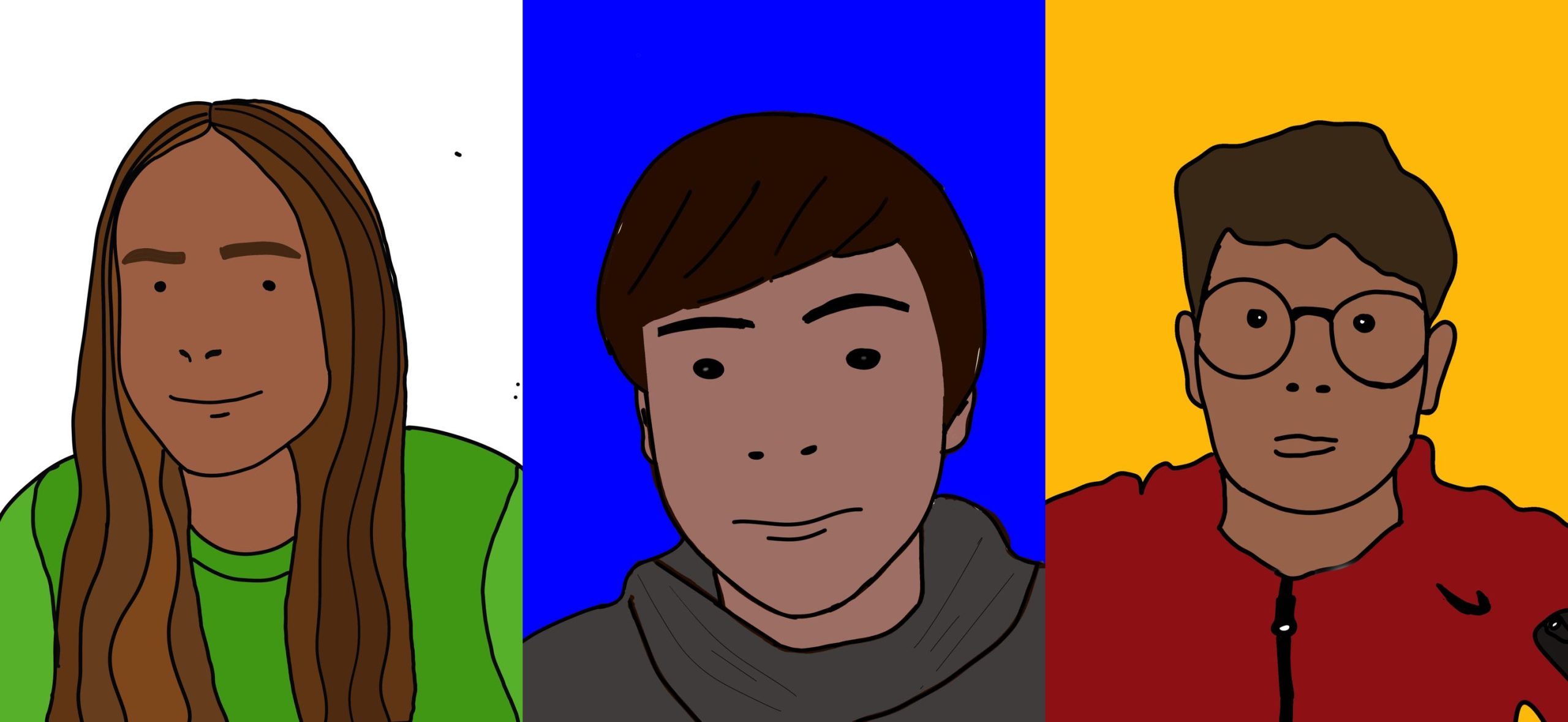
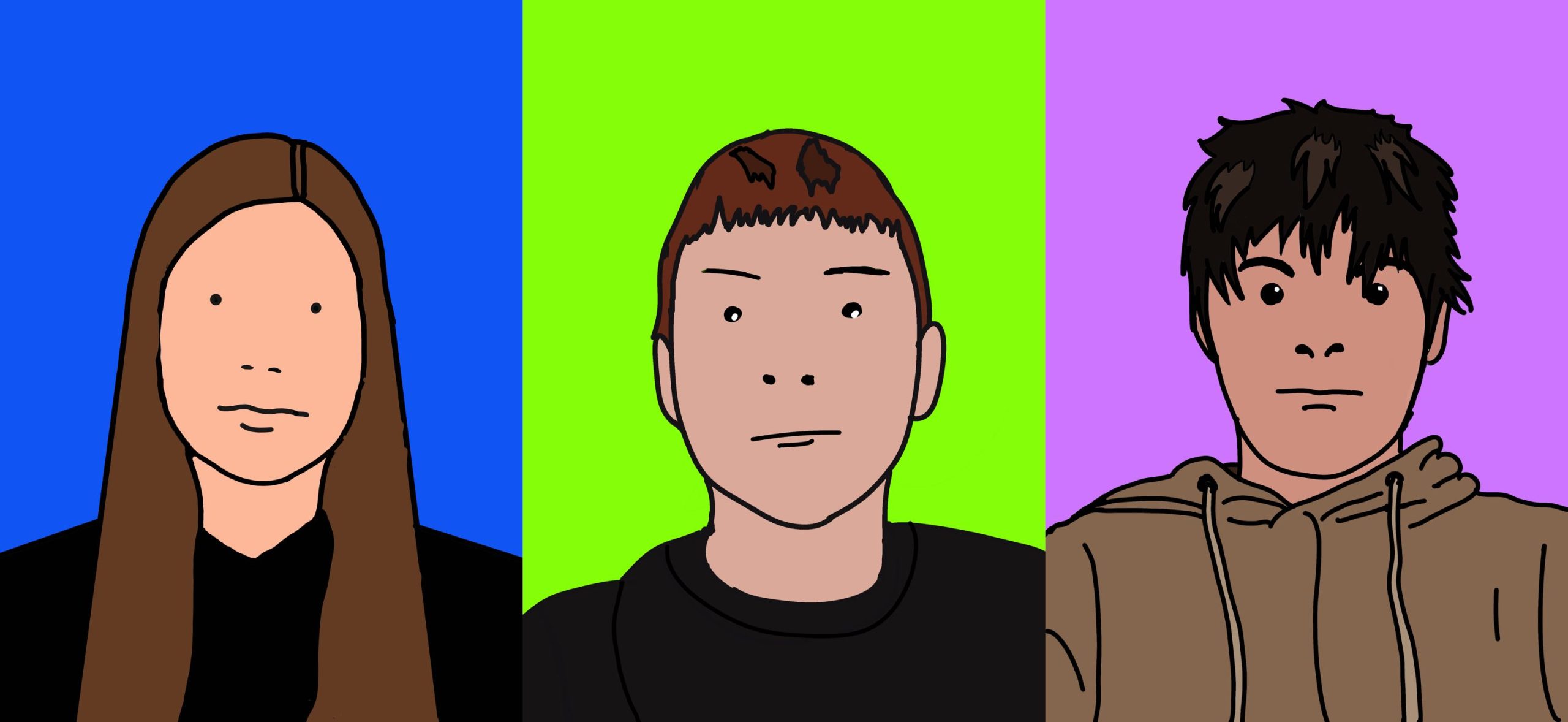
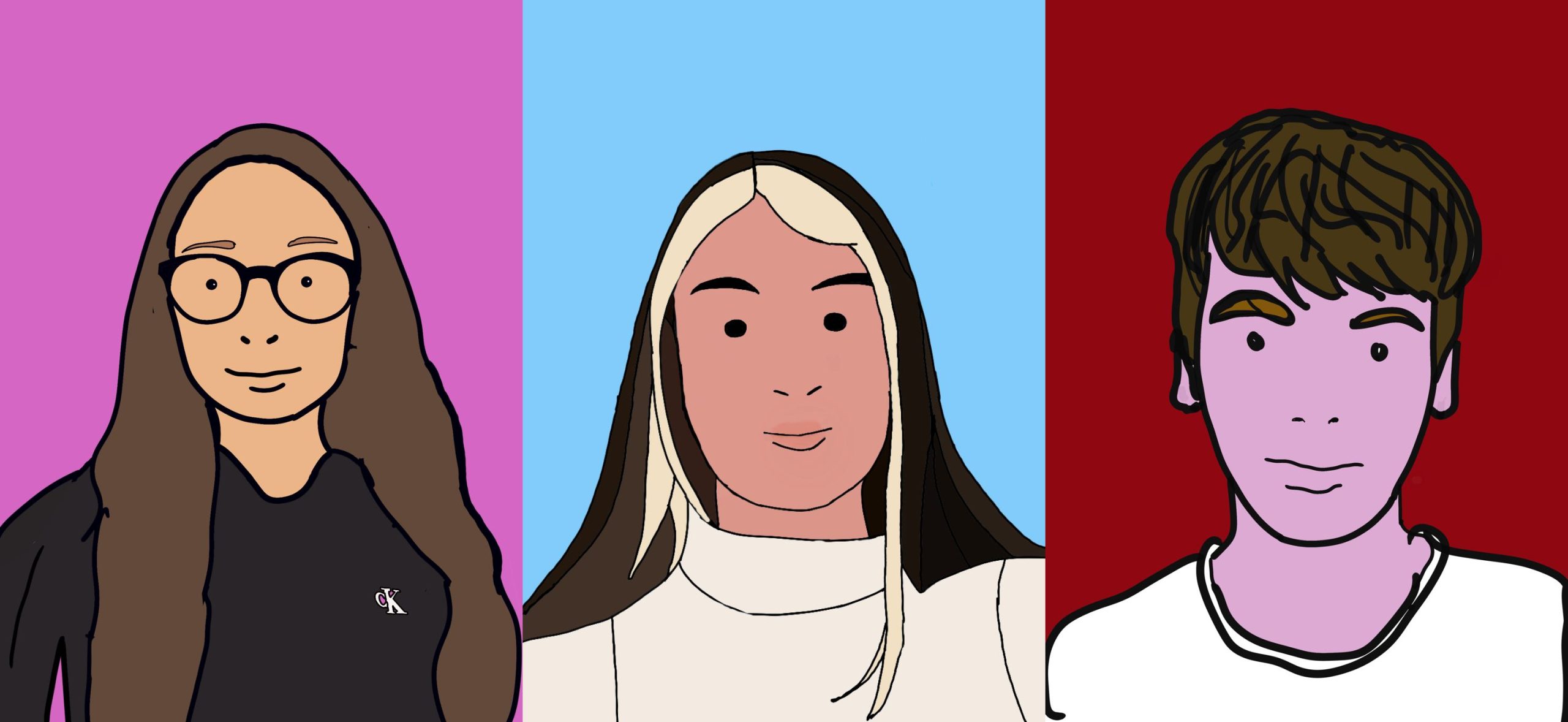
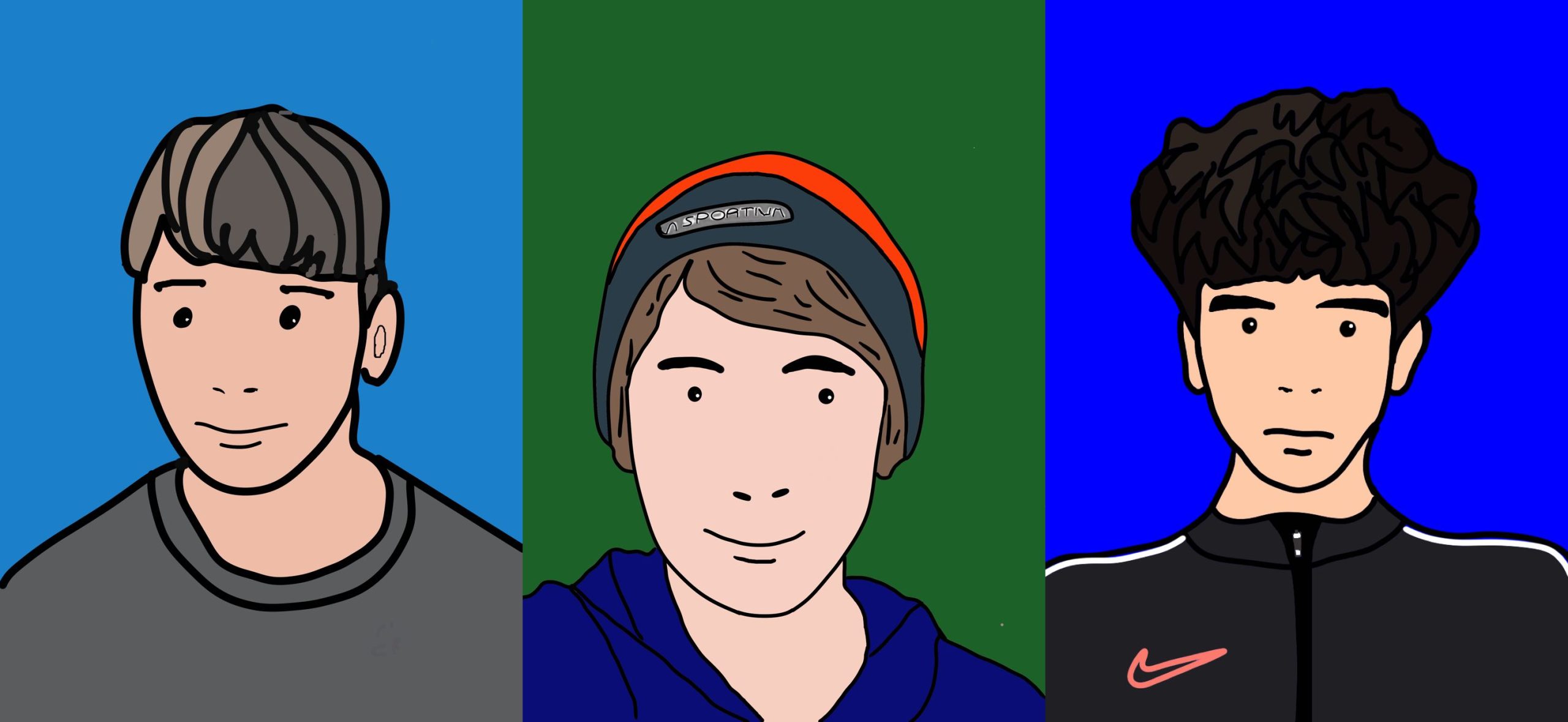
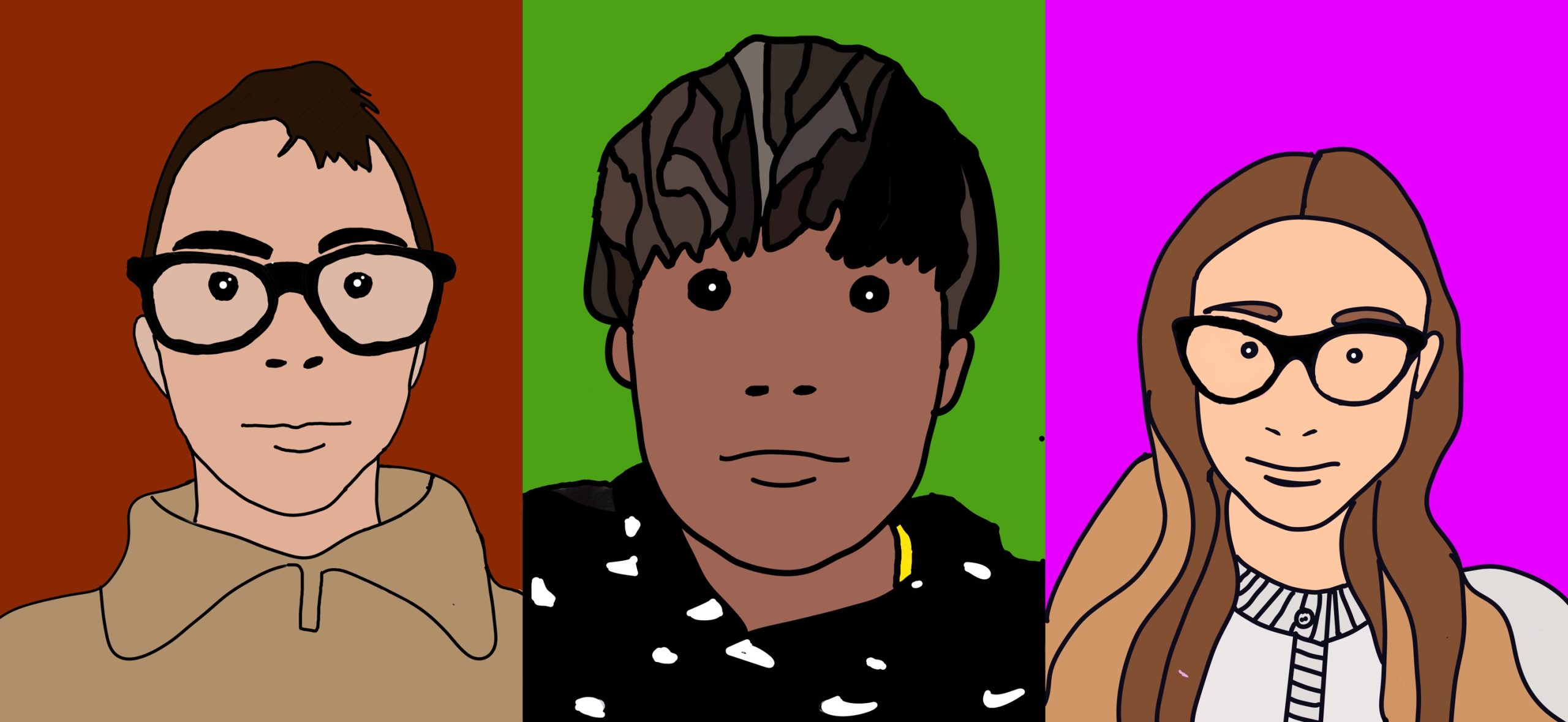
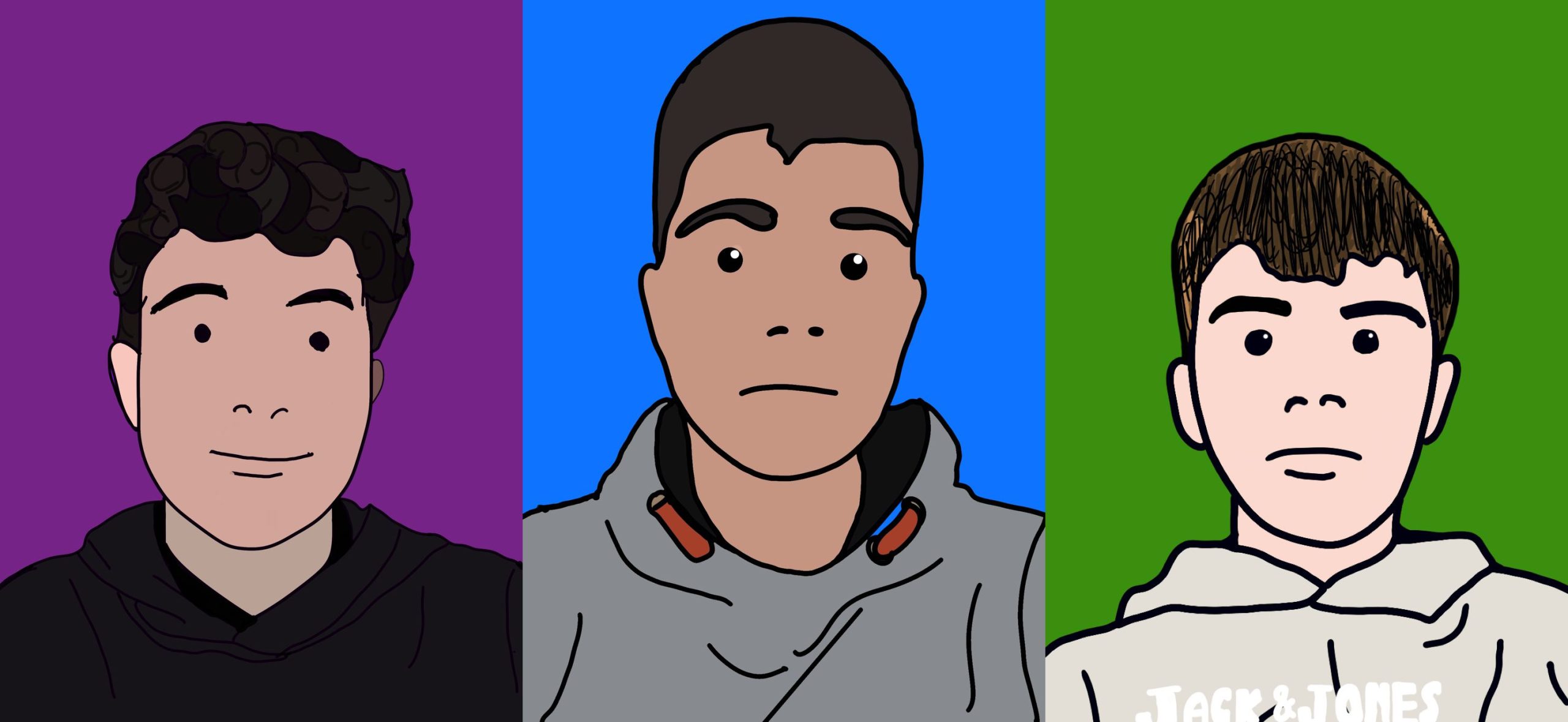
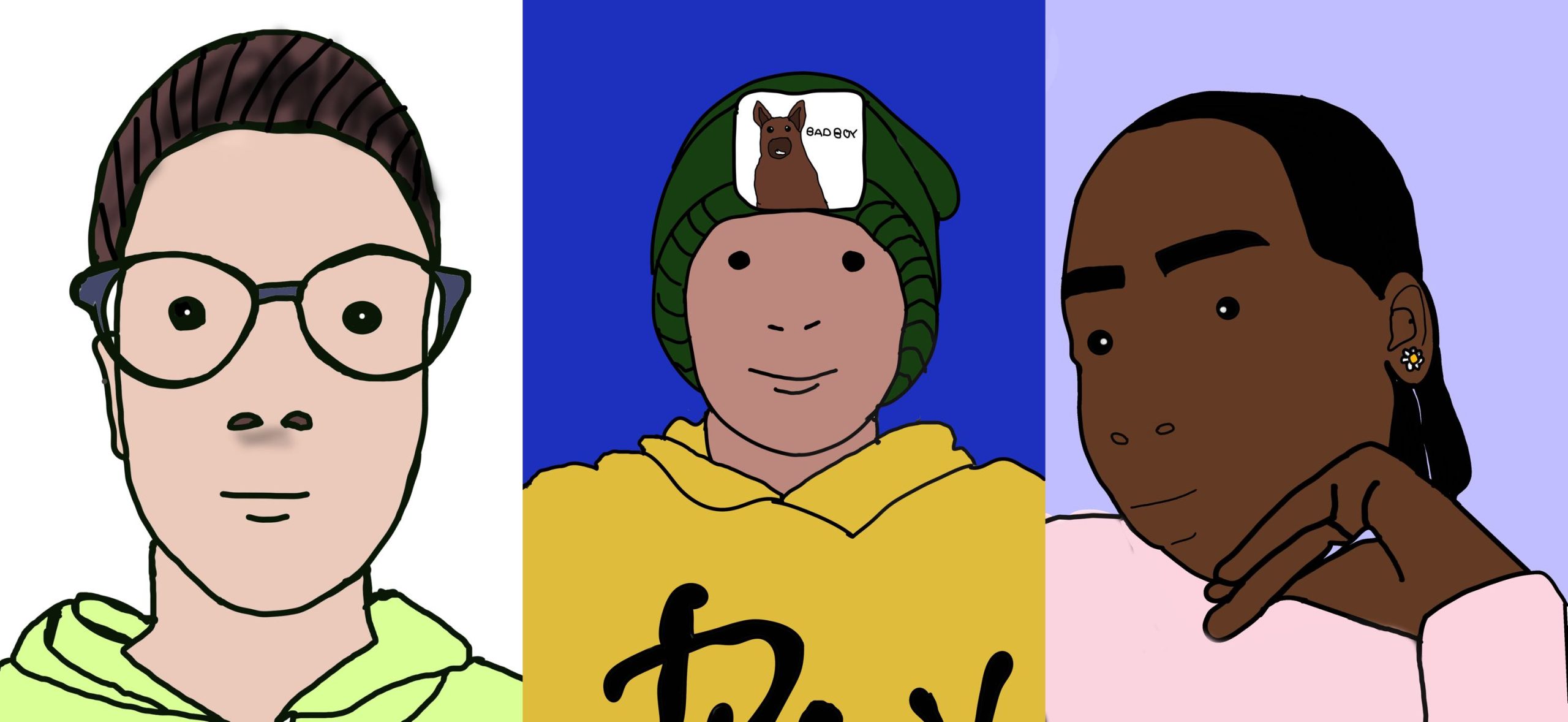
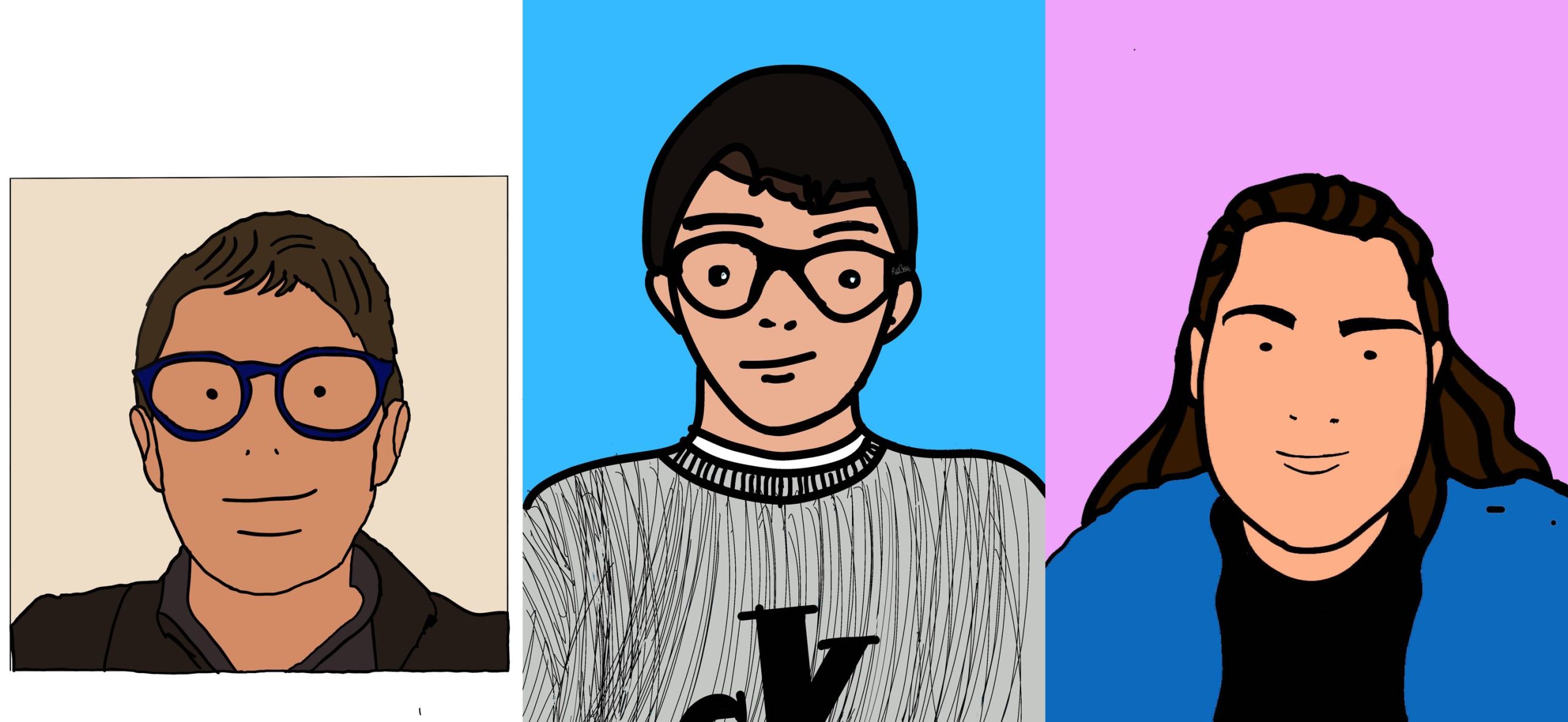
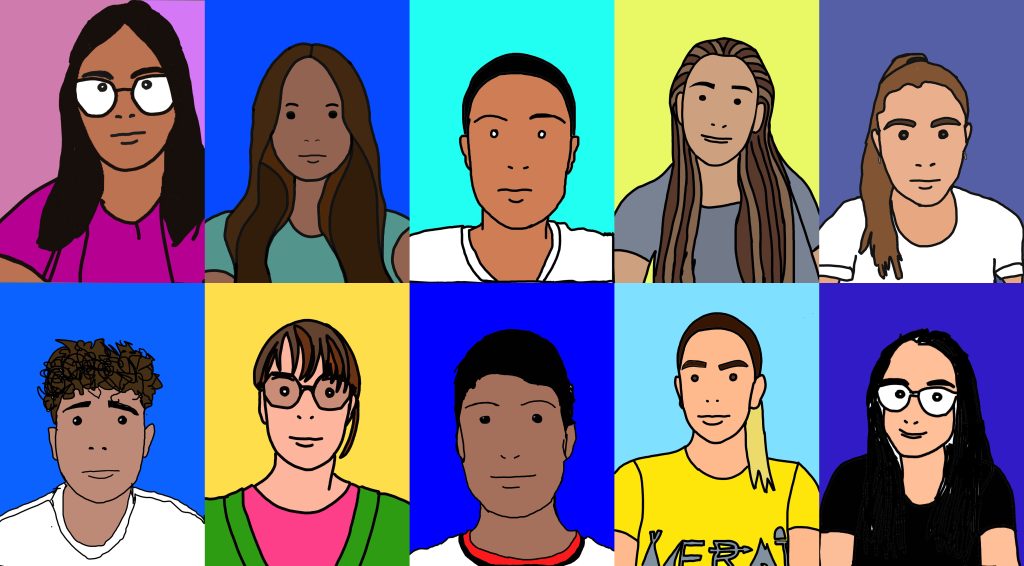
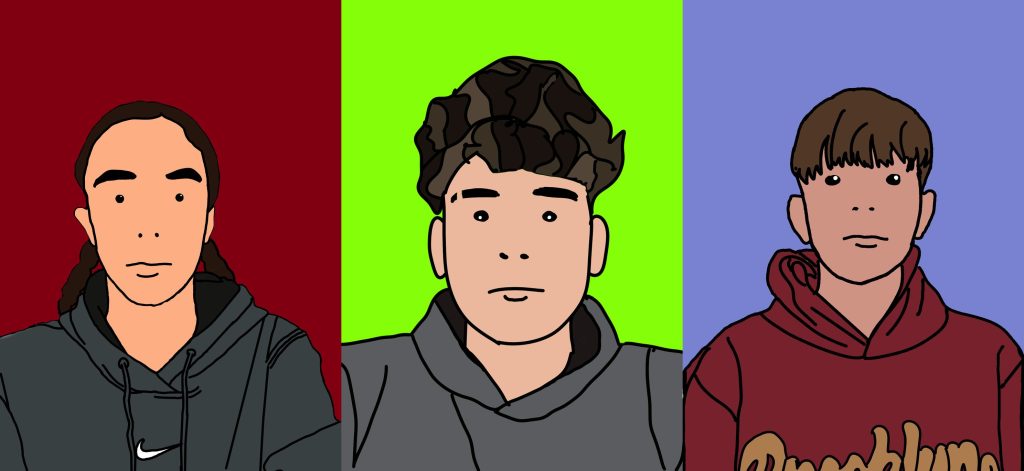
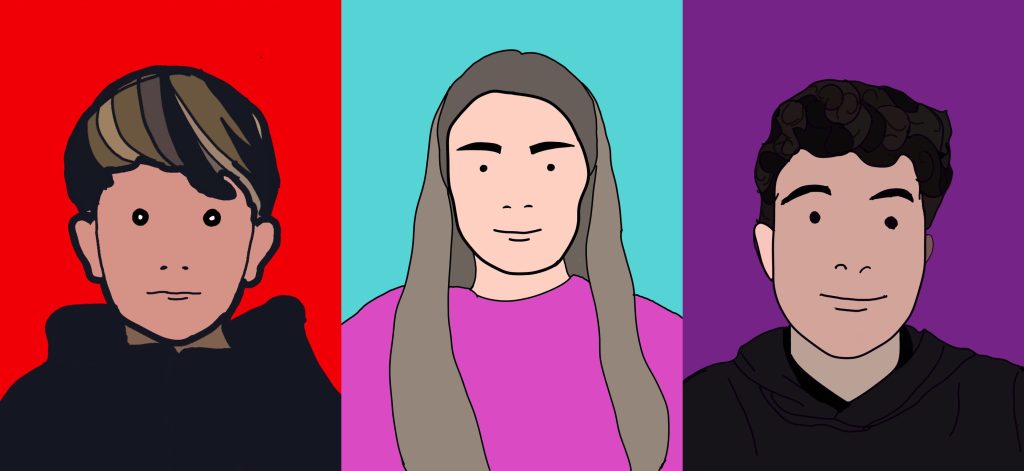
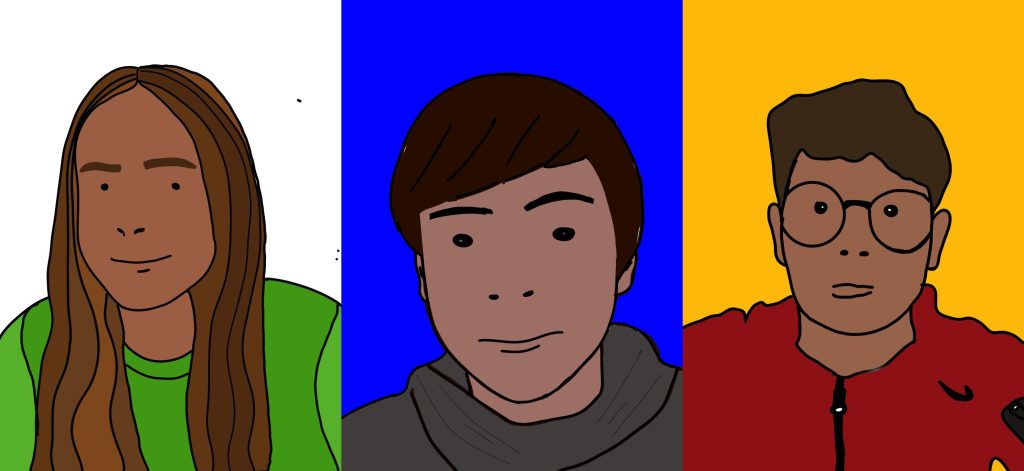
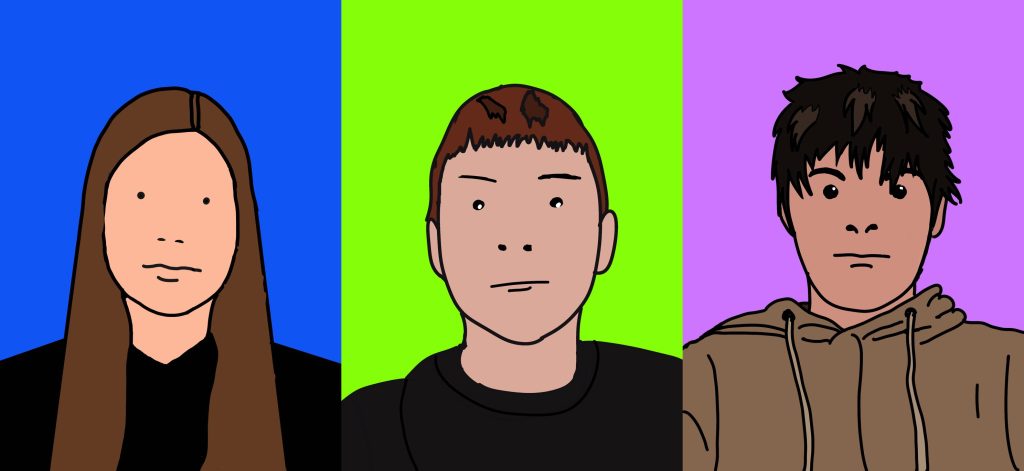
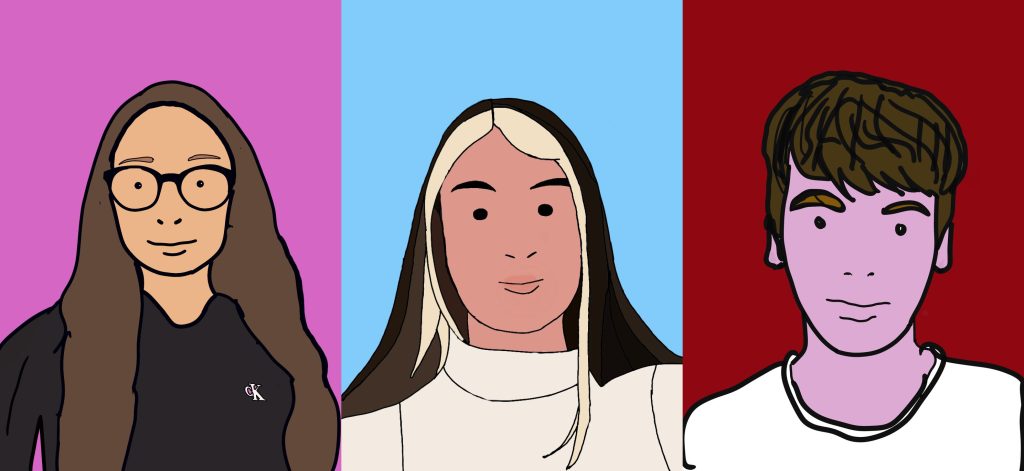
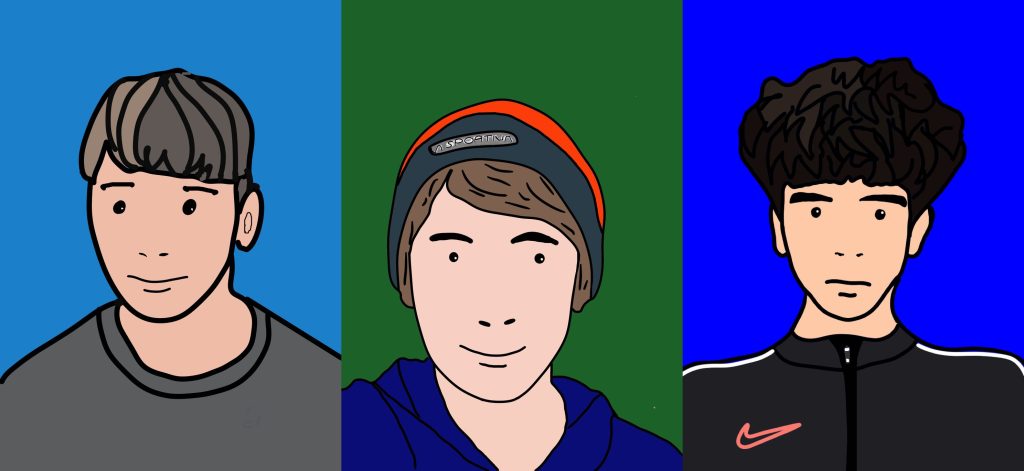
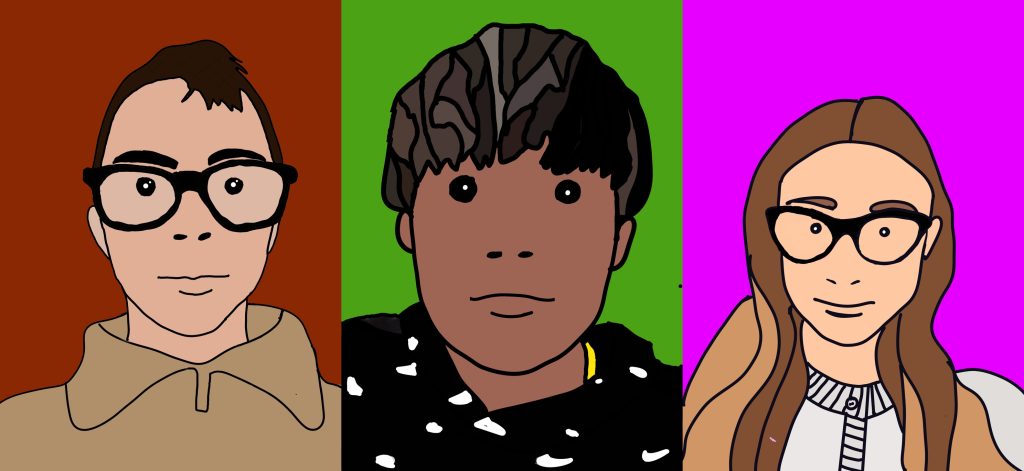
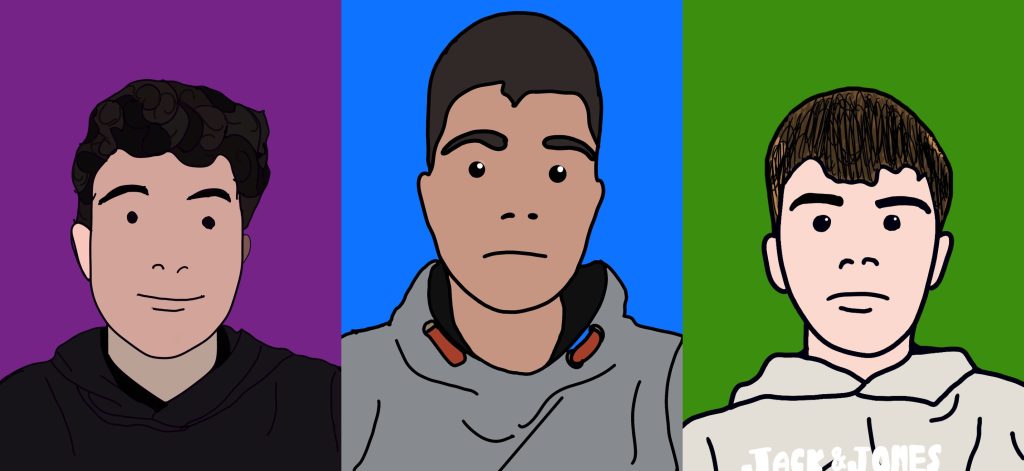
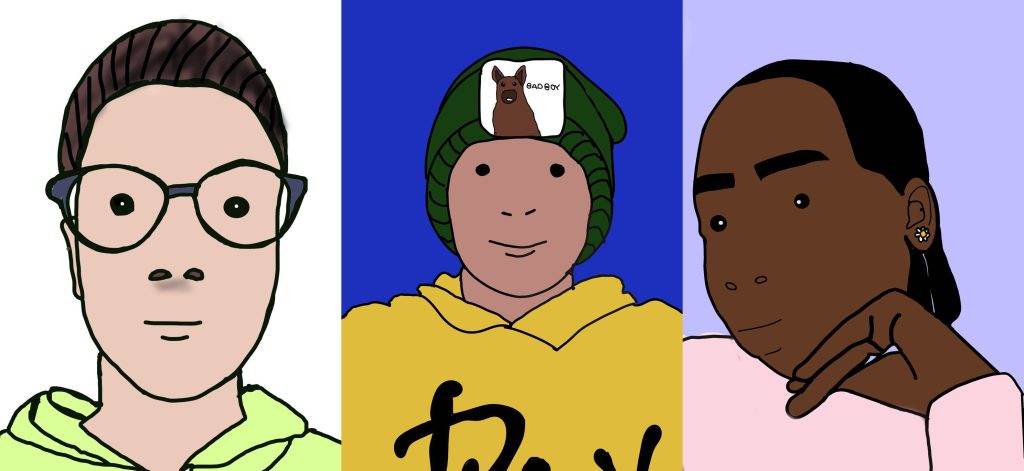
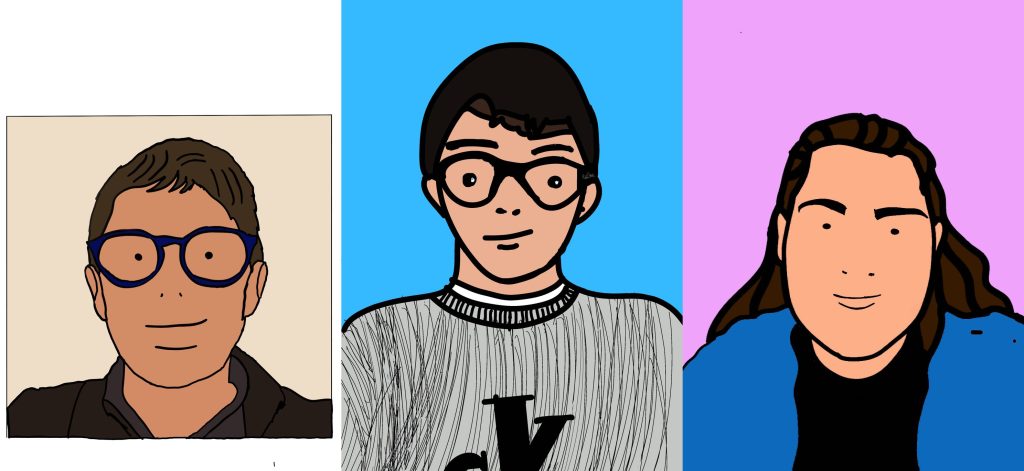
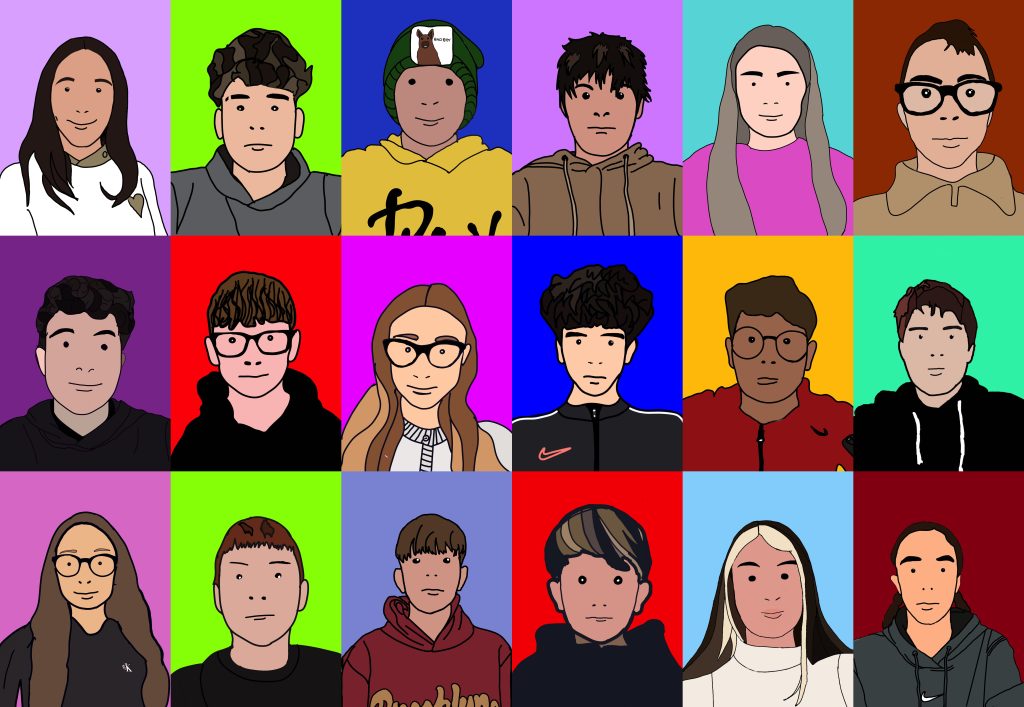
他的面孔如同现代图腾,特征鲜明、易于辨识,同时又高度简化,仅保留极少的视觉元素。在七年级美术课上,我们探讨了现代与当代艺术中肖像画的多重表现形式,并运用 iPad 上的 Sketchbook 应用程序与数位笔,创作了模仿朱利安·奥佩风格的数字自画像。
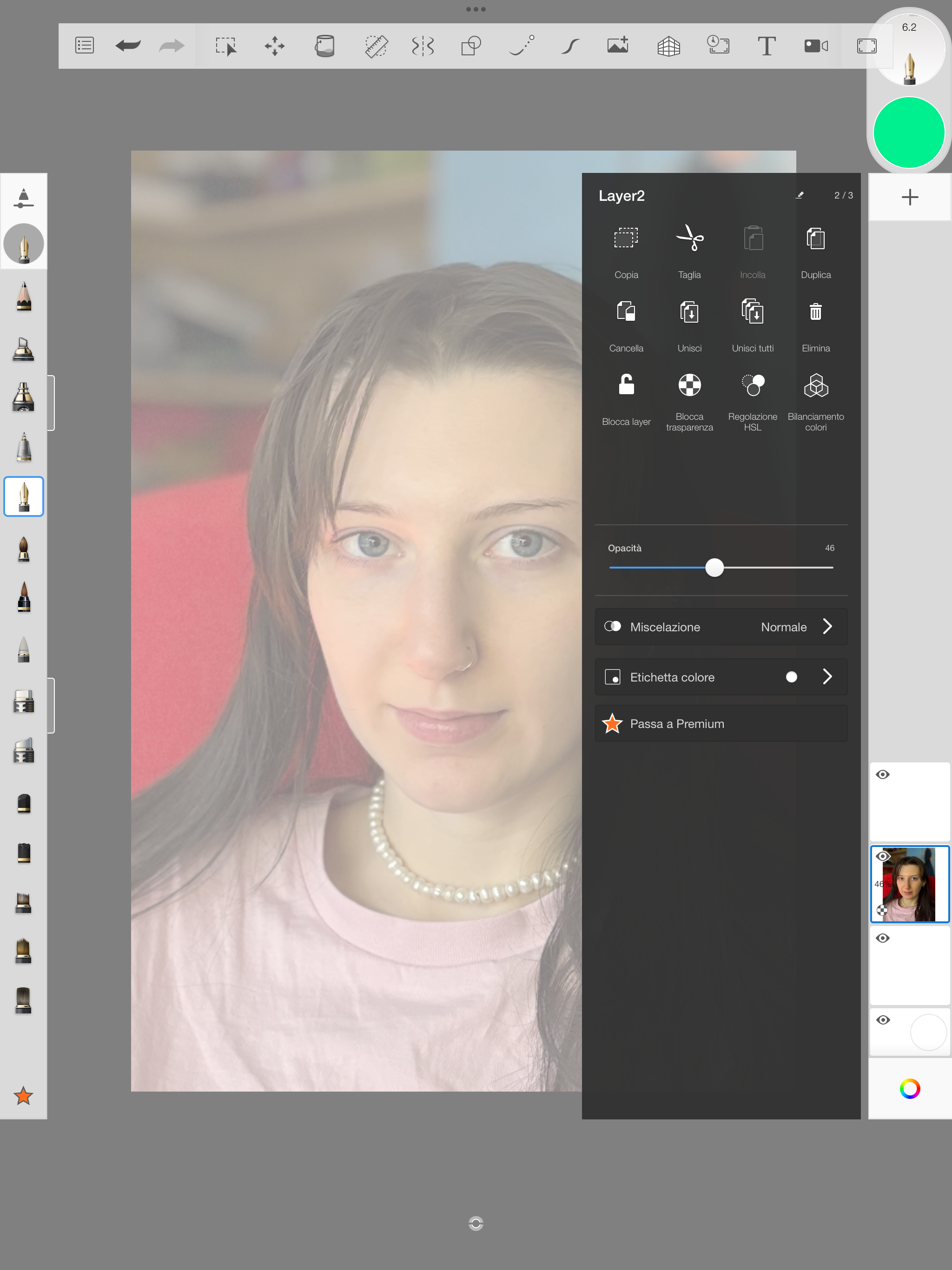
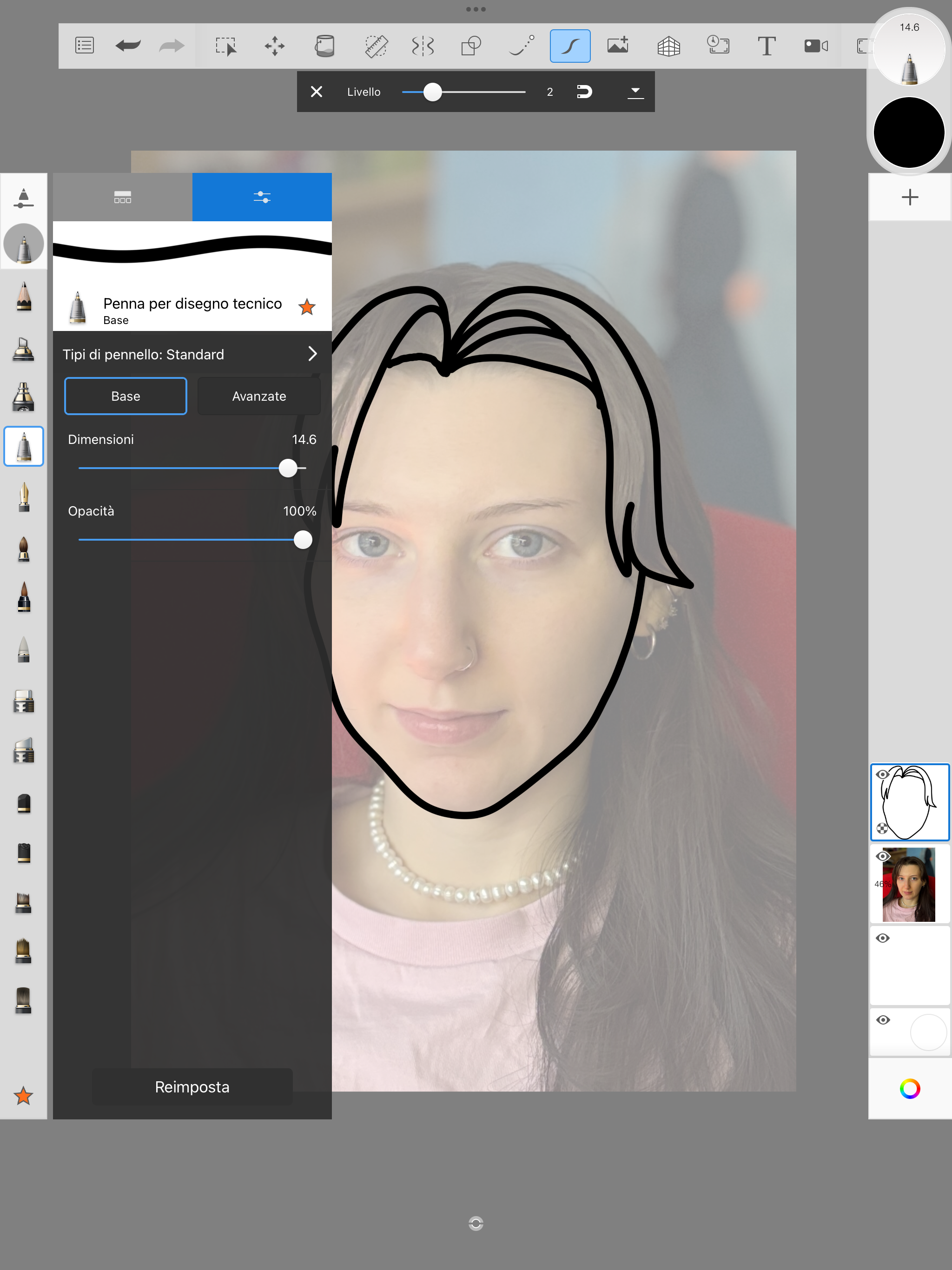
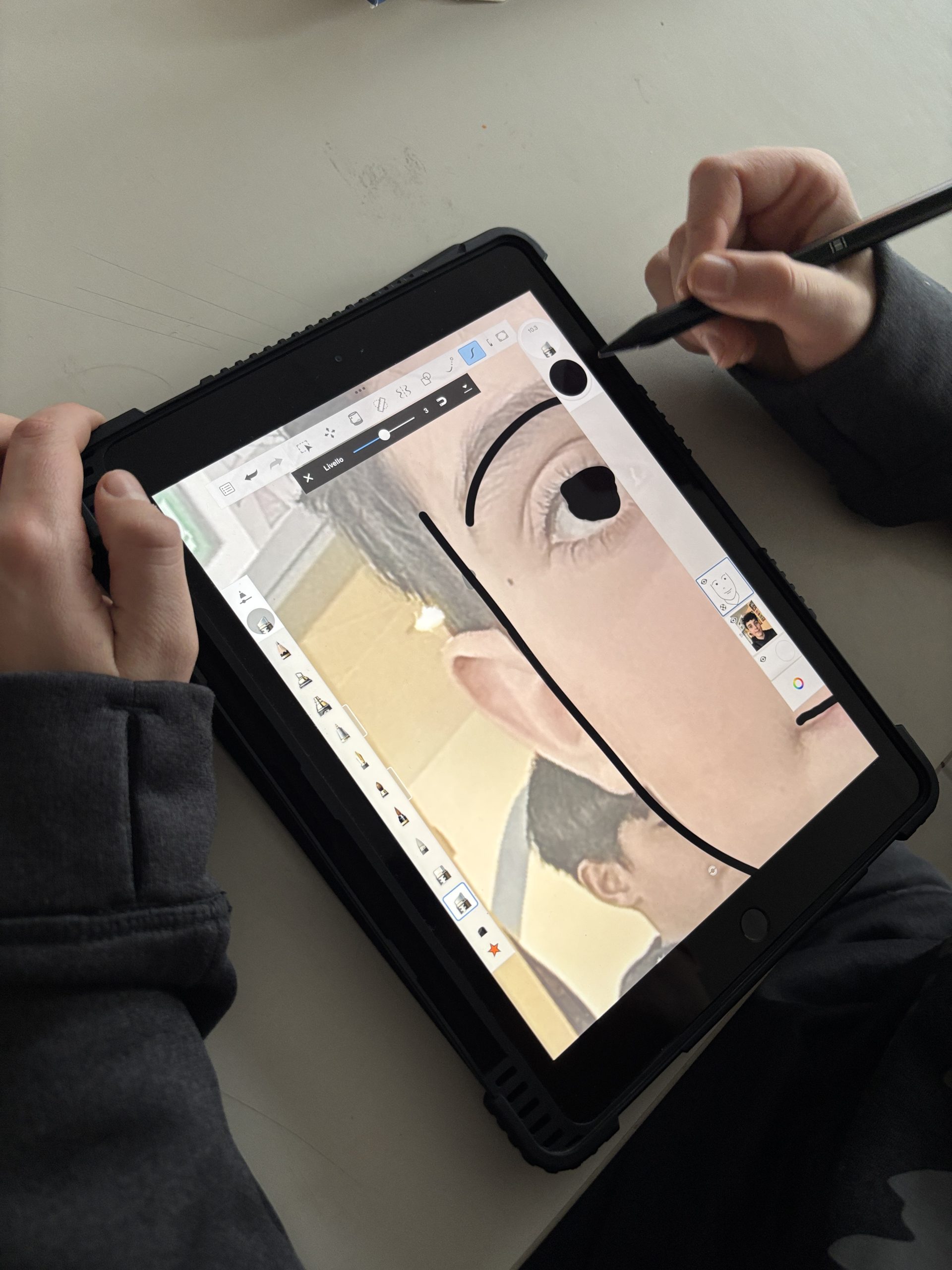
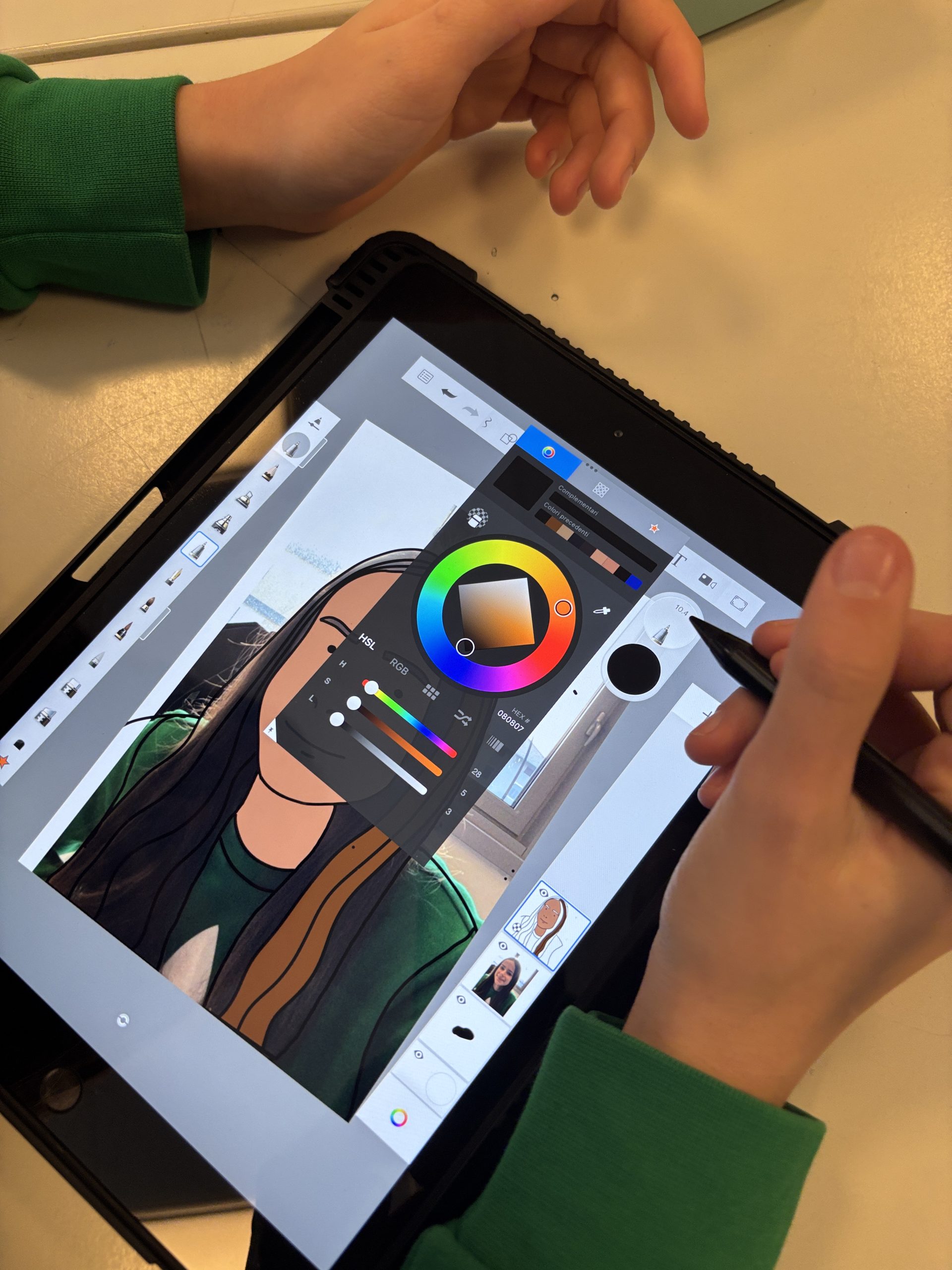
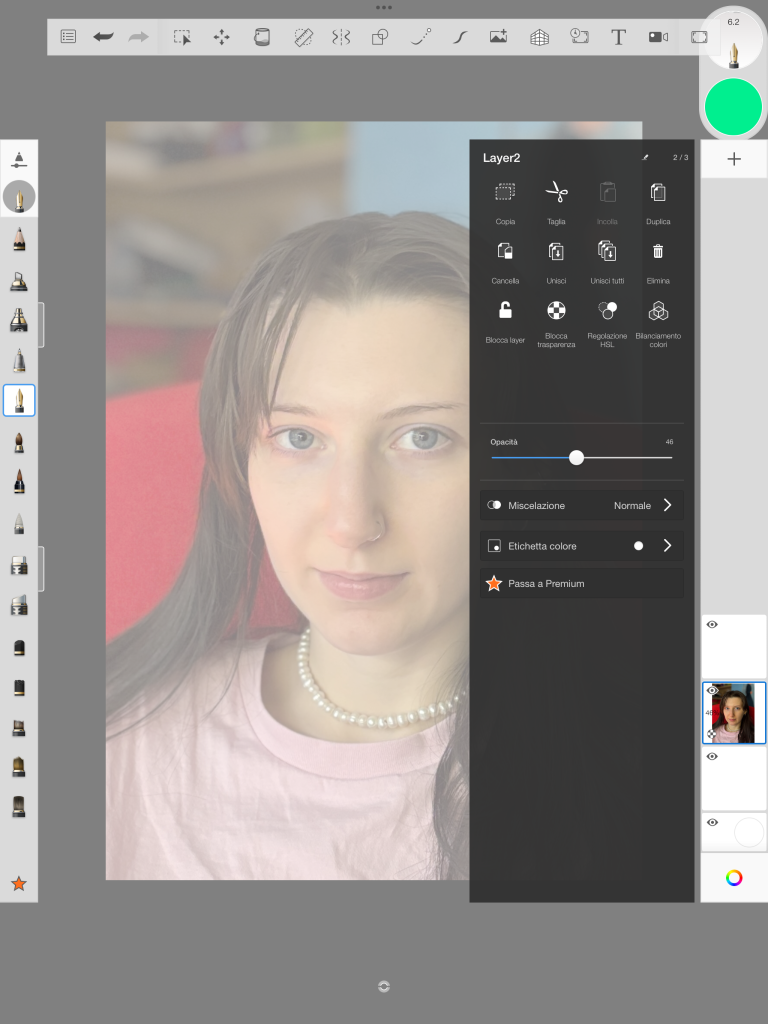
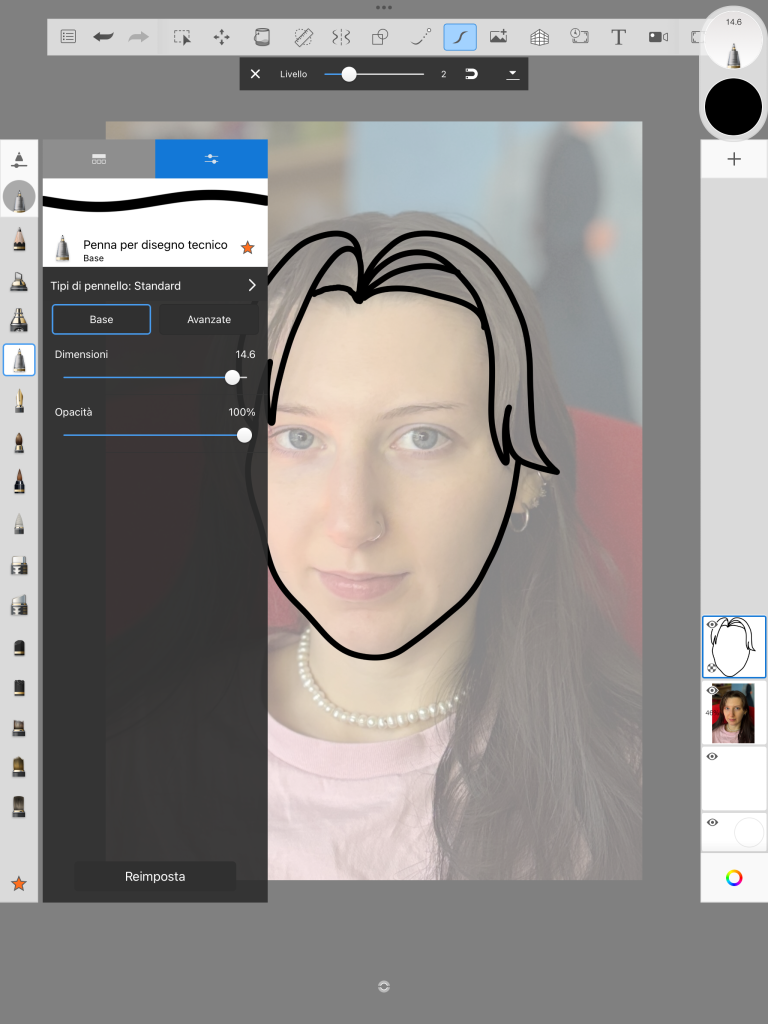
首先,学生们互相拍摄照片,获取用于数字绘制的正面特写自拍照。随后,借助 Sketchbook 的图层功能,我们在原图上方叠加一层透明图层,再以粗重的黑色图形线条绘制自画像。
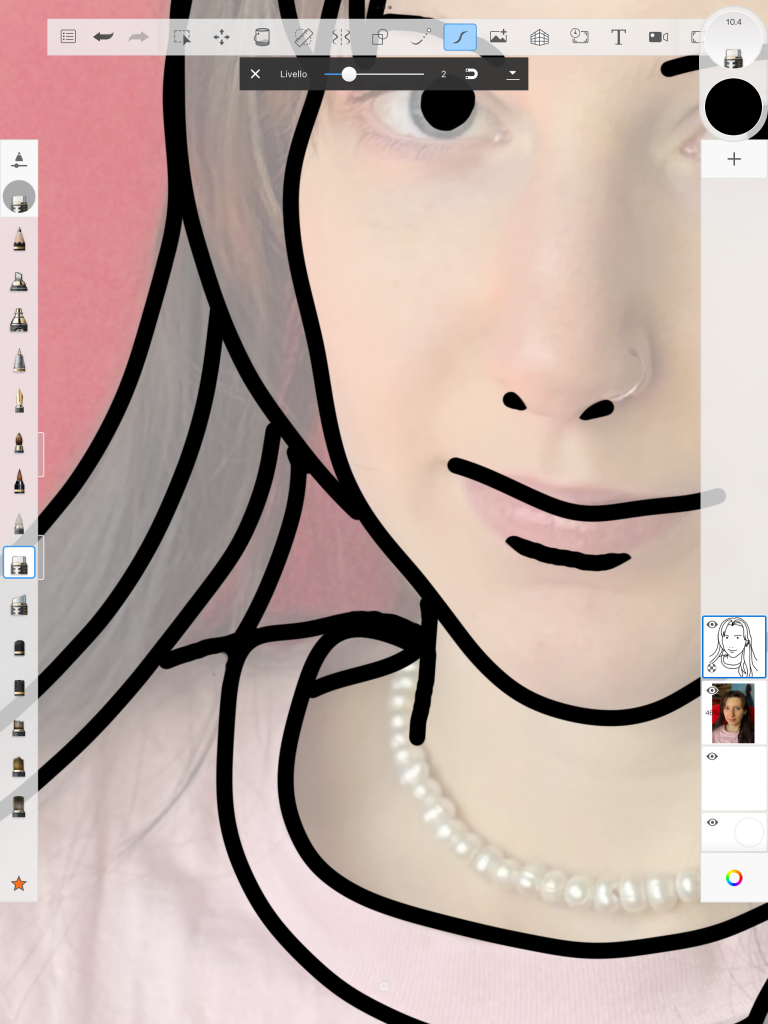
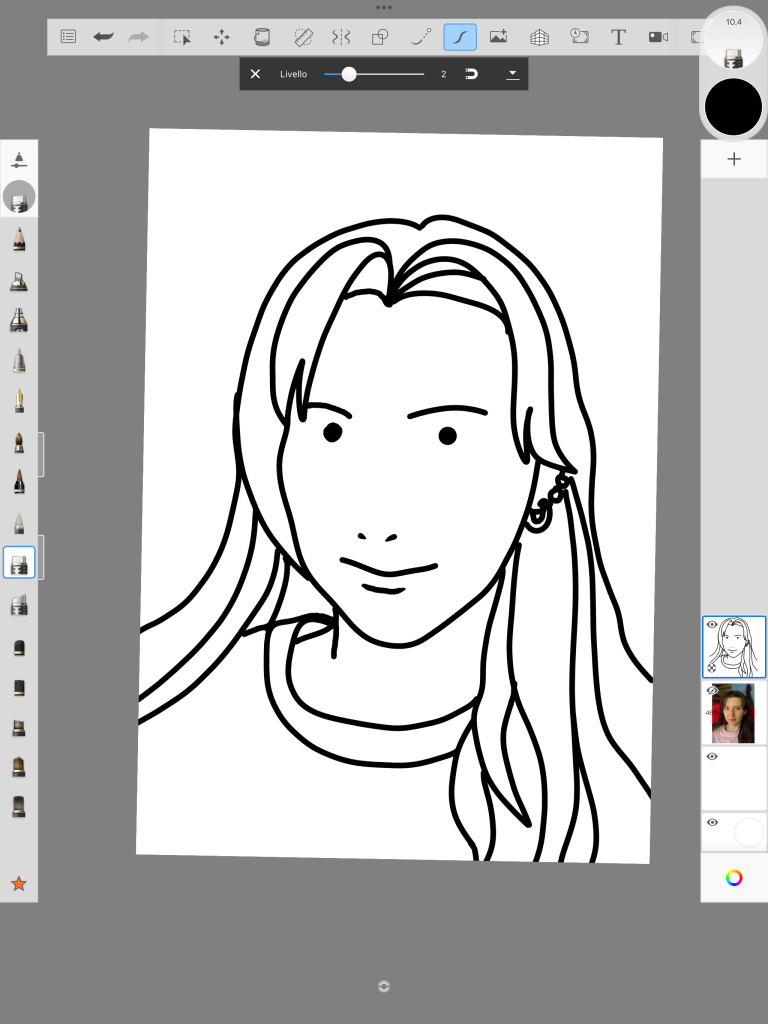
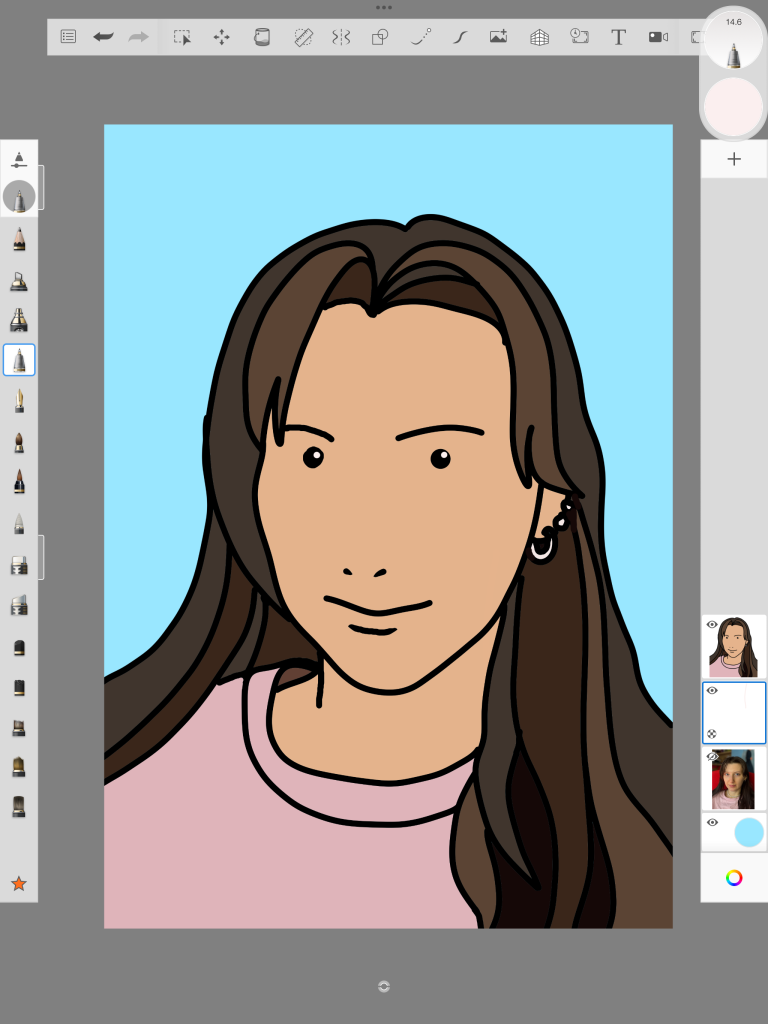
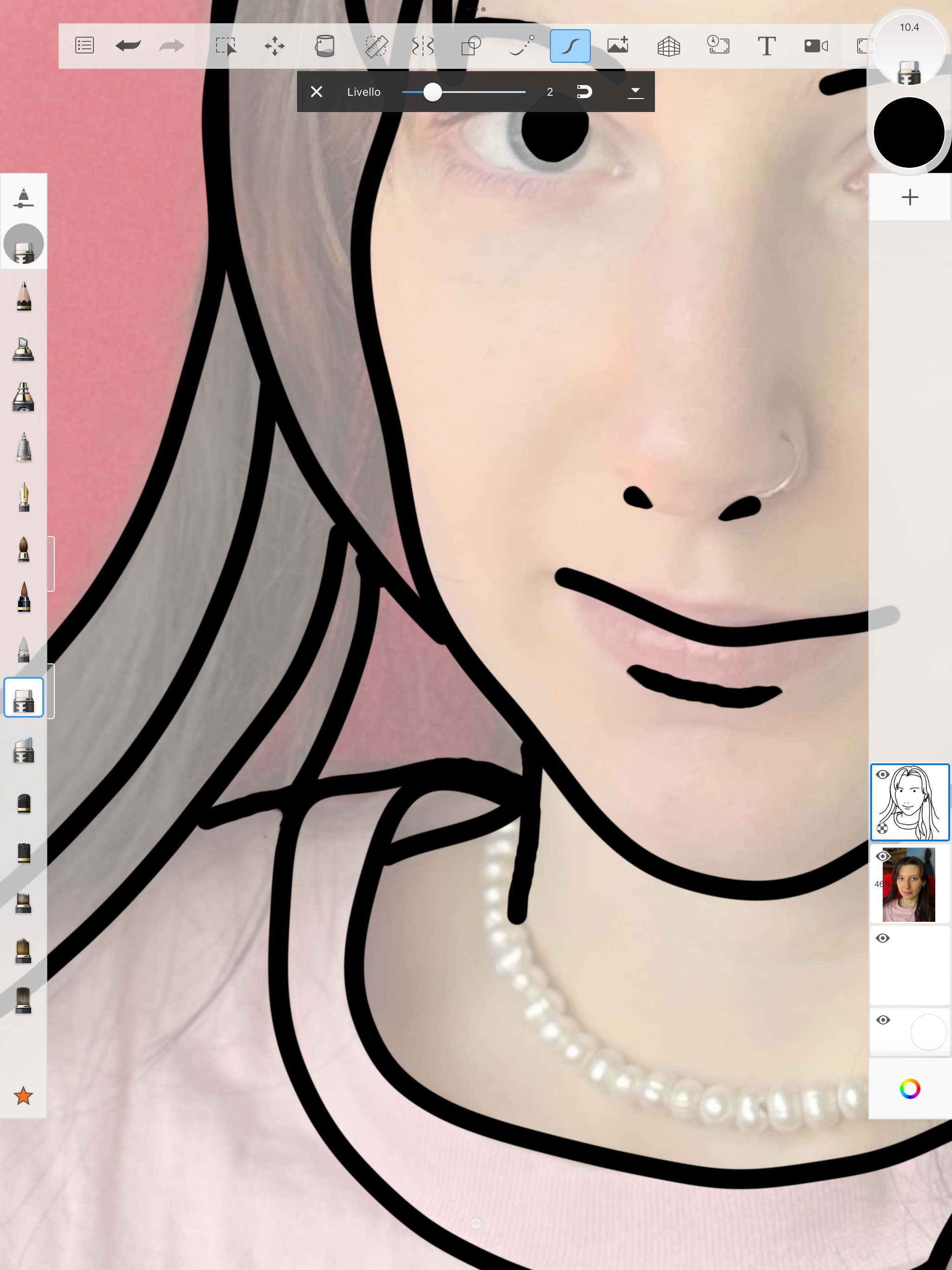
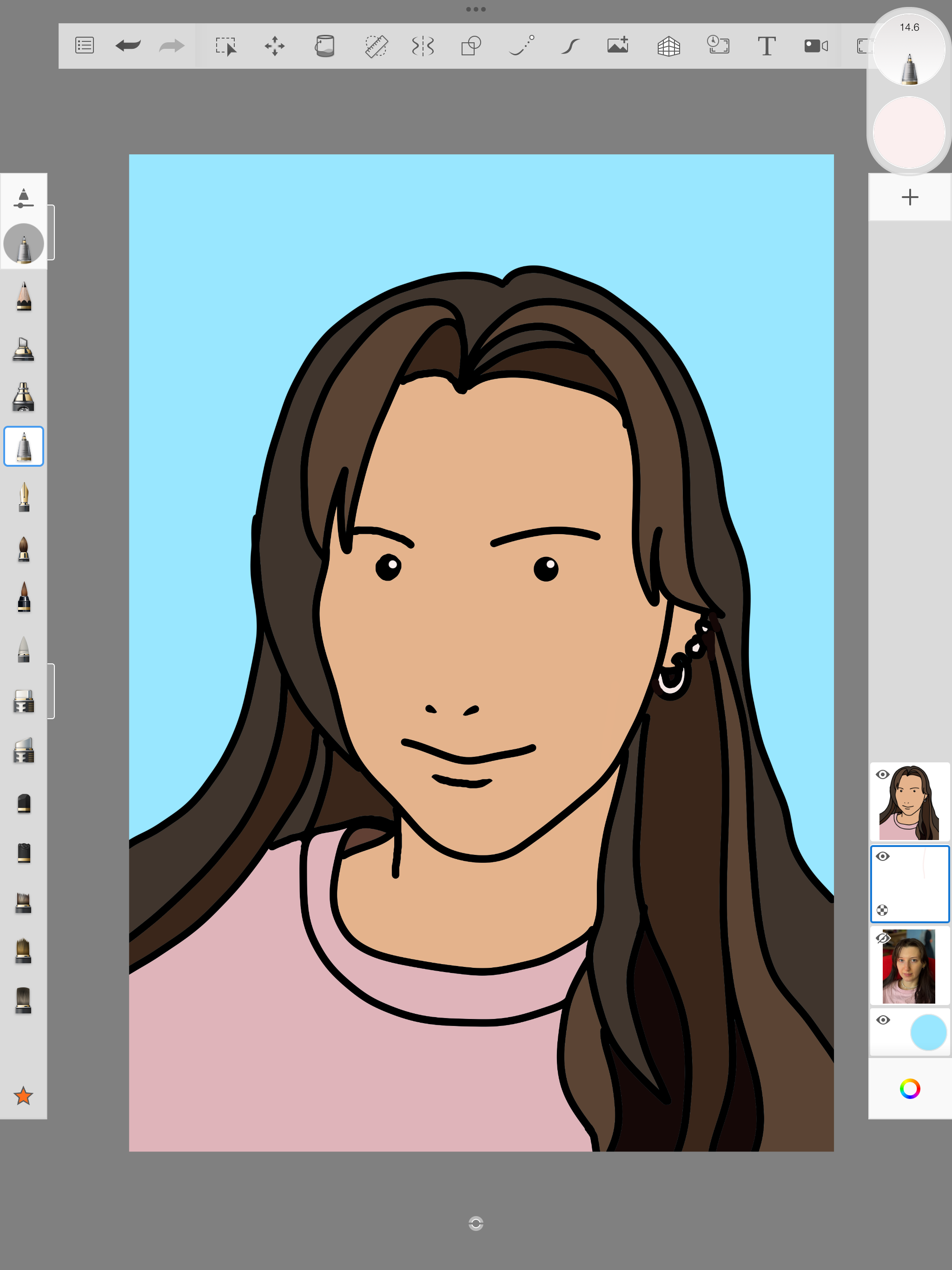
朱利安·奥佩风格肖像的核心特征包括:
- 嘴部:仅画出嘴部开口的线条及下唇底缘线;
- 眼睛:仅画出瞳孔;
- 鼻子:仅画出鼻孔;
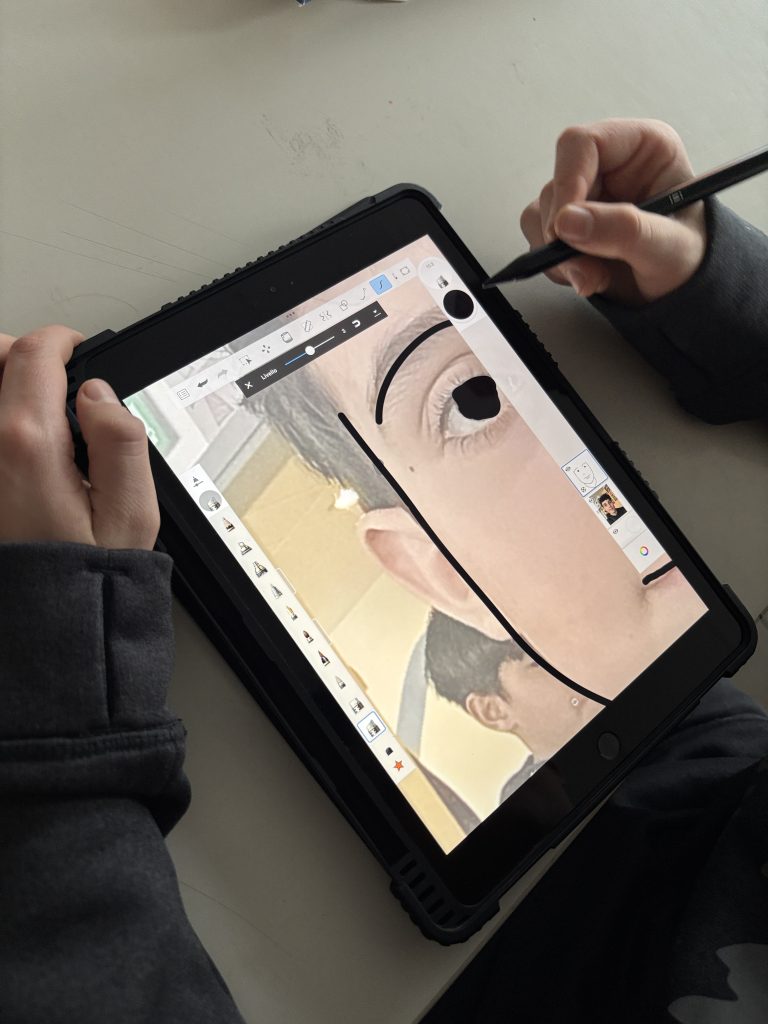
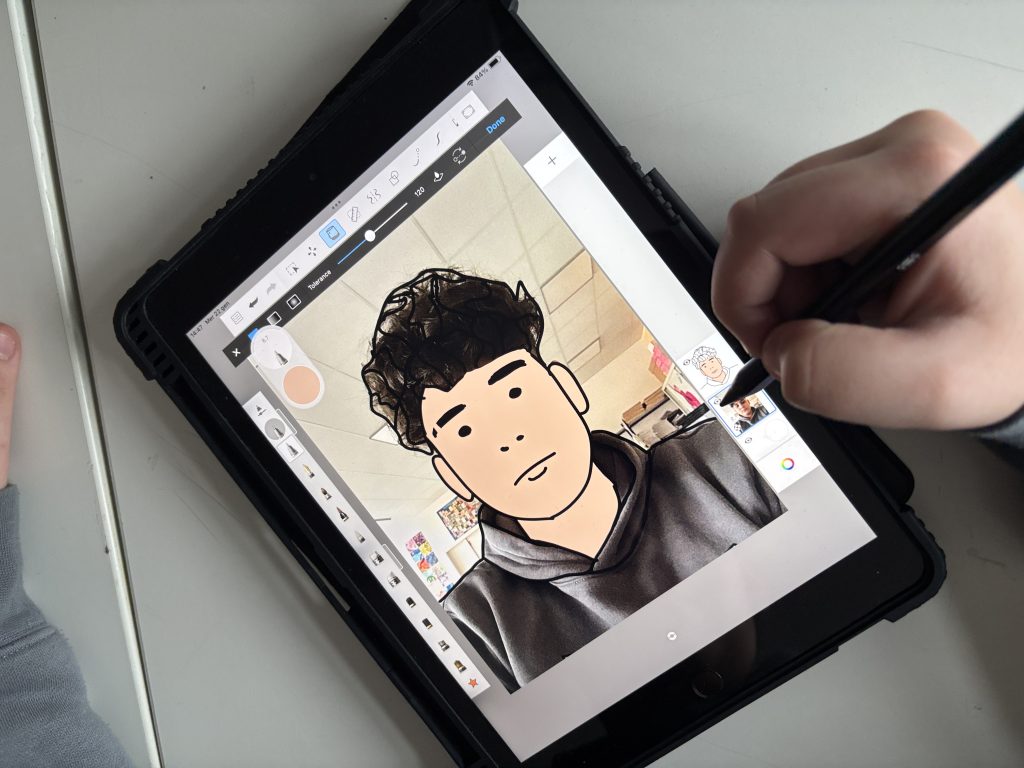
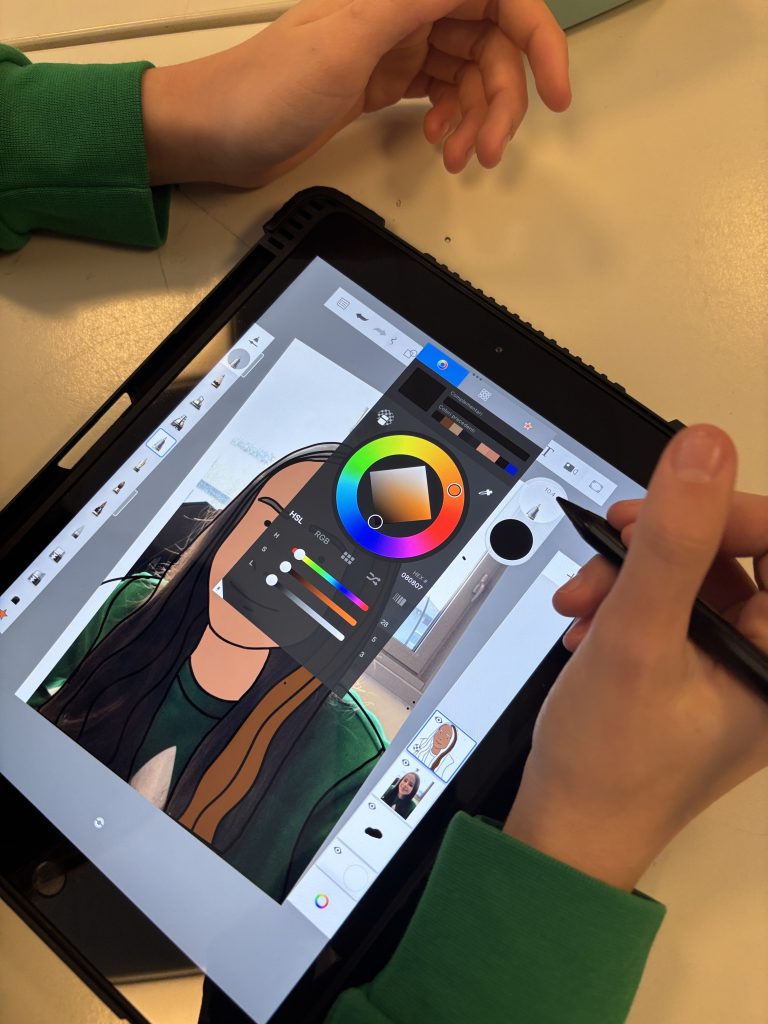
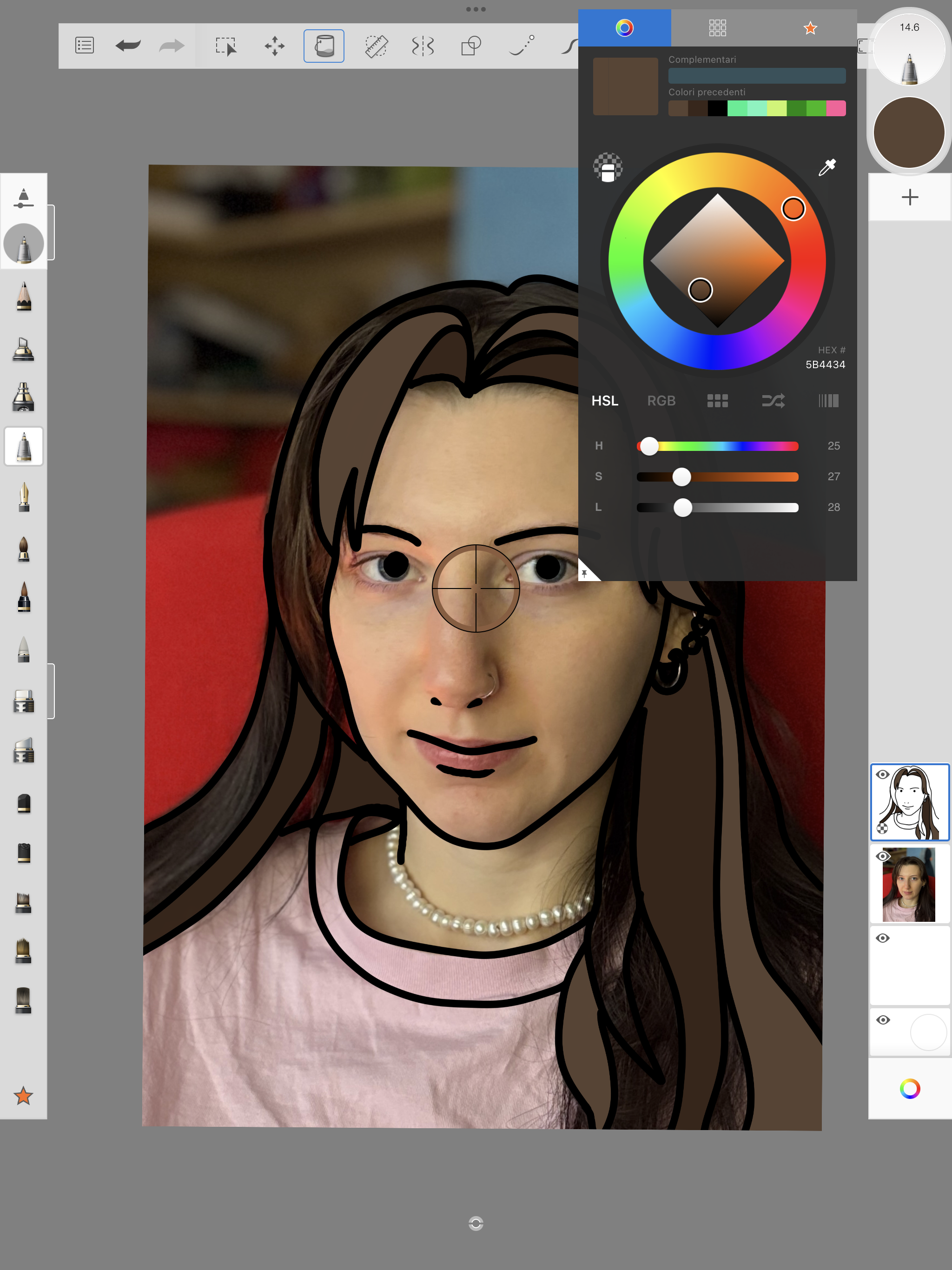
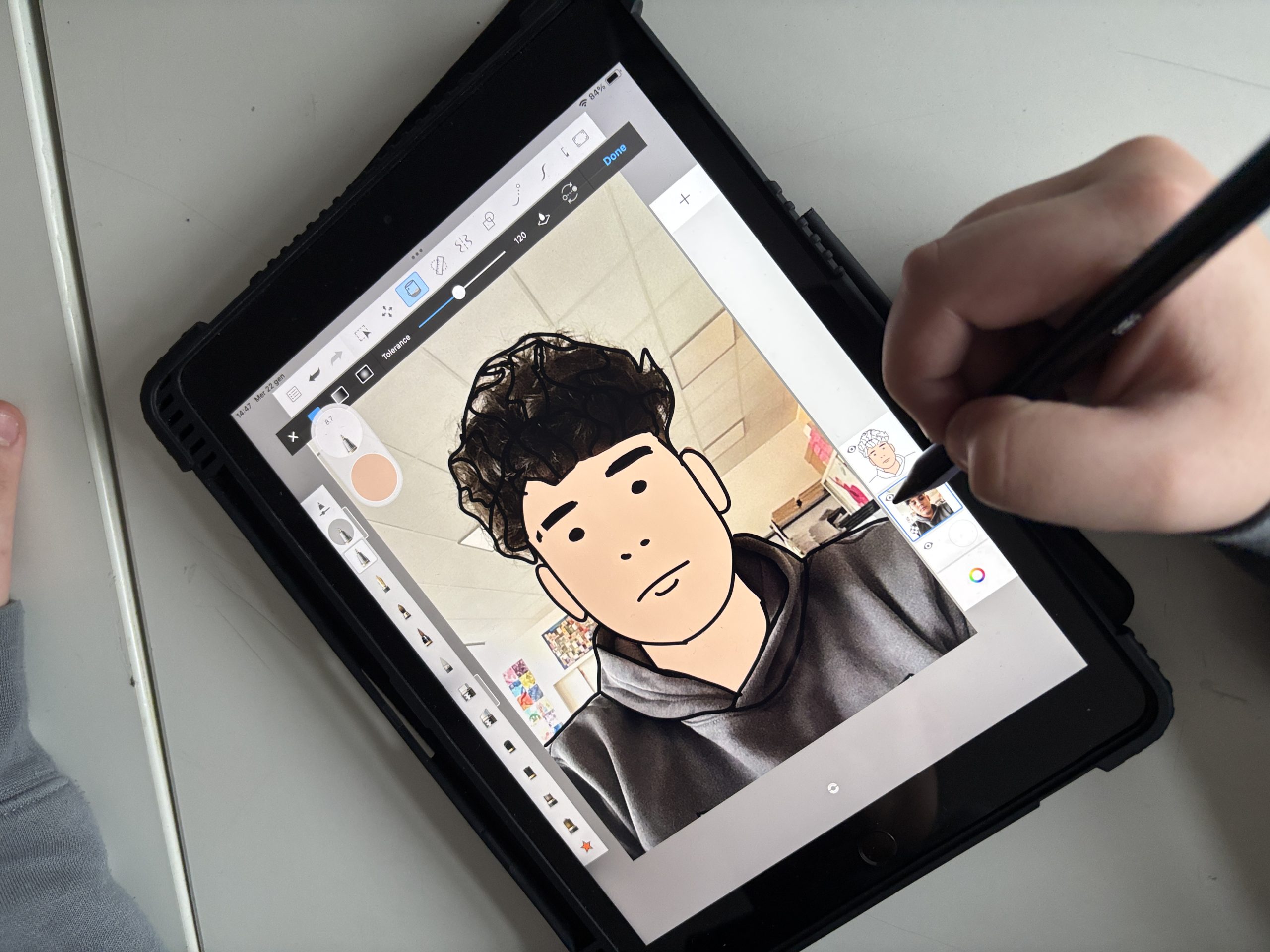
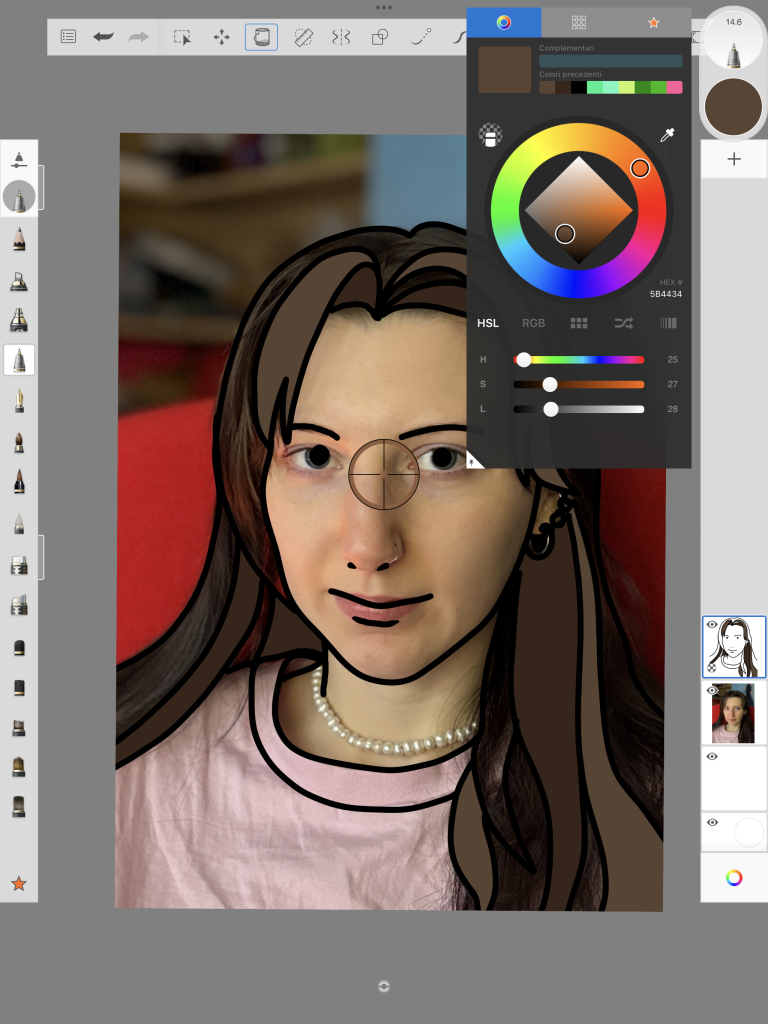
待线性图形肖像完成后,我们使用“油漆桶”工具为各封闭区域填色——通过“吸管”工具从原照片中吸取颜色,尤其用于肤色与发色;衣物与背景则统一填涂纯色。
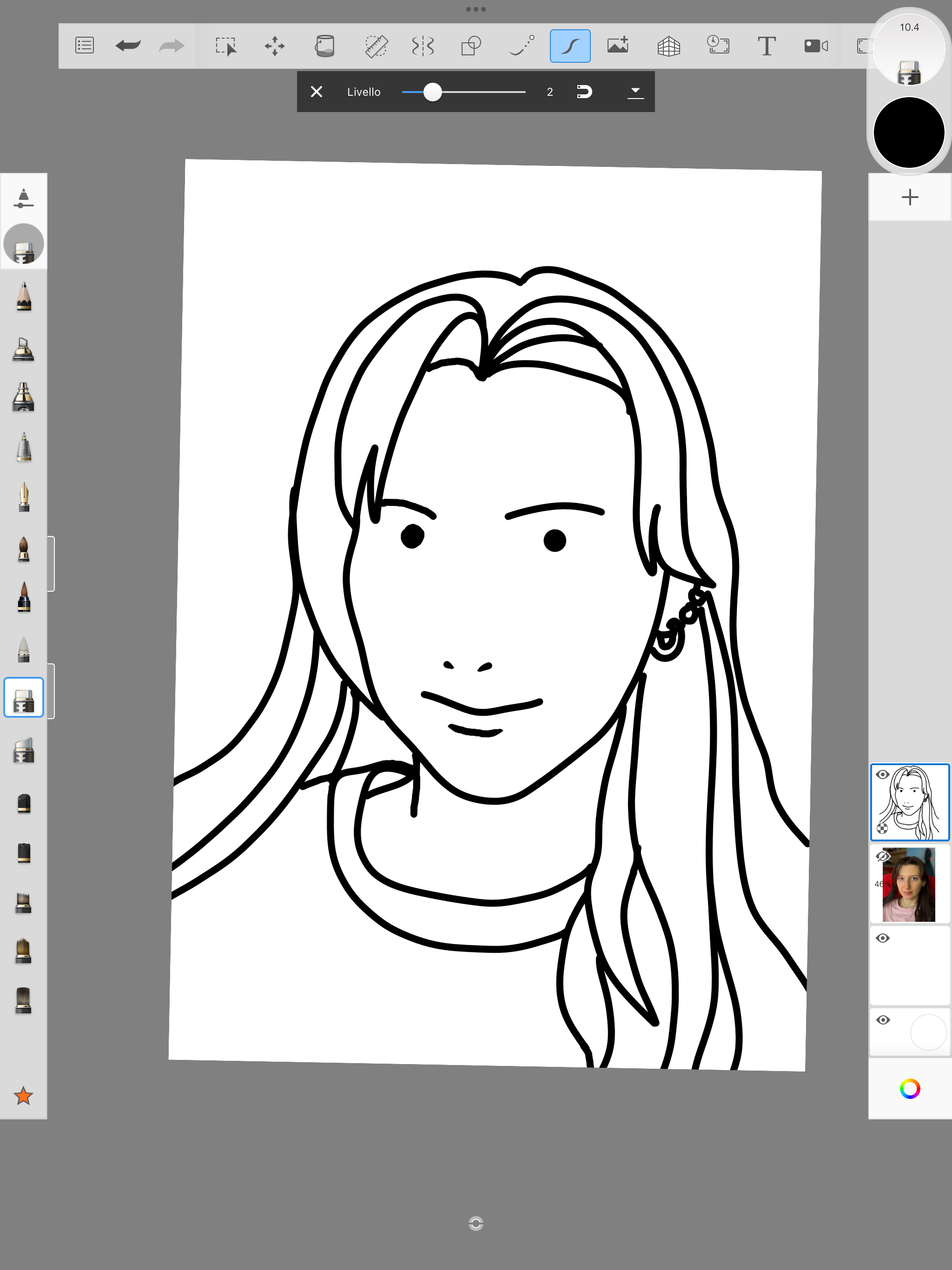
这些自画像最令人惊讶之处在于:尽管仅凭极少量的生理特征元素,它们却与本人惊人地相似。
Digital self-portrait inspired by Julian Opie
Julian Opie is a contemporary British artist, whom I have always liked for his unique way of representing human faces and figures with minimal details, thick black lines drawn to outline the shapes, with references to the linearity of Japanese art, the world of comics and the minimal symbolism of road signs. I invite you to take a look at his website and his latest works:
His faces, as modern icons, are perfectly characterized and recognizable, while maintaining a simplification reduced to very few elements. With 7th Grade students, we saw the multiple interpretations of portrait in modern and contemporary art, and we created a self-portrait in the style of Julian Opie, using the Sketchbook App with iPad and digital pen.
First, students took pictures of each other, to get a close-up self-portrait to draw digitally. Then, using the sketchbook’s layer function, we overlaid a transparent sheet and drew our self-portrait with a thick black graphic line.
The fundamental characteristics of the portrait in the style of Julian Opie are:
- the mouth, of which only the opening line and the underlying line of the lower lip are drawn.
- the eyes, of which only the pupils are drawn;
- the nose, of which only the nostrils are drawn;
Once the linear graphic portrait was completed, we filled the spaces (which must be strictly closed) with the “bucket” function using the “eyedropper” to take the colors from the photograph, especially for the skin and hair tones. The clothes and the background are colored with solid colors.
The surprising thing about these self-portraits is that they are extraordinarily similar to the subject, despite having very few somatic elements available.