水墨画历史与“文房四宝”:第一课
原文链接:https://createartwithme.com/chinese-bamboo-brush-painting/
日期: 2014-12-07
作者: 米歇尔·伊斯(Michelle East)
分类: 三年级、四年级、五年级、六年级、美术课、美术技法课、亚洲艺术课、文化主题美术课、小学美术、高中美术、初中美术、绘画课、绘画技法课、钢笔与水墨画、水墨画
标签: 文房四宝、竹笔、水墨画、中国水墨画、中国书法、小学水墨画课、水墨画、墨砚、日本水墨画、水墨画、水墨画(sumi-e)、水墨画课、水墨画技法
水墨画水墨画是一种极具艺术史与文化底蕴的优美绘画媒介。书法是亚洲文化中一种延续数千年的书写形式,这种富于艺术性的书写方式最终发展为图像——即水墨画艺术。
教学目标:
- 学生理解艺术家运用线条创作二维美术作品;复习五种线条类型及线条质感。
- 学生了解水墨画的历史,理解书法如何演变为水墨画这一艺术媒介。
- 学习并实践运用中国水墨画“文房四宝”(墨、砚、笔、纸)进行水墨画创作。
教学材料:  Speedball 印度墨汁、竹笔、宣纸、水杯、纸巾


本课主要参考资料:

 《日本水墨画》(Susan Frame 著)

 《中国水墨画艺术:掌握这一传统艺术形式的简明技法与优雅笔触》(Lucy Wang 著)
第一天——授课内容:历史与“文房四宝”
- 复习五种线条:水平线、垂直线、斜线、曲线、之字形线。
- 复习线条变化:粗线、细线、粗粝线、光滑线、虚线或隐含线、书法式线条。
- 书法式线条指宽度富于变化的线条。
- 中国书法概览——历史、工具(文房四宝)、执笔方法、基本笔法(四种基本笔触):
- “水墨画”(sumi-e)是日语词汇,字面意为“水墨画”。
- “墨”(sumi)即墨。
- 加上“画”(e)后,即为“水墨画”。
- 水墨画泛指一切源自传统亚洲毛笔技法的水墨绘画。
- 公元1100–1275年间,禅宗僧人将水墨画传入日本及亚洲其他地区。如今,水墨画家遍布全球。
- 水墨画艺术起源于约六千年前的中国书法。书法催生了绘画图像。
- 现存最早的绢本水墨画可追溯至公元前200年左右。
-
“文房四宝”:水墨画必备的核心材料,又称“文房四宝”或“四君子”。
- 墨:墨分两种形态——墨锭与液态墨。墨锭由松烟或油烟、胶质制成,表面常有纹饰。古时墨锭常嵌金箔或宝石,因而极为珍贵。
- 笔:竹笔多以羊毛、马毛、黄鼠狼毛、猪鬃或合成纤维为笔头,笔杆为竹制。
- 砚:砚台用于研磨墨锭。其形制或简朴或繁复,雕刻精美。研墨时,先于砚池注水,再将墨锭反复推磨,直至达到所需明度;部分砚台设多个墨池,便于调出不同明度。
- 纸:绘画通常使用绢或纸。纸张种类包括:
- 宣纸:并非以稻米制成,而是取材于多种植物,如檀香木、竹、构树皮、棉与亚麻。
- 和纸:日本纸,以树皮、树木及灌木为原料制成。
-
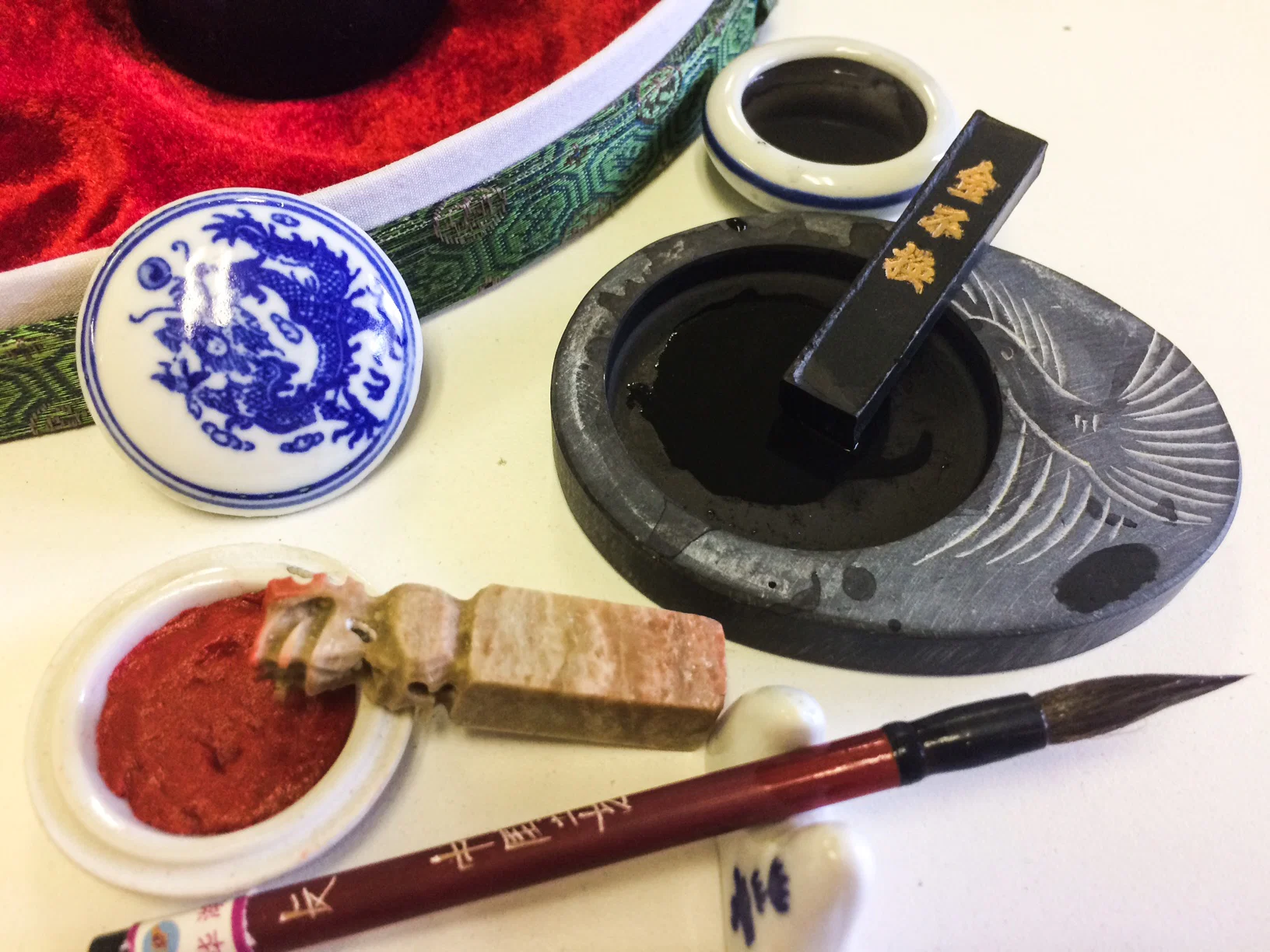
演示“文房四宝”——墨砚、毛笔、墨锭、纸张。(此为本人课堂所用教具套装,用于展示并演示“文房四宝”)


课堂活动:教师引导示范 让学生亲身体验“文房四宝”
若您引用本博客任何内容(图片或文字),请务必注明原始出处并链接回 Create Art with ME!
Sumi-e Painting History & The 4 Treasures: Lesson 1
Original: https://createartwithme.com/chinese-bamboo-brush-painting/
Date: 2014-12-07
Author: Michelle East
Categories: 3rd Grade, 4th Grade, 5th Grade, 6th Grade, Art Lessons, Art Technique Lessons, Asian Art Lessons, Cultural Art Lessons, Elementary Art, HS Art, MS Art, Painting Lessons, Painting Technique Lessons, Pen & Ink, Sumi-e Painting
Tags: 4 Treasures, bamboo brush, brush painting, Chinese Brush Painting, chinese calligraphy, elementary sumi-e painting lesson, Ink Picture, ink stone, Japanese Ink Painting, sumi painting, sumi-e, sumi-e lesson, sumi-e techniques
Sumi-e PaintingSumi-e painting is a beautiful medium that is rich in art history and culture. Calligraphy is a form of writing in Asian cultures that has been taught for thousands of years, this artistic form of writing eventually developed into pictures-the art of Sumi-e.
Objectives:
- Students understand that artists use line to create 2D works of art. They review five types of lines and line qualities.
- Students will learn about Sumi-e painting history. The will understand how calligraphy developed into the art medium of Sumi-e.
- Learn and create art using the Four Treasures of Chinese Brush Painting: Ink, slate, brush, and paper to create a Chinese brush painting.
Materials:Speedball India Ink, bamboo brushes, paper, water cups, paper towels
Main Resources for this Lesson:
“Japanese Ink Painting” by Susan Frame “The Art of Chinese Brush Painting: Master the simple techniques and elegant strokes of this traditional art form”
by Lucy Wang
Day 1-Delivery: History & The 4 Treasures
- Review the 5 types of lines: horizontal, vertical, diagonal, curved, zigzag
- Review line variation- thick, thin, rough, smooth, dashed or implied line, calligraphic
- Calligraphic Line is line that varies in width.
- Overview of Chinese Calligraphy– history, tools (the 4 treasures), holding the brush, techniques (the 4 basic brushstrokes)
- Sumi-e is a Japanese word that literally means “Ink Picture.”
- “Sumi” is the ink.
- Adding “e” makes it “ink picture.”
- Sumi-e refers to any ink painting derived from traditional Asian brush techniques.
- Around 1100-1275 AD, Zen Buddhist monks took ink painting to Japan & other parts of Asia.Today ink painters can be found all over the world.
- The art of Sumi-e originated in China about 6000 years ago as Calligraphy. Calligraphy led to painting pictures.
- The 1st ink painting on silk dates to about 200 b.c.
-
The “4 Treasures”: The essential materials used for Sumi-e are know as the Four Treasures or Four Gentleman.
- Ink: Ink comes in 2 forms: Stick & Liquid.The Stick is made from pine or oil carbon & glue. Most sticks have some type of design on them. In the past, gold leaf or precious stones were embedded, making it very valuable to use.
- Brush: Bamboo Brushes are usually made of Sheep, Horse, weasel, boar or a synthetic hair. The vein is made of bamboo.
- Ink Stone: Ink stones are used with grinding ink sticks.They can be simple or have elaborate carvings. Water is placed in the well of the stone, then the ink stick is pressed back & forth until the desired value is reached. Some stones have extra wells for creating different values.
- Paper: Painting is usually done on silk or paper. Types of paper:
- Rice Paper: It is not made of rice. It is made from a variety of plant materials: sandalwood, bamboo, mulberry, cotton & linen.
- Washi: Japanese Paper made from bark, trees & shrub.
-
Demonstrate “the 4 treasures”– the ink stone, the brush, the ink stick, the paper. (This is the “kit” I use to show the 4 Treasures & Demonstrate them)
Activity: Teacher Guided Demo Allow students to experience the 4 treasures
If you choose to use ANY part of this blog (pictures or written), please link back to Create Art with ME!
